
?Looking for a compact, precise bench power supply that makes setting voltage and current fast and predictable?
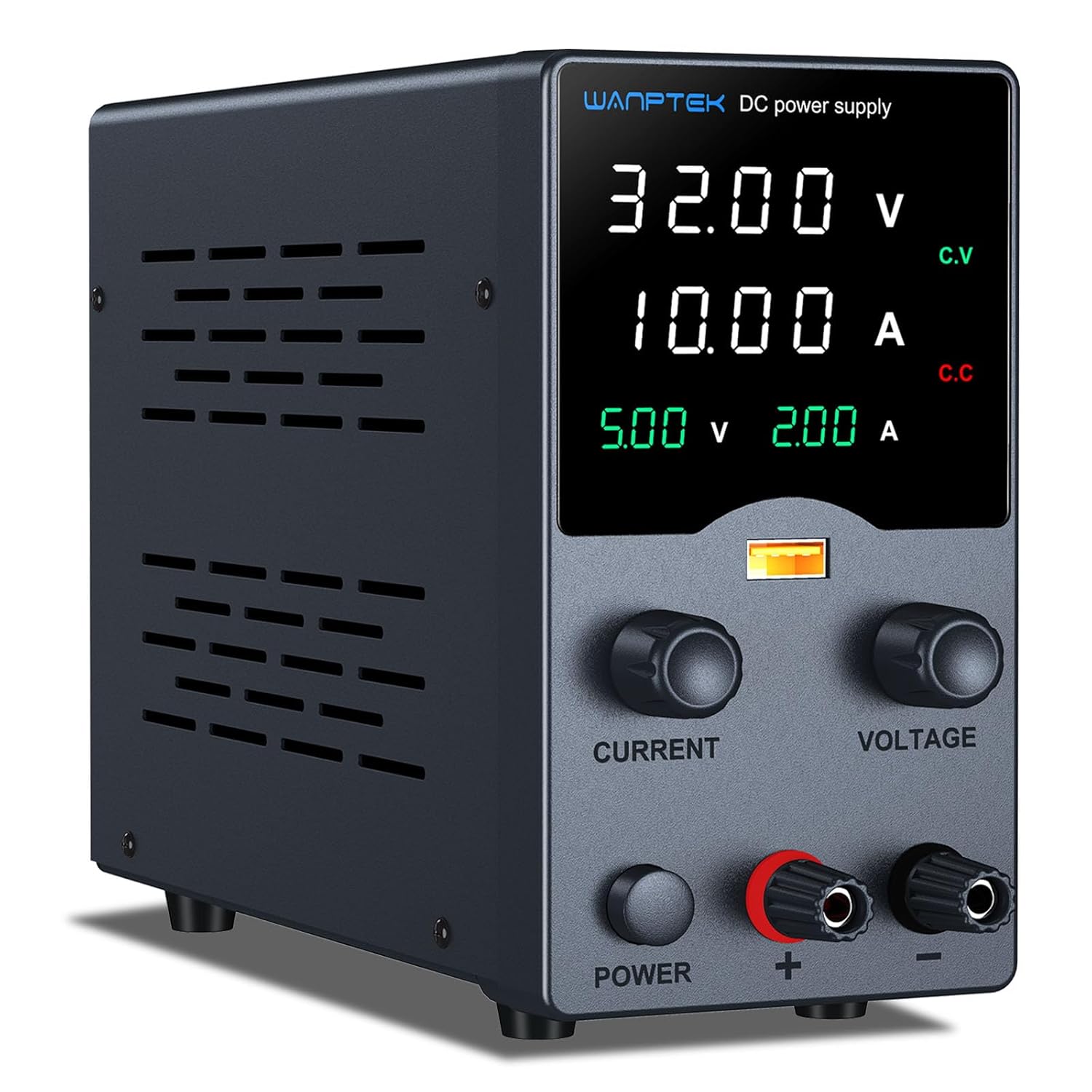

Quick Summary of the Wanptek DC Power Supply Variable 30V 10A, Bench Power Supplies with Encoder Adjustments Knob, USB Fast Charge Port with Output Current Display, 4-Digit LED Display
You get a small, feature-packed bench power supply that aims to replace fiddly potentiometer knobs with a precision encoder system. It combines a readable 4-digit LED display, a USB fast-charge output with on-screen readout, and a set of safety protections in a lightweight chassis that’s easy to move between your bench and field work.

Wanptek DC Power Supply Variable 30V 10A, Bench Power Supplies with Encoder Adjustments Knob, USB Fast Charge Port with Output Current Display, 4-Digit LED Display
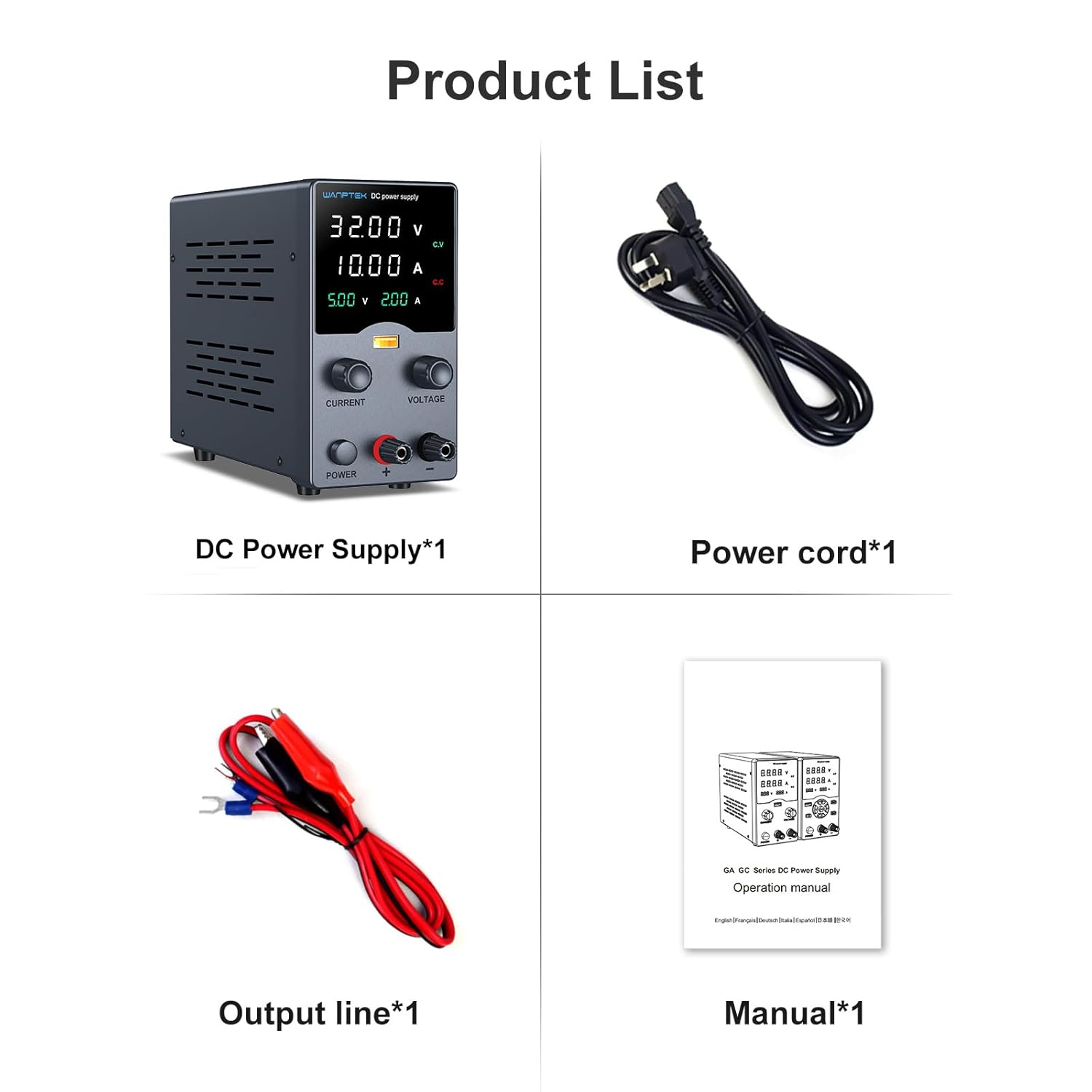
What You Receive in the Box
When you open the package, you’ll find the power supply unit, a power cord, and usually a quick-start guide that explains the encoder operation and basic safety. Accessories are minimal, so if you need extra leads or connectors you’ll want to have them on hand.
Physical Design and Build Quality
The unit is compact (about 5.7 × 7.4 × 3.1 inches) and light (around 2.53 lb), so you can carry it without strain or keep it on a crowded bench. The case and front-panel layout feel solid for the price point; buttons and knobs are responsive and the overall fit is tidy.
Front Panel and Controls: Precision Encoder Knob
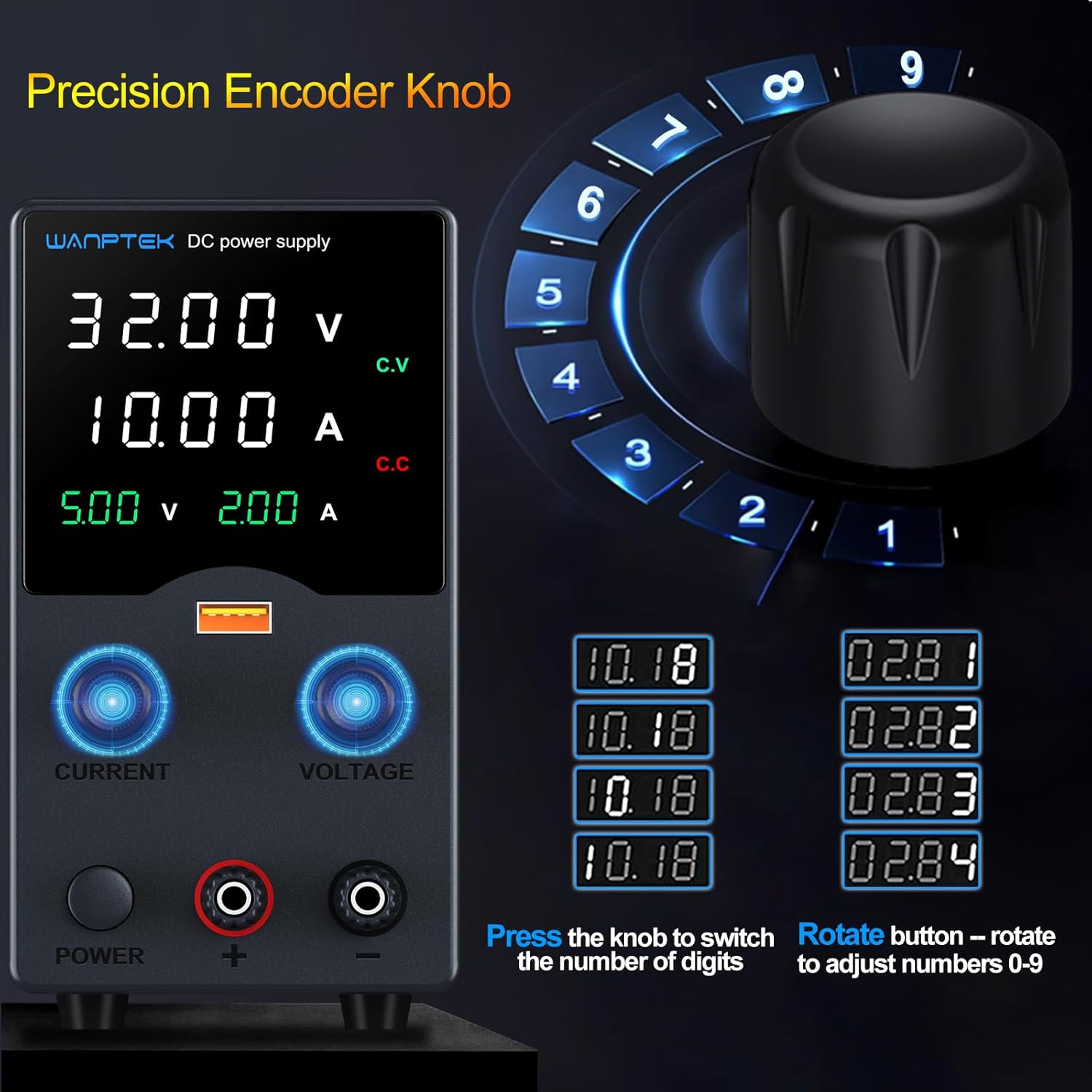
Instead of a classic potentiometer, this supply uses precision encoder knobs for voltage and current adjustments. You press the encoder to select which digit to change, then rotate to set values between 0–9 for each digit, which makes precise settings quicker and reduces overshoot. If you value exact numeric entry and repeatable settings, you’ll like this approach.
Display: High-Precision 4-Digit LED
The 4-digit display gives you a high-resolution view of both voltage and current with 0.1V and 0.001A resolution respectively. The readout also shows operating status indicators, making it easy to see if you’re in constant-voltage (CV) or constant-current (CC) mode. You can read the screen clearly even in dim light, which helps if you work in a less-illuminated area.
Performance: Voltage and Current Accuracy
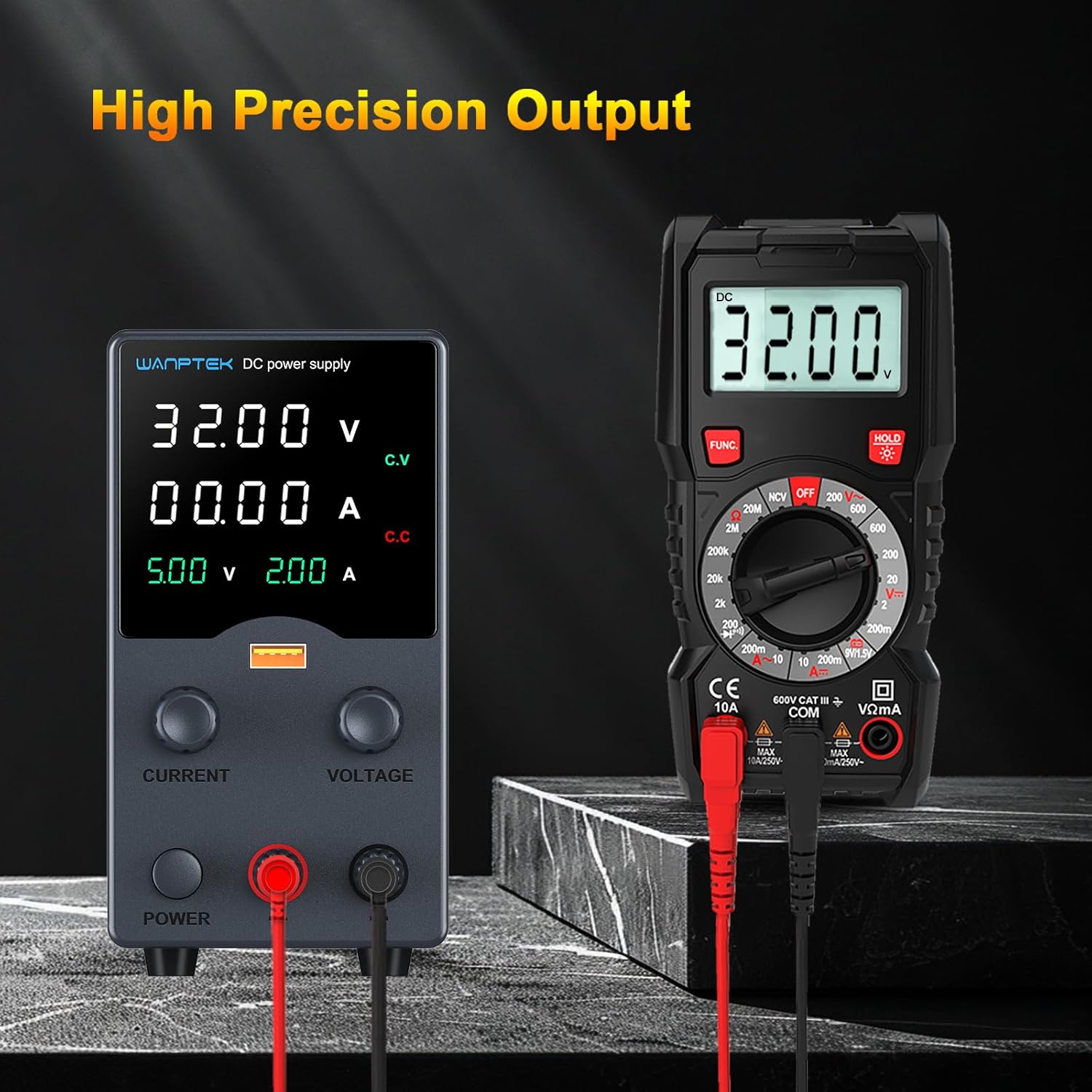
The supply supports 0–30V and 0–10A output, which covers many hobbyist and light professional needs. With the encoder and high-resolution display, you can expect to hit target voltages and currents more confidently than with crude knobs. For most electronics repair, bench testing, and prototyping tasks, the precision and control here are practical and reliable.
USB Fast Charge Port with Output Display
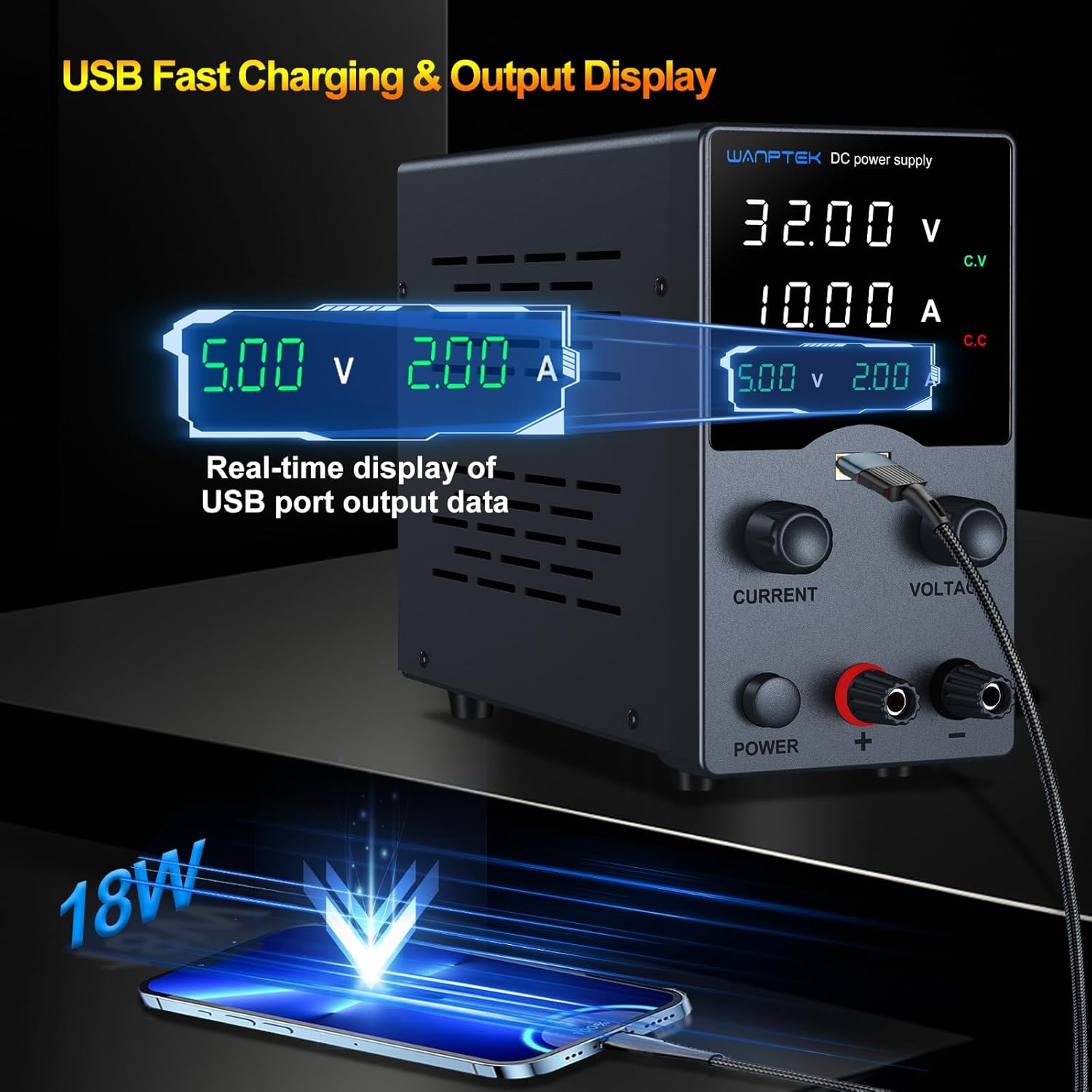
You can charge a phone or a device while using the supply, and the USB port’s output is shown on-screen. This is handy if you want to power or top up a mobile device during testing, or if you frequently power small USB devices as part of your workflow. Seeing the USB output on the display removes guesswork about how much current the USB line is drawing.
Multi-layer Safety and Protection
The unit is built with safety in mind: it features short-circuit protection, overload protection, and a temperature-regulated cooling fan. Those protections help prevent damage to both the supply and your connected devices, and they also extend the unit’s lifespan by preventing stress-related failures.
Thermal Management and Fan Behavior
The temperature-regulated fan engages as needed to control heat; this keeps the supply compact while maintaining thermal safety. In quiet working spaces you might notice the fan under heavy load, but it generally runs only when required and isn’t excessively loud for casual bench use.
Portability and Bench Fit
At about 2.53 lb, the unit is easy to move, and its small footprint saves space on your bench. If you travel to client sites, take part in field repairs, or work in multiple locations, the weight and size make it a practical choice.
Technical Specifications (Quick Reference Table)
You’ll find this table useful for scanning the key specs at a glance. It highlights the parameters that matter most for common tasks.
| Feature | Specification / Notes |
|---|---|
| Model/Product Name | Wanptek DC Power Supply Variable 30V 10A, Bench Power Supplies with Encoder Adjustments Knob, USB Fast Charge Port with Output Current Display, 4-Digit LED Display |
| Output Voltage Range | 0–30 V |
| Output Current Range | 0–10 A |
| Voltage Resolution | 0.1 V (4-digit display) |
| Current Resolution | 0.001 A (4-digit display) |
| Display Type | High HD 4-digit LED |
| Controls | Precision encoder knobs (push-select digit + rotate) |
| USB Port | Fast charge USB port (output display on screen) |
| Protections | Short-circuit, overload, temperature-regulated fan |
| Size | ~5.7 × 7.4 × 3.1 inches |
| Weight | ~2.53 lb |
| Ideal Use | Hobbyist projects, repairs, small lab work, field use |
| Included | Power supply unit, power cord, quick-start guide (typical) |
User Interface Tips: How the Encoder Makes a Difference
You press the encoder to select which digit to set, then rotate to change that digit. This method enables quick, repeatable settings—especially helpful when you frequently switch between test voltages or need precise current limits. You’ll find that once you get used to it, numeric entry is both faster and more accurate than spinning a potentiometer.
Setting Up and First Use
Unpack the unit, connect the power cord to an appropriate outlet, and make sure the output terminals are safe and unconnected while you power up the supply for the first time. After powering on, use the encoder knobs to set a low voltage and current limit, then attach a load or a test device to verify the output behavior.
Initial Configuration Steps
First set the current limit lower to prevent accidental overcurrent on an unknown load, then set your voltage. Press the voltage encoder to choose digits and rotate to set the exact number; repeat for current. If you’re used to coarse knobs, expect a slight learning curve, but overall the process is straightforward and eliminates guesswork.
Calibrating Expectations
This supply is designed for practical bench work rather than ultra-high-precision metrology. If you need certification-level accuracy, an instrument with calibration certificates and metrology-grade specifications will be necessary. For general electronics work, repairs, and prototyping, the level of accuracy you get here is typically more than adequate.
Practical Tests and Real-World Behavior
When you power up and use the supply under different loads, you’ll notice the CV/CC transition is smooth and the readout updates in real time. The USB port reads its output on the main screen too, which helps you confirm how much current your phone or device is drawing during charging or testing.
Response to Load Changes
The precision encoder and the display let you respond quickly when the load changes. If the load draws more than the set current, the supply shifts to CC mode and the voltage drops accordingly. The behavior is predictable and suitable for protecting sensitive circuits when you’re troubleshooting.
Ripple and Noise Considerations
For basic electronics work and device repair, the ripple and noise characteristics are usually acceptable. If you’re testing very sensitive analog circuits or RF front-ends, you’ll want to know the exact ripple/noise figures from the manufacturer or lab measurement; however, for most hobbyist and light professional tasks, the performance is practical.
USB Charging and On-screen USB Output Info
The built-in USB fast charging port is convenient for topping up phones or powering USB devices during tests. You can also see the USB port’s current draw on the main display, which is particularly handy when you’re diagnosing charging behavior or powering peripherals alongside your main load.
Using the USB Port Safely
If you use the USB while simultaneously powering a load from the main terminals, be mindful of the total power budget. You’ll want to ensure you don’t exceed the supply’s internal current limitations; the display helps by showing the USB output, but you should still manage your expected combined loads.
Safety Features in Detail
You get multiple protections: short-circuit protection prevents damage to the supply and the device under test; overload protection helps manage excessive draws, and a temperature-regulated fan keeps the supply within safe thermal limits. These layers help keep both your gear and the supply safer during everyday use.
Practical Effects of Protections
In practice, these protections mean you can test and tinker with less anxiety about frying your device or the power supply itself. When you hit the current limit or a short, the supply will move into CC or shut down as designed, allowing you to diagnose issues without permanent damage.
Thermal Management and Noise
The temperature-regulated fan engages when needed to expel heat and protect internal components. You’ll notice the fan under heavy loads, but it typically isn’t intrusive. If you plan to run sustained high-current loads near 10 A, expect the fan to switch on more often.
Tips to Reduce Fan Noise and Improve Cooling
Keep vents clear on the housing and provide some airflow around the unit. If you use the supply on a soft surface like a carpet, place it on a hard base to keep vents unobstructed. Those small steps can reduce unnecessary fan activity.
Portability: Taking It with You
At roughly 2.53 lb and a compact size, the unit is portable enough for field work or moving between benches. You won’t need a special carry case, though a padded bag will protect the front panel during transport.
Use While Traveling or On-site
Because it’s light and small, you can bring it to client sites or use it in cramped field setups. You’ll appreciate the small footprint when working in tight areas like server racks or compact robotics workspaces.
Who Should Consider This Wanptek Supply?
You should consider this unit if you do electronics repair, hobbyist development, microcontroller projects, small motor testing, or device charging/testing that needs a controlled voltage and current source. It’s particularly useful when you want to set and repeat exact voltage/current values quickly.
Who Should Look Elsewhere
If you require metrology-grade accuracy, lab certifications, or extreme low-noise performance for high-precision analog/RF measurements, a higher-end, calibrated bench power supply is a better fit. This Wanptek unit focuses on practical usability rather than certification-grade specifications.
Pros and Cons
You’ll find this supply offers a lot for its price, but it also has trade-offs. Here’s a balanced look.
Pros:
- Precision encoder knobs make numeric settings fast and repeatable.
- High-resolution 4-digit display gives clear voltage and current readout.
- USB fast charge port with on-screen output monitoring.
- Multi-layer protection (short-circuit, overload, thermal).
- Compact and lightweight—easy to move and saves bench space.
- Good value for hobbyists and small lab use.
Cons:
- Not a calibrated laboratory-grade instrument.
- Fan can be audible under sustained heavy loads.
- Minimal included accessories—additional leads may be needed.
- Limited total power compared to larger bench supplies for heavy-duty work.
Comparison: Encoder Knob vs. Traditional Potentiometer
If you’re choosing a supply, this encoder approach changes the way you interact with settings. With a potentiometer you rotate continuously and can overshoot; with this encoder you set specific digits for exact values. You’ll trade the tactile feel of a traditional knob for the precision of numeric entry.
How That Affects Workflow
You’ll likely save time when switching between fixed test points, and your settings are more repeatable. If you prefer a tactile, analog feel, the encoder might take some getting used to—but many users report faster setup and fewer accidental changes once they adapt.
Maintenance and Care
Take basic precautions: keep vents clean, avoid liquids near the unit, and don’t subject it to heavy shocks during transport. If you need to store it, keep it in a dry, dust-free place and periodically verify that connectors and the display remain clean and intact.
Long-term Care Tips
If you use it heavily, occasionally inspect the terminal screws and clean them if you see oxidation. Keep firmware and documentation handy if the manufacturer provides updates or recalibration procedures. This will help keep the unit reliable for years.
Recommended Accessories
You might want to pick up:
- Banana plug leads or alligator clip leads for quick connections.
- A padded carrying case if you transport the unit often.
- A small USB data/current meter if you need more detailed USB measurement data than the built-in display provides.
- A multimeter for cross-checking the supply’s outputs if you require independent verification.
Frequently Asked Questions (FAQ)
Q: How precise is the display? A: The display offers 0.1V resolution and 0.001A resolution, giving you fine control over settings and a clear readout of what the supply is delivering.
Q: Can the USB port power my phone while I test other devices? A: Yes. The USB fast charge port can supply and display the USB output while the main terminals supply other loads. Just be mindful of the supply’s total thermal and current limits.
Q: Is this supply safe for circuit prototyping? A: Yes, it includes short-circuit and overload protection, plus a temperature-regulated fan. Those features make it safer for prototyping and repair work than an unprotected bench supply or makeshift power source.
Q: Will the fan be disruptive in a quiet workspace? A: The fan is temperature-regulated and generally only runs under heavier loads. In light use it’s often quiet; under sustained high current it becomes noticeable but not overwhelmingly loud.
Q: Do I need calibration? A: For typical hobby and repair tasks, factory calibration is usually sufficient. If you need metrology-grade accuracy or official calibration for professional labs, look for units with calibration certificates or arrange third-party calibration.
Final Verdict
If you want a compact, accurate, and user-friendly bench power supply for electronics repair, hobby projects, or field work, the Wanptek DC Power Supply Variable 30V 10A is a compelling option. You’ll appreciate the precision encoder knobs, high-resolution display, and USB fast charge port that shows the output. The multi-layer protections and small footprint make it practical and safe for everyday use.
You should pick this unit if you value repeatable numeric entry, portability, and clear on-screen feedback without paying the premium for a calibrated laboratory instrument. If you need extreme low-noise performance, lab traces, or certification, consider that a higher-tier supply might be required. For most makers, technicians, and DIYers, this Wanptek supply strikes a solid balance between features, safety, and usability.
If you want, I can help you compare this model to a few specific alternatives or suggest practical testing routines you can run to validate performance on your own bench.
Disclosure: As an Amazon Associate, I earn from qualifying purchases.