
Looking for a reliable, heavy-duty battery charger and starter that you can wheel into the garage and trust when a battery fails?

Product Overview
You’re looking at the Schumacher Electric Wheeled Manual 10A Car Battery Charger and 250A Engine Starter, 2-in-1 Solution, 50A Boost, for 6V/12V Power Sport, Automotive, and Marine Batteries, SC1445. This is a combination manual charger and engine starter designed to meet the needs of professional shops, fleet operators, hobbyist mechanics, and serious DIYers who need both sustained charging and powerful starting capability.
What this product does
This unit functions as a 10A manual charger, a 50A boost charger for quick recovery of deeply discharged batteries, and a 250A engine starter for instant cranking. You get a single wheeled machine that supports both 6V and 12V battery systems, multiple battery chemistries, and manual timer control for charging sessions.
Who this is best for
If you maintain a fleet, restore classic cars, work on ATVs or boats, or just want a robust garage solution, this device gives you control and raw power in one package. You’ll appreciate it if you prefer straightforward manual control and a unit built to withstand shop environments.
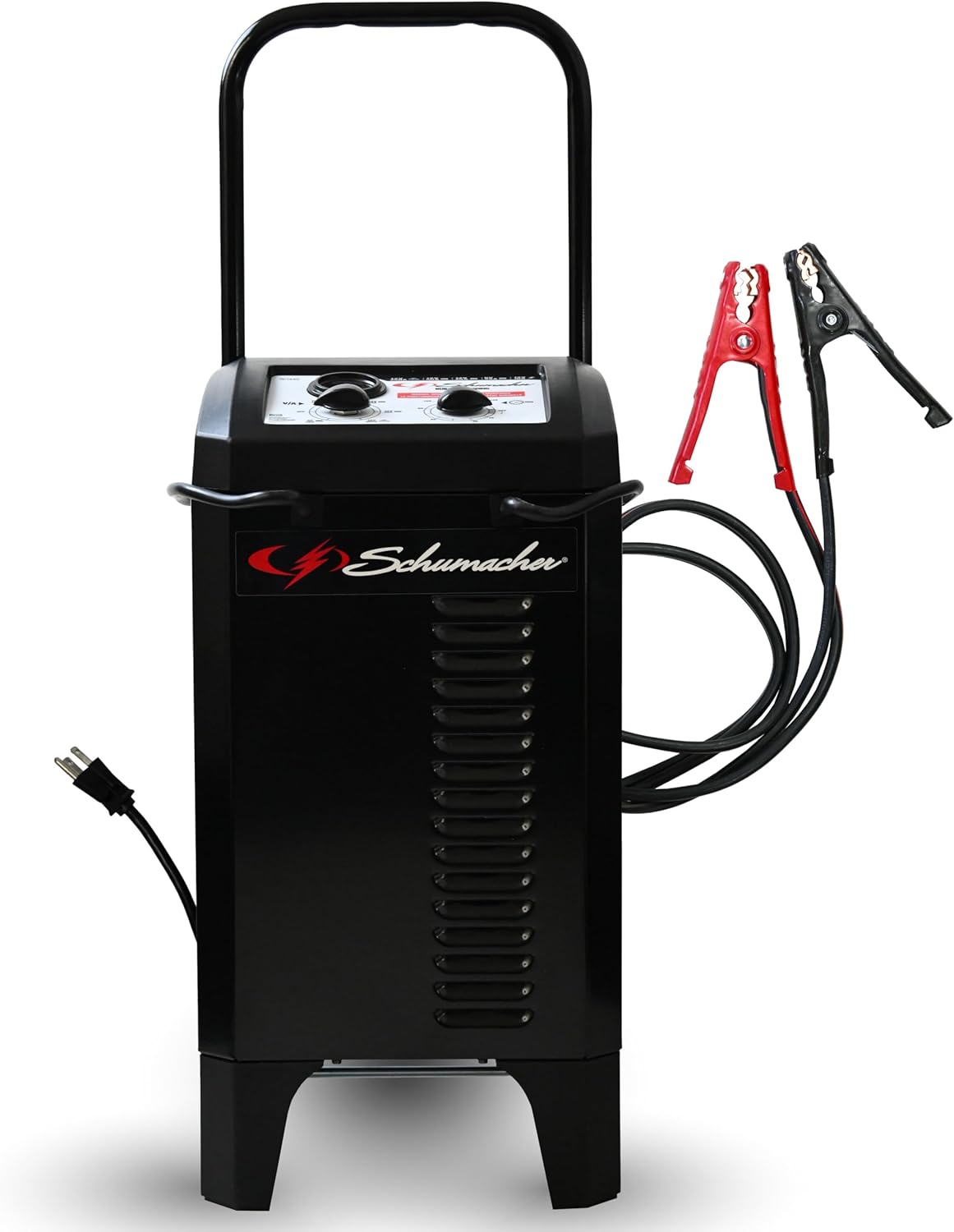
Schumacher Electric Wheeled Manual 10A Car Battery Charger and 250A Engine Starter, 2-in-1 Solution, 50A Boost, for 6V/12V Power Sport, Automotive, and Marine Batteries, SC1445
$179.99 In Stock
Key Specifications and Quick Facts
Below is a breakdown of the most important specs so you can quickly see whether this unit fits your needs. This table gives you the core numbers and a short explanation of what they mean for practical use.
| Feature | Specification | Practical Meaning |
|---|---|---|
| Model | SC1445 | Official model number to reference for parts and support |
| Charger Type | Manual timer-controlled | You set the run time rather than relying on automatic sensing |
| Standard Charge Rate | 10 amps | Good for overnight or multi-hour charging for most car batteries |
| Boost Charge Rate | 50 amps | Fast recovery of deeply discharged batteries; reduces downtime |
| Engine Start Current | 250 amps | Provides heavy cranking power for dead batteries and large engines |
| Voltage Compatibility | 6V / 12V | Works with classic vehicles (6V) and modern vehicles (12V) |
| Battery Types Supported | Standard, AGM, Gel, Deep-cycle | Broad compatibility for automotive, marine, power sport batteries |
| Timer | 135-minute manual timer | Allows precise timed charging sessions up to 135 minutes |
| Mobility | Wheeled with retractable handle | Easier to move around a shop or garage |
| Enclosure | Steel case | Commercial-grade durability for rough environments |
| Accessories Included | User manual (and standard clamps/cables) | Basic accessories to get started; additional cables may be needed for specific use |
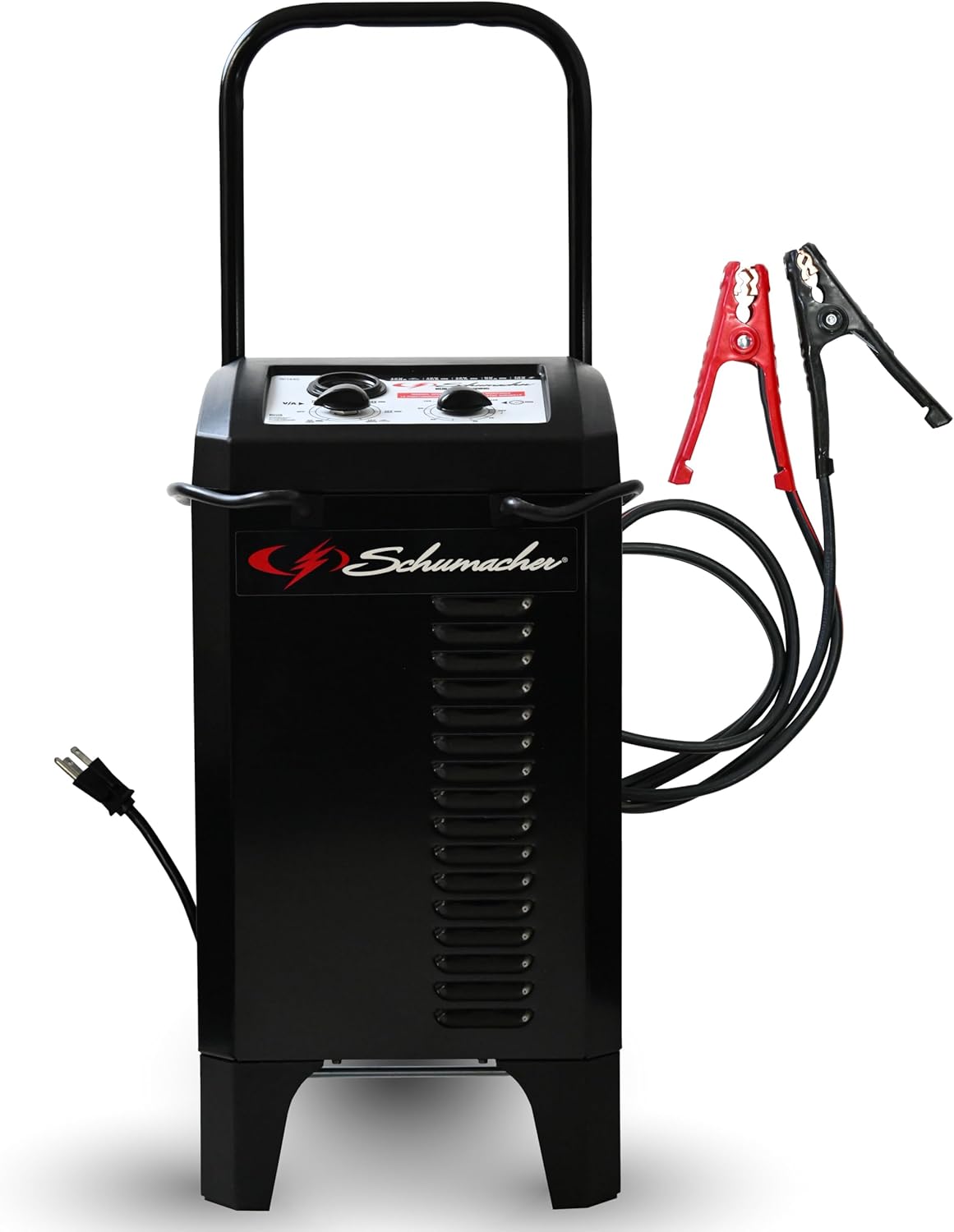
Charging Performance
You’ll want a charger that can do steady restorative charging and also revive a dead battery quickly when you’re in a hurry. This unit aims to cover both scenarios, balancing controlled charge with high-current boost capability.
10A Manual Charging
The 10A standard charge is appropriate for daily maintenance and relatively quick but controlled charging cycles. Because it’s manual-timer controlled, you set the charging interval which gives you predictable charge times and reduces the chance of overcharging if you watch the clock.
50A Boost Mode
When a battery is deeply discharged and needs a quicker revival, the 50A boost gets a lot of energy into the battery fast. That’s helpful if you have multiple vehicles to rotate back into service or if a weekend project needs a fast turnaround.
6V and 12V Compatibility
You can switch between 6V and 12V systems, so you won’t need two separate chargers if you work on older classics or small engines alongside modern cars. That flexibility is especially handy if you work in a mixed-use shop or maintain vintage vehicles.
Engine Start Capability
You may be most interested in how well the unit starts engines rather than how it charges. The engine starter functionality is designed for immediate results when you need to crank a non-starting vehicle.
250A Engine Start Function
The 250-amp engine start provides a heavy burst of current sufficient for many passenger cars, light trucks, motorcycles, and power sport vehicles. It’s designed to deliver a strong, instant cranking power to get engines turning even when the battery is essentially dead.
Using Engine Start Safely
When you use the engine start, always follow safe hookup procedures and adhere to polarity. You should connect clamps correctly, ensure the charger is set for the proper voltage, and stay clear of moving engine parts during cranking to avoid injury or equipment damage.
Build and Durability
You’ll notice the SC1445 is built with commercial environments in mind, so durability and mobility were prioritized in the design.
Steel Case and Mobility
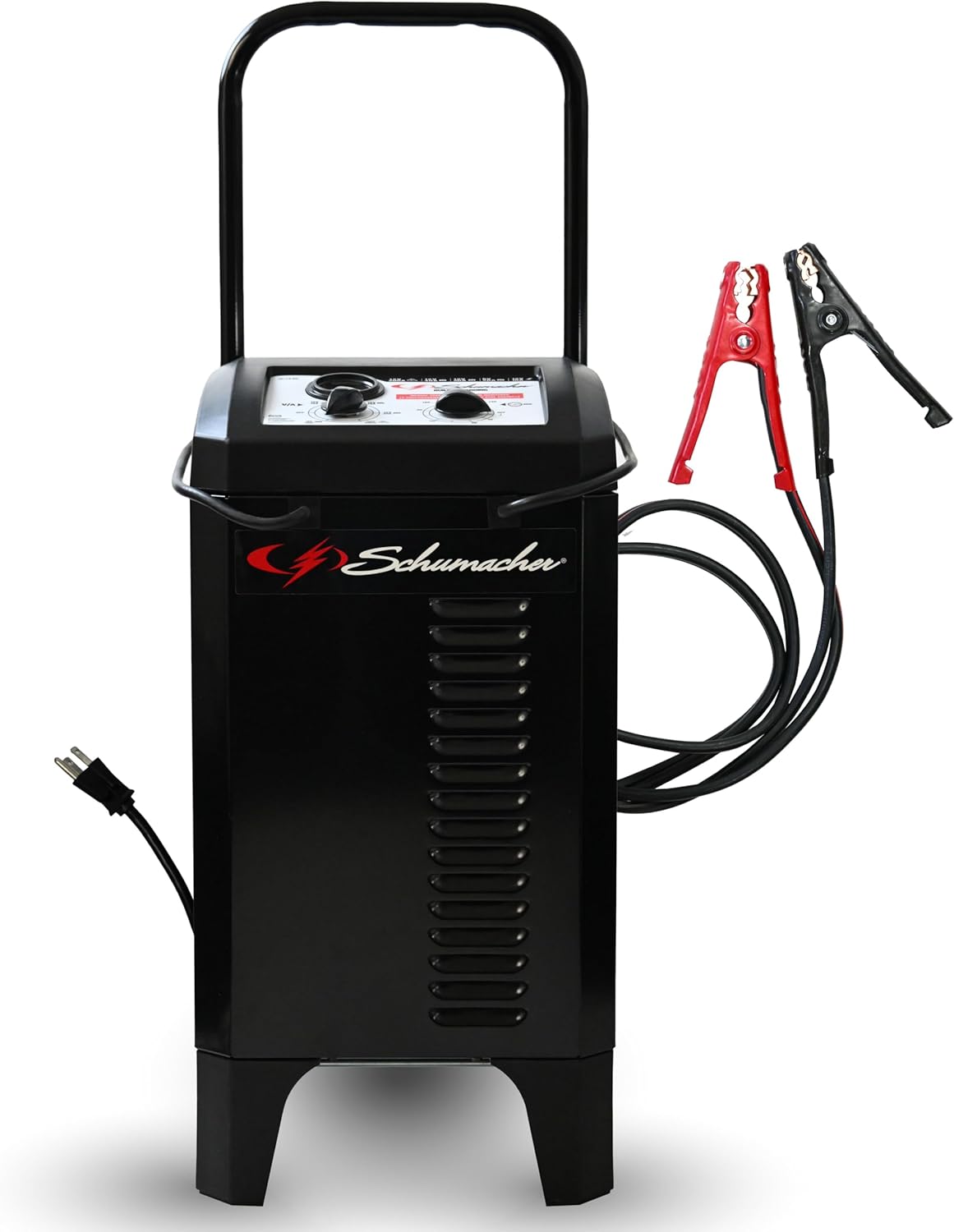
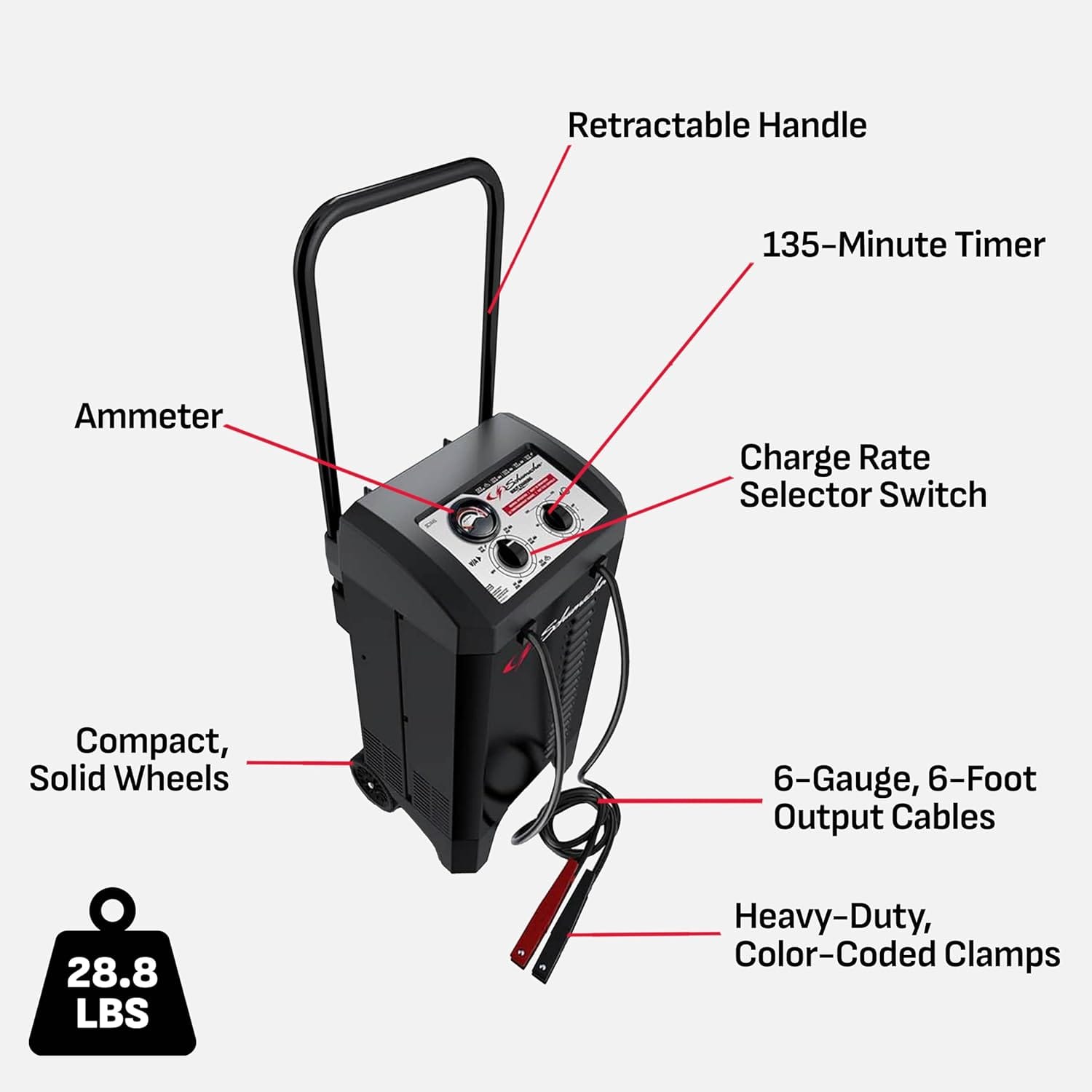
The steel case gives you a rugged exterior that stands up to bumping and shop wear, while wheels and a retractable handle make it easy to move to the work area. This combination lets you position the unit exactly where you need it without having to lift or drag a heavy piece of equipment.
Long-term Reliability
Schumacher has a long history in battery equipment, and this model continues that tradition with heavy-duty construction. If you maintain your unit and use it for intended purposes, you can expect years of service in a typical garage or shop environment.
Controls and Interface
You’ll deal with knobs, timers, and indicator lights rather than automatic microprocessors, so the user interface is direct and tactile. That’s often preferred by experienced technicians who want deterministic control.
Timer-Controlled Manual Operation
The 135-minute timer allows you to apply a precise length of charge rather than leaving the charger to make decisions for you. This manual control suits professionals who know the charge requirements for specific battery types or prefer to monitor charging in a hands-on way.
Clamps, Cables, and Accessories
The cable length and clamp quality matter for real-world convenience. This unit comes with standard clamps and cables suitable for most short-range shop tasks, but you may want to purchase heavier or longer cables if you frequently service vehicles with hard-to-reach battery locations or larger battery banks.
Safety Features
Safety matters when you’re pushing high currents into batteries or starting engines. The SC1445 includes practical protections designed to prevent user errors from causing damage.
Protections Against Mistakes
While it’s a manual unit, it still guards against common user mistakes like incorrect voltage selection by making settings explicit and visible. You must intentionally set the voltage and timer, which reduces the risk of accidental overcharging via an overly “smart” system that might misread an aged battery.
Garage-friendly Design
The steel enclosure and sturdy hardware minimize the likelihood of sparks or damage from external contact, and the wheeled design keeps it stable during use. You should still follow standard battery handling precautions — wear eye protection, keep sparks away from batteries, and ensure ventilation for lead-acid battery off-gassing.
Real-world Use Cases
Knowing how a device performs in the field helps you figure out whether it’s right for your workflow. Below are common scenarios where this unit shines and what to expect.
Automotive and Fleet Use
If you manage a small fleet or work in a service bay, the SC1445 provides the quick-starter capability for dead batteries and a reliable charge for getting vehicles back on the road. The combination of boost and standard charging options reduces downtime and keeps multiple vehicles moving through your shop.
Marine, Power Sport, and Specialty Vehicles
Boats, ATVs, motorcycles, and other power sport vehicles often use AGM or deep-cycle batteries that respond well to the supported charging modes. Because the unit supports different battery chemistries and 6V/12V systems, it’s well suited for mixed-vehicle maintenance where flexibility matters.
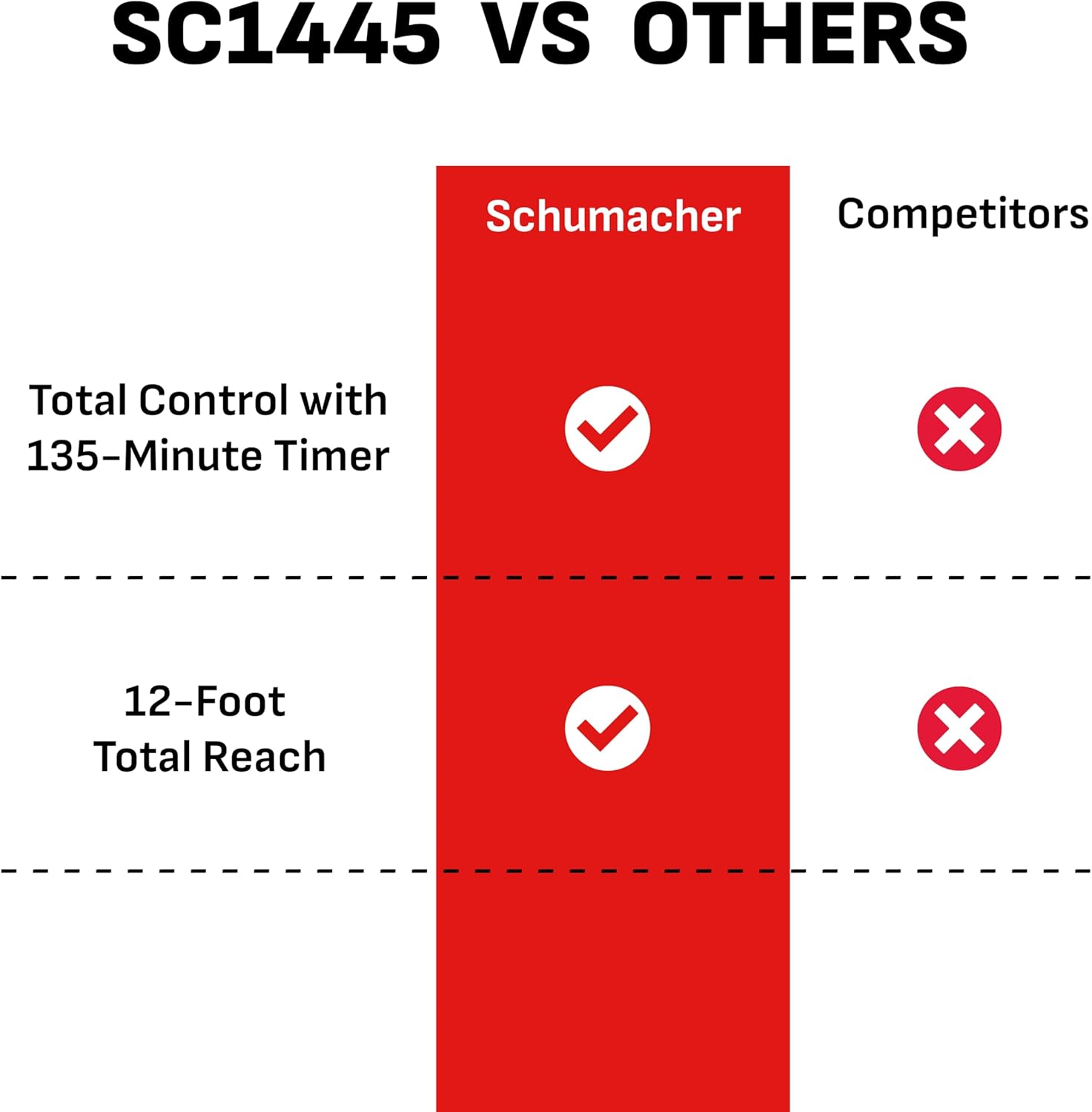
Pros and Cons
It helps to see the upside and the trade-offs clearly so you can decide whether the SC1445 aligns with how you plan to use it. Here are the main advantages and limitations you’ll encounter.
- Pros: You get a very powerful 250A engine start, a handy 50A boost charge for quick recovery, and a durable wheeled steel chassis for tough shop use. The manual timer gives you granular control over charging duration, which professionals often prefer.
- Cons: Because it’s a manual model, you need to monitor charging times yourself and choose the right settings; it lacks automatic multi-stage charging modes. If you prefer plug-and-play battery maintenance with automatic float charging, this manual unit might feel less convenient.
Comparison with Similar Models
If you’re weighing this against other options, it helps to know where it fits in the landscape of chargers and starters.
Manual vs Automatic Chargers
Manual chargers like the SC1445 give you direct control over charge duration and are often simpler to repair and maintain. Automatic chargers provide convenience with multi-stage charging and automatic float maintenance, but they may be less direct and sometimes misread older batteries, causing slower or interrupted service.
Engine Starters and Dedicated Jumpers
Dedicated engine starters (jump packs) are portable and quick but often lack sustained charging capability and can be limited by smaller batteries inside the pack. The SC1445 combines a heavy-duty starting function with true charging capability so you can start the car and then recharge the vehicle battery without switching equipment.
Maintenance and Care
To keep your charger performing well and avoid unexpected failures, you’ll need to do some basic upkeep and thoughtful storage. Your effort will extend the life of the machine and ensure consistent results.
Storage and Winter Care
Store the charger in a dry, temperature-moderate environment to protect its electronics and steel casing from rust. During long winters or off-season periods, disconnect cables and keep the unit covered to prevent dust build-up and corrosion.
Periodic Inspection
Inspect clamps, cables, wheels, and the case regularly for wear, frayed wiring, or loose connections. Tighten hardware and replace worn clamps or cables before they fail to avoid a dangerous situation during heavy use.
Tips for Best Results
You’ll get the most from this machine when you use it with care and follow best practices. Below are practical tips to maximize performance and reduce the risk of issues.
- Always confirm voltage selection before connecting clamps; mismatched voltage can damage battery systems.
- Use the 50A boost sparingly to save battery life and avoid excessive heat; use it primarily for rescue/recovery.
- For routine charging, prefer the 10A manual charge and monitor the timer to prevent overcharging.
- Keep clamps and cable ends clean and free from corrosion to ensure solid electrical contact.
- Let your battery rest for a few minutes after starting with the 250A engine start before removing clamps.
- If you’re charging a very weak battery, periodically check battery temperature during charging to avoid overheating.
- Consider upgrading to longer or heavier gauge cables if you frequently charge vehicles with difficult access points.
- Maintain a log of charging sessions for fleet vehicles so you can detect recurring battery issues early.
- Use eye protection and gloves when connecting or disconnecting battery terminals to minimize injury risk.
- Read the included user manual fully to understand timer operation, hookup diagrams, and safety cautions.
Frequently Asked Questions
You likely have practical questions about how the SC1445 handles certain scenarios. Below are common questions and straightforward answers to help you decide.
Q: Can you leave a battery on the 10A charger indefinitely?
A: No — because this model is manual-timer controlled, it does not have an indefinite float mode; you should set an appropriate charge time and monitor the battery to avoid overcharging.
Q: Is the 250A start enough for larger diesel trucks?
A: For small- to mid-size gasoline engines and many light trucks, 250A is sufficient. However, larger diesel engines often require substantially higher cranking amps, so you should confirm your engine’s starting requirements before relying solely on this unit.
Q: Will the charger damage AGM or gel batteries?
A: The unit supports AGM and gel batteries, but because charging is manual, you should select correct voltage and charge times suited to those chemistries to avoid overcharging. Consult battery manufacturer recommendations.
Q: How long can you use boost mode continuously?
A: Boost mode is intended for short, high-current applications; extended use increases heat and wear on both the charger and the battery. Use boost for brief recovery and then switch to a lower-rate charge.
Q: Can this unit charge multiple batteries at once?
A: It’s designed to service one vehicle/battery at a time. Charging multiple batteries in parallel is technically possible only with proper wiring and understanding of combined load — and it’s generally not recommended unless you have specific guidance.
Q: Are spare parts available?
A: Schumacher provides user manuals and parts for many models; check their support or authorized service centers for replacement cables, clamps, or wheels.
Safety Checklist Before Use
Before you press start, run through this short checklist to keep yourself and your equipment safe. It’s quick and can prevent costly mistakes.
- Confirm voltage selection (6V vs 12V) on the unit.
- Inspect clamps and cables for damage or corrosion.
- Ensure battery terminals are clean and secure.
- Keep flammable materials and sparks away from the battery area.
- Wear appropriate personal protective equipment (gloves and eye protection).
- Set the timer to a reasonable duration for the battery condition.
Common Troubleshooting Tips
When things don’t go perfectly, you’ll want quick fixes to get back to work. Here are practical troubleshooting checks.
- If the charger doesn’t power on, check the power cord and outlet first. A blown breaker or faulty outlet is a common culprit.
- If clamps are hot after use, stop and let them cool; switch to shorter boost intervals and inspect for excessive resistance at the clamp or terminal.
- If the battery won’t hold charge after starting, the battery may be sulfated or internally damaged — consider a professional battery tester.
- If the unit trips or shows erratic behavior, perform a visual inspection and contact Schumacher support if you find signs of internal damage or persistent faults.
Accessories and Add-Ons Worth Considering
You can enhance the usefulness of this charger with a few accessories that improve reach, convenience, and efficiency.
- Heavy-duty extension cables for hard-to-reach batteries.
- Replacement heavy-gauge clamps with improved contact surfaces.
- Protective cover to keep dust and moisture off the unit.
- Battery testing tools to diagnose battery condition before charging.
- A small trickle/maintenance charger with float capability for long-term battery storage.
Environmental and Practical Considerations
You’ll want to operate the unit where the environment is suitable for battery charging and engine starting.
- Provide ventilation when charging batteries because gases can be emitted during charging.
- Avoid exposure to extreme cold or heat for prolonged periods to prevent reduced performance or damage.
- Use the unit on a stable surface; wheels should be locked or braked if the unit is in a precarious position.
Warranty and Support
Schumacher products generally come with manufacturer support and a limited warranty; you should register your unit and keep your purchase receipt. If you encounter defects or malfunctions, contact Schumacher support for parts, repair guidance, or warranty claims.
Final Verdict
If you need a rugged, no-nonsense combination charger and starter that gives you manual control and powerful starting capability, the Schumacher SC1445 is a compelling choice. Its 250A start, 50A boost, and 10A manual charge modes paired with a durable steel case and wheeled design make it highly practical for garage and shop environments where uptime and flexibility matter.
You should choose this model if you value solid construction and the ability to directly control charging cycles. If you prefer fully automated charging and float maintenance without monitoring, you might consider pairing this unit with a dedicated automatic maintainer or selecting a different model designed for automatic multi-stage charging.
Disclosure: As an Amazon Associate, I earn from qualifying purchases.