
Ever had a dead battery leave you stuck at the worst possible moment and wished you had something reliable to get you going again?

Quick impression
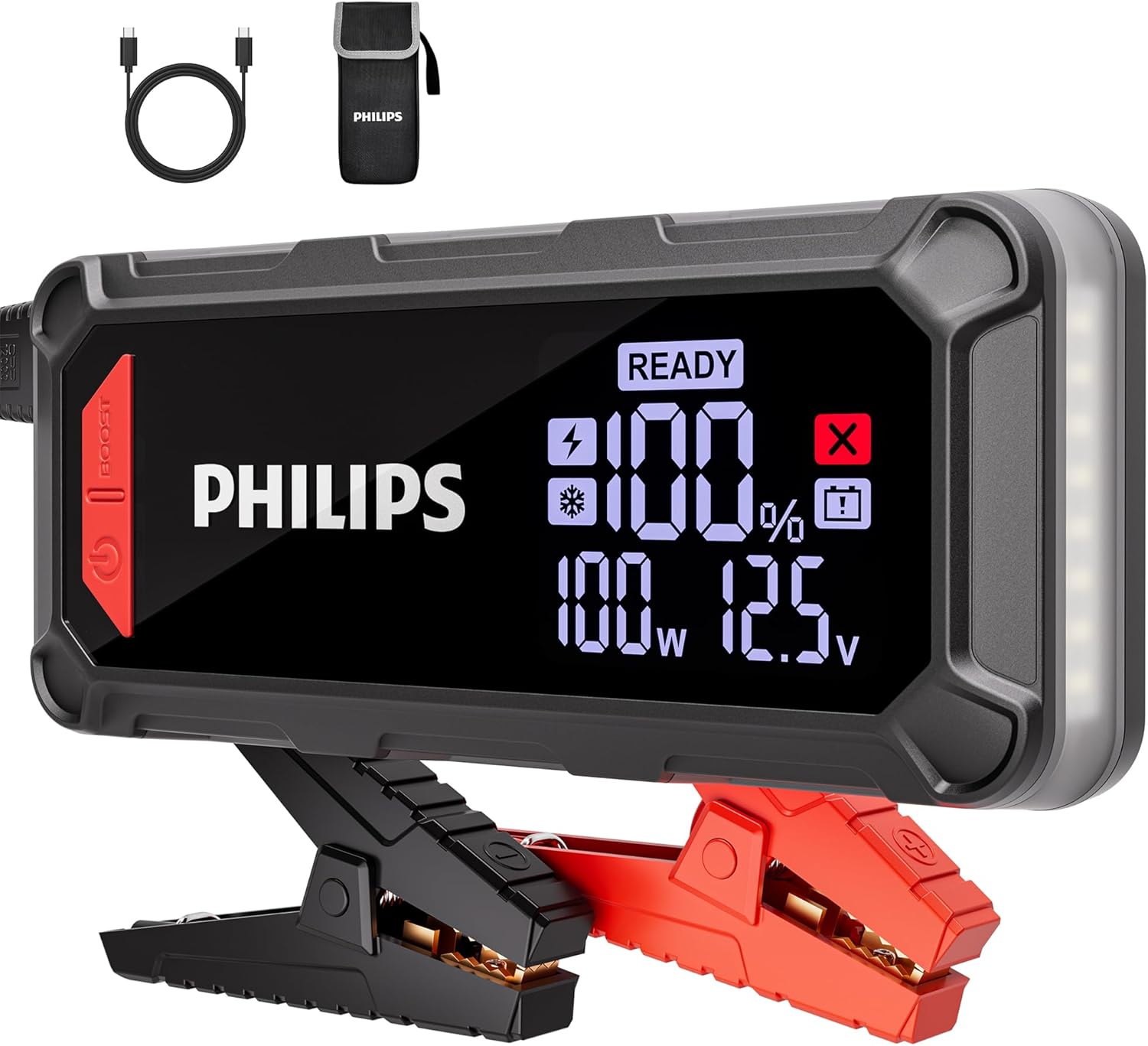
You’ll immediately notice the PHILIPS 2300A Car Battery Jump Starter’s promise of power and convenience. With a 16000mAh capacity and up to 2300A peak current, it’s built to start large gasoline and diesel engines and act as a high-capacity power bank. The unit’s compact form, intuitive LED screen, and multiple output ports make it look like a practical companion for your vehicle and on-the-road charging needs.
What this product is designed to do
This jump starter is intended to serve two main roles for you: quickly start a dead 12V car battery and supply portable power for devices while you’re away from wall outlets. It claims to start most gasoline engines up to 8.5L and diesel engines up to 6L, handle low temperatures down to -4°F, and provide multiple charging ports including a PD100W USB-C. You get both emergency starting capability and day-to-day device charging in one pack.

Key specifications at a glance
Below is a concise breakdown of the essential specs so you can get a quick sense of what the device offers and whether it matches your needs.
| Item | Specification |
|---|---|
| Product name | PHILIPS 2300A Car Battery Jump Starter, 12V 16000mAh Portable Lithium Jump Starter Battery Pack (8.5L Gas 6L Diesel) |
| Battery capacity | 16000mAh / 59.2Wh |
| Peak current | 2300A |
| Engine start capability | Gasoline up to 8.5L; Diesel up to 6L |
| Standby time | Up to 2.5 years |
| Cold operation | Down to -4°F (-20°C approx) |
| Charging input/output | USB-C PD up to 100W |
| Other outputs | 150W DC outlet; 2x USB-A |
| Jump starts per full charge | Up to 25 times |
| Charging time | Full charge in ~45 minutes (via PD100W); 8 minutes to go from empty to enough for a jump start |
| Cycle life | Up to 1000 charging cycles |
| Display | 3.2-inch LED screen |
| Safety | 8 protection features (including reverse-polarity and reverse-charge protection) |
| Durability | IP65 waterproof/dustproof, UL94 V0 fireproof, IK10 impact-resistant |
Design and build quality
You’ll find the PHILIPS 2300A feels solid and well-constructed in hand. The housing strikes a balance between portability and robustness, with reinforced materials to resist impacts and environmental exposure. The clamp cables and connectors are stout, which helps you feel confident when handling battery terminals on a cold morning.
Size, weight, and portability
The jump starter is designed to be portable enough for trunk storage or even a larger glove compartment. It’s not featherlight, but the added weight reflects the high-capacity battery and protective build. You can comfortably carry it during roadside stops or put it in a travel bag without too much trouble.
Ergonomics and controls
The LED screen makes operation straightforward, and ports are logically arranged for easy access. The clamps are labeled and robust, reducing fumbling. Buttons are tactile so you can operate the unit with gloves if needed.
Performance: starting capability
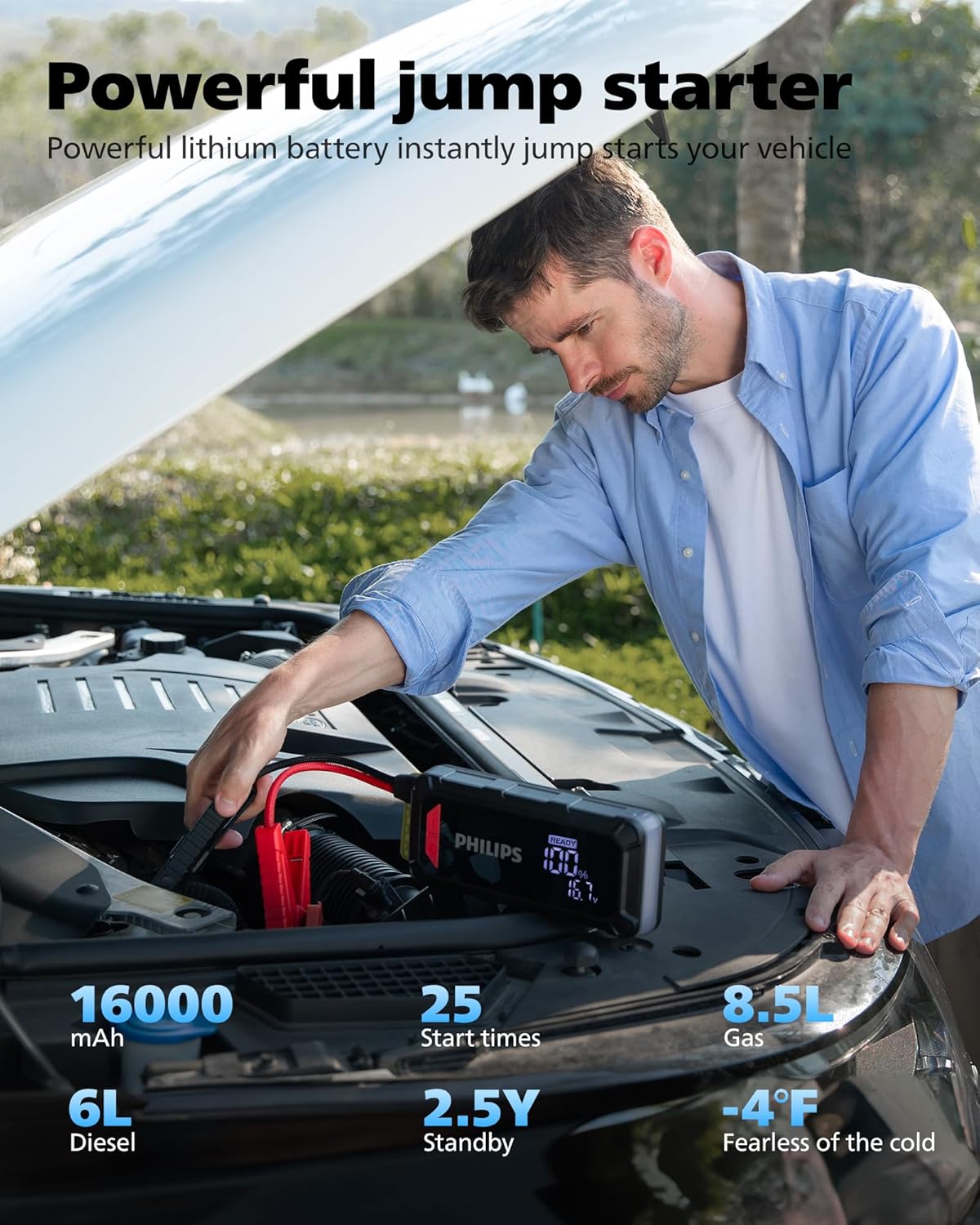
This is the primary job of the device, and the PHILIPS 2300A is rated to produce peak currents up to 2300A. That translates to reliable starting of most 12V gasoline engines up to 8.5 liters and diesel engines up to 6 liters. In regular use, that means you’re covered for nearly all passenger vehicles, SUVs, trucks, and many light commercial vehicles.
Real-world starting behavior
When you need a jump, you’ll appreciate how quickly the unit supplies power to spin the starter motor and crank the engine. You can expect rapid starts on a properly functioning starter system, even when temperatures are low down to around -4°F. The unit’s ability to provide up to 25 jump starts on a full charge is practical for frequent users or situations where multiple vehicles require assistance.
Cold-weather performance
Cold reduces battery output and increases the power needed to start an engine. The fact that the device can operate at -4°F means you’re less likely to be left helpless by winter conditions. It won’t replace heated storage or professional assistance in extreme climates, but it’s a reliable option for typical cold-season emergencies.
Charging speed and battery lifespan
You’ll be impressed with the PD100W USB-C capability. The jump starter supports up to 100W input and output on the USB-C port — enabling fast recharge and fast device charging.
Fast recharging and quick readiness
A full charge takes about 45 minutes when using a 100W PD charger, which is notably fast for a 16000mAh pack. If you’re starting from empty and need immediate capability, just 8 minutes of charging can give you enough power to perform a jump start. That’s excellent when you’re short on time and must get a car moving.
Battery durability and cycles
With up to 1000 charging cycles claimed, the internal lithium-ion pack should last years under normal usage patterns. That lifetime means you won’t need to replace the unit quickly, assuming reasonable charge/discharge habits are followed.
Ports and power delivery versatility
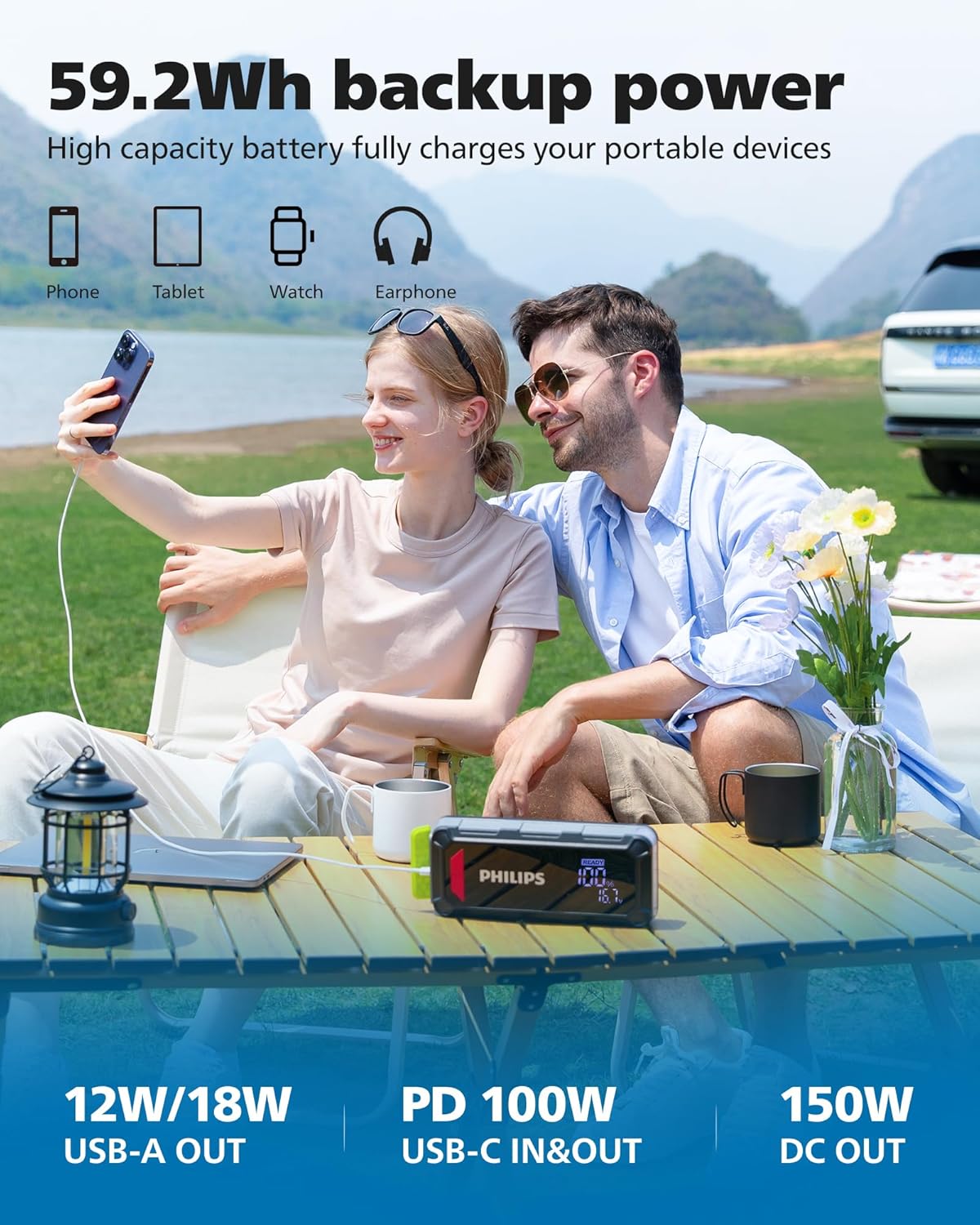
This product functions as more than a jump starter — it’s a multi-port power bank for road use. You’ll find a PD100W USB-C port, a 150W DC output, and two USB-A ports for charging phones, tablets, cameras, and other gadgets.
What you can charge
A smartphone can be charged multiple times (the product detail mentions up to about six full smartphone charges), and the PD100W port can handle laptops that accept USB-C PD. The DC outlet supports devices requiring a barrel or automotive-style power input, broadening the range of devices you can power. This flexibility is especially useful on long trips or during power outages.
Device charging speed
Because of the high-watt USB-C PD port, your laptop or fast-charging phone will charge nearly as quickly as from a wall charger in many cases. Two USB-A ports provide conventional charging for older devices or accessories like Bluetooth earbuds and action cameras.
User interface: the 3.2-inch LED screen
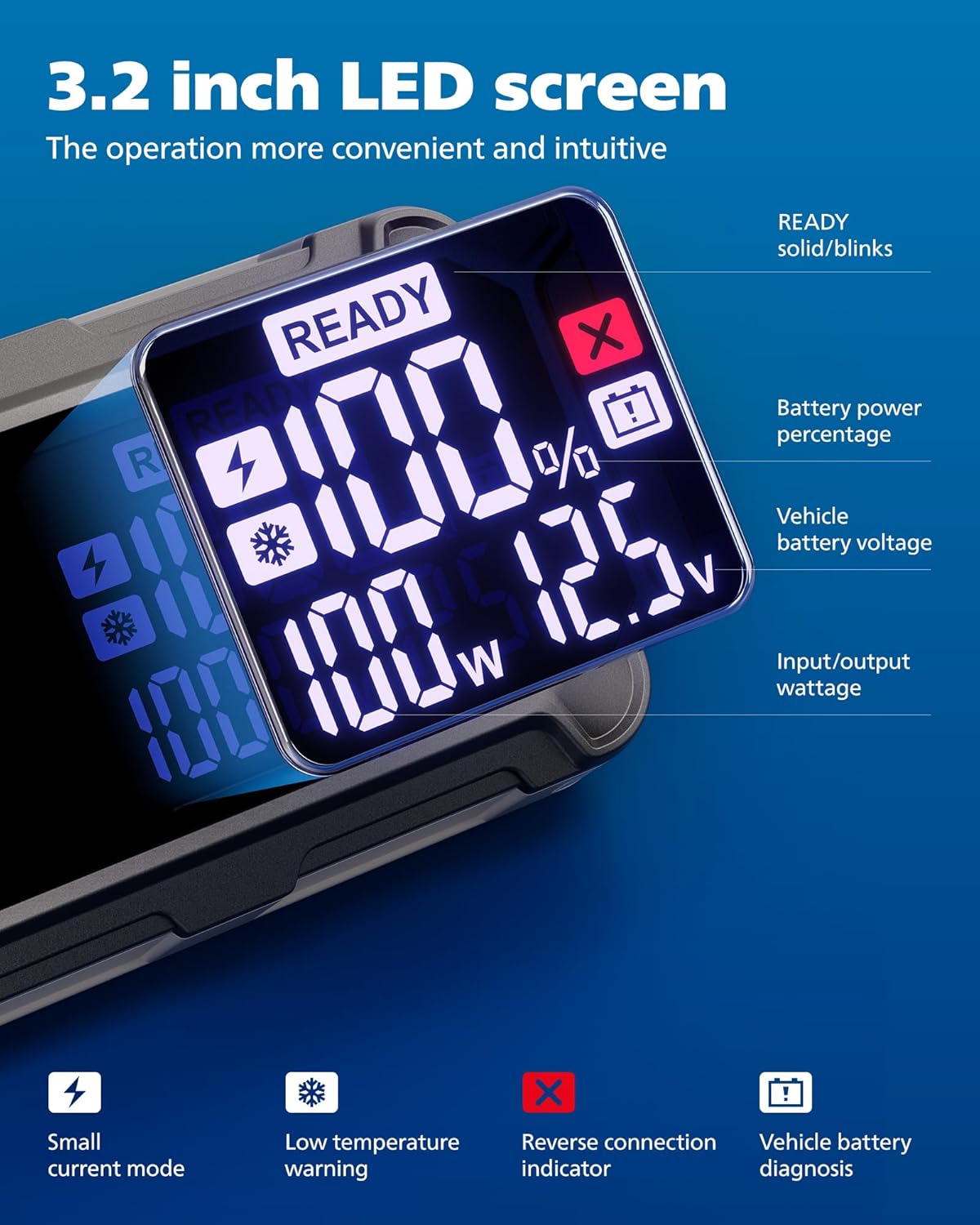
You’ll find the built-in 3.2-inch LED screen very helpful for real-time information. It displays battery level, alerts, and operational status — making the jump process more intuitive and less guesswork.
Safety indications and warnings
If you clip the clamps to the wrong terminals, the screen will display a clear warning message so you can correct the connection before damage occurs. That’s a simple but crucial feature for anyone who isn’t experienced with jump-starting vehicles.
Clarity and convenience
The display’s size makes reading status and error messages easier in daylight or at night. You don’t need to rely solely on LED indicators; the screen gives you clear, actionable information.
Safety features and protections
Philips engineered this unit with eight safety protections to safeguard you and your vehicle’s electrical system. Key features include reverse-polarity protection and reverse-charge protection, among others.
What those protections mean for you
Those protections prevent accidental short circuits, incorrect clip connections, and bad electrical feedback between your vehicle and the jump starter. In practice, the protections reduce the risk of harm to the vehicle’s electronics and to you while handling the clamps.
Rugged certifications and ratings
The device is built to withstand adverse conditions: IP65 waterproof and dustproof rating, UL94 V0 fireproof material, and IK10 impact resistance. This combination means the unit should remain operational in rainy conditions and survive routine bumps and drops.
How to use the PHILIPS 2300A (step-by-step)
You’ll feel confident using this unit with a quick procedure. Below are step-by-step instructions to minimize mistakes and get back on the road quickly.
Starting a vehicle
- Ensure the jump starter is charged. The LED screen will show battery level.
- Turn off the vehicle’s ignition and all accessories (lights, radio, heater fans).
- Connect the red clamp to the positive (+) terminal and the black clamp to the negative (-) terminal or a chassis ground.
- Check the LED screen for polarity warnings; if a warning appears, correct the connection.
- Start the vehicle. If it doesn’t start in 3–5 seconds, wait 30–60 seconds and try again.
- Once the engine starts, remove clamps in reverse order (black first, then red).
- Recharge the jump starter after use.
Charging devices
- Choose the appropriate port (USB-C PD for laptops/fast-charge phones; USB-A for accessories; DC for compatible devices).
- Plug in your device and check the unit’s screen to confirm output and charge progress.
- Unplug when charging is complete or when the jump starter’s battery is low to preserve cycles.

Maintenance and storage tips
If you want the unit to last, there are a few simple practices you should follow. Keep it charged periodically, store it in a dry place, and avoid extreme temperatures when possible.
Storage and charge retention
You can store the jump starter for up to 2.5 years on a full charge according to specs, but it’s healthier for the battery to top it up every few months. Aim to recharge it every 3–6 months, especially if it’s stored in a temperature-controlled environment.
Caring for clamps and ports
Keep clamps and ports clean and dry. Wipe any corrosion or dirt from clamp jaws before use. If the unit gets wet, dry it thoroughly before operating, though the IP65 rating does offer protection against water and dust.
Durability and in-field resilience
The PHILIPS 2300A is designed to withstand rougher environments while remaining functional. From rain to bumps in a workshop, it’s built to be a dependable tool rather than a fragile gadget.
Impact, fire, and environmental resistance
Materials rated UL94 V0 provide flame retardance, IK10 helps resist impacts, and IP65 ensures the unit repels dust and withstands jets of water. These safeguards mean you don’t need to baby the device on routine tasks or in adverse weather.
Longevity in everyday scenarios
If you use the unit frequently for device charging and occasional jumps, the 1000-cycle battery life prediction plus the robust outer shell should give you years of reliable service. Proper storage and moderate usage habits extend its effective life.
Pros and cons
You deserve a balanced view, so here are strengths and trade-offs you’ll encounter with the PHILIPS 2300A.
Pros
- High peak current (2300A) capable of starting large gasoline and diesel engines.
- Fast recharge with PD100W — full charge in about 45 minutes and enough power for a jump in 8 minutes.
- Multi-port outputs (USB-C PD, USB-A, DC) for versatile device charging.
- User-friendly 3.2-inch LED screen with polarity and operational warnings.
- Strong safety suite with 8 protections and rugged certifications (IP65, UL94 V0, IK10).
- Long cycle life and long standby time.
Cons
- Heavier than smaller jump starters due to higher capacity — not ideal if ultralight portability is critical.
- The price is often higher than very basic jump starters because of features and power.
- Some users may find the multiple ports more than they need if their main goal is simply occasional jump starts.
How it compares to competitors
You should consider what you value most: raw starting power, fast recharge, or compactness. The PHILIPS 2300A sits in the higher-tier segment for power and features. Compared to basic 400–1000A models, it offers significantly greater starting capacity and faster recharge times. Against other high-end jump starters, its PD100W and comprehensive protection suite make it a competitive option.
When this is the better choice
Choose this unit if you have larger vehicles, need frequent device charging, or want a fast-recharging, rugged jump starter you can depend on in cold weather. It’s less ideal if you only ever need to jump small cars and prefer something lighter and cheaper.
Common scenarios where this helps
You’ll find multiple practical scenarios where this jump starter becomes indispensable: road trips where multiple devices need charging, work vehicles that might sit unused for periods, cold-weather environments, and situations where you could be called upon to assist others.
Emergency roadside assistance
If a friend’s car won’t start, you can provide multiple starts on a full charge without having to find another vehicle. The bright LED screen and safety features also make it easier and safer to use under stress.
During power outages or remote work
You can run laptops, routers, and phones during short power interruptions or when working outside the reach of mains power. The PD100W port is particularly handy for power-hungry laptops.
Troubleshooting tips
If something goes wrong, you can solve many common issues without professional help.
If the device won’t jump start
- Check battery charge level on the LED screen; recharge if necessary.
- Verify clamp connections and ensure they’re tight and clean.
- Look for error messages on the screen (e.g., reverse polarity). Correct and retry after a short pause.
If the unit won’t charge
- Verify your PD charger and cable are functioning (test with another device).
- Check the USB-C cable rating — some older cables won’t carry full PD speeds.
- Allow the unit to warm up if it was stored in very cold conditions before charging.
Frequently asked questions (FAQ)
You’ll probably have a few questions before committing to a purchase. Here are answers to common concerns.
How many times can you jump a car on a single charge?
A full charge can jump-start a vehicle up to 25 times, depending on the vehicle’s condition and starting system. This is more than sufficient for occasional use and most roadside assistance needs.
Can it start diesel engines?
Yes. It’s rated for diesel engines up to about 6 liters, so it covers many light diesel trucks and commercial vehicles.
Is it safe to leave connected to my car while charging the unit?
It’s not recommended to charge the jump starter directly from your vehicle’s DC system while connected to the battery for jump-start operations. Follow the manufacturer’s instructions for safe charging and charging methods.
Who should buy this
You should consider the PHILIPS 2300A if you: own larger vehicles (big SUVs, trucks, diesel vehicles), frequently travel with multiple electronics, live in areas with cold winters, or need a robust, fast-charging emergency power solution. If you only occasionally need a jump starter for small cars, a lighter, less expensive model may suffice.
Ideal user profiles
- Road travelers and RV owners who want multi-device charging plus reliable starting.
- Professional drivers, mechanics, or roadside assistance volunteers who need frequent starts.
- People living in colder climates who want dependable starting power in low temperatures.
Final verdict
You’ll find the PHILIPS 2300A to be a powerful, well-rounded jump starter and portable power bank. It blends high starting capability with fast PD100W charging, multiple output ports, and an intuitive 3.2-inch LED screen. Safety protections and rugged certifications make it a dependable choice for both emergency use and regular on-the-road charging. If you need a robust, versatile unit and don’t mind a slightly higher weight and price for those capabilities, this unit is a strong contender.
Practical buying tips
When buying, check the included accessories (charging cable, clamps, carrying case) and confirm warranty coverage. If you need the fastest recharge times, ensure you have or purchase a 100W PD charger that supports the unit’s full input capability.
Accessories to consider
- A robust 100W USB-C PD wall charger for fastest recharge.
- Spare USB-C and USB-A cables rated for PD and Quick Charge.
- A protective carrying case to keep clamps and ports safe and organized.
Warranty and customer support
Philips typically provides reliable customer support and warranty options on their consumer electronics. Check the unit’s warranty length and what it covers before purchase, and register the product if registration enhances your support options. Keep proof of purchase and serial numbers handy for claims.
What to expect from support
If you encounter defects or performance issues, customer service can guide you through troubleshooting and warranty claims. Philips’ broader brand presence usually means access to online resources, manuals, and firmware or usage guides when needed.
Closing recommendation
If you want a strong, all-in-one jump starter with high starting power, rapid recharge, and versatile outputs for charging devices, the PHILIPS 2300A is worth serious consideration. It’s particularly valuable if you own or frequently use larger gasoline or diesel vehicles, or if you value the peace of mind that comes with reliable cold-weather starting and robust safety features.
If you have specific needs (lightweight only, ultra-cheap, or extremely compact), mention them and you’ll get tailored alternatives that might suit your situation better.
Disclosure: As an Amazon Associate, I earn from qualifying purchases.