
? Are you looking for a portable power station that can handle home backup, long camping trips, and fast charging for high-power devices with reassuring safety and long life?

Overview of the DJI Power 1000 Portable Power Station
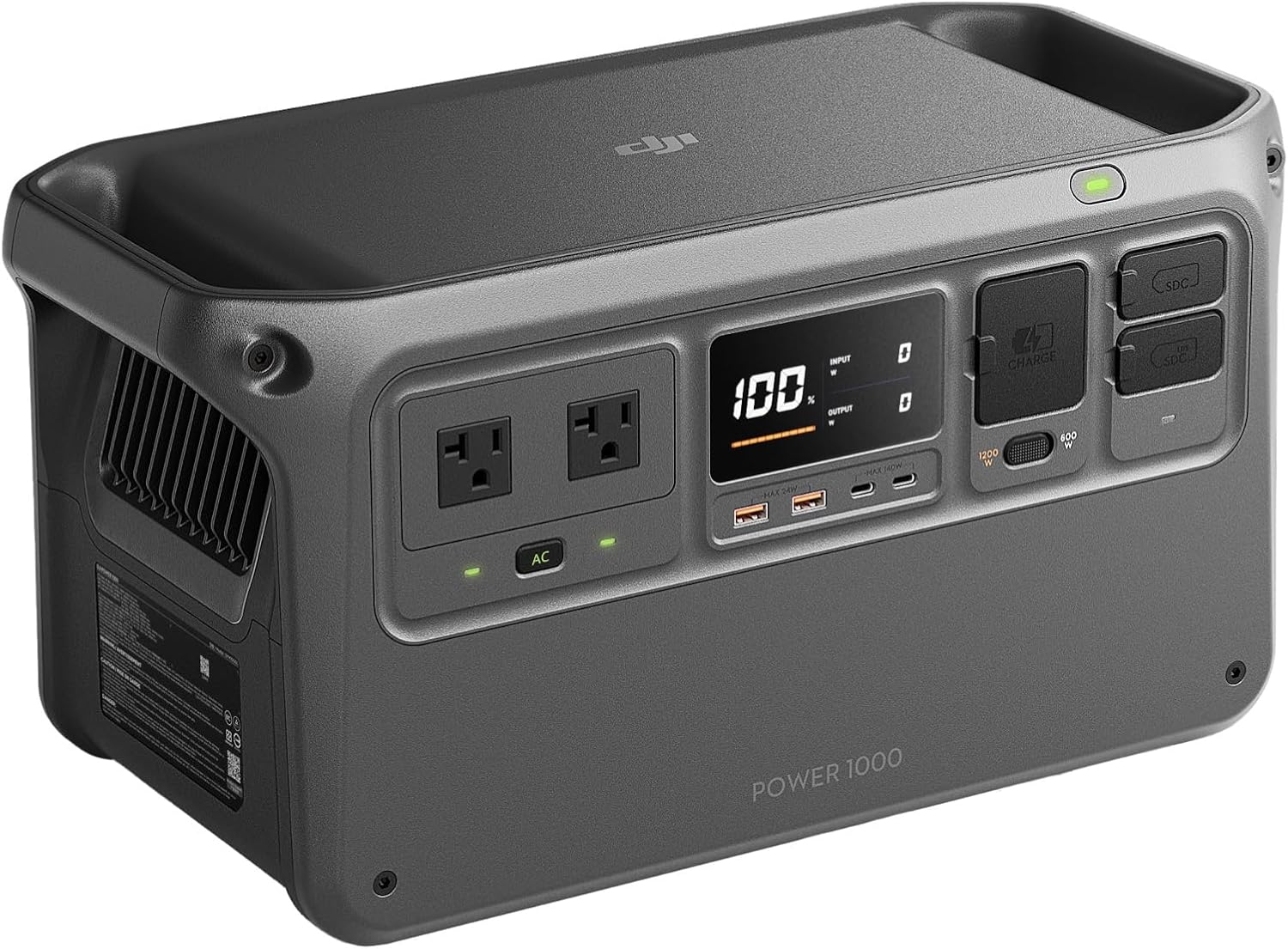
You get a robust 1,024Wh LiFePO4 (LFP) battery pack in a unit designed to be both a reliable home backup and a travel-friendly solar generator. The DJI Power 1000 promises fast recharging, ultra-quiet operation, and a high-power AC output that can support demanding devices, plus an LFP chemistry that gives you years of service life.
What this product aims to do for you
This unit is meant to give you rock-solid portable energy for devices ranging from laptops and cameras to small home appliances, and to keep you running through power outages or while off-grid. DJI has built in fast-charge technology and a thorough battery management system so you can feel confident using it for mission-critical needs as well as weekend trips.
Key Specifications and Quick Facts
You should know the core specs at a glance so you can judge whether it fits your needs. Below is a concise breakdown of the specs DJI provides and what they mean for you.
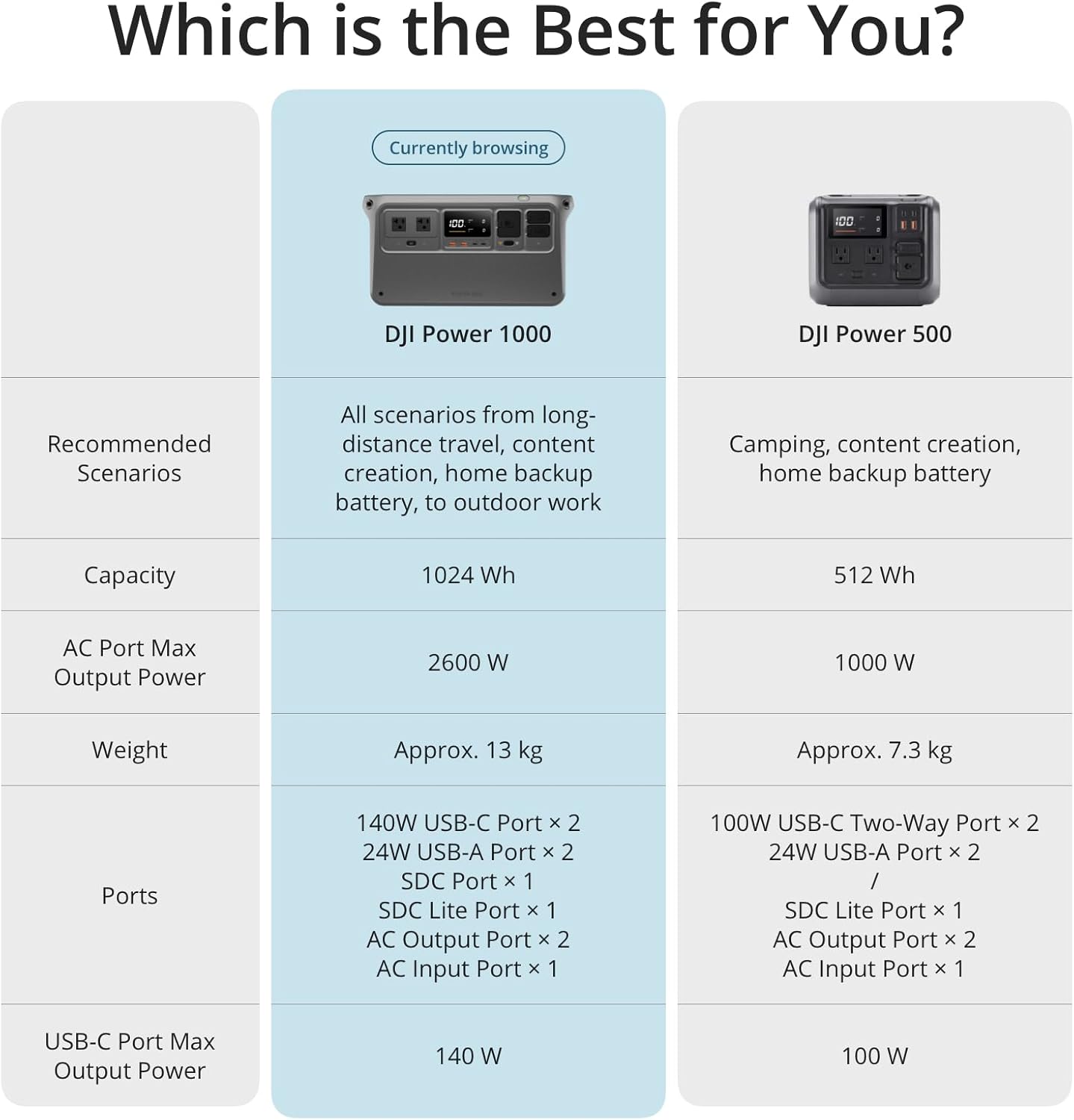
| Specification | Detail | What it means for you |
|---|---|---|
| Battery capacity | 1024 Wh | Enough energy to run laptops, small appliances, and several phone charges; good for short power outages. |
| Battery chemistry | LiFePO4 (LFP) | Long cycle life (up to 4,000 cycles), improved thermal stability and longevity compared with typical lithium-ion alternatives. |
| AC output | 2200 W (Peak 2600 W) | Can power many high-draw devices like microwaves, hair dryers (short bursts), and most household appliances under 2.2 kW. |
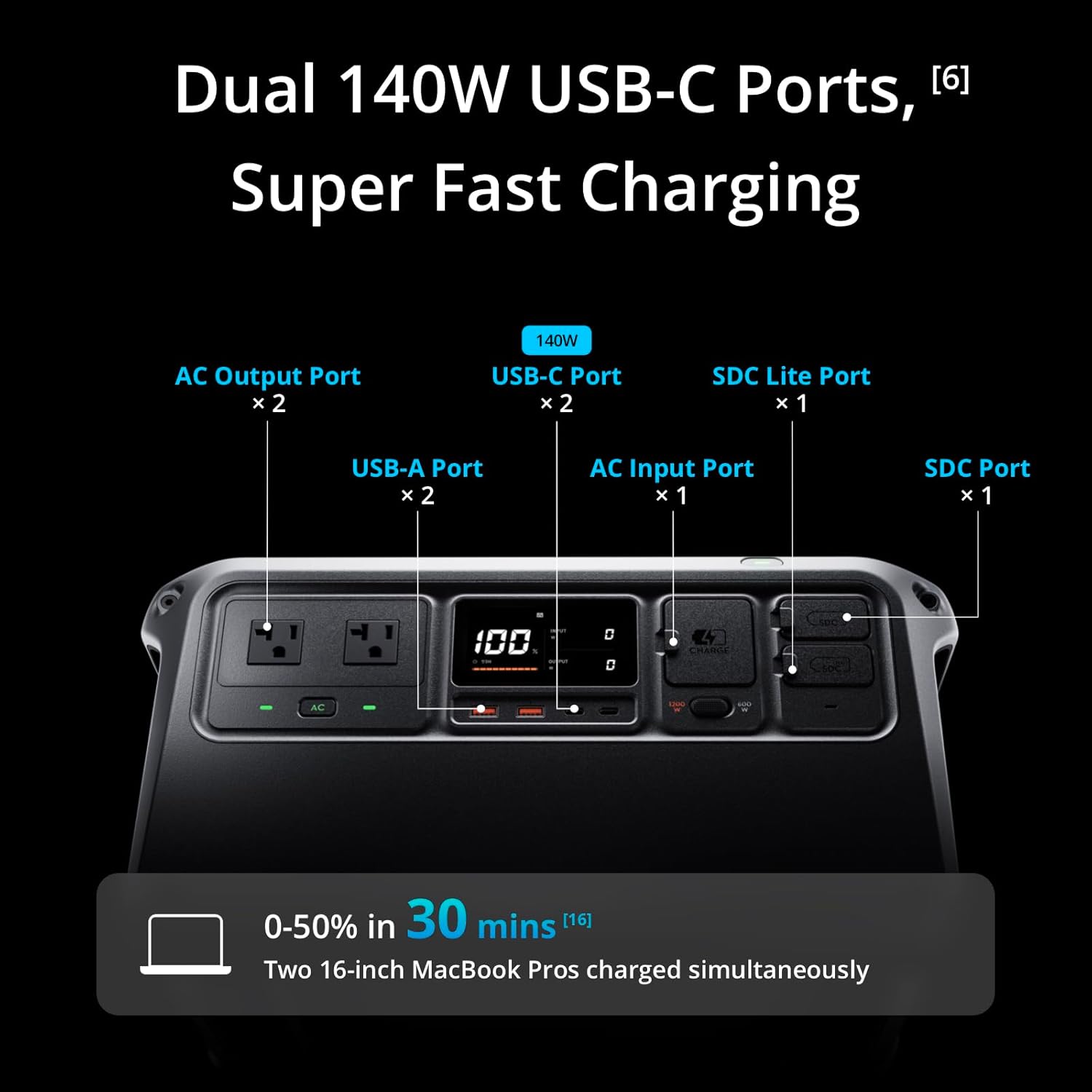
| USB-C outputs | Dual 140 W | Two very high-power USB-C ports for fast charging of laptops (including 16-inch MacBook Pro), tablets, and phones. |
| Recharging time (grid) | 70 minutes (0–100%) | Extremely fast full recharge using grid power; 0–80% in 50 minutes. |
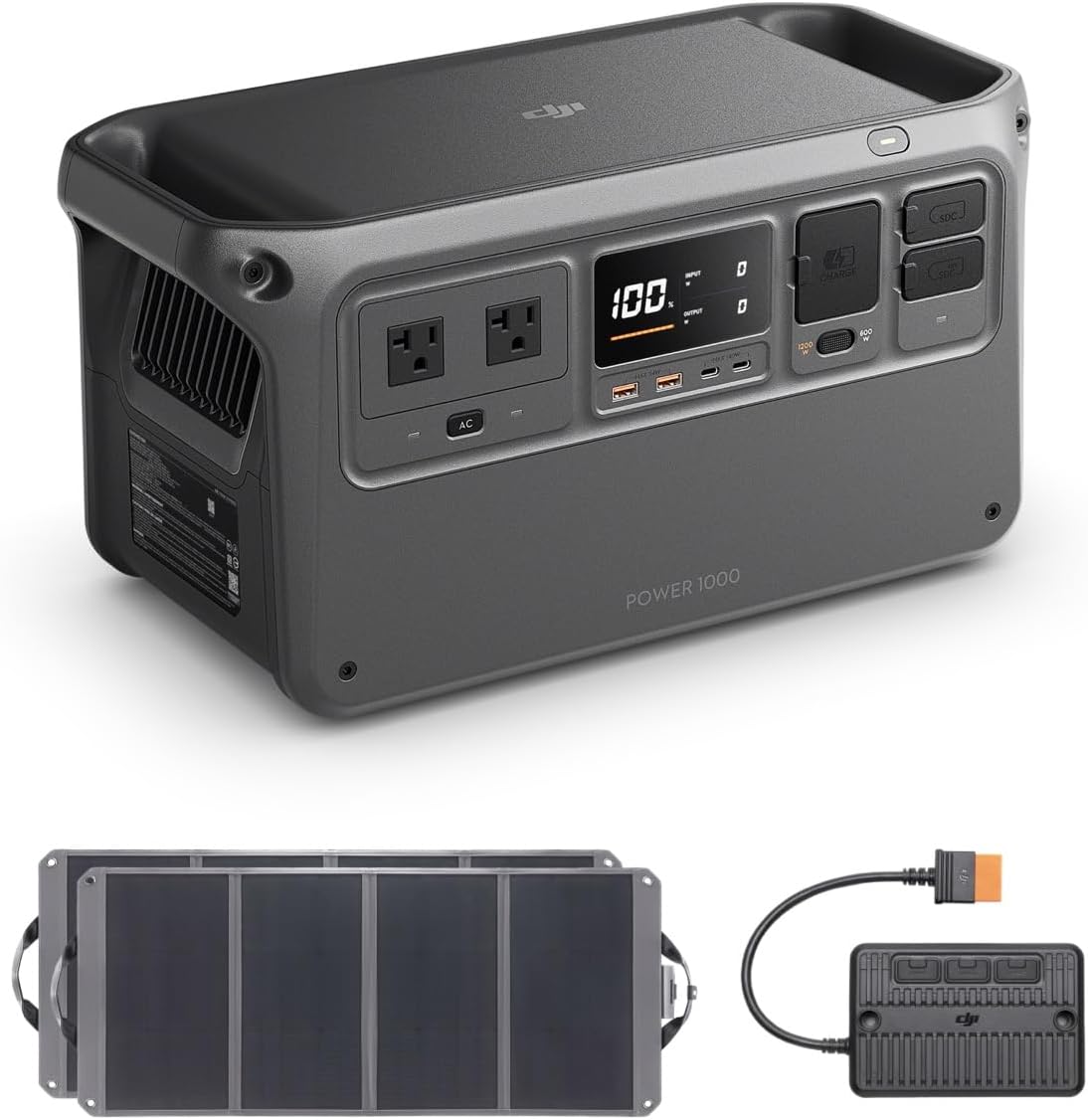
| Recharging time (solar) | 80 minutes | Rapid solar recharge when paired with an appropriate solar input—solar panel optional. |
| Noise level | 23 dB (certified) | Ultra-quiet operation, suitable for quiet environments like campsites or bedrooms. |
| Cycle life | Up to 4,000 cycles | Long service life—roughly 10 years of regular use depending on how you use it. |
| Certifications | 26 SGS certifications; 5 SGS noise tests | Strong safety and performance verification via independent tests. |
| Warranty | 3 years standard; extendable to 5 years | Peace of mind from DJI with easy registration for extended coverage. |
| What’s in the box | Power station and AC power cable | Basic ready-to-use setup for indoor charging; solar panel sold separately. |
How the specs translate into everyday use
You can expect fast recharges, quiet operation, and a power envelope that covers most of what you’ll need away from the grid. The high AC output and dual 140W USB-C ports make this a versatile station whether you’re working remotely, powering recreational equipment, or keeping the essentials running at home.

Charging Performance and Speed
You’ll notice one of the standout features is how quickly the DJI Power 1000 refuels its energy store. DJI markets a next-gen fast recharging architecture that significantly reduces downtime.
Grid charging: how fast is fast?
Using grid power, the unit charges from 0 to 100% in about 70 minutes, with 0–80% achieved in roughly 50 minutes. That means in many use cases you can bring the unit back to nearly full capacity during a short break at home or between activities. This speed is unusually high for a 1 kWh-class LFP unit, so you’ll spend less time waiting to recharge.
Solar charging: what to expect
DJI states full recharge in about 80 minutes with a solar panel (solar panel optional). That implies the unit accepts a high solar input and likely includes efficient maximum power point tracking (MPPT) to make best use of the panels. In practice, real-world solar recharge time will vary with panel wattage, sun conditions, and angle, but the advertised 80 minutes shows the system is built for fast solar replenishment when conditions are right.
Output Capabilities and Device Compatibility
You’ll want to know whether the Power 1000 will run the gear you care about. The combination of high AC output and strong USB-C performance makes it flexible.
AC output — what you can run
With a 2,200W continuous AC rating and a 2,600W peak, you can power a wide array of devices including powerful laptops, small to medium household appliances, and audio/lighting equipment. The peak figure helps with appliances that have high startup surges like refrigerators or power tools. Remember to check startup versus running wattage for devices like compressors and pumps.
USB-C and USB outputs — charging modern devices
Dual 140W USB-C outputs let you fast-charge two high-power devices simultaneously—laptops, gaming machines, tablets, or phones. This means you won’t need separate, bulky chargers for your primary electronics.
Drone charging and accessories
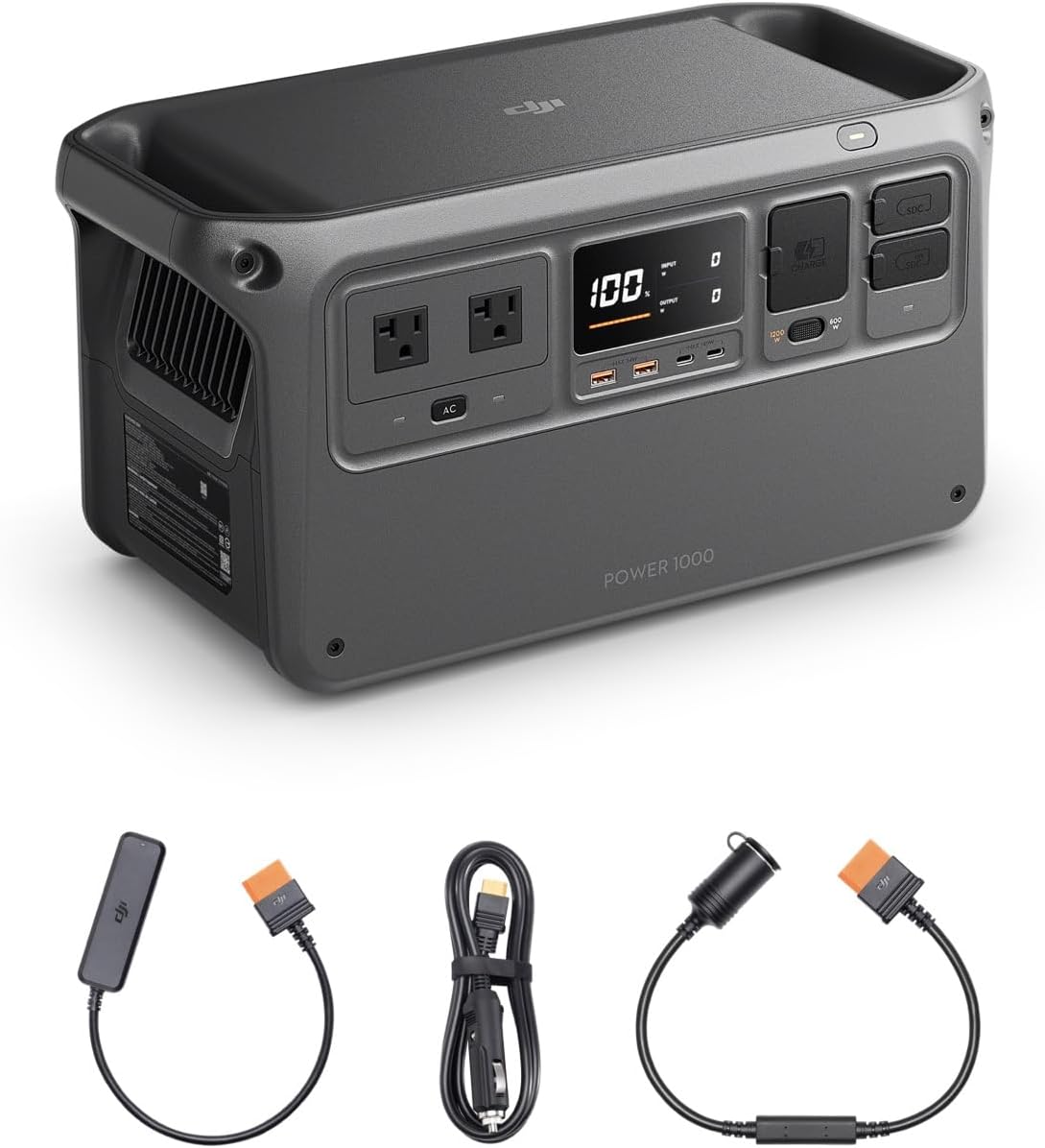
With optional charging cables, you can fast-charge select DJI drone batteries such as those for Mavic 3 and Air 3 series, giving you a useful field-charging option and extending your creative flight time.
Realistic Runtime Estimates (Approximate)
You’ll get better context from practical run-time estimates for common devices. These are approximate and assume inverter efficiency and some overhead; treat them as guidelines rather than guarantees.
| Device | Typical power draw (W) | Approx. runtime from 1024 Wh |
|---|---|---|
| Smartphone (10 W) | 10 W | ~90–100 full charges |
| Laptop (60 W) | 60 W | ~12–14 hours |
| 16-inch MacBook Pro (96 W) | 96 W | ~8–9 hours |
| LED lighting (10 W) | 10 W | ~90–100 hours |
| Small fridge (70–120 W running) | 90 W average | ~9–11 hours (continuous running; compressor cycles extend total time) |
| CPAP machine (60–80 W) | 70 W | ~12–14 hours |
| Portable induction cooktop (1200 W) | 1200 W | ~45–50 minutes |
| Full-size microwave (800–1200 W) | 1000 W | ~50–60 minutes |
| Mini fridge / medical device starter load (peak) | 1500–2000 W peak | Short bursts possible, but check startup surge |
Notes: These estimates assume a usable capacity close to the listed 1024 Wh and an inverter efficiency of around 85–90%. Actual runtimes depend on device usage patterns, environmental temperature, and device startups.
How to interpret these runtimes
If you’re planning for overnight emergency power (lighting + phone + CPAP), the Power 1000 is more than capable. For continuous heavy loads (like running a full-size fridge 24/7), this model can bridge a short outage or be part of a larger battery bank, but you’ll want to calculate expected runtime carefully.
Noise, Design, and Portability
You’ll notice the quiet operation and thoughtful design features that make the unit fit in both home and outdoor contexts.
Ultra-quiet operation
DJI rates the Power 1000 at 23 dB, and notes that it passed five SGS noise tests to achieve this rating. That makes the unit effectively whisper-silent in operation, so it won’t disturb sleep, conversation, or recording. This level of silence is significant if you plan to use the station in campsites, RVs, or indoor spaces.
Portability: how easily you can move it
As a “portable power station”, it’s intended to be moved between home, car, and campsite. The size and weight of a 1,024Wh LFP unit make it portable for short hauls but not something you’ll want to carry long distances on foot. For most users, you’ll find it easy to load into a vehicle and set up where needed.
Safety, Battery Management, and Longevity
You’ll want a power station that’s safe and durable, and the DJI Power 1000 focuses heavily on that.
LFP chemistry and long cycle life
The LiFePO4 (LFP) battery supports up to 4,000 cycles, which translates into a long service life—DJI estimates around 10 years under typical usage. LFP cells are chemically stable and tolerate high cycle counts better than many other lithium chemistries, which means you’ll replace the unit far less frequently.
Battery Management System and certifications
DJI includes an advanced Battery Management System (BMS) to prevent over-current, over-voltage, and over-discharge, which protects both the battery and connected devices. In addition to the 26 SGS certifications, the unit meets rigorous test standards that add credibility to its safety claims.
Return policy and packaging notes
If you need to return the unit, you should use the original packaging due to logistic regulations. DJI recommends retaining the original packaging during the product’s refund window to ensure smooth returns.
Warranty and Support
You’ll appreciate having extended protection for a product like this.
Warranty coverage
The Power 1000 ships with a 3-year warranty, which you can extend to 5 years easily by registering the product. This extended warranty adds peace of mind since the product is a significant investment.
Service and support expectations
DJI’s service network and product registration process are straightforward, and extended warranty options make it easier for you to feel protected against manufacturing defects or early failures.
Pros and Cons — What You’ll Love and What to Watch For
You should weigh the strengths against potential limitations before buying.
Pros
- Very fast recharge times (70 minutes grid, 80 minutes solar) — reduces downtime and keeps you moving.
- LFP chemistry and up to 4,000 cycles — long-term value and durability.
- High AC output (2,200W continuous, 2,600W peak) — supports many high-draw devices.
- Dual 140W USB-C ports — fast charging for modern laptops and devices.
- Ultra-quiet operation at 23 dB — suitable for quiet settings and night use.
- Strong safety certifications and a robust BMS — reduces risk of failure or damage.
- Extendable warranty to 5 years — longer protection.
Cons
- Solar panels are optional — you’ll need to purchase panels separately for full off-grid capability.
- As with any 1 kWh-class station, heavy continuous loads will deplete battery quickly — plan for usage accordingly.
- Portability is good for vehicle-based trips but may be heavy for long backpacking or minimalist trekking.
- The package includes only the AC power cable — optional accessories like drone charging cables or solar arrays are separate purchases.
Who Should Buy the DJI Power 1000?
You’ll find this product especially compelling if you fit one of these profiles.
Great fit if you:
- Need a reliable, long-life power station for home backup that’s also usable for camping and fieldwork.
- Want the convenience of extremely fast recharging to get back to full capacity quickly.
- Want quiet operation for night-time or indoor use.
- Need to charge high-power laptops and devices via high-wattage USB-C ports.
- Own DJI drones and want the option to charge drone batteries in the field (with optional cables).
Might not be ideal if you:
- Are looking for a lightweight ultralight solution for long hikes.
- Need multiple accessories or a full solar kit included in the base price.
- Require extremely long-term continuous power for whole-home energy needs without additional battery capacity.
Practical Tips for Using the DJI Power 1000
You’ll get the most out of the unit by following a few practical tips.
- Register your product right away to extend the warranty to 5 years and ensure support coverage.
- Keep the original packaging until your refund period expires, as returns require original packaging per logistics rules.
- Charge via grid when you have access to power and reserve solar charging for when you need off-grid replenishment.
- For long-term storage, keep the battery partially charged (around 50–70%) and store in a cool, dry place to preserve cycle life.
- Check startup wattages for appliances before plugging them in to be sure their surge requirements are within the 2,600W peak limit.
- Use the dual USB-C ports to charge laptops directly and free up AC outlets for other gear.
Frequently Asked Questions
You’ll likely have practical questions before buying—here are answers to the common ones.
How long does the battery last in real-world use?
Battery longevity depends on usage patterns, but LFP chemistry and up to 4,000 cycles mean you can expect many years of regular use. If you cycle the battery daily, you could still have a viable battery for essentially a decade.
Can it run a full-size refrigerator for a whole day?
A refrigerator’s runtime depends on its running wattage and duty cycle. For average fridge running power of 90 W, you could expect perhaps 9–11 hours of continuous run-time. However, compressors and startup surges must be considered—this unit can handle many surges but continuous full-day operation might require additional capacity.
Does the unit include solar panels?
No. Solar panels are optional and sold separately. You’ll need appropriate panels and cable accessories for solar charging, and you should match panel wattage to get the fast 80-minute recharge DJI advertises.
Can you charge multiple high-wattage devices at once?
Yes. With a 2,200W AC output and dual 140W USB-C ports, you can charge several devices simultaneously. Be mindful of total load to avoid exceeding the continuous 2,200W rating.
Comparison Summary — Where it stands against typical alternatives
You’ll notice the DJI Power 1000 stands out for its fast recharge times and LFP chemistry, both of which contribute to long-term value. Its ultra-quiet noise rating and high USB-C charging capacity make it attractive for creative professionals and frequent travelers. If your priorities are rapid recharge, longevity, and quiet operation, this unit is competitive in its class.
Unique strengths to keep in mind
- Unusually fast recharge for a battery this size.
- LFP chemistry with a very high cycle rating.
- Extremely quiet operation certified by independent tests.
Final Verdict
You’ll find the DJI Power 1000 Portable Power Station to be a compelling option if you need dependable, fast-recharging energy with long-term durability and quiet operation. It’s particularly strong for those who charge high-power laptops and modern devices, want quick turnaround between uses, and appreciate an LFP battery that will keep performing for years. Be prepared to buy solar panels separately if you want full solar capability, and weigh portability needs if you plan to carry it over long distances on foot. Overall, the Power 1000 offers a well-balanced mix of power, speed, and safety that should satisfy both families preparing for outages and professionals needing on-the-go power.
Disclosure: As an Amazon Associate, I earn from qualifying purchases.