
Looking for a portable power station that can actually replace your generator during outages and still handle serious camping, RV, or home needs?

Overview
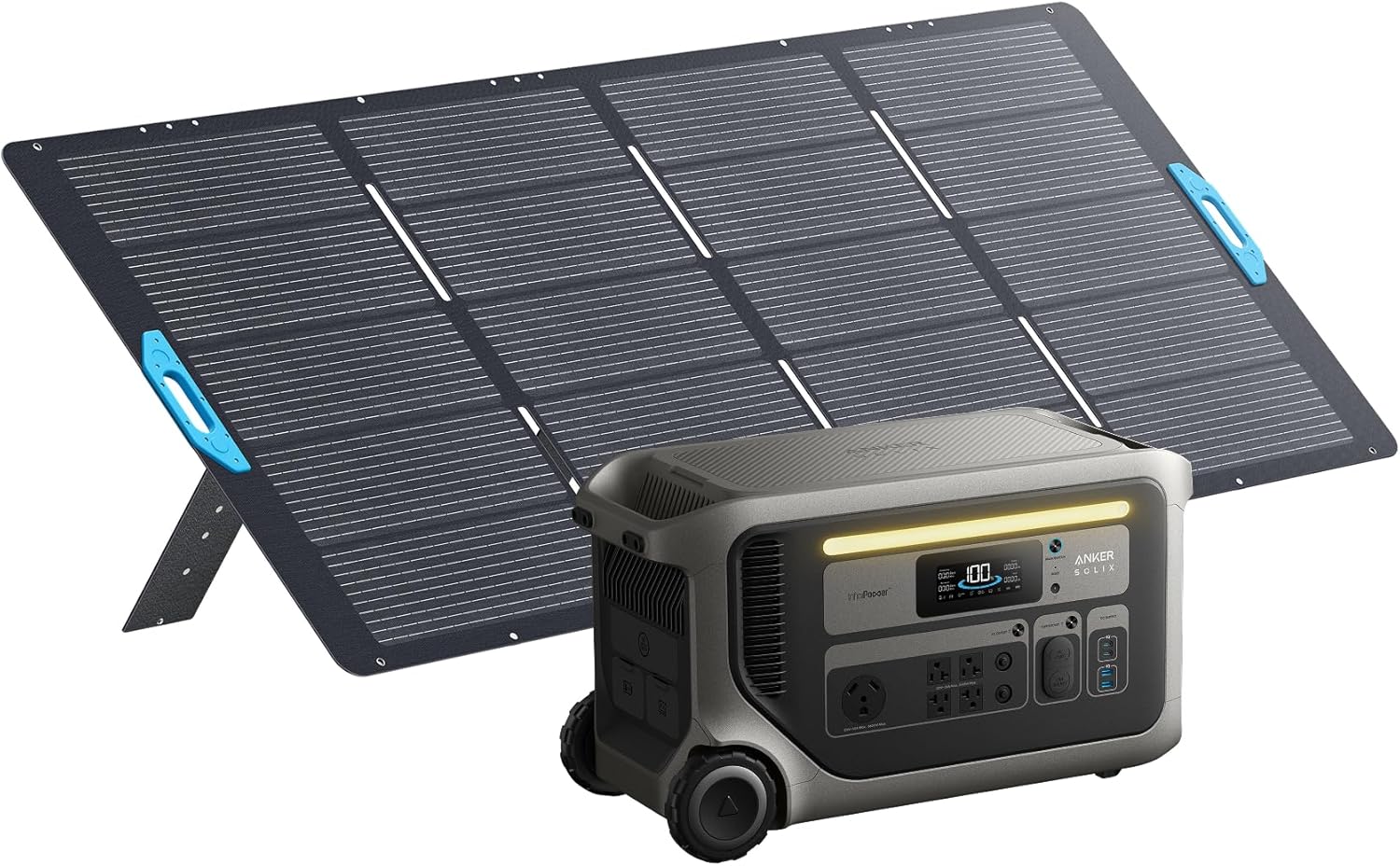
The Anker SOLIX F3000 Portable Power Station and 400W Solar Panel, 3,072Wh, 6,000W Recharging, Solar Generator for Home Use, Expandable to 24kWh, For Outages, Camping, RVs, and Emergencies is a heavyweight entry in the modern portable power market. It’s designed to act as both a dependable backup during blackouts and a mobile energy hub for outdoor adventures, with an emphasis on fast recharge, expandability, and efficient long-duration backup.
What’s included and shipping note
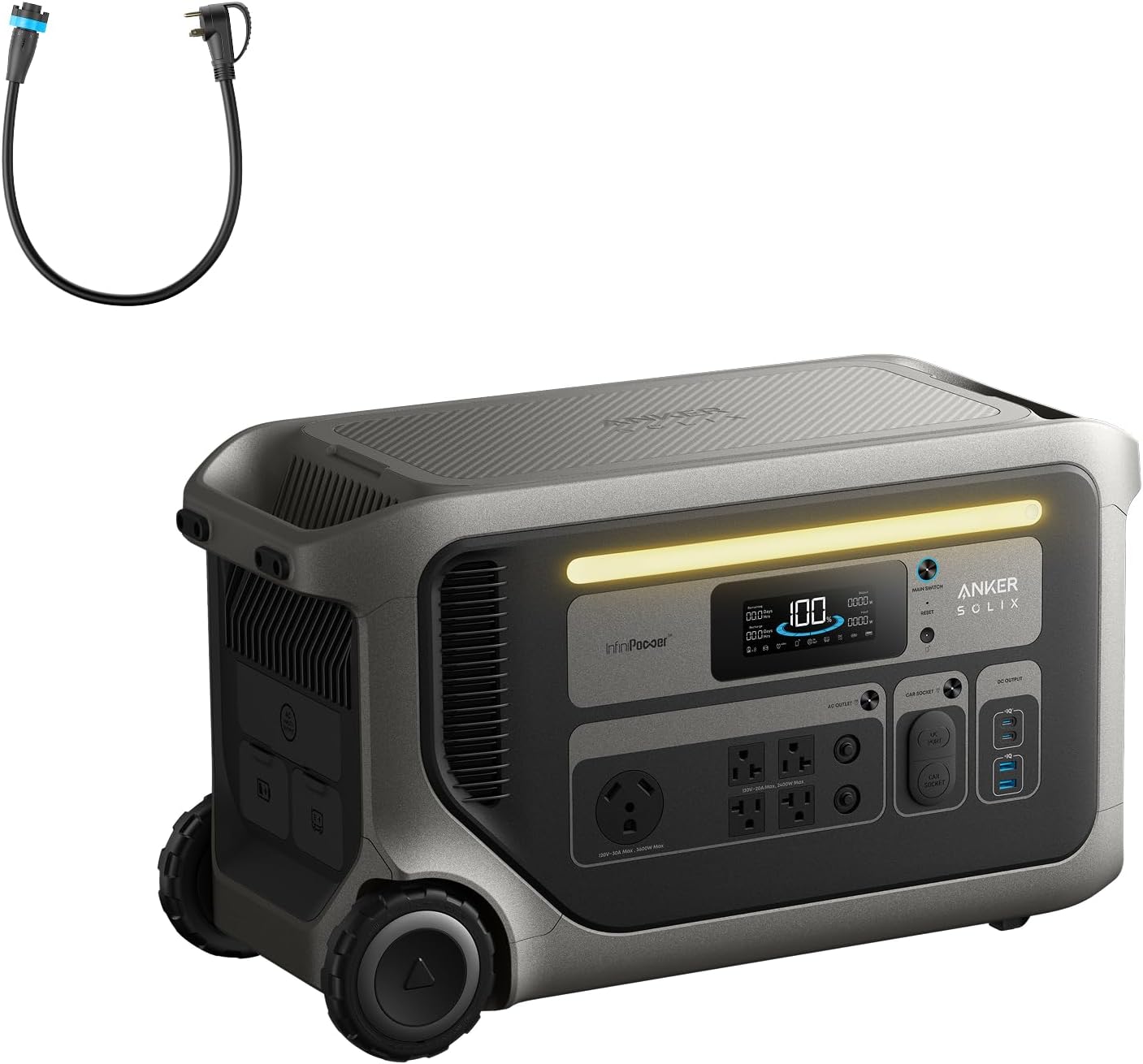
You’ll receive the SOLIX F3000 power station and the 400W PS400 portable solar panel, along with power and high-voltage solar cables, an AC charging cable, user manual, warning notice, and warranty card. Keep in mind the items may ship separately, so if one arrives before the other, wait for the remaining piece before trying to set everything up.
Key specifications at a glance
Below you’ll find a concise breakdown of the main specs so you can quickly assess whether the F3000 matches your needs. This table highlights the practical numbers you’ll reference when planning runtime, charging, and appliance compatibility.
| Specification | Detail |
|---|---|
| Battery Capacity | 3,072 Wh (starting capacity) |
| Expandable Capacity | Up to 24 kWh with additional batteries |
| AC Output (single unit) | 120V, supports heavy loads up to 3,600W pass-through |
| AC Output (paired) | 120/240V when you pair two units for higher-demand appliances |
| Solar Input (max) | Ultra 2,400W solar recharging via supported solar panels |
| Combined Recharging (max) | Hyper-fast 6,000W when combining generator + solar |
| Pass-Through Charging | 3,600W capable for simultaneous recharge and discharge |
| Idle AC Standby Time | Up to 125 hours (ultra-low idle consumption) |
| Fridge Runtime Example | Runs a 190W fridge for approximately 42 hours |
| Typical Starting Capacity Runtime | Keeps essential appliances for roughly 10 hours |
| Box Contents | F3000, PS400 solar panel, AC cable, high-voltage solar cable, manual, warranty card |
| Use Cases | Home outages, camping, RVs, emergency preparedness, mobile work |
How to read these numbers
Those figures are useful starting points, but your actual runtime and performance will depend on the appliances you connect, solar conditions, and charging strategy. Treat these specs as real-world approximations that help you plan for how many hours you’ll actually get under specific loads.

Performance and output capabilities
You’ll appreciate how the F3000 is built to power medium to heavy loads without compromise, including some appliances that smaller units simply can’t handle. The combination of high continuous AC output and a pass-through charging design means you can run devices while replenishing the battery.
AC output: single and paired operation
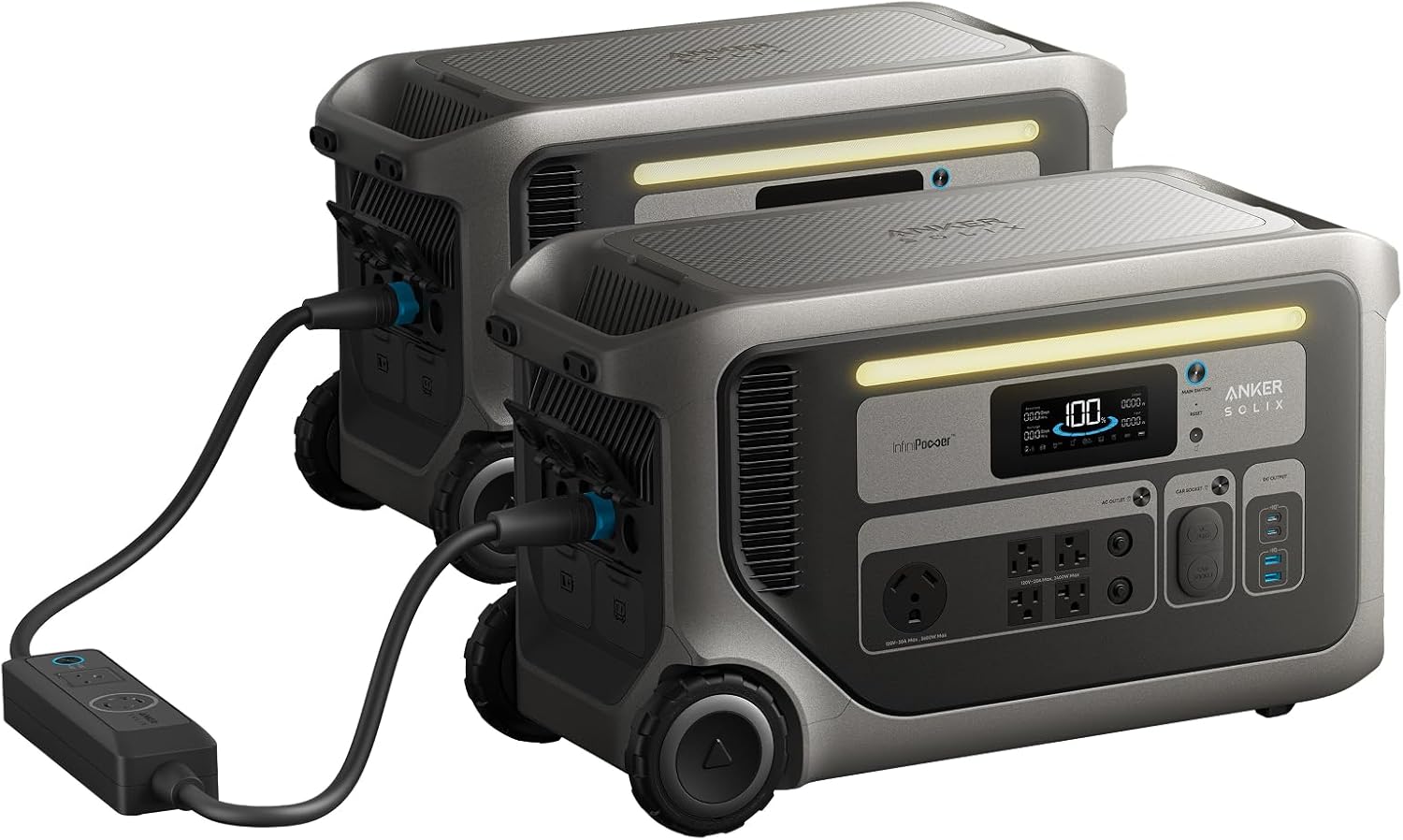
The unit provides robust 120V AC output with a high pass-through capacity so you can run essentials and more demanding equipment. If you need true 240V for large appliances, you can pair two F3000 units to get 120/240V output, letting you run items like large electric ranges or certain HVAC setups that demand that voltage.
Pass-through charging and simultaneous use
The F3000 supports massive 3,600W pass-through charging, meaning you can recharge the station while powering your devices without dropping outputs during an outage. This is a major practical advantage when you need continuous, non-stop power during emergency situations or when you’re charging from a generator and want appliances to stay on.
Peak and surge handling
The unit is made to handle start-up surges from motors and compressors—like refrigerators, pumps, and some power tools—so you don’t get thrown off by transient high-draw events at appliance start. Those surge capabilities are essential if you plan to rely on the F3000 as a primary source for devices with motorized components.
Battery capacity and expandability
The built-in 3,072Wh battery is a strong starting point for long-duration backup and extended outdoor use. Where this unit truly stands out is expandability: you can increase the stored energy up to 24 kWh, turning the F3000 into a serious home backup solution.
What 3,072Wh means for you
If you’re running a set of essentials—lights, phone chargers, Wi-Fi, and a small fridge—you’ll see many hours of runtime thanks to the size and efficiency of the battery. The product notes suggest keeping essentials for roughly 10 hours on a typical starting load, but smaller total loads will extend that time substantially.
Expanding to 24kWh: who this helps
If you want multi-day outage coverage or to run larger loads for extended periods, expanding to a full 24kWh makes the F3000 a near-replacement for traditional whole-house backup systems. That level of expandability is particularly valuable if you live in an area with frequent long outages or if you’re running critical home medical devices.
Charging options and speeds
One of the most compelling features you’ll notice is the variety and speed of charging methods supported. Whether you prefer solar, generator, or AC grid charging, the F3000 supports fast setups to get you back to full power quickly.
Solar charging: ultra 2,400W capability
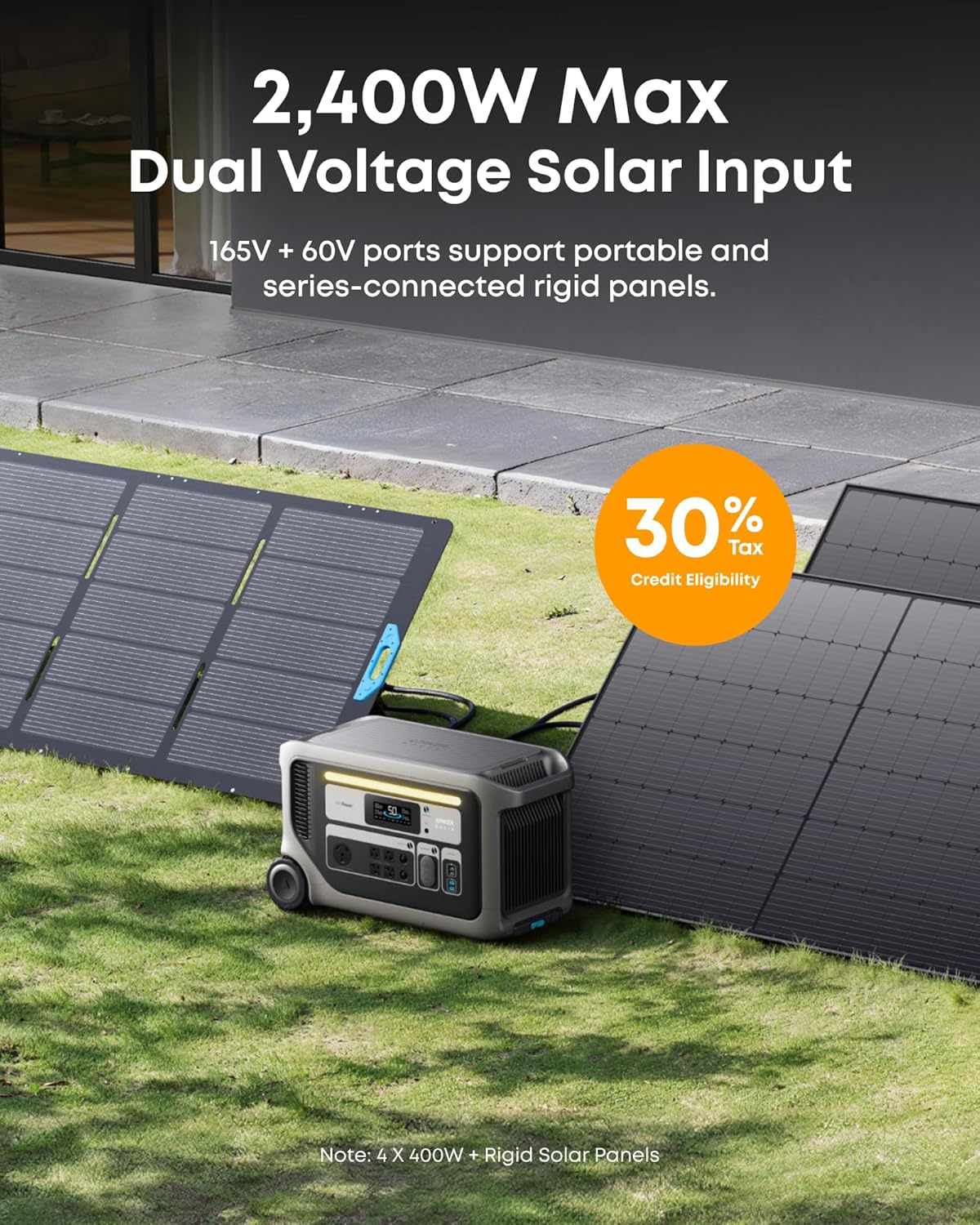
You can connect portable and rigid solar panels to the F3000 and harness up to 2,400W of solar input. That’s a very high solar throughput for a portable system, and under ideal sun conditions it can replenish a large portion of the battery relatively quickly, making it useful for off-grid days.
Hyper-fast recharging: combining generator and solar for 6,000W
When you combine a fuel generator with your solar array, the system supports industry-leading recharging power up to 6,000W. That means in an emergency you can top up very quickly by leveraging both fuel and sun at the same time, minimizing downtime and keeping critical systems online.
AC charging, Bi-Directional Inlet Box & Smart Meter
For smarter home integration, you can add Anker’s Bi-Directional Inlet Box and Smart Meter to automatically store cheap off-peak electricity or free solar energy. AC charging via the included cable gives you reliable grid top-up when solar or generator options aren’t practical, and the Bi-Directional Inlet opens the door to cost-saving automatic energy storage behaviors.
Efficiency and runtime realities
Anker focused on reducing idle power consumption so you get more usable backup time per charge. That ultra-low idle means the F3000 can stay in standby for days without drawing significant power, translating to long realistic backup windows.
Idle consumption and long standby times
With the ultra-low idle power draw, the F3000 achieves up to 125 hours of AC idle standby time, which is excellent if you mostly store the unit for emergencies and only power small loads intermittently. This lets you keep the battery ready without constant recharging, which is a practical advantage for emergency prep.
Real-world appliance runtimes and examples
Anker quotes running a 190W fridge for about 42 hours on the base battery, which aligns with the battery size and shows how efficient the system can be for refrigeration. More power-hungry items will naturally reduce runtime quickly, so plan based on the specific wattages of the devices you expect to run.
Build quality, portability, and practical use
You’ll find the F3000 built to be mobile enough for serious portable use while still feeling rugged and well-engineered for home backup. The included PS400 400W solar panel is also designed to be portable and efficient in field conditions.
Physical design and transport considerations
The F3000 is heavier and bulkier than smaller power stations, so you’ll want to plan how you’ll move it around your vehicle or home. It’s built with practical handles and mounting features to make transport and temporary installations straightforward, but it’s not a one-hand carry like ultra-small units.
Setup for home, RV, camping, and emergencies
For home use, you can add the Bi-Directional Inlet Box for automatic charge cycling and grid integration, while for RV and camping the built-in ports and included solar panel let you set up quickly. The system’s flexibility makes it suitable whether you’re wiring it into a transfer switch for outage coverage or using it as a standalone power hub while boondocking.
Safety, reliability, and warranty
Anker designed protections and thermal management to prioritize safety during heavy charging and discharging cycles. The warranty and support policies help you feel secure buying into the modular ecosystem.
Thermal management and electronic protections
The unit includes protections against overcurrent, overvoltage, overheating, and short-circuits, which is essential when you’re pushing high charging and discharging rates like several kilowatts. Effective cooling and smart control circuitry reduce the risk of thermal-related shutdowns in demanding conditions.
Warranty coverage and customer support
Anker typically backs products with a warranty and customer support channels, and your F3000 comes with a warranty card in the box. That support can be valuable if you plan to expand the system or need replacement parts or technical guidance during setup.
Pros and cons: what you’ll like and what to watch for
Here’s a straightforward take on the strengths and trade-offs so you can decide whether the F3000 fits your priorities and budget.
Pros
You’ll benefit from high capacity, exceptional solar and combined recharging speeds, robust pass-through power, and the ability to expand to professional-grade energy storage. The mix of portability and serious output power makes this one of the most versatile options available for both home and mobile use.
Cons
The system is heavier and costlier than small portable stations, and full expandability requires additional batteries and possibly professional setup depending on your integration needs. If you need a simple, lightweight power bank for weekend trips, this might be overkill.
Comparisons: how the F3000 stacks up
Comparing the F3000 to both smaller portable units and traditional whole-house generators will help you place it in your energy strategy and justify the investment.
Compared to smaller portable power stations
Smaller units are lighter and cheaper, but they usually can’t handle heavy loads, rapid recharging, or expanded battery banks. If you plan to run mid-sized appliances, keep a home comfortable during outages, or need rapid recharge, the F3000 gives you capabilities that small units lack.
Compared to whole-house backup generators
Traditional gas generators provide continuous fuel-based power but are noisy, emit fumes, and require ongoing fuel. The F3000, especially when expanded and combined with solar, gives you quiet, cleaner, and increasingly autonomous backup without the constant fuel logistics—though very large homes with high continuous loads might still require a full-sized generator.
Pricing and value considerations
You’re paying for high-capacity battery, fast and flexible recharging, expandability, and integrated solar compatibility. Consider the total cost of ownership including potential battery expansions and optional accessories like the Bi-Directional Inlet Box, Smart Meter, and additional battery modules.
Is the price justified?
If you value fast recharging, long standby, and the ability to run heavier loads without a noisy fossil-fuel generator, the F3000 represents strong value for what it does. Price-sensitive buyers who need simple portability on a budget might lean toward cheaper, smaller units instead.
Budgeting for expandability and accessories
To reach the upper-level expandability or add smart home integration, factor in the cost of extra batteries and the Bi-Directional Inlet Box. These add-ons change the unit from a portable powerhouse into a flexible home backup system, which is where most of the long-term value appears.
Who should buy the F3000
You should consider the F3000 if you need dependable multi-day backup, want the option to run medium to heavy household loads, and value rapid recharge options including large solar arrays. It’s also a smart choice if you plan to expand your energy capacity over time and want a modular, scalable platform.
Who might prefer a different solution
If you only need power for a couple of nights of camping or don’t intend to run appliances beyond small electronics, a smaller, lighter power station will save you money and weight. Likewise, if you have continuous, very high-power requirements for a large home, you may want to consider whole-home generator options in addition to or instead of a battery-based solution.
Setup and maintenance tips
You’ll get the best performance by planning your installation and upkeep carefully, especially if you intend to expand or use the system as your primary backup.
Solar panel placement and care
Position the included PS400 and any additional panels to maximize sun exposure and keep them clean for best performance; even a little shading can reduce output significantly. Portable panels should be stored flat and dry when not in use, and check connections regularly for corrosion or debris.
Battery storage, seasonal maintenance, and firmware
Store the F3000 in a cool, dry place if you’re not using it regularly, and top it off every few months to prevent deep discharge. Keep firmware updated if Anker provides updates, and inspect the unit periodically for any physical wear, cable integrity, or software notices.
Frequently asked questions (FAQ)
Below are concise answers to common concerns you may have before buying or after you start using the unit.
Can the F3000 run a whole house?
It can power essential circuits and many appliances depending on your demand, especially when expanded to multiple batteries. However, full whole-house coverage for large homes with HVAC and electric stoves may still require multiple units or a complementary generator.
How long does it take to charge from solar?
Charging time depends on solar conditions and panel configuration; with ideal conditions and the ultra 2,400W solar input you can recharge much faster than typical portable stations. When combining generator plus solar you can reach combined 6,000W recharging rates, which dramatically reduces top-up time.
Is pairing two units for 240V hard?
The pairing process is designed to be straightforward, but you should follow Anker’s pairing instructions carefully and, if wiring to home circuits, consult an electrician for safe 240V integration. Proper installation ensures safe operation and access to greater appliance compatibility.
Can you use it indoors during outages?
Yes, the F3000 is designed for indoor or sheltered use and doesn’t generate fumes like fuel generators, making it safer for indoor backup. Ensure ventilation and follow safety instructions, especially when using the Bi-Directional Inlet Box or other integration hardware.
What maintenance is required?
Regularly inspect cables, keep firmware current if updates are provided, and top up battery storage every few months when not in use. For long-term reliability, store the unit in an appropriate environment and follow the user manual’s guidance on temperature and usage.
Final verdict
If you want a modern, flexible, and powerful portable power station that can move from car to campsite to home backup with ease, the Anker SOLIX F3000 and 400W Solar Panel offer a compelling blend of capacity, speed, and expandability. You’ll pay more and carry more weight than ultra-portable options, but you’ll also gain high-power outputs, massive recharge flexibility, and the ability to grow your system into a significant home backup solution.
Quick recommendation
Choose the F3000 if your priority is true backup resilience, the option to scale to household-level stored energy, and the ability to recharge extremely quickly using solar plus a generator. If you mainly need something lightweight for short trips, consider smaller alternatives instead.
Disclosure: As an Amazon Associate, I earn from qualifying purchases.