
?Are you looking for a compact, robust power station that keeps your devices running at camp, during travel, or through unexpected outages?

Product Snapshot: What the DARAN Portable Power Station 1000W Offers
You want clear expectations before committing to a power station. This section summarizes the headline specs and what they mean for your everyday use.
The DARAN Portable Power Station 1000W (Surge 2000W) is a mid-capacity, LiFePO4 solar generator with a 576Wh battery and a 1000W continuous pure sine wave inverter (2000W surge). It’s designed to power small household essentials, charge multiple devices at once, and support recreational uses like camping or RV trips. You’ll find multiple AC outlets, USB-C PD fast charging, DC outputs, and three charging methods (AC adapter, car, and solar). Its LiFePO4 chemistry gives it long cycle life and safer thermal characteristics.
Quick feature list
You should know the core strengths up front:
- 576Wh LiFePO4 battery (long cycle life ~3500+ cycles)
- 1000W pure sine wave inverter, 2000W surge for large startup loads
- 100W USB-C PD fast charging + additional USB ports
- 4 AC outlets, XT60 solar/DC input, car charging option
- Lightweight and portable at 14.8 lbs with integrated handle
- Built-in 3-mode LED light for outdoor use

DARAN Portable Power Station 1000W (Surge 2000W), Solar Generator with 100W USB-C PD Fast Charging,576Wh LiFePO4 Battery for Camping, Home, Power Outages, RV and Emergency
$409.99 Only 13 left in stock - order soon.
Detailed Specifications Table
You prefer a compact reference. This table breaks down key specs so you can quickly compare them to your needs.
| Specification | Detail |
|---|---|
| Model Name | DARAN Portable Power Station 1000W (Surge 2000W) |
| Battery Type | LiFePO4 (Lithium Iron Phosphate) |
| Battery Capacity | 576 Wh |
| Battery Cycle Life | 3500+ cycles (typical LiFePO4 rating) |
| Continuous Output | 1000 W (pure sine wave) |
| Peak Surge Output | 2000 W |
| AC Outlets | 4 × AC outlets (pure sine wave) |
| USB-C Ports | 1 × 100W USB-C PD, 1 × 18W USB-C |
| USB-A Ports | 2 × 18W USB-A |
| DC Output | 1 × 120W XT60 (for solar/DC) |
| Charging Methods | AC adapter, car outlet, compatible solar panel |
| AC Charging Time | 0% → 70% in ~1.8 hours (manufacturer claim) |
| Weight | 14.8 lbs |
| Dimensions | 11.1 × 7.8 × 7.5 inches |
| Extra Features | 3-mode built-in LED light, smart BMS (overcharge/overheat/short protection) |
Design and Build: Portability Meets Functionality
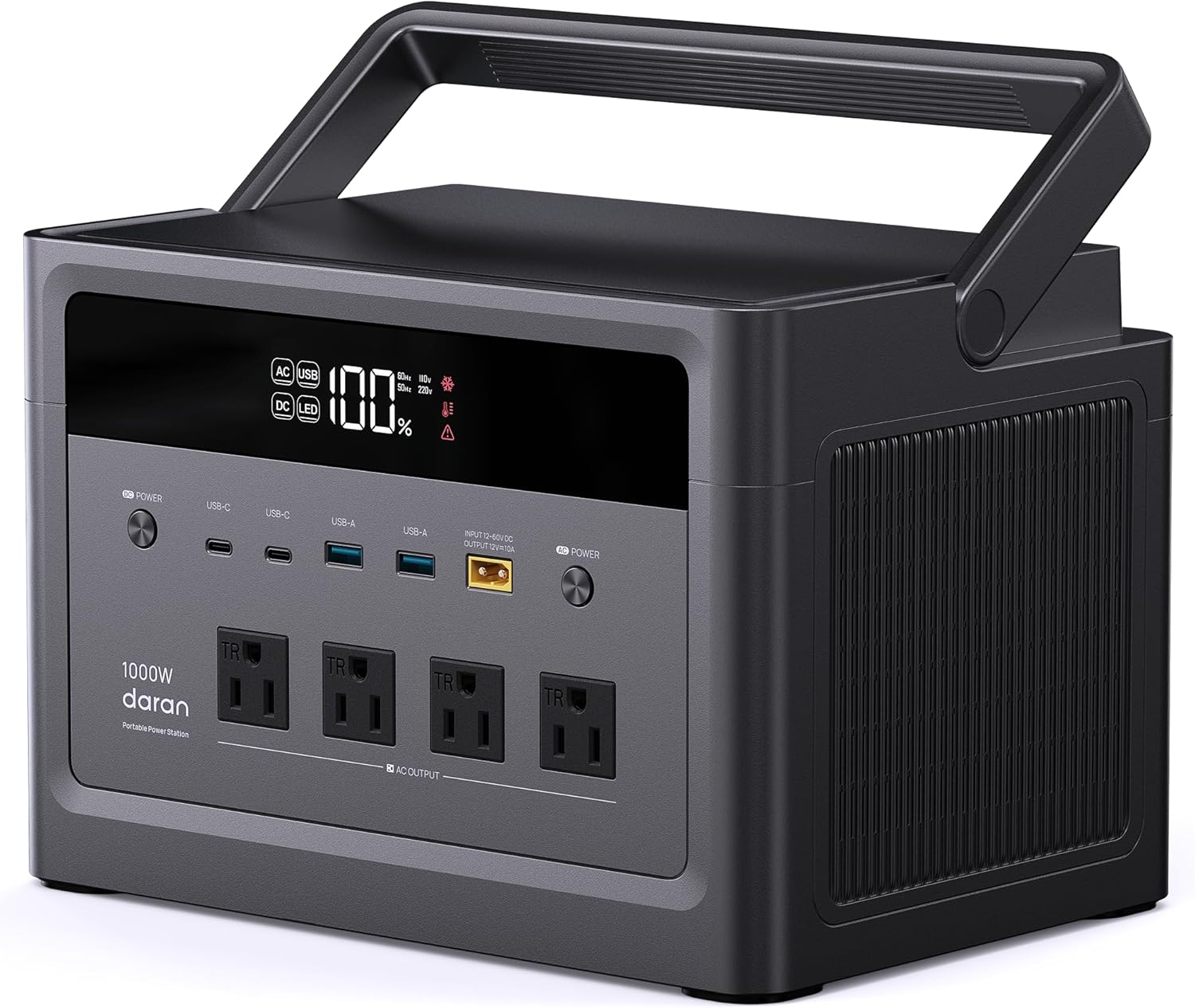
You’ll notice the DARAN is compact and thoughtfully arranged. The integrated handle and size (11.1 x 7.8 x 7.5 in) make it easy to carry to your car, campsite, or around the house.
The casing feels rugged enough for regular outdoor use while remaining light at 14.8 lbs. The port layout groups AC outlets and DC ports sensibly so you can plug multiple devices without overcrowding one panel. The built-in LED light with three modes gives you a simple illumination option for nights outside or brief power-out situations.
Port placement and usability
You want accessible ports when you’re juggling devices. The DARAN’s ports are straightforward to access, and the labeling is clear. The 100W USB-C PD port is especially handy for laptops and fast-charging phones. The XT60 input is convenient for solar panels if you plan to go off-grid.
Battery Technology and Longevity
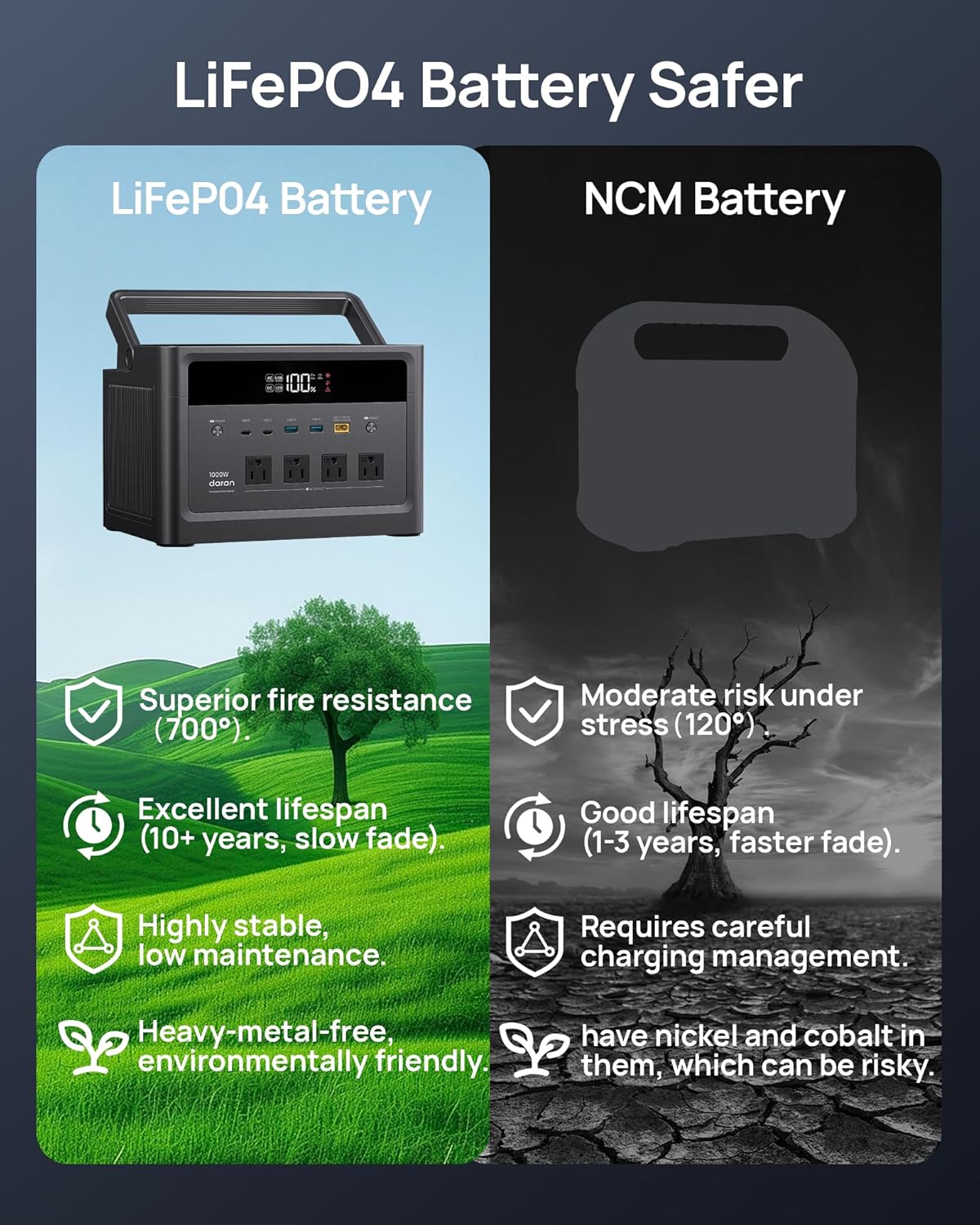
You’re buying a battery-powered device because it has to last — not just a season, but years. The LiFePO4 chemistry in this unit is a major selling point for durability and safety.
LiFePO4 cells generally deliver more cycles than typical lithium-ion (NMC) cells. With a 3500+ cycle rating, you can expect many years of daily or near-daily use before capacity drops significantly. That’s reassuring if you plan to charge frequently during work trips, RV travel, or frequent camping.
Why LiFePO4 matters to you
You’ll appreciate:
- Greater thermal stability (safer under varied temperatures)
- Lower risk of thermal runaway compared to other lithium chemistries
- Longer usable life, giving you better total value over time
Inverter Performance: Pure Sine Wave and Surge Capacity
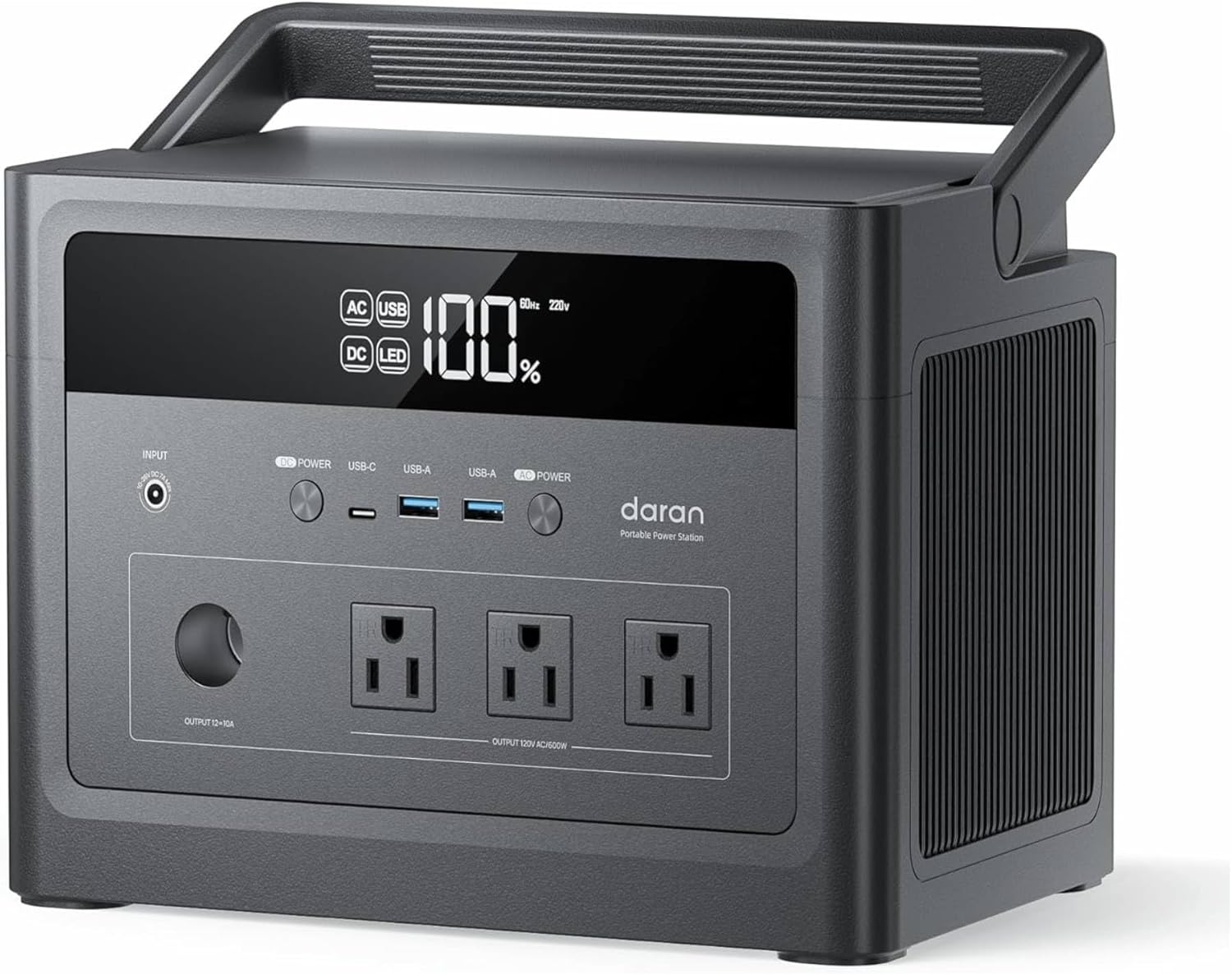
You want clean, stable power for sensitive electronics. The DARAN’s 1000W pure sine wave inverter gives you that, so you can run laptops, TVs, routers, and more without worrying about harmonic noise or interference.
The 2000W surge capability means you can start motor-driven appliances (like refrigerators or some CPAP machines with heated humidifiers) that require high inrush current briefly. That surge headroom is useful for short motor spin-ups or compressor starts.
Practical implications of the inverter specs
You should feel confident powering:
- CPAP machines and medical devices (check wattage needs)
- Small kitchen appliances like blenders and coffee makers (short bursts)
- Fridges and mini-fridges (compressor start surge handled)
- TVs, projectors, and audio gear with no hum or flicker
Ports and Outputs: How Many Devices Will You Power?
You likely want to plug in everything simultaneously without juggling adapters. DARAN claims up to 9-device simultaneous charging capability, which is plausible given its mix of AC, USB, and DC outputs.
Ports breakdown and best uses
- 4 AC outlets: ideal for plugs you’d ordinarily use at home—laptop chargers, small appliances, lamps.
- 100W USB-C PD: best for modern laptops (MacBook Air/Pro, many Windows ultrabooks) and fast phone charging.
- 18W USB-C and 2 × 18W USB-A: good for phones, tablets, small cameras, and accessories.
- 120W XT60: used for solar input or specialized DC outputs; handy if you plan to use solar or certain DC appliances.
Charging Methods: AC, Car, and Solar
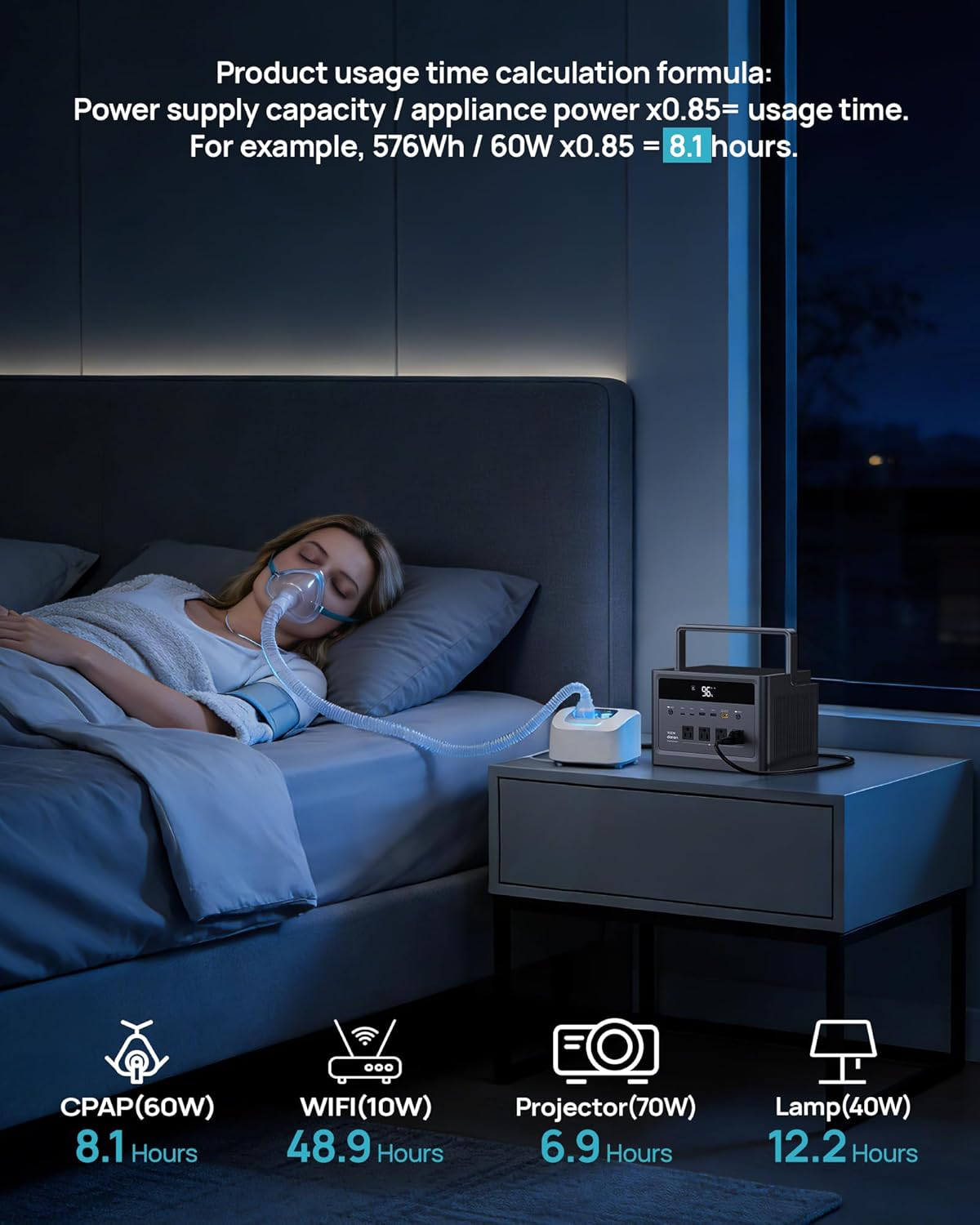
You want flexible ways to recharge when outlets aren’t readily available. The DARAN offers three charging paths: wall AC adapter, car outlet, and compatible solar panels via the XT60 input.
Wall charging (AC)
You’ll appreciate the fast AC charge: manufacturer claims 0% to 70% in about 1.8 hours. That quick recovery makes it reasonable to stop at a hotel or charging point and restore meaningful capacity in a short time. Expect a full 0–100% charge in roughly 2.5–3 hours depending on conditions.
Car charging
You can recharge while you drive. This is particularly useful for road trips where you might spend hours on the road and want to top up without relying on camp electricity. Charging speed from a car outlet depends on your vehicle’s output and the included car charging cable specs.
Solar charging
If you’re off-grid, solar is the way to go. The DARAN accepts solar input through the XT60 port with compatible panels. Solar charging speed depends on panel wattage, sun conditions, and system losses. As a guideline:
- A 100W solar panel might take 5–8 hours of good sun to fully recharge.
- A 200W panel under ideal conditions could reduce that to roughly 3–4 hours. These are approximate and vary by actual sunlight and panel performance.
Charging Times Table (Approximate)
You prefer estimates so you can plan. These are realistic ranges based on capacity and typical efficiencies.
| Charging Method | Typical Input Power (est.) | Approximate 0% → 70% Time | Approximate 0% → 100% Time |
|---|---|---|---|
| AC adapter | 300–400W (peak) | ~1.8 hours (manufacturer claim) | ~2.5–3 hours |
| Car outlet | 80–150W (depends on vehicle) | 4–8 hours | 6–12 hours |
| Solar (100W panel) | ~60–100W (peak) | 4–6 hours | 6–10 hours |
| Solar (200W panel) | ~120–200W (peak) | 2–4 hours | 3–6 hours |
Note: Actual times depend on environmental conditions, panel angle, and midday sun intensity. Manufacturer claims often refer to optimal conditions.
Real-World Runtime Examples
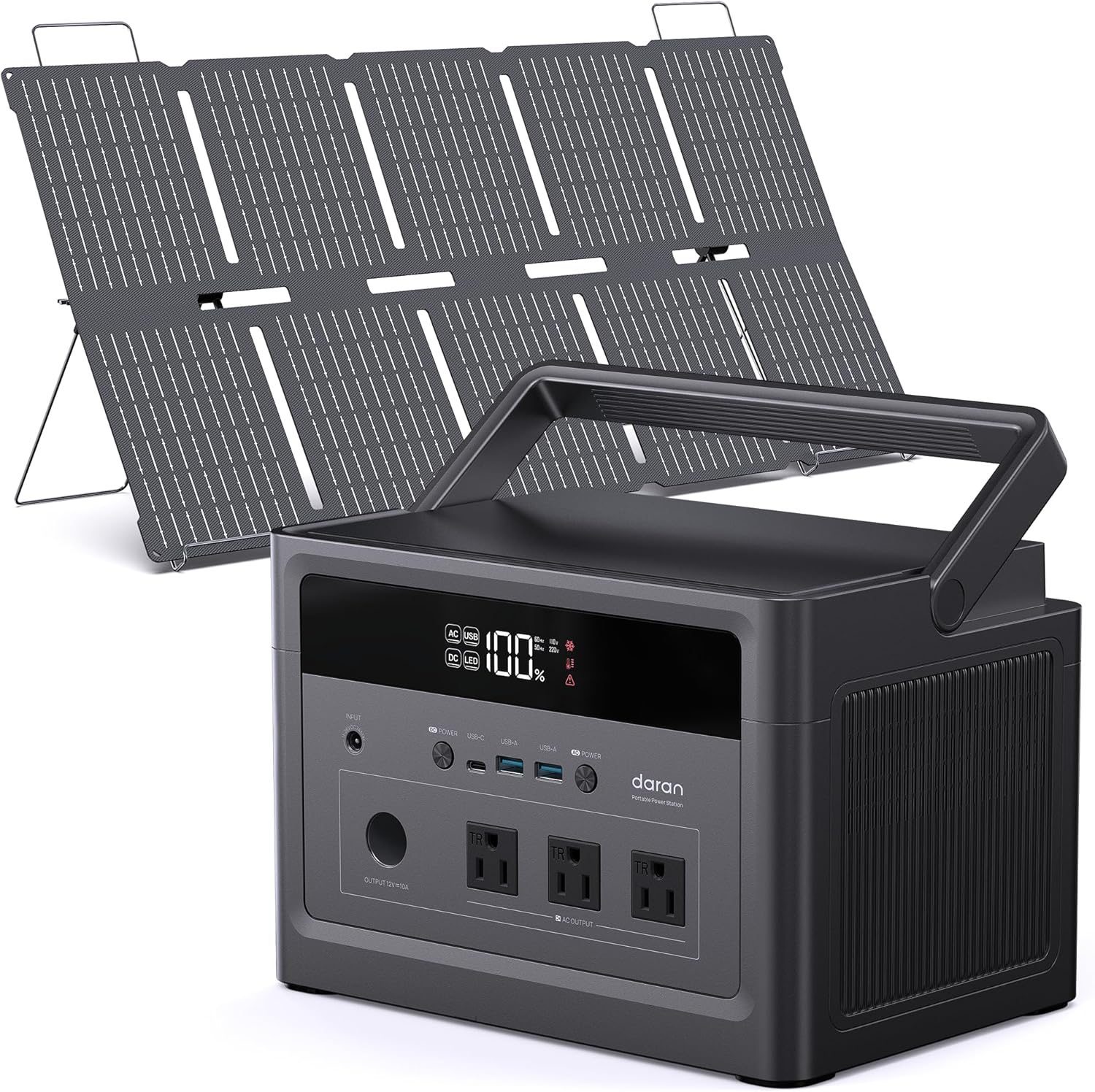
You want real, actionable numbers for the devices you use most. These are approximate estimates that factor in inverter losses and typical device power draws. Use them to plan how long the DARAN will power your gear.
Assumptions:
- Battery capacity: 576 Wh
- For AC loads, allow ~85–90% inverter efficiency (we’ll use 88% for examples)
- For USB-C PD and DC loads, efficiency is higher; we’ll assume about 95%
| Device | Typical Power Draw | Runtime Estimate (approx.) | Notes |
|---|---|---|---|
| Smartphone (full charge counts) | ~12–15 Wh per phone battery | ~30–45 full charges | Via USB ports (direct DC), efficient |
| Laptop (via 100W USB-C PD) | 45–100 W depending on model | 5–12 hours (varies) | 576Wh / laptop wattage; PD port more efficient |
| CPAP machine | 30–60 W average | 8–14 hours | Good for overnight use; check specific model wattage |
| Mini-fridge (average running) | 40–60 W | 8–12 hours | Compressor cycles can change actual usage |
| 32″ LED TV | 40–60 W | 8–12 hours | Great for movies outdoors or during outages |
| Electric kettle (1,000 W) | 1000 W | ~0.3 hours (about 18–35 min) | High draw; significant heat loss and is short duration |
| Coffee maker (600–900 W) | 600–900 W | ~0.6–0.9 hours (36–54 min) | You can make a few pots, but battery drains quickly |
| Projector (30–200 W) | 30–200 W | 3–19 hours | Depends on projector lamp power; good for outdoor movies |
These are approximations. Your device’s true draw, usage patterns, and inverter efficiency will change outcomes. If you need guaranteed runtimes for critical devices, measure actual wattage or consult device specs.
Use Cases: How You’ll Actually Use It
You want concrete ideas for daily life and special situations. Here are practical ways this power station fits into real routines.
Home emergencies and outages
You’ll maintain lights, Wi-Fi, phone charging, small refrigerators, and essential medical devices during a blackout. The 1000W inverter plus 2000W surge ensures you can handle startup surges from fridges or small heaters (if their running wattage is within 1000W). For overnight CPAP use, the 576Wh capacity will likely last through the night for most machines.
Family camping and outdoor movie nights
You can run a coffee maker in the morning, power a mini-fridge to keep snacks fresh, and run a projector for an outdoor movie—all in the same trip. The multiple ports let you charge phones, power a bluetooth speaker, and run campsite lights simultaneously.
Road trips and RV support
You’ll use car charging while driving to keep the station topped up and leverage wall charging when staying in hotels. It’s portable enough to move between campsite and vehicle without fuss.
Backyard parties and DIY projects
You’ll power speakers, string lights, and small power tools for short periods. For heavy tools, check continuous wattage limits before use.
Safety and Battery Management
You want reliability and safety. The built-in smart BMS (battery management system) provides protections like overcharge, over-temperature, and short-circuit prevention.
Why this matters for you
- Prevents damage to the battery and connected devices
- Extends the useful life of the battery
- Reduces fire risk compared to poorly protected units
Still, you should always follow basic safety best practices: keep the unit dry, avoid blocking ventilation during heavy use, and avoid exposing it to extreme temperatures.
Pros and Cons
You want a quick balanced list to weigh the decision. This list helps you see the trade-offs.
Pros
- Long-lasting LiFePO4 battery (3500+ cycles) that gives you years of reliable use
- 1000W continuous pure sine wave output with 2000W surge for starting motors and compressors
- 100W USB-C PD for fast laptop and phone charging
- Multiple simultaneous outputs (AC + USB + DC) for family and group use
- Compact, portable, and lightweight for its capacity with a convenient handle
- Fast AC charging (0–70% in ~1.8 hours claim)
- Built-in LED light for outdoor and emergency use
Cons
- 576Wh is mid-range capacity — great for short trips and essential loads, but not for multi-day off-grid living without recharging
- Solar charging speed depends heavily on panel wattage and sun conditions; you’ll need larger panels to charge quickly
- If you plan to run high-wattage appliances for extended periods, you’ll hit the 1000W limit quickly
- Manufacturer specifications may not give complete detail about solar input voltage/current limits—check compatibility before buying panels
Tips to Maximize Runtime and Battery Life
You want practical ways to get the most out of your purchase. These steps help you stretch runtime and protect the battery.
- Prioritize DC/USB charging for phones and laptops when possible — it’s more efficient than inverting to AC.
- Use the 100W USB-C PD port for laptops that support PD; it’s often more efficient than running the laptop through an AC adapter.
- Consolidate power use: run one large device at a time rather than multiple medium loads simultaneously to reduce peak draw and inefficiencies.
- Avoid discharging the battery to 0% regularly. Even with LiFePO4, maintaining partial charges extends long-term capacity.
- Store the unit around 50–70% charge if you won’t use it for months. Top it off periodically.
- Keep your solar panels clean and angled toward the sun for optimal charging performance.
- Use a small UPS or surge protector for delicate devices where additional buffering is desired.
Camping and RV Setup Recommendations
You’re packing for a trip; these simple tips help everything run smoother.
- Bring a 200W solar panel if you want meaningful daytime recharging without relying on AC. It accelerates recharge significantly versus a single 100W panel.
- Use the 100W USB-C PD for laptops; it frees up AC outlets for other things like a coffee maker or projector.
- Keep a small power strip for AC devices—just monitor the total wattage so you don’t overload the inverter.
- Place the unit in shade during hot days to avoid thermal cutoffs or reduced performance.
- Carry the supplied AC adapter and a car adapter for flexible charging on road trips.
Comparison: Who This Is For vs. Who Should Consider a Different Option
You want to know whether this is the right fit for your needs versus alternatives.
Choose the DARAN if:
- You want an all-purpose unit for camping, emergency backup, and short-term off-grid use.
- You value battery longevity and safety from LiFePO4 chemistry.
- You need fast USB-C PD charging and multiple AC outlets for family use.
- Portability and quick AC charging are priorities.
Consider a larger unit if:
- You plan to run several high-wattage appliances for prolonged periods (full-size fridge, electric heater, or continuous power for a workshop).
- You want multi-day off-grid living without frequent recharging options.
- You need more than 576Wh of capacity for extended emergency preparedness.
Frequently Asked Questions (FAQ)
You probably have a few quick questions. These answers address the most common concerns.
Q: Can you run a refrigerator overnight? A: Many small fridges or mini-fridges with average running watts of 40–60W will run for around 8–12 hours on a full charge. The DARAN’s 2000W surge handles compressor starts, but check your fridge’s continuous wattage and starting current.
Q: Is the 100W USB-C PD port enough for a laptop? A: Yes, many modern laptops will charge and operate from a 100W USB-C PD port, including many ultrabooks and some MacBook models. Power-hungry gaming laptops may need more than 100W or their proprietary chargers.
Q: How many phone charges can you expect? A: A typical smartphone battery is around 12–15 Wh. Expect on the order of 30–40 full charges from a 576Wh battery under ideal conditions.
Q: Is it safe to leave plugged into solar all day? A: Yes, when using compatible panels and following manufacturer guidance. The smart BMS will manage charging, but you should confirm the solar panel’s voltage and current compatibility with the unit.
Final Thoughts and Recommendation
You want a clear take-away. The DARAN Portable Power Station 1000W (Surge 2000W), with its 576Wh LiFePO4 battery, hits a sweet spot for users who want dependable, long-lasting power for weekend trips, emergency backups, and family camping. Its strong suite of ports, the 100W USB-C PD option, and the surge capacity make it flexible for a wide range of devices.
If your priority is longevity, safety, and a powerful but portable unit that handles everyday essentials and occasional heavy starts, this unit should serve you well. If you need multi-day continuous power without recharging, you might prefer a higher-capacity system, but for many users the DARAN represents an excellent balance of portability, functionality, and long-term value.
If you want, tell me the specific devices you plan to run (model names and wattages if possible), and I’ll calculate realistic runtimes and recommend whether this unit meets your needs or whether you should consider a larger system.
Disclosure: As an Amazon Associate, I earn from qualifying purchases.