
Thinking about a reliable portable power station that can handle home backup, camping, and van life without you worrying about runtime or recharge time?

Product overview: Anker SOLIX C1000 Gen 2 Portable Power Station, 2,000W (Peak 3,000W) Solar Generator, Full Charge in 49 Min, 1,024Wh LiFePO4 Battery for Home Backup, Power Outages, and Camping (Optional Solar Panel)
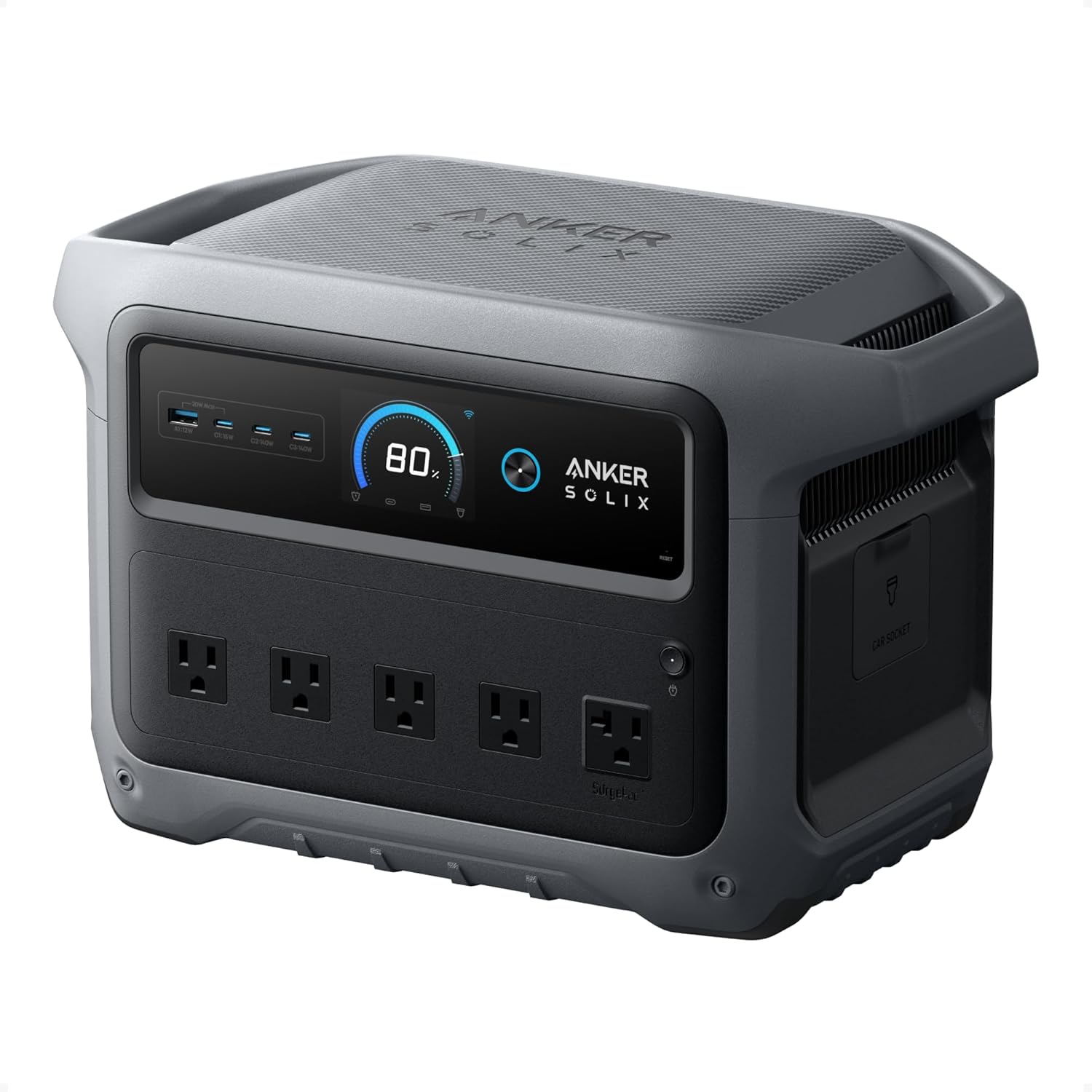
You’ll find the SOLIX C1000 Gen 2 positions itself as a high-capacity, fast-charging, durable option for everyday backup and outdoor living. It combines a 1,024Wh LiFePO4 battery with a 2,000W continuous inverter (3,000W peak), fast recharging tech, and a compact, portable form factor designed to work for both emergency and recreational use.
Key selling points explained
You’ll get extremely fast wall charging (49 minutes using Anker’s HyperFlash tech), a long cycle life (4,000 cycles to 80% capacity), and a UPS feature with under 10 ms switchover for sensitive devices. It also supports solar recharging up to 600W (60V max) so you can run for extended periods off-grid.
Key specifications and quick facts
Below is a clear breakdown so you can see the essentials at a glance. This table summarizes the core specs and what they mean for how you’ll use the unit.
| Feature | Specification | What it means for you |
|---|---|---|
| Model | Anker SOLIX C1000 Gen 2 | The specific unit you’re evaluating |
| Battery Type | LiFePO4 | Long life, safer chemistry, stable for many cycles |
| Capacity | 1,024 Wh | Useful energy for charging devices and running appliances |
| Continuous Output | 2,000 W | Can run many household appliances concurrently |
| Peak Output | 3,000 W | Handles startup surges from motors and compressors |
| UltraFast Charging | Full charge in 49 minutes at 1,600W (enable in Anker app) | Fast recharges reduce downtime after drains |
| Solar Input | Up to 600 W (60 V max) — ~1.8 hours to full | Good for off-grid and rapid solar topping |
| UPS Switchover | <10 ms< />d> | Keeps CPAPs and computers from rebooting |
| Ports | 10 total | Multiple devices at the same time (AC, USB, car port, etc.) |
| Size & Portability | 14% smaller and 11% lighter vs similar models | Easier to move and store |
| Cycle Life | ≥4,000 cycles to 80% capacity (InfiniPower) | Years of daily use before major capacity loss |
| App Features | HyperFlash enable, TOU mode, monitoring | Control charging behavior and optimize cost/usage |
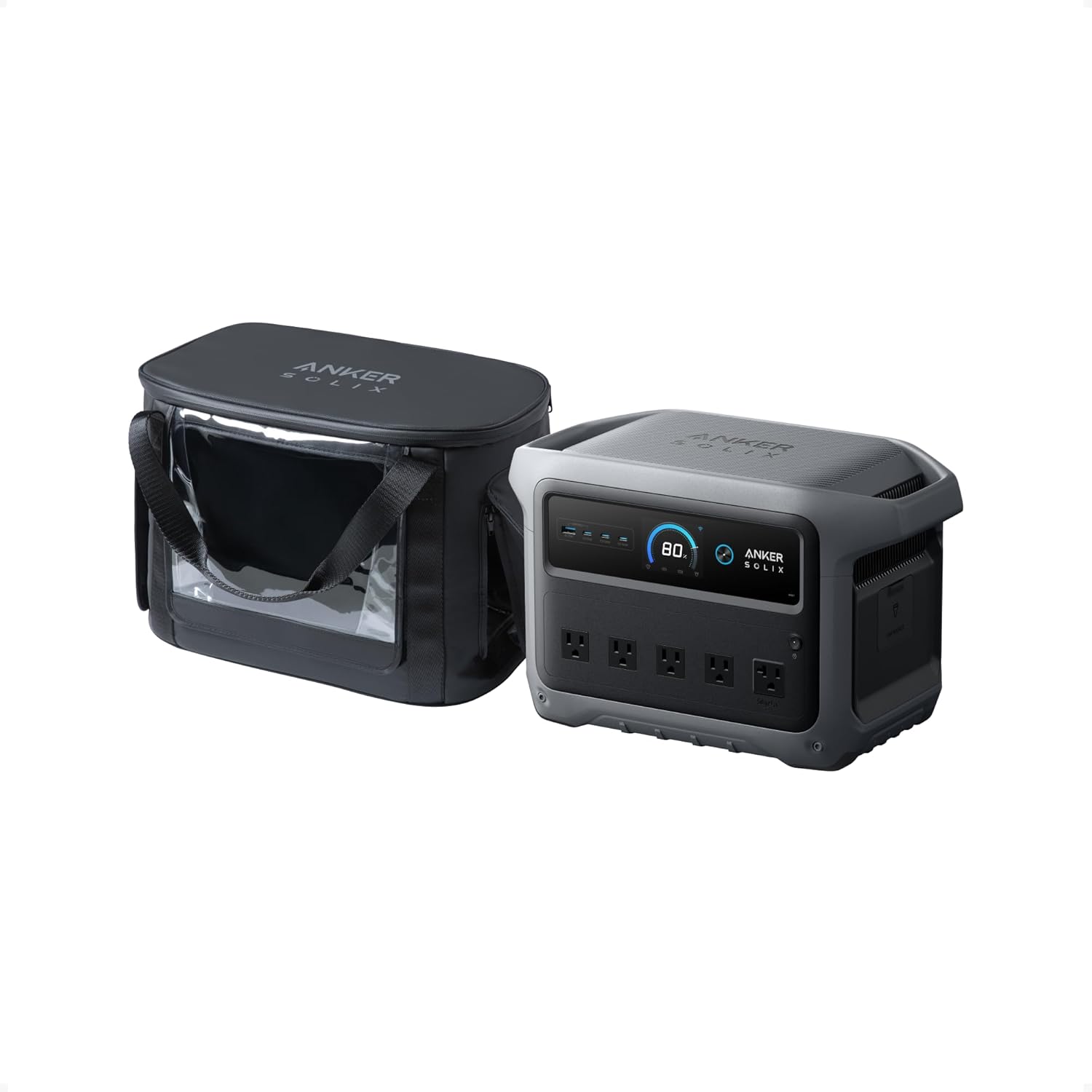
| Box contents | Power station, AC cable, car charging cable, Quick Start Guide, Safety & Warranty Card | Ready to start charging and using right away |
What the specifications mean in everyday use
You’ll notice that a 1,024Wh capacity gives you a meaningful amount of energy for short- to medium-length outages, road trips, or extended work-from-campsite sessions. The 2,000W continuous output opens up use cases beyond phones and laptops — think refrigerators, power tools, and small kitchen appliances — while the 3,000W peak helps with devices that need a strong startup surge.
The LiFePO4 chemistry means you can use and recharge the battery a lot more over its life compared with traditional lithium-ion packs. That’s useful if you plan to rely on the unit daily for van life, RVing, or frequent outage protection.
What you can power and approximate runtimes
You’ll want practical expectations, so here are example runtimes using a conservative usable energy estimate. Real runtimes depend on inverter efficiency, device draw patterns, and usage cycles, but these figures give you a realistic ballpark.
Note: These are approximate and illustrative — calculate runtime by dividing usable watt-hours by the device’s average wattage.
| Device | Typical wattage (approx.) | Estimated runtime (approx.) |
|---|---|---|
| Smartphone charging | 10 W | ~80–100 hours (multiple full charges) |
| Laptop (work) | 50–65 W | ~12–16 hours |
| Small/mini fridge (average) | 60–100 W | ~8–14 hours (depends on compressor cycle) |
| CPAP machine | 30–50 W | ~16–30 hours |
| Full-size refrigerator (running) | 120–200 W | ~4–8 hours |
| Microwave (1,000 W) | 900–1,000 W | ~45–60 minutes |
| Electric kettle (1,500–1,800 W) | 1,500–1,800 W | ~30–40 minutes |
| Power tools (drills, saws) | 500–1,500 W | Varies — can run many short jobs |
You’ll want to keep in mind that motors and compressors have higher startup draws. The 3,000W peak helps you get devices started, but sustained high loads will reduce runtime quickly.

Charging options and speed
You’ll appreciate the flexibility in charging. The SOLIX C1000 Gen 2 supports multiple inputs so you can pick the fastest or most convenient method.
- UltraFast HyperFlash charging: You can fully recharge in about 49 minutes at 1,600W when enabled in the Anker app. That’s a huge advantage if you frequently deplete the battery and need a quick turnaround.
- Standard AC charging: The included AC cable lets you charge from home power as usual, and you can still benefit from faster modes when enabled.
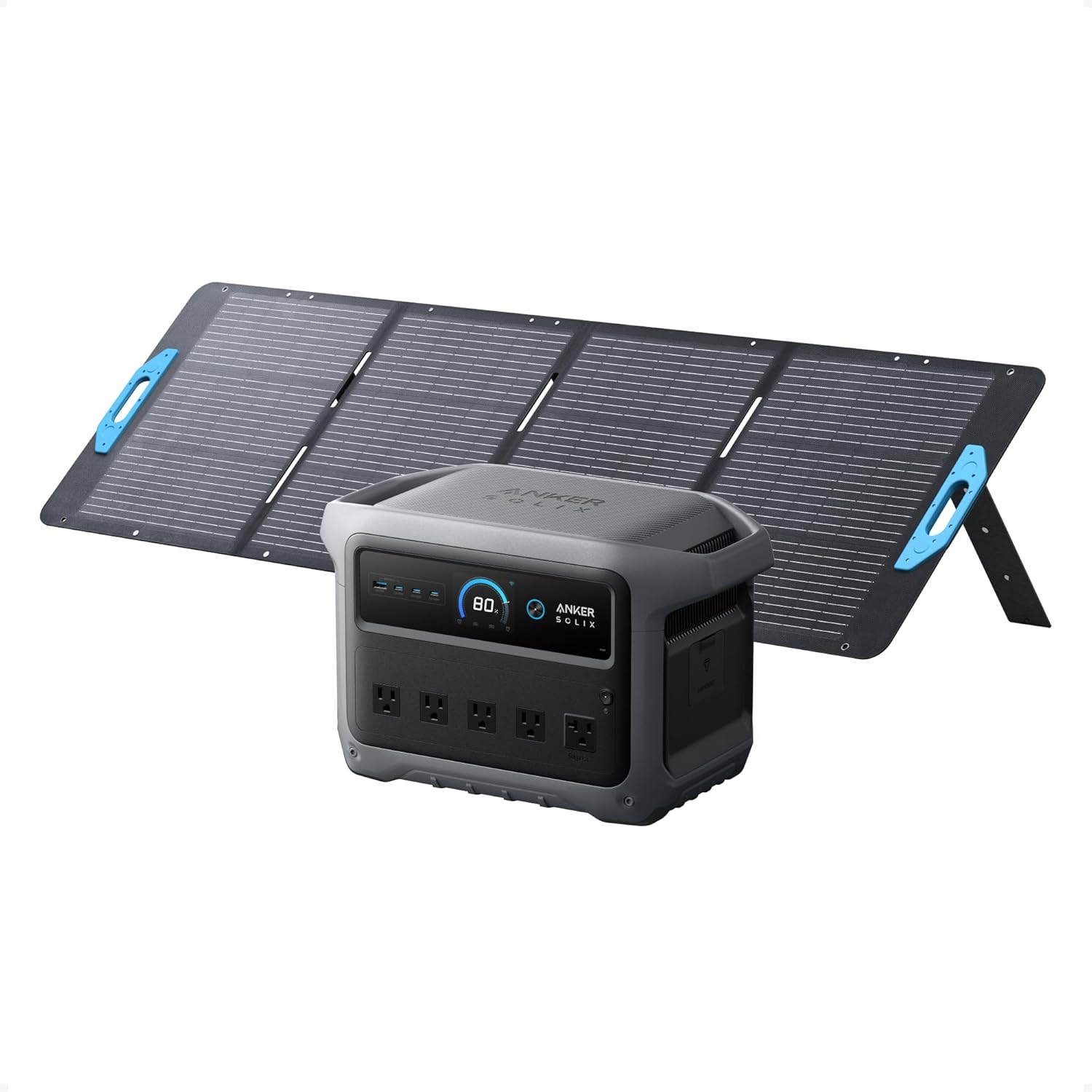
- Solar input: You can connect up to 600W (60V max) of solar panels and get a full recharge in roughly 1.8 hours under good sunlight. That’s great if you want to stay off-grid for extended periods.
- Car charging: A car charging cable is in the box if you need a top-up on the road, though vehicle charging is slower than HyperFlash or solar on a sunny day.
If you plan to rely heavily on solar, check the panel voltage and configuration to stay within the 60V maximum. Also enable HyperFlash only when your input source supports the required power and the app permissions are set.
Design, build, and portability
You’ll notice the SOLIX C1000 Gen 2 was designed with portability in mind. It’s 14% smaller and 11% lighter than comparable models, making it easier to move between rooms, into an RV, or into a trunk. There’s an integrated handle and a compact footprint that lets you carry it for short trips without undue strain.
The exterior is built to be practical: durable casing, clear ports, and easy-to-use controls. While Anker doesn’t market this as a purpose-built rock-solid industrial case, the unit balances ruggedness with portability for most consumer use cases like home backup, camping, or van life.
Ports and connectivity
You’ll have 10 ports total, which gives you flexibility to run multiple devices at once. While specific port breakdowns vary among units, expect a mix of:
- Multiple AC outlets for standard plugs
- USB-C ports suitable for phone/laptop charging
- USB-A ports for accessories
- A car port/DC output for automotive accessories
This mix lets you run essential appliances while charging devices simultaneously, which is especially helpful during outages or when you’re setting up a remote workspace.
Battery chemistry and lifespan
Anker uses LiFePO4 chemistry in this model, and that matters for you in two big ways:
- Longevity: The battery is rated to keep at least 80% capacity after about 4,000 cycles. That’s years of daily cycling if you use it often, far exceeding typical lithium-ion cycle life.
- Safety and stability: LiFePO4 is more thermally stable and less prone to runaway thermal events compared with some other lithium chemistries, offering peace of mind for indoor use.
Keep in mind that “10 years of InfiniPower” is Anker’s way of indicating long usable life under typical conditions. How long it actually lasts depends on how you charge, how often you operate it at extremes, and storage conditions.
UPS functionality and TOU (Time of Use) mode
If you need uninterrupted power for sensitive devices, you’ll like the UPS feature with under 10 ms switchover. That’s fast enough to keep CPAP machines, routers, and computers from rebooting or losing settings during a power cut.
TOU (Time of Use) mode in the Anker app lets you control when the unit draws or supplies power to reduce peak energy charges or to automatically switch to battery power during expensive grid rates. You’ll appreciate this if you want to optimize costs while using the unit as a home energy management tool.
App features and smart control
You’ll control HyperFlash enabling and TOU mode through the Anker app, and you can monitor real-time charging/discharging, set timers, and track battery health. Having an app gives you fine-grain control without digging through the unit’s physical buttons and makes it easier to integrate the station into a tech-forward setup.
Real-world performance expectations
In everyday situations, you can expect the SOLIX C1000 Gen 2 to perform reliably for common tasks: powering a fridge during an outage, running a CPAP through the night, charging laptops and phones, or giving you power for small appliances at a campsite. The fast recharge dramatically reduces downtime.
Be realistic about heavy continuous loads: while it can handle 2,000W, running at that limit for long stretches will drain the battery quickly. Fans and cooling systems inside the unit will likely run more when you push the output, so expect some audible noise under sustained high load.

Safety and storage
You’ll find the LiFePO4 chemistry and Anker’s safety systems make the unit suitable for indoor storage and use, but follow these basic safety practices:
- Store in a cool, dry place away from direct sunlight.
- Avoid exposure to extreme temperatures (very hot or very cold).
- Keep the unit on a stable surface with ventilation around it while charging or discharging.
- Read the Safety and Warranty Card included in the box for specifics and recommended practices.
These steps help protect your investment and ensure the battery ages well.
Pros and cons
You’ll want a clear list to weigh benefits and trade-offs. Here are the major strengths and areas where you might want to be cautious.
Pros
- Extremely fast recharge (49 minutes via HyperFlash) — shortens downtime after heavy use.
- High continuous output (2,000W) and strong peak for motor starting (3,000W).
- LiFePO4 battery with long cycle life (≥4,000 cycles to 80%).
- Solar-ready with up to 600W input — practical for off-grid setups.
- UPS with <10 ms switchover — good for sensitive electronics and medical devices.< />i>
- Compact and relatively lightweight compared to peers — easier to carry and store.
- Anker app control and TOU mode for smart energy use.
Cons
- High-power recharging may require specific power sources or app activation to access fastest rates.
- Solar recharging speed depends heavily on panel choice and sun conditions.
- Sustained loads near 2,000W will drain the battery quickly — plan your usage accordingly.
- If you expect to run very large household loads for extended periods, you may need a larger-capacity system.
Who should buy this unit?
You’ll find the SOLIX C1000 Gen 2 suits these groups especially well:
- Homeowners who want a compact but powerful backup for short- to medium-length outages.
- RVers and van lifers who need a robust power source that recharges quickly and lasts for many cycles.
- Campers and outdoor enthusiasts who want the option to run small appliances and charge multiple devices.
- Off-grid hobbyists and tiny-home residents who pair the unit with solar panels.
- People who need a UPS for sensitive electronics or medical devices like CPAPs.
If you require continuous, multi-day full-home power, this unit might be one piece of a larger solution rather than a full replacement for whole-home backup.
Setup and first-time use
You’ll get started quickly with the items included in the box, and here’s a simple sequence to follow:
- Unbox and inspect: Remove the unit and cables, and check the Quick Start Guide and Safety & Warranty Card.
- Initial charge: Plug into AC power and charge the unit fully. Enable HyperFlash in the Anker app if you want the fastest initial charge and your power source supports it.
- Connect devices: Plug in essential appliances and test loads one at a time — verify the UPS behavior if you plan to use it for sensitive gear.
- Configure the app: Set TOU parameters if you want to schedule charging or discharging to match off-peak rates or solar generation.
- Test solar input: If you have solar panels, connect them according to Anker’s specifications and test the solar recharge function on a sunny day.
Taking a few minutes to configure and test everything will help you understand how the station performs with your specific setup.
Tips to get the most from your SOLIX C1000 Gen 2
You’ll benefit from a few practical tips that improve performance and longevity:
- Enable HyperFlash only when your input source supports the required power and you’re ready to handle the fast charge. Use it sparingly if you want to maximize long-term battery health, though LiFePO4 tolerates frequent cycles well.
- Use TOU mode to charge during off-peak hours or to limit grid draw during expensive periods.
- Pair with appropriately rated solar panels (up to 600W, 60V max) and consider a tilt or tracking setup for maximum daily harvest.
- Avoid continual full-discharge cycles unless necessary; partial cycles still work fine with LiFePO4, but practicing reasonable charge habits helps.
- Keep firmware and the Anker app up to date to benefit from software improvements and new features.
- Run a periodic self-test: plug in typical loads and let the unit undergo a normal discharge cycle to confirm expected runtimes.
- For sensitive gear, test the UPS switchover with your actual device to confirm compatibility and behavior.
Maintenance and warranty considerations
You’ll find basic maintenance is minimal: keep terminals clean, avoid moisture, and store at moderate charge if you’ll be idle for long periods. The unit includes safety and warranty documentation in the box — read that to understand coverage and how to register the product if required.
LiFePO4 chemistry reduces thermal stress risks, but standard electrical precautions still apply. If you plan to install this in an enclosed cabinet, ensure adequate ventilation during operation.
Practical scenarios and example setups
You’ll probably want concrete examples so you can see how you might use the unit.
Weekend camping setup:
- Solar array: 400–600W portable panels on a sunny day.
- Use: Charge phones, run a small fridge, power lights, and occasional electric cooking.
- Benefit: With 600W solar, you can often extend or fully recharge during daytime use.
Home outage kit:
- Place near essential devices (router, modem, CPAP, mini-fridge, a couple of lights).
- Use UPS mode for immediate failover and TOU to avoid charging during peak price windows.
- Benefit: Keeps critical systems running through short-to-medium outages and bridges to generator or grid restoration.
Van/RV daily use:
- Use for charging laptops, phones, running a small fridge, and powering lights.
- Recharging via AC at campgrounds or solar when parked.
- Benefit: Long cycle life supports continuous use without rapid capacity loss.
Remote work-from-field:
- Power up multiple laptops and a small monitor while you work.
- Use app monitoring to ensure you don’t exceed desired discharge thresholds.
- Benefit: Fast recharging gets you back to full capacity between sessions.
Comparisons and buying considerations
You’ll want to compare this model to other portable power stations based on several factors:
- Capacity vs. portability: The SOLIX C1000 Gen 2 is a balance of high output and reasonable weight/size.
- Charge speed: HyperFlash is a standout feature; if recharge time matters to you, this is a major selling point.
- Cycle life: LiFePO4’s 4,000-cycle expectancy is a big advantage for daily users.
- Solar compatibility: Support for up to 600W solar input is generous for this class.
- Software and smart features: If you want an app-controlled experience and TOU scheduling, this delivers.
When comparing, check the exact port layout and wattage of USB-C/PD ports if you rely on high-wattage laptop charging directly from USB-C.
Potential limitations and precautions
You’ll get a lot of capability, but keep these limits in mind:
- Very long home outages requiring continuous whole-house power will need a larger, integrated system.
- Solar recharge time is dependent on sunlight; cloudy conditions significantly slow recharge.
- Heavy continuous loads will heat the unit and reduce service time; plan for realistic runtime expectations and stagger heavy usage where possible.
- Always respect the 60V solar input limit and match panel configurations accordingly.
Final verdict: Is the SOLIX C1000 Gen 2 right for you?
If you want a portable power station that combines high continuous output, rapid recharge, long battery life, and useful smart features, this unit stands out in its class. You’ll benefit from the fast HyperFlash charging, robust UPS with under 10 ms switchover, and the long-lived LiFePO4 battery chemistry. It’s particularly well-suited for homeowners wanting a compact backup solution, RVers and van lifers needing reliable on-the-go power, and campers who want to pair solar for extended off-grid use.
You should consider this unit if you value fast recharging, plan to cycle the battery frequently, or need a compact system with solid inverter performance. If your needs are for multi-day whole-house backup without generator support, look instead at larger-capacity or whole-home hybrid solutions and consider integrating this unit as part of a broader system.
Quick summary checklist before you buy
You’ll want to confirm the following to make sure this unit fits your use case:
- Do you need up to 2,000W continuous output and 3,000W peak? (Think refrigerator, power tools, or microwave usage.)
- Will you benefit from full recharge in about 49 minutes using HyperFlash?
- Are you planning to use solar regularly and can you support up to 600W (60V max) panels?
- Do you want long battery life with many charge cycles (LiFePO4)?
- Is portability and relatively light weight important for your setup?
If you answered yes to most of those, the Anker SOLIX C1000 Gen 2 Portable Power Station is a strong contender for everyday backup and off-grid power.
If you want, I can help you calculate expected runtimes for your exact device list or help you size a solar panel array and accessories to match your usage. Which devices do you plan to run most often?
Disclosure: As an Amazon Associate, I earn from qualifying purchases.