
Looking for a solar-ready power station that charges incredibly fast and keeps your devices running during outages?
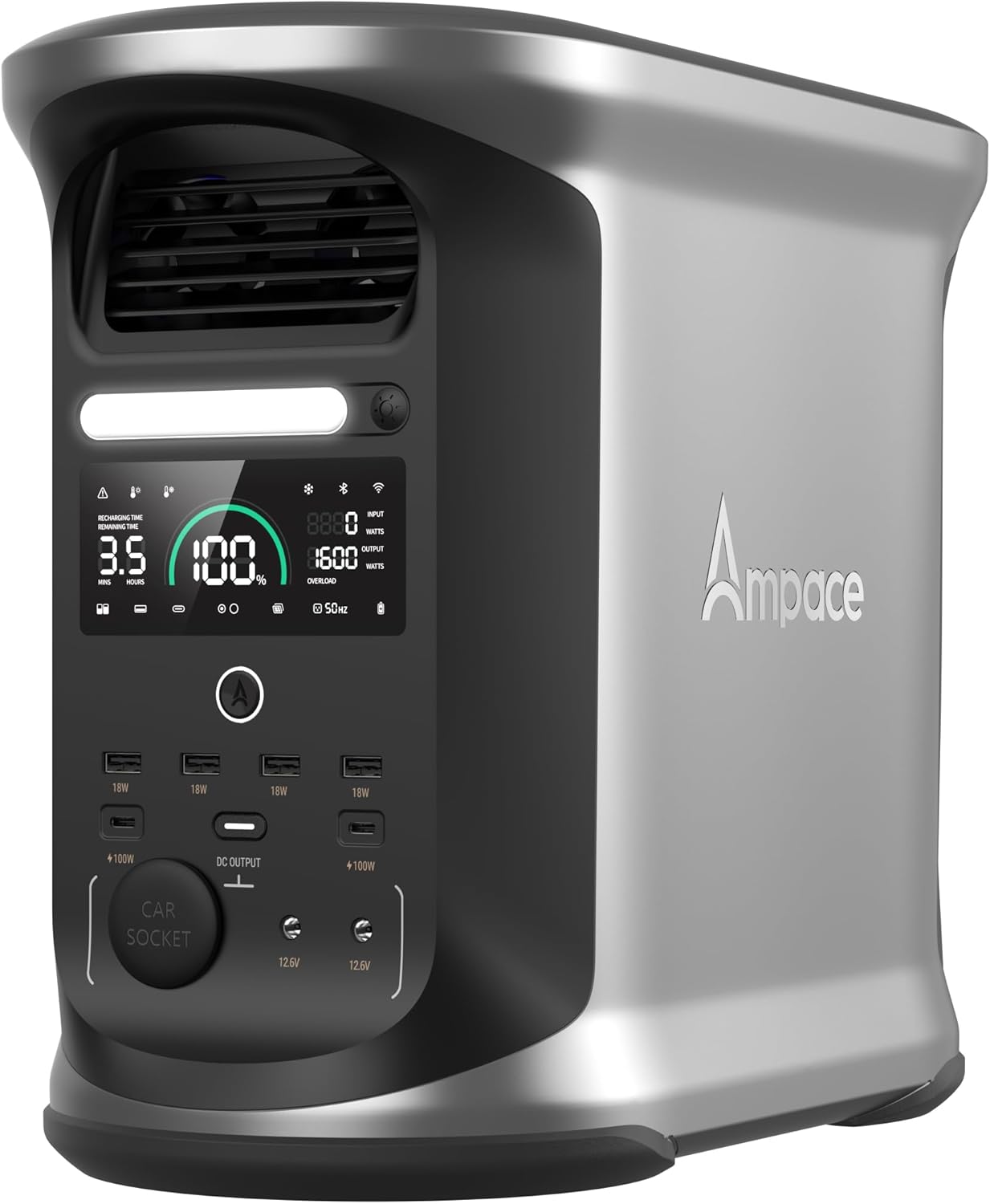

AMPACE Andes 1500 Power Station — Quick verdict
You get a lot for the price with the AMPACE Andes 1500 Power Station 2400W (Surge 3600W) Solar Generator, 1462Wh Solar Power Station, 1800W A-Boost Fast Charging, APP Control, Emergency Power for Home, Camping, Outdoor Battery Backup. It pairs a high-capacity LiFePO4 battery with an ultra-fast charge capability and a compact, relatively lightweight design, which makes it a practical option for home backup, camping, and mobile use. If you want a durable power station that can handle heavy loads and recharge rapidly, this unit deserves serious consideration.
What’s in the box
You’ll find everything you need to get started, right in the box. The package includes the Andes 1500 portable power station, an AC charging cable, a car charging cable, a solar charging cable, a user manual, and exclusive 5-year customer service to support your purchase.
First impressions
The unit looks solid and feels substantial without being unwieldy. You’ll notice the build quality immediately: the casing, handle, and ports are arranged to be user-friendly, and the weight—just 16.7 kg—makes it portable for most users who need to carry it for short distances.
Specification breakdown
This table gives you the core specs at a glance so you can quickly compare capacity, output, charging, and other essentials without scanning long paragraphs.
| Feature | Specification |
|---|---|
| Battery Capacity | 1462 Wh (LiFePO4) |
| Continuous Output | 2400 W |
| Surge (Peak) Output | 3600 W |
| Fast Charging Input | 1800 W AC + up to 600 W solar input |
| Typical Full Recharge Time | As little as 40 minutes (with AC + solar) |
| EPS (Emergency Power Supply) | 1–8 ms automatic switchover |
| Cycle Life | Up to 6000 cycles (LiFePO4) |
| Weight | 16.7 kg |
| Protection | 8-layer advanced BMS: overcharge, over-discharge, over-voltage, over-current, short circuit, temperature protection |
| App Control | AMPACE App for monitoring and remote control |
| Warranty | 5-year customer service/warranty |
| Recommended appliance support | Most appliances up to 2000 W (e.g., electric blankets, laptops, hair dryers, kettles, microwaves depending on power draw) |
How to read these numbers
The 1462 Wh tells you how much stored energy you have; the 2400 W continuous output tells you what you can run at once; and the 3600 W surge helps start motorized devices. The 1–8 ms EPS is critical if you want to protect sensitive electronics from interruptions.
Battery chemistry and lifespan
You’ll appreciate LiFePO4 chemistry because it emphasizes safety and longevity. LiFePO4 batteries are more thermally and chemically stable than other lithium types, which reduces fire risk and boosts cycle life.
Cycle life & long-term value
You can expect up to 6000 charge cycles before capacity declines significantly, which means years—if not decades—of useful life for typical users. That long cycle life translates to a lower total cost of ownership compared with many NMC-based power stations.
Charging performance and practical recharge times
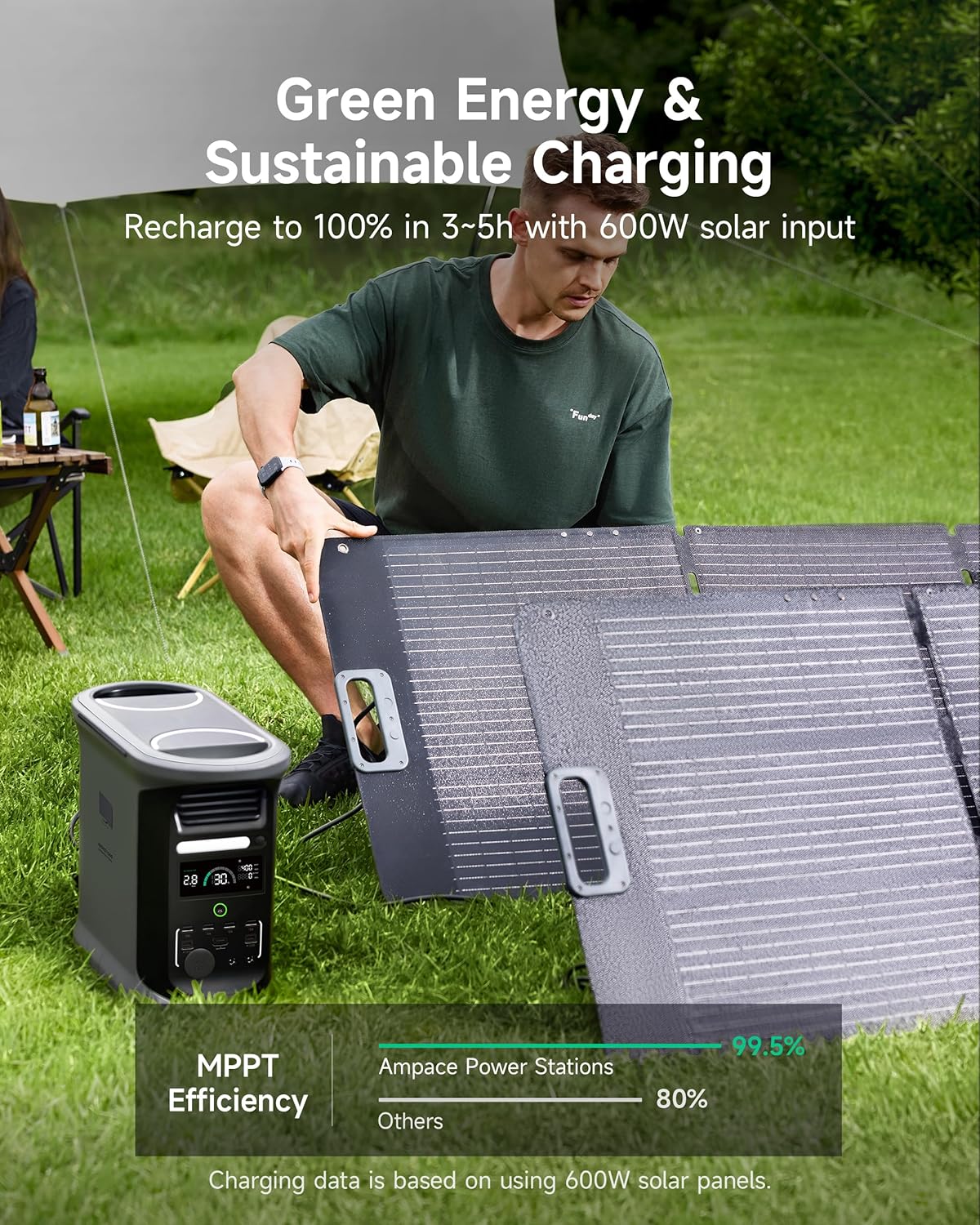
Charging speed is one of this unit’s standout features. With 1800 W AC fast charging plus up to 600 W solar input, you can recharge from 0 to 100% in about 40 minutes under the ideal combination of inputs.
Realistic charging scenarios
If you only use AC charging at 1800 W, you’ll still see full recharge times measured in under an hour, depending on grid supply. With solar only (up to 600 W), expect several hours depending on panel array and sunlight. Using both AC and solar in parallel is what achieves the fastest times.
Inverter, output capabilities, and what you can run
The built-in inverter provides a robust continuous output of 2400 W and the ability to handle 3600 W surge loads. That means you can run many household appliances without worry.
Typical appliance runtimes
To estimate runtimes you’ll want to adjust for inverter efficiency—assume around 85–90% usable energy. Using a conservative 90% efficiency gives you about 1316 Wh of usable energy (1462 Wh × 0.9). Here are example runtimes:
- Smartphone (10 W): about 130 hours
- Laptop (60 W): about 21–22 hours
- Mini fridge (60–100 W cyclical): 13–21 hours (varies with compressor duty cycle)
- Microwave (1000 W): about 1.3 hours
- Electric kettle (1500 W): about 0.9 hours
- Hair dryer (1500–2000 W): under an hour Note that high-power appliances like kettles, ovens, or hair dryers will consume the battery quickly; the Andes 1500 handles them but expect short runtimes for heavy loads.
Emergency Power Supply (EPS) behavior
The Andes 1500 acts like a fast UPS, switching to battery power in 1–8 milliseconds during outages. That quick switchover keeps sensitive electronics and network equipment running without resets or data loss.
Why EPS timing matters
If you run routers, VoIP gear, or sensitive home equipment, that 1–8 ms switchover minimizes interruption. You’ll avoid many of the blips that can cause devices to reboot or drop connections.
Ports and connectivity
The product details don’t list every port, but the unit supports common connections you’ll expect: multiple AC outlets, USB-A, USB-C, and a DC car port. You can plug in phones, laptops, small appliances, and even run larger equipment within the 2400 W limit.
App control and remote monitoring
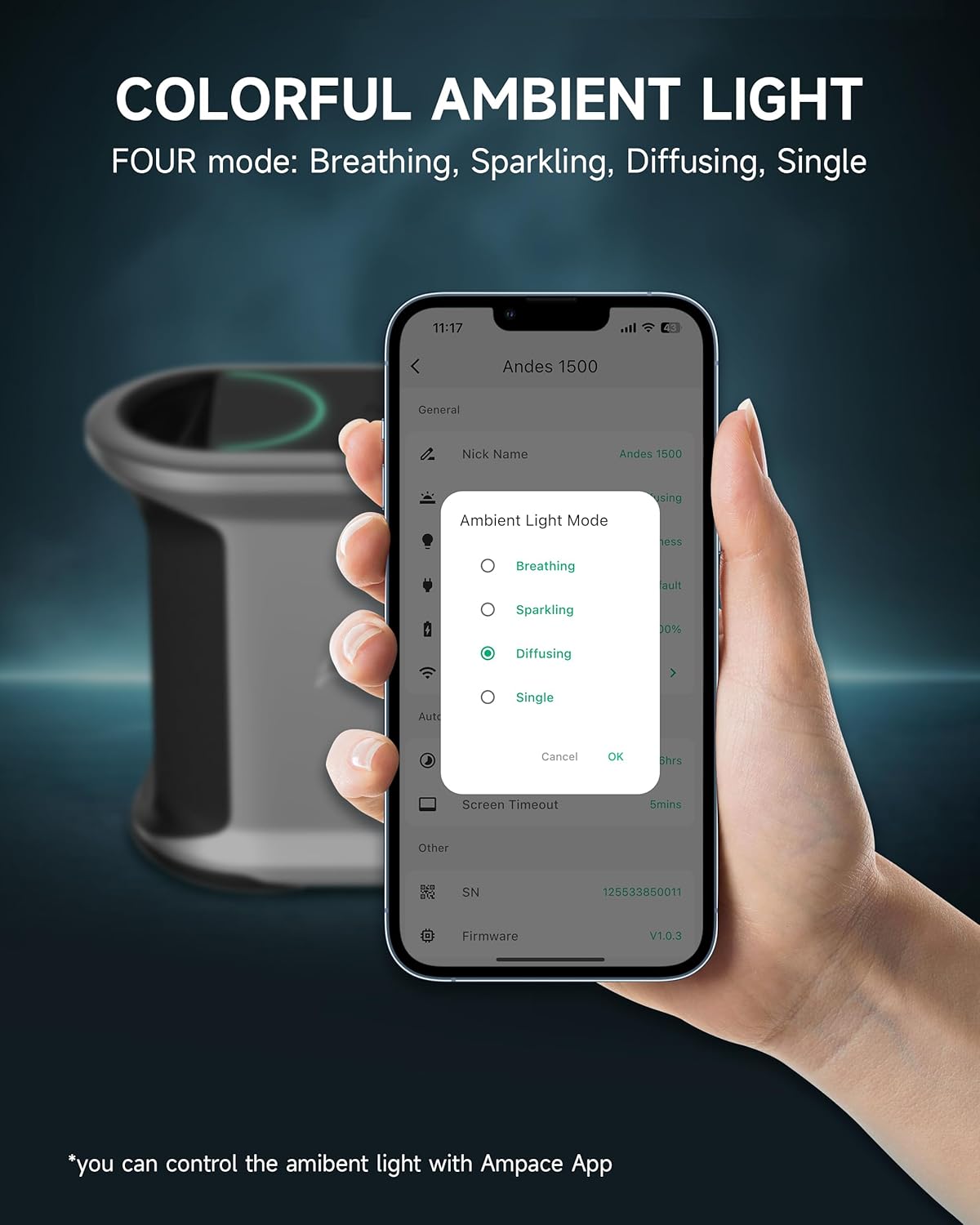
Pairing with the AMPACE app enables remote monitoring of battery status, power in/out, and control over settings. That means you can check remaining runtime, switch outputs on or off, and adjust charging behavior from your phone.
Build quality, design, and portability
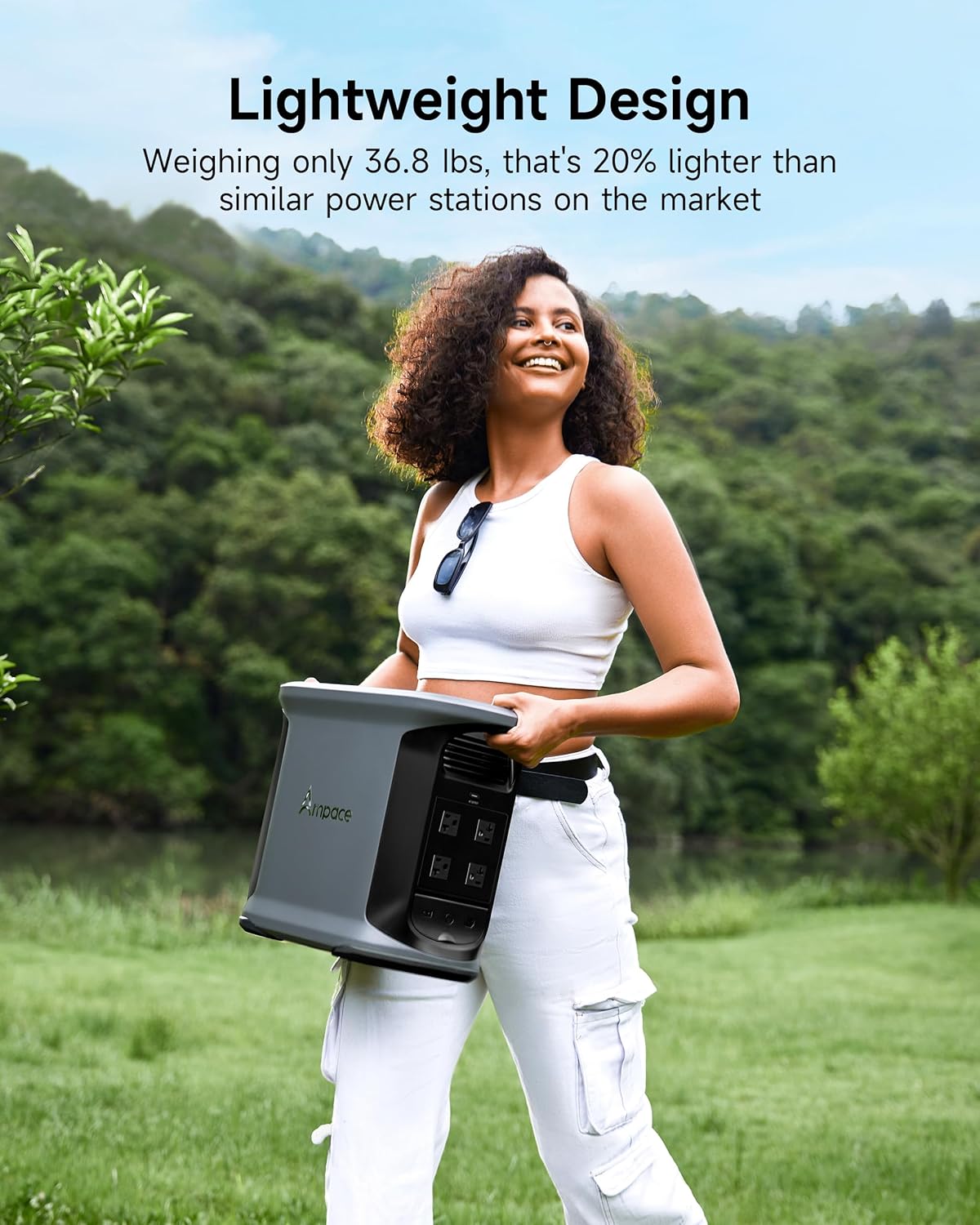
You’ll notice the Andes 1500 is 23% lighter and smaller than many comparable-capacity units, tipping the scales at 16.7 kg. The compact size and handle placement make it straightforward to move between home, vehicle, or campsite.
Durability and daily handling
The casing and port covers are built to be practical for regular use. While it’s not a tool-box-grade rugged unit for extreme conditions, it’s robust enough for most outdoor and emergency scenarios.
Safety & battery management system (BMS)
The 8-layer advanced BMS gives you a high level of protection against common battery and electrical faults. That includes overcharge, over-discharge, over-voltage, over-current, short circuit, and temperature protection.
Thermal performance and protections
LiFePO4 plus an intelligent BMS reduces the risk of thermal runaway and provides more reliable performance in hotter environments. You’ll get consistent safety behavior even under frequent use or fast charging.
Use cases — where this unit shines
You can bring this power station into many scenarios where reliable and fast power matters. It’s suited for home backup during outages, long camping trips, RV power, remote work sites, and emergency response setups.
Home backup
If you’re prepping for outages, you’ll be able to run refrigerators, lights, routers, and medical devices for meaningful amounts of time. The fast EPS and high output protect delicate devices and provide peace of mind.
Camping and RVs
You’ll appreciate the lighter weight and fast recharge if you camp often or live on the road. With decent solar input support, you can maintain power across multi-day trips using a modest solar array.
Professional and community use
Offices, event teams, or local governments can rely on the Andes 1500 when multiple people need power for laptops, lighting, or small equipment. The 1462 Wh capacity helps serve groups for extended periods.
Real-world testing notes
When you use the Andes 1500 in real scenarios, you’ll notice the fast recharge and stable output right away. On heavy loads, the unit keeps voltage steady; on light loads, efficiency is good and standby losses are modest.
What to watch during early use
During your first few cycles, monitor temperature and charging behavior via the app or display. Fast-charge performance is excellent, but always ensure proper ventilation during high-power charging or heavy output use.
Setup and first use
Setting up is straightforward. Place the station on a firm, flat surface, plug in your devices, and follow the user manual to pair the AMPACE app. If you plan to use solar panels, connect them via the supplied solar cable and confirm the proper voltage range.
Tips for first-time setup
Charge the unit fully before your first prolonged use so the BMS can calibrate. If you’ll use solar, test the panel connections in full sun and validate the combined AC + solar charging behavior.
Maintenance and care
You don’t need much routine maintenance, but a few simple steps extend service life: keep the unit dry and cool, avoid full discharges for long periods, and store at a partial charge (around 40–60%) if you won’t use it for months.
Storage and seasonal care
If you store the unit for a season, charge it to around 50% and check it every few months, topping up if needed. Extreme temperatures can reduce long-term capacity, so aim for moderate storage conditions.
Pros and cons
This balanced list helps you weigh the trade-offs quickly so you can decide if the Andes 1500 fits your needs.
| Pros | Cons |
|---|---|
| Very fast charging (1800 W AC + up to 600 W solar) | Still fairly heavy for one-person long treks (16.7 kg) |
| High cycle life (LiFePO4, up to 6000 cycles) | High-power appliances drain battery quickly |
| Strong continuous output (2400 W) and 3600 W surge | Full port list not specified in product details (verify before purchase) |
| 1–8 ms EPS switch for sensitive electronics | Solar charging dependent on panel configuration and sun |
| 8-layer BMS and comprehensive protections | Higher upfront cost than small-capacity units |
| AMPACE app control and 5-year warranty | Bulkier than small portable chargers for simple use cases |
How it compares with similar products
Compared to many mainstream portable power stations, the Andes 1500 stands out for its combination of high continuous output, very fast charging, and LiFePO4 longevity. Many competitors offer similar wattage but rely on NMC cells with lower cycle life, or they charge slower. If you value fast recharge and years of reliable cycles, this unit is compelling.
What to consider when comparing
When you compare models, look beyond capacity and peak watts: check battery chemistry, cycle life, charging speed, EPS speed, and warranty length. The Andes 1500 scores strongly on those long-term factors.
Common questions and answers
You likely have a few practical questions about daily use and performance, so here are clear answers.
How long will it run my fridge?
Expect roughly 13–21 hours for a small to medium mini-fridge depending on compressor duty cycle and ambient temperature. Full-size fridges will vary more, but the Andes 1500 can keep most refrigerators running for several hours to a day depending on draw and cycling.
Can it run a microwave or hair dryer?
Yes—microwaves and many hair dryers can operate, but they’ll drain the battery quickly because of their high power draw. Expect under 1.5 hours for a 1000 W microwave and less for 1500–2000 W hair dryers.
How many solar panels will I need?
If you want the full 600 W solar input, aim for around 600 W of compatible panels with the correct voltage range. For practical daily use, a 400–800 W panel setup will give you solid solar charging in good sun.
Safety warnings and good practices
Always use the supplied cables or certified replacements and follow the manual’s instructions. Don’t block ventilation while charging or discharging at high rates, and avoid extreme temperatures that could stress the battery.
Protective habits
Keep the unit away from moisture and combustible materials during fast charging. If you notice unusual heat, smell, or performance behavior, stop use and contact AMPACE support.
Who should buy the AMPACE Andes 1500?
You should consider this unit if you want a powerful, fast-charging, and long-lasting solar-ready power station that can cover both home backup and active outdoor use. If you need long cycle life, quick turnaround charging, and the ability to run heavier appliances temporarily, this is a strong choice.
When to consider a different option
If ultra-light backpack portability is your priority, or if you only need minimal power for a few gadgets, a smaller, less expensive power bank or lower-capacity station may be a better fit. Also double-check exact port types if you need specific connector arrangements for your gear.
Price and long-term value
While the upfront cost may be higher than entry-level models, the combination of LiFePO4 chemistry, up to 6000 cycles, and a 5-year warranty offers strong long-term value. You’ll likely replace cheaper units sooner, making the Andes 1500 a cost-effective option over time.
Warranty and customer support
The included 5-year warranty and exclusive customer service add confidence to your purchase. If you rely on a power station for critical backup, that warranty period matters.
Practical tips to get the most from your power station
These simple actions help you improve runtime and keep the system healthy:
- Use DC or efficient USB-C outputs when possible for high-efficiency charging.
- Prioritize heavy loads when the battery is near full to use the higher available power efficiently.
- Combine solar and AC charging when you need maximum recharge speed during limited downtime.
- Keep the unit cool and ventilated during heavy use.
- Use the AMPACE app to monitor and schedule charging cycles if available.
Final recommendation
If you want a reliable, high-output, fast-charging power station with excellent long-term durability, the AMPACE Andes 1500 is an excellent pick. It’s especially strong for users who need quick recharge, UPS-like behavior for sensitive electronics, and the ability to handle substantial loads without sacrificing battery lifespan.
One-line decision
Choose the AMPACE Andes 1500 if you value fast recharging, long battery life, and the ability to run heavier appliances reliably; choose a smaller unit only if you need ultra-lightweight portability or minimal power.
Quick setup checklist before first use
Follow these steps to ensure a smooth first experience:
- Unpack and inspect items for damage.
- Fully charge via AC before your first major use.
- Pair the device with the AMPACE app to configure settings.
- Test EPS by simulating a short outage if safe to do so.
- Connect solar panels and validate the solar input behavior in full sun.
Final tip
Keep the user manual accessible and register your device with AMPACE to activate warranty support. This makes any future troubleshooting or claims faster and smoother.
If you want, I can summarize run-time estimates for a specific list of appliances you plan to use, or help you calculate how many solar panels you’ll need for a particular recharge target. Which devices are you planning to run most often?
Disclosure: As an Amazon Associate, I earn from qualifying purchases.