
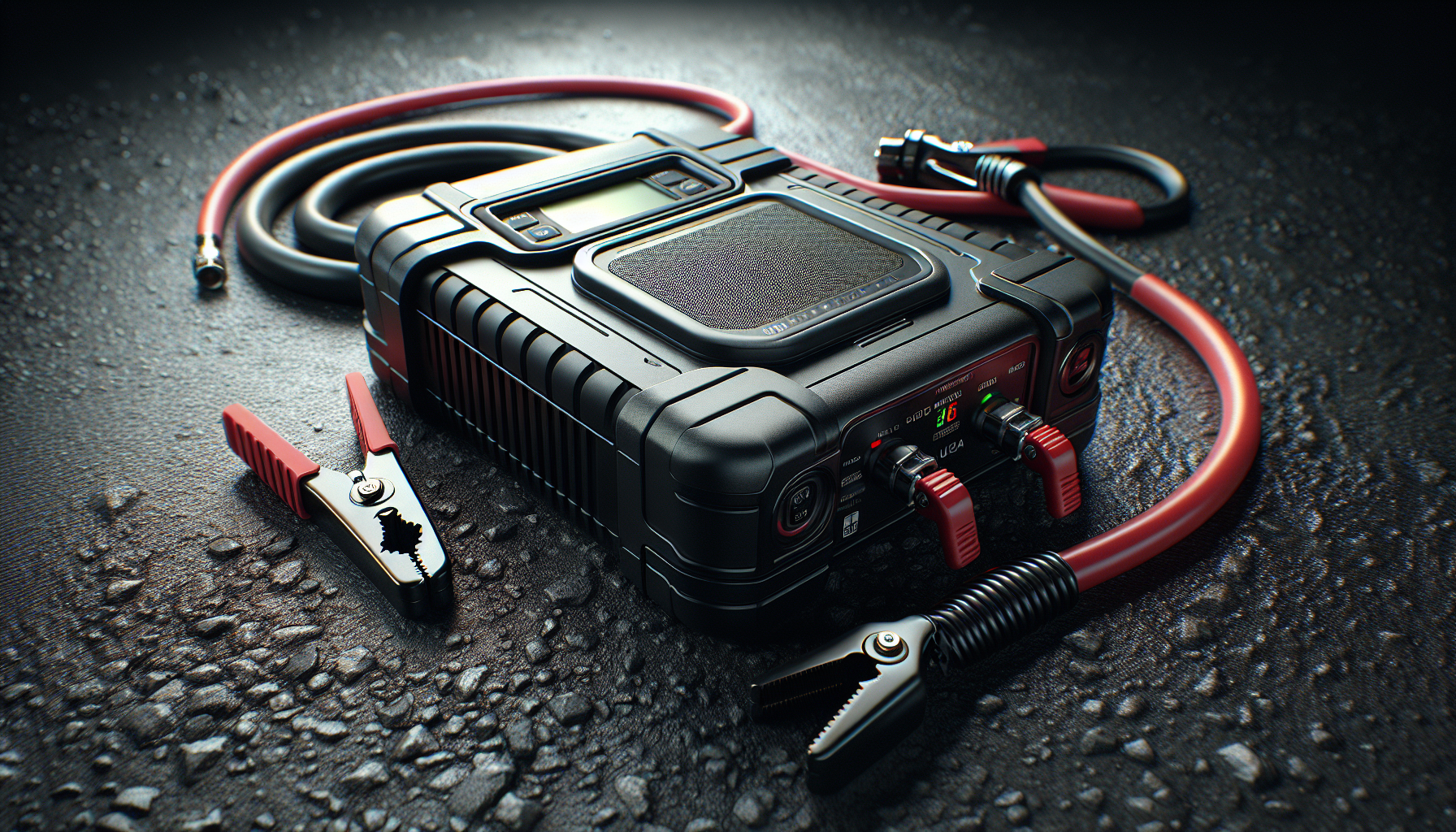
Have you ever stood beside your car with a dead battery and wished you had one reliable device that would get you back on the road fast while also inflating a tire?

Product Overview
You’re looking at the YESPER Jump Starter with Air Compressor 2000A 150PSI Battery Jumper Starter Portable(8L Gas/6L Diesel), 12V Car Jump Pack Battery Charger Jump Box with Jumper Cables, LCD Display, Lights as a combined solution for jump-starting and tire inflation. This compact unit brings jump-start capability, a high-pressure air compressor, basic power output, and safety features together in a single portable package so you can handle common roadside emergencies without calling for help.
What this unit promises
The YESPER X1 claims a peak 2000A starting current and the ability to start larger engines (up to 8.0L gasoline / 6.0L diesel). It also includes a turbocharged air compressor rated at up to 150 PSI with intelligent preset modes and an auto-stop feature, plus an LCD that reports battery and working status. These features are meant to give you confidence in both emergency starts and quick tire inflation.
Specifications at a glance
You’ll find the key specs summarized here so you can check compatibility with your vehicle or gear at a glance. The table highlights peak current, inflation capability, supported engine sizes, ports, protections, weight, and other essentials.
| Specification | Value |
|---|---|
| Product Name | YESPER Jump Starter with Air Compressor 2000A 150PSI Battery Jumper Starter Portable(8L Gas/6L Diesel), 12V Car Jump Pack Battery Charger Jump Box with Jumper Cables, LCD Display, Lights |
| Peak Current | 2000 A |
| Starting Technology | QDSP (temperature equalizing, reduced start temp) |
| Engine Support | Up to 8.0L gasoline / 6.0L diesel |
| Number of Starts | Up to 20 starts on a full charge (varies by engine & condition) |
| Air Compressor Max Pressure | 150 PSI (turbocharged, 35 L/min) |
| Inflation Speed | Reaches ~30 PSI in ~3 minutes (car tire) |
| Preset Modes | 4 preset modes + Smart preset + AUTO-STOP |
| Ports | 1 USB 5V/2.1A output |
| Light Modes | Flashlight / Strobe / SOS |
| Weight | ~635 g |
| Protection Features | Anti-spark, reverse polarity, low-voltage, overheat, overload |
| Working Temperature | -4°F to 140°F |
| Included | Jump starter, smart clamp, phone adapter cable, multi-function gas nozzle, pump tube, manual |
| Not Included | Charging adapter (recommended to charge every 3 months if stored) |
Key Features
You’ll want to know which features matter most before you buy, and how they perform in real-world scenarios. The YESPER X1’s combination of jump-start power, an effective compressor, smart controls, and safety systems is designed to meet common emergency needs.
Jump Starting Performance
You can expect a peak current of 2000 amps, which is strong for a portable unit and intended to start larger engines. That peak power, combined with robust clamps and cables, means you can restart a dead battery even when the vehicle won’t crank at all, and you can also help motorcycles, ATVs, snowmobiles, lawnmowers, and even yachts depending on battery access and size.
Air Compressor & Inflation
The integrated compressor is turbocharged and rated to 150 PSI with a flow of around 35L/min. You’ll appreciate that the compressor can inflate a typical car tire to about 30 PSI in roughly three minutes. The 4 preset modes and AUTO-STOP help prevent over-inflation and let you use the device for SUVs, bikes, balls, and smaller inflatables with one of the included nozzles.
Battery Capacity & Ports
While the manufacturer doesn’t publish a single amp-hour number in the listing, the unit’s capacity is reflected in its ability to start a car up to 20 times per charge under ideal conditions. The single 5V/2.1A USB port lets you charge phones and tablets in an emergency, and the LED work light has three useful modes — standard flashlight, strobe, and SOS.
Safety Features
You’ll find multiple layers of protection: anti-spark, reverse polarity protection, low voltage protection, overheat protection, and overload protection. LED indicators help you make correct/incorrect connections quickly, reducing risk of accidental damage when hooking up to a battery.
Controls & Display
The LCD displays remaining power and working status so you won’t guess battery state or compressor run time. The smart preset and AUTO-STOP functions make inflation simpler and safer, and the color-coded clamp lights provide quick visual confirmation of correct polarity.
Design & Portability
You’ll notice the compact, lightweight design that makes this unit convenient to store in a trunk or garage. Weighing around 635 g, it’s far lighter than many heavy duty jump boxes, which increases the probability you’ll keep it with your vehicle rather than leaving it at home.
Size and handling
The kit aims to be pocketable in a car context, small enough for easy handling while still delivering enough power for emergency starts. The included clamps are designed to be beefy enough for frequent use, and the pump tube & nozzles stow inside the pack or in the carrying space.
Visibility and lighting
The built-in LED light is practical during nighttime emergencies, and the strobe/SOS modes increase your visibility to other road users. You’ll benefit from these lights if you need to work under low-light conditions or signal for help.
In the Box & Accessories
You’ll receive everything necessary to use the key features out of the box except a charging adapter. The included parts are designed to handle most emergency tasks without extra purchases.
What’s included
The pack includes the portable lithium battery starter, a smart battery clamp, a mobile phone adapter cable, a multi-function gas nozzle, a pump tube, and a user manual. Note carefully that it does not include a wall charging adapter, so you’ll need an appropriate charger or car charger to keep it topped up.
What you might need separately
Since the charging adapter isn’t included, you should plan on buying a compatible charger if you don’t already have one. It’s also wise to have a small storage bag for the accessories and a protective place in your trunk so the unit doesn’t get crushed or exposed to extreme heat.
How to Use
You’ll find the unit straightforward to operate if you follow a few simple steps. Proper sequence and safety measures will keep both you and the device safe.
Preparing the unit
Always check the LCD for battery level and ensure the jump starter is charged before use. Make sure the work area is safe, remove loose clothing or jewelry that could cause a short, and always inspect clamps and cables for damage before connecting them.
Jump starting a vehicle
Connect the red clamp to the vehicle’s positive terminal and the black clamp to the negative terminal or a solid grounding point. Confirm the LED indicator shows a correct connection, then try starting the vehicle. If the vehicle starts, disconnect the clamps immediately in reverse order. Allow the unit to rest between high-frequency starts to avoid overheating.
Using the air compressor
Attach the correct nozzle and select the appropriate preset mode for the tire type. Connect the hose to the valve stem, and use the LCD to monitor the pressure. The unit’s AUTO-STOP should prevent over-inflation, but always double-check the tire pressure with a handheld gauge if you have one.
Charging the unit
Charge the unit according to the manufacturer recommendations and recharge every three months if it’s in storage. Avoid charging in extreme temperature environments, and do not expose the unit to sustained high heat while charging. Use a suitable charger and follow the charging indicators on the LCD.
Safety & Maintenance
You’ll get the longest service life and safest operation if you follow basic maintenance and recommended safety practices. The YESPER X1 is safe in normal use, but lithium batteries require care.
Storage & charging best practices
Store the unit in a cool, dry place and charge it at least once every three months if you don’t use it often. Extreme cold and heat shorten battery life, so avoid leaving it in a hot trunk or directly in the sun for prolonged periods.
Operating temperature and use limits
Do not use the unit at temperatures outside the -4°F to 140°F range. Avoid jump-starting continuously at high frequency. Let the clamps and the unit cool for at least one minute between repeated starts to reduce risk of overheating.
What not to do
Never connect the clamps to the wrong terminals, and never use the device if the cables or clamps are damaged. Don’t leave the compressor running unattended for extended periods. Avoid storing the unit fully discharged; that reduces battery longevity.
Performance Expectations
You’ll want to know how the unit behaves under real-life conditions rather than numbers alone. In general, the YESPER X1 performs adequately for most passenger cars and smaller utility vehicles, and the compressor is fast enough for road-side corrections.
Realistic starting capability
Under real conditions, expect fewer than the stated 20 starts if you’re starting large engines repeatedly or using it in cold weather. Battery age, temperature, and engine compression affect start success, but for standard passenger vehicles it will usually provide reliable assistance.
Compressor usage limits
The compressor’s 150 PSI rating is more than enough for tires and small inflatables. You should not expect to run this at peak pressure continuously for long periods — the manufacturer indicates a lasting runtime around 25 minutes for the turbocharged compressor, and AUTO-STOP helps protect the unit and your tire from damage.
Pros and Cons
You’ll find advantages and trade-offs with any combined unit. Here are the main positives and the potential downsides you should consider.
Pros
- High peak starting current (2000A) suitable for many gasoline and diesel engines.
- Integrated air compressor with 150 PSI and useful preset modes including AUTO-STOP.
- Compact and lightweight design makes storage and transport easy.
- Multiple safety protections and clear LED indicators reduce user error.
- USB charging port and LED work light add convenience in emergencies.
Cons
- No charging adapter included, so you must obtain one separately.
- Single USB port at 2.1A limits charging speed for multiple or large devices.
- Stated “up to 20 starts” assumes ideal conditions and will vary with temperature and engine condition.
- Not intended for continuous high-frequency jump-starting; requires cooldown breaks.
- The manufacturer does not list amp-hour capacity openly, which means you’ll estimate longevity by starts rather than raw battery specs.
Troubleshooting & FAQs
You’ll likely find answers to common issues here without needing to contact support. These steps address common connection, charging, and compressor issues.
Why won’t the unit start my car?
If the LED indicates incorrect connection, reattach the clamps ensuring red to positive and black to negative or a grounded metal surface. Check the YESPER’s battery level on the LCD — if low, recharge the jump starter. Allow the unit to cool if you have been attempting many starts in succession.
Compressor won’t turn on or stalls
Ensure the nozzle is connected correctly and the hose is fully engaged with the valve stem. Check the LCD for error codes or low battery indication. If the compressor overheats, allow it to cool before retrying.
How often should I charge the unit in storage?
Charge at least once every three months to maintain battery health. If you live in extreme climates, more frequent checks are advisable to prevent deep discharge.
What if the clamps spark when connecting?
Some sparking is normal if the car battery is deeply discharged; however, excessive sparking often means a poor connection or reverse polarity. Immediately disconnect and recheck clamp placement and battery terminals. The anti-spark and reverse polarity protection will reduce risk, but you should always be cautious.
Can I use this on trucks and heavy vehicles?
You can jump-start many trucks, but the unit is specified for up to 8.0L gasoline and 6.0L diesel. Heavier commercial vehicles with larger batteries and higher cranking demands may need a larger, more dedicated jump starter.
Who should buy this
You’re a good candidate for this unit if you want a compact, multipurpose emergency device for a car, SUV, or light truck. It’s particularly useful for drivers who value portability and the convenience of an integrated compressor. If you frequently travel, camp, or keep a spare set of inflatables (bike tires, sports equipment), this adds a lot of utility in one box.
Who should consider alternatives
If you drive a heavy commercial vehicle or require repeated, frequent jump starts for large engines, you should consider a larger industrial jump starter. Also, if you need fast multi-device charging or multiple power outputs (AC outlets or higher-wattage USB-C PD), you might prefer a different portable power station.
Alternatives & When to Consider Them
You’ll want options if your needs stretch beyond what a compact unit offers. Here are typical alternatives and situations where they make sense.
Larger jump starters
Choose a heavier-duty jump starter with a higher battery capacity and sustained cranking power if you regularly work on diesel trucks, RVs, or marine engines. These units are heavier but offer more reliable repeated starts.
Portable power stations
If you need higher wattage outputs, AC power, or rapid multiple device charging, a portable power station can replace the USB port limitation while also offering higher capacity for camping or power-outage situations.
Dedicated high-volume compressors
If you frequently fill larger tires or need continuous compressor use for workshops or heavy equipment, a dedicated compressor with continuous duty cycle is a better choice than an integrated unit meant for occasional emergency use.
Practical Tips and Best Practices
You’ll get more useful life and better performance if you follow a few proven tips when using this unit in real life. These suggestions are designed to keep you safe and make the device more reliable when you need it.
Keep it charged
Charge the unit after use and top it up every 3 months in storage. Lithium batteries degrade if left discharged, so routine charging preserves capacity and readiness.
Store it safely
Keep the unit in a moderate-temperature location and out of direct sunlight. Avoid storing it in a car in hot climates for long periods.
Test periodically
Test the jump starter and compressor on a monthly or bi-monthly basis to confirm it’s operational. A confirmed working device is far more valuable in an emergency than one that surprises you when you need it most.
Observe cooldown intervals
Don’t jump-start repeatedly without breaks. Let the device cool for at least a minute or as recommended between starts to prevent thermal issues.
Final Verdict
You’ll find the YESPER Jump Starter with Air Compressor 2000A 150PSI Battery Jumper Starter Portable(8L Gas/6L Diesel), 12V Car Jump Pack Battery Charger Jump Box with Jumper Cables, LCD Display, Lights to be a well-rounded emergency companion for most drivers. The combination of strong starting current, a turbocharged compressor with AUTO-STOP, solid safety features, and compact portability makes it a sensible choice for personal vehicles, weekend adventures, and emergency kits. If you need more charging ports, continuous heavy-duty compressor runtime, or a higher-capacity battery for heavy equipment, consider stepping up to a larger unit. For everyday drivers who want convenience and reliable backup power, this unit should meet your expectations.
Quick checklist before you buy
You’ll want to confirm these items to make sure the unit will serve your needs immediately and over time.
- Verify engine compatibility (up to 8.0L gasoline / 6.0L diesel).
- Plan to buy or use a compatible charging adapter (not included).
- Confirm the weight and size fit your storage space in the vehicle.
- Consider whether a single USB 2.1A port is sufficient for your emergency charging needs.
- Make a note to charge the unit every three months if it sits unused.
If you follow the guidance above, you’ll be prepared to use the YESPER X1 confidently and safely when a flat battery or low tire tries to ruin your day.
Disclosure: As an Amazon Associate, I earn from qualifying purchases.