
Ever found yourself staring at a dead battery while it’s pouring rain or your tire is low and you’re nowhere near a pump?

Quick verdict
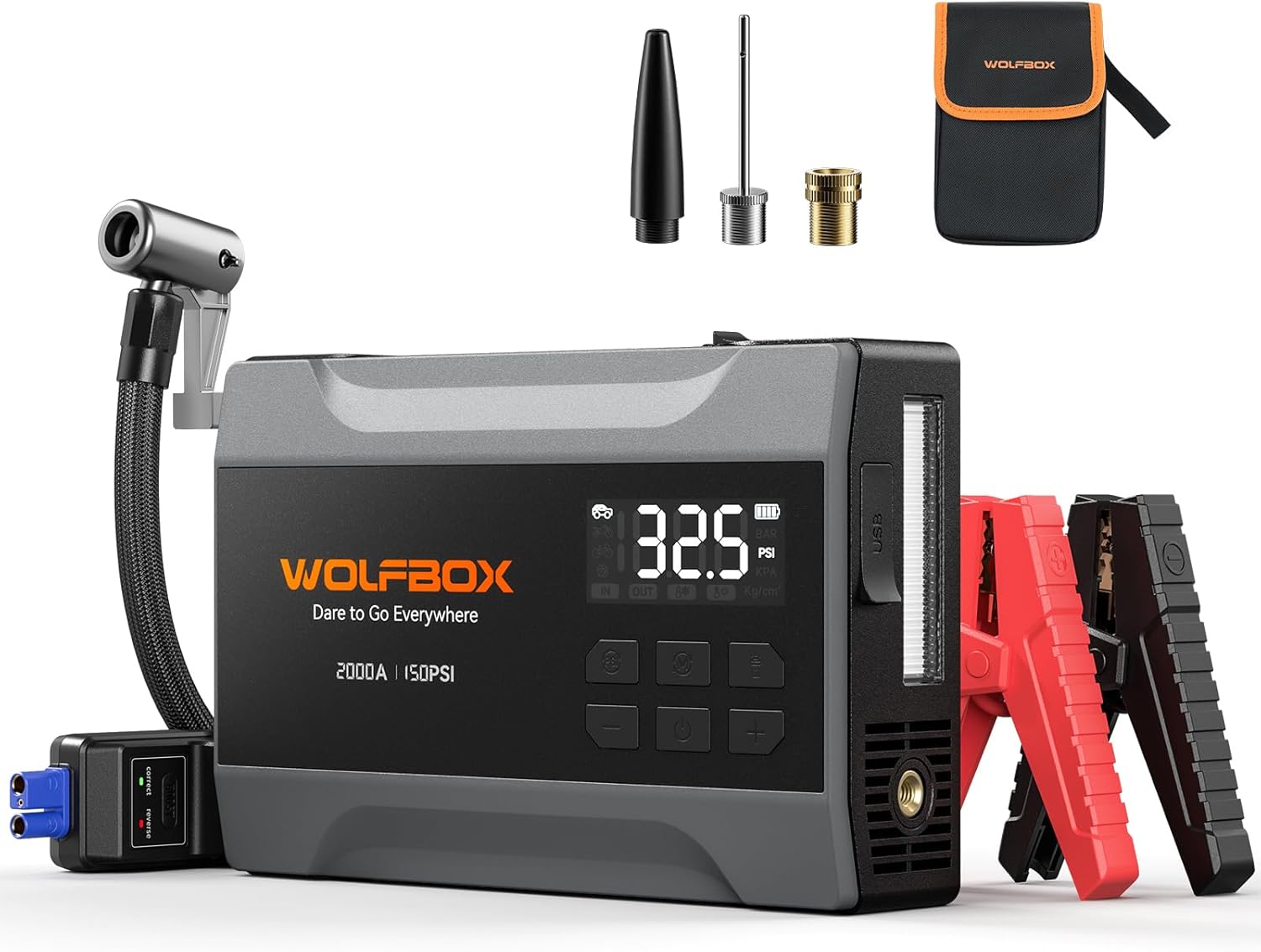
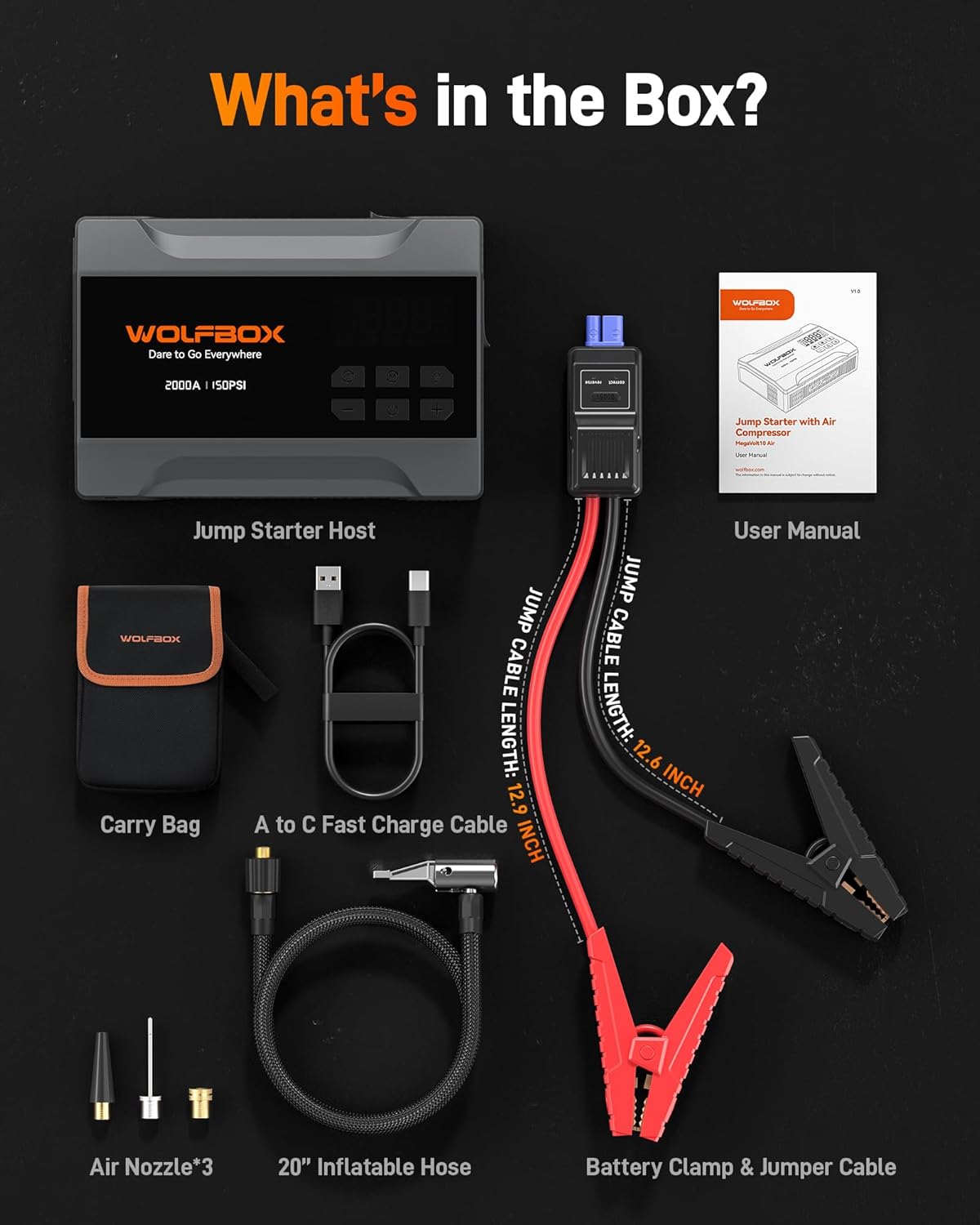
You’re getting a compact, multifunctional emergency tool with the WOLFBOX 2000A Jump Starter with Air Compressor, 37Wh Car Battery Jumper Starter Portable (up to 5L Gas Engine) with 150PSI Tire Inflator, 12V Jump Box with Jumper Cables, Boost, LED Light. It combines jump-start capability, an air compressor, a power bank, and emergency lighting into one device so you don’t have to carry multiple gadgets. If you want a single unit that covers the basics for roadside emergencies and short charging needs, this is a very practical option.
What this product is (and what it isn’t)
You’ll get a multi-purpose battery pack designed primarily for vehicle emergencies and occasional device charging. It’s not meant to replace a full replaceable car battery, nor is it a heavy-duty commercial compressor for long continuous use. If you need a lightweight, travel-friendly solution for jump-starting most gasoline cars up to 5L and inflating tires quickly, this fits the bill. If you need continuous, professional-grade inflation for long jobs, you’ll need a dedicated compressor.

Key specifications
Below is a clear breakdown of the main specs so you can see the essentials at a glance. This will help you compare with other units quickly and decide if it fits your needs.
| Feature | Specification |
|---|---|
| Product name | WOLFBOX 2000A Jump Starter with Air Compressor (37Wh) |
| Peak current | 2000A |
| Rated battery capacity | 37Wh |
| Jump-start capability | Up to 30 starts on a single full charge (12V, up to 5L gasoline engines) |
| Max inflation pressure | 150 PSI |
| Tire inflation example | Inflate 195/65 R15 from 29 to 36 PSI in ~1 minute |
| Inflation modes | Car, Motorcycle, Bicycle, Basketball |
| Pressure units | PSI, BAR, KPA, kg/cm² |
| USB output | 12W USB-A |
| USB-C input | 15W USB-C input (charging the unit) |
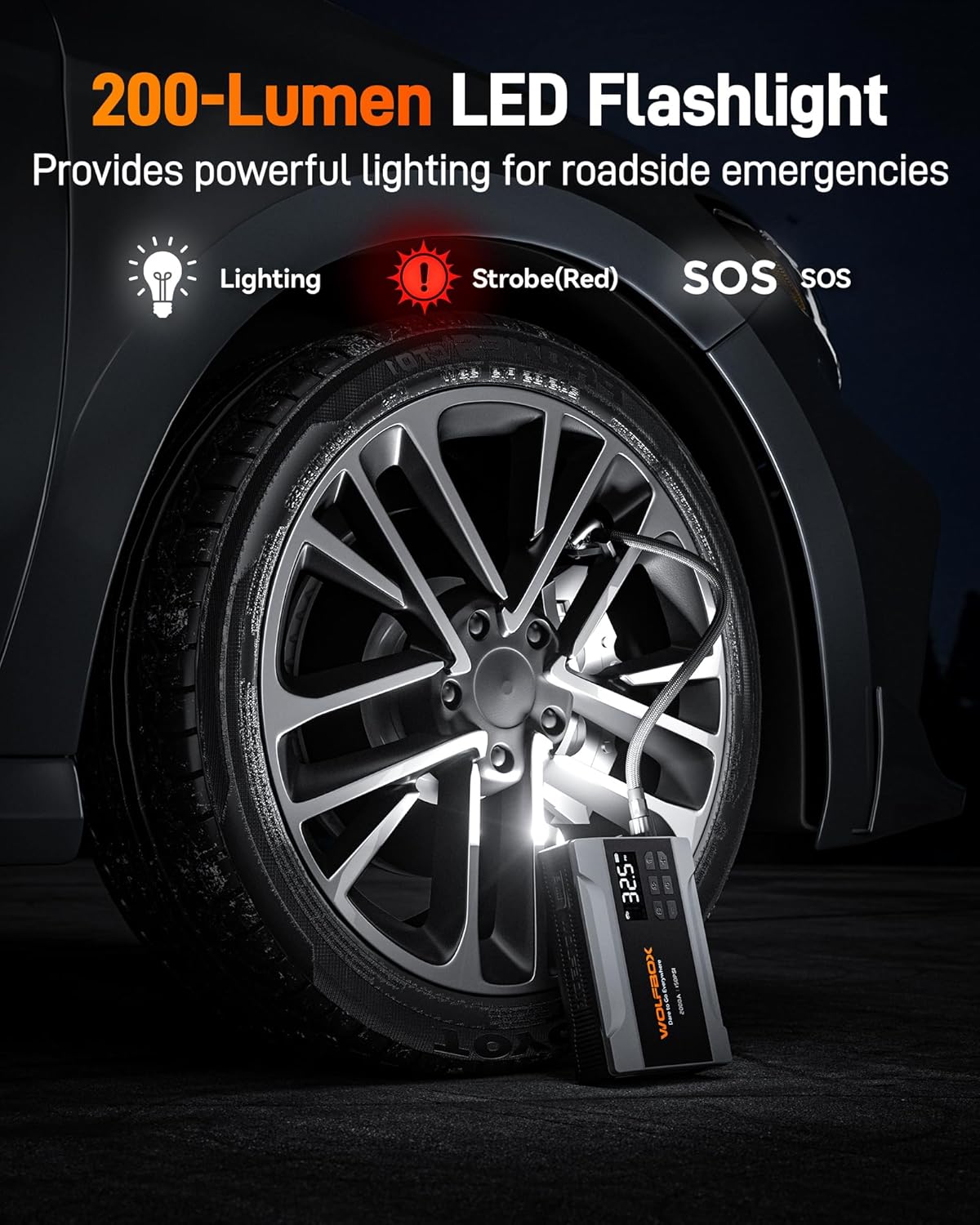
| LED light | 200 lumens with distress, strobe, high beam |
| Operating temperature | -4 to 140°F (-20 to 60°C) |
| Ingress protection | IP64 (splash and dust resistant) |
| Certifications | UL, FCC, CE, CA65 |
| Warranty | 24 months + 24/7 customer service |
Design and build quality
The unit feels compact and thoughtfully put together so you can tuck it into a trunk or a travel bag. You’ll find heat dissipation vents, a textured grip, and a layout that keeps ports and controls easy to reach even in low light. The build isn’t metal-heavy; it’s mostly high-grade plastic to keep weight down, but it still feels solid for typical roadside use.
Ergonomics and portability
You’ll appreciate the small footprint and how it fits in a trunk corner or under a seat. The weight is light enough for one-handed carry but feels substantial enough that you won’t worry about it slipping out of your hands. If you travel regularly or keep an emergency kit in your car, this is a device you can actually remember to bring.
Controls and display
You’ll find user-friendly buttons and a clear pressure readout for inflation. The LED screen and mode switches make it straightforward to select the right inflation mode or check battery levels. Even if your hands are cold or wearing gloves, the buttons are responsive and logically placed.
Jump-start performance
This is the core feature for many buyers, and it performs well for its size. With a 2000A peak current and the ability to start 12V gasoline engines up to 5L, it covers the engine sizes most passenger cars and many light trucks use. You can expect up to 30 jump starts on a single full charge under ideal conditions.
Real-world starting
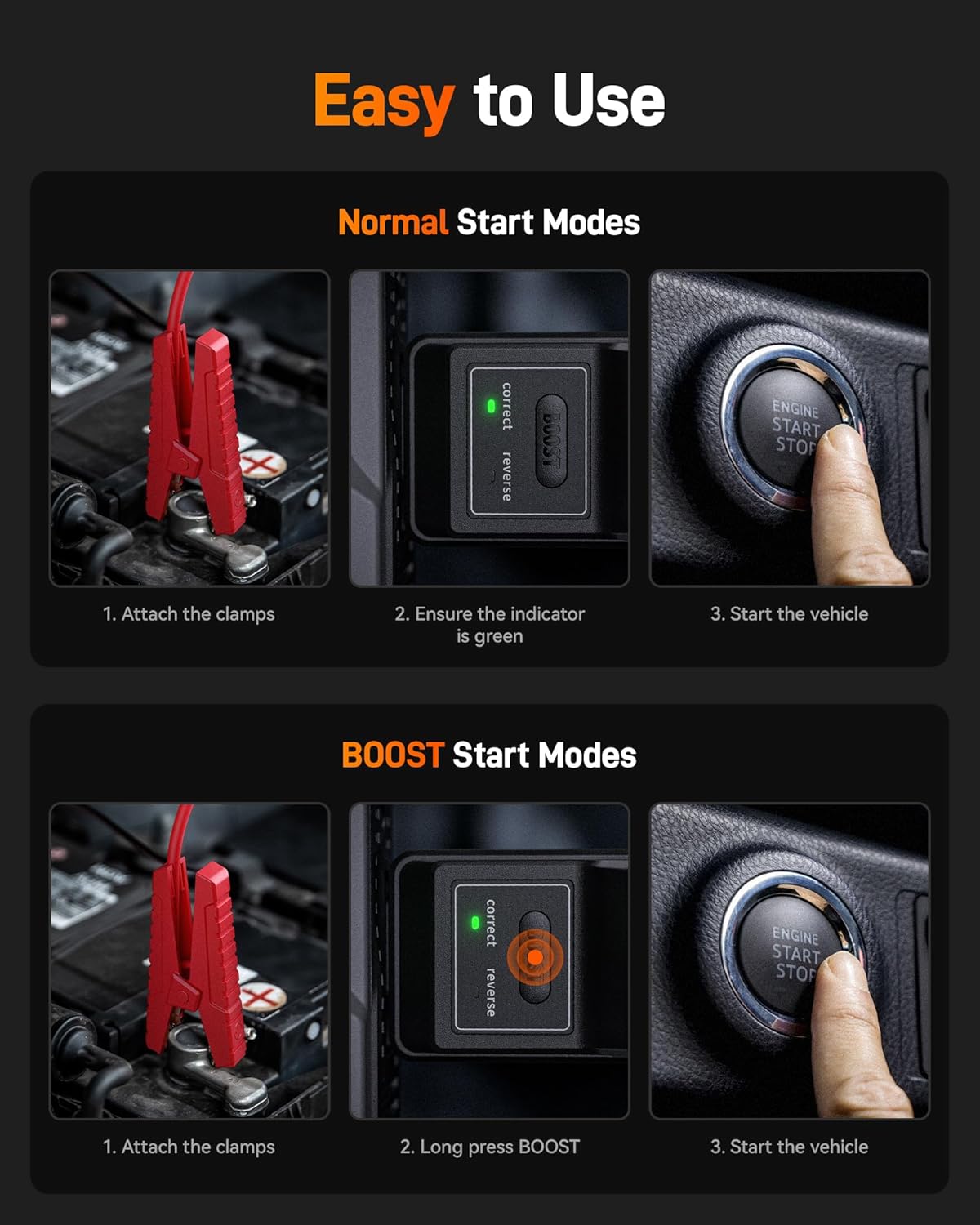
When you need a start, you’ll attach the included jumper cables and use the boost function. The clamps have built-in protections to prevent incorrect connections and to reduce sparks. For routine dead-battery scenarios—cold mornings or lights accidentally left on—this unit gets you back on the road quickly without needing another vehicle.
Safety features when jump-starting
You’ll get reverse-polarity protection, short-circuit protection, over-current protection, and an automatic cut-off if conditions are unsafe. Those protections matter because they reduce the risk of damaging vehicle electronics or causing additional hazards. The integrated safeguards give you reassurance when working around a car battery.
Air compressor and inflation performance
The integrated compressor is a major convenience. It saves you the hassle of portable plugs, tangled cords, or hunting for a gas station air pump. With a 150 PSI max and automatic stop based on real-time pressure reading, you’ll get fast and accurate inflation for tires and sports gear.
How it works for car tires
You’ll switch to the car mode, set the desired pressure, and the compressor will run until the preset pressure is reached. The example given—raising a 195/65 R15 tire from 29 to 36 PSI in about 1 minute—is realistic, and it’s fast enough to make roadside inflation practical. Automatic stop prevents over-inflation when you set the target correctly.
Other inflation tasks
You’ll also have motorcycle, bicycle, and ball modes. Those presets simplify the process—set the right mode, and the unit uses a sensible default pressure or lets you choose a specific number. For inflatables and small items, you’ll appreciate the included adaptors and the ability to switch units among PSI, BAR, KPA, and kg/cm².
Power bank and charging capabilities
Beyond emergency power for vehicles and tires, the WOLFBOX serves as a small power bank. It provides a 12W USB-A output to charge phones and accessories, and a 15W USB-C input to recharge the jump starter itself more quickly. You can charge phones, tablets, and some low-power laptops depending on compatibility.
Practical usage examples
You’ll be able to top up your smartphone multiple times depending on phone battery size and the unit’s remaining charge. For tablets and iPads, expect limited capacity because 37Wh is modest compared to large power banks. It’s most useful for emergency topping-up rather than full multi-day charging for heavy devices.
Charging time and convenience
You’ll recharge the unit via the USB-C input or a dedicated charger if provided. A full recharge time will vary by charger output; using a 15W USB-C source shortens the wait and keeps the unit more ready for repeated use. Carrying a small USB-C wall or car adapter will make keeping this device charged easy.
Durability and operating conditions
This unit is designed to work across a wide temperature range, so you won’t be surprised by sharp cold or heat when you need it. The IP64 rating guards against dust and splashing water, making it suitable for typical roadside exposure. Heat vents help keep the device stable under load, which also protects electronics inside.
Certifications and safety testing
You’ll notice certifications including UL, FCC, CE, and CA65; these indicate the manufacturer invested in safety testing and regulatory compliance. Those certifications aren’t a substitute for careful operation, but they do give extra peace of mind, particularly around battery and power safety.
Environmental limits
You’ll be able to operate it from -4 to 140°F (-20 to 60°C), which covers most climates. High-altitude or extreme cold situations may reduce effective capacity or starting performance, so take that into account in high-risk environments. If you live in extremely cold weather, keep the unit in a temperature-controlled place like a bedroom or heated garage when not in use.
What’s in the box
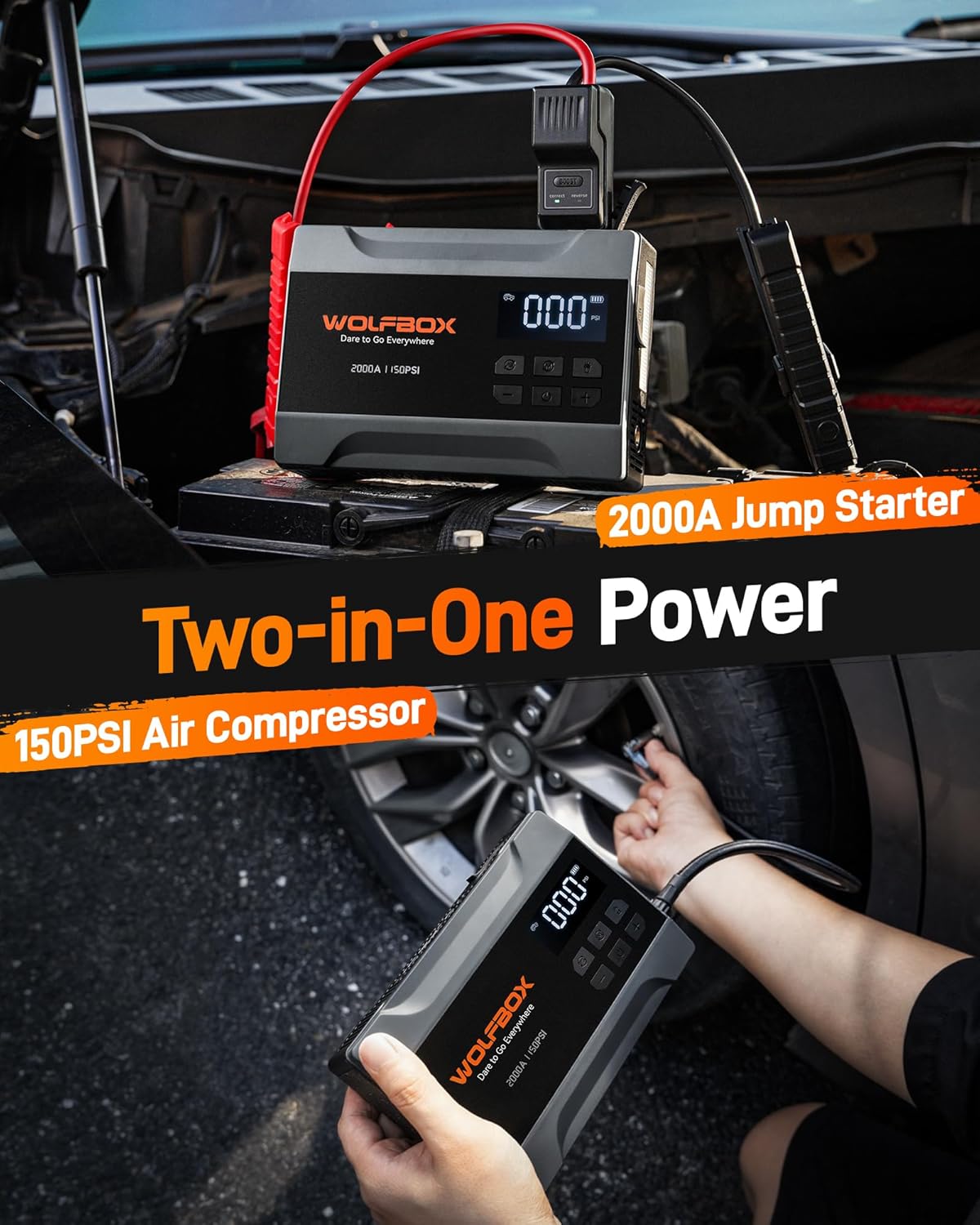
You’ll get the essentials needed to use the unit right away. These typically include the jump starter unit, jumper cables with clamps, the air hose and inflation needles/adapters, USB-C and possibly USB-A charging cables, and a user manual. A storage pouch or carrying case may be included in some bundles.
Accessories and extra parts
You’ll appreciate the included inflation adapters for basketballs and other inflatables, and the hose that connects to the compressor head. If accessories are missing, contact customer support—they offer 24/7 customer service and a 24-month warranty which helps cover missing or faulty pieces.
Step-by-step: How to jump-start a car
You’ll want a clear process to avoid mistakes. Follow these steps and the included manual for your specific vehicle for the best results.
- Turn off your vehicle and remove keys.
- Ensure the WOLFBOX is charged.
- Attach the red clamp to the positive (+) terminal and the black clamp to a grounded metal point on the car away from the battery (or negative terminal if recommended).
- Turn on the WOLFBOX jump-start function.
- Start the vehicle. If it doesn’t start within recommended attempts, wait and try again. Follow the manual for timing and safety.
- Disconnect clamps in reverse order once the car is running and allow your vehicle to run to recharge its battery.
You’ll find the clamps and reverse-polarity protection help make this safer even if you’re new to jump-starting.
Step-by-step: How to inflate a tire
You’ll find inflation just as intuitive as the jump function. The device’s screen helps prevent over- or under-shooting your target pressure.
- Connect the compressor hose to the tire valve and twist-tight if required.
- Select the appropriate mode (car, motorcycle, bicycle, ball).
- Set the desired pressure in your chosen units (PSI/BAR/KPA/kg/cm²).
- Start inflation; the device will show real-time pressure and stop automatically once target is reached.
- Remove hose and recap the tire valve.
You’ll save time and energy compared to manual pumps, and the automatic shutoff significantly reduces risk of overfilling.
Pros and cons
You’ll want a balanced view before buying. Here are the main strengths and limitations to consider.
Pros
- All-in-one tool: jump starter, compressor, power bank, and light in one compact unit.
- High peak current (2000A) supports large enough gasoline engines (up to 5L).
- Fast inflation with real-time pressure monitoring and auto-stop.
- IP64 rating and broad operating temperature range for reliability in diverse conditions.
- Useful safety features: reverse-polarity protection, short-circuit protection, and certifications.
- 24-month warranty and 24/7 customer support.
Cons
- 37Wh capacity is limited for heavy device charging—best for emergency top-ups.
- Not suitable for diesel engines above certain sizes or heavy commercial vehicles.
- Plastic construction, while durable, is not as rugged as metal-bodied industrial units.
- For repeated long-duration inflation tasks, a dedicated high-capacity compressor would be better.
How it compares with alternatives
You’ll find several competitors in the market offering jump starters with compressors, but differences come down to peak current, battery capacity, inflation pressure, and additional features. Many competing units offer higher battery capacity but may be bulkier. Conversely, smaller units are lighter but have less jump-start power.
Typical comparison points
- Peak amperage: 2000A is high for a compact unit and gives you an edge over many small jump starters.
- Battery size: 37Wh is modest compared to some 100Wh+ power packs, but those are heavier.
- Maximum PSI: 150 PSI is more than enough for car tires and most inflatables.
- Portability vs capacity: This model leans toward portability with solid emergency performance, while larger units prioritize multi-charge battery capacity.
If you want the least weight with useful emergency services, you’ll find this an excellent compromise.
Practical tips and best practices
You’ll be more satisfied if you use the device correctly and keep it ready for emergencies. These practical tips will help.
- Charge the unit periodically even if not used; battery packs can self-discharge over months.
- Store the unit inside the vehicle in moderate climates or carry it indoors during extreme cold to preserve battery life.
- Check inflation adapters and seals periodically for wear to avoid leaks during use.
- Always follow clamp connection order: positive first, then ground/negative to reduce sparking risk.
- Read the manual’s suggested wait and retry times between jump attempts to avoid overheating.
- Keep a small microfiber cloth or a zip-lock with spare adapters in the carrying bag for convenience.
Maintenance and storage
You’ll want to maintain the device to extend its life. Regular checks and correct storage can prevent common issues.
Long-term storage tips
If storing for months, charge it to about 50–70% and store in a dry place away from direct sunlight. Recharge every 3–6 months to avoid deep discharge. Avoid exposing it to extremely hot or cold environments for prolonged periods.
Cleaning and checks
Wipe the exterior with a damp cloth and inspect cables and clamps for corrosion or damage. Ensure the inflation hose is free of obstructions and that the nozzles are clean.
Frequently asked questions (FAQ)
You’ll likely have some common questions before buying. Here are clear answers to the ones people ask most.
Q: Can it start diesel engines? A: It’s rated for gasoline engines up to 5L. Diesel engine starting depends on displacement and compression; this unit may not be sufficient for many diesel pickups or commercial vehicles.
Q: How many times can it inflate a tire on a full charge? A: Inflation capacity depends on starting pressure and target pressure. You’ll typically get multiple inflations for small adjustments, but repeated large-pressure changes will drain the 37Wh battery faster than jump-starting.
Q: Will it charge a laptop? A: You can charge small, low-power laptops if they’re compatible with USB-A output or via USB-C charging, but 12W/15W outputs are limited. For full laptop recharges, you’ll likely need a larger power bank or laptop-specific power solution.
Q: What happens if I connect clamps backward? A: The unit has reverse-polarity protection which prevents damage and alerts you to incorrect connections. Always double-check clamps before powering on.
Warranty and customer support
You’ll have a 24-month warranty backed by 24/7 customer service. If you encounter manufacturing defects or missing parts, contact support for troubleshooting, replacement parts, or warranty claims. Keep your purchase receipt and product serial number handy to speed up service.
Who this product is best for
You’ll benefit from this product if you’re a commuter, weekend traveler, or small family car owner who wants compact emergency tools. It’s great if you need reliable jump-start capability, swift inflation for tires and inflatables, and occasional device charging while keeping overall carry weight and volume low.
Who should consider something else
If you regularly jump large diesel trucks, run a small workshop with continuous inflation needs, or need long multi-device charging capacity, you’ll likely be better off with a larger-capacity jump starter or a professional-grade compressor and a higher-capacity power bank.
Final thoughts and recommendation
You’ll find the WOLFBOX 2000A Jump Starter with Air Compressor, 37Wh Car Battery Jumper Starter Portable (up to 5L Gas Engine) with 150PSI Tire Inflator, 12V Jump Box with Jumper Cables, Boost, LED Light to be a smart, space-saving choice for everyday drivers who want peace of mind. It’s not the biggest battery on the market, but the blend of strong peak current, a capable compressor, a compact power bank, and safety certifications makes it an excellent all-round emergency unit. If you want a single device that covers the most common roadside emergencies and fits easily in your trunk, this will serve you well.
Quick buying checklist
You’ll want to confirm a few things before purchase:
- Do you need jump-start power for gasoline engines up to 5L? If yes, this will work.
- Will you rely on it for frequent, heavy device charging? If so, consider a larger-capacity unit.
- Do you want a compact, lightweight emergency kit that includes inflation and lighting? This is a good pick.
- Are you comfortable with plastic-bodied devices and standard accessories? If yes, you’ll find the price-to-feature ratio attractive.
If your answers match the strengths above, this WOLFBOX model is a practical choice that keeps you prepared without adding bulk to your car.

Disclosure: As an Amazon Associate, I earn from qualifying purchases.