
Are you trying to decide if the Westinghouse 296Wh 600 Peak Watt Portable Power Station and Solar Generator is the right power solution for your next trip or emergency?

Product overview
You want a compact, quiet, and reliable power source that can handle small appliances and charge multiple devices at once. The Westinghouse 296Wh 600 Peak Watt Portable Power Station and Solar Generator aims to be that solution, giving you portable lithium power with multiple output options and three charging methods.
What this unit is designed to do
You can use this unit for camping, travel, tailgates, festivals, and as an emergency backup at home. It’s designed to be portable enough for outdoor outings while offering enough capacity for lights, phones, laptops, small appliances, and select medical devices like CPAP machines for limited durations.
Key specifications
You should know the core numbers so you can match the unit to your needs. Below is a concise specification table that breaks down the most important figures at a glance.
| Specification | Detail |
|---|---|
| Model | Westinghouse 296Wh 600 Peak Watt Portable Power Station and Solar Generator |
| Battery Capacity | 296 Watt-hours (Wh) |
| Continuous Output | 300 Watts |
| Peak (Surge) Output | 600 Watts |
| Outputs | 2 × 120V AC outlets (pure sine wave), 3 × USB ports (including USB-C and Quick Charge 3.0), 1 × 12V car outlet, multiple DC outputs |
| Inputs | 12V DC input, wall charger (included), car charger (included), optional solar panel (not included) |
| Weight | ~6 lb |
| Battery Type | Lithium-ion |
| Noise | None (silent operation) |
| Indoor Use | Safe for indoor use (no fumes) |
| Display | LED display with control buttons and power info |
How those specs matter to you
You will want to match the continuous and peak watt ratings to the devices you plan to run. The pure sine wave AC outlets mean sensitive electronics are safer to run, and the variety of ports helps when multiple devices need charging at the same time.
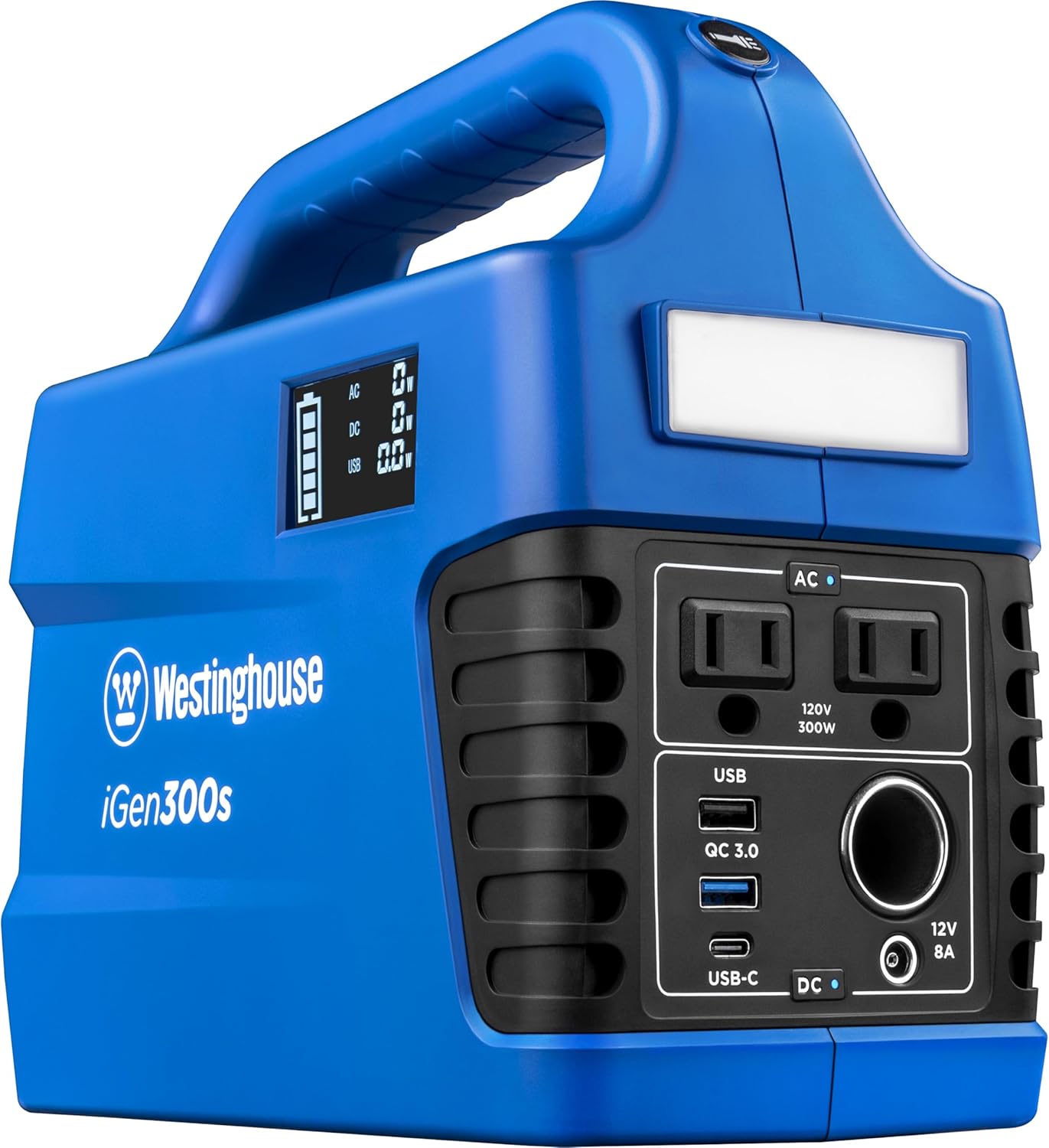
Design and portability
You’ll appreciate a compact design when you carry it to campsites, festivals, or store it in your vehicle. The 6 lb weight makes it one of the lighter options in its class, and the built-in handle makes transport easy.
Build quality and layout
The unit is built for practicality with sturdy housing and an LED display that keeps controls and power information in one place. The layout groups AC, DC, and USB outputs logically so you can reach ports without tangling cords.
Size and carry convenience
Because it’s designed to be light and compact, you can easily toss it into a car trunk, camper, or closet for emergencies. If you plan frequent hikes that require carrying long distances, you’ll still want to check how it fits into your pack because it’s compact but not ultralight.
Power and performance
You should look at both the raw numbers and how they translate to real-world runtimes. The 296Wh capacity and 300W continuous output define what devices you can reasonably support.
Capacity explained in everyday terms
A 296Wh battery stores enough power to run a 30W device for almost 10 hours or a 60W device for nearly 5 hours under ideal conditions. Real-world results can vary due to device efficiency and environmental factors, but this gives you an idea of the practical limits.
AC, DC, and USB outputs in practice
You can power small appliances and charge multiple electronics at once with the dual 120V pure sine wave outlets, USB-A, USB-C, Quick Charge 3.0, and the 12V car output. The pure sine wave output is especially useful for sensitive electronics like laptops and some CPAP machines.
Real-world run time examples
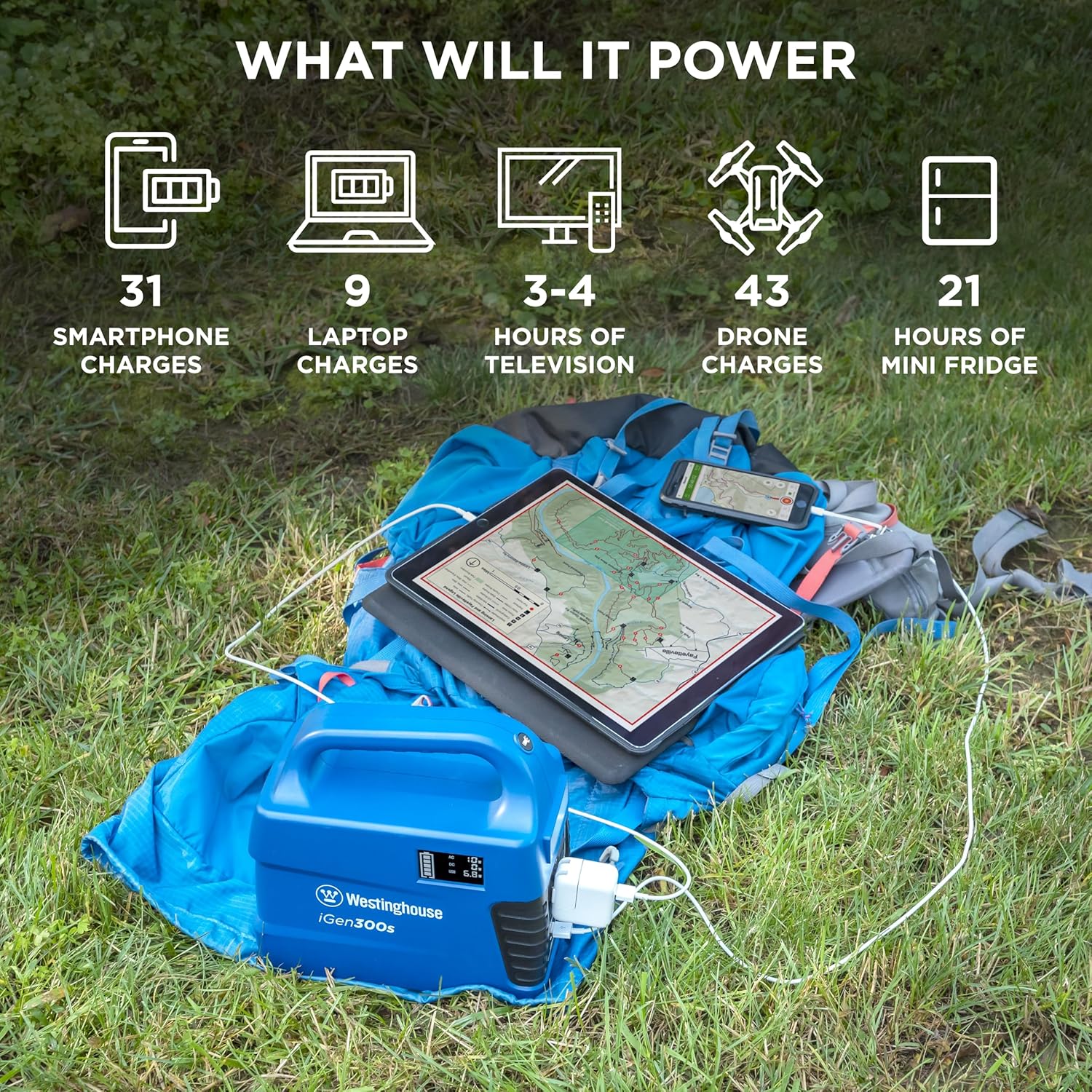
You’ll find it helpful to see estimates for common devices so you can plan properly. Below is a practical runtime table using conservative approximations based on the 296Wh capacity.
| Device | Typical Power Draw | Estimated Runtime (approx.) |
|---|---|---|
| LED string lights (7W) | 7W | ~40 hours |
| TV (32″, LED, 30-100W) | 30–100W | ~3 hours (at 100W) |
| Smartphone (15 Wh per charge) | 15 Wh | ~14 full charges |
| Laptop (50–65W) | 50–65W | ~3 charges (varies) |
| Drone battery (50Wh) | 50Wh | ~5–6 charges (model dependent) |
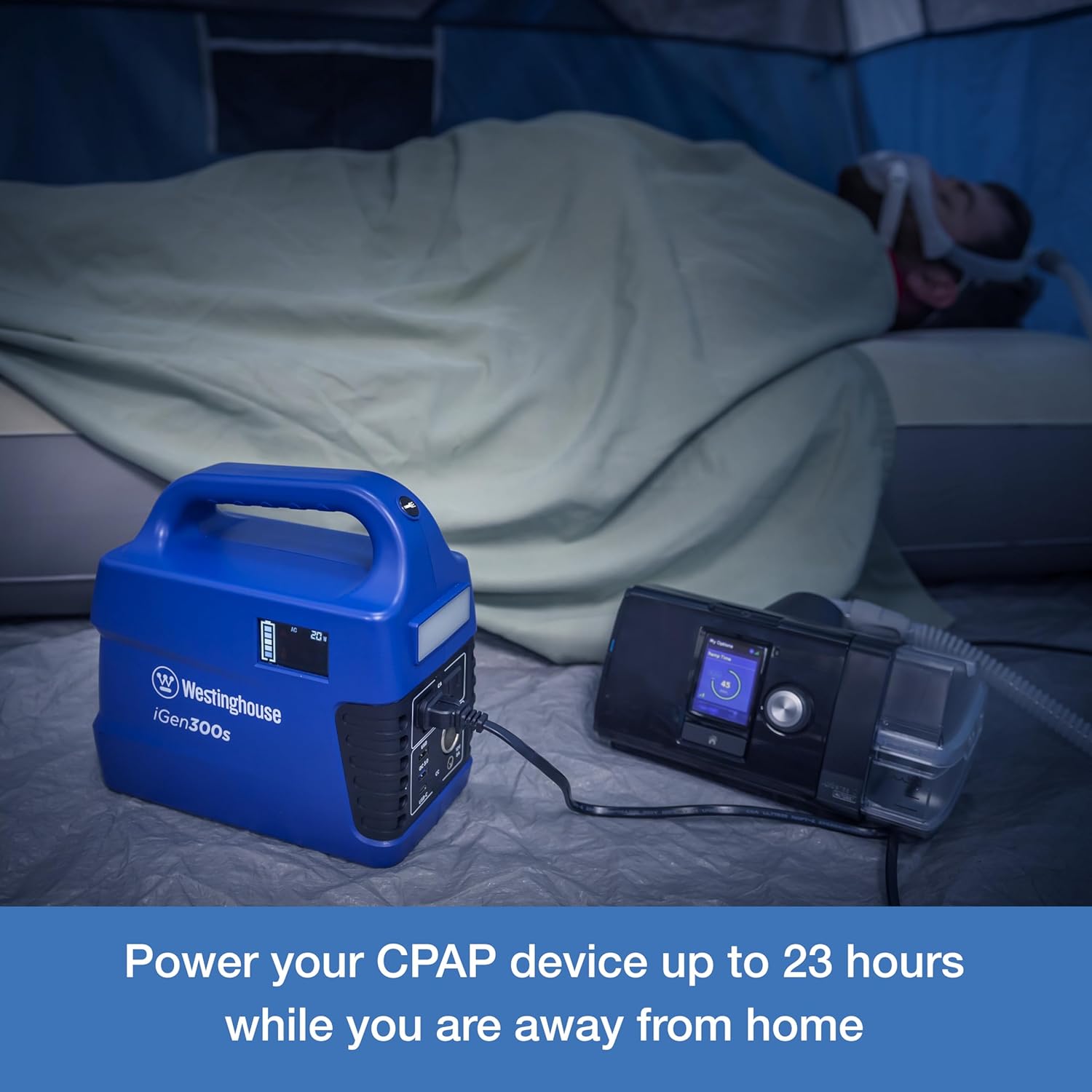
| CPAP (30–60W depending on model/settings) | 30–60W | ~2 nights on select lower-power CPAP devices |
Notes on runtime accuracy
Your actual runtimes will vary based on device draw, power conversion losses, and environmental conditions (like temperature). The surge rating (600W peak) allows starting motors or compressors briefly, but continuous loads must stay under 300W.
Charging methods and times
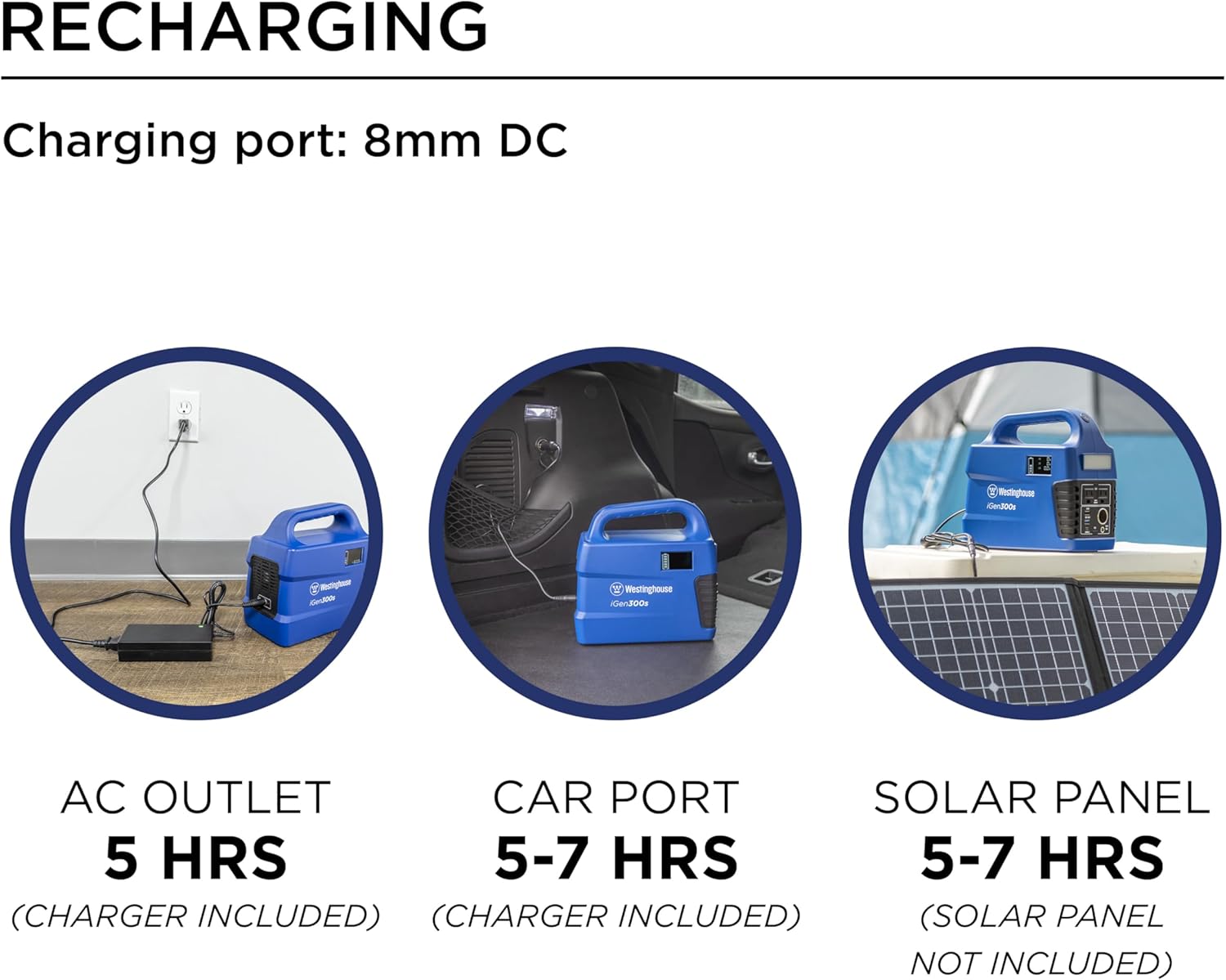
You’ll want to know how quickly the power station recharges and which options you have. The unit supports three charging methods: wall charger (included), car charger (included), and optional solar charging (solar panel not included).
Wall charging
Using the included AC wall charger is the most convenient method, and it’s typically the fastest. Exact wall-charge times vary, but expect a full charge in a few hours under normal conditions.
Car charging
Car charging offers a way to recharge while driving. This is slower than wall charging but useful during road trips or when you’re away from grid power. You can use the included car charger to maintain or partially charge the unit in transit.
Solar charging
If you want a sustainable option, you can add a solar panel and charge in daylight. Solar charging speed depends on panel wattage and sun conditions. The unit’s 12V DC input allows a direct solar input when you have a compatible panel, making it suitable for off-grid setups if you size your panel appropriately.
User interface and controls
You’ll interact with the LED display for status and controls, and that display keeps all essential information in one place so you don’t have to guess battery percentage or output use.
Display and buttons
The LED display shows battery level, input/output power, and active outputs. Buttons let you enable or disable AC output and other functions quickly, giving you easy control without a manual.
Status indicators and alerts
Built-in indicators and safety alerts help protect both the power station and connected devices. Overload, over-temperature, and short-circuit protections are common, and the unit will notify you or shut down outputs as needed.
Safety features
You’ll want to trust the power station to protect your devices and avoid hazards. The Westinghouse unit includes built-in protections to prevent overcharge, over-discharge, overload, and short circuits.
Why protections matter
When you’re powering laptops, smartphones, or medical devices, a sudden surge or fault could cause damage or lose data. Built-in safety features mitigate those risks and make the unit safer for indoor use.
Use around sensitive equipment
The pure sine wave AC output keeps your equipment running cleaner and more reliably than modified sine wave inverters, reducing noise, heat, and potential compatibility issues with certain chargers and motors.

Battery longevity and maintenance
You’ll want to treat the battery well to get maximum cycles and reliable performance over time. Lithium-ion batteries are low maintenance, but a few best practices will extend life.
Charging cycles and expected life
Lithium-ion cells generally provide hundreds of cycles before capacity noticeably declines. To maximize battery longevity, avoid letting it sit fully discharged for long periods and avoid storing it at 100% for extended times if possible.
Storage and temperature considerations
Store the unit in a cool, dry place and avoid extreme temperatures. High heat will shorten battery life, while extreme cold can temporarily reduce usable capacity until the battery warms up.
Practical use cases
You’ll find the unit useful in several scenarios, and understanding its strengths helps you plan better.
Camping and outdoor events
For small group camping, the unit can run lights, charge phones and cameras, and power a portable speaker or mini-fridge briefly. Its quiet, fuel-free operation makes it campsite-friendly.
Road trips and travel
You can keep devices charged during long drives and use the car charger to top up the unit while you move. It’s handy for powering laptops, drones, and small inflators at rest stops.
Emergency backup at home
For brief outages you can keep phones, lights, and essential small appliances running, and you’ll have peace of mind during storms or grid interruptions. Remember the capacity is modest, so prioritize critical devices during an outage.
Medical devices (CPAP)
The unit can power select CPAP machines for a limited number of nights depending on mask type, humidifier use, and pressure settings. Confirm your CPAP’s power draw and whether it has a DC-compatible adapter before relying on this unit for nightly use.
Comparison with similar units
You’ll want to weigh this model against other portable power stations in the 200–500Wh range. It performs well for its size and weight, with the pure sine wave inverter and multiple ports as clear advantages.
Strengths versus peers
Compared to similar-capacity units, the Westinghouse box is lightweight and offers a good mix of AC and modern USB outputs, including USB-C and Quick Charge 3.0. The pure sine wave inverter sets it apart for sensitive electronics.
Limitations compared to larger stations
If you plan to run larger appliances like full-size refrigerators or multiple high-wattage tools, you’ll need a higher-capacity station with greater continuous output. This unit is best for smaller loads and short-term use.
Pros and cons
You want a balanced picture so you can decide whether the unit fits your needs. Below are the main advantages and limitations you’ll encounter.
Pros
- Lightweight and easy to transport at about 6 lb.
- Multiple output options: two AC outlets (pure sine wave), USB-A, USB-C, Quick Charge 3.0, and a 12V car outlet.
- Quiet, fuel-free operation suitable for indoor use.
- LED display provides clear power and status information.
- Three charging methods (wall, car, solar with optional panel) add flexibility.
Cons
- 296Wh capacity is limited for long-term home backup or high-wattage appliances.
- Only 300W continuous output restricts heavier loads and many kitchen appliances.
- Solar panel is not included, so you’ll need to buy one separately for off-grid solar charging.
- Real-world runtimes vary and will be less than theoretical maximums after accounting for inverter losses.
Setup and first-time use
You’ll want straightforward steps to get started and to validate the unit works as expected. Setup is simple and quick when you follow a few basic steps.
Unboxing and inspection
When you first open the box, inspect the unit for damage and make sure the included wall and car chargers are present. Check the LED display and test each port briefly to confirm proper operation.
Initial charging recommendation
Charge the unit fully before your first use for best battery calibration and longest initial runtime. Using the wall charger overnight usually brings it up to full capacity.
Tips to get the best performance
You’ll get better results by matching loads to the unit’s strengths and using efficient charging practices.
Efficient power use
Prioritize low-wattage LEDs and power-saving modes on laptops and devices. Use the USB ports for direct charging to minimize inverter losses, and turn off AC output when you’re only charging USB devices.
Sizing solar panels and accessories
If you plan to add solar, choose a panel that matches or slightly exceeds the input wattage the unit supports for reasonable charge times. Also consider an MPPT or compatible controller if required by the solar setup you choose.
Maintenance and care
You’ll want simple maintenance habits to keep the unit usable for years. Routine care will protect the battery and electronics.
Routine checks
Periodically cycle the battery (charge and discharge) to keep cells balanced, and inspect ports and wiring for damage or corrosion. Clean vents and surfaces to prevent dust buildup that can affect heat dissipation.
Long-term storage
If you store the unit for months, keep it around 40–60% charged and in a cool environment. Check and recharge at least every 3–6 months to prevent deep discharge.
Frequently asked questions
You’ll likely have practical questions before buying or using the unit; below are common ones and concise answers.
Can this power a mini-fridge?
You can power many mini-fridges for short periods if their startup surge and average consumption stay within the 600W peak and 300W continuous limits. Check your fridge’s startup watt rating and ongoing power consumption first.
How long does it take to charge from 0–100%?
Charging times vary by method: wall charging is fastest, often a few hours, car charging takes longer, and solar depends on panel wattage and sunlight. Expect variable times based on conditions.
Is the unit safe for indoor use?
Yes. Because it uses lithium-ion batteries and produces no fumes or noise, it’s safe for indoor use as long as you follow standard battery safety and avoid exposing it to water or extreme conditions.
Can you power high-watt tools?
No. The 300W continuous output is too low for most standard power tools and high-wattage appliances. Use a larger-capacity power station for heavy-duty tools.
Do I need a special solar panel?
You need a solar panel and controller that are compatible with the unit’s DC input specifications. Westinghouse and other third-party panels often work, but verify voltage and connector compatibility.
Accessories and add-ons
You’ll increase functionality with a few carefully chosen accessories. Consider a solar panel, a protective carrying case, and any specific adapters for devices like CPAP machines.
Recommended extras
- Solar panel sized to your expected daily energy needs (e.g., 100W or larger for faster charging).
- Protective case or padded bag for transport.
- Extra DC or AC adapters for devices with unusual plugs.
What to avoid
Avoid cheap, incompatible solar panels or adapters that don’t match the input voltage or connector type. Also avoid exposing the unit to rain or heavy moisture without protection.
Who should buy this unit
You’ll find it useful if you need a lightweight, quiet, and portable power source for electronics and small appliances. It suits campers, weekend travelers, festival-goers, and people wanting a compact emergency backup.
Who should consider a larger unit instead
If you need to run full-size refrigerators, electric heaters, power tools, or need multi-day whole-house backup, consider a larger capacity unit in the 1000Wh+ range with higher continuous wattage.
Final verdict
You’ll get a highly portable, well-rounded power station with the Westinghouse 296Wh 600 Peak Watt Portable Power Station and Solar Generator if your needs center on charging devices, powering small appliances, and short-term backup. The pure sine wave inverter, multiple ports, and light weight make it a flexible choice for many users, while the limited capacity and continuous output mean you should plan loads carefully and consider larger alternatives for heavy-duty needs.
Bottom-line recommendation
If you want a compact, quiet, and multi-port power station for camping, travel, or emergency phone/laptop backup, this unit is a solid option. If you need prolonged home backup or to run high-wattage appliances, consider a higher-capacity model.
If you want, I can help you calculate how long this unit would run your specific devices or recommend compatible solar panels and accessories so you can get the most out of it.
Disclosure: As an Amazon Associate, I earn from qualifying purchases.