
Are you ready to see whether the VTOMAN 3096Wh Portable Power Station Bundle can actually keep your home, RV, or campsite powered without stress?

Product overview: VTOMAN 3096Wh Portable Power Station Bundle with Extra Battery & 200W Solar Panel Included – Up to 3600W Solar Power Generator for Home Backup, Off-grid, Road Trip, RV, Camping, Fishing, Emergency
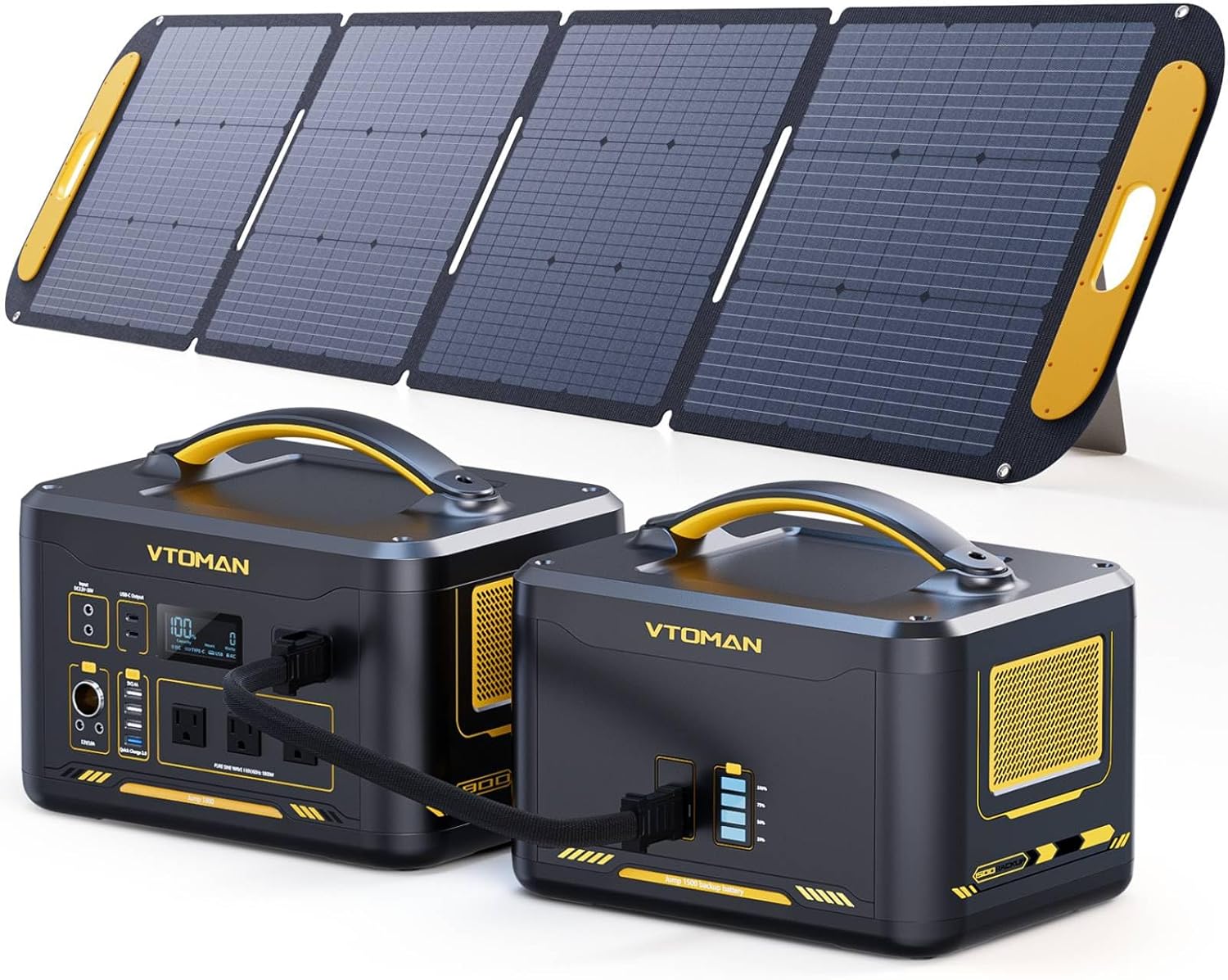
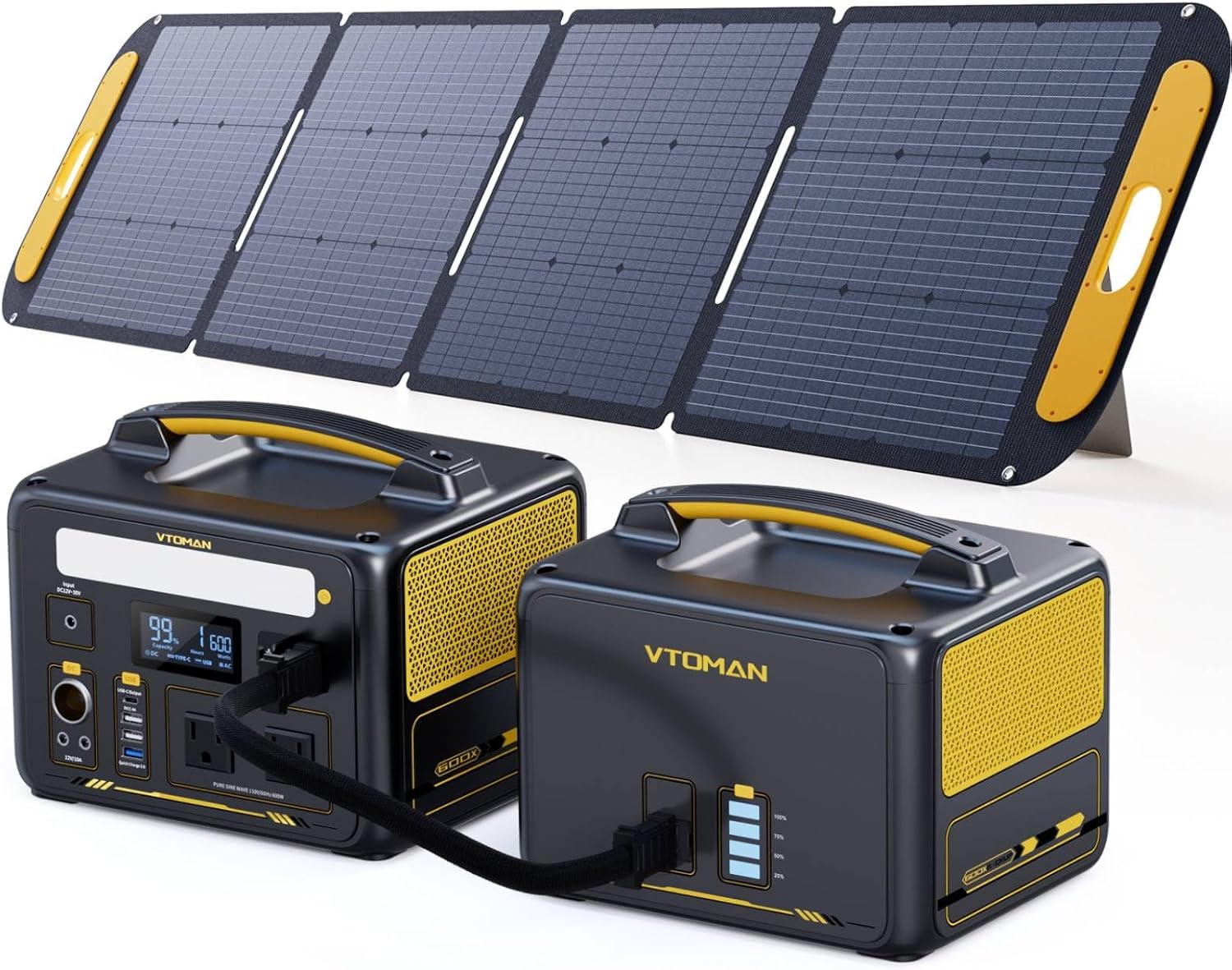
You’re looking at a bundled system that pairs the VTOMAN Jump 1800 power station with a Jump 1500 extra battery and a 200W solar panel, giving you a combined usable capacity of up to 3096Wh out of the box. The bundle is meant to cover a wide range of scenarios from emergency home backup to long off-grid trips, and it’s worth unpacking what that actually means for your needs.
Quick specs at a glance
This is a compact table that breaks down the most important numbers and features so you can assess fit for your use case quickly. Use this as your go/no-go checklist before reading the deeper sections.
| Feature | Spec / Detail |
|---|---|
| Bundle components | VTOMAN Jump 1800 power station, Jump 1500 extra battery, 200W solar panel, AC adapter, car charging cable, Cables (Type-C, USB-A), user manual |
| Total expandable capacity | Up to 3096Wh (1548Wh base + 1548Wh extra) |
| Battery chemistry | LiFePO4 (Long life, safer chemistry) |
| Cycle life | ~3,000 cycles to 80% capacity |
| Continuous AC output | 1800W pure sine wave |
| Surge output | 3600W peak |
| Number of simultaneous outputs | Up to 12 devices |
| USB-C output | 2 × PD 100W |
| USB-A outputs | 4 (one QC 3.0 port, 18W max) |
| DC outputs | 2 × 12V/10A DC5521, 1 × regulated 12V/10A car port |
| Solar panel | 200W monocrystalline, up to 23% efficiency |
| Solar interface | MC4 with 3-in-1 adapter (Anderson / XT60 / DC5521) |
| Special features | Pass-through charging, SuperSafe LIFEBMS protections |
| Shipping note | Items ship in 3 separate packages due to weight; arrival times may differ |
What’s included in the box
You’ll receive the Jump 1800 power station, the Jump 1500 extra battery, and the 200W solar panel as part of the bundle, along with all the common charging cables and adapters. Keep in mind that because of the package weight, the three items arrive separately — be patient if you see only one or two packages at first.
Shipment timing and what to expect
VTOMAN clearly states the bundle ships in three separate packages, so staggered delivery is normal and not a missing item alert. If you prefer simultaneous delivery, contact the seller before purchase to discuss options, but generally this split shipment is for safe handling and to comply with carrier limits.
Design and build quality
You’ll notice the VTOMAN Jump 1800 is built with practical portability in mind, featuring a handle and a compact footprint that still feels beefy because of the steel and polymer construction inside. The finish is matte and practical rather than flashy, which suits both outdoor and indoor emergency use.
Exterior durability and ports layout
The ports are grouped logically on the front and side faces so you can access AC, DC, and USB outputs without cables getting tangled across the top surface. Rubber covers protect DC ports from dust and moisture, but this isn’t a fully waterproof unit, so you should shield it from heavy rain.
Battery chemistry and safety: LiFePO4 + SuperSafe LIFEBMS
You get LiFePO4 chemistry in the Jump 1800, which is a major plus if you want a battery that tolerates heat better and has longer lifecycle than standard NCM or NMC packs. The built-in SuperSafe LIFEBMS provides up to 10 protections including overcharge, over-discharge, over-voltage, over-current, and thermal protections — so you can feel safer while charging sensitive electronics or running heavy loads.
Advantages of LiFePO4 for your usage
LiFePO4 batteries are known for stability, long cycle life, and lower tendency to thermal runaway compared with some other chemistries, which makes them a great choice for long-term home backup or frequent outdoor use. The advertised 3,000 cycles to 80% capacity translates to years of regular use if you cycle the unit often — that’s a big long-term cost advantage.
Capacity: 1548Wh base, expandable to 3096Wh
Out of the box the Jump 1800 offers 1548Wh of usable capacity, and the included Jump 1500 extra battery doubles that to 3096Wh for the bundle you’re looking at. That expansion ability means you can tailor runtime to your needs — run a few key appliances for many hours or many small devices for days.
What 3096Wh looks like in real life
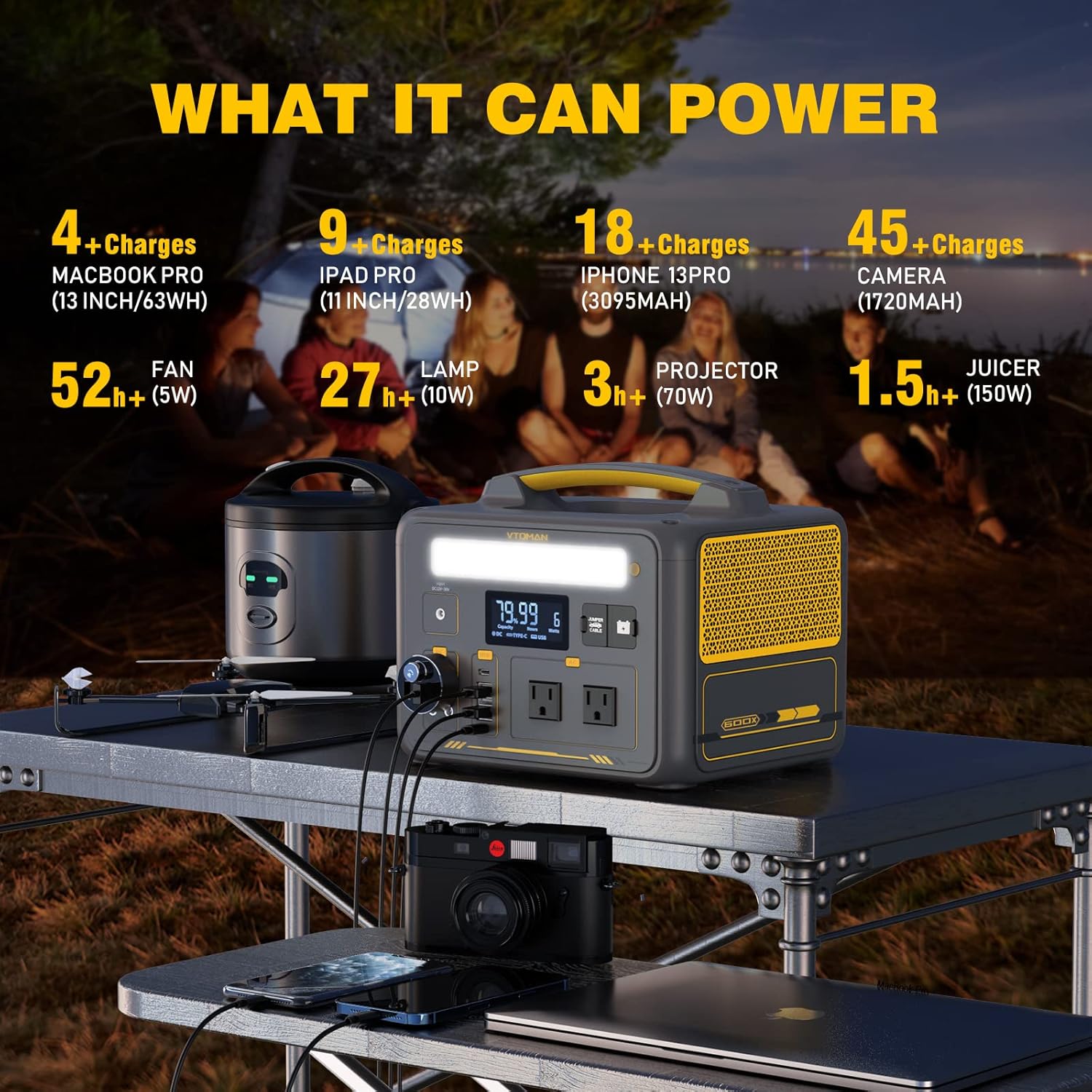
With 3096Wh you could run essential devices like a refrigerator, Wi-Fi router, LED lights, and a few devices for many hours, or run a typical 60W laptop for dozens of hours. Remember that actual runtime depends on appliance efficiency, inverter loss, and environmental factors, so these are practical estimates rather than guarantees.
Power output and inverter performance
The Jump 1800 provides a continuous pure sine wave AC output at 1800W, with surge capability up to 3600W — that surge helps start motors and compressors. Importantly, the unit is designed to continue providing 1800W constant-power output, even when attempting to run appliances rated above 1800W, rather than shutting the outputs off outright.
Handling high-power appliances
You can expect more reliable starts on appliances with motors, like refrigerators and some power tools, because of the 3600W surge. Still, appliances with very high continuous draws (electric ovens, high-wattage space heaters over 1800W) are not suitable for long-term continuous use on this unit without checking the actual power draw carefully.
Ports and simultaneous device charging
You can charge up to 12 devices at once thanks to a combination of 3 AC outlets, multiple DC outputs, car port, 4 USB-A ports, and 2 Type-C PD 100W ports. This is particularly useful when you and others need to keep phones, laptops, cameras, and small appliances charged at the same time.
Details on the USB and Type-C outputs
The two Type-C ports support PD 100W, which is more than enough to fast-charge almost any laptop and modern phone simultaneously. The USB-A section includes a QC 3.0 port that can deliver up to 18W for smartphones and tablets, so you won’t be fighting for fast charge ports.
Charging methods and estimated times
You can charge the power station by AC adapter, car charger, or solar panel; the product supports pass-through charging so you can use outputs while the unit is charging. Exact recharge times vary by method and attached extra battery: using AC is typically the fastest, solar depends on panel wattage and sun intensity, and car charging is slower but handy on the road.
AC charging (wall)
When plugged into AC with the included adapter, you’ll get the fastest recharge rate; this is ideal for topping up before a trip or recovering quickly after heavy use. Expect several hours for a full charge depending on whether the extra battery is attached and the starting state of charge.
Solar charging with the included 200W panel
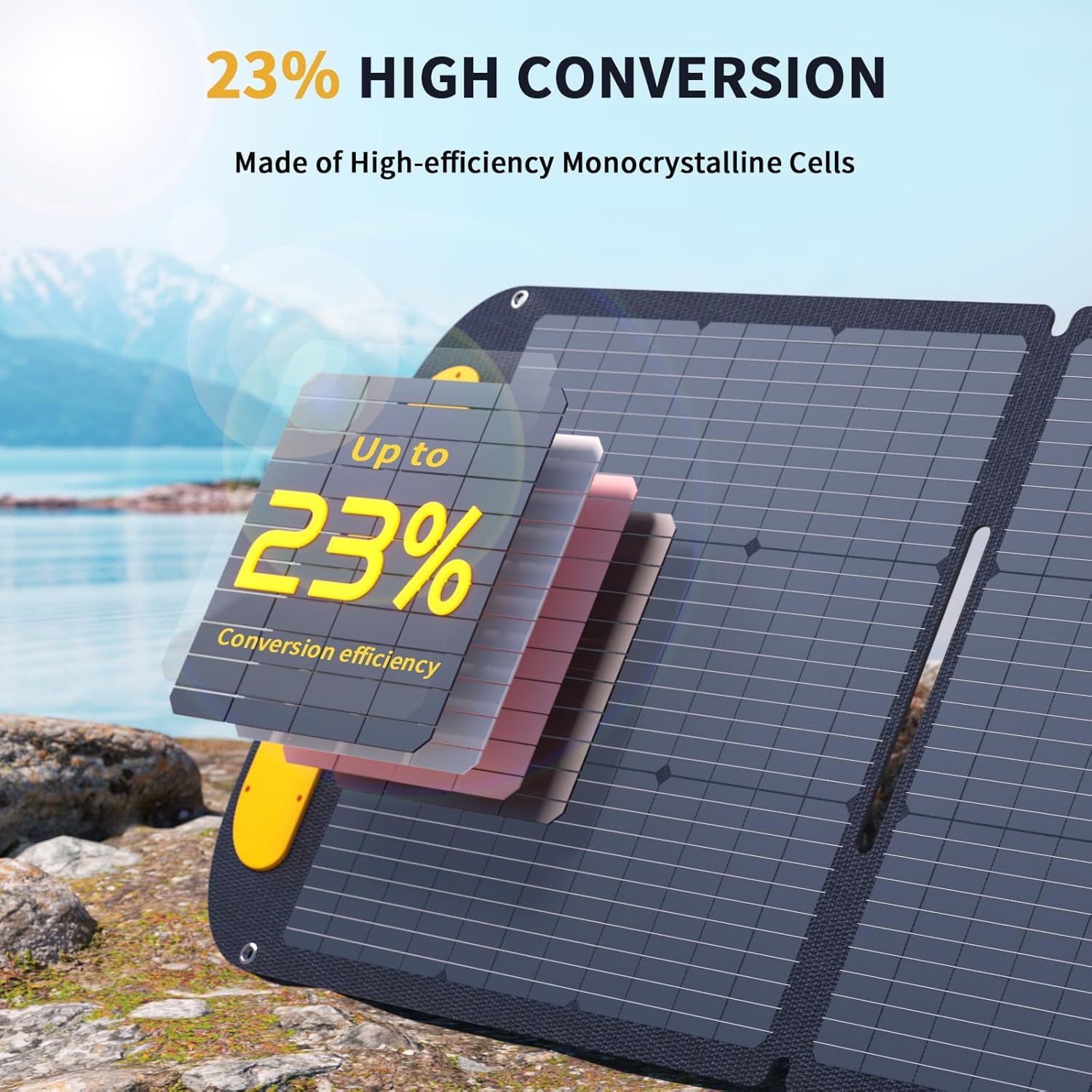
VTOMAN includes a 200W monocrystalline panel with up to 23% efficiency, which is a good balance between size and output for portable systems. Under ideal conditions, the 200W panel will contribute significantly, but remember solar is variable — full sun, correct angle, and minimal shading are essential for best results.
Car charging and DC options
The included car charging cable lets you recharge at slower rates while driving, which is useful if you’re on a long road trip or need to top up while moving. Car charging is not as quick as AC charging but it’s reliable in situations where AC is unavailable.
Solar panel specifics: 200W, monocrystalline, up to 23% efficiency
The 200W solar panel in the bundle uses monocrystalline cells, giving you higher efficiency compared with some polycrystalline or thin-film alternatives. It features adjustable kickstands and four hanging holes, so you can mount it on an RV, balcony, or prop it at the best sun angle.
Compatibility and adapters
The panel includes a universal MC4 interface and a 3-in-1 adapter for Anderson, XT60, and DC5521, meaning you can usually connect to a wide range of power stations and controllers without buying extra adapters. This flexibility matters if you plan to expand your solar setup or use the panel with other gear.
Portability and practical mobility
The Jump 1800 and extra battery are portable, but don’t expect to carry them long distances like a small power bank; these are heavy enough that you’ll want a cart or vehicle for longer hauls. The solar panel folds or carries compactly depending on the case style, and the kickstands let you deploy quickly when you reach your site.
Weight and handling considerations
Because the bundle components ship separately, weight distribution can be managed in transit, but once assembled you’ll feel the heft of the combined system. If you plan to move the system frequently, consider investing in a rolling case or a storage solution that makes lifting and positioning simpler.
Pass-through charging and daily workflow
Pass-through charging means you can charge devices from the power station while it’s itself being charged by AC or solar, which helps when you need to keep critical gear running during an outage. You should know that frequent pass-through use can slightly increase heat and may impact long-term battery health compared with occasional use.
Battery management suggestions for daily use
If you want to maximize battery life, avoid deep discharges whenever possible and use regular shallow cycles in combination with occasional full cycles. The LiFePO4 chemistry tolerates frequent cycling well, but treating the battery gently will still extend its useful life.
Safety and thermal performance
VTOMAN’s SuperSafe LIFEBMS adds multiple layers of protection, and the LiFePO4 cells are inherently more resistant to thermal runaway, so you get reliable and safe operation in diverse conditions. Keep the unit in a ventilated area while charging or under heavy load, because heat buildup can reduce efficiency and comfort.
Operating temperatures and environmental limits
You should avoid charging or running the unit in extreme heat or cold whenever possible, because all battery systems have optimal operating ranges and performance drops outside those. The built-in protections will help prevent damage if you inadvertently push the system, but consistent extremes will shorten battery life.
Real-world scenarios and runtime estimates
It helps to measure expected runtimes against the actual appliances you plan to run: a 60W laptop on a 3096Wh system theoretically runs for dozens of hours, while a 1000W microwave will drain the system in a few hours at best. For home backup, prioritize critical loads — fridge, lights, router — instead of trying to run everything at once.
Home backup use case
If you use the Jump 1800 + Jump 1500 bundle to keep a refrigerator, a few lights, and electronics running, you can realistically cover a multi-day outage depending on fridge cycle efficiency and how much you reduce other draws. Pairing with the 200W panel will help on sunny days to extend runtime significantly, though solar won’t fully replace grid power for heavy loads.
RV, camping, and road trip use case
For RV and camping, the compact footprint and PD 100W ports make it great for powering laptops, lights, small refrigerators, and communication gear. The included car charger and solar panel make camping trips less dependent on a generator, with lower noise and smell.
Emergency and medical device readiness
If you need a reliable backup for medical devices like CPAP machines, check the exact wattage and run-time requirements; the Jump 1800’s pure sine wave output and surge rating make it appropriate for many such devices. Always test your actual device on the system before relying on it in an emergency to confirm start-up and continuous operation.
Pros and cons summary
You’ll appreciate the expandable capacity, LiFePO4 longevity, robust port selection, and reasonable solar panel pairing. On the flip side, the system’s weight and the logistics of three-package shipping might be inconvenient if you need everything at once.
Pros (concise)
- Expandable to 3096Wh for extended runtime.
- LiFePO4 chemistry with ~3,000 cycles to 80%.
- 1800W continuous / 3600W surge pure sine wave output.
- Two PD 100W USB-C ports for fast laptop charging.
- Included 200W solar panel with 23% efficiency and multiple adapters.
Cons (concise)
- Bulk and weight make true portability limited.
- Split shipping in three packages may confuse some buyers on arrival.
- Solar charging still depends on sun availability and may be slow in poor conditions.
Maintenance, storage, and longevity tips
You’ll get the longest life by storing the unit at moderate temperatures and keeping it between around 20% and 80% charge for long-term storage where possible. Cycle the battery occasionally if you’re storing it for months, and keep the solar panel clean and free of debris for best output.
Battery care suggestions
Avoid leaving the unit fully discharged for long periods, and try to recharge it within a few weeks after heavy use. LiFePO4 is forgiving compared to other chemistries, but good habits will still extend the useful years you get from the bundle.
Frequently asked questions (FAQ)
This section answers common practical questions so you don’t have to chase down specs or struggle with setup details. If you still have specific concerns after reading, checking the included user manual and contacting VTOMAN support is recommended.
Can the station run a refrigerator?
Yes, the 3600W surge helps with compressor starts and the 1800W continuous supports many small to medium fridges, but actual runtime depends on compressor efficiency and duty cycle. For older or very large refrigerators, measure the start and running wattage to confirm compatibility.
How long will the 200W solar panel take to recharge the system?
Under perfect sun conditions, one 200W panel can provide a meaningful recharge rate, but full recharge time for both the base and extra battery could take many hours or multiple days of good sun. Using multiple panels in parallel (if you add them) will speed this up substantially.
Is pass-through charging safe?
Yes, pass-through charging is supported, and the unit’s BMS handles charging and discharging simultaneously. However, minimizing constant pass-through use when not necessary will help reduce heat and marginally increase battery life.
Final verdict: who should buy this bundle
You should consider the VTOMAN 3096Wh bundle if you want a robust, expandable, and relatively safe energy solution for multi-day home backup, extended off-grid trips, RV use, or a reliable emergency kit. If you need something ultra-light for backpacking or tiny power banks for short trips, then this system is heavier and more than you need.
Final recommendation
If you value long battery life, safety, flexibility in charging, and the ability to add battery capacity later, this VTOMAN bundle is a strong candidate for your investment. Just prepare for the logistics of split shipping and the unit’s weight in your planning, and you’ll have a dependable portable power system for many seasons to come.
If you want, I can help estimate runtimes for your specific devices or draft a packing checklist for taking this bundle on your next trip.
Disclosure: As an Amazon Associate, I earn from qualifying purchases.