
Are you looking for a single unit that can charge, start, maintain, test, and recondition your vehicle batteries without fuss?

Product overview
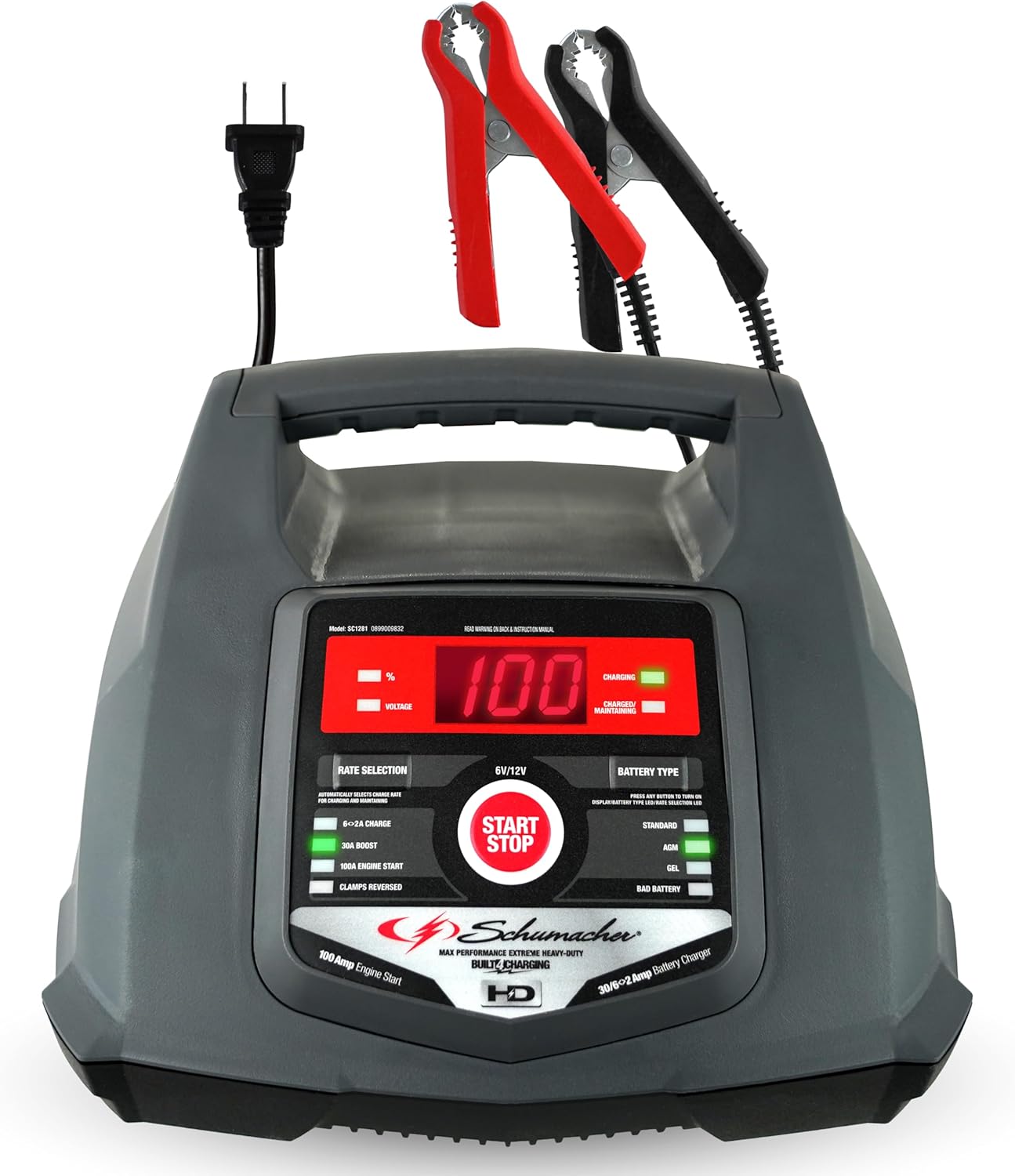
You’ll find the Schumacher Electric 6A Car Battery Charger and 100A Engine Starter, 5-in-1 Solution, Maintainer, 30A Boost, for 6V/12V Power Sport, Automotive, and Marine Batteries, SC1281 to be a compact but capable piece of equipment. It’s designed to handle a wide range of battery tasks — from a simple overnight charge to a rapid engine start — while offering multiple safeguards to protect you and your vehicle.
What this unit claims to do
The SC1281 is advertised as an advanced 5-in-1 device that starts, charges, maintains, tests, and reconditions batteries. You get engine-starting power up to 100 amps, boost charging from 30 amps down to 12 amps, normal charging from 6 amps to 2 amps, and a smart trickle mode for long-term maintenance.
Who should read this review
If you own motorcycles, ATVs, cars, trucks, SUVs, or boats, and want one box that covers routine charging, emergency starting, and occasional battery reconditioning, this review is written for you. You’ll also benefit if you prefer a unit that checks alternator and battery health before you commit to more invasive troubleshooting.
Specifications at a glance
This table summarizes the main specs you’ll want to know before deciding.
| Feature | Details |
|---|---|
| Product name | Schumacher Electric 6A Car Battery Charger and 100A Engine Starter, 5-in-1 Solution, Maintainer, 30A Boost, for 6V/12V Power Sport, Automotive, and Marine Batteries, SC1281 |
| Modes | Start (100A), Boost (30A / 12A), Charge (6A / 2A), Maintain (Trickle), Recondition (Desulfation) |
| Voltage support | 6V and 12V |
| Battery types | Standard (flooded), AGM, Gel, Deep-cycle |
| Compatibility | Gas and diesel vehicles; motorcycles, ATVs, cars, trucks, SUVs, marine applications |
| Safety features | Reverse polarity protection, short-circuit protection, over-voltage protection |
| Built-in tests | Battery tester, alternator test |
| Power | AC-powered (must be plugged in during use) |
| Accessories | 6-foot power cord, booster cables |
| Included | SC1281 unit, user manual |
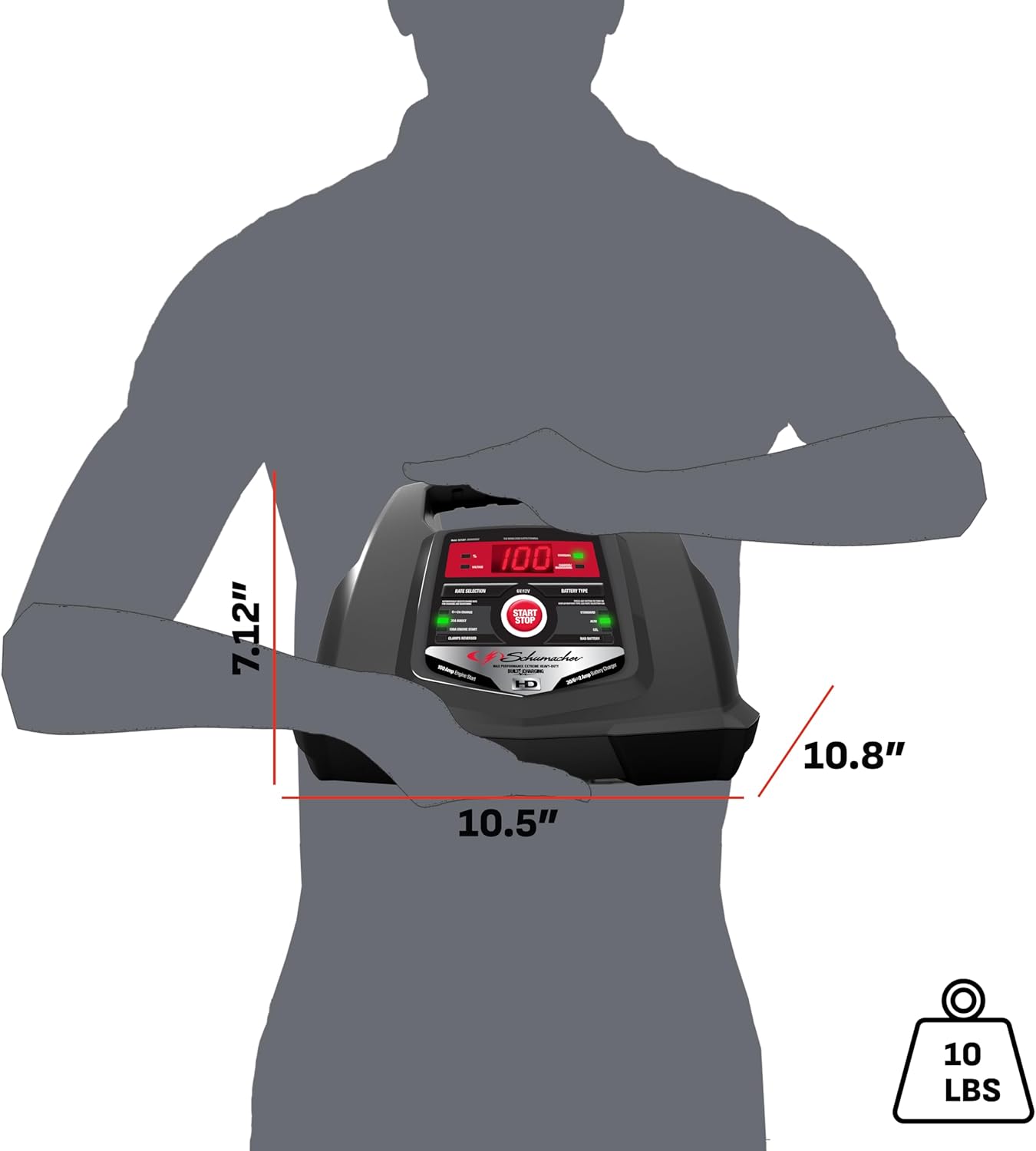
| Dimensions & weight | (See manual or product page for exact physical specs) |

Key features explained
You’ll appreciate a clear understanding of each core feature before you start connecting clamps and flipping switches. Below are the main capabilities and what they mean for your daily use.
100A engine start
The 100-amp engine start function gives you immediate burst current for crank-intense situations. That capacity is enough to jump-start most motorcycles, cars, and smaller trucks that have a moderately drained battery, and it helps you avoid pushes or calls to a tow service.
30A and 12A boost charge
When your battery isn’t completely dead but has dropped to a low state of charge, the boost modes (30A and 12A) let you bring it to a usable level faster than a hang-in-there trickle. You can expect these modes to shorten the time it takes to get your vehicle running, especially when you need a quick turnaround.
6A to 2A charging and maintenance
The 6A and 2A charging settings cover routine charging needs. The smart trickle/maintainer keeps batteries at an optimal float voltage over long storage periods without overcharging. That’s ideal for seasonal vehicles and boats that spend months in storage.
Battery reconditioning (desulfation)
The SC1281 includes an advanced desulfation mode intended to reverse some sulfation on lead-acid batteries. This can help restore lost capacity and extend battery life when sulfation is a culprit, though results will vary depending on the battery’s condition and age.
Built-in battery and alternator tester
You can quickly check whether the battery or alternator is at fault using the integrated tester. That saves time by telling you whether a low-voltage situation is a battery issue or a charging-system problem, so you don’t replace parts unnecessarily.
Reverse polarity and safety protections
Reverse polarity protection prevents damage if you accidentally attach the clamps backward, and other safety circuits guard against shorts and over-voltage. These protections help reduce the risk of sparks or damage to electronics in modern vehicles.
Wide battery compatibility
The unit supports multiple battery chemistries — flooded, AGM, gel, and deep-cycle — and both 6V and 12V systems. You’ll be able to service power sport batteries as well as automotive and marine batteries without swapping equipment.
AC-powered operation
This device must be plugged into AC power while in use, which means it’s best suited for garages, shops, and docks where you have mains power. It’s not a portable battery-powered jump starter, so you’ll need access to a power outlet for operation.
Real-world performance
You’ll want to know how the charger/ starter behaves in practical situations, not just on paper. The following sections cover typical outcomes and what you can expect when using the SC1281.
Speed of charge in various modes
The 6A mode is good for a relatively fast charge on smaller batteries and a moderate top-up on car batteries overnight. The 2A trickle is for long-term maintenance where you leave the unit connected for weeks or months. When you need a faster recovery, the 30A boost mode significantly reduces time to usable charge, and the 100A start provides a quick burst to crank the engine.
Starting a dead battery
If your battery is flat but not completely sulfated or internally failed, that 100A start often gets engines turning over immediately. For larger diesel engines, you may still need a dedicated high-capacity starter pack, but for most gasoline engines and smaller diesels, the SC1281 does the job.
Reconditioning effectiveness
Battery reconditioning can revive batteries that are suffering from mild-to-moderate sulfation. If the battery plates are heavily damaged or the battery has internal shorting, reconditioning won’t perform miracles. Think of it as a preventive or restorative tool that can squeeze more life out of marginal batteries.
Diagnosing alternator issues
The built-in tester gives quick indications about alternator health by checking voltage under load and verifying charging system output. If the tester indicates the alternator is weak, you’ve got a clear next step to pursue mechanical repairs rather than replacing the battery.
Ease of use
How intuitive is the SC1281 for everyday tasks? You’ll find it straightforward for basic operations, but there are a few things to keep in mind to get the best results.
Controls and indicators
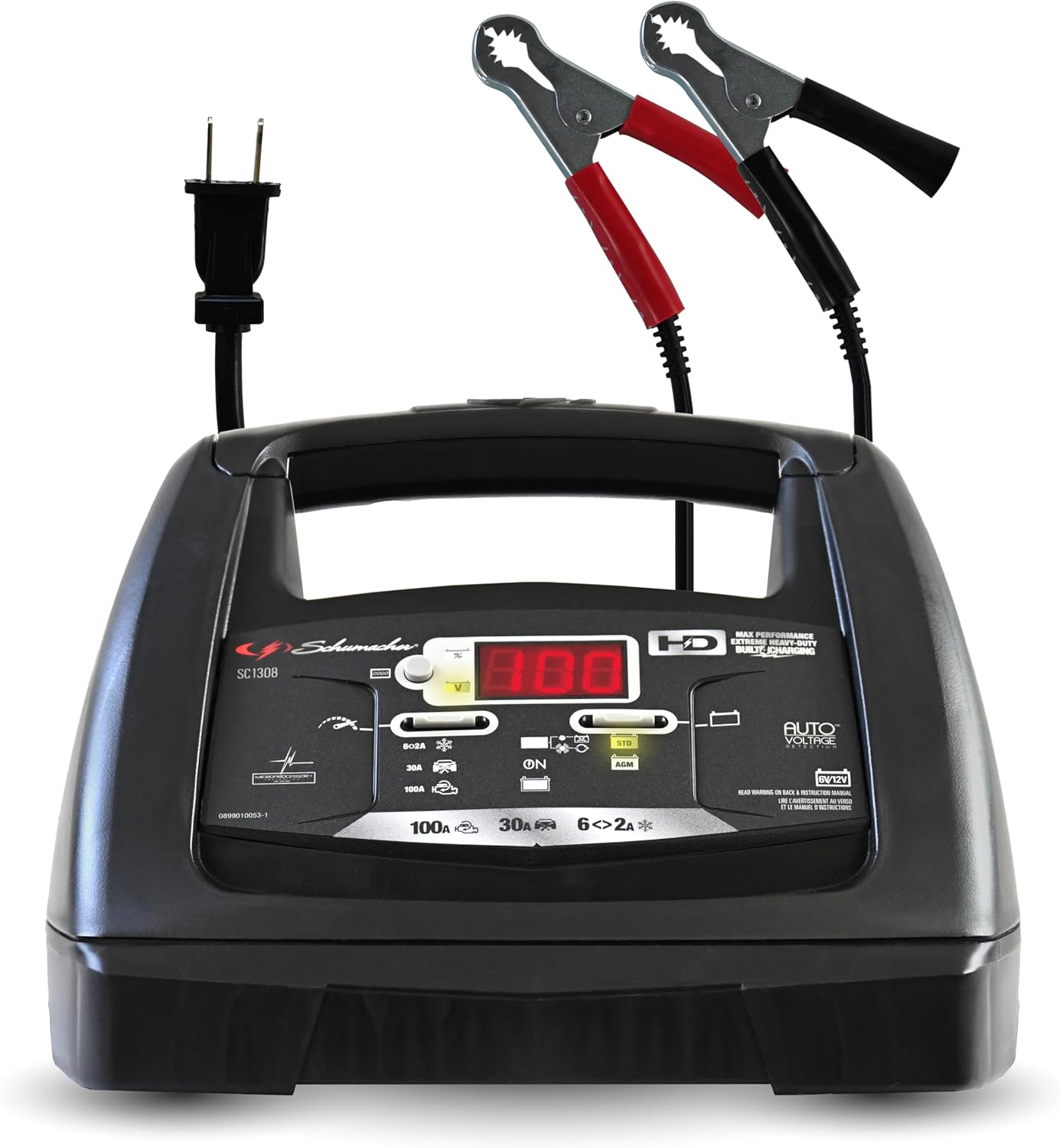
The front panel uses labeled switches and LEDs that guide you through mode selection and status. You can switch between charge modes and use the start/boost functions with tactile controls that are easy to interpret once you’ve read the quick-start steps.
Clamps, cables, and reach
The unit includes booster cables and a six-foot power cord. The cable and clamp quality is good for typical garage work; the booster cables are robust enough to carry high starting current safely. You may find extension or repositioning needed in tight engine bays, but the included lengths suit most common use cases.
Setup and operation
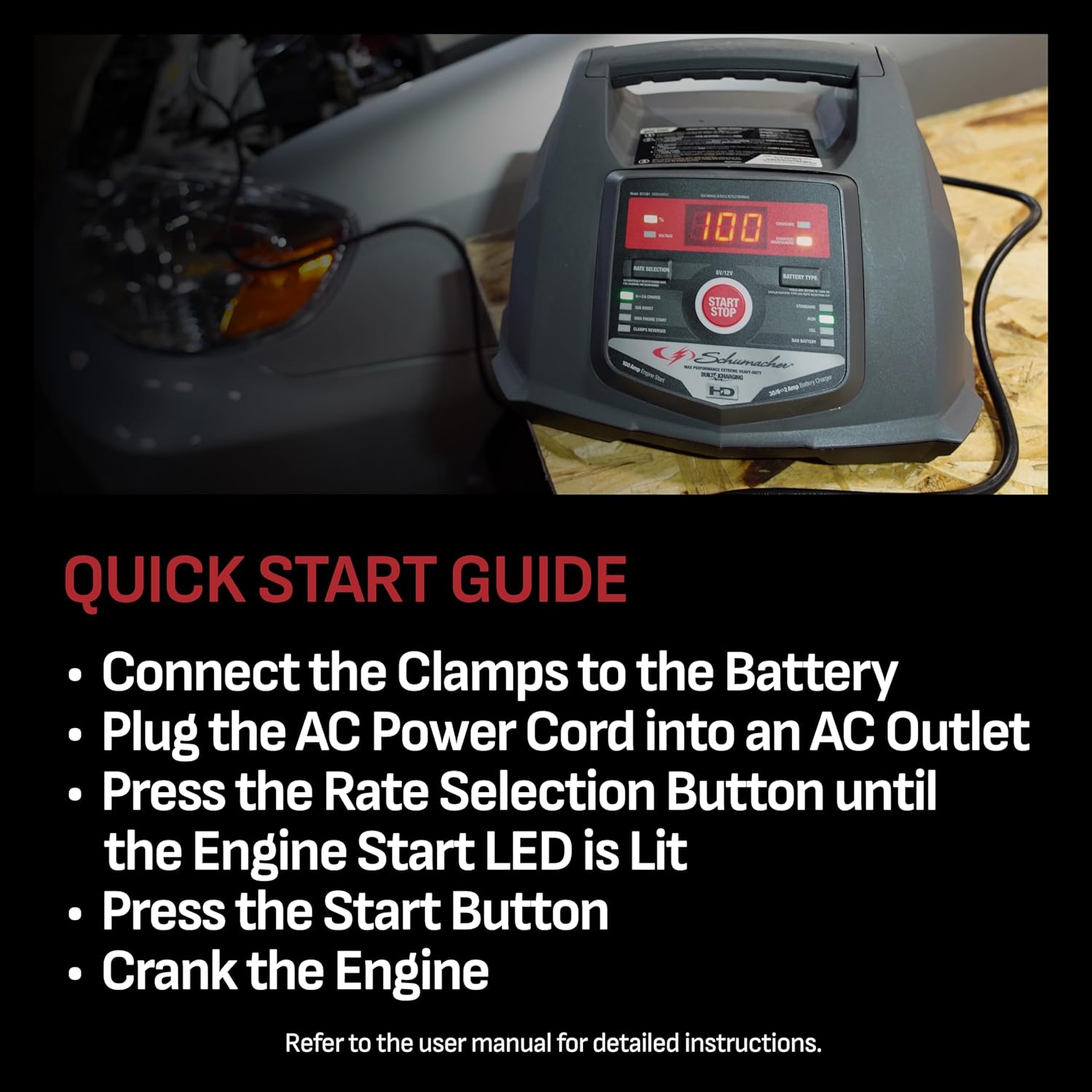
You’ll connect the clamps to the battery terminals, select the correct voltage and battery type, then choose the appropriate mode. For engine starts, connect and ensure the unit is powered and switched to start mode; for charging, choose the desired amp level. It’s a simple sequence, but always follow the safety steps in the manual.
Safety and user guidance
Built-in protections minimize common errors, but you still need to observe basic precautions: wear eye protection, ensure good ventilation around batteries, and keep sparks away from battery gasses. The reverse polarity protection gives you a safety net, but correct connections and attention prevent unnecessary complications.
Compatibility and supported vehicles
You’ll be able to use this unit across a broad spectrum of vehicles and battery types, which makes it a versatile garage tool.
Supported voltages and types
The SC1281 works with both 6V and 12V systems and supports flooded lead-acid, AGM, gel, and deep-cycle batteries. That versatility allows you to service lawn/garden equipment, motorcycles, power sports, cars, and many marine applications.
Gas vs. diesel engines
It handles gas engines very well and smaller diesel engines too. Larger diesels with high cranking amps may still need a higher-capacity starter pack, but for the majority of light-duty diesel vehicles, the 100A start will often suffice.
Seasonal and recreational vehicles
If you store boats, ATVs, or motorcycles for months, the smart trickle and maintain modes keep batteries healthy and ready. You’ll avoid late-season surprises by maintaining proper float voltage and checking battery health periodically.
Maintenance and longevity
You’ll extend the life of both batteries and the charger by following a few simple habits.
How to store the unit
Keep the SC1281 in a dry, cool place when not in use and avoid prolonged exposure to direct sunlight or damp workshop corners. A clean unit with cables neatly coiled will last longer and be easier to deploy.
Routine checks and care
Inspect clamps and cables for corrosion or frayed insulation before use, and clean battery terminals as part of a regular maintenance routine. Periodically use the alternator/battery tester to catch charging-system problems early.
When to expect replacement
The charger itself is solidly built but moving parts like clamps and cables may wear before internal electronics. If you notice declining output, intermittent contact, or obvious physical damage, repair or replacement is warranted.
Pros and cons
You’ll want a balanced view before buying. Below are the main strengths and potential limitations to consider.
Pros
- Very versatile 5-in-1 functionality: start, charge, maintain, test, and recondition batteries with a single unit. This reduces the need for multiple devices in your garage.
- Strong starting capability with 100A engine start for emergency crank situations. That 100A burst makes it practical for quick jump-starts.
- Multiple charge rates and a smart maintenance/trickle mode for safe long-term battery care. You can leave it connected without overcharging concerns.
- Supports several battery chemistries and both 6V and 12V systems for broad applicability. One device covers many vehicles and applications.
- Built-in battery and alternator testing simplifies diagnostics before committing to repairs or replacements. It helps you identify whether the battery or charging system is at fault.
- Safety features like reverse polarity protection reduce user risk. That’s valuable if multiple household members use the unit.
Cons
- AC-powered only, so it’s not a portable battery-powered jump starter. You’ll need mains access to operate it.
- For heavy-duty diesel engines, the 100A start might be insufficient; professional starter packs may be required. Check your engine’s cranking amp needs before relying solely on this unit.
- Reconditioning has limits: very old or physically damaged batteries won’t be fully restored. Reconditioning helps but doesn’t guarantee revival in all cases.
- If you prefer small handheld jump starters for roadside emergencies, this unit is less convenient because it requires a wall outlet.
How the SC1281 compares to alternatives
If you’re weighing options, this unit sits between a basic trickle charger and a full professional battery service machine. Understanding that middle ground helps you make a purchase decision.
Versus a basic 2-amp trickle charger
Compared to a basic 2A maintainer, the SC1281 gives far more flexibility: faster charging, engine-starting capability, and testing functions. If you have multiple vehicle types or occasional starting emergencies, the SC1281 is a more complete solution.
Versus a portable jump starter pack
Portable jump starters are excellent for roadside independence where no AC outlet exists. The SC1281, being AC-powered, is better suited to home or shop use where you want to both charge and recondition batteries as well as start engines.
Versus professional battery chargers/reconditioners
High-end shop units may provide higher current and advanced diagnostics, but they often cost substantially more and are bulkier. The SC1281 delivers many pro-like features at a consumer-friendly price and footprint, sacrificing only maximum heavy-duty current capacity.
Practical tips and best practices
You’ll get the best results if you follow a few practical tips while using the SC1281. These suggestions keep you safe and protect your batteries.
Preparing the battery and vehicle
Make sure the vehicle’s ignition is off, remove jewelry, and ventilate the area if you’re indoors. Clean the battery terminals of corrosion for a good connection and check battery fluid levels on serviceable batteries.
Choosing the right mode
Select 6V or 12V and choose the battery chemistry before starting. Use boost modes only for quick recoveries and choose trickle/maintain mode for long-term storage. The recondition/desulfation mode works best when a battery shows signs of sulfation rather than physical failure.
Monitoring during use
Monitor the unit’s LEDs and follow any guidance in the manual. For longer reconditioning cycles, check battery temperature occasionally and stop if the battery becomes excessively hot or shows signs of swelling.
Safety and proper technique
Attach the positive clamp to the positive terminal first, then the negative clamp to a grounded metal point on the chassis away from the battery for safety when starting. If you must connect to the negative battery terminal, ensure you’re following the manual’s recommended steps to minimize sparks near the battery.
Troubleshooting common scenarios
You’ll occasionally run into situations where the unit doesn’t behave as you expect. These troubleshooting tips help you isolate issues quickly.
Unit won’t power on
Verify the AC outlet and power cord for damage, and try another known-working outlet. If the cord is intact and the outlet works but the unit still won’t power up, service or replacement may be necessary.
Charger indicates reverse polarity
Double-check clamp placement and make sure you haven’t mixed up the positive and negative terminals. The reverse-polarity protection will notify you, and correcting clamps usually resolves it.
Battery doesn’t accept charge or reconditioning
If the battery has an internal short or is severely sulfated, reconditioning might not help. Use the built-in battery tester to get a clearer picture and consider lab testing or replacement if results are poor.
Cost and value proposition
You’ll find the SC1281 to be a cost-effective option if you need multiple capabilities in one unit. The combination of charge rates, starting power, testing, and reconditioning yields a lot of functionality for the price, particularly compared to buying separate devices for each task.
Long-term savings
By maintaining batteries properly and sometimes reconditioning borderline batteries, you may avoid premature battery replacements. The diagnostic features also reduce guesswork and unnecessary spending on parts.
When it’s worth upgrading
If you routinely service heavy commercial vehicles or large marine diesels, a higher-capacity pro-grade charger/jump starter could be worth the investment. For most home users and hobbyists, the SC1281 strikes a good balance.
Who should buy the SC1281
You’ll be well served by this unit if you want one reliable tool to handle most battery needs in a garage or at the dock. It’s especially useful for households with multiple vehicle types — motorcycles, ATVs, cars, and boats — and for anyone who prefers to maintain batteries proactively.
Ideal user scenarios
- You keep seasonal vehicles or boats and want a safe maintainer for long storage intervals.
- You’ll benefit from built-in testing to avoid needless battery swaps or charging-system repairs.
- You want emergency starting capability without buying a separate jump starter.
Less ideal scenarios
- If you need roadside independence with no access to AC power, a portable battery jump starter is more suitable.
- If you service heavy-duty diesel trucks regularly, you may find the 100A start insufficient.
Final recommendation
You’ll find the Schumacher Electric 6A Car Battery Charger and 100A Engine Starter, 5-in-1 Solution, Maintainer, 30A Boost, for 6V/12V Power Sport, Automotive, and Marine Batteries, SC1281 to be a practical, multi-function tool that brings together charging, starting, maintenance, testing, and limited reconditioning in one compact unit. For homeowners, hobbyists, and small-shop users who have access to AC power, it’s a high-value device that reduces clutter and covers most battery-related needs.
Quick buying checklist
Before you buy, confirm you have AC access where you’ll use the unit, verify your vehicle’s cranking amp requirements (especially for larger diesels), and decide whether you value reconditioning and built-in testing over absolute maximum start current. If those items align with your needs, this unit is a strong contender for a versatile garage charger/starter.
If you want, I can summarize the operating steps for the most common tasks (starting a car, charging a battery, maintaining in storage) in a short checklist you can print and keep in your garage.

Disclosure: As an Amazon Associate, I earn from qualifying purchases.