
Looking for a compact power station that can actually keep your devices running through camping trips, power outages, or CPAP nights?

Quick verdict
You’ll find the PROGENY 300W Portable Power Station, 299Wh/80818mAh Solar Generator to be a very practical balance of weight, capacity, and features. It’s light enough to carry easily, yet powerful enough to keep phones, laptops, a mini fridge, and even a CPAP running for meaningful amounts of time.
What this product is best for
This unit is ideal when you need reliable backup power for short trips, emergency kits, van life, or medical devices like CPAPs that require steady 12V power. If you want a portable power source that won’t weigh you down but still offers regulated outputs and pass-through charging, this is worth considering.
Packaging and included items
The package typically includes the PROGENY 300W power station, an AC charging cable, a car charging cable, and a user manual that explains ports and safety features. If you plan to charge from solar, remember the Progeny 120W solar panel is sold separately.

Key specifications
Below you’ll find a compact table that breaks down the most important specs and run-time estimates so you can quickly see if the unit matches your needs.
| Specification | Detail |
|---|---|
| Battery capacity | 299Wh / 80818mAh (nominal) |
| Weight | 7 lb (approx.) |
| AC output | 110V pure sine wave, 300W rated, 600W peak |
| DC car port | 12V/10A, 120W max |
| USB outputs | QC 3.0 and USB-C (9V/2A, 18W max) |
| Pass-through charging | Supported on all ports |
| Special feature | 12V regulated output (keeps voltage stable as battery depletes) |
| Recharge via AC | ~6–7 hours |
| Recharge via car | ~7–8 hours |
| Recharge via solar (with Progeny 120W panel) | ~6–7 hours |
| BMS protections | Short, overcurrent, overvoltage, overload, overheating |
| Extras | Pure sine wave inverter, LED light |
| Typical phone charges | ~40 times (2,000 mAh phone) |
| Typical laptop charges | ~4–5 times (56Wh laptop) |
| Mini fridge runtime | ~6–18 hours (45W fridge, depends on duty cycle) |
| CPAP runtime | ~2–4 nights (using DC converter, depends on settings) |
Design and build quality
The PROGENY 300W has a compact, rectangular design that feels sturdy for its weight class. The housing is made of durable plastic with vents and a comfortable handle that makes it easy to carry between your car and campsite.
Portability and handling
At only about 7 lb, this power station is one of the lighter 300W-class units on the market, so you won’t struggle to lift it into a backpack or trunk. The size and weight make it a realistic option for solo campers, day-trippers, and anyone who needs lightweight emergency backup.
User interface and controls
The front panel shows clear labels for each port and includes an LED indicator or screen that provides battery level and charging status. Buttons are tactile and simple to operate, so you can turn outputs on and off or select power modes without reading the manual first.
Output options and everyday usage
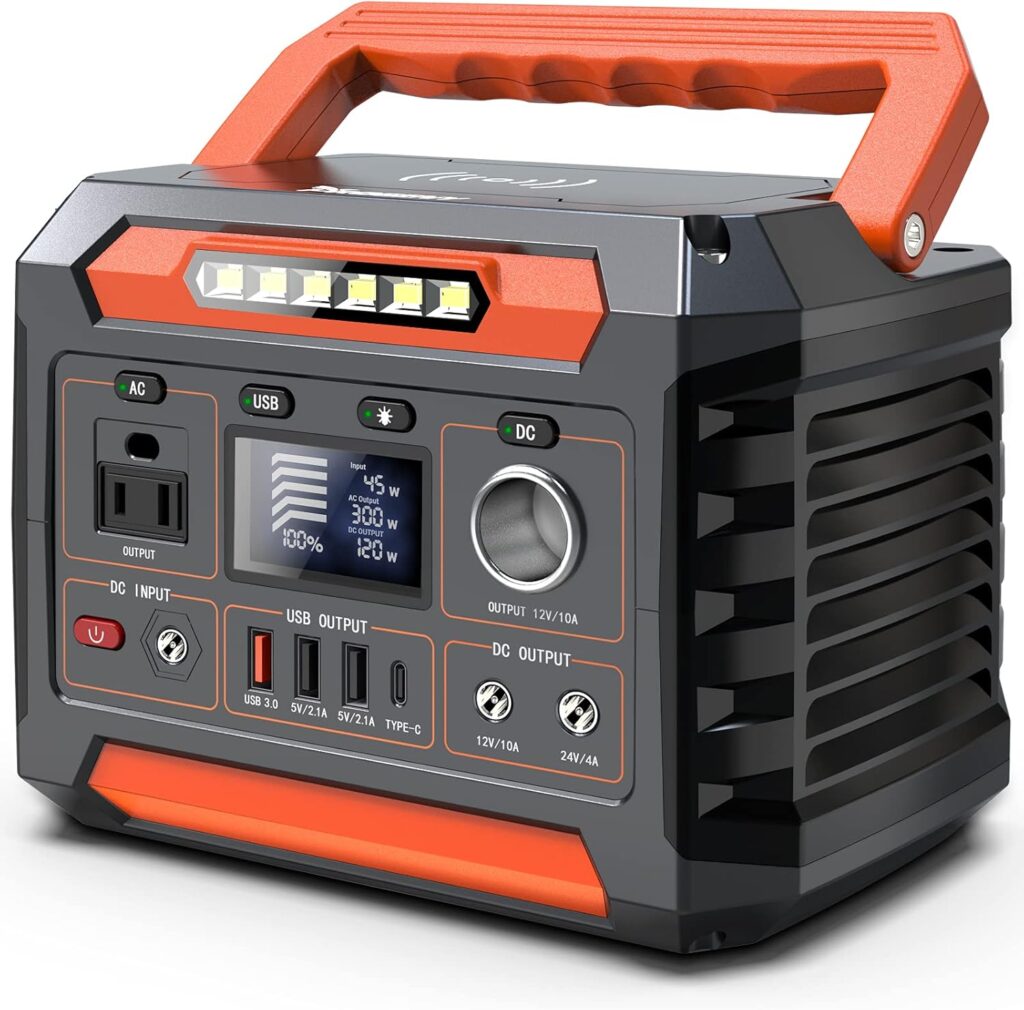
You get a lot of flexibility from the outputs: a 110V pure sine wave AC outlet for sensitive devices, a regulated 12V car port for fridges and CPAPs, and fast-charge USB ports for phones and small gadgets. Because all ports support pass-through charging, you can charge the battery and run devices at the same time, which is handy during long outings.
Pure sine wave AC outlet
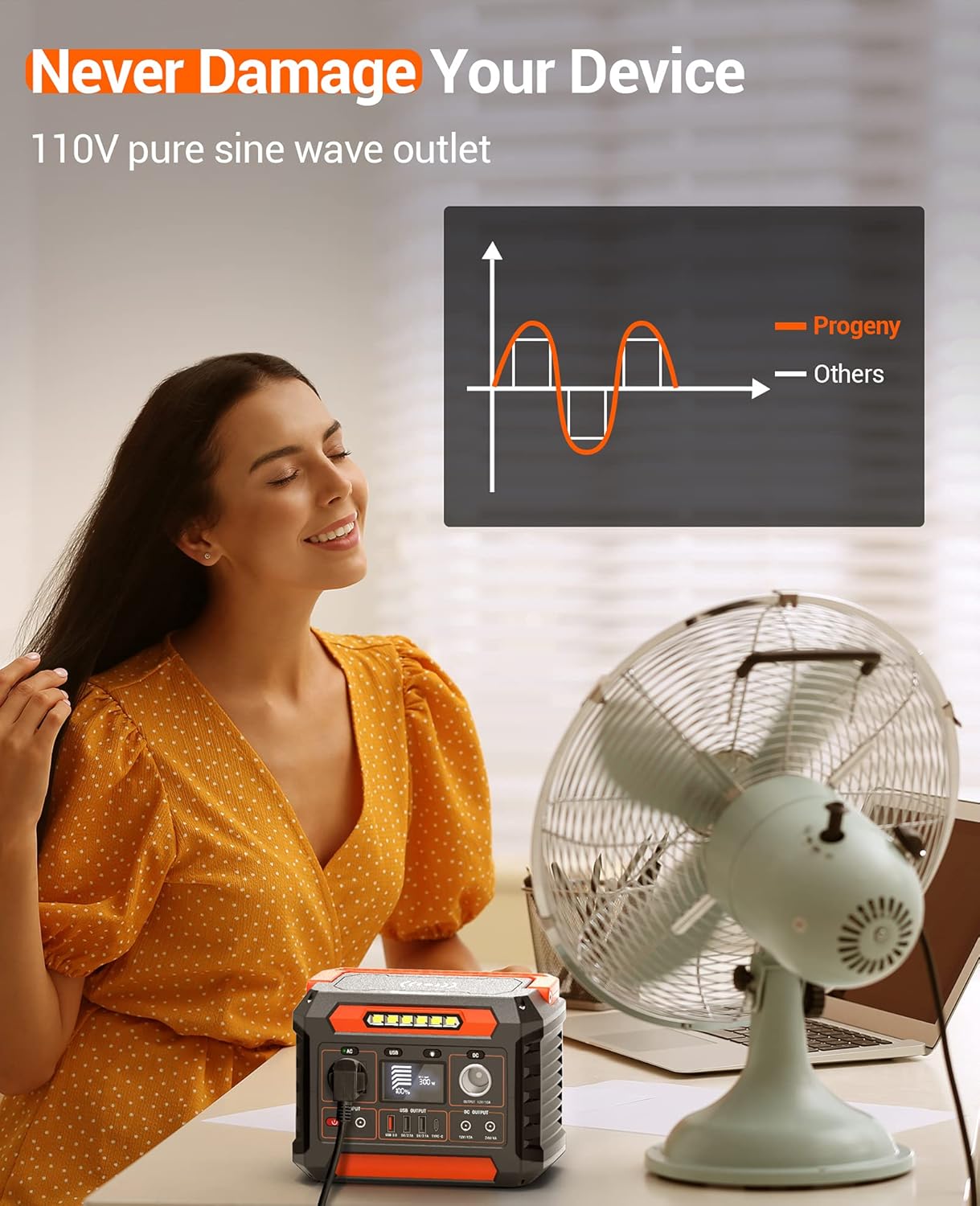
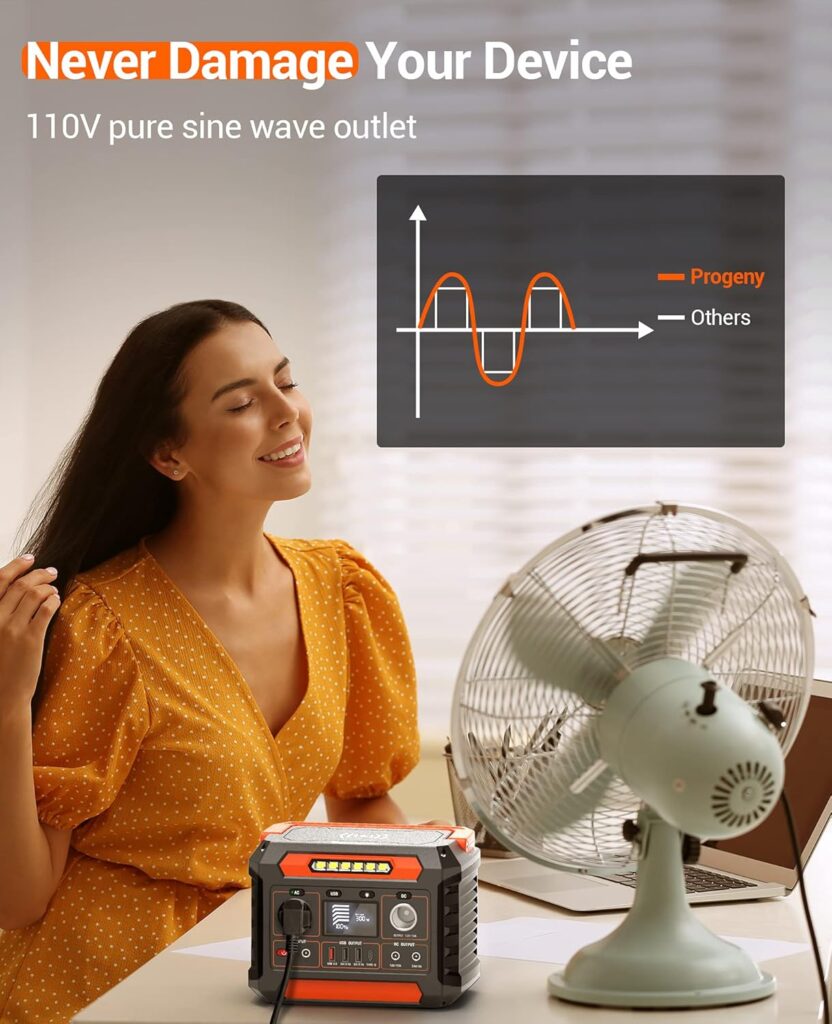
The pure sine wave AC output provides cleaner power that’s safe for laptops, monitors, and other electronics that can be sensitive to waveform shape. The 300W continuous rating and 600W surge capacity handle devices with modest startup draws, but you’ll need to check higher-draw appliances first.
USB and fast charge
QC 3.0 USB and USB-C (9V/2A, 18W) deliver fast charging for phones, tablets, and small USB-powered accessories. That top fast-charger on the unit is convenient when you forget a cable, letting you quickly top off your phone without rummaging into your pack.
Car port and regulated 12V output
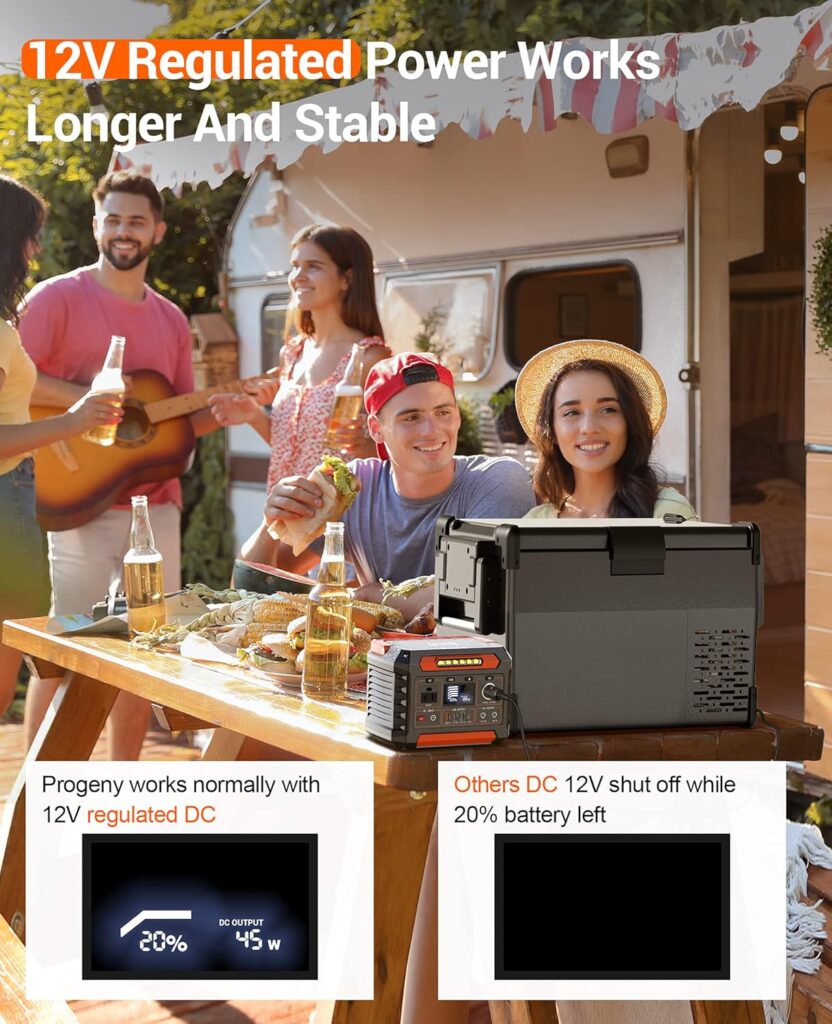
The built-in car port supplies 12V/10A power with regulated output, so your 12V devices won’t shut down prematurely as the battery level drops. That regulated output is particularly useful for electric coolers, freezers, and CPAP machines that can be sensitive to voltage changes.
Why regulated 12V output matters
Many competing power stations only provide unregulated DC output that can drop in voltage as the battery drains, causing some 12V devices to stop. Because the PROGENY P66 300W offers regulated 12V, your devices will keep running consistently until the battery is truly low, which reduces frustrating mid-use shutdowns.
Charging options and flexibility
You can recharge the unit from three main sources: AC wall outlet, car cigarette lighter port, or solar panels. This flexibility means you can top it up at home, during road trips, or off-grid with solar power.
AC charging
Charging from an AC outlet typically takes about 6–7 hours to reach full capacity, which is a reasonable time for a 299Wh battery. If you’re preparing for a weekend trip, plugging it in overnight will usually deliver a full battery for the next day.
Car charging
Car charging will take a bit longer, around 7–8 hours, depending on your vehicle’s alternator output and the cable quality. That makes it practical to recharge while driving between campsites or on a road trip where wall outlets aren’t available.
Solar charging and MPPT
The PROGENY includes MPPT technology to maximize solar charging efficiency, and with the Progeny 120W solar panel (sold separately) you can expect roughly 6–7 hours for a full charge under good sun. MPPT means the solar input will be faster and more reliable than PWM-based systems, especially in variable sunlight conditions.
Pass-through charging: how it makes your life easier
Pass-through charging lets you charge the power station while drawing power from it to run devices at the same time. This feature is handy when you’re at a campsite with solar or when you want to run a CPAP overnight while the battery recharges from AC or solar.
Battery management and safety features
The built-in battery management system (BMS) protects against short circuits, overcurrent, overvoltage, overload, and overheating. These protections help extend battery life and keep both the unit and your connected devices safe from common faults.
Noise, heat, and thermal behavior
The unit is mostly silent except when the inverter is under heavy load and the cooling fan runs. Even then, noise is modest compared to gas generators, making it a better option for quiet campsites and indoor use during power outages.
Real-world performance: phones, laptops, and small gadgets
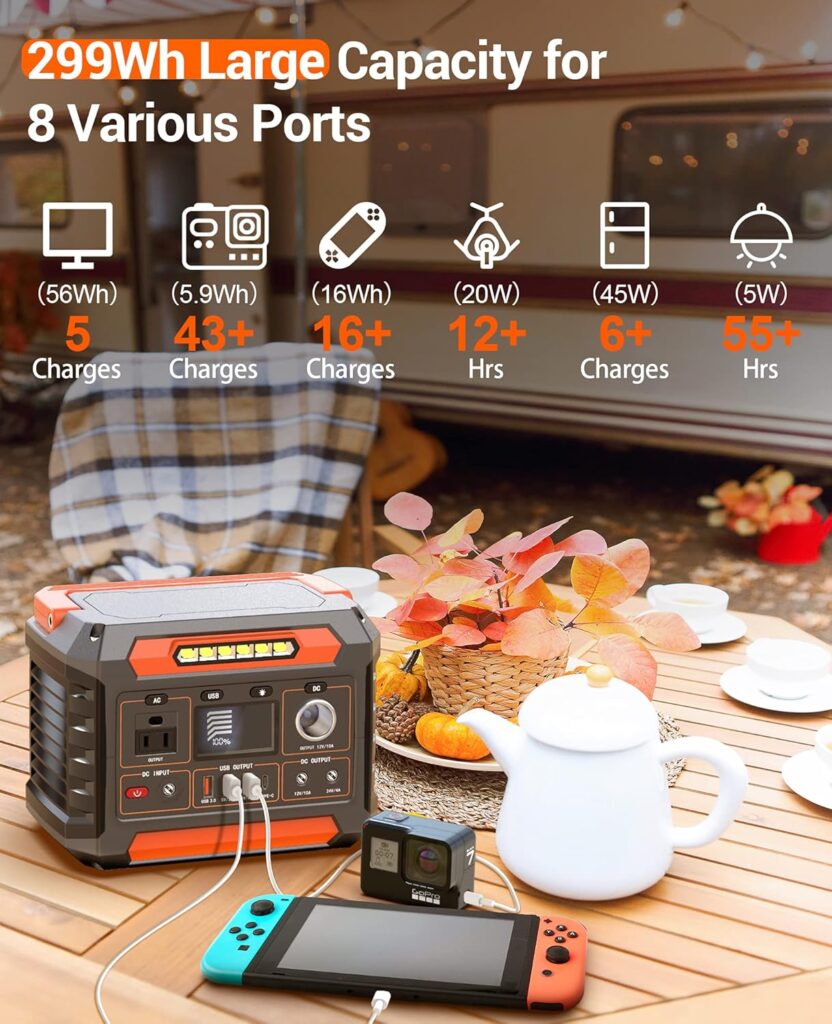
For typical phones with a 2,000 mAh battery, you can expect about 40 full charges, which is perfect for multi-day trips. Laptops with moderate battery sizes around 56Wh will recharge roughly 4–5 times, letting you keep your work or entertainment flowing for several days.
Real-world performance: mini fridge and refrigeration
A 45W mini fridge can run roughly 6–18 hours depending on duty cycle, ambient temperature, and insulation. If the compressor runs less often (good insulation and cooler ambient temps), you’ll reach the higher end of that range; continuous operation or hot conditions push you toward the lower end.
Real-world performance: CPAP compatibility and runtime
Using a DC converter, the unit can keep a CPAP running for about 2–4 nights but runtime will vary with mask pressure, humidifier usage, and the CPAP model. Because the 12V output is regulated, you’ll get stable power which is critical for consistent therapy during outages or travel.
Using the power station with CPAP safely
To use the PROGENY 300W safely with a CPAP, confirm your machine’s power requirements and whether it needs a DC adapter. You’ll also want to test runtime ahead of time so you know how long the battery will last under your device settings and if you need to limit features like heated humidification.
Comparing solar recharge vs AC recharge times
Solar recharge times depend heavily on sunlight quality, panel angle, and panel wattage, while AC recharging is more predictable. With a dedicated Progeny 120W panel and good sun, you’ll see similar recharge times to AC (around 6–7 hours), but cloudy days will extend that considerably.
Practical tips for maximizing runtime
Lower screen brightness, turn off unused devices, and use power-saving modes to stretch battery life. For refrigerators and CPAPs, reducing heater or humidifier use and ensuring efficient insulation can improve effective runtimes.
Maintenance and storage
Store the unit in a cool, dry place and top it up every few months if you’re not using it regularly to keep the lithium cells healthy. Avoid exposing it to extreme temperatures and charge the battery to around 50–80% for long-term storage if the manufacturer suggests that practice.
Safety checks and troubleshooting
If the unit won’t charge or power devices, check the input/output switches, cable connections, and any error indicators on the screen. If you trip protections like overload or overtemperature, turn off loads and allow the unit to cool before attempting to restart it.
Comparison with similar units
Compared to similar-capacity units, the PROGENY stands out with its regulated 12V output and relatively light weight. You may find competitors with larger capacities or more AC outlets, but they frequently weigh more and may lack the regulated DC that keeps fridges and CPAPs consistently powered.
Accessories and useful add-ons
Consider adding the Progeny 120W solar panel for mobile solar charging, a DC car-to-DC adapter for some CPAPs, and a carry case for extra protection. A few high-quality cables and a USB car charger can make on-the-go charging more convenient.
Pros and cons
You’ll appreciate the low weight, regulated 12V output, pure sine wave AC, and MPPT solar capability. On the downside, the 300W continuous AC limit means you’ll need a larger unit for heavy loads, and the solar panel is sold separately which adds to total cost.
Who should buy the PROGENY 300W
This model is a great fit if you need a lightweight, reliable power source for overnight CPAP use, weekend camping, or as a compact emergency backup. If you regularly need to power larger appliances or many devices for long periods, you may prefer a higher-capacity unit.
Common questions and quick answers
- Can you run heavy appliances? The 300W continuous output limits heavy appliances; microwaves, full-size fridges, and AC units are typically too large.
- Is the unit safe for CPAP? Yes, with the correct DC adapter and because the 12V output is regulated, it’s a solid choice for CPAP use.
- Can you charge while using it? Yes, pass-through charging is supported on all ports.
Practical scenarios and examples
If you’re on a two-person camping trip, the power station will comfortably keep phones charged and run a small light or two for evenings while powering a mini fridge for day-long food cooling. During a multi-day outage, the unit can maintain basic electronics, medical devices, and provide lighting, but you’ll need to ration power for extended blackouts.
Final considerations before purchasing
Make sure the 300W AC limit fits your devices and that you understand how long you need to run things like a CPAP or fridge between charges. If you rely on solar, factor in the cost of the Progeny 120W panel and the variable nature of solar recharge.
Final verdict
You’ll find the PROGENY 300W Portable Power Station, 299Wh/80818mAh Solar Generator to be an excellent lightweight option that punches above its size thanks to regulated 12V output, MPPT solar, and pure sine wave AC. It’s particularly attractive if you want dependable CPAP support, convenient pass-through charging, and a unit you can carry comfortably to the campsite or pack in an emergency kit.
If you want, I can help you compare this unit to a few specific competitors or calculate exact runtimes for your particular devices based on wattage and usage patterns.
Disclosure: As an Amazon Associate, I earn from qualifying purchases.