
Looking for a compact power station that can keep your devices running on a camping trip, in an RV, or during a blackout?

Quick verdict
You get a compact, feature-rich portable power station that balances size, ports, and functionality. The Powkey R600 (Portable Power Station 600W, Powkey 296Wh Battery Backup with 2 Pure Sine Wave AC Outlets, USB-C PD100W and 2 Wireless Chargers, Solar Generator (Solar Panel Optional) for Outdoor Camping/RVs/Home Use) is tailored to people who want flexible charging options without hauling a heavy generator.
What this product is at a glance
You have a 296Wh lithium-ion battery pack and a 600W pure sine wave inverter, plus a mix of ports that lets you charge or power many small-to-medium devices. The unit focuses on convenience with wireless charging pads, multiple USB-C and USB-A ports, and the ability to be charged by wall, car, or solar panels.
Two quick strengths
You’ll appreciate the pure sine wave AC output for powering sensitive electronics and the inclusion of high-power USB-C PD (up to 100W) for fast charging laptops and many modern devices. Both features make the unit more versatile than basic battery packs that only offer USB ports.
One quick limitation
You should remember the 296Wh capacity limits continuous runtime for heavier appliances, so it’s best suited for short-term use, low-draw appliances, or topping up devices rather than powering high-wattage equipment for extended periods.
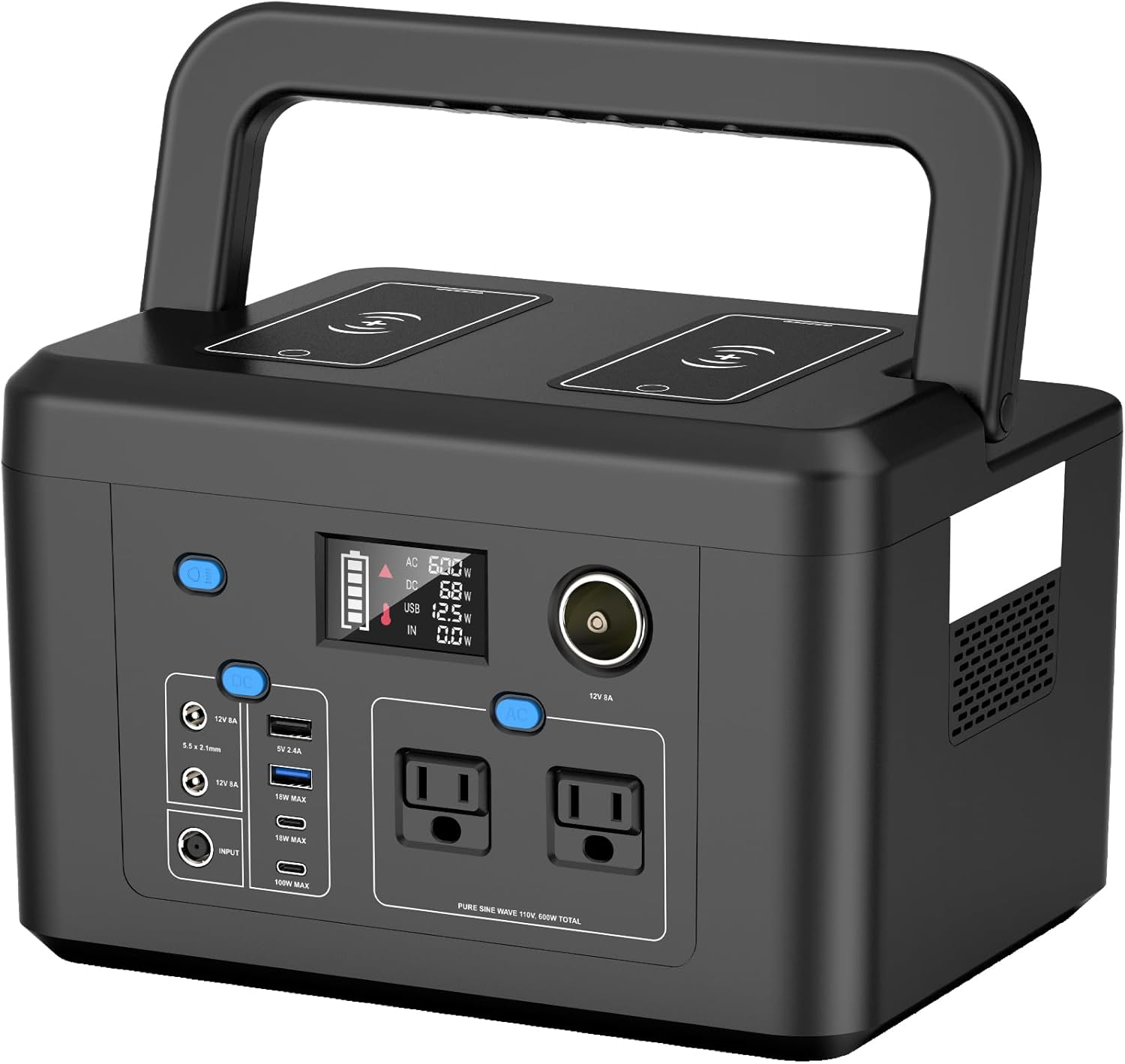
Key specifications table
You can scan this table to get the primary specs and offerings at a glance. It includes the manufacturer-provided data and notes where details are not specified.
| Feature | Details / Notes |
|---|---|
| Battery capacity | 296Wh (80,000mAh at 3.7V) |
| Rated AC output | 110V pure sine wave, 600W continuous |
| Peak/surge power | Not specified by manufacturer |
| AC outlets | 2 x AC (110V, total 600W) |
| USB-A ports | 2 x USB-A |
| USB-C ports | 2 x USB-C (one supports PD100W) |
| Wireless chargers | 2 x 10W wireless charging pads |
| 12V DC ports | 2 x 12V DC ports |
| Charging inputs | USB-C, DC input, AC adapter (included), car charge cable (included), solar (optional) |
| Recommended solar input | 13–24V / 4.74A; 100W+ solar panels recommended |
| Included accessories | AC power adapter, car charger cable, user manual |
| Weight / Dimensions | Not specified |
| Safety notes | Keep power ≥30% / 2 bars; recharge every 3 months to avoid battery defect |
| Warranty / Support | 24/7 customer service, lifetime technical support (per listing) |
Battery and capacity
You have a 296Wh lithium-ion battery pack which is a practical middle ground between tiny power banks and larger home backup stations. That capacity is sufficient to charge phones multiple times, run a laptop for a few hours, or run small appliances for limited durations.
The product description gives the battery in both watt-hours and mAh at 3.7V (80,000mAh). Keep in mind that usable capacity will be less than the raw figure because the inverter and conversion losses consume energy during AC output.
What 296Wh means in practice
You should expect realistic usable energy closer to 85–90% of the listed capacity after conversion inefficiencies depending on loads and conditions. That makes this unit great for short trips, weekend camping, and emergency top-ups, but not for powering full-size fridges or heavy power tools for long stretches.
You should also pay attention to the manufacturer’s maintenance suggestion: keep the battery above 30% and recharge at least every 3 months to avoid long-term battery issues.
Ports and connectivity
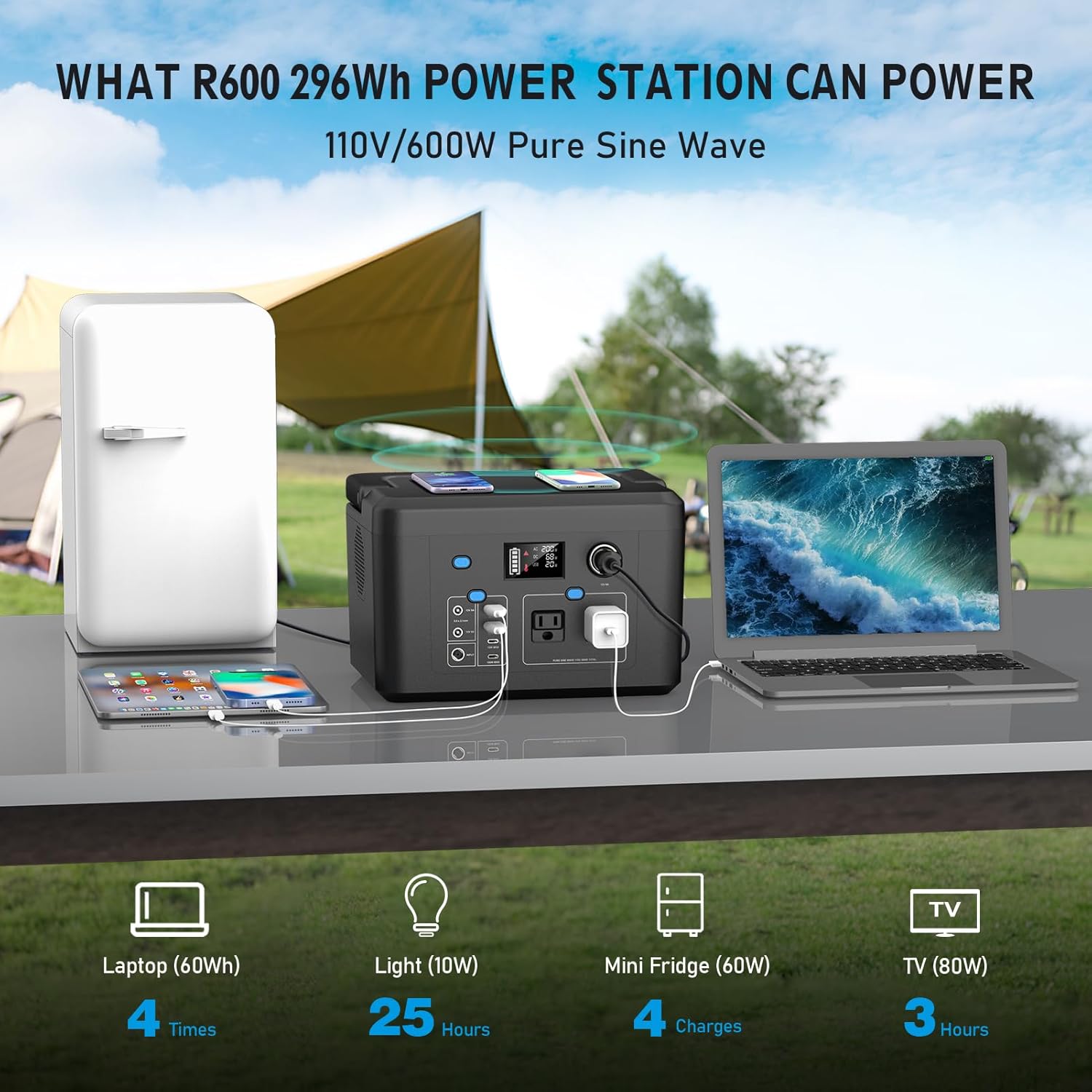
You get an unusually large selection of ports for a compact 300Wh-class unit: 2 AC outlets, multiple USBs including a PD100W USB-C, two wireless chargers, and 12V DC ports. That breadth gives you flexibility to charge several devices simultaneously without hunting for adapters.
The inclusion of both USB-C PD and wireless charging pads means you can charge modern laptops and phones quickly while also reserving AC outlets for appliances.
Port list summary
You’ll find these outputs useful for almost any modern device: two 110V pure sine wave AC outlets, two USB-A, two USB-C (one PD100W), two wireless charging pads (10W each), two 12V DC ports, and two charging input ports (USB-C and DC). This layout is tuned for mixed-device scenarios like camping with multiple gadgets.
You should plan port use based on priority: put high-draw items on AC or PD and use wireless pads for secondary device charging.
AC output and pure sine wave performance
The Powkey R600 supplies 110V pure sine wave AC up to 600W total, which is superior to modified sine wave units when it comes to sensitive electronics. You’ll be able to run devices like mini-fridges, small TVs, projectors, and more without the risk that a modified output sometimes causes.
Pure sine wave output is specifically safer for devices with inductive or electronic motor-driven parts, and it reduces the chance of noise, heat, or erratic performance.
Limits on AC usage
While the inverter handles 600W continuous, any appliances drawing more than that will either not run or potentially trip the protection. You should double-check starting/surge watt requirements for motors (like compressors) because some refrigerators or pumps need a higher surge wattage during startup. Since surge specs aren’t provided, be cautious when powering motor-driven devices.
You should also spread the load across the two AC outlets to avoid pushing the unit to its continuous limit.

Wireless charging: convenience and details
You have two 10W wireless charging pads. That means you can place two Qi-compatible phones on the unit and charge them cable-free, which is handy while you’re outdoors or in a tight RV space.
Wireless charging is never as fast as wired PD for larger devices, but it’s convenient for topping up phones or accessories while you’re doing other tasks.
Practical wireless use tips
You’ll get best results when you align devices properly on the pads and avoid placing thick cases or metal accessories between the phone and charger. Wireless pads are great as secondary chargers and for keeping your devices at usable battery levels during the day.
Remember that wireless charging still consumes battery; if you need maximum efficiency, prefer wired PD or USB-A connections.
Charging the unit: AC, car, solar
You can charge the R600 via the included AC adapter (wall socket), the included car charger cable (12V cigarette lighter), or via solar panels (not included). The recommended solar input is 13–24V at around 4.74A, and Powkey recommends using 100W+ panels to speed charging.
This multi-mode charging gives you flexibility: wall charging is fastest and most convenient, car charging is practical on road trips, and solar opens fully off-grid use when sunshine is available.
Solar specifics and expectations
If you choose to use solar, aim for a panel setup that matches the recommended voltage and can deliver 100W or more. That will shorten charging time significantly and make the R600 much more useful for longer stays away from grid power.
You should also ensure your solar panels include compatible connectors or use an appropriate adapter cable to match the R600 input. Solar performance will vary by weather, panel tilt, and sun hours.
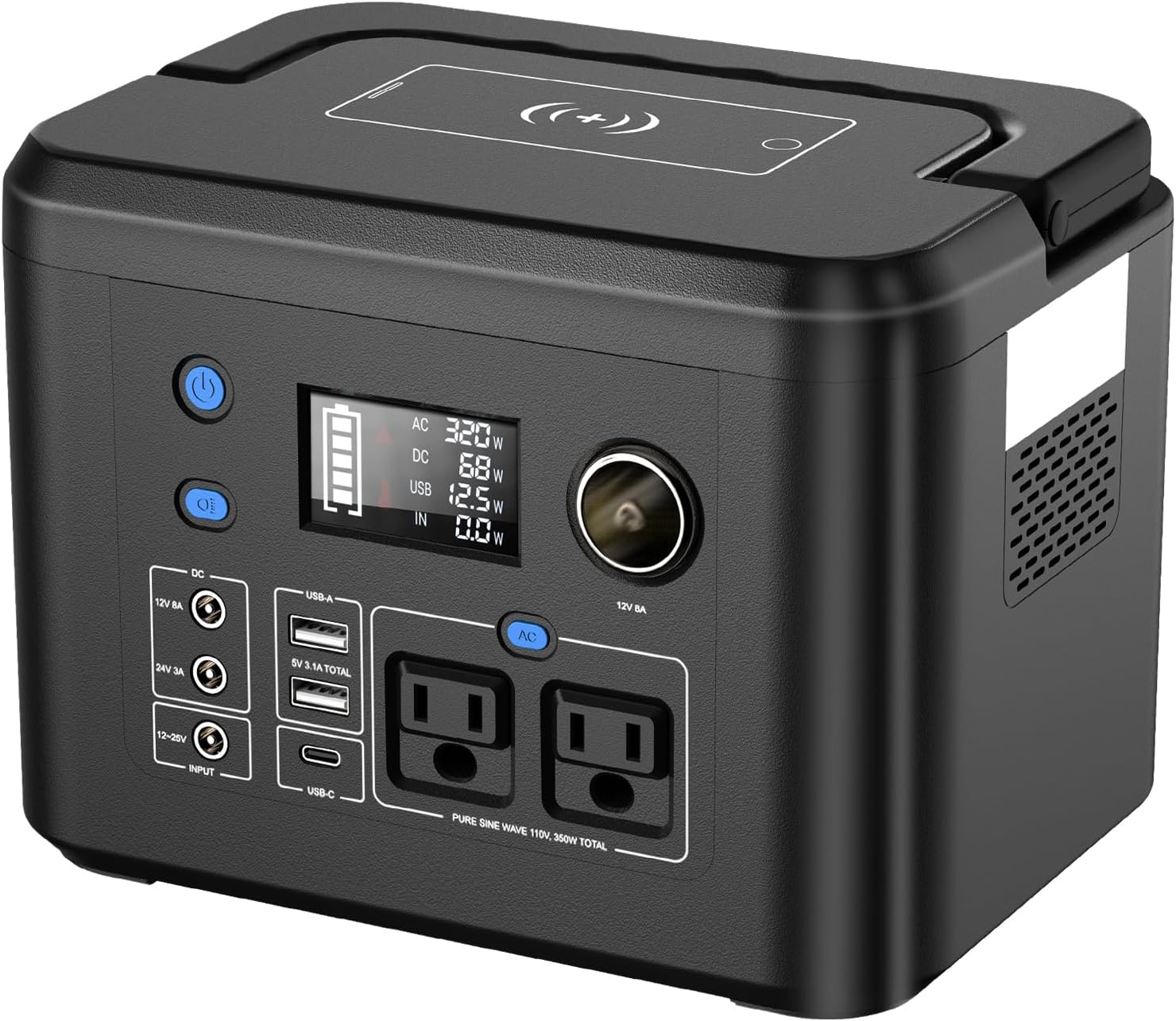
Estimated runtimes for common devices
You’ll find the following table helpful for planning trips or outages. These are rough estimates using the 296Wh capacity and assume 85% inverter efficiency for AC loads. Actual results will vary by device model, battery health, and settings.
| Device | Typical Power Draw | Estimated Runtime (hours) | Notes |
|---|---|---|---|
| Smartphone (charging via USB) | 10W | 20–24 hours (multiple charges) | Many phone charges are 10–20Wh per full charge |
| Laptop (USB-C PD, 60W) | 60W | ~3.7–4.2 h | Using PD100W is more efficient than AC |
| Mini fridge | 60–80W average | ~3.7–4.2 h | Compressor start-up may need higher surge; duty cycle reduces average draw |
| 32″ LED TV | 40–60W | ~3.7–5.3 h | Varies by model and brightness |
| Portable projector | 40–80W | ~3.7–6 h | Depends on bulb/LED and settings |
| Electric fan | 20–30W | ~8–11 h | Good low-draw appliance for cooling |
| CPAP (basic unit 40W) | 40W | ~6.3 h | Check CPAP starting surge and humidifier power |
| Portable blender | 200–300W | ~0.8–1.3 h | Heavy loads deplete battery fast |
| Camera battery charger | 10–20W | 10–20 h (multiple battery charges) | Useful for photographers in the field |
These estimates show you can run small appliances for several hours but should balance high-draw items to prevent rapid depletion. If you need longer runtimes, plan to bring additional power stations or top up with solar while running.
How to interpret these numbers
You should treat these numbers as planning guidance rather than precise guarantees. Real-world runtime will be affected by inverter efficiency, ambient temperature, battery age, and whether an appliance draws its listed power continuously.
For mission-critical devices like medical equipment, always validate compatibility and consider redundancy.
Performance and real-world behavior
You’ll likely find the R600 performs reliably for the intended use cases: charging multiple devices, powering low-to-moderate AC loads, and providing portable convenience. The pure sine wave inverter helps sensitive electronics run cleanly; the PD100W USB-C gives fast charging for modern laptops and phones.
Because the manufacturer provides maintenance advice and 24/7 support, you also get some peace of mind if you run into setup questions or need troubleshooting.
What to expect day-to-day
You should enjoy a smooth experience charging phones, running lights, powering small fridges for short durations, and using USB-C laptops. The handle and relatively compact footprint make it easy to move between car, tent, and campsite.
Expect to monitor battery levels if you plan on continuous use overnight or when powering devices with motors.
Portability and build quality
You’ll find the R600 designed with a flexible handle for carrying; it’s meant to be portable and convenient for outdoor activities. The overall packaging seems oriented toward users who want a balance between capacity and mobility.
While precise weight and dimensions are not provided in the listing, the 296Wh capacity typically corresponds to a manageable size you can carry short distances.
Practical mobility tips
You should position the unit on a stable, flat surface and keep it shaded when charging via solar or running in hot environments. If you plan on backpacking, its weight may be a factor—this unit is better for car camping or RV trips than for long hikes.
Protect the unit from strong impacts and avoid exposing it to heavy rain unless you have protective covering.
Safety features and maintenance
You get the benefits of pure sine wave output which is inherently safer for electronics, plus standard protections expected in modern power stations—overload, overcharge, over-discharge, and short circuit protections. The product includes explicit advice to keep battery ≥30% and recharge every 3 months to avoid battery defects.
Following maintenance guidance will prolong battery life and keep performance reliable over time.
Battery care recommendations
You should store the power station partially charged (not fully drained) and recharge it periodically if it’s unused. Avoid leaving it at extreme temperatures for prolonged periods, and follow the manufacturer’s recharge schedule to maintain cell health.
If you notice diminished runtime over months of use, contact customer support for troubleshooting or warranty options.
Package contents and customer service
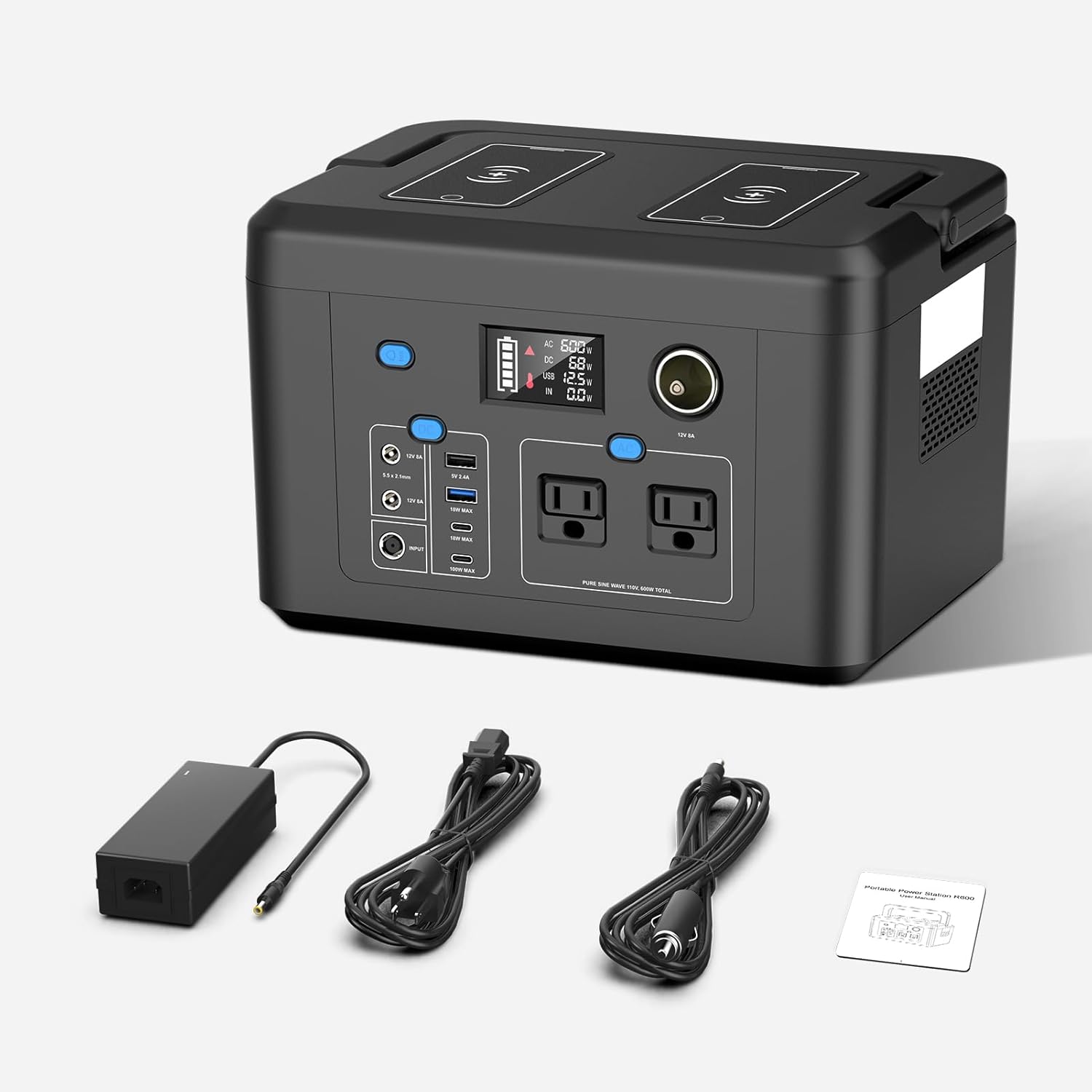
You will receive the Powkey R600 unit, an AC power adapter, a car charger cable, and a user manual. The listing also promises 24/7 customer service and lifetime technical support, which can be helpful if you need step-by-step help or have compatibility questions.
Having included charging accessories means you can start using the unit right away; solar panels are optional and sold separately.
Customer support expectations
You should expect to get setup assistance and troubleshooting via the vendor’s support channels. If anything seems off—like charging behavior or error codes—reach out promptly so the support team can help you diagnose or escalate issues.
What you’ll like about this power station
You’ll appreciate the generous mix of outputs (AC, PD100W USB-C, wireless pads) and the pure sine wave inverter for sensitive electronics. The recommended solar compatibility and included car charger expand your options for off-grid charging, making the unit flexible for multiple scenarios.
It’s also compact enough for weekend trips while providing more versatility than tiny power banks.
Practical positive use-cases
You should find it especially useful for charging laptops, running a mini-fridge for a few hours, powering lights and small fans in a campsite, or powering media devices during an RV trip. The wireless pads add an easy, cable-free option for phones.
What you might not like
You should be mindful that the 296Wh capacity limits long-term heavy usage; high-wattage appliances will drain it quickly. The listing doesn’t state surge capacity or exact weight/dimensions, so you might want those specifics before purchase if they’re important to you.
Additionally, solar panels are not included, so you’ll need to buy compatible panels separately for sustained off-grid use.
Practical trade-offs to consider
If you need to power high-surge devices like full-size refrigerators, circular saws, or air conditioners, you should look at larger-capacity stations. If you want a very lightweight pack for long solo hikes, consider smaller options made specifically for ultralight use.
Comparison ideas: where this unit fits in the market
You’ll find this model sits in the mid-size portable power station category—more capable and versatile than pocket power banks but smaller and more transportable than 500–1000Wh home backup stations. Its PD100W and wireless pads make it modern and multi-functional.
This position means you benefit from a relatively affordable compromise between portability and functionality.
Who should choose something else
You should look for larger units if you need multi-day power for heavy appliances or continuous home backup. Conversely, choose smaller battery banks if you want strictly ultra-light portability for day hikes.
Who this product is best for
You’re likely the ideal customer if you enjoy car camping, RVing, short off-grid stays, outdoor photography, or want a handy emergency backup for occasional blackout scenarios. It’s also good for digital nomads who need PD100W for laptop charging on the go.
If you need hospital-grade backup power or multi-day off-grid capability without solar, this isn’t the right fit.
Examples of use cases
You should bring this to a weekend campsite to charge phones, run a portable fridge, power a projector for an outdoor movie, and recharge camera batteries. In an RV, it can supplement built-in systems for short bursts of power or act as an emergency backup.
Buying tips and accessory suggestions
You’ll want to buy a compatible 100W+ solar panel if you plan extended off-grid use; follow the recommended voltage range (13–24V at ~4.74A). If you intend to run motorized loads, look for documentation about surge capabilities or call support to confirm safe usage.
Also consider protective carrying cases, extra PD cables, and a small power strip if you need to plug multiple AC devices.
Solar and cable compatibility
You should verify cable polarity and connector types before buying panels; many portable panels use MC4 connectors and require an adapter. Aim for quality panels with MPPT or PWM controllers built in (or use an external MPPT controller) to maximize charging speed and efficiency.
Troubleshooting and practical tips
If charging seems slow, check solar panel orientation, shading, and the panel’s wattage. If the unit shuts off unexpectedly, confirm you’re not exceeding the 600W continuous limit or triggering an overload protection.
Keep the battery above 30% during long storage, and consult the user manual or customer support for error codes or unusual behavior.
Common simple fixes
You should try a full reboot (power off, wait, power on) to clear transient errors and test with a known-good device to confirm output. Replace or test cables if charging fails, and ensure the AC adapter is connected and functioning.
Final recommendation
You should consider the Powkey R600 if you want a portable, versatile power station with modern charging capabilities and pure sine wave AC for sensitive electronics. It’s well suited to weekend trips, RV use, and emergency backups where you need a balance of capacity, portability, and a wide array of ports.
If you prioritize longer runtimes for high-wattage gear, combine it with suitable solar panels or look at larger-capacity units. Otherwise, this unit can be a very practical and convenient part of your outdoor and emergency kit.
One last practical suggestion
You should test the unit at home before relying on it in the field—charge it fully, try powering each device you plan to use, and measure runtimes so you know what to expect when you’re away from easy power sources.
Disclosure: As an Amazon Associate, I earn from qualifying purchases.