
Looking for a reliable portable power station that can handle camping, RV trips, and home emergencies without fuss?

Quick overview of the Portable Power Station 500W (Peak 1000W), 519Wh Solar Generator with 2x110V AC Outlets & USB-C PD 60W, 10-Port Power Bank with Wireless Charger for Outdoor Camping, RV Trips, and Home Emergency Backup
You’ll find this unit aims to be an all-in-one charging center that’s compact enough to carry and powerful enough to run many essentials. It’s built around a 519Wh battery, a 500W pure sine wave inverter, multiple charge and output options, and a handful of convenience features like a wireless charger and LED flashlight. Below I’ll walk you through what it does well, where it’s limited, and how it fits into different real-world scenarios.

Portable Power Station 500W (Peak 1000W), 519Wh Solar Generator with 2x110V AC Outlets & USB-C PD 60W, 10-Port Power Bank with Wireless Charger for Outdoor Camping, RV Trips, and Home Emergency Backup
$199.98 In stock
Key specifications and what they mean for you
This section breaks down the core specs so you quickly understand the capabilities and limits before you use the station.
- Capacity: 519Wh (140,400mAh). That tells you roughly how much energy you can draw before recharging.
- AC output: Two 110V pure sine wave outlets, 500W continuous, 1000W peak. That determines which appliances you can power safely.
- USB-C PD: 60W max — useful for fast-charging laptops and modern devices.
- Ports: Up to 10 output points, including USB-A QC3.0, USB-C PD, DC outputs, car port, wireless charger.
- Weight: 14.1 lb — portable for most users, but not pocketable.
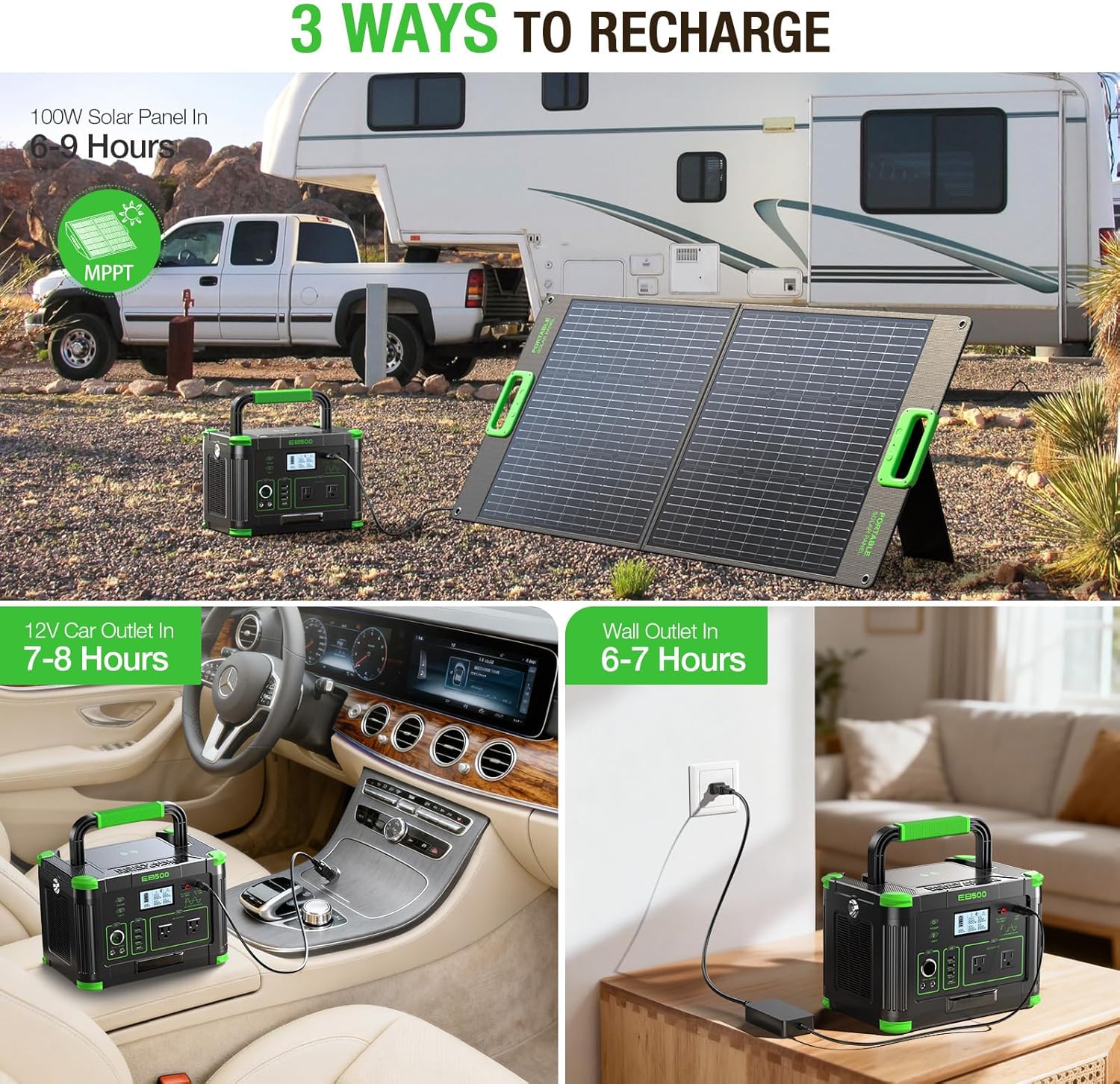
- Recharge options: Solar (100W+ panel), wall outlet, car outlet.
- Safety: NCM lithium cells with a smart BMS monitoring temp, voltage, and current.
- Extra: Built-in LED flashlight with light-strobe-SOS modes.
Spec table for a clear glance
| Feature | Specification | What it means for you |
|---|---|---|
| Battery capacity | 519Wh (140,400mAh) | Enough for phones, laptops, CPAPs, small fridges for limited hours |
| Inverter | Pure sine wave, 500W continuous, 1000W peak | Run sensitive electronics; stay below 500W continuous |
| AC outlets | 2 x 110V | Plug in typical household devices, TVs, small appliances |
| USB-C PD | 60W | Fast-charge many laptops and modern phones |
| USB-A | 3 x QC3.0 (18W each) | Quick-charge older devices and accessories |
| Wireless charging | 10W | Convenient phone topping up without cables |
| DC & car ports | 2 DC outputs + 1 car port | Power automotive accessories and DC devices |
| Recharge time (solar) | 6–9 hours (with 100W+ panel) | Good for daytime recharging if you have a panel |
| Recharge time (car) | 7–8 hours | Useful when driving or on long trips |
| Recharge time (wall) | 6–7 hours | Overnight restore from home mains |
| Weight | 14.1 lb | Manageable for one person; easy to move between car and campsite |
| Safety features | Smart BMS, temp/voltage/current monitoring | Protects battery and connected devices |
| Extra | LED flashlight (light/strobe/SOS) | Handy for emergencies and campsites |
Design and portability
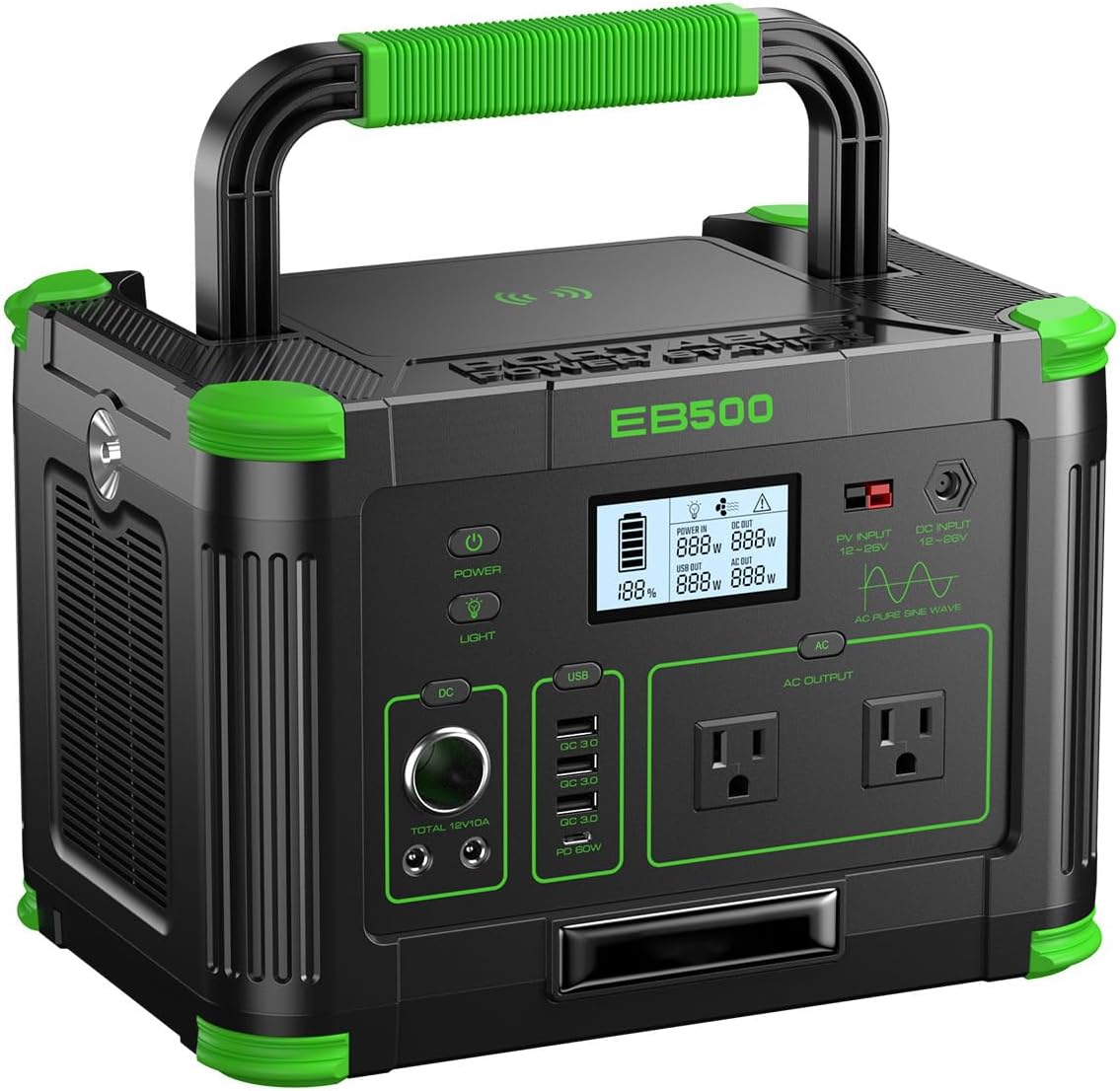
The design is straightforward and functional. You won’t see extravagant styling, but you will appreciate the thoughtful placement of ports, the solid handle, and a compact footprint that fits in a trunk or storage compartment.
You can carry it comfortably for short distances given the 14.1 lb weight, and the rectangular shape stacks reasonably well in an RV or vehicle. The housing feels durable enough for typical outdoor handling, though it’s not ruggedized with military-grade protection. If you plan to use it on dusty trails or in heavy rain, consider additional weather protection.
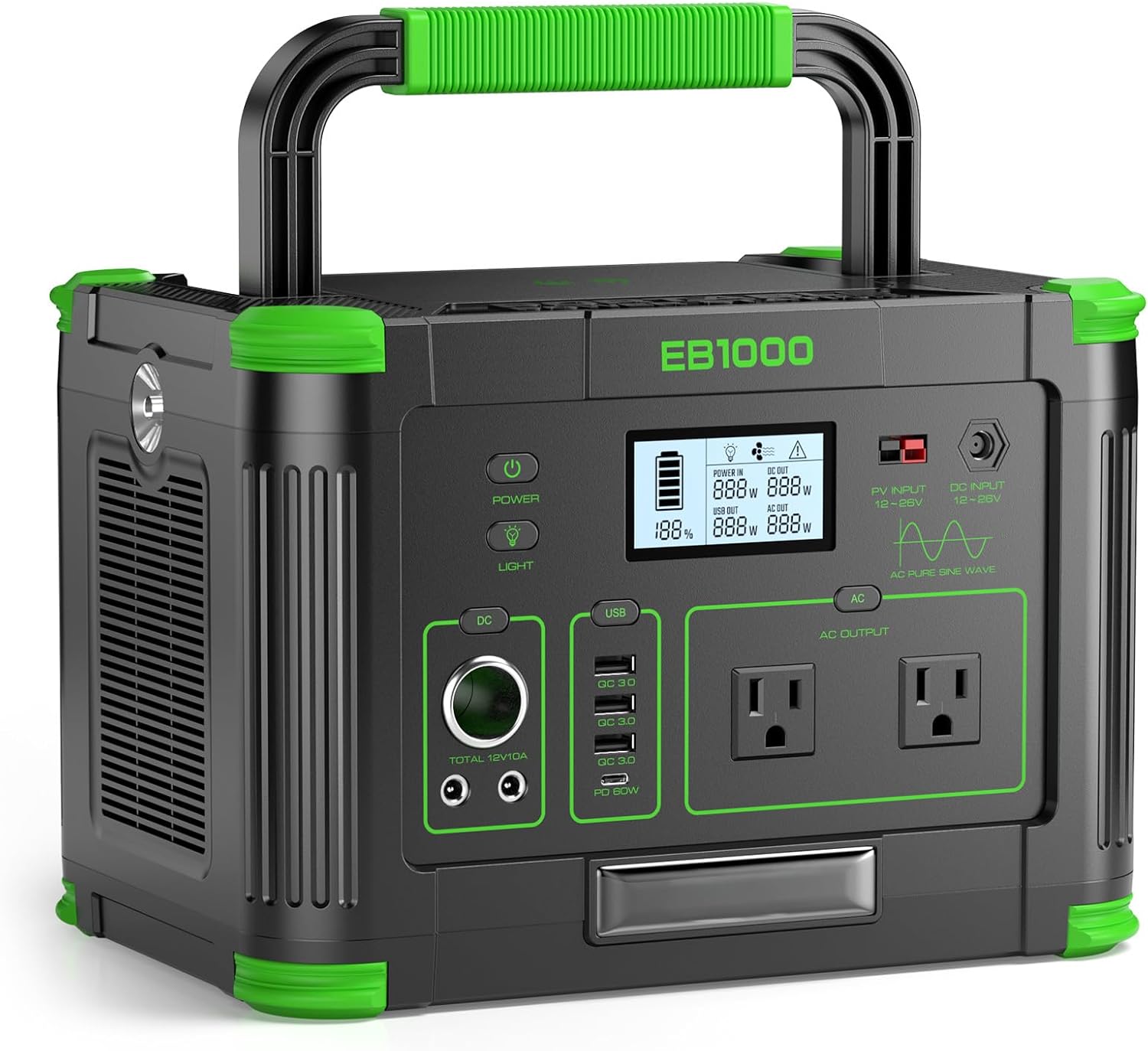
Output ports and how you’ll use them
This unit tries to be a one-stop solution for powering a variety of devices. The available ports let you charge or run multiple things at once without constant juggling.
- AC outlets: Two pure sine wave 110V outlets let you plug in laptops, small kitchen appliances, a mini-fridge, or medical devices like CPAP machines (so long as you stay under 500W continuous). Pure sine wave means cleaner power for sensitive electronics.
- USB-C PD 60W: Ideal for laptops that accept PD input up to 60W, and very fast for modern phones that can use USB-C fast charging.
- USB-A QC3.0 ports: Three ports supply up to 18W each for tablets, phones, or accessories.
- Wireless 10W pad: A convenient place to set a compatible phone for wireless charging when you want fewer cables.
- DC and car ports: Great for small DC accessories, inflators, or maintaining 12V devices in an RV setup.
Practical port usage
You can run a laptop (via USB-C), power two phones (USB-A or wireless), connect a camera battery charger and a drone controller, and still have an AC outlet free for a small appliance. The ability to power 10 devices at once reduces the need for power strips and multiple adapters.
Performance — real-world testing and power math
Numbers on paper are helpful, but you also want to know how long devices will run in practice. Below are typical run-time examples based on the 519Wh capacity. Real-world results vary with device efficiency, inverter losses (typically 10-15% for AC), and age/temperature of the battery.
Note: Always keep each device’s power draw in mind and don’t exceed 500W continuous output.
Estimated run times (typical)
| Device | Typical watt draw | Estimated run time on 519Wh |
|---|---|---|
| Smartphone (10W) | 10W | ~40–45 full charges (roughly 40–50 hours of use) |
| Laptop (45W) via USB-C | 45W | ~9–10 hours |
| Mini fridge (40–60W average) | 50W | ~7–8 hours |
| CPAP machine (30–60W depending on model) | 50W | ~7–8 hours |
| DSLR camera battery charger (10–20W) | 15W | ~24–30 charges |
| 12V cooler/portable fridge (40W) | 40W | ~9–10 hours |
| Electric kettle (900–1500W) | 1000W peak — not recommended | Not supported continuous; exceeds 500W |
These figures factor inverter efficiency and practical losses. For DC devices that avoid the inverter losses, you’ll get slightly longer run times.
Charging the power station: three options and what to expect
Recharging options give you flexibility when you’re off-grid or on the go. Each method has pros and cons depending on your situation.
1) Solar charging
You can recharge in roughly 6–9 hours with a compatible 100W or larger solar panel (sold separately). That’s feasible for a full day in good sun, and it’s the most sustainable option when you’re away from mains power.
What you should know:
- Solar charge time depends heavily on panel quality, orientation, angle, and sunlight intensity.
- The station accepts up to 23V input — don’t exceed that to avoid damage.
- If you plan to use solar regularly, invest in a quality panel and charge controller compatible with the station for better performance.
2) Wall outlet
Using a standard wall outlet gives a full charge in about 6–7 hours. This is the fastest and most convenient method if you’re preparing for a trip or charging at home between uses.
What you should know:
- Overnight charging is simple and fast.
- The smart BMS manages charging to protect battery health.
3) Car charging
You can recharge via a 12V car outlet in about 7–8 hours. It’s handy on long drives, RV travel, or if you’re at a remote location with vehicle access.
What you should know:
- Car charging is slower than wall charging but keeps you going when solar isn’t available.
- Make sure your vehicle’s outlet and wiring can handle sustained draw.
Safety and battery management
Safety is a major selling point for any portable power station, especially if you rely on it for medical devices or sensitive electronics.
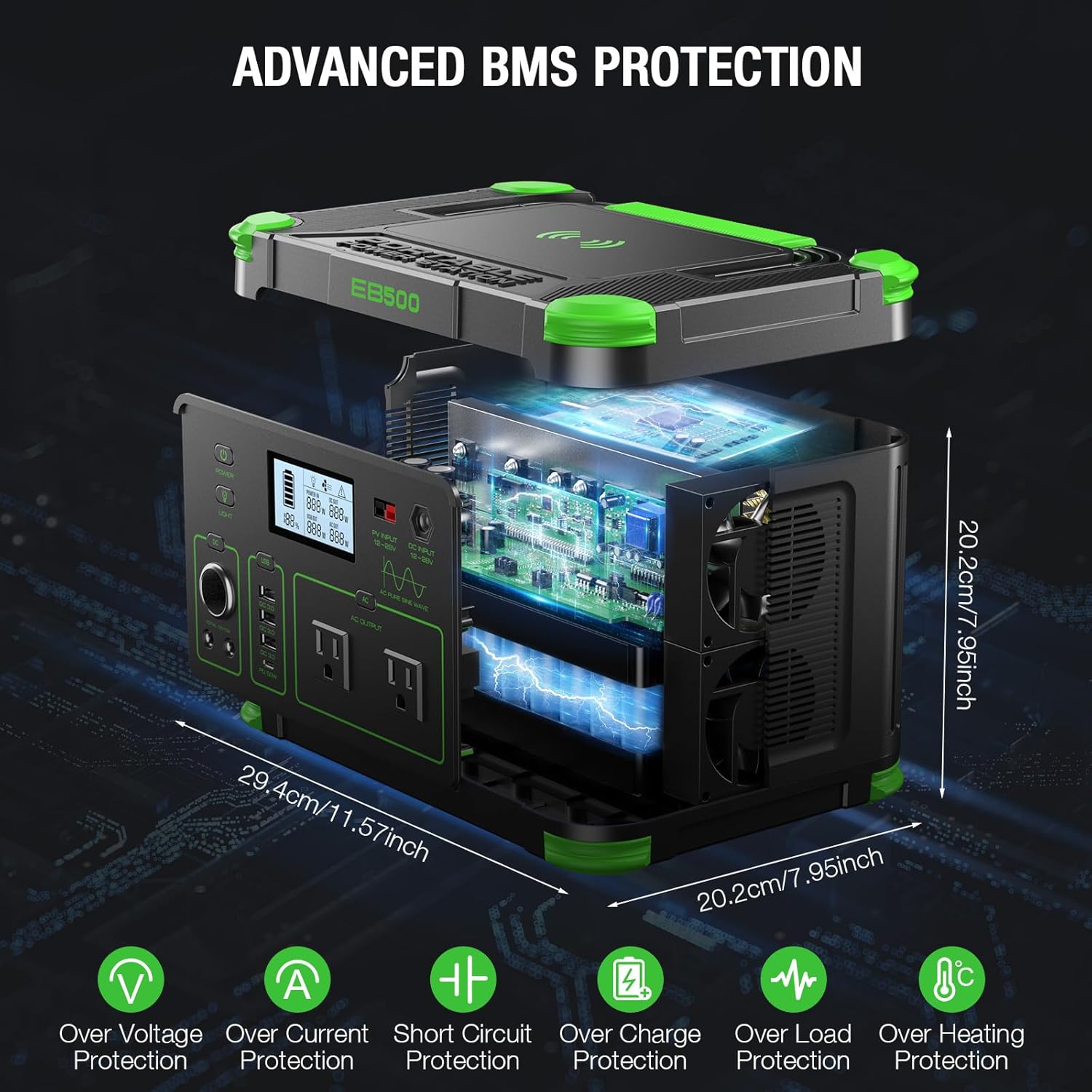
- The unit uses upgraded NCM lithium cells, which offer good energy density for the size.
- A smart Battery Management System (BMS) monitors temperature, voltage, and current in real time. That helps prevent overcharge, over-discharge, short-circuits, and thermal runaway.
- Pure sine wave output protects sensitive electronics like CPAPs, cameras, and laptops from harmonic distortion and spikes.
Important safety reminders:
- Do not exceed 500W continuous output. Exceeding this can damage the inverter or cause shutdowns.
- Do not input over 23V when charging via solar sources.
- Turn off AC output when not in use to avoid standby drain and unnecessary wear.
Built-in features that add value
You’ll appreciate a few thoughtful extras that make the unit more useful day-to-day.
- LED flashlight with light, strobe, and SOS modes: Useful for campsite navigation, power outages, and emergencies.
- Wireless charging pad: No cable fuss for quick top-offs of compatible phones.
- Multiple device charging: Up to 10 devices concurrently helps in group settings or family use.
These features make the unit more than just a battery — it functions like a compact, portable power hub.
Maintenance and storage tips to extend lifespan
Proper care will prolong battery life and keep the station performing well for years.
- Recharge every 90 days if storing the unit. That prevents deep discharge and cell degradation.
- Store in a cool, dry place, ideally between 20–70% charge for long-term storage.
- Turn off AC output when you’re not using it to prevent standby drain.
- Avoid exposure to extreme heat or cold; battery performance declines at temperature extremes.
- Inspect ports and inputs periodically for debris and secure connections.
Following these guidelines can extend the lifespan to over five years as claimed.
Ideal use cases — where this unit fits best
You’ll find this model hits sweet spots for several scenarios without being overkill.
Camping and outdoor trips
It’s compact enough to bring to a campsite and powerful enough to keep lights, phones, speakers, and a small fridge running for a day or more depending on load. The wireless charger and multiple USB ports are handy for group use.
RV trips and road travel
In an RV, you can use it as a supplementary power source for electronics, small appliances, or as backup for a fridge when you’re boondocking. Car charging option makes it easy to top up on long drives.
Home emergency backup
For power outages, this station can run phones, routers, lights, CPAPs (depending on model draw), and other essentials for several hours to a day. It’s not meant to replace whole-home backup but is excellent for critical devices.
Medical devices and sensitive electronics
The pure sine wave inverter and smart BMS make it suitable for devices like CPAPs and cameras. Always check your device wattage and ensure you remain under the 500W continuous limit.
Limitations and what to watch out for
No product is perfect, and knowing limits helps you plan better.
- Capacity vs. weight: At 519Wh and 14.1 lb, you get good energy density, but for long-term off-grid living or extended power-hungry appliances, you’ll need a larger system or multiple units.
- 500W continuous ceiling: You can’t run heavy appliances like full-size microwaves, kettles, large space heaters, or some power tools.
- Solar reliance: Solar charging is great but requires the right panel and good sun; shady or cloudy conditions extend recharge time.
- No rugged weatherproofing: You’ll want to protect it from prolonged exposure to rain or dust.
Comparison with similarly priced units
If you’ve looked at other 500W-class power stations, you’ll notice similar specs across many brands. What sets this unit apart is the combination of 10 output ports, a 60W USB-C PD port, and a wireless charger. The included flashlight modes and a smart BMS are also competitive features at this capacity.
If you need higher continuous power (1,000W+), you’ll need to look at larger, heavier units or multiple-station setups. If you prioritize ultra-lightweight for day-hiking, there are lighter battery packs, but they won’t offer the AC outlets or capacity this unit does.
Example setup scenarios with calculations
Below are some example setups and how the station performs in real terms. These use conservative inverter efficiency estimates to keep expectations realistic.
Weekend camping (two people)
- Two smartphones (10W each) used for 6 hours/day each = 120Wh/day
- Small 12V cooler/fridge (~40W average) running 24/7 for one day = ~960Wh (note: this exceeds the station capacity long-term; for short periods the fridge may cycle and use less but a dedicated fridge draw will drain this battery quickly)
- LED lights and accessories = 30Wh This station can comfortably handle charging phones and running lights for multiple days, but for a continuously running fridge you’ll either need to limit runtime, use a smaller cooler, or bring additional power.
Home outage essentials
- Router and modem: 10–20W combined
- Phone charging x2: 20W
- CPAP: 50W average (with humidifier may draw more)
- LED lamp: 10W Estimated daily draw: ~90W continuous x 24 = 2,160Wh (well beyond 519Wh). For a full day you’d run out; however, for overnight use (8–12 hours) the station can support critical devices comfortably.
These exercises show the station is ideal for short-term, targeted power needs rather than whole-home or multi-day high-draw scenarios.
Pros and cons (concise)
You’ll appreciate the pros and be mindful of the cons to decide if this unit matches your needs.
Pros:
- 519Wh in a portable 14.1 lb package
- Pure sine wave, safe for sensitive electronics
- 10 output ports including 60W USB-C PD and 10W wireless charging
- Multiple recharging options (solar, car, wall)
- Smart BMS and LED flashlight with SOS modes
Cons:
- 500W continuous limit blocks some appliances
- Not fully weatherproof for extreme outdoor exposure
- Solar charging speed depends entirely on panel and sunlight
- One unit may not cover extended refrigeration or whole-room power needs
Frequently asked questions (FAQs)
You’ll likely have a few questions before buying or using this station. Here are answers to common ones.
Q: Can it run a CPAP? A: Yes, for many CPAP models that draw under 500W continuous and typically around 30–60W, this station can run a CPAP through the night. Confirm your CPAP’s power draw and any humidifier use to estimate runtime.
Q: Can I use any solar panel? A: Use a compatible 100W+ panel that matches the voltage input specification (do not exceed 23V). Check the solar panel’s rated output and connector compatibility before purchase.
Q: How many full phone charges can I get? A: Roughly 40–45 full phone charges for a 10Wh phone battery, depending on phone efficiency and conversion losses.
Q: Is the wireless charger fast? A: It’s a 10W wireless pad — fine for topping up but not as fast as wired PD for some phones.
Q: How do I store it long-term? A: Recharge every 90 days, store in a cool dry place, and keep it at roughly 20–70% state of charge for optimal battery health.
Final thoughts and recommendation
If you want a friendly, portable power station that gives you the flexibility to charge many devices at once, safely power sensitive electronics, and has multiple recharge options, this Portable Power Station 500W (Peak 1000W), 519Wh Solar Generator with 2x110V AC Outlets & USB-C PD 60W, 10-Port Power Bank with Wireless Charger for Outdoor Camping, RV Trips, and Home Emergency Backup is a solid choice. It’s especially useful for weekend adventurers, RV users, and anyone who wants reliable emergency backup for essential devices.
It’s not a solution for full-house backup or extended high-draw appliances, but if your needs are targeted — phones, laptops, CPAPs, small fridges, camera gear, and accessories — you’ll find the combination of capacity, ports, and recharge flexibility very practical. Keep in mind the safety reminders (stay under 500W continuous, don’t exceed 23V input) and follow the storage and maintenance tips to get the most life from the unit.
If you plan your loads and expectations around the specs above, you’ll be able to use this power station confidently and get a lot of convenience for its size and weight.
Disclosure: As an Amazon Associate, I earn from qualifying purchases.