
Looking for a compact, smart charger that keeps your batteries healthy without constant babysitting?


NOCO GENIUS1: Product overview
You get a small, powerful charger that handles charging, maintaining, trickle charging, and desulfation all in one. The NOCO GENIUS1: 1A 6V/12V Smart Battery Charger – Automatic Maintainer, Trickle Charger & Desulfator with Overcharge Protection & Temperature Compensation – For Lead-Acid & Lithium Batteries is designed to be simple to use while offering features usually found on larger units.
What you should know about the GENIUS1
This model is described as 35% smaller and delivering over 35% more power than the G750, making it easier to stow and use in tight spaces. It’s built to be an “all-in-one” solution for many battery types and situations, from long-term storage maintenance to bringing deeply discharged batteries back to life.
What’s included
You’ll receive the 1A charger itself, a direct wall plug-in, a 110-inch DC cable with both battery clamps and integrated eyelet terminals, and a 3-year warranty. Those accessories make it easy to choose the connection method that fits your setup.
Key specifications and quick reference
Having the specs in front of you helps when selecting the right charger for your needs. Below is a concise breakdown so you can scan for the essentials.
| Specification | Details |
|---|---|
| Model | NOCO GENIUS1 |
| Output Current | 1 Amp |
| Voltage | 6V / 12V selectable |
| Battery Types | Lead-acid (AGM, Gel, SLA, VRLA, flooded), LiFePO4 |
| Minimum Input Voltage | Charges from as low as 1V |
| Force Mode | Can manually charge dead batteries down to 0V |
| Features | Automatic maintainer, trickle charger, desulfator, temperature compensation, overcharge protection |
| Cable Length | 110-inch DC cable |
| Connections | Battery clamps + integrated eyelet terminals |
| Warranty | 3 years |
| Designed | USA |

Design and build quality
The GENIUS1 is compact and lightweight, which makes it easy to store in a toolbox or in a vehicle. You’ll notice it’s designed for convenience, with a direct wall plug-in and a long DC cable so you don’t need an outlet right next to the battery.
Portability and form factor
Because it’s 35% smaller compared to a previous model, you can slip it into tight spaces or glove boxes. You’ll appreciate its small footprint if you work in cramped garages or need to stash it in an RV or boat locker.
Connectors and cable quality
The included 110-inch cable gives you plenty of reach, and having both clamps and eyelet terminals means you can quickly hook up for short-term charging or make a permanent connection for maintenance. The connectors are solidly made for repeated use, and the eyelets are handy when you plan to leave the charger connected long-term.
Charging performance and modes
You get a number of smart charging behaviors that protect and maximize battery life. The GENIUS1 does more than deliver voltage — it manages the charging profile to suit battery chemistry, temperature, and condition.
Charging algorithms and automatic behavior
The unit automatically senses battery voltage, type, and condition, then applies an appropriate multi-stage charging algorithm to charge, condition, and maintain without overcharging. That means you can leave it connected and let it decide when to top up or float.
Trickle charging and maintenance
When a battery is fully charged, the charger switches to a maintenance mode to keep the battery topped up without causing damage. If you have seasonal equipment or vehicles that sit for months, you can leave this charger connected safely without worrying about overcharging.
Desulfation and pulse charging
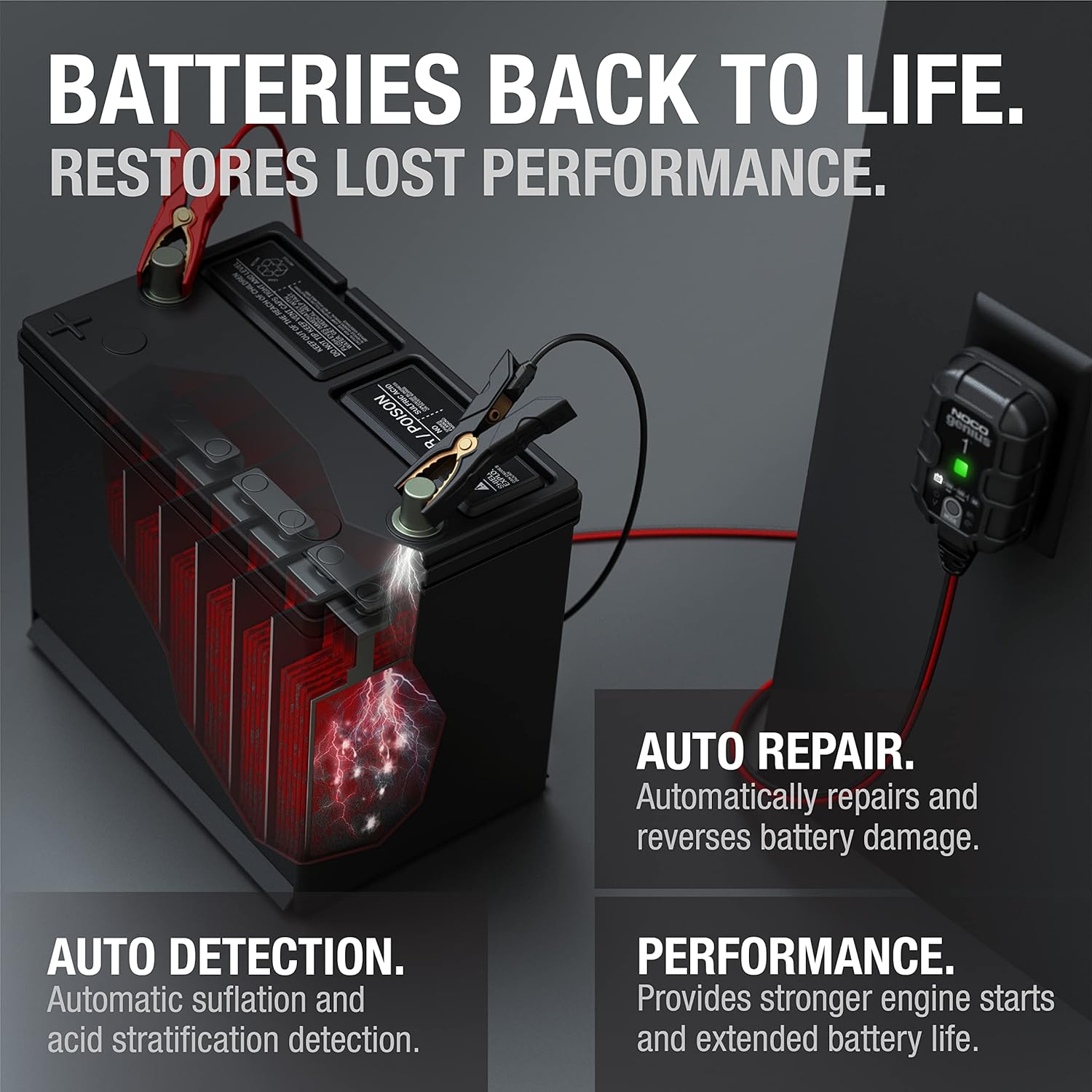
The GENIUS1 employs precision pulse charging to detect and reverse sulfation and acid stratification on lead-acid batteries. You’ll see improved battery performance and longer battery life for batteries that haven’t been completely destroyed by sulfation.
Temperature compensation and safety
Charging performance can change drastically with ambient temperature. The GENIUS1 includes an integrated thermal sensor that adjusts charging voltage automatically so your battery isn’t overcharged in hot conditions or undercharged in cold environments.
Why temperature compensation matters
When it’s hot, batteries require lower charging voltage to avoid overpressure and damage; when it’s cold, they need a slightly higher voltage to accept charge properly. You’ll get more consistent, safer charging across seasons and geographical regions thanks to this feature.
Built-in protections you can trust
You’re protected from common mishaps like overcharging, reverse polarity, short circuits, and overheating. These protections reduce the risk of damage to both the charger and the battery, giving you peace of mind while using the device.
Charging dead or deeply discharged batteries
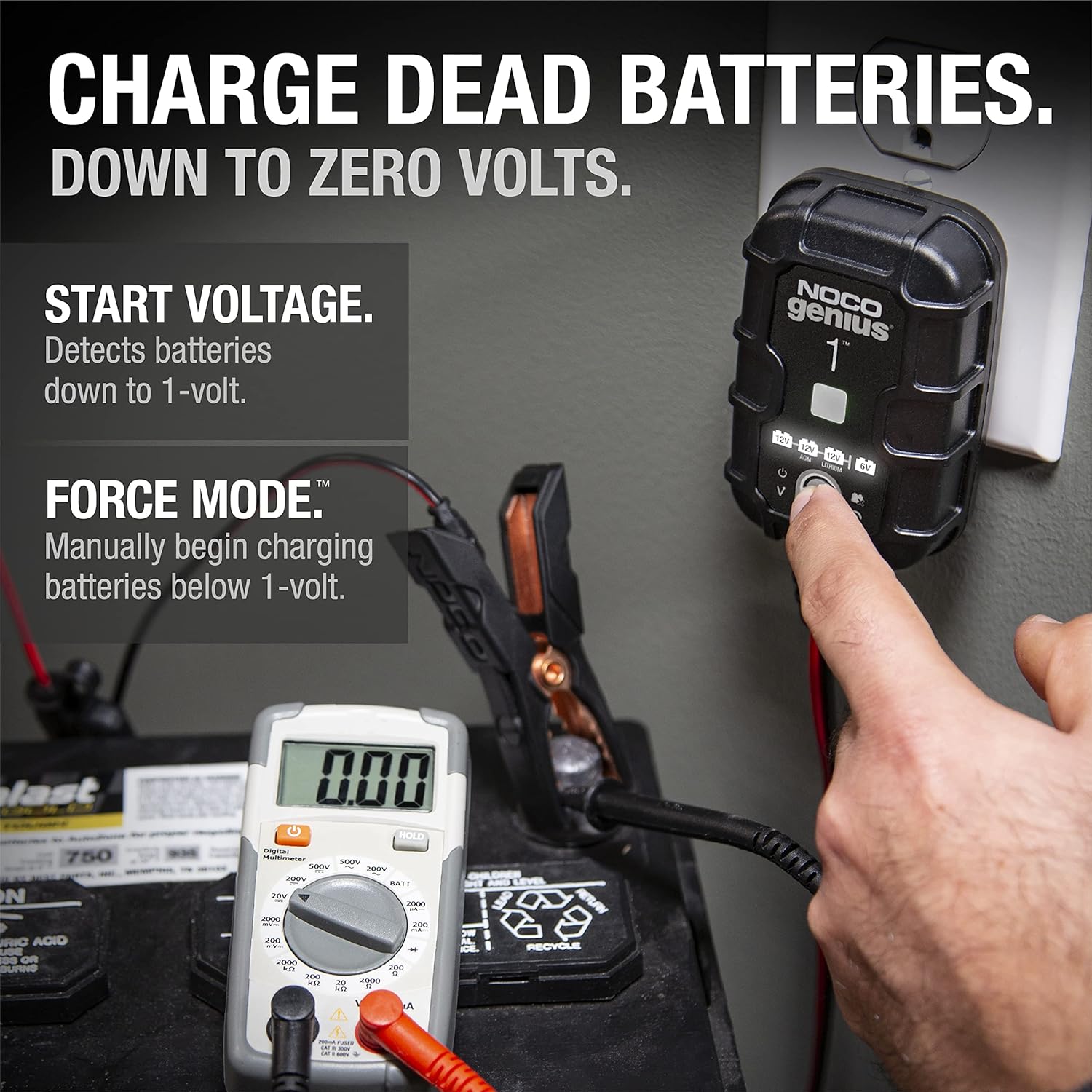
One of the standout features is the ability to charge batteries from extremely low voltages. The GENIUS1 can start charging from as low as 1V, and with Force Mode you can manually charge batteries down to zero volts.
How Force Mode works for recovery
Force Mode lets you push a manual charge to revive batteries that the automatic senses might otherwise ignore. You’ll use this when a battery is deeply discharged or when automatic modes fail to initiate charging. Use caution and monitor the battery when using Force Mode, because these batteries can be damaged beyond recovery if severely compromised.
Practical recovery expectations
While the GENIUS1 can rescue many neglected batteries, it can’t always restore a battery that has severe physical or chemical damage. Expect good results with sulfation and stratification recovery, but be realistic: some batteries may be too far gone and will require replacement.
Battery compatibility and recommended uses
This charger is versatile. You’ll be able to use it with many battery types and a wide range of vehicles and equipment.
Lead-acid and lithium support
It supports 6V and 12V lead-acid batteries — including flooded, AGM, Gel, SLA, VRLA, and deep-cycle — and also supports LiFePO4 (a lithium chemistry). You should check the battery manufacturer’s recommendations before charging lithium types, but the GENIUS1 is built to handle LiFePO4 safely.
Vehicles and gear you can maintain
You can use this charger on cars, motorcycles, scooters, lawn mowers, ATVs/UTVs, tractors, RVs, boats, jet skis, classic cars, and more. If you’ve got a battery that fits the supported chemistry and voltage, the charger will usually work well.
Use cases where the GENIUS1 shines
You’ll find the unit particularly useful in situations where battery health is critical or when equipment sits idle for long stretches.
Seasonal storage and maintenance
If you put your mower, motorcycle, or boat away for the winter, the GENIUS1 is ideal for long-term maintenance. It will keep the battery topped without risk of overcharging, so you don’t come back to a dead battery in spring.
Garage keepers and classic car owners
Classic cars often live in storage and need constant tender attention. You’ll appreciate the trainer-style maintenance the GENIUS1 provides — it keeps batteries healthy and ready to go, which reduces cranking problems and prevents corrosion from frequent starting attempts.

Installation and everyday usage
Hooking up the GENIUS1 is straightforward, but following best practices will keep you safe and yield the best results.
Basic connection steps
- Unplug the charger from the wall before connecting.
- Attach the clamps or eyelet terminals: clamp the red lead to positive (+) and the black lead to negative (-). If you use eyelets, attach to the battery posts securely.
- Plug the charger into the wall. The charger will sense the battery and select the appropriate mode.
- Leave the charger connected for maintenance or until the charge cycle completes.
You’ll find the long cable and included eyelets helpful for semi-permanent installations where the battery needs continuous supervision.
Charging a dead battery, step-by-step
- Inspect the battery for visible damage or leakage; replace if damaged.
- Ensure good air circulation and remove sparks/ignition sources.
- Connect the clamps or eyelets to correct polarity.
- Plug in the charger and observe the LED indicators.
- If the charger doesn’t start, consider using Force Mode following manufacturer instructions.
- Monitor the battery temperature and charger LEDs. Disconnect when safe or when the unit indicates a completed charge.
Desulfation: how it helps and what to expect
When batteries sit discharged, lead sulfate crystals form and reduce capacity. The GENIUS1 uses pulse charging to break down these crystals and potentially restore capacity.
How pulse charging benefits you
The charger applies controlled pulses to convert lead sulfate back into active material, which can restore lost capacity and cranking ability. You’ll often see improved voltage stability and charge acceptance after a successful desulfation cycle.
Limits of desulfation
Desulfation helps many batteries, but it isn’t a miracle fix for batteries with extensive physical degradation, plate shedding, or irreversible chemical changes. If the battery has been heavily abused or is very old, replacement may still be necessary.
Safety, legal, and practical considerations
Knowing what the charger can and can’t do will protect you and extend battery life. You should always follow safety best practices.
Safety best practices
Always wear eye protection when working with batteries, keep the area ventilated, and avoid sparks or open flames. Ensure good polarity when connecting clamps and never attempt to charge a frozen battery.
Legal and warranty notes
The GENIUS1 includes a 3-year warranty, but misuse (like exposing it to water or using it with unsupported chemistries) can void coverage. Keep your proof of purchase and register the device if required to maximize warranty protection.
Pros and cons
Here’s a concise, honest assessment to help you decide if this is the right charger for your needs.
Pros
- Compact and portable design fits tight spaces.
- Supports both 6V and 12V batteries and multiple chemistries including LiFePO4.
- Can charge from as low as 1V and has Force Mode for dead batteries.
- Integrated thermal sensor optimizes charging across temperatures.
- Desulfation and precision pulse charging can restore battery performance.
- Automatic maintainer allows indefinite connection without overcharging.
- Long cable and multiple connection options included.
Cons
- 1 amp output is slow for larger batteries; it’s best for maintenance and small battery charging, not rapid recharging of large automotive batteries.
- Not waterproof — needs a dry environment or protected installation.
- Deeply damaged batteries may be beyond the charger’s recovery capabilities.
- Limited to 6V and 12V systems — won’t work for high-voltage bank charging without proper configuration.
How the GENIUS1 compares to alternatives
If you’re choosing between small smart maintainers, the GENIUS1 stands out for its combination of features and portability. Compared to older NOCO models like the G750, the GENIUS1 is smaller and claims more power.
Quick comparison table
| Feature | NOCO GENIUS1 | Typical 1A Basic Charger |
|---|---|---|
| Size | 35% smaller than G750 (compact) | Larger |
| Output | 1A with advanced algorithms | 1A basic output |
| Temperature compensation | Yes | Usually no |
| Desulfation | Yes (pulse charging) | No |
| Dead battery recovery | Charge from 1V, Force Mode to 0V | Often won’t start below ~6V |
| Battery types | Lead-acid + LiFePO4 | Often just lead-acid |
| Long-term maintenance | Safe indefinitely | Often not smart enough to prevent overcharge |
This gives you a clear picture: GENIUS1 is more feature-rich than most basic 1A chargers and offers capabilities normally found in higher-end units.
Troubleshooting and common questions during use
Even with an intelligent charger, you might run into scenarios that need attention. Here are common issues and how to address them.
Charger won’t start
If the charger doesn’t initiate, first check connections and polarity. If everything is correct but the charger won’t start, the battery may be below the auto-start threshold — try Force Mode if safe to do so, or consult the manual and warranty support.
Slow charging
Remember, 1 amp is slow. A depleted car battery with many amp-hours will take a long time to charge. You’ll see the GENIUS1 shine as a maintainer and recovery tool, not as a rapid charger for large batteries.
LED status confusing
Refer to the manual for the exact meanings of the LEDs. Typically they’ll indicate battery voltage, charging stage, errors, and maintenance. If you see an error or abnormal indicators, unplug and inspect for damage.
Practical tips to get the most from your GENIUS1
These tips will help the charger work efficiently and extend your battery life.
- Always clean battery terminals before connecting to ensure good contact.
- Use the eyelet terminals for long-term storage setups to avoid accidental disconnection.
- Keep the charger indoors or in a dry, ventilated area to prevent moisture damage.
- For winter storage, leave the charger connected to maintain proper state of charge and avoid freezing risks from sulfated batteries.
- Monitor batteries that are deeply discharged during initial recovery cycles — heat or swelling may indicate a failing battery.
Frequently asked questions (FAQ)
You might have specific questions about capabilities or practical usage. Here are clear answers to common ones.
Q: Can you leave the GENIUS1 connected indefinitely?
A: Yes. The charger’s maintenance mode is designed to keep a battery at an optimal charge without overcharging, so you can safely leave it connected for long-term storage.
Q: Can it charge lithium batteries?
A: It supports LiFePO4 batteries. Always confirm the specific lithium chemistry and battery manufacturer recommendations before charging.
Q: Will it revive any dead battery?
A: The charger can start charging from very low voltages and has Force Mode for deeply discharged batteries, but severely damaged batteries may not recover.
Q: Is it waterproof?
A: No. Keep the charger dry and install it in a protected environment to avoid damage.
Q: Can you use it while the engine is running?
A: Chargers are typically designed for stationary charging. If you need charging while the engine is running, the vehicle’s alternator and voltage regulator are the normal source. Consult the manual and vehicle manufacturer guidance before connecting.
Final thoughts and recommendation
You’re getting a small but capable charger that serves as a maintenance tool, recovery device, and safety-minded smart charger for both lead-acid and LiFePO4 batteries. The NOCO GENIUS1: 1A 6V/12V Smart Battery Charger – Automatic Maintainer, Trickle Charger & Desulfator with Overcharge Protection & Temperature Compensation – For Lead-Acid & Lithium Batteries is particularly useful if you need a charger that you can leave connected without worry, recover mildly neglected batteries, and maintain batteries during storage. Its compact size and included accessories make it practical for home, garage, boat, or field use.
If you need a fast bulk charger for large batteries, you’ll want something with higher amperage. If your priority is a reliable, feature-rich maintainer and battery doctor in a tiny package, the GENIUS1 is a strong choice that gives you professional-level care without complexity.
Disclosure: As an Amazon Associate, I earn from qualifying purchases.