
Looking for a smart, reliable way to charge, maintain, and restore 12V lead-acid batteries without fuss?

Product Overview: NEXPEAK NC101 Car Battery Charger
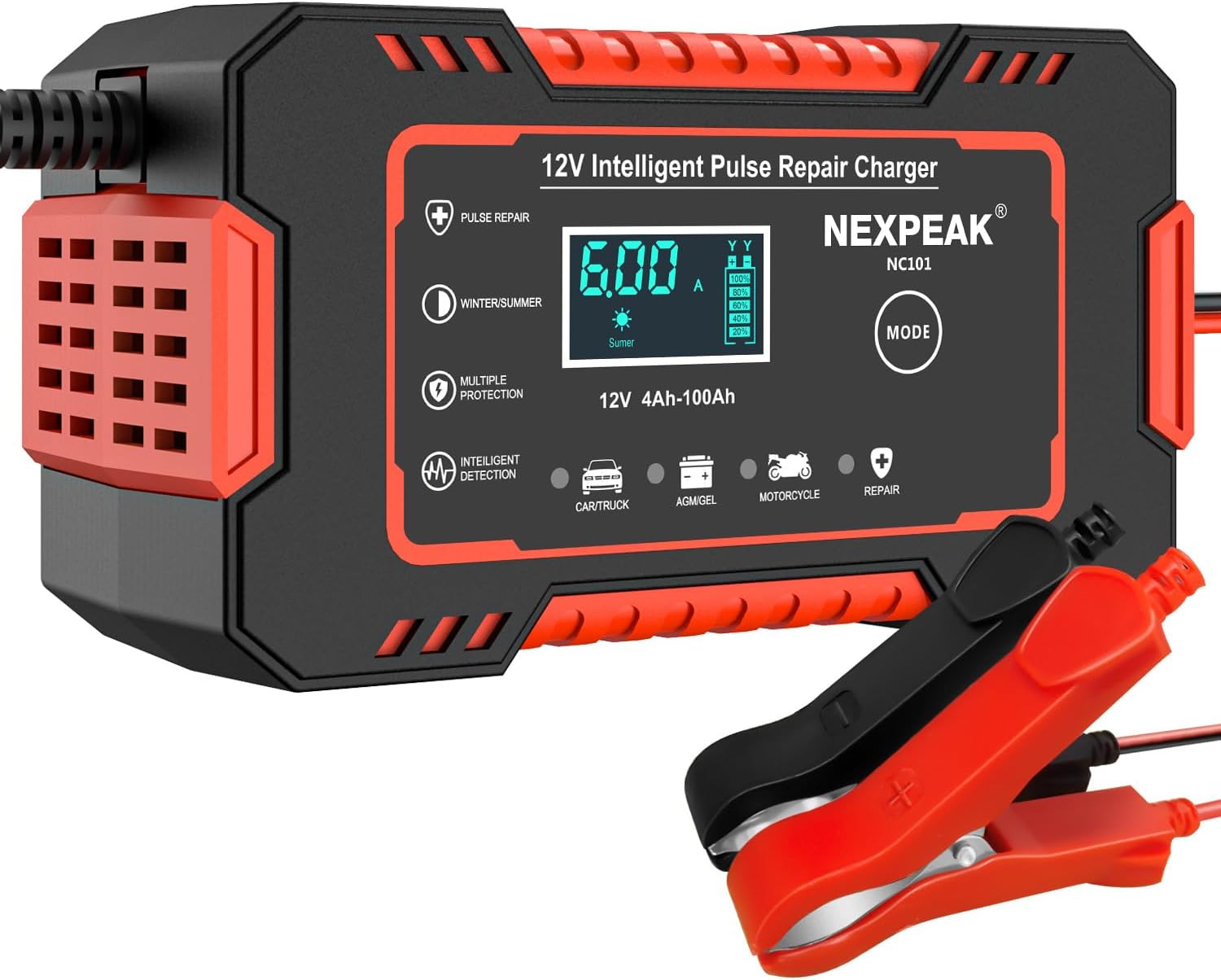
You’ll find the NEXPEAK NC101 is positioned as an all-in-one home garage solution that charges, maintains, and attempts to repair common lead-acid battery problems. It’s a 12V 6A smart charger with trickle, float, and pulse repair functions designed for cars, trucks, motorcycles, lawn mowers, and marine batteries.
What this unit promises
The NC101 promises faster charging than low-amperage maintainers while avoiding the damage that high-current quick chargers can cause. It also promises visual feedback via an LCD and a set of safety protections to keep both you and your battery safe during prolonged storage or seasonal layup.
Key Features and What They Mean for You
You’ll want to know how features translate into day-to-day use, so here’s a clear breakdown of the most useful parts.
12V 6A Charging — Fast but Gentle
With a 6-amp charging rate, this charger is faster than 1–5A maintainers but still conservative enough to avoid overstressing battery chemistry. That makes it a good middle ground if you want reasonable charging speed without risking shortened battery life from excessive current.
Trickle/Float Charging for Long-Term Storage
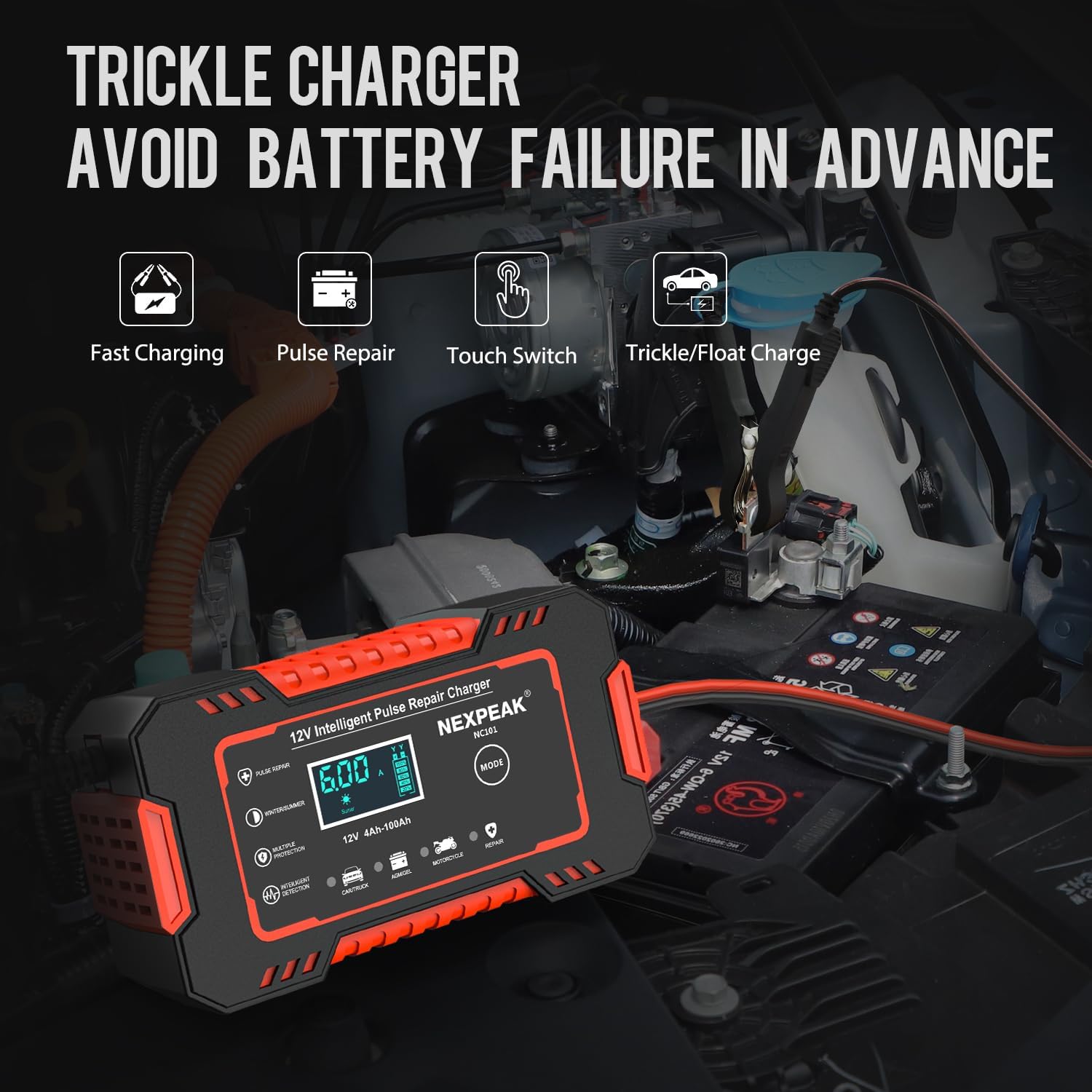
The float/trickle mode is designed to maintain a fully charged battery by compensating for self-discharge over long idle periods. If you store a seasonal vehicle like a motorcycle or boat, this feature helps you avoid dead batteries when you come back to use them.
Pulse Repair / Desulfation
The NC101 includes a pulse repair function to address sulfation and acid stratification — two common issues that reduce battery capacity over time. In many cases, this can restore some lost performance and extend battery cycle life, though it won’t resurrect a physically failed cell or a battery with 0V.
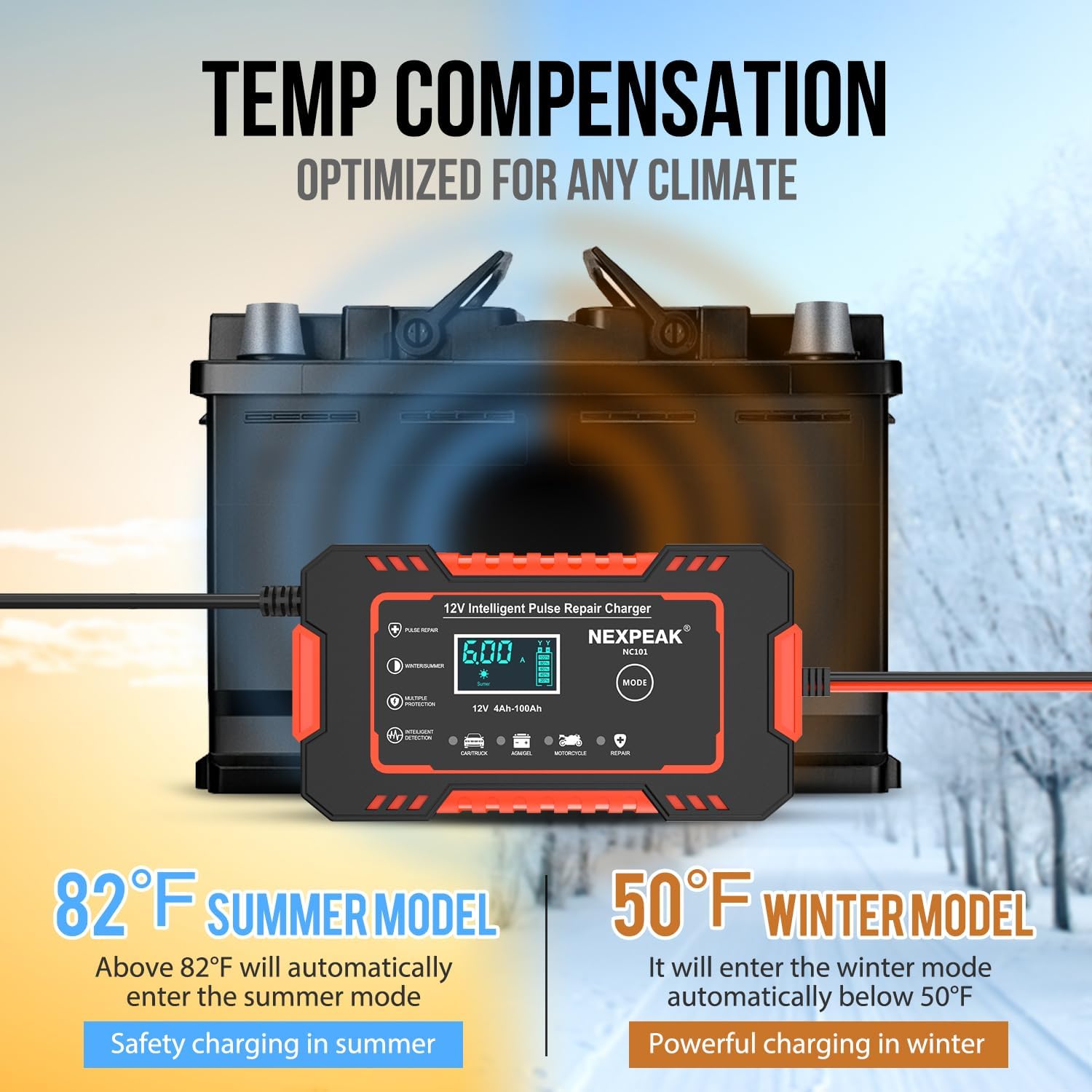
Temperature Compensation
The charger adjusts its behavior based on internal temperature sensing so charging remains safe and effective in cold or hot environments. That matters if you keep your garage in a chilly region or need to maintain batteries over winter or during hot summers.
Multi-Type Battery Compatibility
This charger explicitly supports AGM, GEL, SLA, flooded (WET), and other 12V lead-acid types, making it flexible across most common vehicle and small-engine batteries. You still need to select the correct mode for the chemistry you’re charging.
Visual LCD Readout
The large LCD shows charge voltage, charge current, internal temperature, and charge percentage, giving you a clear picture of charging status. That’s more convenient than single-LED chargers and helps you monitor progress without guessing.
Safety Protections
NEXPEAK built in eight protections: smart control, temperature compensation, reverse polarity protection, cooling, overcurrent protection, fireproof components, overcharge protection, and short-circuit protection. These make the unit safer for unattended charging and long-term maintenance.

Specifications (Quick Reference)
Below is a simple table that helps you compare the most important specs at a glance so you can decide if this unit fits your needs.
| Item | Detail |
|---|---|
| Model | NEXPEAK NC101 Car Battery Charger |
| Output Voltage | 12V DC |
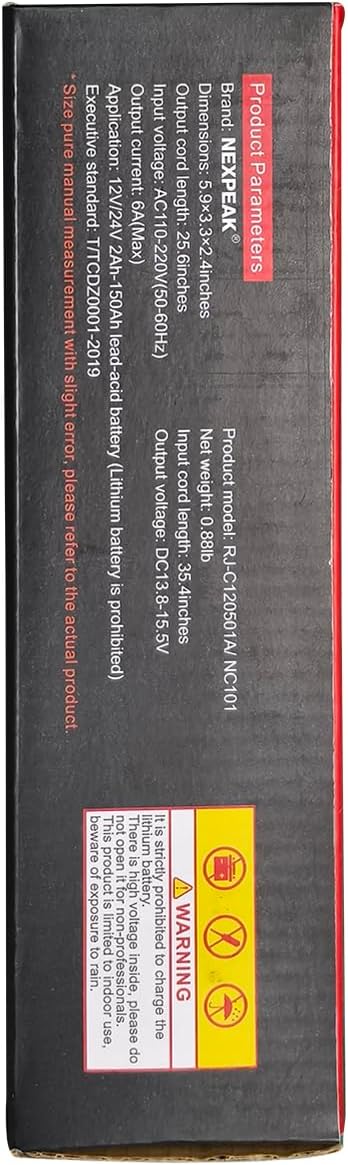
| Maximum Current | 6A |
| Battery Types Supported | AGM, GEL, SLA, Flooded/WET, Motorcycle batteries |
| Charge Modes | STD/AGM, GEL/WET, MOTORCYCLE, SUMMER/WINTER indicators |
| Trickle/Float Mode | Yes (switch to maintain long-term charge) |
| Pulse Repair/Desulfation | Yes (pulse repair function) |
| LCD Display | Shows voltage, current, temp, percent, mode |
| Protections | Smart control, temp compensation, reverse, cooling, overcurrent, fireproof, overcharge, short circuit |
| Jump Start | Not a jump starter; cannot jump-start batteries |
| Dead Battery Limitation | Cannot charge or activate 0V totally dead batteries |
| Warranty | Replacement available within 2 years for quality issues |
| E-bike Compatibility | Not for E-bike or E-mobility batteries |
| Weight / Dimensions | Not specified by manufacturer |
You’ll appreciate having these specs in one place when you’re comparing chargers or figuring out whether this one will work for a particular battery.
How the Charger Actually Works
You’ll see that the NC101 combines conventional charging stages with intelligent control. It starts with a bulk charge phase to bring voltage up, then switches to absorption and finally float/trickle stages while monitoring with sensors and the pulse circuit.
When it detects sulfation or acid stratification, it applies a pulse repair algorithm to break down sulfate crystals and restore some conductivity. Temperature compensation adjusts charge voltage to avoid under- or overcharging in cold or hot conditions.
Step-by-Step: How You Use the NEXPEAK NC101
You’ll find setup and day-to-day use are straightforward, but following a careful routine improves performance and safety.
- Choose the correct mode for your battery chemistry (STD/AGM, GEL/WET, MOTORCYCLE). Make sure you understand which chemistry your battery is — wrong settings can reduce effectiveness.
- Connect the clamps to the battery: red clamp to positive, black clamp to negative (or to a chassis ground if recommended by the vehicle manual). The charger’s reverse-polarity protection helps prevent damage if you accidentally swap them, but always double-check.
- Plug the charger into AC power and turn it on if needed. The LCD will show initial readings and the selected mode.
- Allow the charger to run through the bulk/absorption phases; the unit will indicate when the charge is “FUL” or when it’s ready to switch to trickle/float.
- If you’re storing the vehicle, switch to MOTORCYCLE mode (or the designated trickle setting) after full charge to maintain the battery without overcharging.
- Unplug the charger and remove clamps when maintenance or charging is complete. For long-term storage, you can leave trickle charging enabled based on the manufacturer instructions.
If you follow these steps, you’ll minimize the risk of user error and get the most out of the NC101’s features.
Real-World Performance Expectations
You’ll notice charging at 6A will restore a typical car battery more quickly than low-current maintainers but slower than dedicated 15–30A fast chargers. For example, a 50 Ah battery that’s 50% discharged theoretically could get a bulk refill in several hours at 6A, though real-world times depend on battery condition and temperature.
Pulse repair can take hours to days to yield noticeable improvement; if a battery is heavily sulfated, you may see incremental improvements rather than a dramatic one-time recovery. Remember this unit cannot bring dead 0V batteries back to life.
Pros and Cons
You’ll want a balanced look at strengths and weaknesses before making a decision. Here’s a candid assessment.
Pros
- Friendly middle-ground charging rate: faster than trickle maintainers but gentle enough for battery longevity.
- Helpful pulse repair function that can restore lost capacity from sulfation in many cases.
- Clear LCD that gives useful status details you can act on or monitor remotely.
- Multiple protections and temperature compensation reduce risk when charging unattended.
- Works with most 12V lead-acid chemistries, so one charger supports multiple vehicles and tools.
- Float/trickle mode makes seasonal storage easy and reduces surprise dead batteries.
Cons
- Not a jump starter — you can’t use it to crank a dead car battery in an emergency.
- Won’t activate or charge totally dead (0V) batteries, so severely discharged batteries may still need replacement.
- Manufacturer details like physical dimensions and weight aren’t specified, so mounting or storage planning is a bit guesswork.
- The pulse repair is useful but not miraculous; some batteries with internal damage or aging won’t recover enough to avoid replacement.
If you weigh these points, you’ll see the NC101 is meant primarily for maintenance and recovery, not emergency starting or resurrection of dead cells.
Comparison: NC101 vs. Simple Trickle Chargers
You’ll find meaningful differences when you compare this 6A smart charger with basic trickle chargers.
- Basic trickle chargers (1–2A) are cheaper and fine for very long-term storage, but they can take a long time to recharge a partially discharged battery. The NC101 charges faster and offers repair features that a basic trickle charger does not.
- High-end smart chargers often offer multi-stage charging with more precise charge curves; the NC101 still gives multi-stage and pulse repair, making it a solid middle option.
Comparison: NC101 vs. High-Current Fast Chargers / Jump Starters
You’ll notice trade-offs when you consider faster chargers or jump starters.
- High-current chargers and jump starters can recharge or crank quickly, which is useful in emergencies, but can also stress battery chemistry and shorten cycle life with repeated use. The NC101 intentionally avoids those risks by offering a maximum of 6A.
- If you want emergency starting ability, you’ll need a separate jump starter or a high-current combination unit. The NC101 focuses on maintenance and longevity rather than emergency power.
Safety Tips You Should Follow
Safety reduces the chance of injury and ensures longer battery life. Keep these practical tips in mind.
- Always connect clamps to the correct terminals and ensure a good metal chassis ground if recommended. Reverse polarity protection helps, but you shouldn’t depend on safety features as a substitute for correct connection.
- Charge in a well-ventilated area because lead-acid batteries can emit hydrogen gas during charging, which is flammable. Avoid sparks near the battery.
- If the battery shows signs of bulging, leaking, or severe corrosion, don’t charge it — replace it or consult a professional. The charger’s protections can mitigate many issues but not a physically compromised battery.
Maintenance and Storage Advice
You’ll get longer life out of your batteries and the charger when you keep up with basic maintenance.
- Keep battery terminals clean and use a terminal protector to prevent corrosion that can interfere with charging. Regular cleaning helps the charger read battery voltage accurately.
- When storing the charger, coil its cords without sharp bends, store it dry, and keep it out of extreme temperatures so internal electronics stay healthy. The built-in cooling and fireproof features help, but proper storage extends life further.
Troubleshooting Common Issues
If you run into trouble, there are straightforward checks you can perform before contacting support.
- Charger won’t start or show activity: Verify AC power outlet is live and that the charger’s fuse or cord isn’t damaged. Also ensure clamps are firmly connected.
- Display shows error or doesn’t register battery voltage: Check for heavy corrosion or loose clamps. Reverse polarity protection may have tripped — correct connections and try again.
- Battery doesn’t recover after pulse repair: The battery may have internal sulfation beyond repair, physically damaged plates, or a shorted cell; these are common reasons a charger can’t restore capacity. You’ll likely need a replacement battery in this case.
- Charger becomes warm during use: That’s normal to a degree — internal cooling should manage heat. If it becomes excessively hot or smells of burning, disconnect and stop use; contact support for warranty help.
Warranty and Customer Support
You’ll have a safety net with the manufacturer’s replacement policy. NEXPEAK offers a replacement available for any quality issue within 2 years, which gives you time to identify defects or early failures.
Keep your purchase receipt and register the product if the manufacturer requires registration to streamline any claims. If you have persistent performance issues, reach out to the seller or manufacturer with photos and voltage readings shown on the LCD for faster help.
Use Cases: Where the NC101 Fits Best
You’ll find the NC101 suits several scenarios where battery maintenance and gentle recovery are priorities.
- Seasonal vehicles: motorbikes, lawn mowers, and boats that sit unused for months will benefit from float/trickle maintenance.
- Household garage use: if you maintain multiple 12V lead-acid batteries across different vehicles and equipment, a single, multi-mode charger reduces clutter and improves reliability.
- Batteries showing early-stage sulfation: apply pulse repair over time to recover some lost capacity and potentially delay replacement.
If your main need is emergency jump-starting or rapid recharging for repeated daily deep discharges, this unit may not be ideal.
Frequently Asked Questions (FAQ)
You’ll likely have a few straightforward questions — here are the ones most buyers ask along with clear answers.
Q: Can I use this to start my car if the battery is dead? A: No. This is not a jump starter and cannot crank a vehicle. It charges and maintains batteries slowly and safely but won’t provide the instantaneous high current needed to start an engine.
Q: Will it work with AGM or GEL batteries? A: Yes. The NC101 supports AGM, GEL, SLA, and flooded lead-acid chemistries. Be sure to select the correct charging mode for the battery type.
Q: Can it repair a dead battery? A: It can attempt to repair batteries suffering from sulfation and acid stratification using pulse repair, but it cannot revive batteries that are fully dead at 0V or those with internal physical damage.
Q: Is it safe to leave the unit connected for months? A: Yes, if you’re using the float/trickle mode correctly. The charger’s smart control and protections are designed for long-term maintenance, but you should still follow safety precautions and check periodically.
Q: Will it damage my battery if I charge overnight? A: No, the multi-stage charging and protections are designed to prevent overcharging and overheating. However, always ensure you’ve selected the correct mode for your battery chemistry.
Q: Can I use this on an e-bike or other high-voltage battery packs? A: No. The manufacturer specifies it is not for E-bike or e-mobility batteries. It’s designed purely for 12V lead-acid systems.
Troubleshooting Quick Reference Table
You’ll find this short table useful for quick diagnostics when something isn’t working as expected.
| Symptom | Likely Cause | Quick Fix |
|---|---|---|
| No display or power | AC outlet issue or damaged cord | Test outlet, try another device, inspect charger cord and fuse |
| Incorrect voltage reading | Loose clamps or corroded terminals | Clean terminals, reattach clamps securely |
| Charging stalls before FUL | Battery sulfation or high internal resistance | Run extended pulse repair; if no improvement, consider replacement |
| Charger shuts down / overheats | Overcurrent or internal temp high | Move to ventilated area, allow to cool, check battery and connections |
| Reverse polarity error | Clamps connected incorrectly | Reconnect clamps correctly; reverse polarity protection prevents damage |
You’ll be able to diagnose most common issues using this quick guide.
Final Verdict
You’ll find the NEXPEAK NC101 Car Battery Charger to be a very capable, user-friendly battery maintainer that hits a good balance between charging speed and battery care. If you want a single device to keep multiple 12V lead-acid batteries healthy, restore some loss from sulfation, and leave batteries ready for seasonal use, this charger is a practical choice — just remember it’s not a jump starter, and it can’t revive completely dead 0V batteries.
If you want, I can summarize the pros and cons into a short checklist you can save, or help you compare this unit to a specific charger you already own. Which would you prefer?
Disclosure: As an Amazon Associate, I earn from qualifying purchases.