
Looking for a lightweight, compact power station that can keep your devices charged on a camping trip or during an outage?
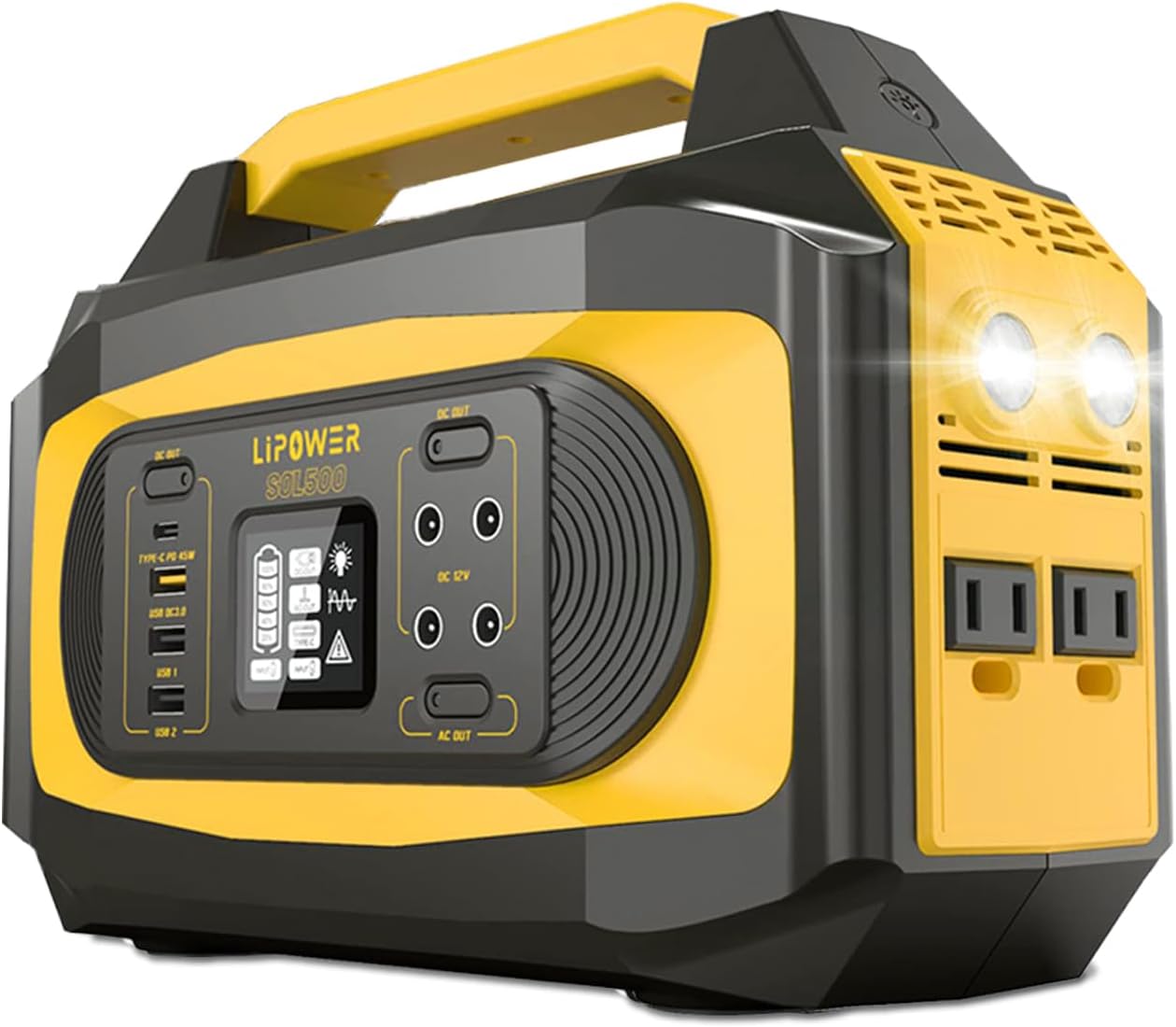

Quick look at the LIPOWER Portable Power Station 500W, 472Wh Solar Generator
This unit packs a 472Wh battery into a package that weighs just 9.9 lbs, which makes it genuinely portable for day trips, short weekend camping, and emergency grab-and-go situations. You’ll get multiple outputs, a built-in handle, and a battery management system with standard safety certifications, which together make it practical and reassuring to carry and use.
Key specifications
Below is a clear breakdown of the most important specs so you can quickly see what this unit offers and whether it fits your needs. The numbers below are based on the manufacturer’s listing; remember that real-world performance will vary with usage conditions and device draws.
| Item | Specification |
|---|---|
| Battery capacity | 472 Wh (lithium battery) |
| Weight | 9.9 lbs |
| AC output | 2 x Pure Sine Wave AC sockets, 110V, 500W continuous (750W peak) |
| DC outputs | 4 x DC power sockets (12V/6A Max) |
| USB outputs | 2 x USB-A (5V/3.1A), 1 x QC 3.0 (5–12V, 18W Max), 1 x USB-C PD (labeled 45W; spec lists 5–15V, 30W Max) |
| Simultaneous outputs | Up to 10 devices |
| Recharge methods | Solar (MC4 to DC cable, DC 5.5mm x 2.1mm), car charger, AC adapter |
| Certifications | FCC, RoHS, CE, PSE |
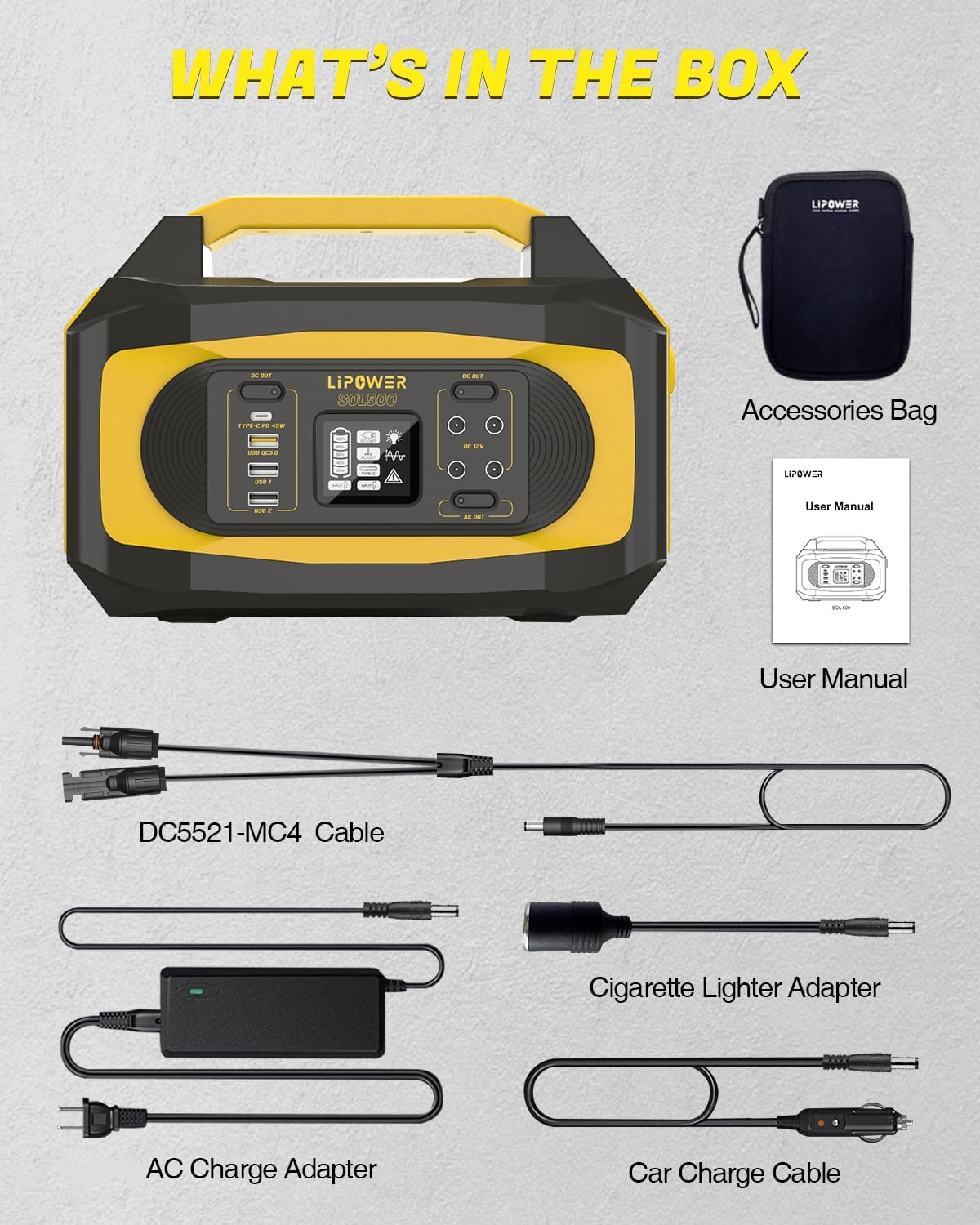
| Included | Power station, AC adapter, car charging cable, cigarette lighter adapter, MC4 to DC cable, accessory storage bag, user manual |
Battery capacity and weight
The 472Wh capacity gives you a good balance of usable energy without becoming too heavy to carry, and the 9.9 lb weight keeps it comfortable to move around. You’ll notice the difference if you’re used to bulkier power stations, and the built-in handle makes the unit easy to grab when you’re heading out the door.
AC output and inverter
The two pure sine wave AC outlets deliver a continuous 500W with short peaks up to 750W, which is smooth enough for sensitive electronics like laptops and small appliances. You should avoid running devices that draw continuously above 500W, and always check startup surge needs because some compressors and power tools have high inrush current that can exceed the peak limit.
DC and USB outputs
With four DC sockets and a variety of USB ports (including QC 3.0 and a USB-C PD port), you’ll be able to charge flashlights, cameras, phones, tablets, and other accessories simultaneously. Note the PD port is listed as “45W” on the product name but the detailed spec lists 5–15V, 30W max, so you might want to verify actual PD output if you rely on full 45W charging for specific laptops.

What’s in the box
When you open the package you’ll find the LIPOWER SOL500 power station plus several charging cables and adapters that let you start using it right away. The MC4 to DC cable allows a direct connection to compatible solar panels (sold separately), and the storage bag is handy for keeping small accessories together.
Included accessories
You’ll get an AC adapter for wall charging, a car charging cable and cigarette lighter adapter for mobile charging, an MC4 to DC cable for solar input, an accessory bag, and a detailed user manual. Having these accessories included means you won’t have to buy basic cables separately for most common charging setups.
Build quality and portability
The housing feels sturdy and the finish resists scuffs and fingerprints, which is useful on outdoor trips where gear gets moved around a lot. Because the unit is light and has a built-in handle, you won’t struggle to move it from your trunk to campsite or garage, and you can easily place it on a table or inside your RV.
Design notes and ergonomics
Controls and labels are straightforward, and the display gives you the essential readouts without overwhelming you with technical data. The unit’s compact footprint and balance make it simple to set down and reach the ports without shifting it around constantly.
Ports and how you’ll use them
This power station is designed to serve a lot of small- to medium-power devices at once, which is ideal if you’re traveling with friends or running multiple pieces of gear. Having two AC sockets means you can plug in a laptop and a small appliance at the same time, and the DC/USB array handles phones, lights, cameras, and other peripherals.
AC sockets — what to plug in
Use the AC outlets for devices that require standard household current like laptops, small TVs, portable coffee makers under the wattage limit, and CPAP machines with compatible power draws. Avoid high-wattage devices like full-size microwaves or large window air conditioners, as those will either overload the unit or run for only a short time.
USB ports — quick charging on the go
The two USB-A ports and the QC 3.0 fast-charge port are convenient for charging phones, power banks, wireless earbuds, and smaller gadgets quickly. The USB-C PD port is especially useful for PD-compatible laptops and tablets, but confirm the true PD wattage if you need the highest charging speed.
DC ports — powering 12V devices
The 12V DC sockets are handy for small 12V appliances, lights, and some portable fridges or coolers that don’t have heavy startup currents. Running 12V devices directly is usually more efficient than converting through the AC inverter, so you’ll get slightly more runtime for items that accept a DC connection.
Performance and run-times
You’ll want to convert the 472Wh into realistic expectations based on what you intend to power, and remember that inverter losses mean AC-powered devices will use slightly more battery than their rated wattage suggests. A conservative estimate is to assume around 85–90% usable energy for AC loads to account for conversion losses and BMS overhead.
How to estimate runtime for your devices
To estimate runtime, divide the battery’s watt-hours (472Wh) by your device’s power draw in watts, then adjust for inverter efficiency; for AC devices you might assume 85% usable energy, while USB/DC outputs are more efficient. For example, a 50W laptop would run roughly 472 / 50 ≈ 9.4 hours in theory, but after inverter losses you might realistically see 7.5–8 hours.
Typical device run-time examples (approximate)
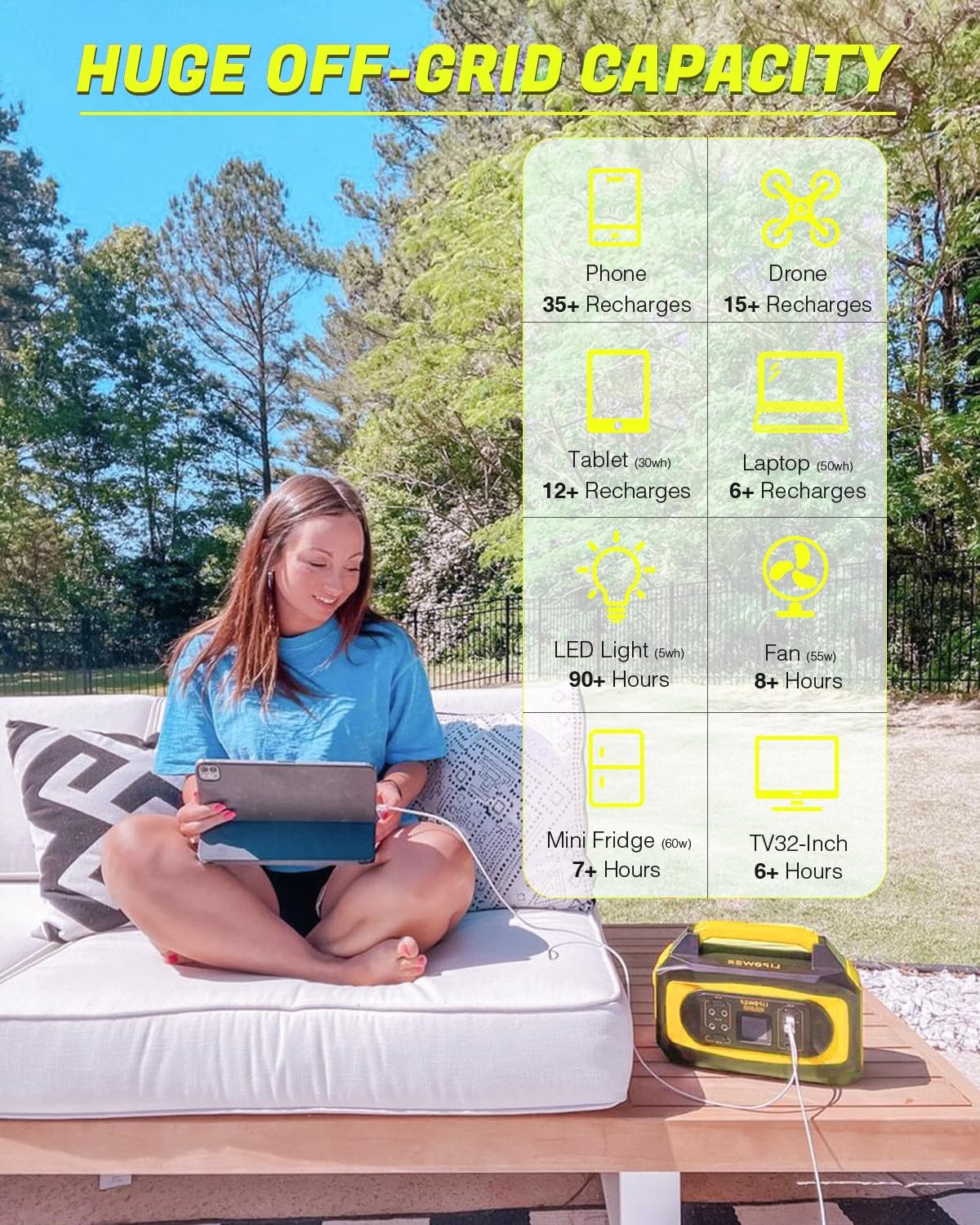
Here are practical approximations for common devices so you can plan better on the trail or during an outage. These numbers are estimates and should be used as guidelines — actual runtimes depend on device settings, battery age, and environmental conditions.
| Device | Typical power draw | Estimated runtime (approx.) |
|---|---|---|
| Smartphone (10–15 Wh) | ~10–15 Wh per full charge | ~30–50 full charges — often multiple days of heavy phone use |
| Laptop (45–60 W) | 45–60 W | ~6–10 hours depending on laptop power draw and PD output |
| Drone battery (50 Wh) | 50 Wh | ~8–9 charges for a typical drone battery |
| CPAP machine (30–60 W) | 30–60 W | ~6–12 hours depending on model and humidifier use; check your CPAP draw first |
| Small LED TV (30–50 W) | 30–50 W | ~8–12 hours |
| Mini-fridge average (40–100 W) | 40–100 W (compressor cycles) | ~4–10+ hours of runtime depending on average draw, but compressor startup spikes may be a problem |
| Large appliances (microwave, AC) | 700–1500 W | Not suitable — continuous draw exceeds 500W limit |
Notes on fridge and compressor loads
Small 12V camping fridges that are designed for low-power operation can often be run from this unit directly via DC, but larger compressor fridges may have high startup surges that can exceed the 750W peak or the AC continuous limit. If you plan to run a fridge, check both its continuous wattage and its startup surge rating — sometimes soft-start devices or inverter-friendly models work better.
Charging options and expected times
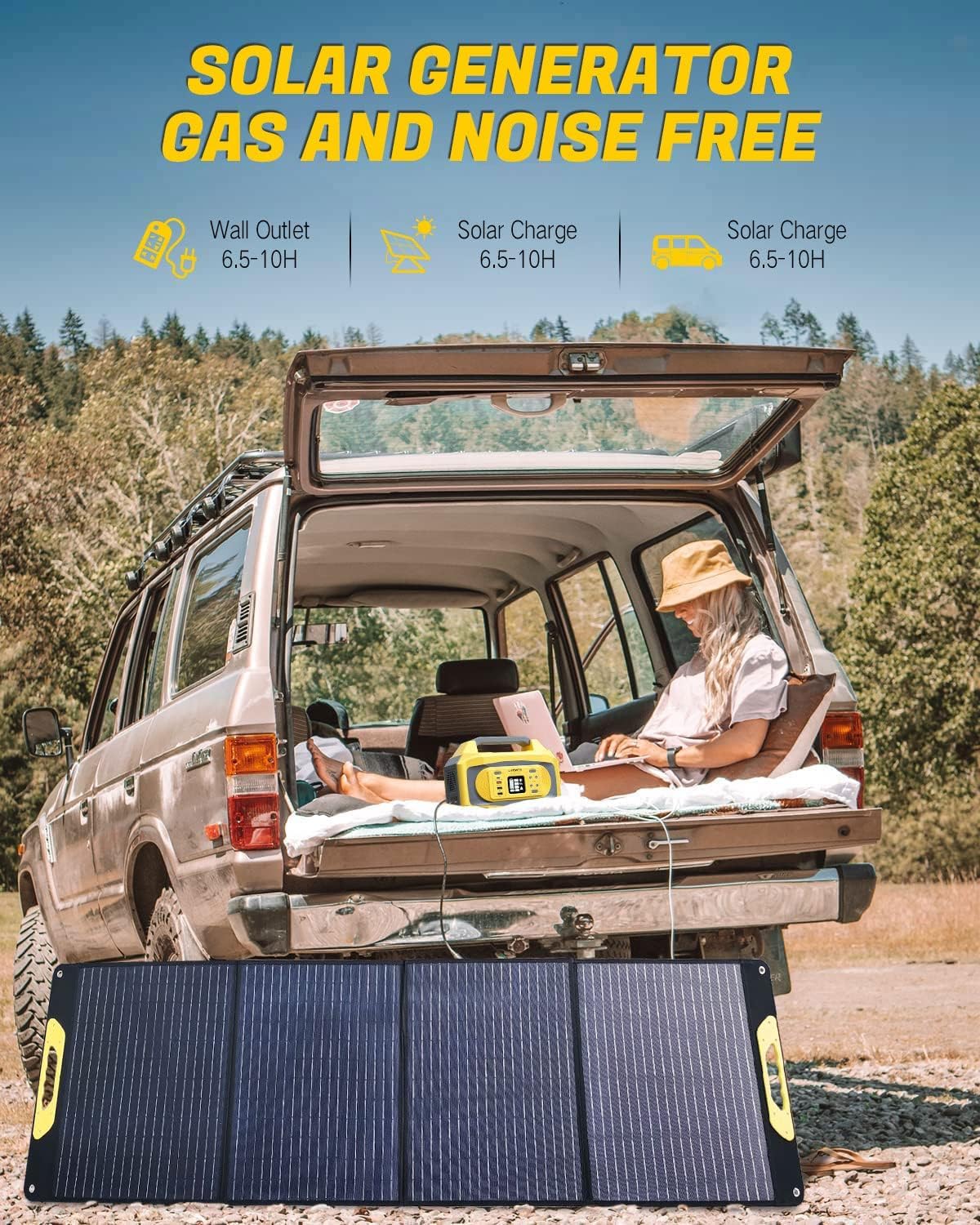
You have three ways to recharge the LIPOWER SOL500: AC wall, car, and solar, which gives you flexibility depending on whether you’re at home, on the road, or off-grid. Charging times depend on input power and conditions, so expect variance.
AC wall charging (fastest consistent option)
Using the included AC adapter is usually the most reliable way to get the unit back to full, and for a 472Wh battery you can typically expect anywhere from about 4–8 hours depending on the input wattage and efficiency. If you need a full charge quickly and have mains power available, this is the method you’ll likely prefer.
Car charging (convenient while driving)
You can recharge from your vehicle using the car charging cable if you’re on the move, but it’s often slower than AC since car outlets usually supply lower wattage. It’s best used to top off the battery during long drives or as a backup when mains power isn’t accessible.
Solar charging (dependent on panel and sunlight)
Solar charging time depends entirely on your panel’s wattage and sunlight conditions; with a 100W panel under ideal sun you might see a full charge in 6–10 hours, but realistic conditions often extend that to a full day or more of sun. Use the MC4-to-DC cable provided and match your panel output to the DC 5.5mm × 2.1mm input; if you plan repeated long off-grid trips, consider using multiple panels or a higher-watt solar kit.
Safety features and certifications
The unit includes a battery management system (BMS) that handles overcurrent, short-circuit protection, over-voltage, under-voltage, and temperature control to keep both the battery and connected devices safe. Additionally, international safety certifications like FCC, RoHS, CE, and PSE provide a layer of regulatory assurance useful for peace of mind.
Battery management system (BMS)
The BMS actively monitors and prevents unsafe states such as overcharging, overcurrent, short circuits and overheating, and it will stop charging a device automatically when the device is full. This active protection helps reduce the risk of battery issues and also improves overall lifespan compared to unprotected packs.
Certifications and what they mean
FCC covers electromagnetic compatibility in the U.S., RoHS ensures hazardous materials are limited, CE indicates conformity with European standards, and PSE relates to Japanese product safety regulations. These certifications suggest that the manufacturer has taken steps toward compliance with multiple safety and environmental standards, which is especially relevant for international buyers.
Real-world use cases
You’ll find the LIPOWER SOL500 well-suited to many common scenarios because it hits a sweet spot of capacity and portability, making it versatile for personal, medical, and recreational needs. Here are several examples of how you might use it in day-to-day and emergency situations.
Camping and weekend trips
For camping you can run lights, charge phones and cameras, power speakers, and even run a small coffee maker or electric cooker that stays within the 500W limit. The compact weight and multiple ports mean you can keep everyone’s essentials powered without lugging a heavy generator.
RV and van life
In an RV or camper van you can use it as a tertiary power source for overnight charges or to run a laptop and kitchen devices when shore power isn’t available. It’s not a full-time house battery replacement for extended boondocking if your power needs are high, but it’s perfect for short trips or supplementing larger systems.
Emergency backup for home
Keep the unit near your main exit or in an emergency kit to run critical devices during short outages — phones, lights, routers, and small medical devices. Because it’s lightweight and easy to carry, you can quickly move it to the room you need to power during a blackout.
CPAP users and medical equipment
Many CPAP machines fall well within the wattage range of this unit, and the 472Wh capacity often provides a night or more of operation depending on your specific machine and settings. Always verify your CPAP’s power draw and, if applicable, avoid using humidifiers that add a significant extra load unless you’ve confirmed run-times.
Photography, drone, and fieldwork
You can charge camera batteries, gimbals, drones, and laptops without needing to find mains power, which is especially useful for remote shoots. The multiple simultaneous outputs let your entire kit be ready to go by the time you wrap up shooting.
Pros and cons
You’ll want both the bright spots and the trade-offs when making a purchase decision, and this section lays those out so you can weigh what matters most for your use.
Pros
The unit is lightweight, has a solid capacity for its size, and a well-rounded mix of outputs that let you charge many devices at once, which is rare at this weight. Safety certifications and a built-in BMS give extra reassurance, and the included accessory set helps you get started right away.
Cons
The continuous AC output is limited to 500W, so high-power appliances aren’t an option, and the PD port’s labeled wattage vs. spec inconsistency might require you to test real-world PD speeds. For long-term off-grid living you’ll need a larger bank or solar setup, and purchase of solar panels is extra.
Tips to maximize runtime and efficiency
You’ll get the best results when you match device selection and usage to the unit’s strengths, and a few simple habits can meaningfully extend runtime. Focus on using DC ports when possible, reduce device brightness and power settings, and avoid powering high-surge appliances.
Practical usage tips
Charge phones and tablets with the USB ports instead of using AC adapters, and use DC outputs for 12V devices to cut conversion losses and squeeze out more runtime. Turn off devices when not in use and keep the power station in a cool, ventilated area to optimize efficiency.
Solar charging tips
Position your panels for maximum sun and use an MPPT charge controller if you have a setup that supports it, because better solar harvesting gives you more usable energy fast. If you plan heavy solar use, consider buying panels that can be wired in parallel to raise input wattage and reduce full-charge time.
Maintenance and storage
Keeping your power station healthy will give you more usable cycles and reliable performance over time, and proper storage habits are straightforward. Store at partial charge (around 40–60%) if you won’t use the unit for weeks or months, and avoid extreme temperatures, both hot and cold.
Routine care
Cycle the battery (charge and discharge) every few months if the unit sits idle, and clean the ports and vents periodically to prevent dust buildup. If you notice reduced capacity or abnormal behavior, consult the manual or contact LIPOWER support for guidance rather than attempting internal repairs.
Troubleshooting common issues
When things don’t work as expected, a few common checks will often get you back on track without hassle. Check cables for damage, make sure the correct input port and polarity are used, and verify the device’s power draw against the power station’s limits.
Common quick fixes
If the unit won’t charge from solar, confirm the MC4 cable is properly connected and that your panel’s voltage and current are compatible with the listed DC input (5.5mm × 2.1mm). If an AC device won’t start, check the peak and continuous wattage — many startup issues are simply a mismatch between the appliance’s inrush current and the inverter’s peak limit.
Comparisons and alternatives
If you’re choosing between similar portable power stations, consider how weight, capacity, and output options align with your typical use cases rather than picking the largest battery by default. The 472Wh/500W class is a great middle ground, but if you need to run larger appliances or extend off-grid time, step up to higher-capacity models or pair this unit with additional batteries and a stronger solar array.
When to consider a larger unit
If you plan to run high-wattage appliances like microwaves, air conditioners, or power tools for extended periods, you’ll want a system with higher continuous and peak wattage and larger battery capacity. Similarly, if you’ll be off-grid for days at a time without the ability to recharge, a bigger bank or parallel units will save you frustration.
Who should buy the LIPOWER SOL500
You should consider this unit if you want a truly portable, light power station for camping, weekend travel, emergency backup, or light RV use, and if you value multiple output types and certified safety. It’s particularly well-suited to phone and laptop users, photographers, CPAP users who have modest draws, and anyone who needs a reliable backup that’s easy to lift and move.
Who might look elsewhere
If you need to power heavy appliances frequently, or you want days-long autonomy without recharging, look at larger capacity power stations or whole-home generators; they’ll be heavier but more capable for sustained high demand. Likewise, if you require guaranteed high-wattage PD charging for large laptops, confirm the actual USB-C performance or opt for a unit with a documented 60–100W PD port.
Frequently asked questions (FAQ)
Here are short, clear answers to the questions people most commonly ask about portable power stations like this one; these will help you avoid surprises and make the purchase decision simpler.
Can you run a microwave or space heater with this unit?
No, you should not rely on this unit for microwaves or most space heaters because those devices typically require continuous draw well above 500W and often exceed startup surge limits. For such high-wattage devices you’ll need a higher-capacity inverter and battery system.
How long does it take to recharge via solar?
Solar recharge time depends on the panel wattage, sunlight, and conditions; with a single 100W panel in ideal sun you might see 6–10 hours, though realistic conditions can stretch that. If you need faster or more consistent recharge, use multiple panels or a higher-wattage array.
Is it safe to keep the unit in a car during summer?
You should avoid leaving lithium batteries in extremely hot cars for long periods, as high temperatures can degrade battery health and increase risk. If you must store or leave it in a vehicle, keep it shaded and ideally at partial charge, and bring it indoors when possible.
Will it power my CPAP all night?
Many CPAP machines fall within the power range this unit can support for an entire night, but exact run-time depends on model, settings, and usage of humidifiers. Verify your CPAP’s wattage and, if necessary, run a trial before relying on it for critical overnight usage.
Can you charge while discharging (pass-through charging)?
Some portable power stations support pass-through charging while powering devices, but this behavior can increase heat and slightly reduce battery longevity. Check the manual for explicit manufacturer guidance and avoid prolonged pass-through use if you want to maximize lifespan.
Final recommendation
If you want a well-rounded, lightweight power station that gives you versatile outputs for everyday devices and short-term off-grid needs, the LIPOWER Portable Power Station 500W, 472Wh Solar Generator is an excellent choice for its size and price class. Be mindful of the 500W continuous limit and verify the USB-C PD actual output for your laptop needs, but otherwise you’ll likely find it a dependable and portable solution for camping, emergency backup, and light off-grid power.
Final buying tips
Confirm what you plan to run most often, check the startup surge of any compressor or motorized device, and consider adding a solar panel or a second battery if you need extended off-grid time. Buying the right accessories and understanding power draw up front will ensure the power station meets your expectations and keeps your devices running when you need them most.
Disclosure: As an Amazon Associate, I earn from qualifying purchases.