
Ever wished your DeWalt tool battery could pull double duty and get your car started when the battery dies?

Product Overview
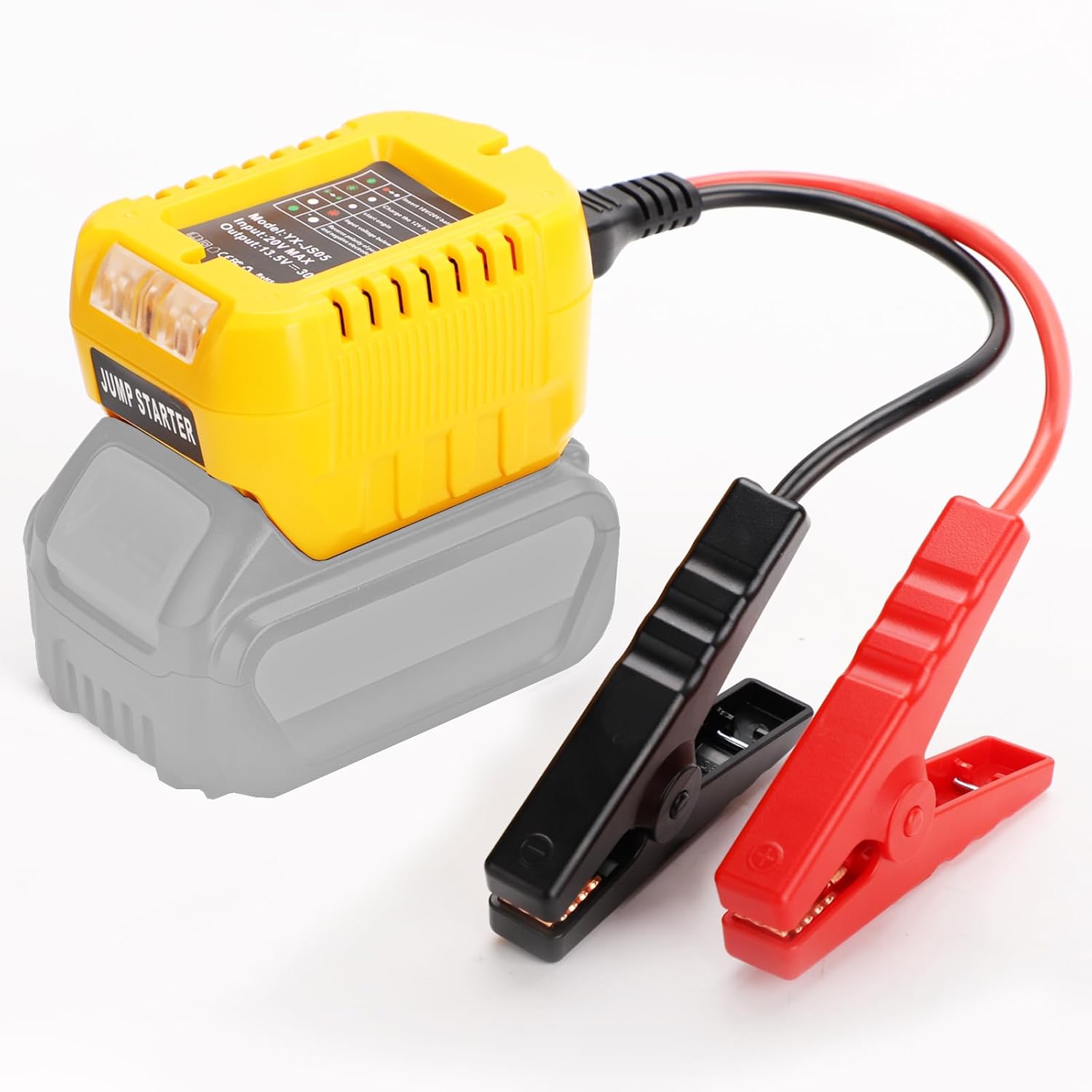
You’re looking at the Jump Starter Compatible with Dewalt 20V Tools – Heavy Duty 11AWG Jump Starter Cable (1.2FT), Car Battery Booster Using Power Tool Batteries (Battery not Included). This adapter turns selected DeWalt 20V tool batteries into a portable car jump starter so you can get a quick ignition boost without carrying a heavy standalone starter. It’s intended as a compact emergency aid — not a replacement for a fully charged automotive battery or a device for charging dead batteries.
Key Specs
This section summarizes the technical highlights so you can quickly decide if the adapter fits your tool collection and needs. The specs focus on compatibility, cable construction, length, and the built-in safety and indicator features.
| Feature | Detail |
|---|---|
| Product Name | Jump Starter Compatible with Dewalt 20V Tools – Heavy Duty 11AWG Jump Starter Cable (1.2FT) |
| Battery Compatibility | DeWalt 20V batteries: DCB201, DCB203, DCB204, DCB205, DCB206, DCB230, DCBP320, DCB210, DCB240, DCB208, etc. |
| Cable Gauge | 11 AWG (heavy duty copper wiring) |
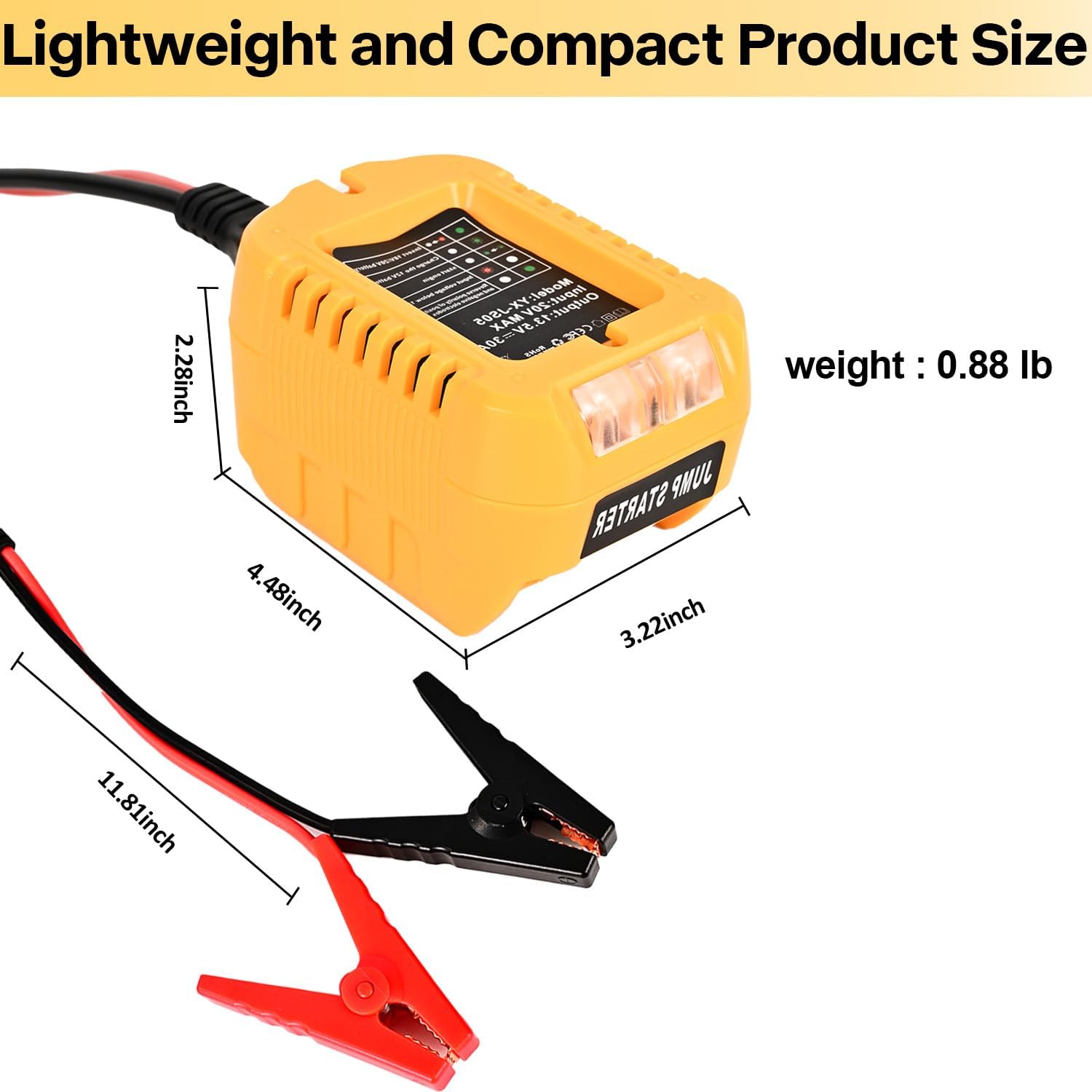
| Cable Length | 1.2 ft (foldable/compact) |
| Insulation | Silicone-insulated cables |
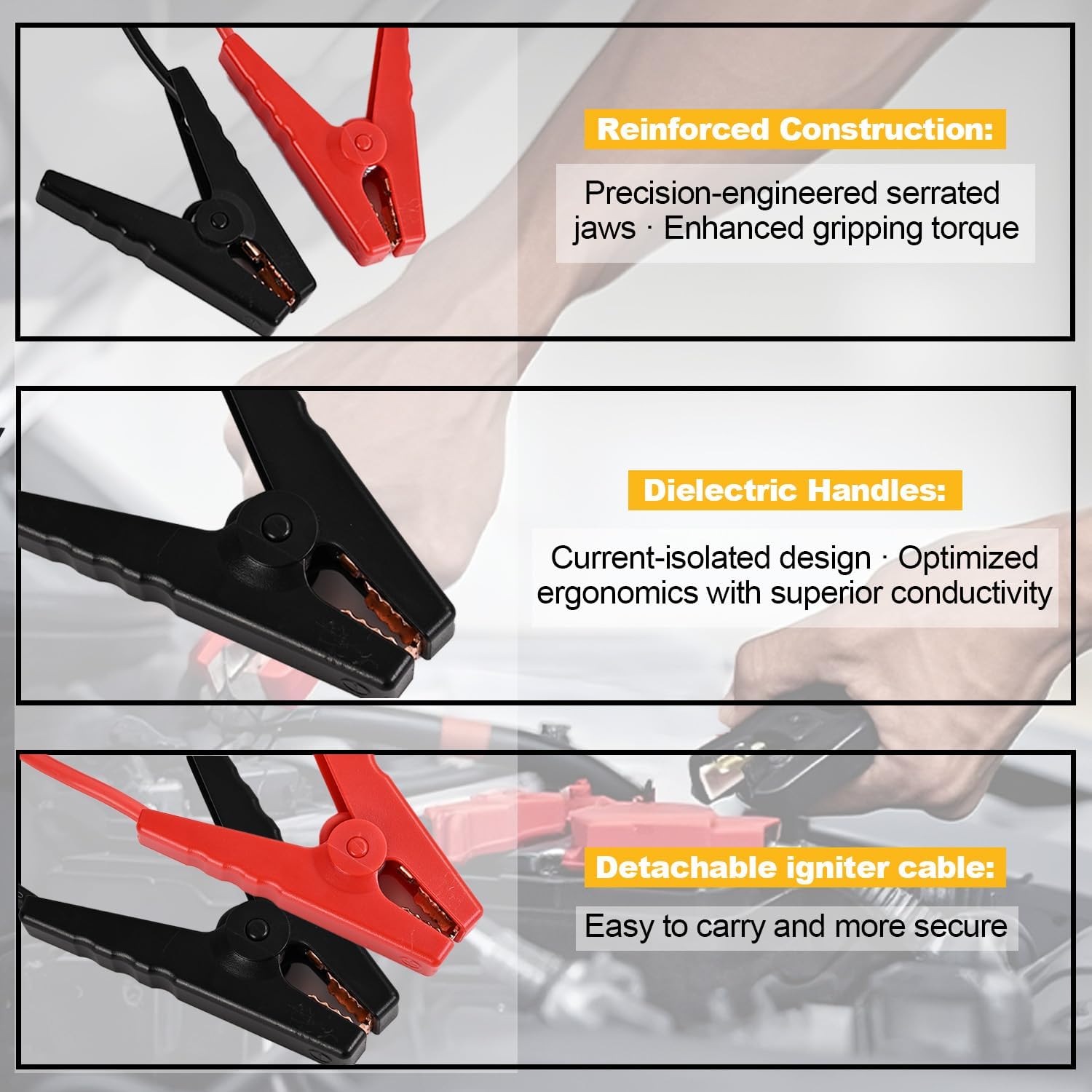
| Clamps | Dual-grip clamps with non-conductive rubber |
| Indicators | LED indicators: power/reverse polarity/low voltage |
| Operation | Temporary ignition boost; not for charging batteries |
| Battery Included? | No — tool battery sold separately |
| Quick-Release | Quick-release plugs for detachable storage |
| Recommended Use | Emergency jump starts only; wait 3–5 minutes for stabilization before starting engine |
This table gives you a quick reference so you know what to expect straight away. The compact dimensions and 11 AWG gauge are the main selling points if you want portability without sacrificing basic conductivity.
What’s Included
You’ll get the detachable silicone-insulated jump starter cable assembly with clamps and quick-release plug connectors. The package does not include any DeWalt battery, so you’ll need a compatible 20V battery already in your toolkit or to purchase one separately. Also keep in mind any retail packaging may include a short user guide that covers the LED signals and safe operation.

Jump Starter Compatible with Dewalt 20V Tools - Heavy Duty 11AWG Jump Starter Cable (1.2FT), Car Battery Booster Using Power Tool Batteries (Battery not Included)
Design and Build Quality
The adapter is designed to be utilitarian and rugged so it survives roadside conditions and occasional rough handling. You’ll notice a compact, folding form factor with silicone insulation that resists kinking and more easily tolerates temperature swings than standard PVC insulation.
Cable and Clamps
The 11 AWG copper wiring is thicker than thin jumper leads you might find in budget products, which helps reduce voltage drop during a short burst of current. The clamps have rubberized, non-conductive grips so you can hold them comfortably while making secure contact with battery terminals. You’ll appreciate the reinforced clamp jaws when you’re fast but careful on a cold morning.
Connector and Compatibility
The quick-release connector that plugs into DeWalt 20V batteries is straightforward and mirrors how many tool adapters work, so you’ll feel familiar if you already use batteries in converters or shoe adapters. Compatibility covers a wide range of DeWalt 20V models (DCB201, DCB203, DCB204, DCB205, DCB206, DCB230, DCBP320, DCB210, DCB240, DCB208, etc.), but you’ll want to verify your exact battery model before relying on this as your emergency plan.
Compatibility and Use Cases
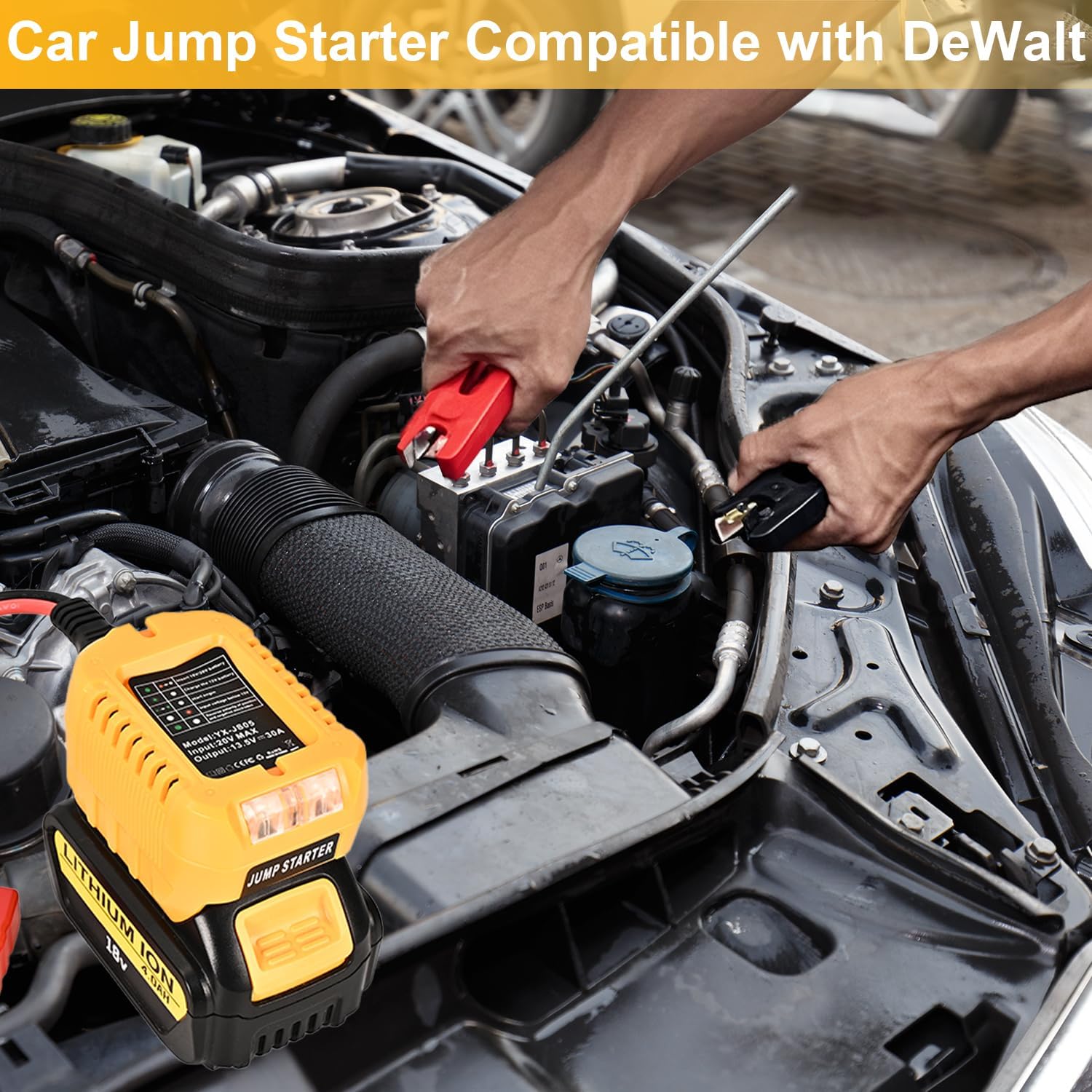
If you own DeWalt 20V batteries, this adapter is designed to convert those batteries into a temporary jump-start source. You can use it on cars, trucks, motorcycles, lawn tractors, boats with lead-acid starter batteries, and other vehicles that require a short cold-cranking assistance. You’ll find it especially handy if you already carry DeWalt batteries for your job or hobbies.
Who Should Buy This
You should consider this adapter if you already own DeWalt 20V batteries and want a compact, lightweight emergency option. It’s ideal for tradespeople, contractors, and homeowners who keep batteries in the work vehicle or toolbox and prefer minimal additional gear. If you travel light and avoid carrying bulky jump starters, this adapter can sit in your glove box and give you peace of mind.
Who Shouldn’t Buy This
You shouldn’t buy this if you don’t own a compatible DeWalt 20V battery or if you need a primary solution for charging dead car batteries. If you routinely travel in remote areas where a reliable, long-lasting jump supply is critical, a dedicated high-capacity jump starter with a built-in battery and higher CCA may be a better choice. Also avoid relying on this unit for repeated starts without checking battery charge levels.
Performance and Real-World Use
Performance hinges primarily on which DeWalt battery you use with the adapter. Larger Ah batteries give more cranking power and can support multiple starts, while smaller batteries will provide fewer attempts. In mild conditions, a 4Ah–5Ah 20V battery can often deliver enough burst current to start a typical gasoline engine once or twice; diesel engines and very cold conditions require more energy and may fail to start.
Starting Small Engines vs Cars
You’ll likely have no trouble starting small engines like lawnmowers, ATVs, and small motorcycles because they require less cranking amperage. For cars, performance varies by engine displacement, temperature, and how depleted the vehicle battery is. You can usually expect a decent chance of a single start with a mid-capacity battery (3–5Ah) and higher probability with larger capacity packs.
Expected Number of Starts (Approximate)
Estimating starts is tricky because it depends on battery state-of-charge, battery capacity, and engine load, but you can use rough guidelines: with a 2Ah battery you might get 1 start or a partial attempt; a 4–5Ah battery could get 2–4 starts under ideal conditions; larger 6Ah+ packs improve odds further. Use these rules of thumb cautiously and assume fewer starts in cold weather or if your vehicle battery is severely discharged.

Safety Features and Indicators
Safety is built into the design so you don’t accidentally harm yourself or the vehicle electronics. The non-conductive rubber grips reduce the chance of short circuits when you’re handling the clamps, and the silicone insulation helps keep the wires flexible and protected. LED indicators provide clear feedback about connection status and potential errors.
How the LED Indicators Work
When you insert the DeWalt battery the green light should come on to indicate the adapter is ready. If you see a steady red/green pattern it indicates reverse polarity — meaning your clamps are attached incorrectly — so you should disconnect immediately and reattach correctly (red to positive, black to negative). A blinking red LED signals low battery voltage from the tool battery and warns you the pack may not supply enough current to start the engine.
Safety Best Practices
Always attach the red clamp to the positive terminal and black to the negative as the adapter instructs, and keep metal objects away from clamps to avoid shorts. Wait 3–5 minutes after inserting the tool battery before starting attempts to allow the circuitry to stabilize. If your vehicle doesn’t start after an attempt, wait about 5 minutes before trying again and disconnect once the engine is running.
How to Use (Step-by-Step)
You’ll appreciate simplicity when you’re dealing with a dead battery. Follow this sequence and keep safety in mind:
- Confirm you have a compatible DeWalt 20V battery installed in the adapter (battery not included). Make sure the battery is charged.
- Insert the battery into the quick-release connector until it seats fully and the LED lights show the initial state. Wait 3–5 minutes for the green light to become steady.
- With the adapter ready, connect the red clamp to the vehicle’s positive (+) battery terminal.
- Connect the black clamp to the negative (-) terminal or a grounded metal chassis point if instructed by your vehicle’s manufacturer.
- Check LED indicators: a steady green typically indicates correct polarity and sufficient voltage; steady red/green indicates reversed clamps; blinking red indicates low tool-battery voltage.
- Attempt to start the engine once the steady green indication is present.
- If the engine starts, disconnect clamps immediately after the engine runs and remove the battery from the adapter. If it doesn’t start, wait 5 minutes and try once more.
- Store the adapter by folding the cables and using the quick-release plugs to keep it compact and protected.
You’ll find the operation intuitive once you’ve done it once, but always follow the LED warnings and don’t use the adapter to repeatedly try starting a vehicle without checking battery health.
Pros and Cons
You’ll want a balanced view before deciding.
Pros:
- Extremely compact and lightweight compared to standalone jump starters, easily stored in glove box.
- Compatible with a range of DeWalt 20V batteries you may already own.
- Heavy 11 AWG wiring and silicone insulation for improved current delivery and durability.
- Quick-release connectors and foldable cables make storage tidy.
- Built-in LED indicators for polarity and low voltage reduce user error.
Cons:
- Short 1.2 ft cable limits clamp placement and may be awkward on some vehicles.
- Not a substitute for a dedicated car jump starter; it provides temporary boost only and won’t charge a dead vehicle battery.
- Performance depends entirely on the capacity and charge of the installed DeWalt battery.
- Battery not included, so cost increases if you need to buy a compatible battery.
- May struggle with larger engines or in extreme cold.
You’ll need to weigh portability and convenience against limitations in raw starting power and cable length.
Comparison with Alternatives
If you’re deciding between this adapter and other options, here’s how it stacks up for common needs.
- Versus a standalone jump starter: Standalone units typically have higher peak amps, integrated batteries, and often extra features like USB charging and air compressors. You should choose a standalone if you need repeated starts, stronger performance, or independence from tool batteries. This adapter wins on portability and price if you already have compatible batteries.
- Versus jumper cables: Traditional jumper cables require another vehicle and more space, but they don’t rely on tool batteries. The adapter is better for solo emergencies when you have a charged DeWalt pack and no helper vehicle.
- Versus battery-to-battery boosters: Some battery boosters are designed specifically for automotive use and offer higher CCA and integrated protections; they’re more reliable for heavy-duty use. The adapter is more of a convenient, lightweight supplement.
When you already own compatible DeWalt batteries and you value compact emergency gear, this adapter is a practical complement rather than a full replacement for larger devices.
Troubleshooting
If you run into problems, here are common issues and steps you can take.
- Adapter shows blinking red (low voltage): Your DeWalt battery is likely too low to provide the required cranking current. Recharge the battery or swap to a higher-capacity pack before trying again.
- LED indicates reversed polarity (steady red/green): Immediately disconnect clamps, re-check clamp placement (red to +, black to -), and reattach correctly. Check for corrosion on vehicle terminals which can confuse contacts.
- Engine won’t crank despite green light: The vehicle battery may be too deeply discharged, the tool battery might not have enough capacity, or the vehicle requires more current (common in diesel engines or extremely cold weather). Wait 5 minutes and try again or use a dedicated jump starter.
- Clamps feel loose or don’t grip: Inspect the clamp jaws for grime or corrosion. Clean clamps and battery terminals with a wire brush and ensure a firm mechanical connection.
- Connector won’t seat in battery: Ensure you’re using a compatible DeWalt 20V pack and that the connector is aligned properly. Don’t force it.
You’ll avoid many problems by keeping both the adapter and your tool batteries charged and clean.
Storage and Maintenance
Keep the adapter folded and stored in a dry place like the glove box or toolbox. Silicone-insulated cables resist kinking, but you should still avoid sharp bends and protect contacts from dirt and moisture. Periodically check the clamps for corrosion and the quick-release plug for secure connection.
- Wipe clamps with a cloth and mild cleaner if they get oily.
- Avoid storing with the clamps attached to metal surfaces to prevent accidental shorts.
- Test the LED indicators occasionally so you know the adapter is functioning when you need it.
- Keep spare DeWalt batteries charged and rotate them if you rely on them for power tools and jump-starting.
Taking small maintenance steps extends the adapter’s serviceable life and ensures reliability during emergencies.
Frequently Asked Questions (FAQ)
You’ll likely have a few practical questions before buying or using the adapter. Here are clear answers to common concerns.
Q: Do I need to buy a DeWalt battery separately? A: Yes. The adapter does not include a battery. You need at least one compatible DeWalt 20V battery (DCB201, DCB203, DCB204, DCB205, DCB206, DCB230, DCBP320, DCB210, DCB240, DCB208, etc.) and it should be charged before use.
Q: Can this charge my dead car battery? A: No. It provides a temporary ignition boost only and is not designed to charge a deeply discharged or dead battery over time. If the vehicle fails to start after several attempts, you should use a dedicated charger or seek professional help.
Q: Will this work with non-DeWalt batteries? A: The adapter is made for DeWalt 20V battery interfaces; it won’t fit or operate safely with other brands unless you have a compatible adaptor expressly designed for that purpose.
Q: How long should I wait before starting the car after inserting the tool battery? A: Wait 3–5 minutes after inserting the battery until the LED green light turns solid, then proceed to start the engine. If the engine doesn’t start, wait about 5 minutes before attempting again.
Q: Is the 1.2 ft cable long enough for all cars? A: The short cable limits where you can place the adapter relative to battery terminals, which may be awkward for some vehicle battery locations. It’s designed for compact storage and quick access but may not suit every vehicle layout.
Q: How many times can I start my car with one DeWalt battery? A: It depends on the battery capacity and engine size. Expect 1–4 starts from smaller Ah batteries and more from higher-capacity packs; cold weather and larger engines reduce the number significantly.
Q: Are there protections against reverse polarity? A: Yes. LED indicators alert you to reversed polarity so you can correct the connection before attempting to start.
Practical Tips and Best Practices
You’ll get the most out of this adapter by pairing it with routine habits that increase reliability.
- Keep at least one DeWalt 20V battery charged and reserved for emergencies rather than always using the same pack for work.
- Store the adapter in the glove box or under the seat so it’s accessible quickly; attach a small label so helpers know what it is.
- Practice the connection procedure at home once so you know how the LEDs behave and how the clamps attach, which reduces fumbling in an actual emergency.
- Use higher-capacity DeWalt packs if you want more consistent starting power — larger Ah packs make this adapter more effective.
- Keep a basic battery terminal cleaning brush in your vehicle; corrosion on terminals reduces contact quality and lowers success odds.
By preparing ahead, you’ll increase your odds of a successful, stress-free jump-start when you need it.
Final Thoughts
If you already own DeWalt 20V batteries and want a compact, affordable way to get emergency ignition assistance, the Jump Starter Compatible with Dewalt 20V Tools – Heavy Duty 11AWG Jump Starter Cable (1.2FT), Car Battery Booster Using Power Tool Batteries (Battery not Included) is a sensible accessory to keep in your vehicle. You’ll trade raw cranking power and a long cable for portability and convenience, so treat it as an emergency aid, not a primary automotive power solution.
You can rely on it for occasional, short bursts of power to get you moving, but plan for a full-service solution if you need repeated starts or heavy-duty performance. Keep your tool batteries charged, follow the LED guidance, and you’ll have a compact, practical backup when the unexpected happens.
Disclosure: As an Amazon Associate, I earn from qualifying purchases.