
Looking for a reliable tool that can get your car started, inflate tires, and charge your devices when you need it most?

Quick Verdict
You get a heavy-duty multi-function device that’s built to handle large engines and provide emergency power on the go. If you want a single gadget that combines a powerful 5000A jump starter with an air compressor and a fast PD charger, this unit will likely fit your needs while staying compact enough to store in your vehicle.
Product Summary: Jump Starter 5000A, Car Battery Jump Starter with Air Compressor for Up to 9.0L Gas and 8.0L Diesel Engine, 12V Jump Box with Display,PD 45W,LED Light, Jumper Cables, and Storage Case
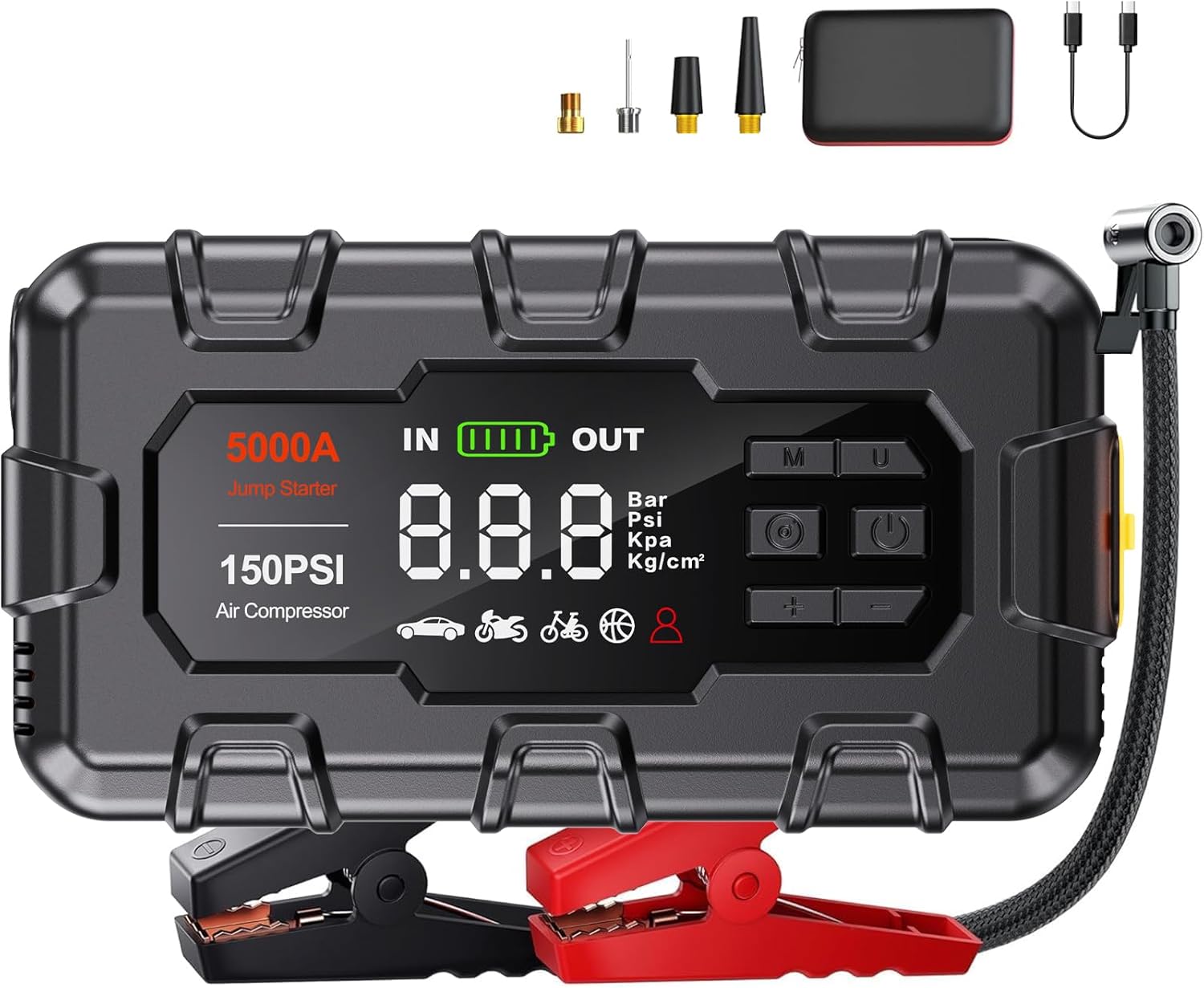
You’re looking at a 5-in-1 device that combines jump starting, tire inflation, mobile power, and lighting in one package. The product claims a 5000A peak current, support for up to 9.0L gasoline and 8.0L diesel engines, a 150 PSI air compressor, and PD 45W fast charging — all in a single portable jump box that’s intended to be used on cars, trucks, motorcycles, and SUVs.
What’s Included
You’ll receive the jump starter unit, a set of smart alligator clips (jumper cables), an inflation nozzle plus accessories, a charging cable, a user manual, and a storage case. These items give you everything you need to start a vehicle, inflate tires, and charge devices without hunting for additional accessories.
Key Specifications (at-a-glance)
Here’s a quick table to break down the important specs so you can scan them fast and decide what matters most to you.
| Feature | Details |
|---|---|
| Peak Current | 5000A |
| Engine Support | Up to 9.0L gasoline / 8.0L diesel engines |
| Vehicle Support | 12V cars, trucks, motorcycles, SUVs |
| Jump Starts per Charge | Up to ~50 starts (manufacturer claim) |
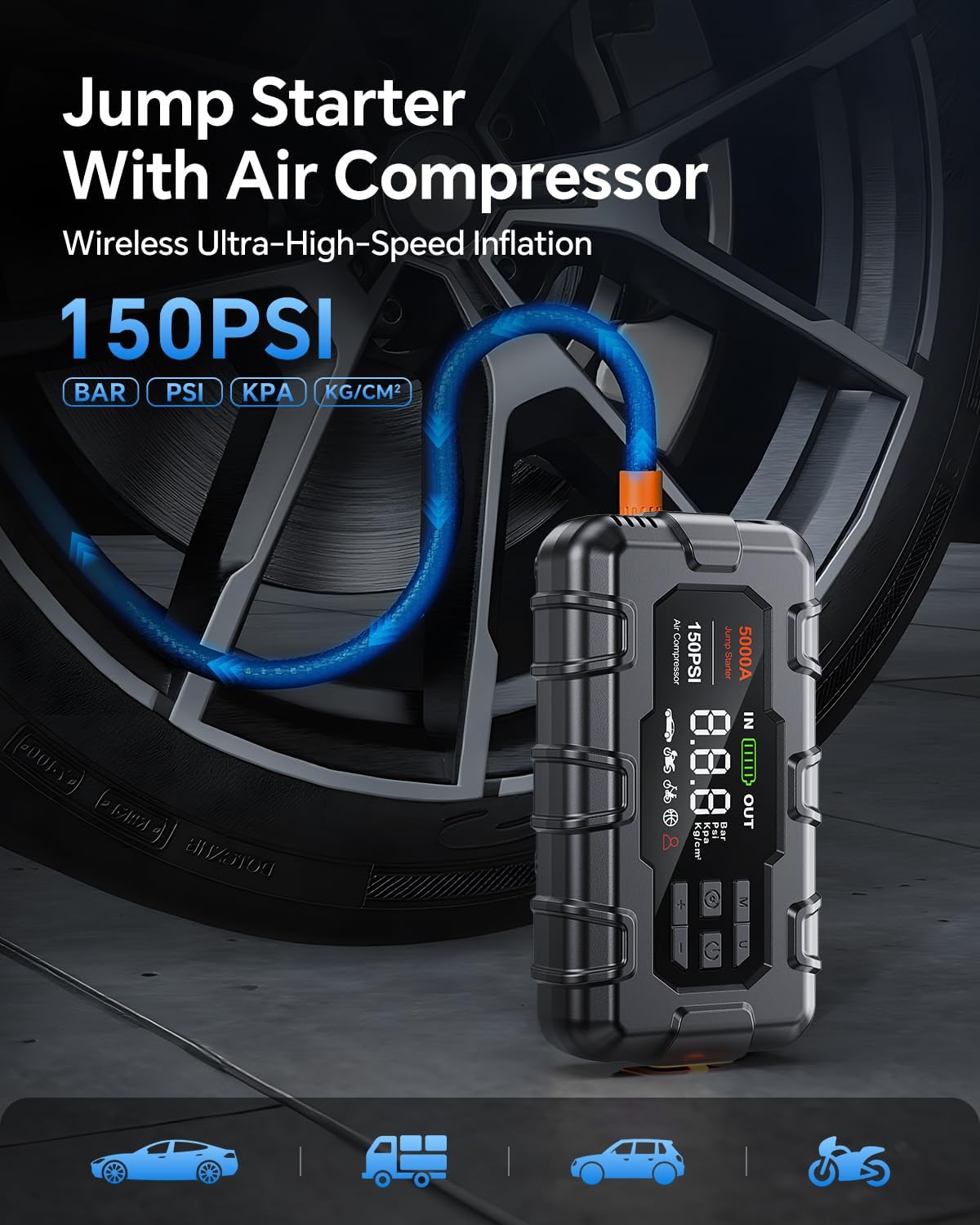
| Air Compressor Max Pressure | 150 PSI |
| Air Compressor Run Time | Can run up to ~25 minutes (continuous use in cycles) |
| Inflation Nozzles | 4 different nozzles (cars, motorcycles, bicycles, balls) |
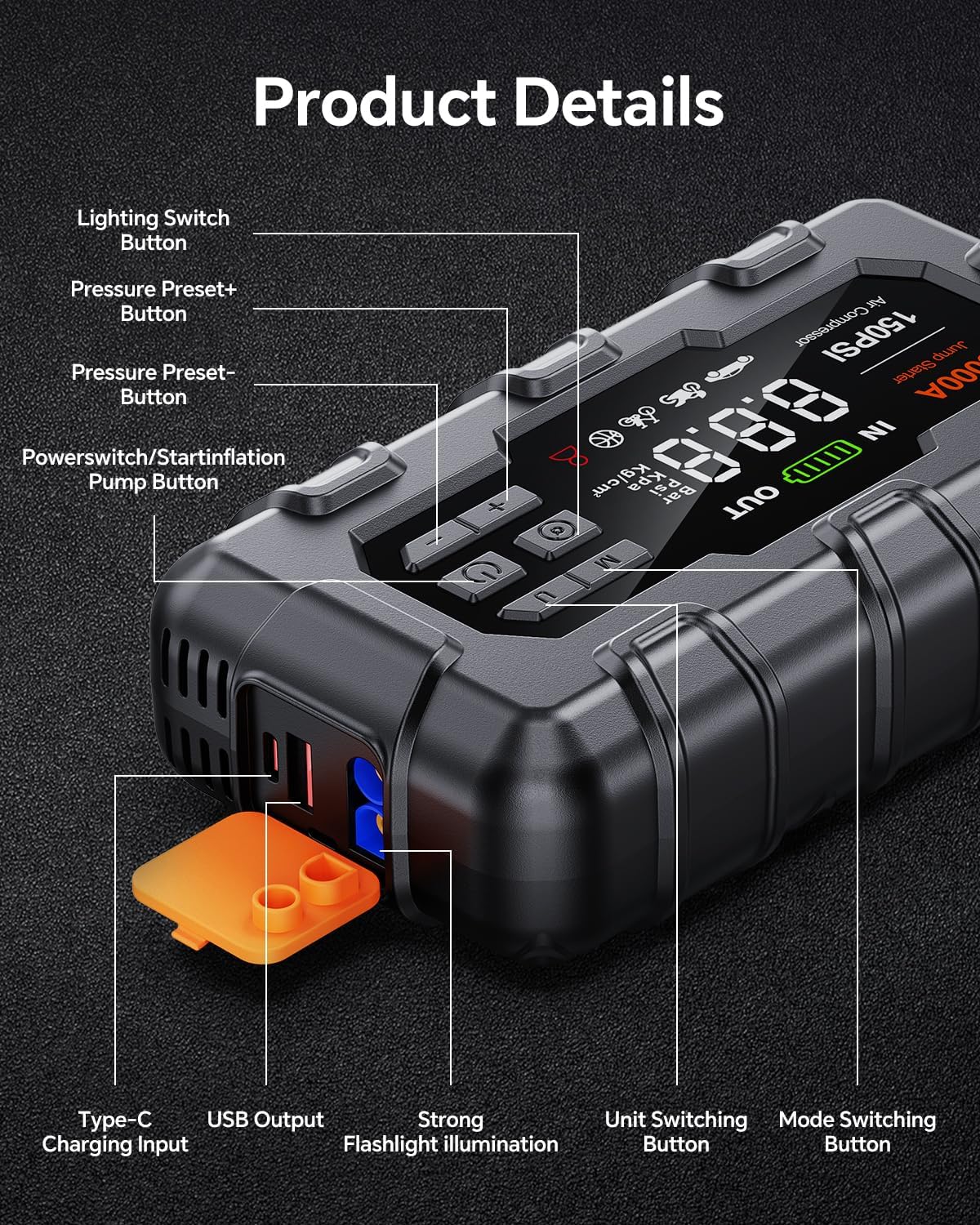
| USB Output | 5V/3A and PD 45W (fast charging) |
| Lighting | Built-in LED flashlight and LED light |
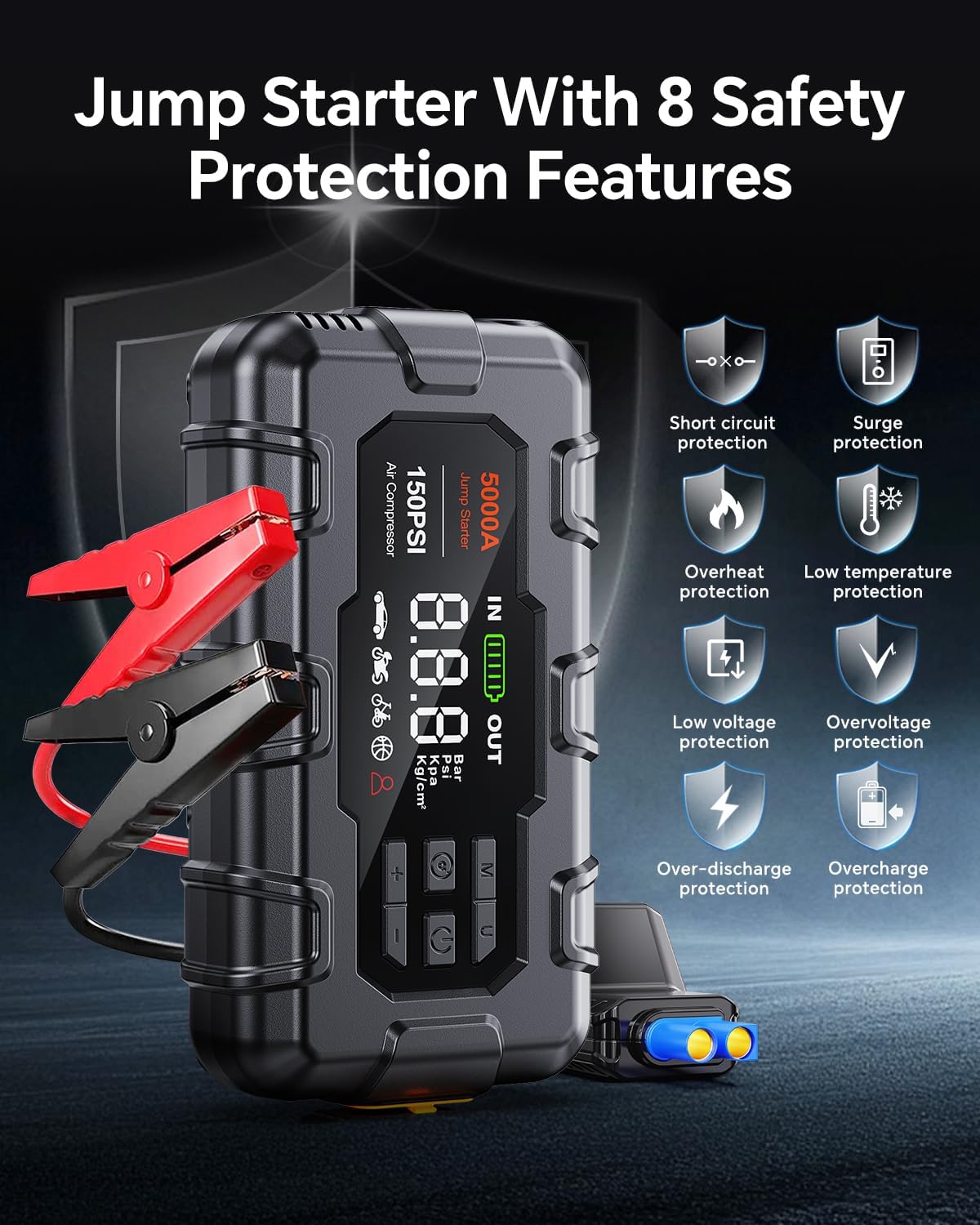
| Protections & Certs | Overcharge, overdischarge, short circuit, reverse polarity, thermal protections; PSE, CE, FCC, MSDS |
| Included Accessories | Smart clamps, air nozzle, nozzle accessories, charging cable, storage case |
| Recommended Charge Level Before Use | >70% for jump starting |
You can use the table above as a quick reference when deciding if the unit matches your vehicle and travel habits. These figures come from the product description and summarize the unit’s intended capabilities.
Performance Overview
You’ll find that the device aims to balance raw starting power with multi-function utility for roadside emergencies. Performance reflects a combination of battery chemistry and component quality — in practice, that means the jump capability is impressive for large engines while the compressor and USB outputs are convenient for everyday needs.
Jump Starting Performance
When you need to start a dead 12V battery, the 5000A peak current is designed to deliver a large inrush of power to crank sizable gasoline and diesel engines. In real-world conditions, you should expect reliable starts for engines up to the stated limits — just be sure the jump starter itself is adequately charged (manufacturer recommends >70%) before attempting starts. You’ll appreciate how quickly your vehicle responds once the clamps are connected properly, and the smart clamps help prevent accidental reverse polarity.
Air Compressor Performance
The built-in compressor supports up to 150 PSI and can run for long enough to inflate tires, sports equipment, and smaller inflatables using the provided nozzles. You’ll be able to handle a flat or low tire emergency without needing a separate pump, though for very large or heavy-duty tires you should monitor compressor temperature and cycle it to avoid overheating. Having four nozzle types makes the unit versatile for bicycles, inflatable toys, and auto tires.
Power Bank and Charging Speed
With PD 45W and a 5V/3A USB output, you’ll be able to charge phones, tablets, and even some laptops at respectable speeds. You’ll notice faster top-ups compared with standard 5W or 10W USB outputs, and PD capability means your compatible devices can draw higher wattage for quicker charging. For emergency phone calls or navigation, this reduces anxiety and keeps you connected.
Design and Build Quality
From a practical standpoint, the unit feels like a well-equipped tool designed to be kept in a vehicle. You’ll notice sturdy clamps, a solid housing for the compressor, and a combination of ports and indicators that make it functional for roadside use.
Size, Weight, and Portability
You’ll want to keep the storage case in your trunk or garage, since this device is heavier and bulkier than small pocket jump starters. Portability is a balance: it’s easy enough to move and store, but it’s clearly designed to be a dedicated emergency tool rather than a lightweight accessory. The included storage case makes it easier to carry everything together and keeps cables and nozzles organized.
Connectors, Clamps, and Safety Features
The smart alligator clips are designed to attach securely and offer reverse-polarity protection, which reduces the chance of damaging your vehicle’s electronics. You’ll find the clamps comfortable to clip and unclamp, and the unit’s display gives you clear status indicators so you know when the device is ready or if there’s a fault. The built-in protections like overcharge, overheating, and short circuit prevention are reassuring when you’re working in stressful conditions.

Ease of Use
You’ll appreciate how most actions follow simple, intuitive steps, and the device’s display and lights provide clear feedback. Whether you’re starting a car, inflating a tire, or powering a laptop, the basics are straightforward and the included manual helps clarify any specifics.
Starting a Vehicle: Step-by-Step
- Charge the unit to at least 70% before attempting to start the vehicle. This ensures you have the energy reserve needed for the initial cranking and avoids multiple failed attempts.
- Connect the smart clamps to the jump starter and then to the vehicle battery: red clamp to positive (+) and black clamp to negative (-) or a grounded metal point on the vehicle. The smart clamps will indicate proper connection and prevent you from making harmful mistakes.
- Power on the jump starter and attempt to start the vehicle. If it doesn’t start after a few seconds, wait a minute and try again, monitoring the unit’s status indicators. After a successful start, disconnect clamps in the reverse order and allow the vehicle to run to recharge its battery.
These clear steps minimize confusion in emergencies and help you act quickly and safely.
Inflating Tires and Items: Step-by-Step
- Attach the appropriate nozzle to the compressor hose depending on what you’re inflating (tire stem, ball needle, etc.). Making a secure connection prevents air leaks and speeds the process.
- Set the desired pressure on the unit’s display if available, or monitor the inflation manually by checking the pressure periodically. For vehicle tires, check the manufacturer’s recommended PSI and avoid overinflating.
- Run the compressor in short cycles if you’re inflating a large tire to prevent overheating. If the compressor becomes hot, pause and let it cool before resuming.
Following these steps will help you get back on the road faster without risking damage to the compressor or the item being inflated.
Safety and Protections
You’ll find multiple safety features designed to keep you and your vehicle safe while using the device. The combination of hardware protections and smart clamp design helps prevent user errors that could lead to damage.
Built-in Protections and Certifications
The unit includes protections for short circuits, overdischarge, surge current, reverse current, low voltage, high voltage, high temperature, and overcharge. You’ll also see certifications like PSE, CE, FCC, and MSDS listed, which suggests the manufacturer has pursued standard safety and material testing for market compliance.
Practical Safety Tips
Always ensure the jump starter has adequate charge before attempting a start, and never connect clamps when the jump starter is powered off unless instructed by the manual. You’ll also want to keep the unit dry, avoid exposing it to extreme temperatures for prolonged periods, and follow the manufacturer’s guidance on duty cycles for the compressor to prevent overheating.
Battery Maintenance and Charging
You’ll want to treat the jump starter like any other battery-powered emergency tool by keeping it charged and stored correctly. Proper maintenance extends the life of the unit and ensures it’s ready when you need it most.
How to Charge and Store
Charge the unit with the supplied cable or adapter and ensure it reaches at least 70% before attempting a jump. For long-term storage, the manufacturer recommends recharging the device every 2–3 months to keep the battery in optimal condition and avoid deep discharge.
Long-Term Care
You should avoid leaving the unit in extreme heat or freezing conditions for long periods, as those environments can degrade lithium-ion batteries. You’ll also reduce wear by not fully depleting the battery repeatedly; partial discharges and regular top-ups are healthier for long-term battery life.
Real-world Use Cases
Thinking about practical scenarios will help you decide if this unit matches your lifestyle. You’ll find this device particularly useful for road trips, seasonal weather events, and everyday preparedness.
Everyday Emergency Use
If your car won’t start after overnight parking or a short electronics drain, you can use the jump starter to get rolling again quickly. You’ll also use the fast charger to restore phone battery for navigation and calls while waiting for roadside assistance.
Travel and Outdoor Use
For camping or longer road trips, the compressor and PD charging make the unit multifunctional — you can inflate air mattresses or bike tires while keeping gadgets charged. You’ll appreciate the built-in LED flashlight for night-time repairs or signaling.
Fleet and Professional Use
If you manage a small fleet or perform roadside assistance, the high peak current and rugged clamps make it a viable tool for repeated use. You’ll still need to adhere to duty cycle recommendations and possibly keep a backup if you anticipate heavy daily use.
Pros and Cons
You’ll want to weigh these strengths and limitations to make a smart purchase decision. The unit combines multiple useful functions, but like any multi-tool, there are trade-offs compared to specialized single-purpose devices.
Pros:
- Powerful 5000A peak current that supports large gasoline and diesel engines.
- Built-in 150 PSI air compressor with multiple nozzles for versatile inflation tasks.
- PD 45W fast charging for phones, tablets, and some laptops.
- Multiple safety protections and smart clamps reduce user risk.
- Comes with a storage case and accessories for immediate use.
Cons:
- Heavier and bulkier than ultra-compact jump starters; not as pocketable.
- For very large truck tires or industrial inflations, the compressor may be slower than a dedicated heavy-duty compressor.
- Manufacturer’s “up to 50 starts” claim will vary by engine size, temperature, and charge cycles, so real-world numbers may be lower.
Comparison: How This Unit Stacks Up
You’ll find different niches where this product either excels or compromises, depending on your priorities.
Compared to Smaller Jump Starters
Smaller models are lighter and more portable but usually provide lower peak current and lack a compressor or PD 45W charging. You’ll trade off raw power and multi-function utility for compactness if you choose a smaller unit.
Compared to Larger Portable Power Stations
Large power stations offer higher capacity and more outlets for camping or heavy electronics, but they’re bulkier and typically more expensive. You’ll benefit from this unit’s focused features — jump starting, inflation, and PD charging — if you need vehicle-centric emergency capabilities rather than extended off-grid power.
Practical Tips and Best Practices
You’ll get the most out of your unit by following a few practical tips that improve safety and performance. These steps help preserve battery life and ensure reliable operation when you need it.
- Keep the unit charged to at least 70% if you anticipate needing to jump a vehicle. This reduces failed attempts and battery stress.
- Store the jump starter in a cool, dry place and avoid leaving it exposed to sunlight or freezing temperatures. Temperature extremes shorten battery lifespan.
- Use short compressor cycles for large tires to prevent overheating, and allow the unit to cool between cycles if it becomes hot.
- Inspect clamps, cables, and nozzles for damage before each use to avoid failures or safety hazards.
- Read the user manual to understand indicator lights and error codes so you can address minor issues quickly.
Troubleshooting Common Issues
You’ll want to have a few troubleshooting steps in mind for common scenarios, since roadside conditions aren’t always ideal.
- If the engine doesn’t crank, confirm clamp connections, ensure the unit is charged above 70%, and double-check vehicle battery terminals for corrosion. A weak vehicle battery or parasitic drain may need repeated attempts or professional battery replacement.
- If the compressor runs but doesn’t build pressure, check for loose nozzle connections or leaks in the hose or valve. Try another nozzle and ensure the valve stem is unobstructed.
- If the unit shows an error or won’t power on, check for an internal safety lockout due to temperature or an overcurrent event. Let the device cool and then recharge it before trying again.
Frequently Asked Questions
You’ll likely have common questions about compatibility, maintenance, and everyday use — here are clear answers to help.
Q: Can it start my truck? A: If your truck engine falls within the 9.0L gas or 8.0L diesel limits and it’s a 12V system, this device is designed to start it. You’ll want to check your truck’s specifications and ensure the jump starter has sufficient charge before attempting a start.
Q: How many times can it jump start a car on a full charge? A: The manufacturer claims up to about 50 starts, but actual numbers depend on engine size, temperature, and how long you run the starter between attempts. For larger engines or cold weather, expect fewer starts per charge.
Q: Is the PD 45W port safe for my laptop? A: Many laptops that accept PD input will charge from a 45W source, but you should check your laptop’s required wattage and cable compatibility. You’ll get faster charging than standard USB but slower if your laptop normally expects higher wattage.
Q: Can I leave the clamps connected to the vehicle while the engine is running? A: It’s safer to disconnect the clamps after a successful start to avoid accidental arcs or clamp movement. Follow the manual’s instructions and disconnect in the recommended sequence.
Q: How often should I charge the unit if it’s not used? A: Charge it every 2–3 months to maintain battery health and ensure the unit is ready when you need it. This interval helps prevent deep discharge that can reduce battery life.
Who Should Buy This
You’ll appreciate this unit if you regularly drive vehicles with larger engines, travel long distances, or value having multiple emergency tools in a single package. If you want something to support car starting, tire inflation, fast charging, and lighting without buying separate devices, this is a strong candidate.
Ideal Users
- Drivers of trucks or SUVs with large engines who want reliable jump power.
- Road-trippers, campers, or outdoor enthusiasts who need an all-in-one emergency solution.
- Fleet operators who need a portable, capable unit for occasional roadside assistance.
Less Ideal Users
- Someone who only needs a tiny, ultra-portable emergency starter for occasional small-car battery issues.
- Users who require heavy-duty industrial compressors or very long off-grid power, where a full-size power station and compressor would be better.
Final Recommendation
If you want a single, multi-function tool that handles jump starts for large engines, provides a capable air compressor, and charges devices at PD 45W speeds, this unit is an excellent all-around choice. You’ll get peace of mind from the combination of power, safety features, and accessories included in the kit, making it a valuable addition to your emergency gear.
Closing Notes
You should always follow the manufacturer’s charging and storage recommendations to maximize the lifespan of the device. Keep the included manual handy, test the unit periodically under non-emergency conditions, and store it charged and ready so it’s useful when you need it most.
Disclosure: As an Amazon Associate, I earn from qualifying purchases.