
Thinking about whether the Jackery HomePower 3000 is the right backup and portable power solution for your home, RV, or next emergency plan?

What this product is and who it’s for
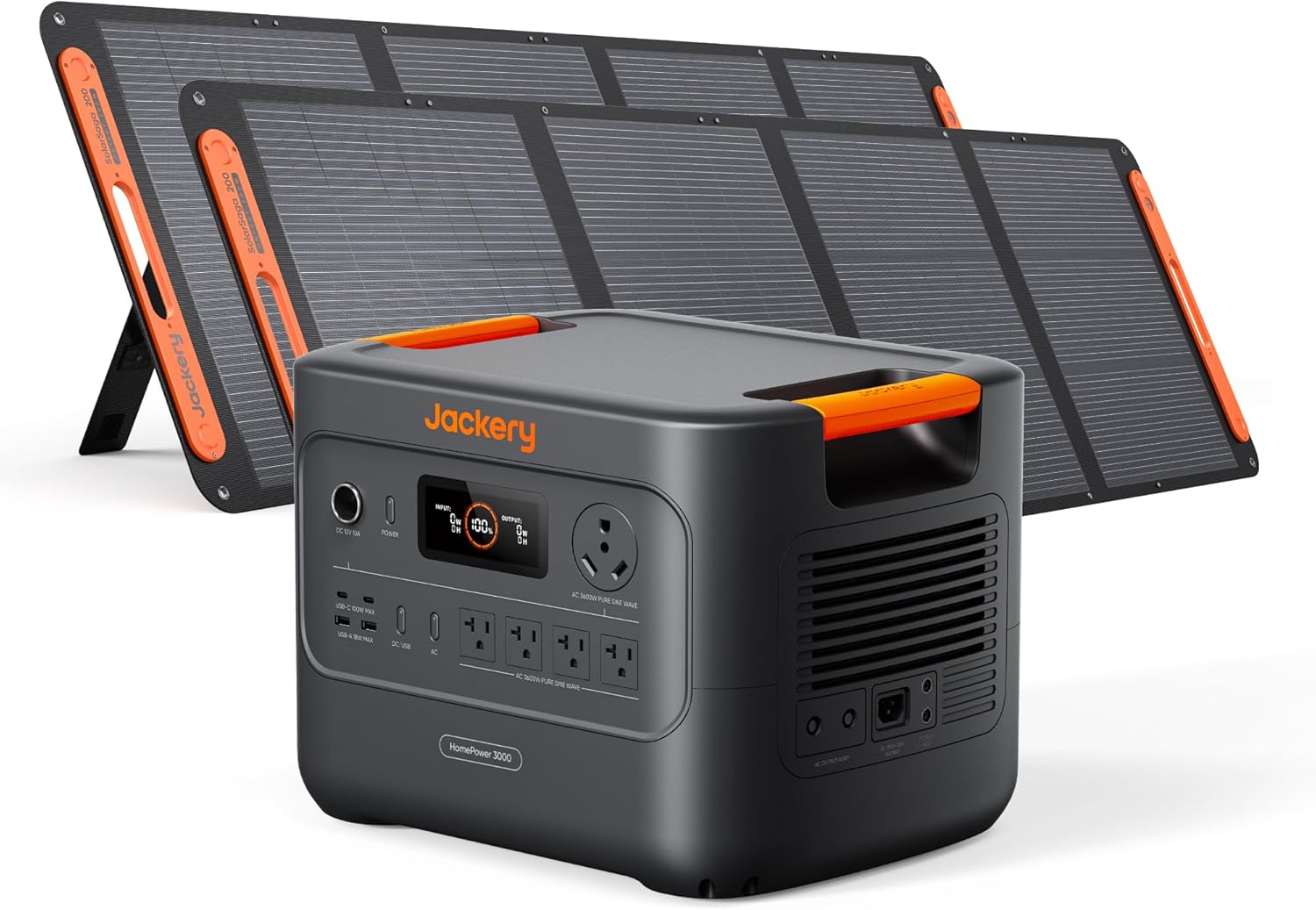
You’re looking at the Jackery HomePower 3000 Portable Power Station with 2x 200W Solar Panels, 3600W (Surge 7200W) Output, 3072Wh LFP Battery Solar Generator, Essential Backup for Home Use, Power Outage, RV, Emergencies. You get a high-capacity LiFePO4 battery, a high continuous output with big surge capability, and a package that includes two SolarSaga 200W panels to keep things topped up.
This unit is aimed at people who want a robust, reliable home backup that’s portable enough to move where you need it. If you run a small medical fridge, want to keep your home network and lights on during outages, or need a strong RV power source, this product is built to meet those needs.
Quick specs at a glance
You want facts fast so you can decide quickly. Below are the headline numbers and what they mean in practical terms.
| Item | Specification / Example load | What it means for you |
|---|---|---|
| Battery capacity | 3072Wh (LiFePO4) | Enough to run many essentials for hours to days depending on load. |
| Continuous AC output | 3600W | Can run high-draw appliances like microwaves, power tools, or multiple devices simultaneously. |
| Surge output | 7200W | Handles short startup loads from compressors and motors, like fridges or pumps. |
| UPS switch time | ≤20ms (UL-certified) | Keeps sensitive electronics running during power blips or outages with no interruption. |
| Fast charge (AC) | 2.2 hours | Quick AC-only recharge for fast turnaround after heavy use. |
| Hybrid charge (AC + DC) | 1.7 hours | Fastest factory-supported recharge option if you combine inputs. |
| Solar charge (2x 200W) | ~80% in 9 hours | Solar-ready for off-grid recharging during daylight. |
| Cycle life | 4,000 cycles to 70% capacity (LiFePO4) | Long-lasting battery life for many years of regular use. |
| Portable design | 47% smaller and 43% lighter vs similar capacity | Easier to move and store than many comparable 3kWh units. |
| Ports | Multiple AC, dual 100W USB-C PD, USB-A, DC, TT-30 RV | Charges phones, laptops, runs appliances, and plugs into RV shore power. |
| Shipping note | Panels and station may ship separately | Expect separate packages and staggered delivery timelines. |
Design and portability
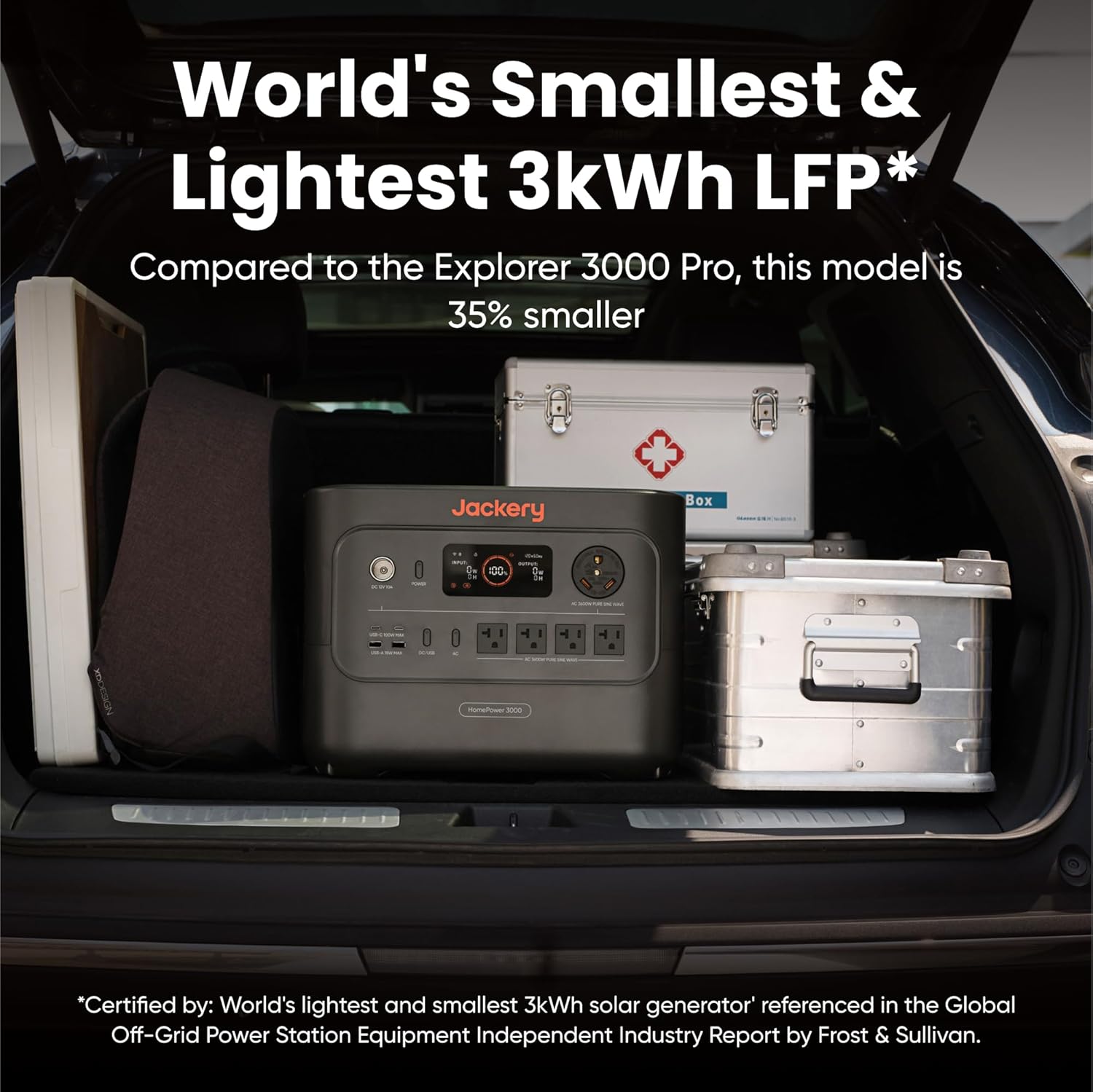
You’ll notice Jackery made this unit smaller and lighter than most other 3kWh power stations. The company claims CTB technology gives a 14% improvement in space efficiency and the unit is 47% smaller and 43% lighter than comparable models.
That translates into easier handling and simpler storage for you. The honeycomb-style bottom shell improves stability when you set the unit down, and the integrated photovoltaic (PV) and inverter design reduces the need for extra external modules, making the whole setup cleaner and less cluttered.
Build quality and materials
The shell and handle design aim for durability without excessive weight. You’ll appreciate the balance between ruggedness and transportability.
The LiFePO4 chemistry inside is tougher than many older lithium-ion chemistries, resisting thermal stress and offering a long cycle life for regular use. Overall, you get a product that feels intentionally engineered for repeated movement and use in different scenarios.
Battery technology and lifespan
You’ll find a LiFePO4 (LFP) battery with 3,072Wh capacity, which is both safer and longer-lived than many consumer-level NMC batteries. Jackery claims 4,000 cycles while retaining 70% capacity, which means you can rely on it for years with frequent cycling.
This is especially useful if you intend to use the generator as a daily power hub for an off-grid cabin or a frequent RV traveler. The longer cycle life reduces long-term replacement costs and gives you confidence the unit will remain effective for many battery charge-discharge cycles.
ChargeShield 2.0 and AI-based charging
You get ChargeShield 2.0 technology, which uses proprietary AI-based algorithms to optimize charging speed and protect battery health. You’ll see faster safe charging and less stress on the battery over time.
This smart charging reduces heat and wear during replenishment, helping your battery maintain capacity and performance. You’ll benefit from both quicker replenishment and longer-lasting battery health as a result.
Output power and real-world performance
With 3600W continuous and 7200W surge output, you can run pretty heavy loads. If you’re powering a fridge, lights, WiFi, and a couple of smaller devices, this station will cover it comfortably.
The high surge rating is particularly valuable for appliances with compressor motors or devices with high inrush currents. When the fridge or air conditioner starts, the surge headroom prevents the unit from tripping or cutting out.
UPS feature and sensitivity
The unit includes a UL-certified UPS that switches within ≤20ms, which means you won’t lose your Zoom call or interrupt sensitive equipment like security cameras and medical refrigeration when the grid blips.
You’ll appreciate that short transfer time for devices that don’t tolerate even brief power interruptions. The UPS function makes the HomePower 3000 suitable for both home emergency backup and professional setups that need continuous power.
Ports and charging options
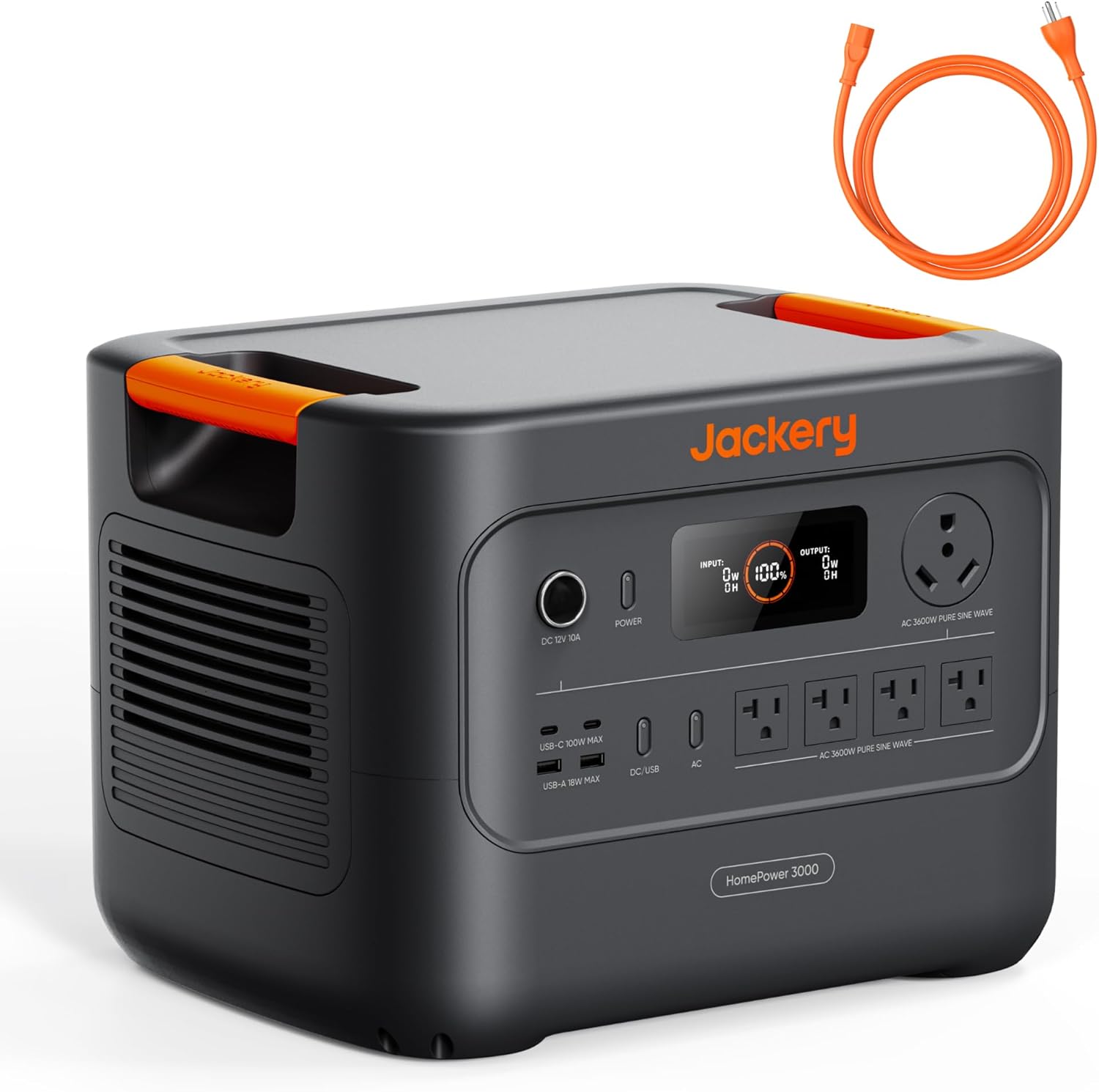
You’ll find a wide range of outputs: multiple AC outlets, dual 100W USB-C PD ports, USB-A ports, DC outputs, and a TT-30 RV port for direct RV connection. That covers almost all modern devices and many appliances without extra adapters.
The dual 100W PD ports enable fast laptop and device charging, and the TT-30 RV port offers plug-and-play convenience for many older RV setups. If you need to keep several devices running at once, the port variety means you won’t be hunting for adapters.
Recharging methods and times
You can recharge the HomePower 3000 via AC, DC, solar, a 12V car charger, or a gas generator. AC-only charging gets you to full in about 2.2 hours, while hybrid AC + DC can cut that to 1.7 hours. With the two included SolarSaga 200W panels, the unit reaches about 80% in roughly 9 hours of good sun.
That flexibility makes it highly adaptable to your setup. If you have limited grid access, you can rely on solar or a car alternator; if you have grid access, the rapid AC recharge minimizes downtime.
Solar panels and real-world solar charging
The package lists two SolarSaga 200W panels, designed to work well with the HomePower 3000. When paired, you can expect up to 80% charge in about 9 hours under optimal conditions.
Remember that solar charging depends heavily on weather, orientation, shading, and seasonal sun angles. If you plan to use the solar panels regularly, position them for maximum exposure and consider panel angle and tracking to get the best performance.
Shipping note for panels
Be aware the HomePower 3000 and the SolarSaga panels may ship separately and arrive in separate packages. You’ll want to plan for that so you’re not surprised by staggered deliveries.
This separation is common with large kit items and doesn’t affect the product; it simply requires a bit of patience while waiting for all components to arrive.
Typical run times — what you can expect
You probably want practical runtime examples. Below are estimated run times for common appliances to help you plan. These are estimates — actual times vary depending on appliance efficiency, initial conditions, and ambient temperature.
- Refrigerator (medium, efficient): ~24–48 hours (1–2 days) — when used conservatively and depending on cycles.
- WiFi router + modem + lights + phone charging: ~15 hours or more.
- CPAP machine (without heated humidifier): Many hours — often overnight and multiple nights if used sparingly.
- Laptop (USB-C 100W PD): Charges multiple times or runs for many hours depending on model.
- Microwave or space heater: Short bursts are fine; sustained usage will deplete the battery faster due to high power draw.
Runtime examples table
| Appliance / Load | Typical power draw | Estimated runtime on 3072Wh |
|---|---|---|
| WiFi router + modem (20–30W) | 25W | ~120 hours (5 days) |
| LED lighting (4 bulbs, 10W total) | 40W | ~76 hours (3+ days) |
| Laptop (charging via 100W USB-C) | 60W | ~45–50 hours of light use or multiple full charges |
| Refrigerator (compressor cycling, avg 100W–150W) | 125W | ~24–30 hours; possibly 1–2 days depending on cycles |
| CPAP (60W) | 60W | ~48 hours |
| Microwave (1,000W intermittent use) | 1000W | ~2–3 hours of cumulative run time |
| Space heater (1500W) | 1500W | ~1–2 hours |
These numbers assume you draw from the whole usable capacity; actual usable capacity, inverter losses, and battery reserve settings might reduce those numbers slightly. You’ll want to factor in inefficiencies and keep some buffer for emergencies.
Safety, certifications, and reliability
You’ll get UL certification for the UPS functionality, and LiFePO4 chemistry brings intrinsic safety advantages like chemical stability and lower fire risk compared to some other lithium chemistries. Jackery’s ChargeShield 2.0 also adds protective software oversight.
That means you can feel confident leaving the unit connected to critical devices for extended periods. Built-in protection against overcharge, over-discharge, short-circuit, and temperature extremes helps safeguard both your devices and the unit.
Reliability over time
With a rated 4,000 cycles to 70% capacity, the HomePower 3000 is built for long-term, repeated use. You’ll likely see many years of service even with frequent cycling, making it a better long-term investment compared to lower-cycle units.
The robust inverter and surge capability also mean you don’t need to baby the unit; it can handle typical household surges and startup loads without premature failure.
Practical setup and daily use tips
When you first get your unit, charge it fully via AC before relying on it for critical tasks. You should also test the UPS function with non-critical devices to confirm settings and behavior in your home environment.
If you plan to integrate solar, position the SolarSaga panels in unobstructed sun and consider adding a simple panel-stand or portable rack to optimize angle. For RV users, the TT-30 port simplifies hookup but always check your RV’s power needs and converters before relying on a single source.
Maintenance and care
Keep the unit in a cool, dry place and avoid extreme heat while charging or discharging heavily. If you store the unit for months, maintain a charge cycle every few months to protect battery health. You’ll extend battery longevity by keeping it between 20–80% for prolonged storage where possible.
Occasional firmware updates, if offered, and checking ports for debris will keep your unit working smoothly. The design aims to be low-maintenance, but a little care goes a long way.
Pros — what you’ll like
You’ll appreciate several strengths of the HomePower 3000 that stand out in its class:
- High continuous and surge output suitable for serious home backup and heavy appliances.
- Large 3072Wh LiFePO4 battery with long cycle life.
- Rapid recharge options and solar compatibility for flexible energy replenishment.
- UPS functionality with ≤20ms transfer time for uninterrupted operation.
- Multiple modern ports including dual 100W USB-C PD for fast device charging.
- Compact, lighter weight design compared to similar capacity units.
These features make the unit a strong choice if you need reliable power continuity and portability without sacrificing capability.
Cons — what you should consider
You’ll want to weigh a few trade-offs before buying:
- Price: Higher-spec units with LiFePO4 chemistry and heavy-duty inverters will cost more. You’re paying for durability and capability.
- Weight: Although lighter than many competitors, it’s still a multi-kilogram unit; moving it frequently may still require help.
- Solar charge time: Solar charging to full will take a full day or more under good sun; plan for grid or generator top-ups if you need immediate full capacity.
- Separate shipments: Panels and the main unit may arrive in separate packages, which can be inconvenient if you expect everything at once.
You should weigh these against the needs you have: if you need a lightweight ultra-portable charger, something smaller would fit better; if you need home-level backup, this is a strong fit.
Comparison with other options (brief)
You’ll find competing units in the 2–5kWh range from other manufacturers, often with NMC chemistry, lower cycle life, or smaller inverters. What sets the Jackery HomePower 3000 apart is the combination of LiFePO4 longevity, high continuous and surge output, and a reasonable size-to-capacity ratio.
If you want pure weight savings and don’t need long life, some NMC units are lighter but will require earlier replacement. If you need higher sustained solar charging or modular expandability, other brands offer stacked battery options, but at the cost of complexity.
When competitors make sense
If your main need is occasional camping or charging phones, a smaller power station will be cheaper and lighter. If you want to build a scalable whole-house system, a stationary inverter + battery setup from a home solar company might be more suitable than a portable solution.
Use case scenarios
You’ll find the HomePower 3000 shines in a number of clear use cases:
- Home emergency backup for fridge, lights, internet, medical devices, and communication.
- RV power source for boondocking with direct TT-30 hookup and solar recharging.
- Temporary power during renovation, yard work, or outdoor events.
- Portable system for small off-grid cabins or work sites where grid power is intermittent.
You’ll be able to adapt it to mixed needs because of the combination of high output and fast charging options.
Tax credit and incentives
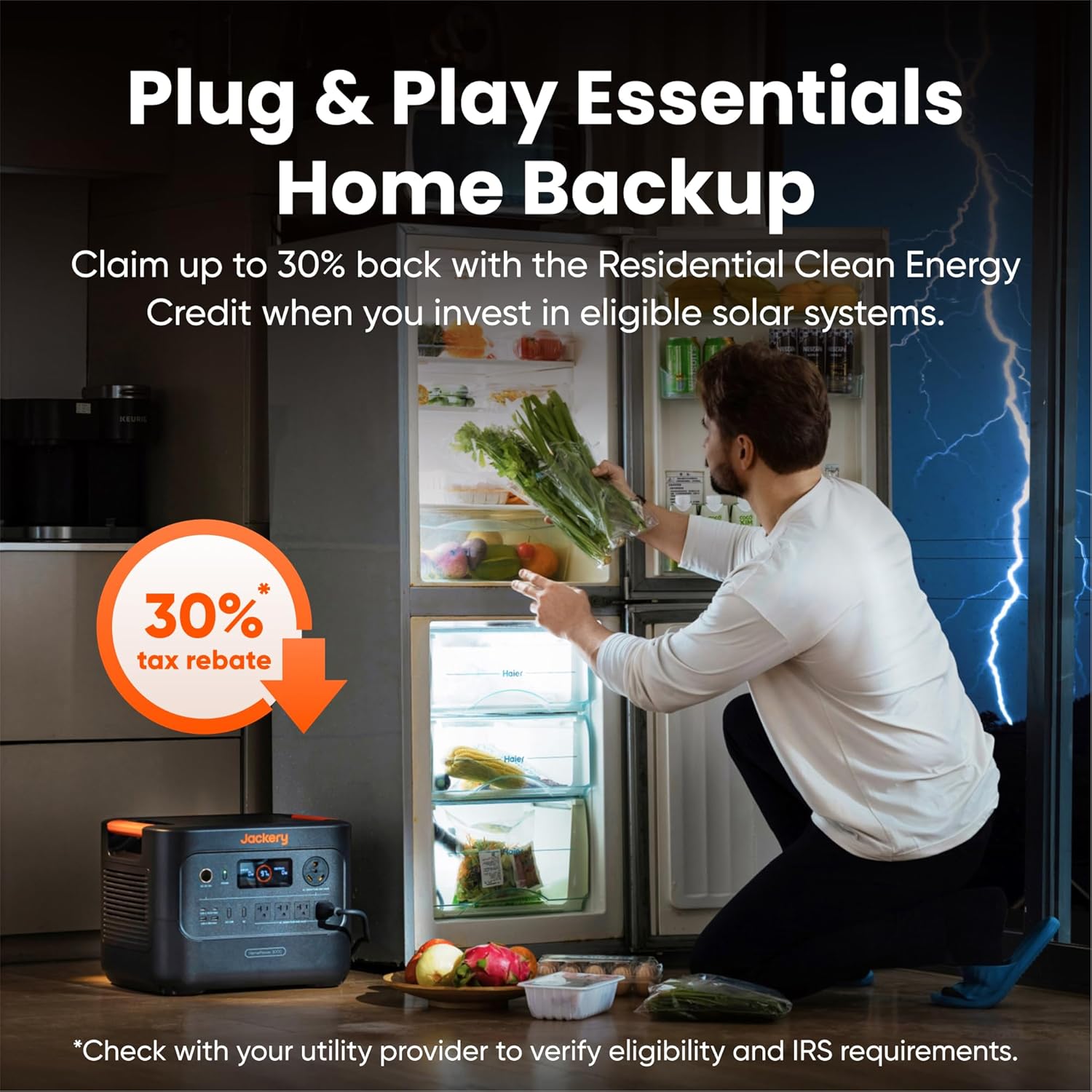
You may be eligible for a 30% residential clean energy tax credit for costs linked to qualified solar electric property. Contact your utility provider and tax advisor to confirm eligibility and confirm the specific requirements of the Residential Clean Energy Credit programs.
Be aware that the 30% federal tax credit may be ending on December 31, 2025, so you’ll want to check the latest guidance and timelines before purchasing if that incentive matters for your budget.
Price and value considerations
You’ll pay more for this level of capacity and safety features, but you’re getting durable LiFePO4 chemistry, significant surge capacity, and fast recharging. Over the years, the long cycle life and the ability to handle large loads often make such a purchase good value compared to repeatedly replacing smaller units.
Consider the total cost of ownership: battery replacements, convenience during outages, and avoided spoiled food or disrupted work can make the higher upfront cost economical in practical terms.
Setup checklist for first use
You’ll want to run through a short checklist when your HomePower 3000 arrives:
- Inspect packaging and components; note panels might arrive separately.
- Charge fully via AC before first deployment.
- Connect and test the UPS function with non-critical loads.
- If using solar, position SolarSaga panels with full sun and confirm connectors match.
- Register product and check for firmware updates or support resources.
This ensures you’re ready and confident before relying on it in an emergency.
Final thoughts and recommendation
You’ll find the Jackery HomePower 3000 to be a powerful, versatile, and reliable portable power station for serious backup and mobile power needs. If you want a long-lived battery, rapid recharging options, and the capacity to run heavy appliances or multiple devices simultaneously, this product checks a lot of boxes.
If you need a basic phone charger or weekend camping power, it’s more than you need. But if you want a near-home UPS-level backup that’s still portable and solar-ready, the HomePower 3000 is an excellent choice that balances power, portability, and long-term reliability.
Important final note
Remember that the HomePower 3000 and its solar panels may ship separately and potentially arrive in different packages. You should also consult a qualified tax advisor or your utility to confirm eligibility if you plan to claim the residential clean energy credit, which may be available at 30% until December 31, 2025.
Disclosure: As an Amazon Associate, I earn from qualifying purchases.