
Are you hoping to find a portable power station that can actually run your home essentials during outages and also recharge from solar when the sun’s out?

Quick Verdict
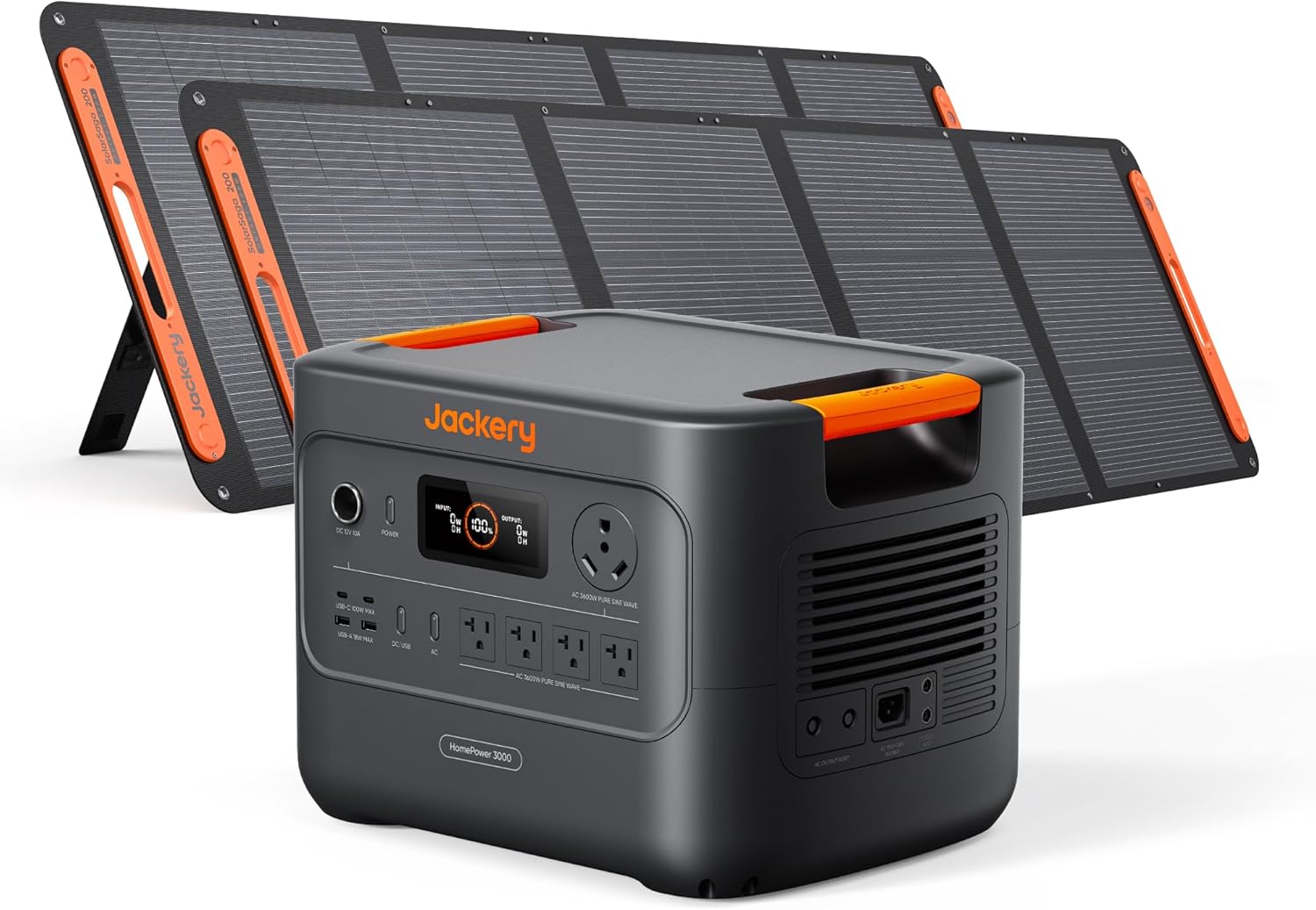
You get a powerful, versatile home backup and portable power solution in the Jackery HomePower 3000 Portable Power Station with 2x 200W Solar Panels, 3600W (Surge 7200W) Output, 3072Wh LFP Battery Solar Generator, Essential Backup for Home Use, Power Outage, RV, Emergencies. It’s designed to be compact for its capacity, supports fast charging options, and offers strong reliability with LiFePO4 cells and ChargeShield 2.0. If you want a near-seamless transition from grid to backup and flexible recharging methods, this unit is built to cover those bases.
What the Jackery HomePower 3000 Is
You’re looking at a large-capacity portable power station intended for both home backup and mobile use. It combines a 3072Wh LiFePO4 battery with a 3600W continuous inverter (7200W surge), multiple output ports, and support for solar charging via included SolarSaga 200W panels. It’s built to be more compact and lighter than comparable 3kWh units while still offering professional-grade features like a UL-certified UPS and extended cycle life.

Who This Is For
If you need dependable emergency power that’s also convenient for RV trips, remote work, or outdoor events, this product is for you. You’ll appreciate the fast-charging PD ports for electronics, the RV-ready TT-30 port, and the ability to keep critical loads running during short-notice outages—security cameras, routers, medical fridges, and more. It’s also suitable if you want a solar-capable system eligible for a residential clean energy tax credit.
Key Specifications
You’ll find the core specs summarized below so you can quickly see what this system offers. The table breaks down capacity, outputs, charging methods, and physical highlights so you can match it to your needs.
| Specification | Details |
|---|---|
| Model | Jackery HomePower 3000 |
| Battery Type | LiFePO4 (LFP) |
| Usable Capacity | 3072 Wh |
| Continuous Output | 3600 W |
| Surge Output | 7200 W |
| UPS Switch Time | ≤ 20 ms (UL-certified) |
| Cycle Life | ~4,000 cycles to 70% capacity |
| Included Solar Panels | 2 x SolarSaga 200W |
| Solar Input (pair) | Up to ~400W combined |
| AC Recharge Time | 2.2 hours (AC only) |
| Hybrid AC + DC Recharge Time | 1.7 hours |
| Solar Charge to 80% (with 2x200W) | ~9 hours |
| Other Charging | 12V car, gas generator support |
| Ports | AC outlets, dual 100W USB-C PD, USB-A, DC, TT-30 RV |
| Weight & Size | 47% lighter & 43% smaller vs similar-capacity models (CTB tech) |
| Special Tech | ChargeShield 2.0 (AI-based charging optimization) |
| Safety/Certs | UL-certified UPS |
| Shipping Note | Power station and solar panels shipped separately |
Design and Portability
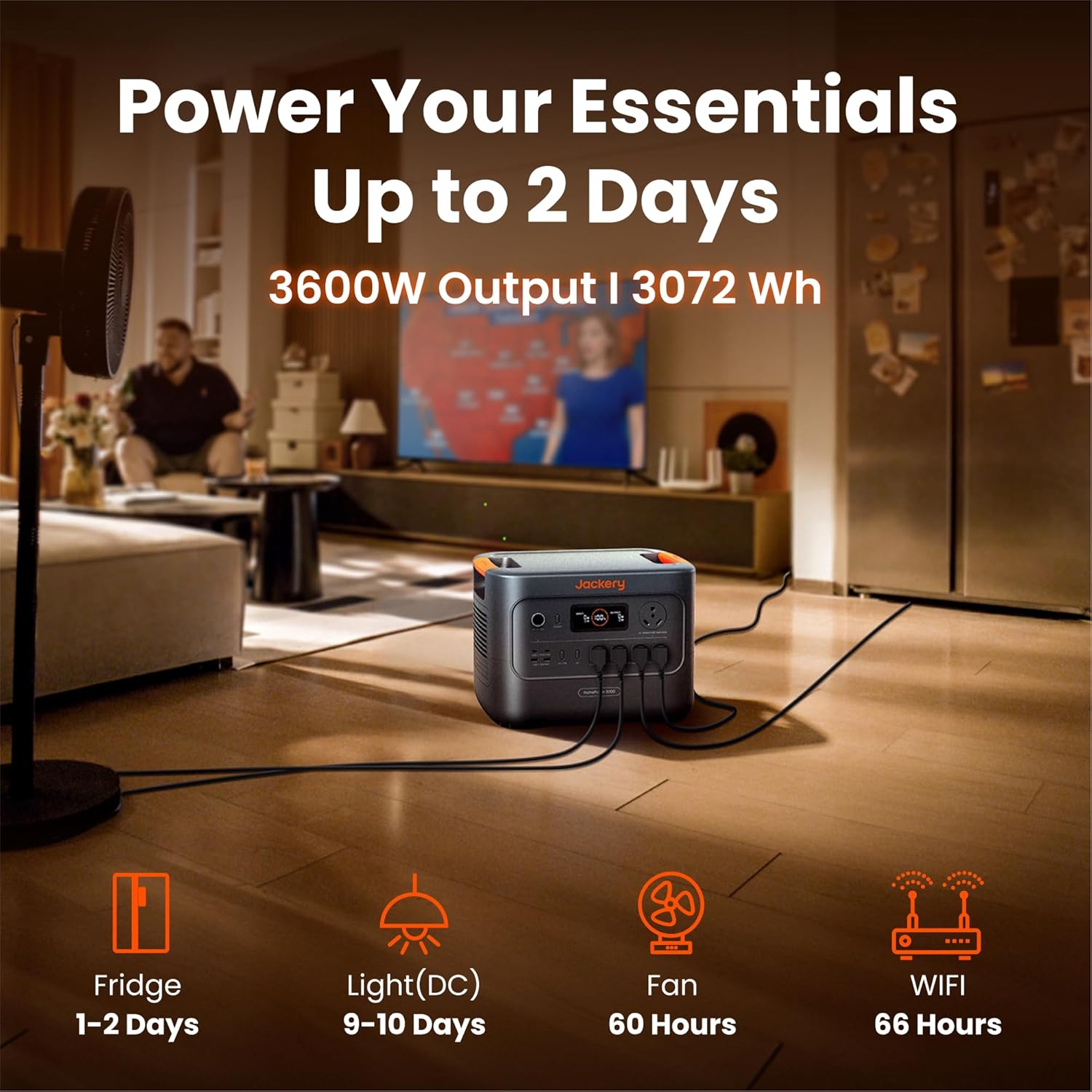
You’ll notice the HomePower 3000 emphasizes space efficiency and toughness. The CTB technology (integrated PV + inverter design) cuts size by almost half compared to many 3kWh units, making it significantly easier to carry and store. The honeycomb-style bottom shell adds stability and strength, so you don’t have to baby it during transport.
Build Quality and Materials
Jackery uses LiFePO4 battery chemistry, which is heavier in individual cells but offers far better cycle life and thermal stability than typical NMC cells. You’ll benefit from a robust outer shell and internal layout that prioritizes safe heat management. The integrated inverter and PV layout also reduce cabling complexity and the chance of user error during setup.
Battery Chemistry and Longevity
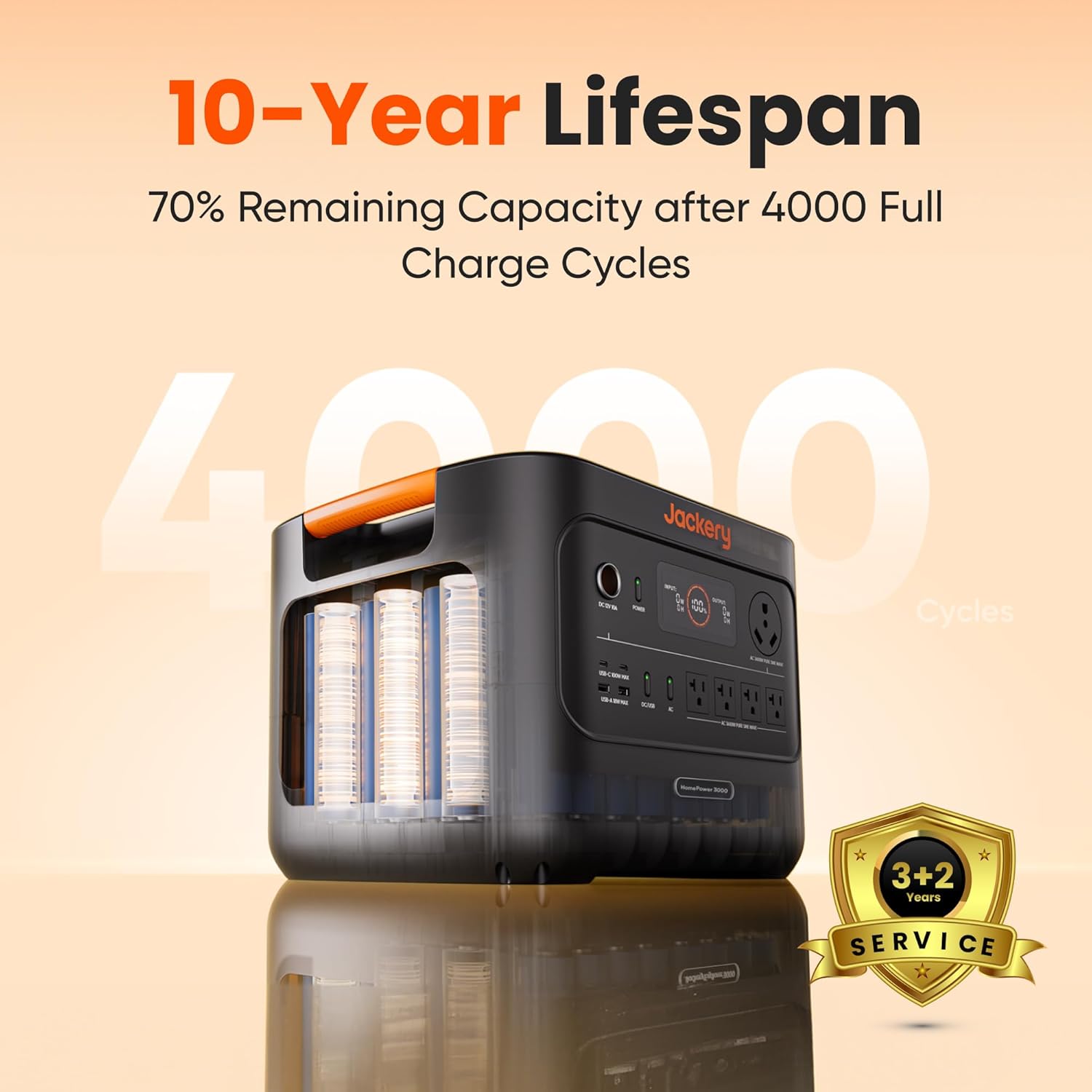
You’ll get LiFePO4 (LFP) cells that are among the most durable on the market for portable stations. With an advertised ~4,000 cycles to 70% capacity, this unit is meant to last several years of regular use—great if you expect frequent discharges during outages or when living off-grid occasionally. ChargeShield 2.0 adds AI-driven control to improve charging speeds and extend battery health over time, which helps preserve that long-term capacity.
Output Performance (What You Can Power)
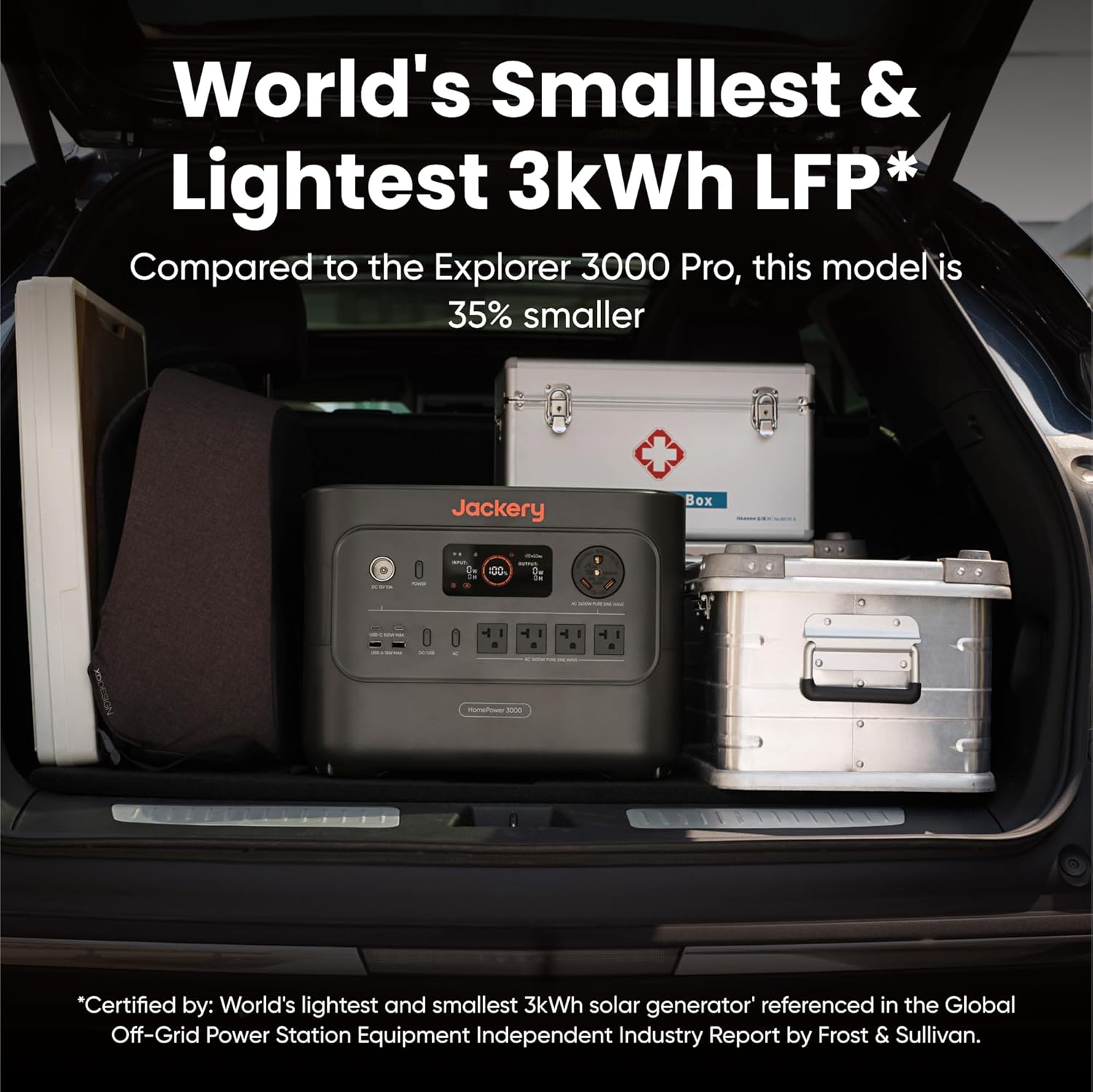
With a continuous 3600W inverter and 7200W surge capacity, you can run many heavy loads that smaller stations can’t handle. You’ll be able to run refrigerators, fans, pumps, multiple lights, routers, and power tools in many cases. The surge capability helps with motor-starting currents from compressors and pumps, which is vital for keeping things like fridge compressors alive when power blips occur.
UPS Functionality and Response Time
The UL-certified UPS switches in ≤20ms, so your critical devices (security systems, medical fridges, routers, or work-from-home rigs) will stay connected without noticeable interruption. You’ll appreciate how this keeps sensitive electronics stable during grid transitions, and the certification gives you confidence in the reliability.
Port Variety and Practical Charging
You’ll find versatile port options that let you charge phones, tablets, laptops, and run appliances simultaneously. The dual 100W PD ports let you fast-charge modern laptops and devices, while AC outlets handle larger draws. The built-in TT-30 RV plug gives you a direct, convenient option for RV camping without needing an external adapter.
Charging Options and Speed
You’ll have several ways to recharge the HomePower 3000, letting you choose the fastest or most convenient method for each situation. Hybrid recharging (AC + DC) can bring the station to full quickly, while solar recharging gives you independence from fuel or grid electricity.
AC and Hybrid Charging
AC-only recharges take about 2.2 hours, and hybrid AC + DC can reduce that to around 1.7 hours. You’ll find these times impressive for a 3kWh-class unit and particularly helpful when outages are short but frequent and you want to top off the battery quickly between events.
Solar Charging
When paired with the included 2 x 200W SolarSaga panels, you can expect to charge to roughly 80% in about 9 hours under good sun conditions. You’ll need to account for actual solar conditions—panel orientation, shading, and weather will affect this—but solar gives you a good, fuel-free way to recover capacity during extended outages or when camping.
Car and Generator Charging
You can recharge using a 12V car charger or a gas generator, so you’re not locked into one charging method. This flexibility is great for road trips or when solar isn’t practical and you need a quick top-off from your vehicle or generator.
Real-World Runtime Examples
You’ll want to know how long common devices run from a 3072Wh battery. Here are practical approximations under typical conditions:
- Refrigerator (moderate-efficiency, cycling): 24–48 hours (depends on compressor efficiency and ambient temp).
- WiFi Router and modem: Multiple days.
- LED lighting for a typical house (low draw): Up to 15 hours or more, depending on the number of fixtures.
- Laptop (charging + use): Many full charges depending on model.
- CPAP (depending on model and mask heater): Several nights (check wattage).
- Small microwave or induction cooktop (short bursts): Possible thanks to surge power but limited by inverter runtime.
Keep in mind that exact runtimes vary with device efficiency, duty cycle, and environmental factors. You’ll want to estimate based on your actual appliance wattages.
Setup, First Use, and Day-to-Day Operation
You’ll find setup straightforward: unbox the HomePower 3000, charge it from AC or solar, and connect your devices. Note that the power station and the solar panels ship separately, so expect separate deliveries. You should register the unit if the manufacturer recommends it, and read the UPS/AC configuration instructions so the automatic switchover behaves the way you want during outages.
Pairing and Mounting the Solar Panels
You’ll align and angle the SolarSaga panels toward the sun, connect them to the power station using the provided cables or adapters, and use the inbuilt input interface. You’ll want to place panels free from shading and at a tilt that suits your latitude for best output. Keep in mind the panels might arrive in a separate package.
Safety Features and Certifications
You’ll get a unit with an UL-certified UPS, which is important for reliability when running critical or sensitive devices. ChargeShield 2.0 helps by optimizing charging curves to prevent overheating and improve battery longevity. Additionally, LiFePO4 chemistry brings thermal stability and lower risk of thermal runaway compared to other chemistries.
Noise and Thermal Management
You’ll notice the HomePower 3000 is mostly quiet during typical operation, though cooling fans will run under heavy loads or while charging rapidly. The integrated design helps manage heat effectively; still, avoid enclosing the unit in tight spaces during high-output or recharging sessions to maintain cooling efficiency.
Portability and Use in RVs
You’ll find the TT-30 RV port especially handy if you spend time in an RV—no extra adapters for many RV setups. The unit’s reduced size and weight make it reasonable to move between home, garage, and vehicle, though at 3kWh capacity it’s not something you’ll carry for long distances on foot. It’s built for convenient transport, not ultra-light backpacking.
Maintenance and Care
You’ll want to store the unit at a partial charge if you won’t use it for extended periods—LiFePO4 handles storage well, but it’s best to keep it around 40–60% for long-term storage. Periodically cycle it according to manufacturer recommendations and keep the software/firmware updated if Jackery provides updates for ChargeShield 2.0. Clean the panels and keep port contacts free of debris.
Pros and Cons
You’ll appreciate many strengths here, but there are trade-offs to consider.
Pros:
- High usable capacity (3072Wh) with long-life LiFePO4 cells.
- Strong continuous and surge output (3600W / 7200W).
- UL-certified UPS with ≤20ms switch time.
- Fast AC/hybrid recharge times.
- Dual 100W PD ports and TT-30 RV port.
- Included 2x SolarSaga 200W panels for solar capability.
- Compact and lighter than comparable models thanks to CTB tech.
- ChargeShield 2.0 for better charging management and battery health.
- Eligible for a 30% Residential Clean Energy federal tax credit (conditions apply).
Cons:
- Panels and power station may ship separately, causing staggered arrival.
- Solar recharge time to 80% is ~9 hours—good for daytime but slow for quick recovery.
- Size and weight, while reduced, still mean it’s not ultra-portable on foot.
- Price point will likely be higher than smaller units; initial cost may be substantial.
- True runtime for large loads depends heavily on device efficiency and duty cycles.
Price and Value Consideration
You’ll weigh upfront cost against long-term reliability and performance. The HomePower 3000 targets users who need a robust 3kWh solution that’s future-proofed by LiFePO4 longevity. If you plan to use it regularly, the extended cycle life and versatile charging options make it a better value over time than cheaper, short-cycle products.
Eligibility for 30% Residential Clean Energy Tax Credit
You’re eligible to claim a residential clean energy credit (30%) for costs associated with qualified solar electric property linked to this system. This can significantly reduce your net cost if you meet program requirements. The federal 30% tax credit may end on Dec 31, 2025, so check current rules and timelines. Contact your utility provider or a tax professional to confirm eligibility and ensure the Jackery solar panels and installation meet the Residential Clean Energy Credit requirements.
Comparisons and Alternatives
If you’re considering other systems, compare capacity, inverter rating, battery chemistry, cycle life, and charge speeds. Some alternatives use NMC cells (lighter upfront but shorter cycle life) or offer different inverter sizing. You’ll want to compare runtime for your key loads and how fast each model can recharge—especially via solar if off-grid operation is important.
Practical Tips for Maximizing Use
- Prioritize critical loads: assign essentials to the HomePower 3000 during outages (fridge, medical devices, comms).
- Use energy-efficient appliances and LED lighting to stretch runtime.
- If you can, charge to full before forecasted storms.
- Place solar panels for maximum sun exposure and avoid shading from trees or buildings.
- Keep the unit firmware updated to benefit from any ChargeShield improvements.
- Store the unit at moderate charge if unused for long periods.
Setup Checklist (Before First Use)
You’ll want a quick checklist to make setup smooth:
- Unbox both the HomePower 3000 and SolarSaga panels (they may ship separately).
- Read the safety and UPS instructions thoroughly.
- Charge the power station fully with AC before first use.
- Inspect panel cables and connectors for damage.
- Choose panel placement for best sun exposure and secure them.
- Connect essential devices and test the UPS switch.
- Register the product and check for firmware updates.
Common Questions You Might Have
Q: Can it run my whole house?
A: You can run many essentials, but running an entire modern house continuously (HVAC, electric oven, multiple large appliances) would exceed the capacity and runtime expectations. Use it to prioritize essentials or pair it with a larger whole-home system if you need full-house backup.
Q: How long will the battery last over years?
A: With LiFePO4 and ChargeShield 2.0, you can expect around 4,000 cycles to 70% capacity, which translates to many years of regular use depending on discharge depth and frequency.
Q: Is installation complicated?
A: Basic use is plug-and-play. For integration with home electrical systems or whole-house UPS setups, consult a licensed electrician.
Final Recommendation
If you want a reliable, high-capacity portable power station that’s practical for home backup, RV use, and solar recharging, the Jackery HomePower 3000 is a compelling choice. You’ll like the fast PD ports, TT-30 RV connector, UL-certified UPS with ≤20ms switchover, and the long battery life from LiFePO4 chemistry. The included SolarSaga panels and eligibility for a 30% residential clean energy tax credit increase its value for people planning to use solar regularly. Make sure to account for separate shipping of panels and power station, and plan realistic runtimes for your specific appliances.
Please note: The HomePower 3000 and solar panels are shipped separately and may arrive in separate packages. Also, the 30% federal tax credit may end on Dec 31, 2025, so check eligibility and program details with your utility provider or a tax professional.
Disclosure: As an Amazon Associate, I earn from qualifying purchases.