
Looking for a compact, travel-friendly solar generator that can keep your essentials running during a day trip or a short outage?
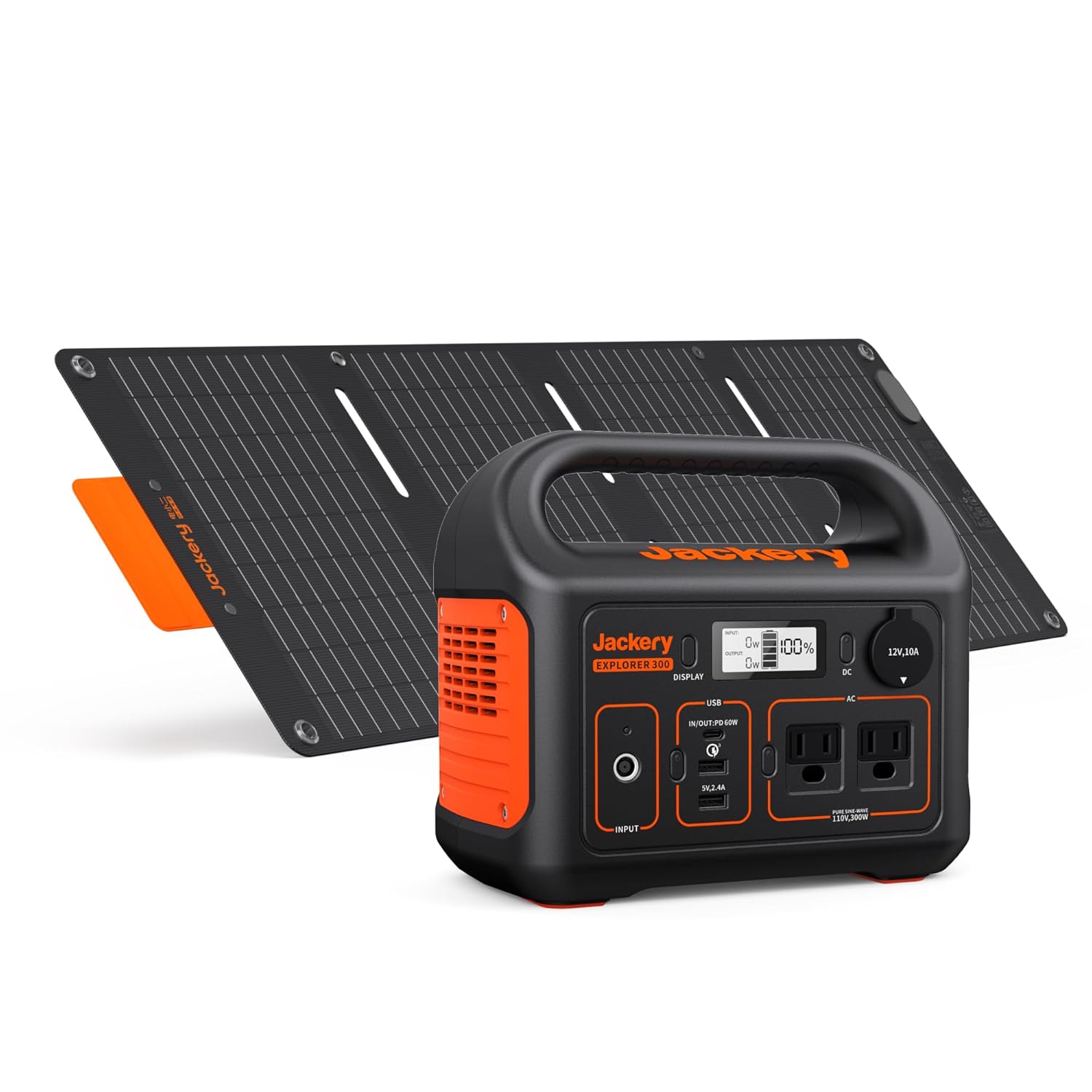

Overview of the Jackery Explorer 300 Solar Generator with 40W Solar Panel, 293Wh Backup Lithium Battery, Book-Sized Foldable Solar Panel
You’ll find that this package pairs the Jackery Explorer 300 portable power station with a SolarSaga 40 W foldable panel, giving you a lightweight off-grid power option. The combo is aimed at campers, vanlifers, photographers, and anyone who needs reliable, portable power without hauling heavy gear.
What this product includes
You’ll get the power station, a compact solar panel, and the accessories needed to hook everything up and start charging right away. Everything in the box is designed to be plug-and-play so you can focus on your trip rather than fussing with cables.
Box contents (in plain terms)
You’ll receive:
- 1 x Jackery Explorer 300 Portable Power Station
- 1 x AC adapter
- 1 x Car charger cable
- 1 x SolarSaga 40 Mini (foldable solar panel)
- 1 x Accessories bag
- 1 x DC8020 to USB-C/USB-A Adapter
- 1 x Multifunctional Solar Charging Cable
- 2 x Carabiners
- 5-Year Long Warranty
You can keep the accessories bag for spare cables and small items, and the carabiners help you attach the solar panel to a backpack or tent.

Key features at a glance
You’ll appreciate the mix of useful ports, modest capacity, and true portability the package offers. The power station is easy to carry, and the solar panel is shaped for travel convenience.
Main specifications
Below is a concise breakdown of the most important specs so you can quickly compare with other options.
| Feature | Specification |
|---|---|
| Battery capacity | 293Wh lithium-ion |
| AC output | 2 x Pure Sine Wave AC outlets, 300W continuous |
| USB-C | 1 x PD 60W (input/output supported) |
| USB-A | 1 x standard USB-A port, 1 x Quick Charge 3.0 port |
| DC port | 1 x DC car port |
| Simultaneous outputs | Up to 6 devices |
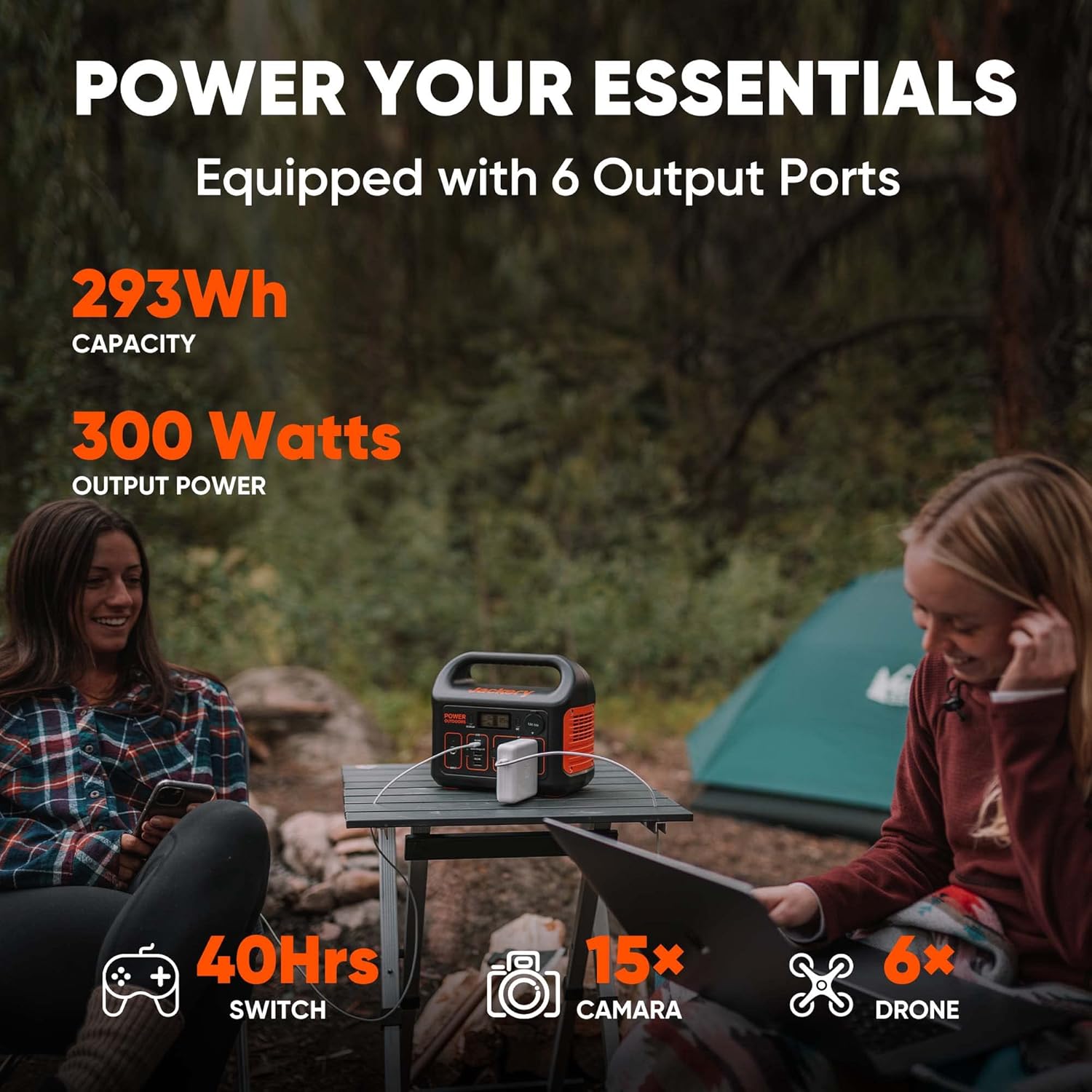
| Weight (power station) | 7.1 lbs |
| Solar panel | SolarSaga 40 W, 4-fold design |
| Solar panel weight | 2.6 lbs |
| Solar conversion efficiency | ~23% |
| Solar panel size folded | 9.9 x 11.8 x 1.2 inches |
| Charging examples | iPhone 13 ~2.5 hours; can charge some Jackery units to 80% in ~4 hours |
| Warranty | 5 years |
You’ll notice the combination targets users who want safe AC power and modern USB-C charging in a compact package.
Battery and Power Output
You’ll get a 293Wh lithium-ion battery that balances energy and portability for short-term needs. The 300W continuous AC output is enough for smaller devices and low-power appliances, but you’ll need to watch the wattage for bigger loads.
What the 293Wh battery means in practice
A 293Wh capacity will comfortably recharge phones, cameras, drones, and small laptops several times. If you plan to power larger devices—like electric kettles, full-size refrigerators, or high-wattage power tools—you’ll find the 300W continuous limit becomes the bottleneck.
You should calculate device wattage to estimate runtime: for example, a phone that uses 10W will get many recharges, while a 60W laptop will shorten runtime significantly.
Pure sine wave AC outlets
You’ll appreciate the purity of the AC output because it’s safe for sensitive electronics. Devices like laptops and some audio gear run cleaner and more reliably on pure sine wave power compared to modified sine wave inverters.
If you plug in sensitive gear such as medical devices or high-end audio equipment, the pure sine wave output reduces compatibility and noise issues.
Ports and Connectivity
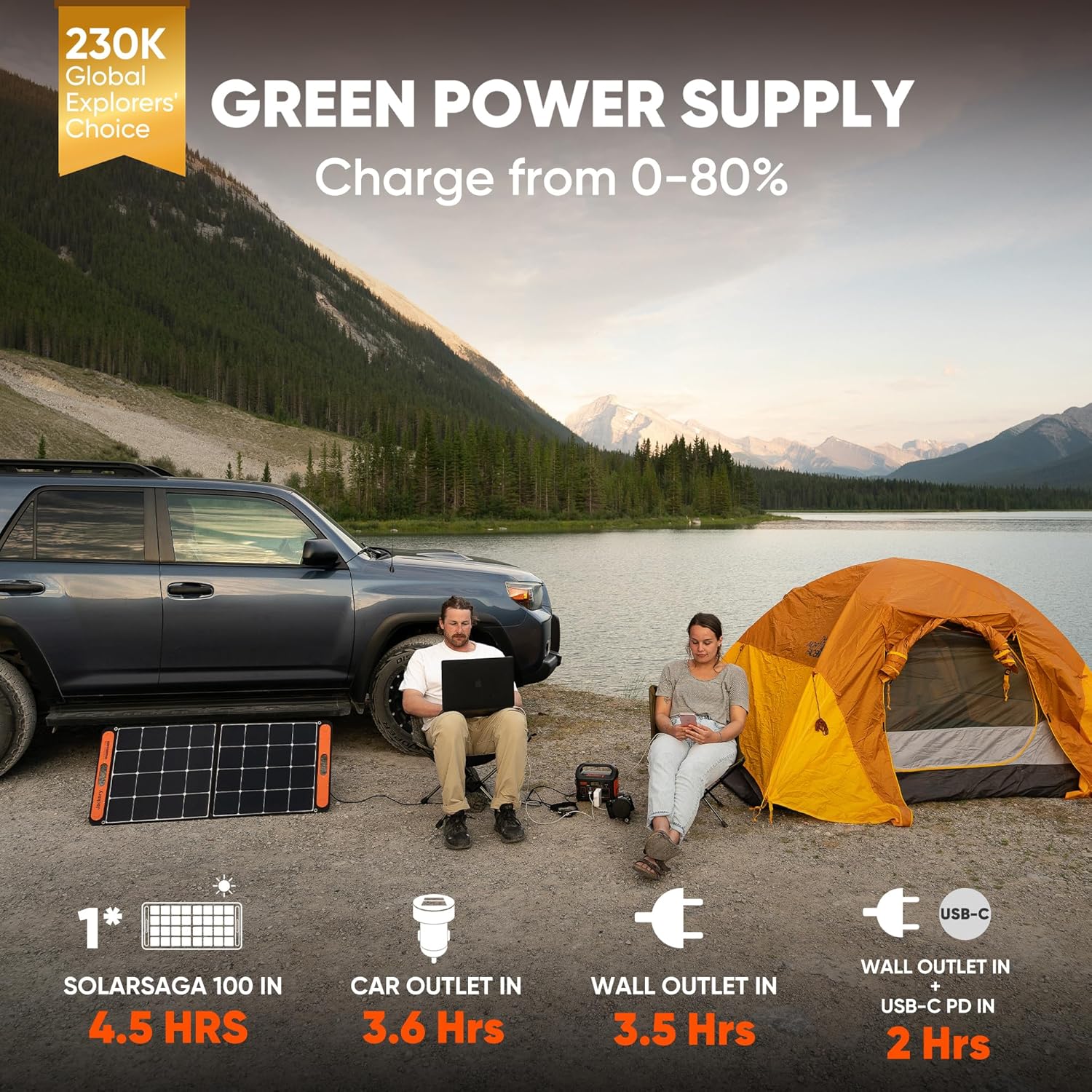
You’ll find a good mix of modern and legacy ports to power up multiple devices at once. The inclusion of a PD 60W USB-C port is particularly handy for fast charging laptops and phones.
Port breakdown
You get:
- 2 x AC outlets (pure sine wave)
- 1 x USB-C PD 60W (input/output)
- 1 x Quick Charge 3.0 USB-A port
- 1 x USB-A port
- 1 x DC car port
You can run a laptop off the USB-C PD port while simultaneously powering smaller devices from the AC outlets and USB-A ports.
Simultaneous charging capabilities
You can power up to six devices simultaneously by using the varied ports. That means your phone, tablet, camera, drone, and laptop could all be on charge at once for short durations.
Be mindful that total output is limited by the 300W continuous AC and the max output of other ports, so heavy simultaneous loads will reduce available runtime.
Solar Panel: SolarSaga 40 W
You’ll like how compact and travel-friendly the SolarSaga 40 W panel is, especially if you’re moving light. The 23% conversion efficiency is strong for its size, and the foldable, book-like design makes it easy to store and carry.
Portability and design
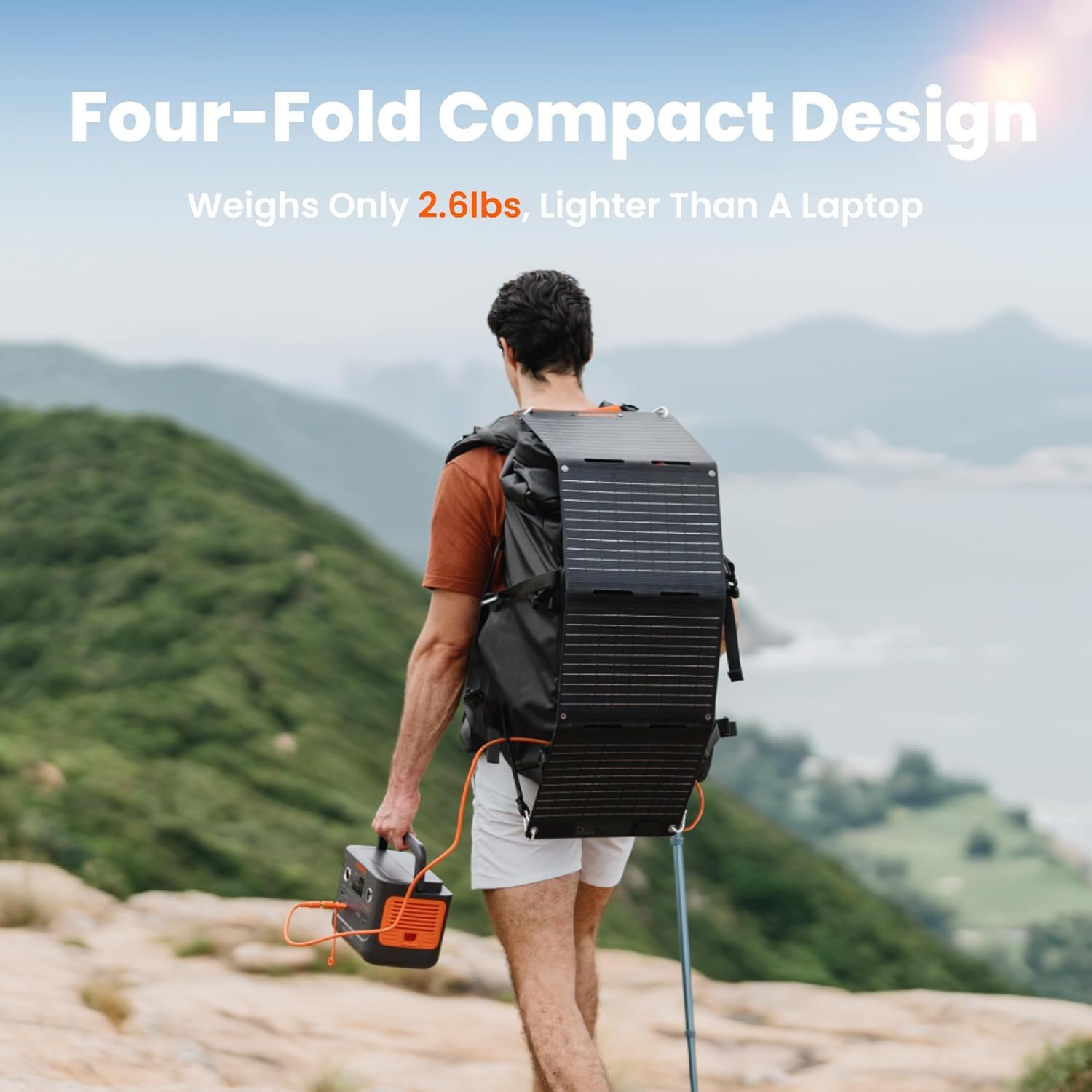
Weighing only 2.6 lbs and measuring 9.9 x 11.8 x 1.2 inches folded, the panel is lighter than many laptops and designed for attachment to backpacks with two carabiners. The four-fold design packs down small without much bulk, letting you bring it anywhere you’d normally carry a small bag.
You can clip it to your pack or set it on a tent, and the included carabiners make that process quick and secure.
Charging performance in sunlight
Under ideal conditions, the panel’s 23% efficiency will deliver solid output and can power small electronics or feed the Explorer 300 for recharging. It can fully charge an iPhone 13 in roughly 2.5 hours, and Jackery reports charging compatible units like the E100 Plus to 80% in about 4 hours under good sun.
Remember that real-world performance will depend on sunlight intensity, panel angle, temperature, and shading.
Charging times and scenarios
You’ll want to know how long the Explorer 300 takes to recharge and how it performs when powering devices. Below are realistic examples based on the 293Wh capacity.
Charging the Explorer 300
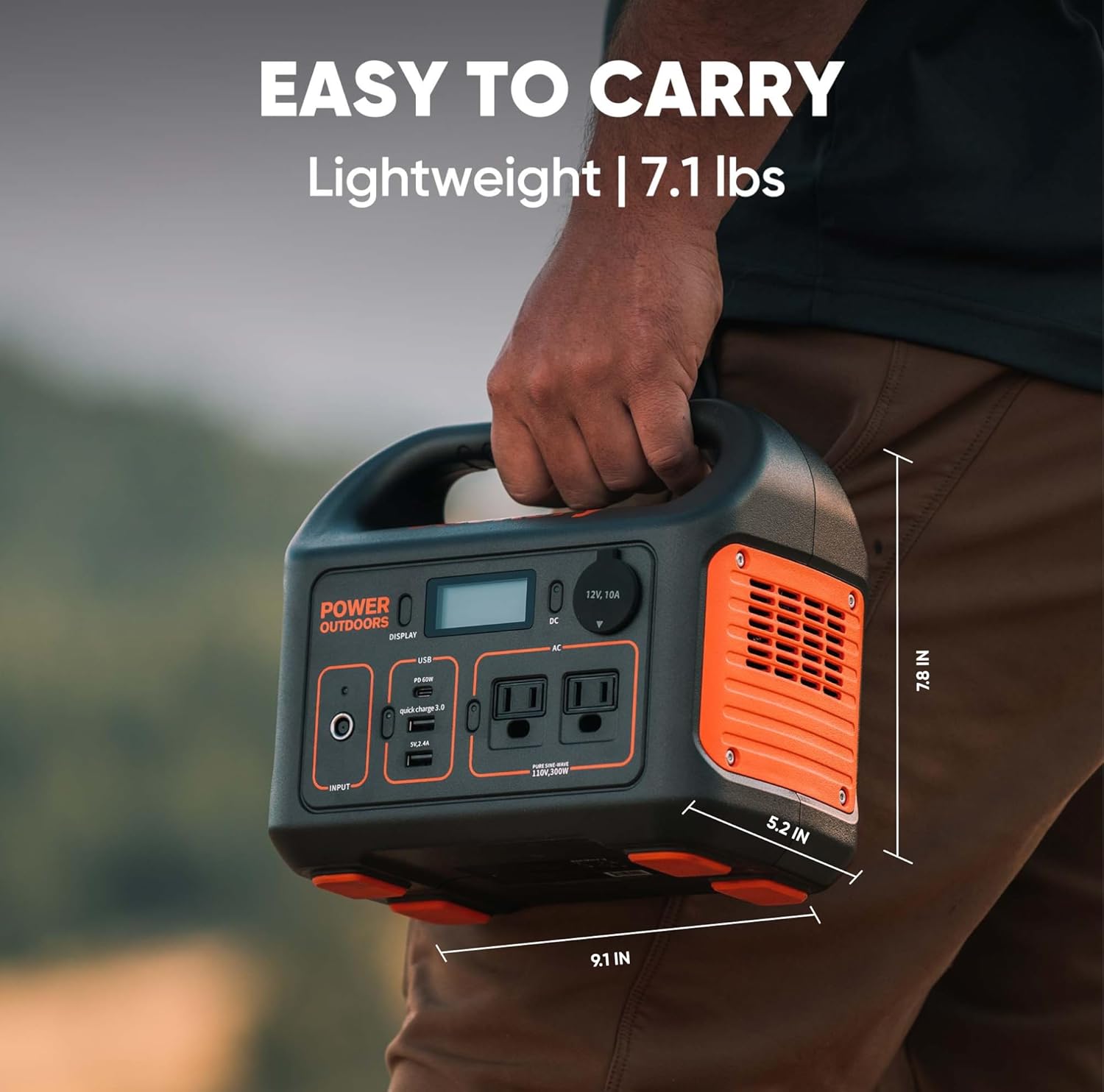
- AC wall charging: Often faster and more consistent; expect a full charge in about 2.5 to 3.5 hours with the included AC adapter under typical conditions.
- Solar charging (SolarSaga 40 W): Expect slow to moderate solar recharging; with peak sun you may see ~40W input, so a full recharge from empty could take 7–9 hours or more of optimal sun. Jackery’s claim about charging compatible generators to 80% in 4 hours likely assumes stronger solar inputs or additional panels.
You should consider using AC charging for faster turnaround or adding another solar panel in series/parallel for higher solar input if you’ll be off-grid for many days.
Device runtime examples
Here are approximate device runtimes using the 293Wh battery. Actual results will vary by device efficiency and usage.
| Device | Typical Power Draw | Estimated Runtime (hrs) |
|---|---|---|
| Smartphone (10W) | 10W | ~25–28 hours (multiple charges) |
| Laptop (60W) | 60W | ~4–5 hours |
| Drone battery (30W avg) | 30W | ~8–9 hours (several recharges depending on pack size) |
| Mini fridge (45W avg) | 45W | ~6 hours (short-term use) |
| Portable fan (10–20W) | 15W | ~18 hours |
You’ll want to check your specific device wattage and plan accordingly. For prolonged power needs, consider multiple recharges or a larger capacity unit.
Portability and build quality
The Explorer 300 weighs 7.1 lbs, which is light enough to carry for day trips or short-term basecamp use. The power station’s handle and compact dimensions make it easy to stow in a car or backpack.
Practical portability
You’ll find it simple to toss in a vehicle for a weekend trip, and the SolarSaga panel’s foldable design means it won’t take up much space. If you travel frequently, this kit offers a good balance between capacity and weight.
You should consider whether you need more runtime; if you do, you’ll inevitably trade off for higher weight and size.
Materials and durability
Jackery designs these units with sturdy plastics and simple controls to keep weight down while maintaining durability. The solar panel includes reinforced stitching and protective casing for the folds.
If you plan to use it in rough conditions, you’ll still want to protect the unit from heavy rain, prolonged dust exposure, and direct impact.
Safety features and reliability
You’ll appreciate Jackery’s safety-first approach with pure sine wave output and built-in protections. The unit includes over-current, over-voltage, short-circuit, and temperature protections.
Safe operation
The pure sine wave inverter ensures your devices run smoothly, and internal management systems monitor and protect the battery. The power station’s short-circuit and overcurrent protections help prevent damage to your gear.
You should always use the included cables and avoid leaving the unit in extreme heat or enclosed car trunks for long periods.
Warranty and support
Jackery backs this product with a 5-year warranty, which gives you substantial peace of mind. Their customer support is generally responsive, and the warranty covers manufacturing defects under normal use.
If you run into issues during your warranty period, you’ll want to contact Jackery support and keep proof of purchase handy.
Real-world use cases
You’ll find this combo useful for a variety of real-world scenarios, from weekend camping to powering field photography equipment. It’s not meant to replace whole-house backup systems but is ideal for portable, short-term needs.
Camping and vanlife
For campsite power, you can run lights, charge phones, and keep a small fridge or fans running for a limited time. The lightweight panel is helpful for daytime charging while you’re out hiking.
If you’re living in a camper van full-time, you’ll likely need a larger capacity system or multiple panels for extended off-grid stays.
Outdoor photography and drone work
You’ll be able to keep cameras, drone batteries, and laptops charged in the field, and the PD 60W port is especially handy for fast laptop recharging. Multiple ports mean you can charge several items in one session.
You should bring spare batteries if you expect heavy drone usage, as drone packs tend to drain small power stations quickly.
Emergency home backup
For short power outages, this unit can keep phones, routers, and lights running. It’s a compact supplemental solution for communication and small-device power during outages.
You need to plan which critical items you’ll prioritize and recognize that long outages will require larger capacity solutions.
Comparisons with similar units
You’ll want to compare capacity, weight, port selection, and price when evaluating alternatives. Here’s how the Explorer 300 stacks up against common alternatives.
What it does well compared to competitors
- Better portability than larger 500–1000Wh units.
- PD 60W USB-C gives a modern fast-charging option many older units lack.
- Foldable 40W solar panel is more travel-friendly than rigid panels.
You’ll find some competitors offer slightly faster charging or higher capacity, but they often weigh more and cost more.
Where it trails
- Battery capacity (293Wh) is limited compared to mid-size power stations around 500Wh.
- 300W AC continuous output restricts use of high-power appliances.
- Solar input from a single 40W panel is modest; full recharges via solar alone will take many hours.
You should match the unit to your actual consumption needs: it’s ideal for light-to-moderate use, not sustained appliance-level loads.
Maintenance, setup, and practical tips
You’ll get the most from this kit with a few practical habits to extend battery life and ensure reliable operation.
Setup tips
- Position the SolarSaga panel perpendicular to the sun and keep it clean for best performance.
- Use the PD 60W port for laptops that support USB-C charging for faster, more efficient charging.
- Avoid charging and discharging to extremes frequently; maintain mid-range charge when storing long-term.
You’ll see more consistent performance when you keep the unit in a cool, dry place and avoid full discharge for prolonged periods.
Storage and long-term care
- Store the power station at about 50–70% state of charge for long-term storage.
- Charge the unit every 3–6 months if it’s in storage to avoid battery degradation.
- Keep the solar panel folded and free of heavy pressure or abrasion.
You should follow these steps if you want the battery to retain capacity over multiple years.
Frequently asked questions (FAQs)
You’ll probably have a few specific questions about real-world use; here are answers to the most common ones.
How long will the Explorer 300 power my laptop?
It depends on your laptop’s draw. Many modern laptops charge around 45–65W; with a 293Wh battery, you can expect roughly 4–5 hours at 60W. Always check your laptop’s power consumption to refine the estimate.
You can extend runtime by using power-saving modes or charging during downtime.
Can I chain solar panels for faster charging?
Yes; adding more solar panels or using a higher-watt solar array will increase solar input and reduce recharge time. Make sure added panels and adapters are compatible with Jackery’s input specifications.
You should consult Jackery’s recommendations about maximum input and recommended panel configurations.
Is the unit safe for CPAP or medical devices?
The pure sine wave output is better for sensitive electronics, but you should confirm the device’s power draw and any manufacturer restrictions. Some medical devices have specific power requirements or need continuous power that this unit may not sustain for extended periods.
If you need a long-term medical backup, you’ll likely require a higher-capacity system.
Can the PD 60W USB-C both input and output?
Yes, the PD 60W port supports both input (to recharge the station) and output (to charge devices), giving you flexibility in charging options.
You’ll appreciate this when you need faster charging using a USB-C PD wall adapter or when using a laptop charger to top up the station.
Pros and cons
You’ll find this balanced summary helps you quickly decide if this kit suits your needs.
Pros
- Lightweight and highly portable power station and panel.
- Pure sine wave AC for safe device operation.
- PD 60W USB-C supports fast charging and can act as input for recharging.
- Foldable 40W panel with good conversion efficiency and backpack-friendly design.
- Up to 6 devices can be charged simultaneously.
- 5-year warranty for peace of mind.
You’ll appreciate the convenience-oriented design and modern port selection.
Cons
- 293Wh capacity limits extended off-grid use.
- 300W AC output restricts high-watt appliances.
- Single 40W panel provides slow solar recharging in less-than-ideal conditions.
- For heavy drone or power-tool use, you’ll need additional capacity or panels.
You should weigh these cons against your intended usage; for light, portable power the pros often outweigh the cons.
Final verdict
You’ll find the Jackery Explorer 300 Solar Generator with 40W Solar Panel, 293Wh Backup Lithium Battery, Book-Sized Foldable Solar Panel is a compelling choice for lightweight, portable power. It’s ideal for day trips, photography outings, short camping trips, and emergency phone/laptop backup where mobility matters most.
If your priority is maximum runtime for appliance-level loads or extended off-grid living, you should look at larger-capacity systems or plan to add more panels and charging options. But if you want a travel-friendly, easy-to-use power combo with modern charging ports and a trusted brand warranty, this kit will likely match your needs well.
Closing tips before you commit
You’ll want to list the devices you need to power and estimate total watt-hours required per day before buying. Consider whether you’ll mostly recharge via AC or rely on solar, and whether a single 40W panel will be enough for your routine.
If you plan multi-day off-grid trips, add extra panels or consider a higher-capacity Jackery model. Otherwise, this combination gives you versatile, safe power in a friendly, portable package.
Disclosure: As an Amazon Associate, I earn from qualifying purchases.