
Are you looking for a heavy-duty, expandable power station that can actually handle whole-home needs and serious off-grid use?

Quick take on the IEE 7680Wh Power Station with 5000W Output, 120V/240V Dual Voltage, Expandable Home Backup with Transfer Switch Ready & App Control
You get a high-capacity, modular LiFePO4-based power system designed for fast charging, bi-directional power flow, and both 120V and 240V output. It’s built to act as a reliable home backup during outages, while also being flexible enough for off-grid living and heavy outdoor use. There are a few spec inconsistencies on product pages you should watch for, but the core strengths—long battery life cycles, high continuous output, fast switchover, and app control—are clear.
What this product promises and what that means for you
The product title claims 7680Wh capacity, but product text mentions 5120Wh and then lists a bundle with multiple batteries. In practice, the system is modular: the inverter and multiple battery modules are intended to work together, and the full kit you buy may contain the larger 7680Wh capacity. Expect 5000W continuous output (9000W surge), 120V/240V dual-voltage capability, and an EPS fast switchover of 5–8 ms. These features mean you can power many appliances simultaneously and keep sensitive devices running without interruption.
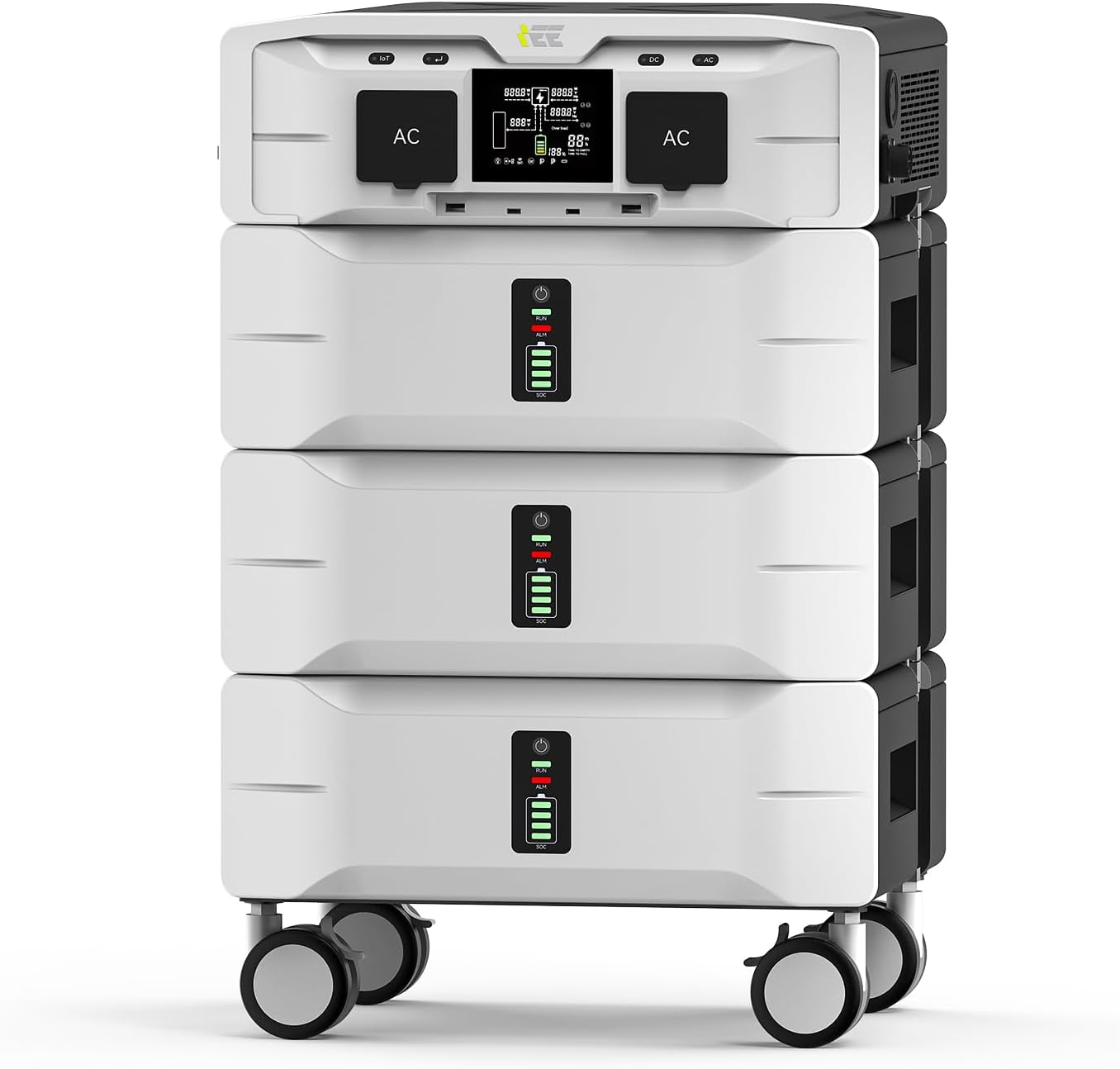
IEE 7680Wh Power Station with 5000W Output, 120V/240V Dual Voltage, Expandable Home Backup with Transfer Switch Ready & App Control
Key specifications and a clear breakdown
Below is a table to organize the main specs you’ll see across product listings and what they mean to you.
| Specification | Stated Value(s) | What it means for you |
|---|---|---|
| Product name capacity | 7680Wh (title) | Likely the full kit capacity. Good for extended outages or heavy loads. |
| Alternate capacity listed | 5120Wh (product text) | May reflect a single-battery configuration or a different kit option—verify before purchase. |
| Continuous AC output | 5000W | Can run multiple heavy appliances at once (fridge(s), well pump, many power tools). |
| Surge output | 9000W | Handles startup surges from motors (fridges, pumps, some AC units). |
| Voltage output | 120V / 240V dual voltage | You can power standard household circuits and certain 240V appliances. |
| Inverter type | Bi-directional DC/AC inverter (3500W in some text) | Supports charging from AC and discharging to AC; specs may vary by internal module configuration. |
| Fast charging | 3500W AC input + 1000W solar input | Very fast recharge if you have adequate AC power and solar panels. |
| Charge time claim | 0–100% in 1h / 1.5h (conflicting) | Real charge time depends on kit capacity and combined input wattage—expect ~1–2 hours for typical configs with full inputs. |
| Battery chemistry | LiFePO4 | Long life, high cycle durability, better thermal stability. |
| Cycle life | Up to 4000 cycles / 25 years (service life claim) | Excellent longevity compared with typical lithium-ion. |
| Fast switchover | 5–8 ms | Minimizes interruption to sensitive electronics during utility outages. |
| Outlets | 16 outputs (combination of AC, DC, USB) | Plenty of ports to run multiple devices at once. |
| App control | Yes (IEE app) | Remote monitoring and control from your phone. |
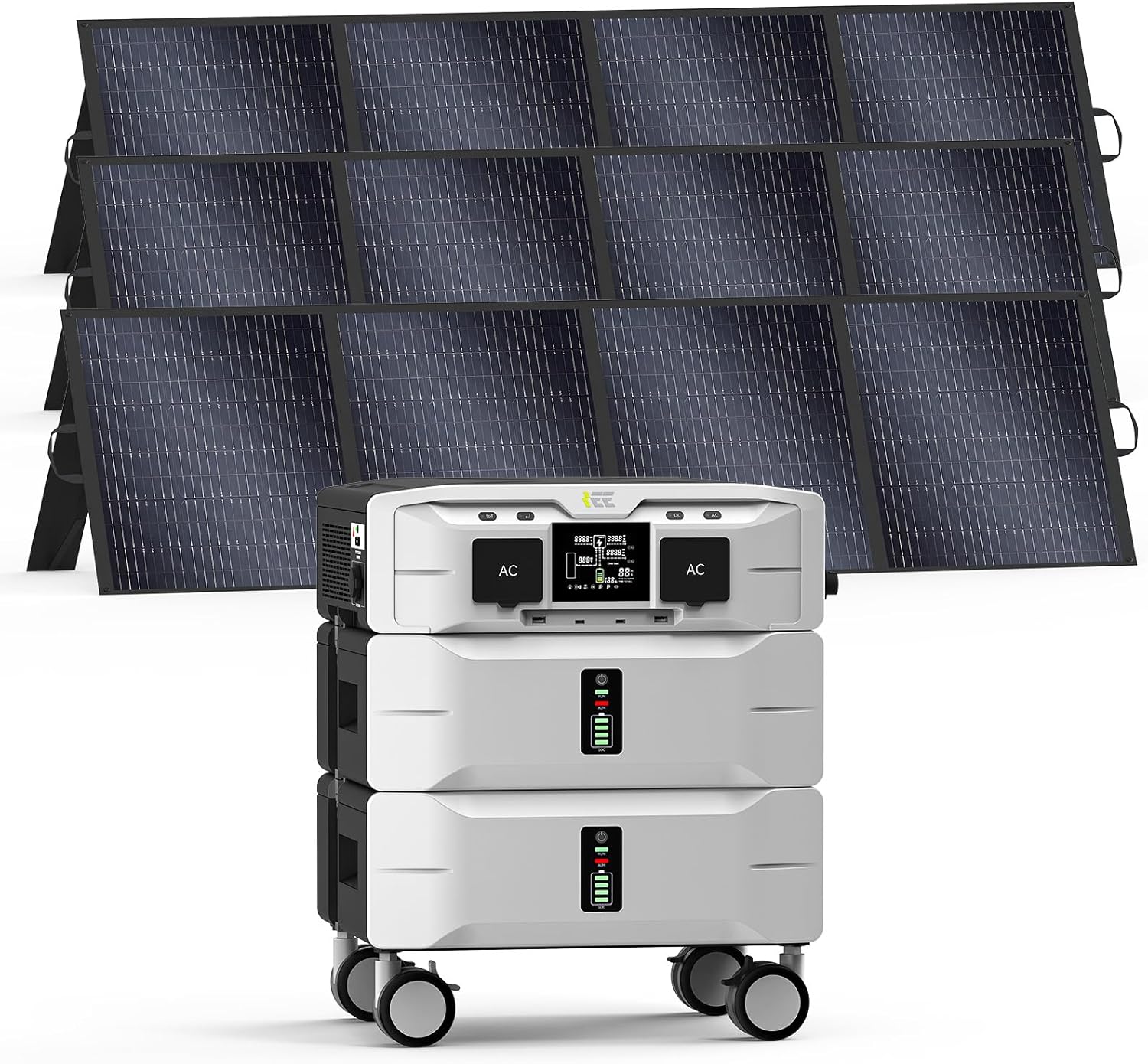
| Included items | Inverter ×1, Battery ×3, car & solar & AC cables, manuals | Usually a complete kit, but confirm exact battery count and accessories with the seller. |
| Warranty | 5 years | Good manufacturer support window for a product of this class. |
Capacity details and clarifying the numbers
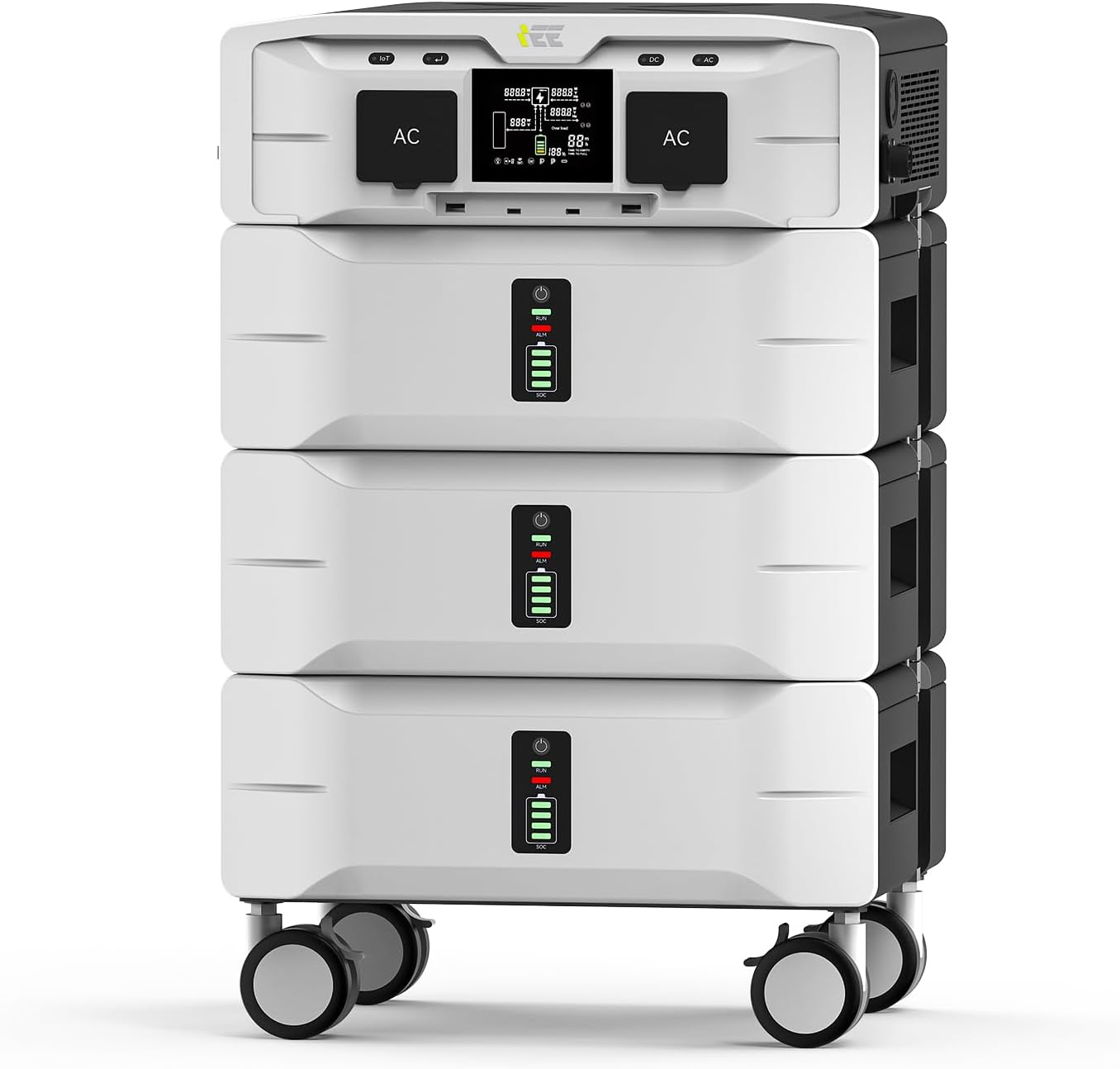
You should double-check the exact kit sold. The product title lists 7680Wh, but the description references 5120Wh. The packing list that mentions “SP5000 Battery (×3)” implies multiple modules are included; if each battery module is roughly 2560Wh, three modules would add to close to 7680Wh. Alternatively, a single configuration may present 5120Wh when fewer modules are shipped. Before finalizing a purchase, confirm whether you’re getting a single-battery configuration or a multi-battery kit.
Why the capacity confusion matters to you
Battery capacity determines how long you can run loads. For example:
- If you want to run a 1000W load continuously, 5120Wh gives about 5 hours (minus inverter losses), while 7680Wh gives about 7–7.5 hours.
- For whole-home emergency support, higher total capacity reduces how actively you need to manage loads.
Performance and real-world power delivery
You can expect strong continuous output and high surge capability. 5000W continuous is substantial—enough for most household circuits and many heavy appliances. The 9000W surge is especially useful for motor-driven devices which need high startup power.
Real appliance examples and runtime estimates
These are approximate and assume ideal conditions and full battery capacity:
- Refrigerator (700W avg): 5120Wh ≈ 6–7 hours; 7680Wh ≈ 9–10 hours.
- Microwave (1200–1500W while running): can run for short durations repeatedly; overall runtime depends on duty cycle.
- Window air conditioner (1500–2000W): a single unit could run several hours on 5120Wh, longer on 7680Wh.
- Sump pump or well pump (startup surge high): surge rating helps start pumps; continuous draw varies—this unit should handle many common pumps.
- Electric tools: you can run multiple tools or one heavy tool simultaneously without immediate overload.
Inverter behavior and 120V/240V benefit
Because it supports both 120V and 240V, you can power typical household circuits plus certain 240V loads (e.g., some well pumps, electric ranges, EV chargers in limited scenarios). The bi-directional inverter also means the system can act as both an inverter and a charger—useful for hybrid setups and when integrating solar.
Charging performance and what to expect
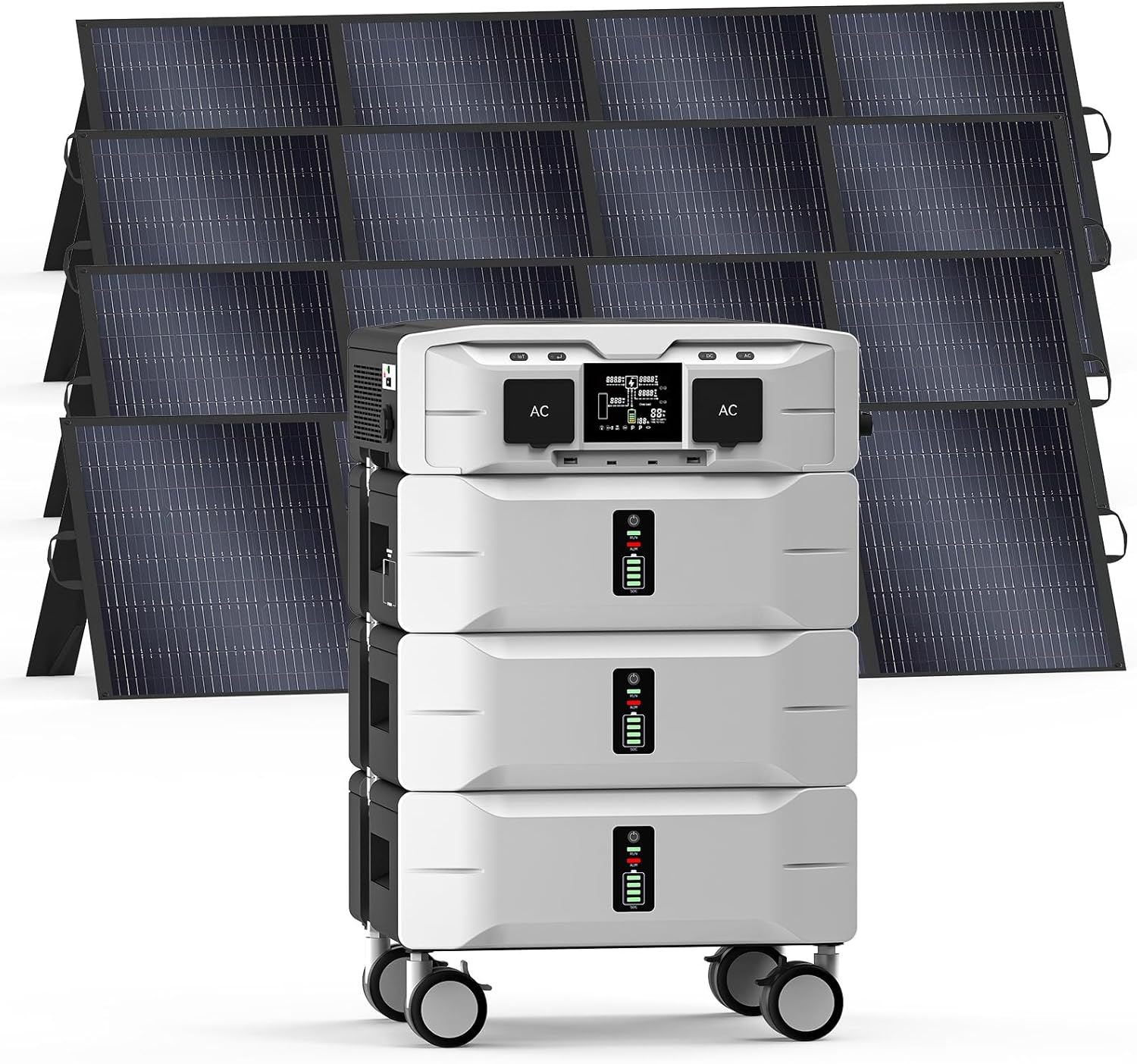
Claims include up to 3500W AC input charging plus 1000W solar input. That combined 4500W input produces very fast recharge times relative to many competitors. However, charge time depends directly on the actual total battery capacity and environmental conditions.
Typical recharge scenarios
- If your kit is 5120Wh and you feed in 3500W AC only, theoretical charge time is about 1.5 hours (plus small losses), matching one of the product claims.
- If the kit is 7680Wh, the same 3500W AC input will take closer to 2–2.5 hours to fully charge.
- Adding 1000W of solar reduces the time proportionally when conditions allow (sunlight, panel orientation, and MPPT efficiency matter).
Solar considerations
You’ll want to size your solar array to match the charging input limits and to align with your location’s average sun hours. For full 1000W solar input, you’ll need panels that consistently deliver that output during peak sun hours. The system likely uses an MPPT controller—confirm exact solar input characteristics for best results.
Battery chemistry and longevity (LiFePO4)
LiFePO4 chemistry is a major advantage. It offers:
- High cycle life (you’ll see claims up to 4000 cycles).
- Better thermal and chemical stability.
- Lower risk of thermal runaway vs. some other lithium chemistries.
What that means for you long-term
With LiFePO4, you’re looking at a product that should maintain usable capacity for many years. If the manufacturer’s claim about up to 25 years holds under typical lower-depth-of-discharge cycling, this is a great long-term investment for home backup.
Safety features and protections
The product is backed by an advanced eight-layer BMS (battery management system) that includes:
- Overcharge protection
- Over-discharge protection
- Over-voltage protection
- Over-current protection
- Short-circuit protection
- Temperature monitoring
This set of safety measures is important when you plan to run critical loads or use the system in different weather conditions.
App control: monitoring and remote management
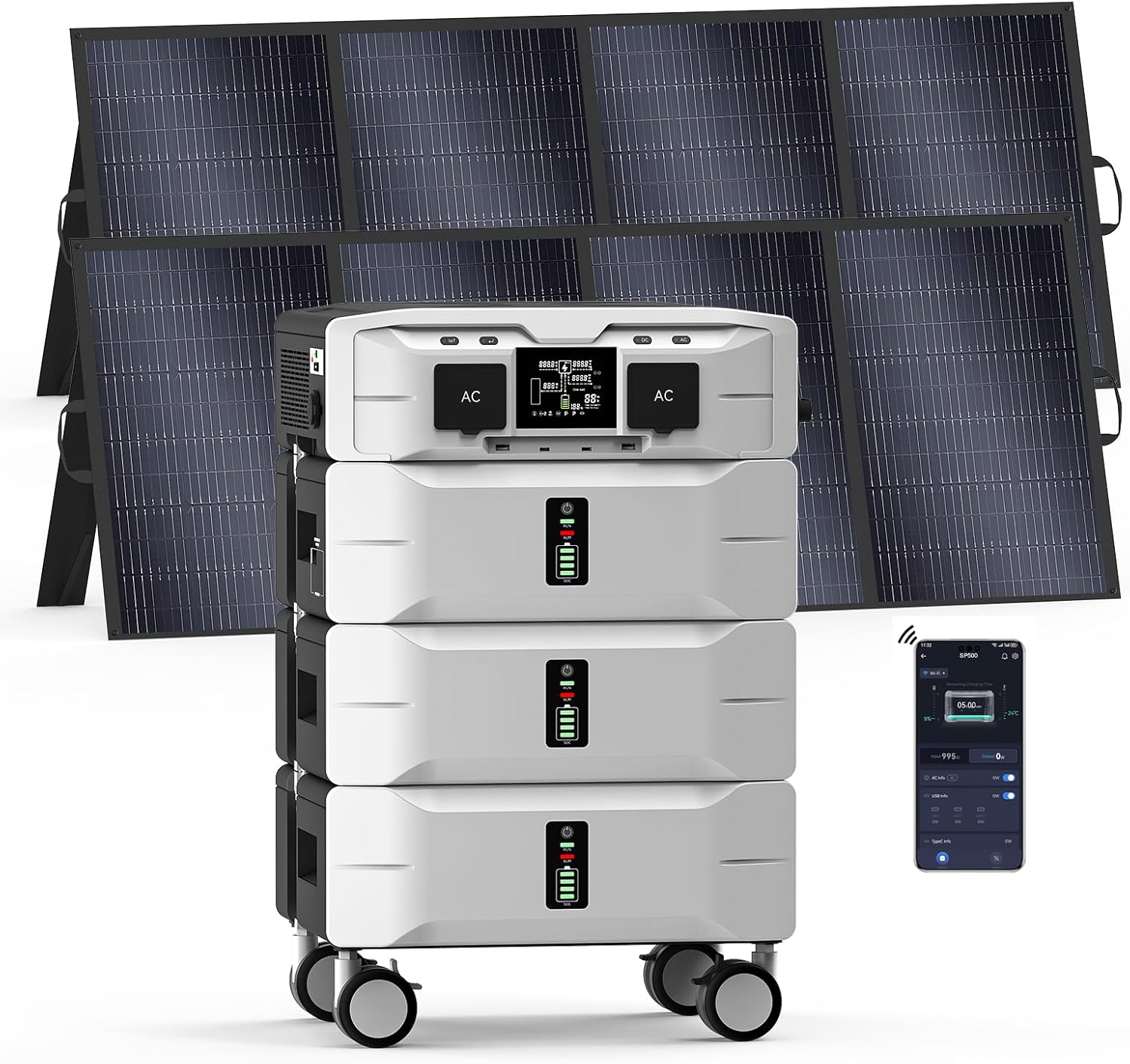
You’ll be able to monitor power usage, battery state-of-charge, input/output statistics, and likely initiate some control commands from the IEE app. App control is convenient for:
- Remote monitoring during outages.
- Scheduling charging or discharge preferences.
- Diagnostics and firmware updates (if supported).
What to test right away
After setup, pair the app and confirm you can read:
- Real-time wattage in/out
- State-of-charge
- Error or warning alerts
- History logs (if available) so you can understand consumption patterns
Transfer switch readiness and home integration
This system is transfer switch ready, which means it’s designed to integrate with a transfer switch for semi-automatic or automatic connection to home circuits.
How you would use the transfer switch
- Install a transfer switch at your breaker panel to select which circuits you want backed up (refrigerator, freezer, furnace blower, garage door, selected outlets).
- During an outage, the transfer switch isolates the circuits from the grid and connects them to the power station.
- The fast 5–8 ms switchover reduces interruption to devices like routers, security systems, and some electronics.
Note: For safe and code-compliant installation, always use a qualified electrician and confirm the transfer switch type and wiring meets local codes.
Expandability and modular use
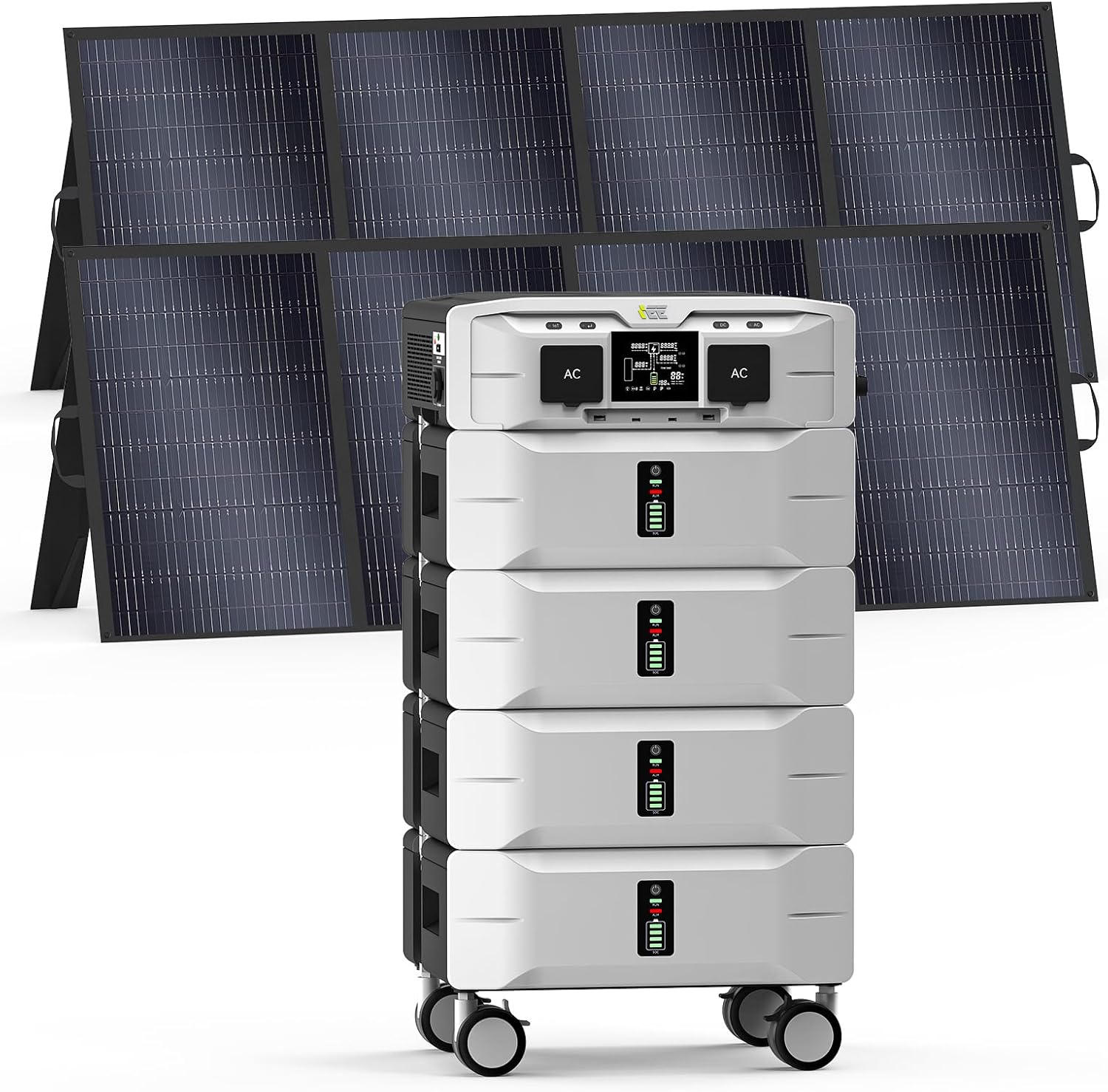
The “expandable home backup” designation indicates the system supports adding more battery modules for increased capacity. That’s useful because:
- You can start with a smaller outlay and add capacity as needs grow.
- You can prioritize batteries for long-term outages vs. daily off-grid use.
- Modular expansion gives future flexibility if your power needs increase.
Practical tips for expanding
- Make sure modules are same model and firmware for best compatibility.
- Keep wiring distances short and neat to minimize voltage drop and complexity.
- Follow manufacturer guidance for adding modules to protect warranty.
Physical setup, placement, and ventilation
This is a high-capacity system—so it needs a stable, dry, and ventilated location. Keep these points in mind:
- Place on a firm, level surface away from direct sunlight and moisture.
- Ensure adequate airflow around the inverter and battery modules to help with temperature control.
- Keep it in a location accessible for maintenance and for connecting AC or solar inputs.
Included items and what you may need to buy separately
Included typically:
- SP5000 Inverter ×1
- SP5000 Battery ×3 (confirm with seller)
- Car charging cable ×1
- Solar charging cable ×1
- 120V AC charging cable ×1
- 240V AC charging cable ×1
- User manual ×1
You may need to buy:
- Additional solar panels and appropriate racks/mounts
- Transfer switch and professional installation
- Extra battery modules if you want more capacity than the base kit
- Longer cables or conduit for remote mounting or panel connection
Pros and cons
You’ll want to weigh these practical strengths and limitations.
Pros:
- High continuous and surge power ratings suitable for heavy loads.
- LiFePO4 chemistry for long cycle life and thermal stability.
- Fast charging capability with combined AC + solar inputs.
- Transfer-switch ready for home backup and 120V/240V dual-voltage flexibility.
- Modular expandability for future capacity increases.
- App control for monitoring and remote management.
- Long manufacturer warranty (5 years).
Cons:
- Product descriptions show inconsistent capacity numbers—verify the exact kit before purchase.
- Fast recharge claims depend heavily on having full AC input and/or strong solar input; real-world conditions may yield slower times.
- Depending on your local codes, you’ll likely need a qualified electrician for transfer switch integration.
- Size and weight could be significant; not as portable as smaller power stations.
Who should consider this unit?
This system is ideal if you:
- Want an expandable home backup that can run several major appliances.
- Need a unit that supports 240V appliances or heavier loads.
- Value long battery life and low long-term replacement costs (LiFePO4).
- Want a fast-charging system that can be topped up quickly via AC and solar.
- Need transfer-switch readiness for semi-automatic or automatic home integration.
You might want something smaller if you only need to charge phones/laptops, run a few small appliances, or prioritize portability over raw capacity.
Installation and first-use checklist
- Confirm exact kit capacity and battery count with the seller.
- Position the system on a stable, ventilated surface away from children and pets.
- Verify the included cables and purchase any additional connectors or extension cables you need.
- If integrating with a transfer switch, hire a licensed electrician to handle panel wiring and code compliance.
- Charge the system fully before first use to condition the battery and confirm operation.
- Pair the system with the IEE app and confirm telemetry and alerts are working.
Maintenance and long-term care
- Keep the unit clean and dust-free; wipe with a dry cloth and avoid liquids.
- Avoid extreme temperatures; store in a cool, dry place if possible.
- Cycle the battery only as necessary and avoid deep discharge when possible to maximize life (though LiFePO4 tolerates deeper cycles better).
- Update firmware via the app if updates are available and recommended by the manufacturer.
- Test the transfer switch and simulated outages periodically so you know how your loads behave.
Troubleshooting common issues
- If the app won’t connect: confirm Bluetooth/Wi-Fi permissions, ensure the station and phone are in range, and check for firmware updates.
- If the system won’t take full solar input: check panel wiring, connections, panel orientation, MPPT settings, and shading issues.
- If surge loads trip breakers: confirm wiring gauge, breaker sizing, and that the inverter’s output mode matches your devices.
Safety and regulatory notes
- Always follow local electrical codes when integrating with home systems.
- Never backfeed the grid—use a transfer switch to safely isolate from the utility when running the system.
- If you’re unsure, work with a licensed electrician to ensure safe and compliant installation.
Comparisons: where this product stands
Compared with smaller portable power stations, this system:
- Offers far greater continuous output and surge capabilities.
- Provides more expansion options via additional battery modules.
- Is more suited to semi-permanent home backup than weekend camping (though it can do both).
Compared with full-size generators:
- It’s quieter and cleaner (no fuel or emissions).
- It’s limited by battery capacity unless recharged via AC or solar, whereas fuel generators can run long as long as you have fuel.
Final verdict and recommendation
If you need a robust, expandable, long-lasting backup system that can run heavy loads and integrate with your home via a transfer switch, this product is a strong candidate—especially thanks to LiFePO4 cells, substantial continuous and surge power, fast-charging capability, and app control. Before buying, you should confirm the exact battery configuration and total capacity (5120Wh vs. 7680Wh discrepancy) from the seller so you know what runtime to expect. Plan for professional installation if you intend to use the transfer switch capability for home circuits.
Frequently asked questions (FAQ)
Q: Which capacity should I expect to receive—5120Wh or 7680Wh? A: Confirm the kit contents with the seller. The title claims 7680Wh, but the product description references 5120Wh. The packing list suggests multiple battery modules, so verify exact battery count before purchase.
Q: Can this unit power my whole house? A: It can power many essential circuits, but powering an entire house continuously depends on your total load. Use a transfer switch and prioritize critical circuits (fridge, sump pump, lights, communications). For entire-home coverage for extended periods, you may need multiple battery modules or auxiliary systems.
Q: Can I charge this using solar only? A: Yes—solar input up to 1000W is supported. Full recharge will depend on solar panel output and sun hours. Combining AC and solar input produces the fastest recharge.
Q: Is the 5–8 ms switchover fast enough for sensitive electronics? A: Yes. 5–8 ms is typically fast enough to keep routers, modems, and most electronics running without interruption. Some extremely sensitive devices (certain industrial controllers) may require zero-transfer UPS setups.
Q: Do I need a special transfer switch? A: Use a transfer switch that matches your panel and intended circuits. A licensed electrician can recommend and install the correct type for your setup.
Q: How many years will the battery last? A: The LiFePO4 chemistry and manufacturer claim up to 4000 cycles and a potential service life up to 25 years in optimal conditions. Real-world lifespan depends on depth of discharge, temperature, and usage patterns.
If you want, I can draft a short checklist you can use when comparing seller listings to confirm capacity, battery quantity, and included accessories before you buy.
Disclosure: As an Amazon Associate, I earn from qualifying purchases.