
?Thinking about a powerful, flexible backup and portable power solution for your home, RV, or outdoor life?

Quick take
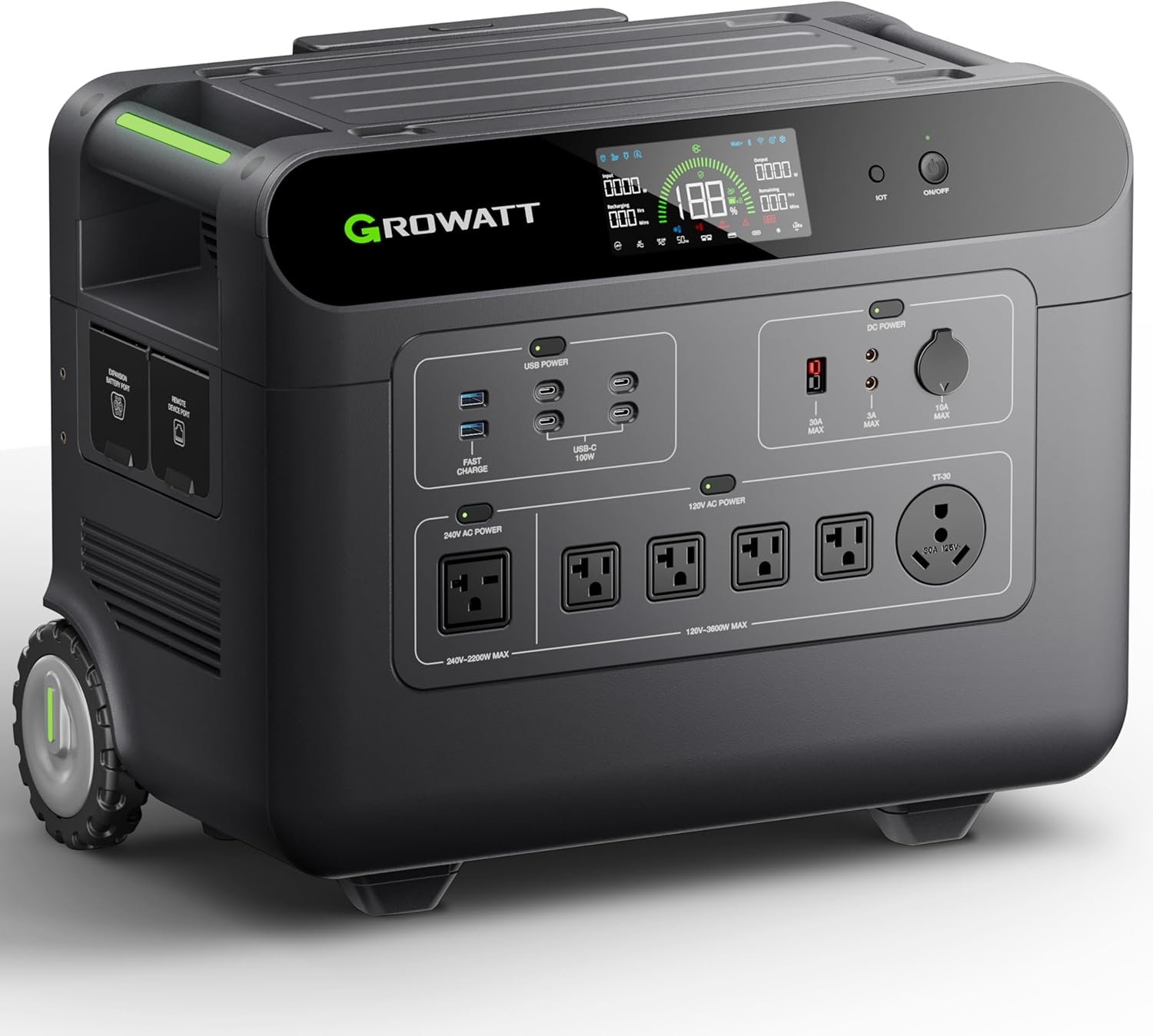
You’re looking at a heavy-duty portable power station that aims to cover everyday essentials and larger loads while giving you lots of charging flexibility. The GROWATT Portable Power Station, HELIOS 3600W Electric Solar Generator,3686Wh LiFePO4 Battery is built to be scalable, durable, and suitable for everything from emergency whole-house backup to off-grid camping.
What the HELIOS 3600 is
You get a high-capacity LiFePO4 battery pack combined with a robust inverter and a generous set of outputs and inputs. It’s designed as a plug-and-play unit you can use immediately, then expand into a split-phase or multi-unit system to power much larger loads or your entire home.
Core components and features
The core elements you’ll interact with are the 3686Wh LiFePO4 battery, a 3600W continuous AC inverter (4500W with Watt+), multiple AC and DC ports, Anderson connectors, and a mobile app for monitoring and control. The unit also supports fast charging and multiple input methods so you can adapt it to the energy sources you already have.
Key specifications at a glance
Here’s a compact breakdown that helps you see the main specs quickly. This table will make it easier to compare to other units or decide if it fits your planned use.
| Specification | Detail |
|---|---|
| Battery type | LiFePO4 (LFP), EV-grade cells |
| Usable capacity | 3684.6–3686 Wh (advertised 3686Wh) |
| Continuous AC output | 3600W |
| Peak/surge output | 4500W with Watt+ |
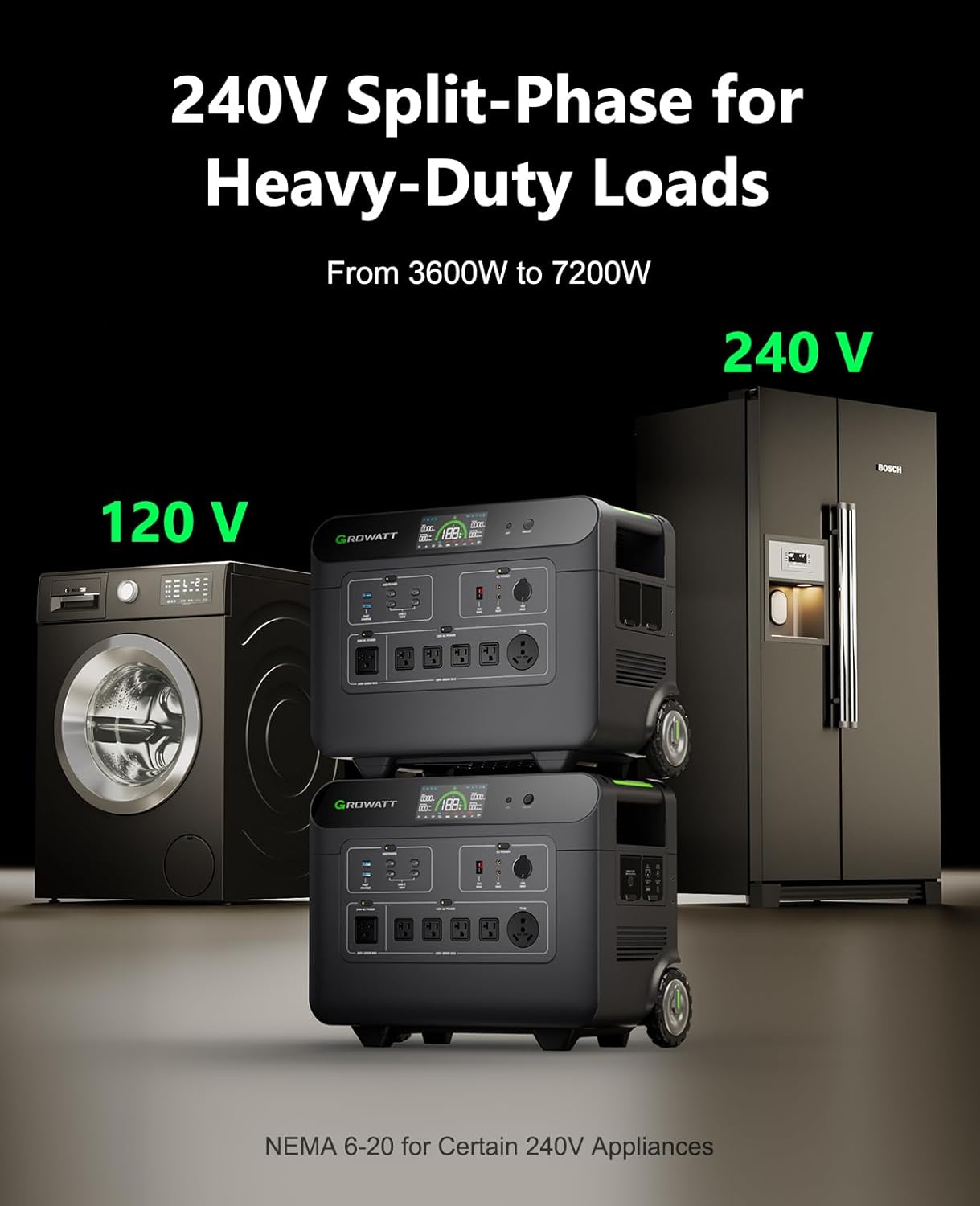
| Expandability | Up to 2 units + split-phase connector for 240V; up to 7200W/36kWh |
| UPS transfer time | <15 ms< />d> |
| Charging methods | AC wall, solar, car, alternator, EV charger, other generators, combos (6+ methods) |
| Fastest charge time | ~1.5 hrs (3600W combined input) |
| Solar charge time | ~2.8 hrs at 2000W |
| Wall charge time | ~3 hrs at 120V |
| Cold start | Down to -22°F |
| Ports | 16 output ports incl. AC, USB-A, USB-C, Anderson, NEMA TT-30 |
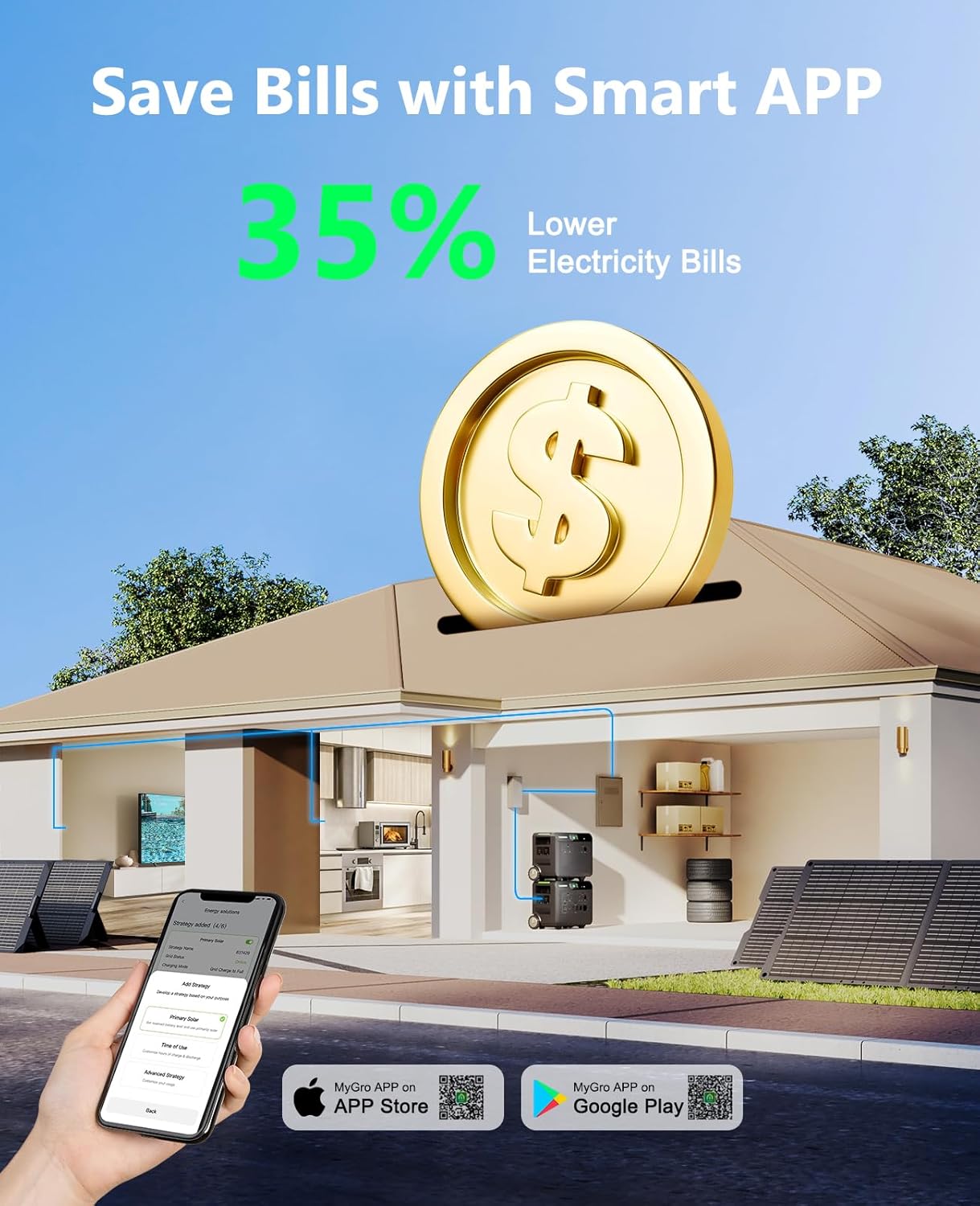
| App control | Smart power strategy, monitoring |
| Warranty & lifespan | EV-grade LFP with decade-long lifespan (manufacturer support) |
| Incentives | Eligible for Residential Clean Energy (30% tax credit) — check eligibility |
You’ll find these figures useful when planning capacity for long outages or sizing panels and chargers for fast recharge cycles.

Power and performance
You’ll be able to run most of your daily appliances with confidence. The 3600W continuous output supports about 99% of typical household essentials — refrigerators, sump pumps, some HVAC setups (depending on size), power tools, and many kitchen appliances. With Watt+ boosting to 4500W, you’ll have the headroom for short peak loads like motor startups.
Realistic runtime expectations
Runtime depends on appliance wattage and battery use. For example, a small fridge (100–200W) could run for many hours, while a microwave (700–1200W) will be a short-use device. You should plan using the battery capacity (≈3686Wh) and account for inverter efficiency and depth-of-discharge strategies to preserve battery life. If you expand with an extra HELIOS battery, runtime multiplies significantly.
UPS and reliability for sensitive gear
Because the HELIOS 3600 offers under-15ms transfer time, you can protect sensitive electronics and some medical equipment from power interruptions. You’ll see near-instant switching, which is enough for many appliances and electronics that can’t tolerate long power gaps.
Battery and lifespan
The LiFePO4 chemistry is an important selling point if longevity and safety matter to you. EV-grade LFP cells provide better thermal stability, longer cycle life, and safer characteristics versus many other chemistries.
Cycle life and longevity
You can expect years of service before capacity drops substantially — a decade-long lifespan is realistic under normal usage patterns. If you plan to use the station for daily off-grid living, the longer cycle life means lower lifetime cost compared to shorter-lived battery chemistries.
Safety features
LFP cells resist thermal runaway and handling extremes better than many alternatives. The HELIOS 3600’s engineering and Growatt’s residential-solar pedigree add additional safety layers like battery management systems, protections against overcharge/discharge, short circuits, and temperature control. That gives you extra confidence when you run heavy loads or leave the unit in hard use.
Charging methods and speed
One of the standout features you’ll appreciate is the flexibility in charging. You won’t be limited to a single charging path — you can combine inputs to shorten recharge times dramatically.
6 flexible charging options
You can charge from:
- AC wall outlets (about 3 hours at 120V)
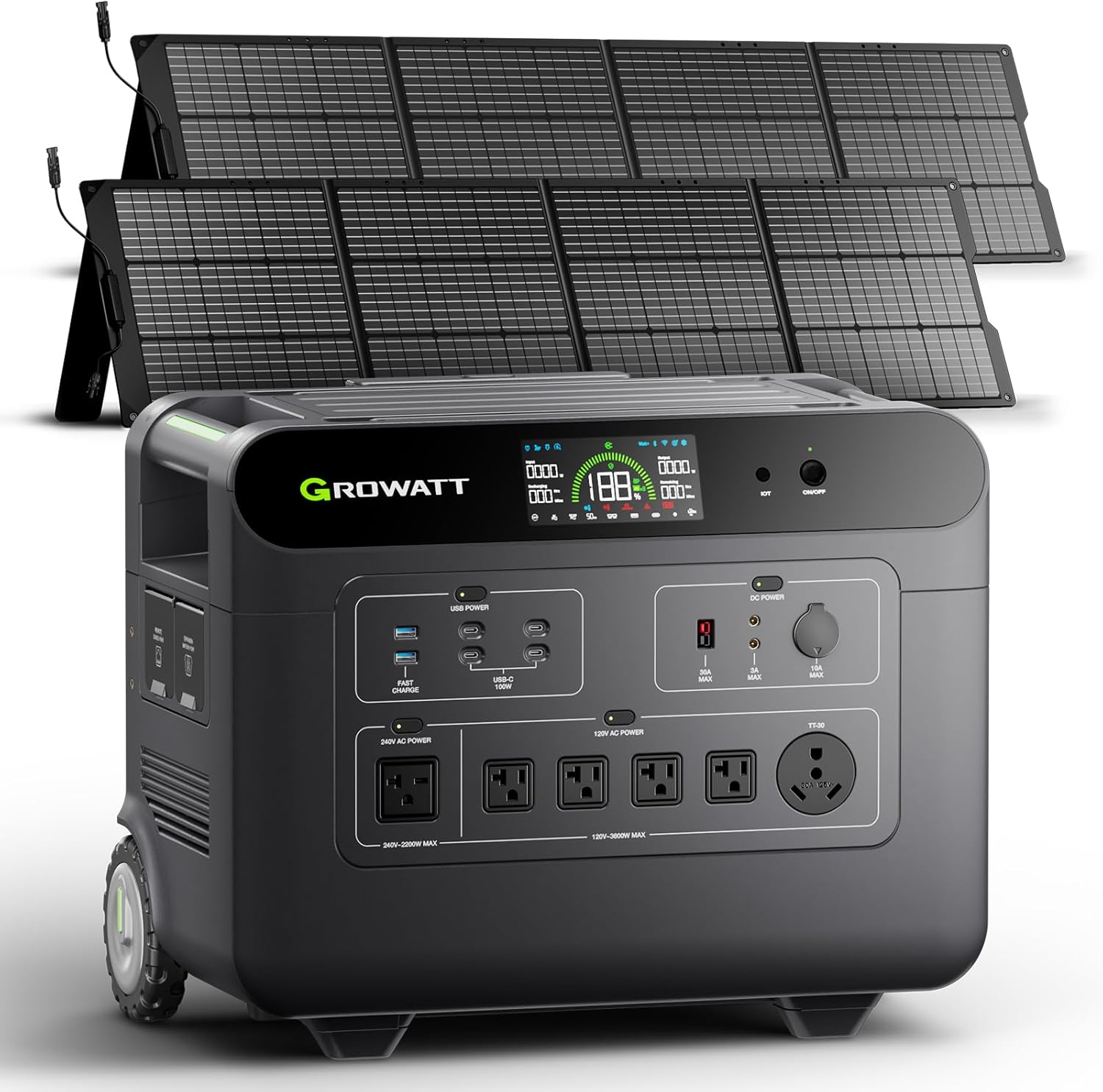
- Solar arrays (about 2.8 hours at 2000W solar input)
- Car outlets and alternators for on-the-road top-ups
- EV chargers and other high-power AC sources
- Generators or other compatible power sources
- Combo inputs that combine sources to hit ultra-fast charging rates
If you need extremely fast recovery during a multi-day outage, combining inputs to reach up to 3600W of input for ~1.5 hours charge is a powerful capability.
Quiet charge mode
You can enable a quiet charge mode if you want to minimize fan noise during nighttime use or when you’re in a campsite environment. You’ll lose some of the fastest possible charge capability, but it’s helpful when silence matters.
Expandability and whole-home capability
If you want more than a standalone unit, the HELIOS 3600 is built to scale. You can pair two HELIOS 3600 units with the optional split-phase connector to create a 240V system with up to 7200W continuous and a combined capacity reaching roughly 36kWh if you add additional batteries.
Whole-house operation
With the right setup (two units + split-phase connector and a transfer switch), you can power most of your home’s loads and sustain power for days — Growatt estimates 4–7 days in certain scenarios depending on consumption and battery bank size. This setup allows you to run heavy loads and even energize circuits through a transfer switch to keep your home functioning.
DIY-friendly expansion
You’ll be able to assemble and expand the system yourself if you’re comfortable with basic electrical work and transfer-switch installation guidelines. The unit’s plug-and-play approach plus the app-based management makes system configuration and monitoring straightforward.
Portability and outdoor use
Although it’s robust, the HELIOS 3600 is designed with outdoor use and RV compatibility in mind. You’ll find connectors and features intended for off-grid and mobile power needs.
Outdoor/RV connectors
Anderson input/output ports and a NEMA TT-30 outlet make it easy to connect to typical RV setups, alternator charging systems, and direct DC sources. That means you can use it to power RV appliances without awkward adapter chains, and you can charge directly from your vehicle alternator when you’re driving.
Cold-start capability
If you’re dealing with cold weather, the Cold Start feature lets you bring the unit online in temperatures down to -22°F. This is useful if you need reliable power in winter storms or remote cold-weather trips.
Setup and user experience
You’ll likely appreciate how the unit translates advanced features into approachable steps. The plug-and-play format helps you power essential loads quickly, and the app offers smart control.
App and smart power strategy
The Growatt app provides monitoring, control, and a smart power strategy that can optimize charging, discharge scheduling, and load prioritization. If you want to run the unit with solar and grid interplay or optimize battery cycles during an outage, the app simplifies that process.
<15 ms ups and automatic switching< />3>
For many critical loads, the near-instant UPS switching gives you reliability without the fuss. You’ll notice quick transitions when the grid drops or when you shift to battery power manually or automatically.
Ports and connectivity — what you’ll find
You’ll encounter a broad mix of outputs that cover daily modern needs, from conventional AC sockets to fast-charging USB-C ports and specialized RV connectors.
A versatile port lineup
With 16 output ports, the HELIOS 3600 gives you flexibility for multiple simultaneous devices. Expect multiple AC outlets, USB-A, USB-C (likely with PD output suitable for laptops), DC ports, Anderson connectors, and the RV-friendly NEMA TT-30. This reduces the need for additional power strips or adapters.
Noise and thermal management
You won’t have constant loud noise like many traditional gas generators. The unit’s fans will run when required but the quiet charge mode reduces fan activity during low-noise conditions.
Reasonable operating sound
In typical operation you’ll hear fan activity under heavy loads or when fast-charging, but it’s far quieter than a portable gas generator. For campsite or residential use, that’s a meaningful advantage.
Safety, warranty, and service
You want peace of mind when you depend on a portable power station. Growatt’s reputation in residential solar and the use of EV-grade LFP helps here.
Manufacturer support and expectations
Growatt is an established brand in the residential solar market, and they back their products with customer service and warranty support. You should check the specific warranty duration for the HELIOS 3600 and follow registration procedures for service and tax credit eligibility.
Built-in protections
The system includes protections for overcurrent, overvoltage, temperature, short circuit, and more. The BMS (battery management system) helps protect the battery and extend usable life.
Tax credit and incentives
If you’re in the United States, the HELIOS 3600 reportedly qualifies for the Residential Clean Energy Credit at a 30% tax credit level for qualified solar electric property. You’ll want to confirm eligibility and any documentation requirements with your utility or tax advisor before making assumptions.
How to approach the tax credit
Keep records of purchase, serial numbers, and installation details. If you plan to connect solar panels and claim the residential clean energy credit, understanding the qualification criteria (and whether installer or equipment requirements apply) will save you headaches.
Real-world use cases — how you might use it
You’ll find the HELIOS 3600 useful in a wide range of scenarios. Below are specific examples to help you picture real-world performance.
Emergency whole-house backup
When storms knock power out, this unit (especially when expanded) can keep essential circuits active — refrigeration, lighting, communications, medical devices, and limited HVAC. If you build out the full split-phase/expanded battery setup, you can expect multi-day support depending on consumption.
RV and road trips
You’ll appreciate the Anderson connectors and NEMA TT-30 for straightforward RV power. Alternator charging and the ability to accept multiple charge sources are convenient when you’re on the move.
Outdoor work and small business
If you run power tools at a remote job site or need a quiet, clean power source for a small business stall, the HELIOS 3600 gives you strong AC output and sockets to run laptops, saws, lights, and more.
Camping and events
For longer camping trips with higher power needs (camp ovens, coffee makers, heated blankets), the high capacity and cold-start capability are strong benefits. Quiet charge mode is handy for campsites.
Practical runtime examples
It helps to see sample run times so you can plan. Below are approximate estimates based on the ~3686Wh capacity. Real-world numbers vary with inverter efficiency and device usage.
| Device | Typical wattage (approx.) | Estimated runtime on 3686Wh |
|---|---|---|
| LED lighting total | 30W | ~100+ hours |
| Refrigerator (avg) | 150W | ~18–20 hours (varies with cycles) |
| Laptop (USB-C) | 60W | ~50–60 hours |
| TV (LED) | 80W | ~40–45 hours |
| Microwave (1000W) | 1000W | ~3–4 uses (short cycles) |
| Electric kettle (1500W) | 1500W | ~1–2 uses (short cycles) |
| Small window AC (1000–1500W) | 1000–1500W | ~2–3 hours (continuous) |
You’ll want to calculate your own runtime based on how much you plan to draw and whether you’ll expand the battery bank.
Pros (what you’ll like)
- High capacity LiFePO4 battery and EV-grade cells for longevity and safety.
- Strong continuous and surge power (3600W / 4500W) suitable for most home loads.
- Flexible charging methods and rapid charge capability with input combos.
- Expandable to whole-home solution with split-phase connector and transfer switch.
- RV-friendly connectors and cold start for outdoor/winter use.
- Smart app management and under-15ms UPS switching for sensitive devices.
- Potential eligibility for a 30% Residential Clean Energy tax credit.
Cons (things to consider)
- Weight and size: with this capacity it’s less “grab-and-go” compared to smaller portable units.
- Cost: higher upfront than small power stations, especially when you factor in expansion batteries and accessories for whole-house setups.
- Installation for whole-house use may require a transfer switch and potentially an electrician if you don’t do DIY electrical work.
- Fastest charge times require high-power inputs or combos that you may need to acquire separately (EV charger, large solar array, high-capacity generator).
Comparison highlights (how it stacks up)
If you’ve looked at other large-capacity stations, the HELIOS 3600’s strengths are LiFePO4 chemistry, robust expandability to a true split-phase system, and fast-charging combos. Some competing systems offer similar capacity but may differ in charging speed, connectivity, included ports, or expandability. If whole-home scalability and EV-grade battery cells matter to you, this model is positioned well.
Accessories and add-ons you may need
To make the system work optimally in your use case, you might want:
- Additional HELIOS battery units (for capacity and whole-home operation).
- Split-phase connector and transfer switch for 240V and whole-house integration.
- Solar panels (sized to reach 2000W+ for faster solar recharge).
- High-capacity EV charger or multi-input charging hardware to get to the fastest charge times.
- Anderson cables, adapters, and an RV power cable for TT-30 connections.
- Protective covers, mounting solutions, or a wheeled cart for easier movement.
Installation tips and best practices
You’ll want to place the unit in a well-ventilated, dry area with stable temperature conditions for best performance and longevity. Keep terminals and connectors clean and use recommended cable sizes for high-current charging and discharge to avoid losses or overheating.
Setting up for whole-home backup
If you plan to integrate with home circuits, consult an electrician for safe transfer switch installation and code compliance. Label circuits and decide which loads you’ll prioritize to optimize battery usage during outages.
Maintenance and care
You don’t need heavy maintenance, but you should:
- Keep firmware up-to-date via the app to get performance and safety improvements.
- Cycle and store the battery at recommended charge levels if you won’t use it for long periods.
- Maintain clean contacts and monitor for any alerts from the app or unit.
- Avoid prolonged exposure to extreme heat or sustained sub-freezing conditions when possible (even with cold-start capability).
Troubleshooting basics
If you run into issues:
- Check the app for error codes and follow the recommended steps.
- Verify input/output connections and fuses, and make sure cables are correctly rated.
- If charging is slow, inspect each charging source for wiring or power limitations and ensure the unit isn’t in quiet charge mode.
- Contact Growatt support if you see persistent BMS warnings or unexpected behavior.
Frequently asked questions
Q: Can the HELIOS 3600 run central air conditioning?
A: It depends on the size and startup current. Smaller window or ductless mini-split units with appropriate startup headroom may run for short periods. For full-size central AC you’ll likely need an expanded multi-unit setup or a supplemental generator for long runtime.
Q: How many times can I cycle the battery?
A: LiFePO4 chemistry typically supports thousands of cycles with gradual capacity decline. The manufacturer’s guidance and the EV-grade cell choice point to many years of service under reasonable cycling.
Q: Is professional installation required to use it for whole-house backup?
A: For direct connection to the main service panel via a transfer switch, you should hire a licensed electrician to meet local codes. For standalone or RV use, DIY setup is common.
Q: Does it support pass-through charging (charging and discharging at once)?
A: Many modern hybrid systems do, and HELIOS supports smart power strategy — check the user manual and app settings for pass-through and combined charging modes.
Safety reminders
Always follow the manufacturer’s manual for safe operation, use approved cables and connectors, and don’t attempt to modify internal battery compartments. If integrating into a home electrical system, use a transfer switch and meet local electrical codes.
Final recommendation
If you want a reliable, long-lasting, and flexible power station that serves as both a high-capacity portable generator and a building block for whole-house backup, you’ll find the GROWATT HELIOS 3600 a strong option. It’s particularly compelling if you value LiFePO4 longevity, fast charging flexibility, and the ability to scale into a 240V split-phase system. For RV users, outdoor enthusiasts, and homeowners preparing for extended outages, it offers a balance of performance, safety, and expandability that’s hard to beat — provided you’re comfortable with the initial investment and any accessories needed for your specific setup.
If you want, I can help you calculate expected runtimes for your specific appliances, estimate the solar array and chargers you’d need to hit a given recharge window, or outline the components required to set up a 240V split-phase system for whole-house backup.
Disclosure: As an Amazon Associate, I earn from qualifying purchases.