
Looking for a reliable portable power station that can handle camping trips, emergency blackouts, and charging multiple devices at once?

Quick verdict
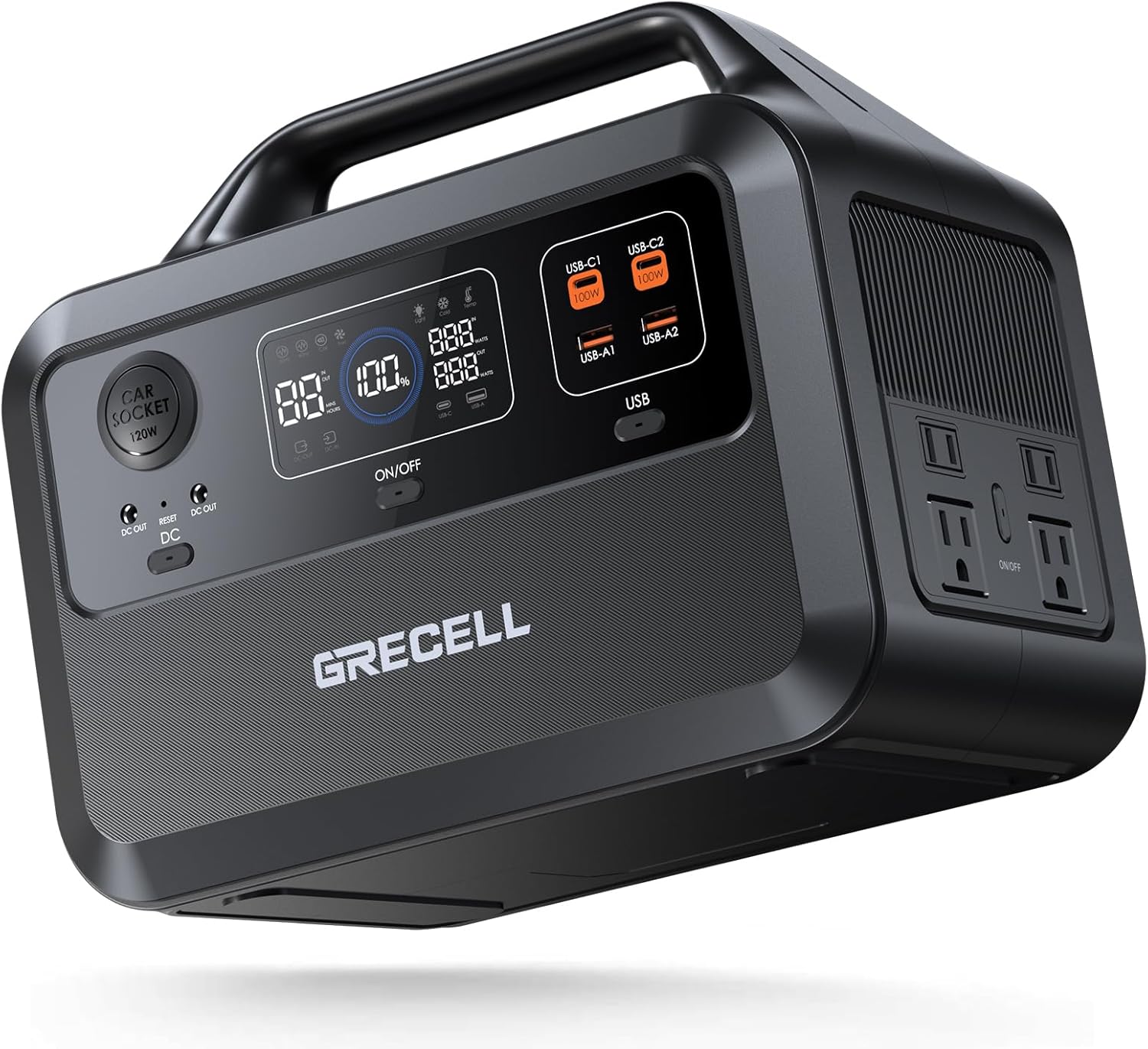
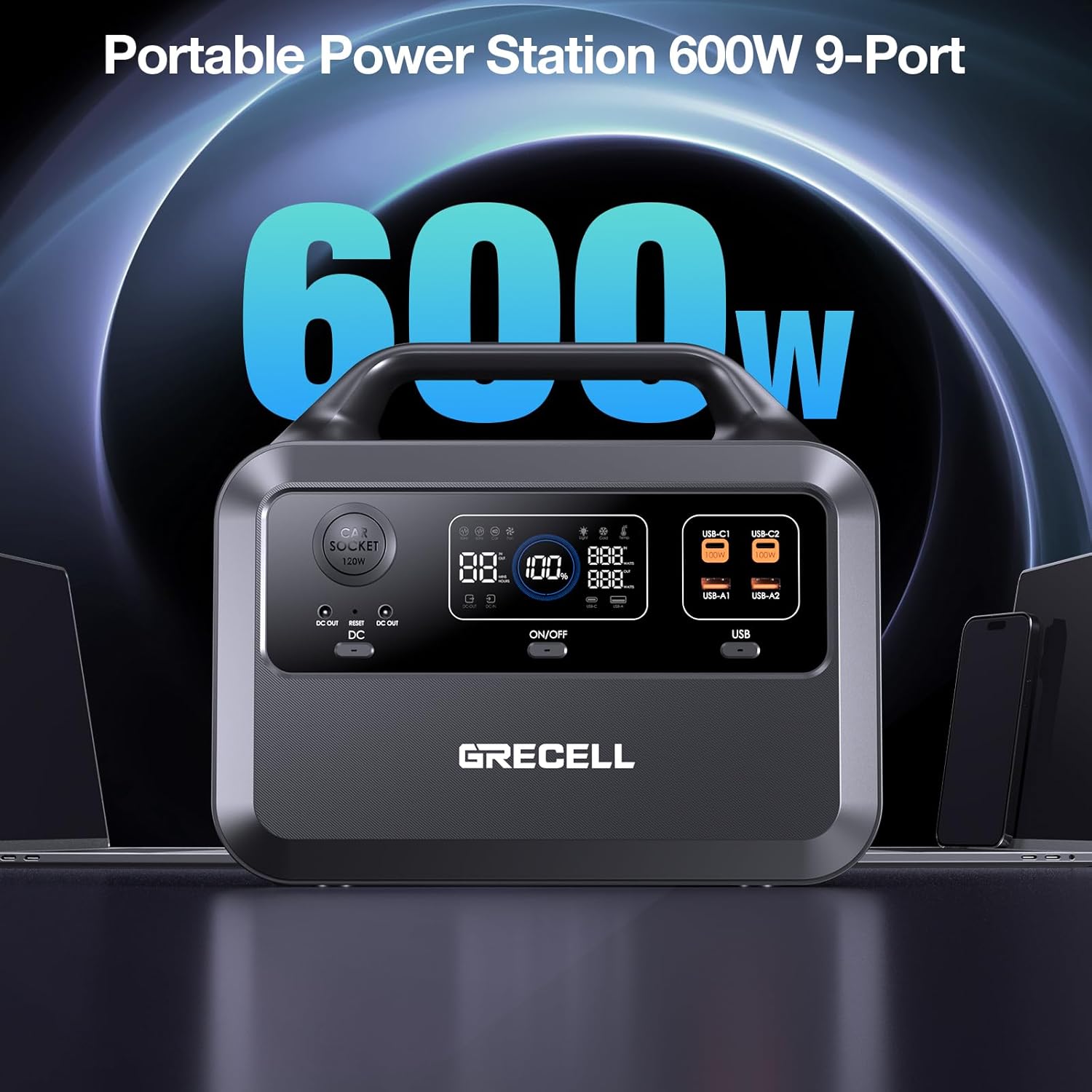
You get a compact, high-capacity portable station in the GRECELL Portable Power Station 600W 460Wh Solar Generator (Surge 1200W). It pairs a 460Wh LiFePO4 battery with a 600W continuous inverter and a hefty 1200W surge, making it a versatile option for weekend trips and basic home backup.
Who this is for
If you want something lighter than a full-size generator but stronger than a typical 200–300Wh power bank, this unit fits that gap nicely. You’ll like it if you need to run multiple devices at once, charge camera batteries in the field, keep a laptop and small fridge going, or have a dependable emergency backup at home.
Key specifications
These are the headline numbers you’ll see in listings and marketing. They help set realistic expectations about what the unit can and cannot run.
| Specification | Value |
|---|---|
| Battery chemistry | LiFePO4 (Lithium iron phosphate) |
| Battery capacity | 460 Wh |
| Continuous AC output | 600 W |
| Peak/surge AC output | 1200 W |
| AC outlets | 2 (input/output supported) |
| DC outlets | 2 |
| USB ports | 4 |
| Cigarette lighter output | 1 |
| Charge/discharge cycle life | ~3000+ cycles |
| Estimated lifetime | ~10 years |
| Included accessories | XT60 connector cable, AC charger, XT60-Y branch cable, 12V car charger cable, user manual, cable storage bag |
| Solar panels | Not included (supports XT60 connectors; XT60-Y included) |
How to read these numbers
The 460Wh figure is the raw usable energy stored in the battery; what you actually get for your devices will be lower after inverter and conversion losses. The 600W AC continuous rating is what you can draw from the AC outlets steadily, while the 1200W surge helps start motors and compressors that need a short burst of power.
Design and build quality
The unit feels solid and utilitarian, with a design focused on portability rather than ultra-lightweight form. You’ll find it easy to carry for car camping and short hikes, though it’s heavier than palm-sized power banks because of the LiFePO4 cells inside.
Controls and display
The front interface typically gives you a clear readout of charge level, input/output power, and charging status. You’ll be able to monitor remaining battery percentage and whether you’re charging via AC, car, or solar without guessing.
Ports and connectivity
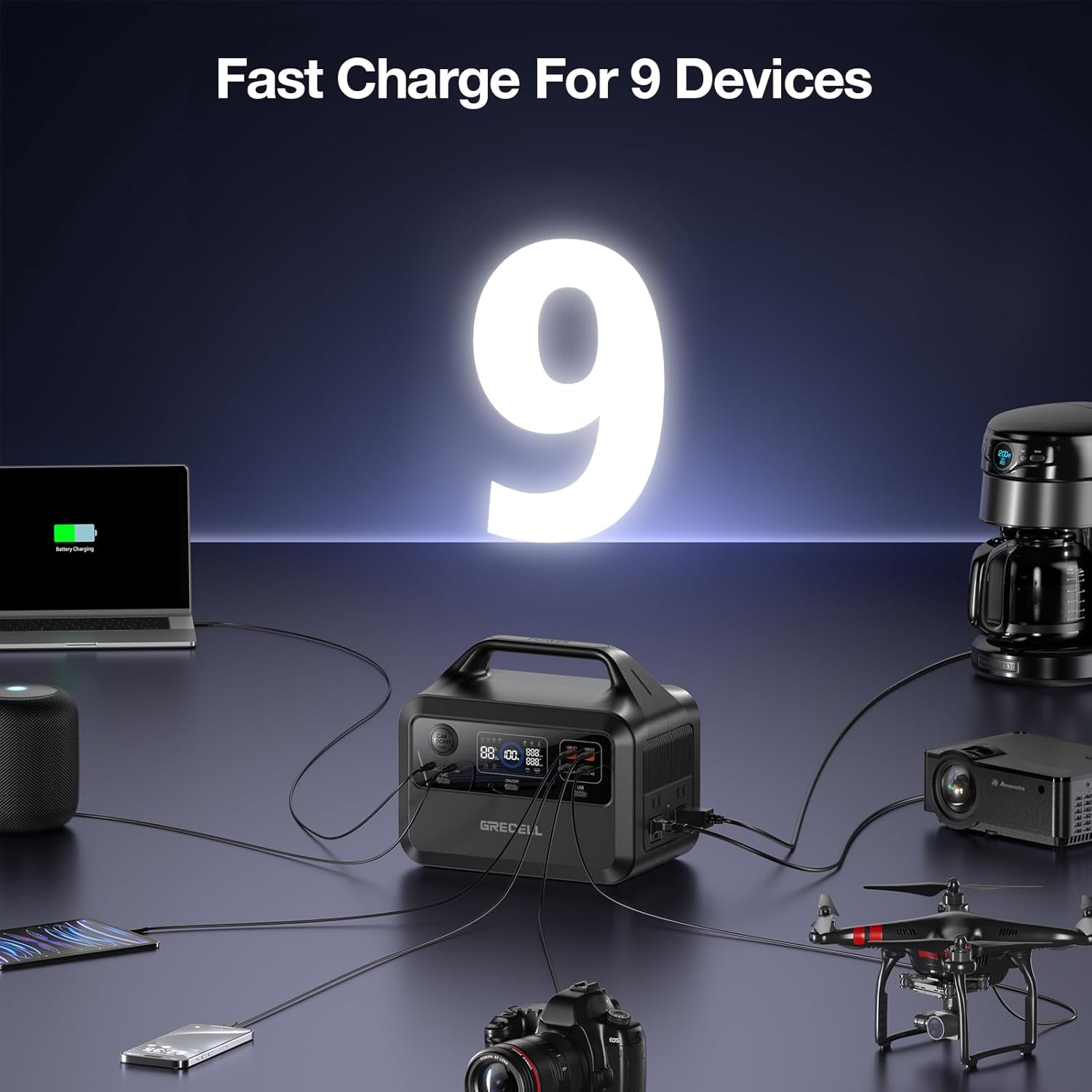
This product is designed to charge up to eight devices at once, so there’s a good mix of AC, DC, and USB options. You can plug in several things simultaneously, which is handy when you’re sharing the power station with others or powering multiple gadgets.
Port breakdown (detailed)
| Port type | Count | Typical use |
|---|---|---|
| AC outlets | 2 | Laptops, small appliances, chargers |
| DC outlets | 2 | 12V devices, some camping gear |
| USB-A / USB-C ports | 4 | Phones, tablets, cameras |
| Cigarette lighter output | 1 | Car accessories, air pumps |
| Solar input (XT60) | 1 (supports split/parallel) | Connects to solar panels via included XT60 cables |
Why the variety matters
Having both AC and DC outputs means you can run appliances and keep devices charged without carrying extra converters. The multiple USB ports let you charge phones, cameras, and tablets at the same time, which is convenient for families or small crews.
Battery chemistry and longevity
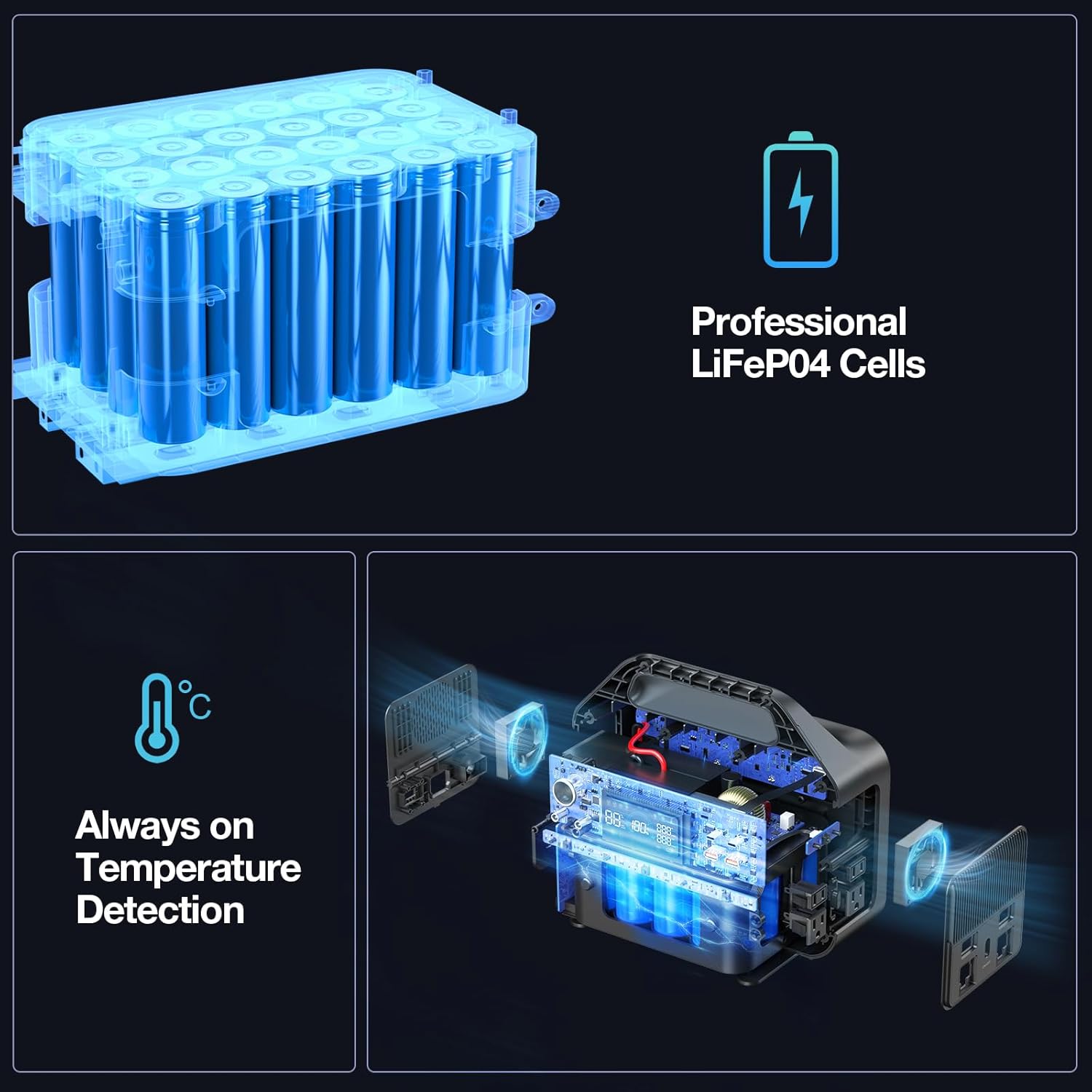
LiFePO4 is one of the safest and longest-lasting lithium chemistries available in consumer power stations today. You’ll benefit from more charge/discharge cycles and better thermal stability compared to many lithium-ion options.
What the BMS protects against
The product includes an eight-layer battery management system (BMS) that protects against over-charge, over-discharge, over-voltage, over-current, short circuits, and temperature extremes. You can expect consistent, safe operation and a longer practical lifespan — the manufacturer states around 3000 cycles and roughly a decade of use under reasonable conditions.
Real-world performance and runtime estimates
Raw Wh numbers are useful, but you want to know how long this unit will run specific devices. Below are conservative estimates that account for conversion losses (inverter for AC use, small losses for direct DC/USB outputs).
Notes on calculation: For AC loads we assume about 85% efficiency (inverter + conversion losses). For DC/USB loads we assume roughly 95% efficiency. Actual run times will vary with device behavior, battery aging, and environmental conditions.
| Device | Typical wattage | Estimated runtime (approx.) |
|---|---|---|
| Smartphone (charging, 10W) via USB | 10 W | ~40–45 hours |
| Tablet (20W) via USB | 20 W | ~20–22 hours |
| Laptop (60W) via AC | 60 W | ~5–6.5 hours |
| Small compressor fridge (50W avg) via AC | 50 W | ~7–8.5 hours |
| Portable fan (20W) via AC | 20 W | ~15–18 hours |
| CPAP machine (30W continuous typical) via AC | 30 W | ~9–11 hours |
| DSLR battery charger (15W) via AC/USB | 15 W | ~17–20 hours |
| 12V cooler (40W) via DC | 40 W | ~10–11 hours |
Interpreting the numbers
These are practical ballpark numbers designed to give you a sense of what to expect. If you plan to run high-draw devices near the 600W limit (space heaters, high-power power tools), the runtime will be much shorter and continuous operation may not be possible.
Charging options and approximate times
You can recharge the unit via AC wall charger, car charger, or solar panels. Each method has advantages depending on where you are and how quickly you need a refill.
AC charging (wall)
When you’re at home or have access to mains power, AC charging is the most reliable method. Charging time depends on the included AC adapter’s wattage; under a typical 100–200W input scenario, expect several hours to a full charge — often around 2–6 hours depending on adapter specs and how depleted the battery is.
Car charging (12V)
You can replenish power while driving using the included 12V car charger cable. Car charging is convenient on long road trips but is generally slower than AC charging. Expect longer charge times and variable rates depending on vehicle alternator output and cable limits.
Solar charging
Solar gives you off-grid recharging flexibility and pairs well with the XT60 input and the included XT60-Y branch cable. The charging speed through solar depends on panel wattage and sunlight quality: a single 100W panel under perfect sun will be slower than multiple panels in parallel. Two 100W panels in good sun could reduce charging time substantially.
Example solar math
If you assume a real-world average of ~80W from a 100W panel (after losses), a single panel would need roughly 460Wh / 80W ≈ 5.75 hours of strong sun. Using two panels in parallel (roughly 150–160W effective) could bring that down to around 3–4 hours under ideal conditions. These figures are estimates; cloud cover, panel angle, and temperature will affect actual times.
Solar panel compatibility and setup
The unit supports solar input via XT60 connectors and includes an XT60-Y branch cable so you can wire two panels in parallel. You aren’t limited to specific panel brands as long as the panels use compatible connector types.
Practical notes for solar use
You’ll want panels that match or are within the input voltage/current limits of the station; check the panel open-circuit voltage and max power point to avoid mismatch. Since solar panels are not included, plan to buy panels or a solar kit that offers 100–300W total depending on how quickly you want to recharge.
Safety and temperature considerations
LiFePO4 chemistry is inherently safer and more thermally stable than many alternatives, which reduces the risk of fire and improves longevity. The BMS adds multiple layers of protection to keep the battery and devices safe during operation.
Operating temperature and storage
Avoid exposing the station to extreme heat or freezing temperatures for prolonged periods. For long-term storage, keep it partially charged (roughly 40–60%) and store in a cool, dry place. That helps preserve battery health and cycle life.
Portability and daily use
While the unit isn’t featherweight, it balances capacity and portability well for car camping, van life, BBQs, and household emergency kits. You’ll find it easier to move around than a gas generator and quieter during operation.
Ergonomics and practical handling
The casing and carry handle are designed for occasional transport; you can comfortably tote it to campsites, tailgates, or between rooms during an outage. The cable storage bag keeps accessories neat so you don’t lose adapters or connectors.

Use cases and scenarios
Here are common situations where this power station is effective, with practical tips for each scenario.
Camping and RVing
You can run lights, charge phones and cameras, power small fridges, and run fans during overnight stays without running an engine or noisy generator. Pair with decent solar panels to extend multi-day stays off-grid.
Home emergency backup
For short blackouts, you can keep critical devices like Wi‑Fi routers, phones, laptops, LED lamps, and small medical devices running. For extended outages or heavy appliances (like full-size refrigerators), you’ll need a larger-capacity generator or cascade multiple power sources.
Road trips and tailgating
You’ll appreciate the cigarette lighter output for air pumps and 12V accessories, and the USB ports for charging multiple devices. It makes setting up a mobile workstation or a comfortable picnic spot much easier.
Photography and filmmaking
Photographers and videographers can charge multiple camera batteries, lights, and laptops simultaneously. The clean AC output and multiple USB ports make on-location power management simpler.
Pros and cons
You should weigh the advantages and the limitations to see whether this unit matches your expectations and needs.
Pros
- LiFePO4 battery chemistry for long life and safety.
- 460Wh capacity strikes a good balance between weight and usable energy.
- 600W continuous power with 1200W surge to handle startup loads.
- Multiple outputs allow charging several devices simultaneously.
- Solar compatibility with included XT60 accessories for flexible recharging.
- Robust BMS offering comprehensive protections and ~3000 cycles.
Cons
- Not designed to run high-wattage appliances (space heaters, large microwaves) for long periods.
- Solar panels are not included — you’ll need to buy them separately to use solar charging.
- Exact AC adapter charging rate is dependent on the supplied adapter and may not be as fast as some higher-end units.
- Heavier than lighter 200–300Wh units, so it’s less ideal for long backpacking trips.
Practical tips to get the most from the unit
A few habits will improve runtime, longevity, and overall satisfaction with your power station.
Maximize battery life
Charge regularly and avoid full deep discharges whenever possible. LiFePO4 is resilient, but treating the battery well will keep cycle life high and degradation low.
Manage loads smartly
Run high-efficiency devices and prefer DC/USB when possible to reduce conversion loss. Prioritize essential devices during outages and stagger heavy draws rather than running everything at once.
Solar planning
If you plan extended off-grid use, size your solar array to match expected daily consumption. Two 100W panels are a good starting point for moderate use; add more panels if you need fast or continuous recharging.
Maintenance
Keep the station clean, dry, and stored at moderate charge when not in use. Inspect cables and connectors periodically for wear and replace damaged components promptly.
What’s included in the box
You’ll get a practical collection of cables and accessories to start using the unit immediately. These items help you connect to AC, car, and solar charging sources without hunting for third-party adapters.
Included accessories
- 1 x Portable power station (GRECELL Portable Power Station 600W 460Wh)
- 1 x XT60 connector cable
- 1 x AC charger (adapter)
- 1 x XT60-Y branch cable (for two-panel parallel solar input)
- 1 x 12V car charger cable
- 1 x User manual
- 1 x Cable storage bag
Comparison with typical alternatives
Compared to small 200–300Wh units, you get nearly double capacity and a stronger AC inverter, allowing you to run more devices longer. Versus larger 1000Wh+ models, this unit is lighter and more portable but offers less total runtime for heavy loads.
How it stacks up for different users
If you’re a solo camper or need backup for essentials, this is a strong mid-range choice. If you’re powering a full household during lengthy outages or running multiple heavy appliances, consider stepping up to a higher-capacity system or using this unit as a component of a larger solution.
Frequently asked questions (FAQs)
These address common practical concerns about using and maintaining the station.
Can you chain multiple units together?
This model is primarily designed as a standalone unit; check the manufacturer’s instructions for compatibility if you’re thinking of parallel systems. Not all power stations support safe parallel operation without specific hardware.
Will it run a full-size refrigerator?
It can run small compressors and portable fridges fairly well, but full-size household refrigerators often have higher startup currents and continuous energy needs that will drain the battery relatively quickly. For prolonged refrigerator backup, a larger-capacity system or a generator is recommended.
Is it safe to leave plugged into solar all the time?
Modern BMS logic usually allows continuous solar connection without harm because the BMS manages charge and stops charging at full capacity. Still, check the manual for specific manufacturer recommendations and avoid extreme temperatures.
Final thoughts
You’ll find the GRECELL Portable Power Station 600W 460Wh Solar Generator to be a dependable mid-range option that balances capacity, safety, and versatility. It’s particularly strong for camping, small-appliance use, and emergency preparedness, with LiFePO4 chemistry and a robust BMS offering a long usable life.
Should you buy it?
If your needs center on portable power for multiple devices, moderate appliance use, and reliable longevity, this unit is a sensible purchase. If you need extended runtimes for very high-wattage appliances, pair it with solar panels and additional energy sources or choose a higher-capacity model.
If you want, I can help you estimate exact runtimes for the specific devices you plan to run or suggest solar panel sizes to match your daily energy needs.
Disclosure: As an Amazon Associate, I earn from qualifying purchases.