
Looking for a compact power station that can keep your CPAP running, charge your phone, and power a few small appliances during a blackout or while camping?

Overview of the Flashfish 200W Portable Power Station 151Wh, 400W Peak Solar Generator with 110V AcOutlet, 2 DC & 3 USB Ports, Backup Battery for CPAp Camping, Home, Outdoor EmergencyPower supply
You’ll find this Flashfish unit positioned as a lightweight, versatile emergency and outdoor power solution. It combines a mid-size 151Wh battery with a 200W continuous AC inverter and a 400W peak capability so you can run many small devices with confidence.
What the product is meant for
This model is designed to be a grab-and-go backup power source for short-term needs: charging phones, powering lights, running CPAP machines for a few hours, or giving your laptop life on the road. It’s not intended to replace home generators for long-term, high-load use, but it’s ideal when you need quiet, portable electricity.
Who should consider it
If you travel with electronics, rely on a CPAP while away from reliable power, go camping with a few gadgets, or want a lightweight backup for short outages, this unit is made for you. You’ll especially appreciate the small size and multiple port types if you frequently switch between device types.
Key specifications at a glance
You’ll want the basics up front so you can compare this unit to other options. Below is a compact summary of the most important specs that affect real-world usage.
| Specification | Details |
|---|---|
| Battery capacity | 151Wh (40,800mAh) |
| AC output (continuous) | 200W |
| AC output (peak/surge) | 400W |
| AC outlet | 1 x 110V AC |
| DC ports | 2 DC output ports |
| USB ports | 2 x QC3.0 USB-A, 1 x USB-A (2.4A auto) |
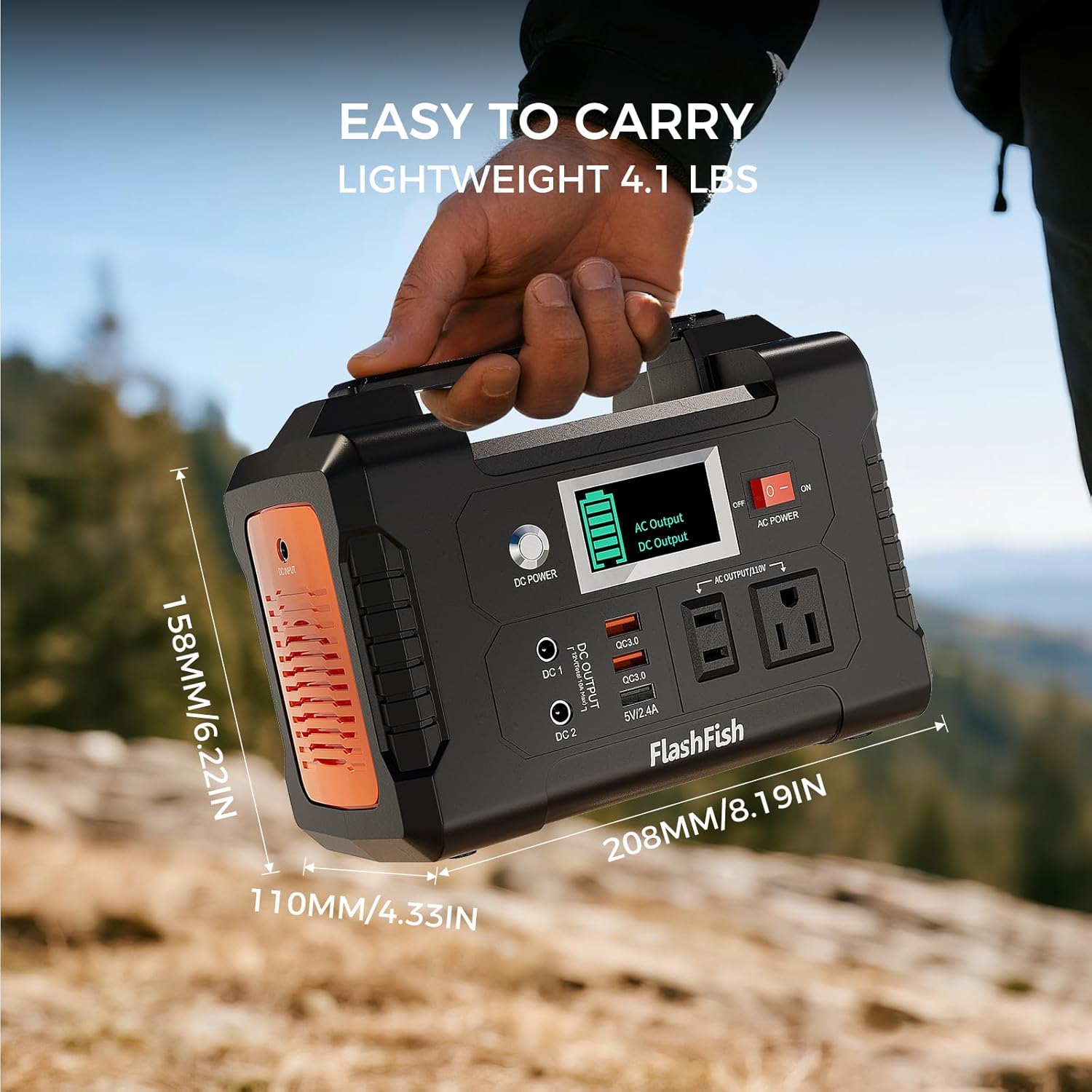
| Weight | 4.07 lbs |
| Recharge options | Wall AC (4–4.5 hrs), Car charger (5 hrs), 60W solar panel (5–6 hrs, solar panel sold separately) |
| Display | Multifunction LCD (remaining power, charge/discharge status, AC/DC output) |
| Safety | Built-in BMS with voltage, temperature, short-circuit control; overload auto-shutoff |
| Warranty & support | 12-month warranty, 24/7 customer support |
Why these specs matter
You’ll use the 151Wh number to estimate run times. The 200W inverter determines what appliances you can run continuously while the 400W peak helps with short motor-start loads. The weight and handle matter if you carry it a lot, and the charging options dictate how quickly you can top it up in different settings.

Ports, outputs, and what you can run
You’ll want to know exactly how to connect your gear and what to expect from each port during real use. This section helps you match devices to the appropriate outputs.
AC outlet and its limits
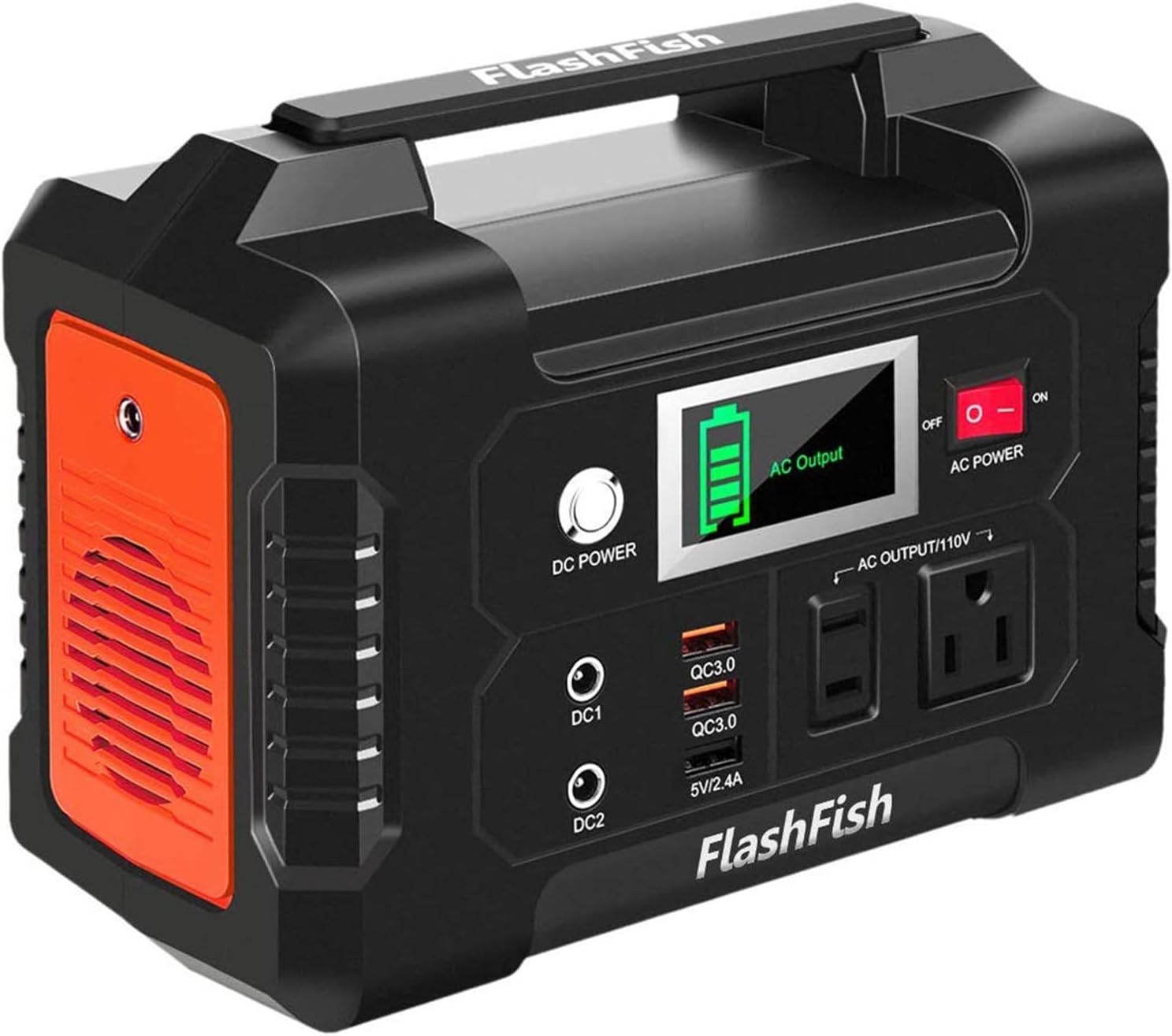
The single 110V AC outlet is rated for 200W continuous output with a 400W peak. That means you can run laptops, small TVs, small fans, LED lights, or medical devices like certain CPAP models that consume under 200W. Avoid plugging in high-draw appliances like full-size refrigerators, large heaters, or microwave ovens — they’ll exceed the continuous rating.
USB and DC outputs
The two QC3.0 USB ports give fast-charge capability for modern phones and tablets. The 2.4A auto USB port is great for older devices or accessories. The two DC ports let you run or charge devices that depend on car-like DC power. You’ll appreciate that multiple devices can be charged simultaneously.
Port usage examples
You can charge two phones via QC3.0, run a small LED lantern from the AC outlet, and use a low-power DC device simultaneously without trouble. The LCD display helps you monitor combined load so you don’t overload the inverter.
Battery capacity and runtime expectations
Battery capacity is the heart of any power station. You’ll want practical runtime estimates rather than just a raw watt-hour number.
Understanding 151Wh in practical terms
151Wh means the battery stores 151 watt-hours of energy. In theory, that could power a 10W device for about 15 hours or a 50W device for about 3 hours. In real use you should factor in inverter inefficiency (typically 85–90% for small units), so expect slightly shorter run times.
Example runtimes with inverter losses considered
Below are approximate run times after accounting for typical inverter and conversion losses. Actual results will vary based on device efficiency and how old the power station battery is.
| Device | Typical power draw | Approximate runtime (hours) |
|---|---|---|
| Smartphone (charging) | 10–15 Wh per full charge | 8–12 full charges overall (or multiple charges; about 12 full charges is a rough guideline) |
| Tablet | 20–30W while charging/using | 4–6 hours of use |
| Laptop (light use) | 30–50W | 3–4 hours |
| LED camping light (5–10W) | 5–10W | 12–25 hours |
| CPAP (no humidifier) | 30–50W | 3–4 hours |
| CPAP (with heated humidifier) | 50–70W | 2–3 hours |
| Small fan | 10–25W | 6–12 hours |
| Mini fridge (small compressor) | 40–60W running, higher at start | 2.5–4 hours of continuous running (start surge may be covered by 400W peak) |
How to interpret these numbers for your needs
If you need to run a CPAP all night, you’ll likely get a few hours depending on your exact machine and settings; that may not cover a full night for some setups. If your priority is long phone and light charging during a weekend trip, this battery is more than sufficient. You’ll want to map your device list and required runtime to the table above before relying on it for critical devices.
Charging methods and speed
You’ll often recharge from different sources, so it’s important to understand recharge times, included accessories, and what works best for your situation.
Wall AC and car charging
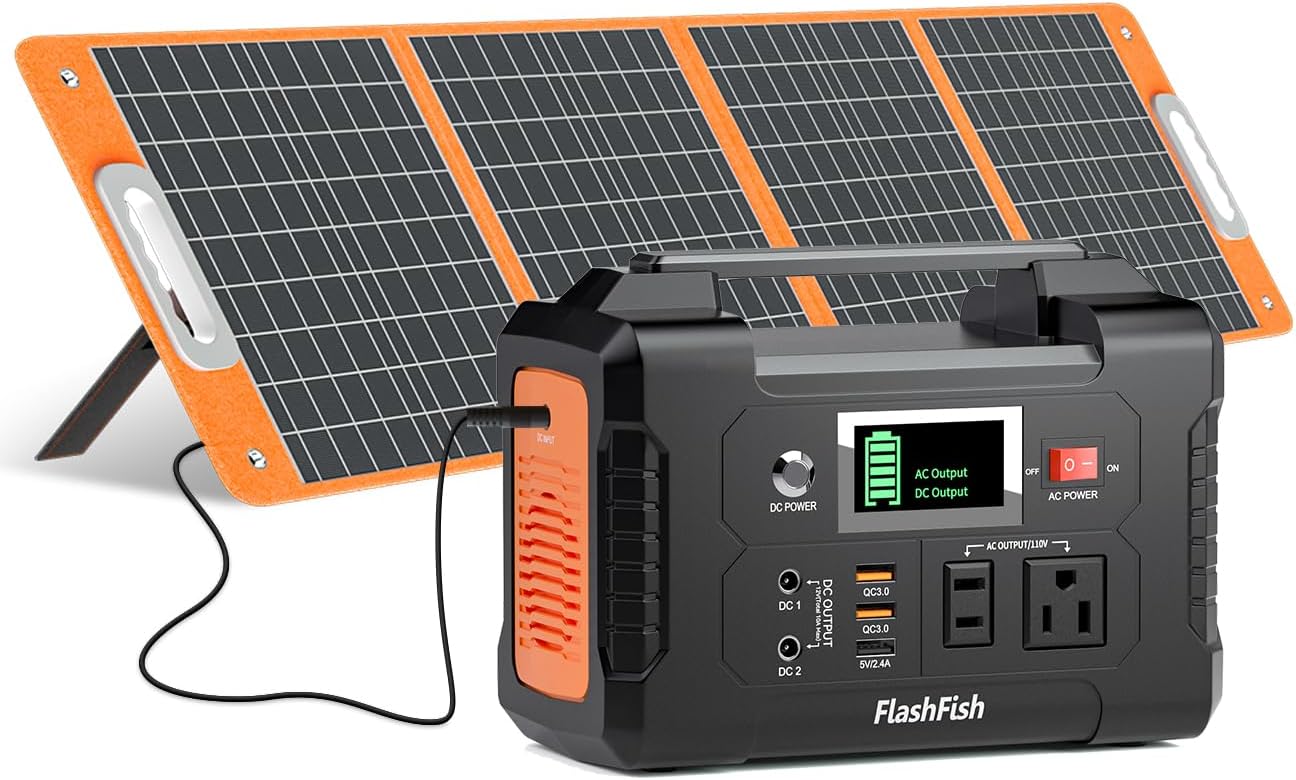
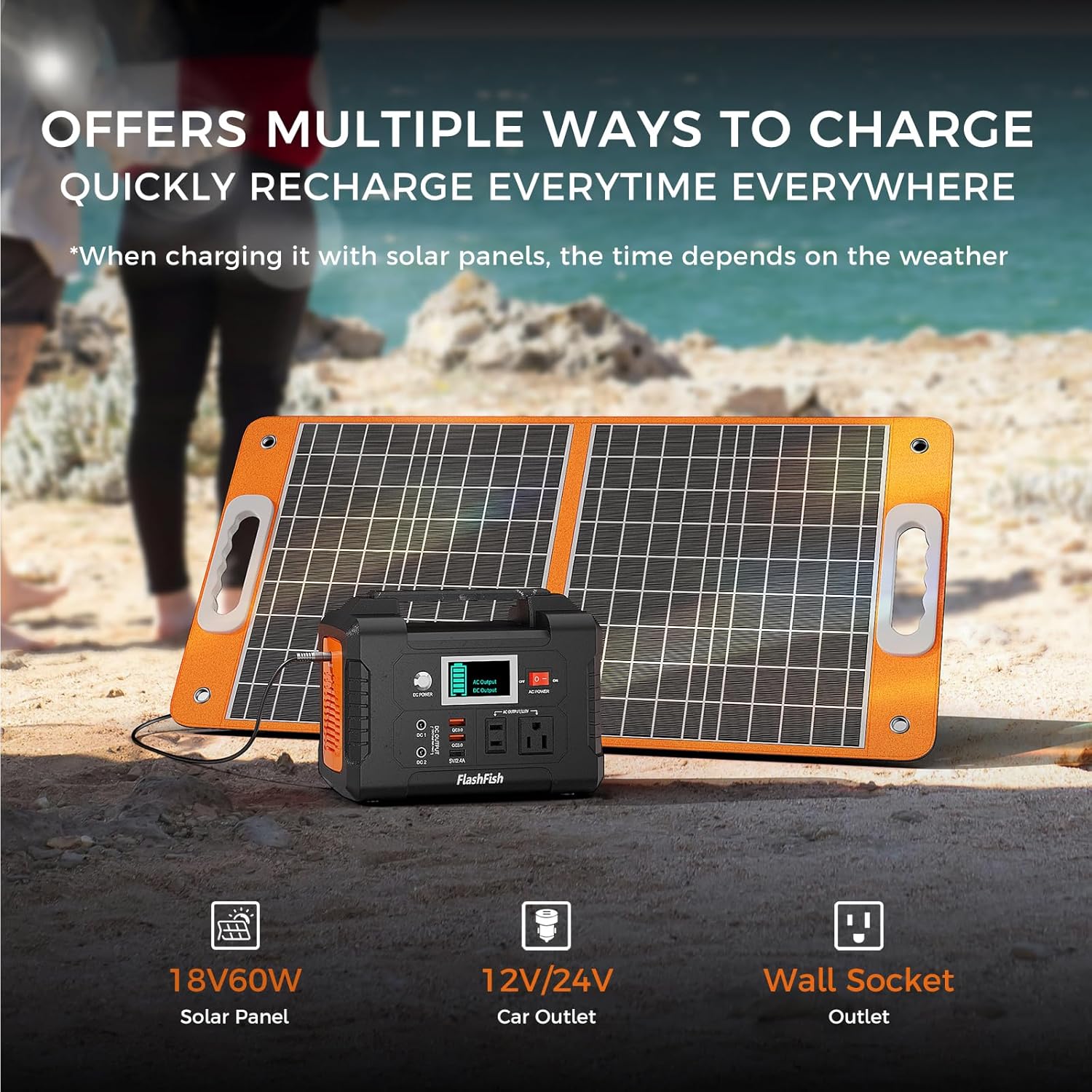
The unit includes an AC adapter and a car charger. Expect wall charging to take roughly 4–4.5 hours from empty to full. A car charger is listed at about 5 hours. Those times assume the specified input power and no simultaneous heavy discharge.
Solar charging
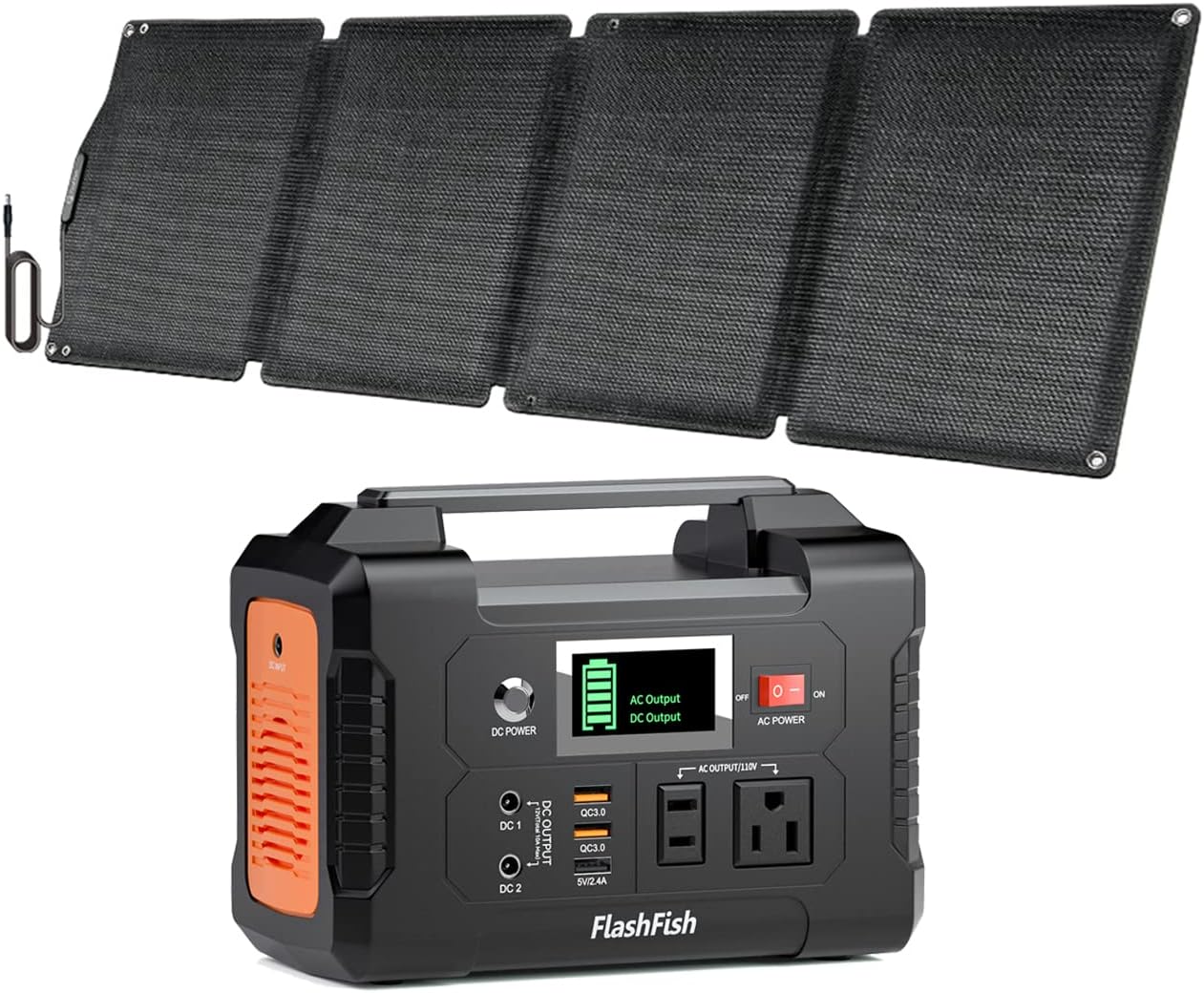
You can recharge from a compatible Flashfish 60W solar panel in about 5–6 hours under ideal sun conditions (panel sold separately). Solar charging depends heavily on sunlight intensity, panel angle, shading, and weather, so realistic times may be longer on cloudy days or with suboptimal panel placement.
Which charging method to choose
If you have access to wall power, AC is fastest. If you’re on the road, car charging gives flexibility. If you’ll be off-grid, pair the station with the recommended 60W solar panel and plan for variable charge times. You’ll also want to avoid draining the battery to 0% frequently to preserve battery longevity.
Size, weight, and portability
You’ll likely carry this to campsites, into vehicles, or across a room during outages, so pay attention to its portability features.
Weight and handling
At about 4.07 lbs, the Flashfish unit is genuinely lightweight compared to many other portable power stations. The soft handle makes it easy to grab and move, and the compact footprint fits easily into most backpacks, car trunks, or small storage spaces.
Where it fits in
Because of its low weight and size, you’ll favor it for day trips, short weekend camping, or as a grab-and-go emergency battery. If you need something to power multiple heavy appliances for long durations, you’ll want a larger, heavier system.
Display, controls, and user interface
You’ll interact with the system through its control buttons and LCD display, so usability matters.
LCD and status indicators
The multifunction LCD clearly shows remaining power percentage, charge/discharge status, and whether AC or DC outputs are active. That transparency helps you manage loads and decide when to recharge.
Separate AC/DC control buttons
The unit has distinct AC and DC control buttons, which makes turning outputs on and off straightforward and prevents accidental power-wasting. You’ll appreciate being able to selectively activate outputs and monitor their consumption.
Ease of use in low light
Even in dim conditions you can read the LCD and use the soft handle comfortably, which helps at campsites or during nighttime power outages.
Built-in safety features and warranty
You’ll want protection features to keep you and your devices safe and to ensure the unit lasts.
Battery Management System (BMS)
The built-in BMS handles voltage control, temperature monitoring, and short-circuit protection. It will automatically shut off under overload conditions to prevent damage. This gives you a safety net when you’re charging multiple devices or connecting borderline loads.
Overload protection and automatic shutoff
If you accidentally plug in a device that demands more than 200W continuous or triggers a sustained overload beyond the 400W peak, the unit will shut down to protect itself. You’ll need to reduce the load and restart.
Warranty and customer support
Flashfish includes a 12-month warranty from the purchase date and offers 24/7 customer support. If you run into problems, you can expect help and a pathway to repair or replacement within the warranty window.
Real-world scenarios: how you might use it
Knowing what the power station can do in everyday situations helps you decide if it matches your lifestyle and needs.
Overnight CPAP backup
If you depend on a CPAP while traveling, this unit can keep many CPAP models running for several hours. You’ll need to verify your CPAP’s power draw, account for humidifier or heated hose usage, and consider carrying a separate battery or larger unit if you need an entire night reliably.
Weekend camping and road trips
For charging phones, powering a small speaker, LED lights, and occasional laptop use, this station is ideal. You’ll reduce the weight in your pack compared to heavier systems, and its multiple port types let you power many devices at once.
Home emergency use
For short outages, you’ll be able to keep lights, phones, and small medical devices operating. If you want to maintain multiple household appliances for extended periods, you’ll need a larger-capacity system.
Photography and drone charging on location
If you shoot photos or video outdoors, the AC outlet and QC3.0 USB ports will charge camera batteries and drones quickly between shoots. You’ll want to keep an eye on remaining capacity when you’re away from recharging options.
Comparisons and alternatives
You’ll likely be choosing between several models in this capacity tier. Here’s how this Flashfish unit stacks up conceptually.
How it compares to similar 150–200Wh units
Compared to peers, Flashfish’s strengths are the light weight, multiple quick-charge USB ports, and a clear LCD. The 200W continuous inverter is comparable to other small power stations and is adequate for many portable needs. If you want longer runtimes or higher continuous wattage, consider a 300–1000Wh option.
When you might choose a larger or smaller unit
If you need overnight CPAP with humidification, power tools, or full-size refrigerators during outages, choose larger capacity (300Wh+) and higher continuous output (1000W+) systems. If your needs are limited to charging phones and lighting for day trips, a smaller 50–100Wh unit might be even lighter and cheaper.
Pros and cons
You’ll want a clear list of strengths and limitations to determine if this unit matches your priorities.
What you’ll like
- Very lightweight (4.07 lbs) and easy to carry.
- Multiple fast-charge USB ports and DC outputs for simultaneous charging.
- Clear LCD with separate AC/DC control buttons for simple operation.
- 151Wh capacity is solid for short trips, phone and laptop charging, and partial CPAP support.
- Includes AC adapter and car charger, plus optional solar compatibility for off-grid charging.
- Built-in BMS and overload protections for safety.
- 12-month warranty and 24/7 support offer peace of mind.
Limitations to consider
- 151Wh may be insufficient for powering high-draw appliances for extended periods.
- Single AC outlet limits simultaneous AC device use to one appliance.
- Solar panel sold separately — you’ll need to purchase a compatible 60W panel to use solar input effectively.
- Not ideal as a long-term home backup if you need to power multiple devices for many hours.
Tips for maximizing performance and battery life
You’ll get better results if you follow a few practical habits that preserve battery health and ensure efficient use.
Charge habits and battery care
Avoid fully depleting the battery frequently. Partial discharges and regular charging cycles generally extend lithium-based battery life. Try to keep the battery between 20% and 80% when possible for long-term health.
Managing loads to extend runtime
Prioritize essential devices and turn off unneeded ports. Use low-wattage LED lights and energy-efficient devices when possible to stretch runtime. Monitor the LCD to see discharge rate and remaining percentage so you can ration power during extended off-grid use.
Using solar efficiently
If you use a solar panel, orient it toward direct sunlight and adjust angles during the day to maximize output. Avoid shading and use a clean panel surface. Clouds, obstructions, and indirect sunlight will lengthen recharge time significantly.
Maintenance and storage
You’ll want to handle storage and maintenance properly so the unit is ready when you need it.
Proper storage practices
Store the unit in a cool, dry place away from direct heat and humidity. If storing long-term, charge it to around 50% and check it every couple of months, topping up as needed to prevent deep discharge.
Cleaning and inspection
Keep ports clean and free of dust. Inspect cables and connectors for wear before use. If you plan to use outdoors frequently, consider a protective case or bag to reduce exposure to elements.
Frequently asked questions (FAQ)
You’ll likely have some common questions — here are clear answers to help you decide.
Can this power a CPAP all night?
It depends on your CPAP model and settings. Without a humidifier, many CPAPs draw 30–50W and could run 3–4 hours. With a heated humidifier, draw can be higher and runtime shorter. Test your exact setup before relying on it for overnight therapy.
Is the solar panel included?
No. The unit is compatible with Flashfish 60W solar panels, but the panel is sold separately. If you plan to recharge off-grid frequently, add the correct solar panel to your kit.
Can I run a small fridge?
You may be able to run a small compressor fridge for a few hours, but continuous power draw and compressor start-up peaks vary. A fridge with a high start-up surge may trip the inverter if it exceeds the 400W peak or sustained draw exceeds 200W. For reliable fridge backup, choose a larger power station.
How long does the battery last in years?
Battery longevity depends on usage patterns and storage habits. With moderate use and proper care, you should expect several hundred charge cycles before significant capacity loss. Follow manufacturer recommendations to maximize lifespan.
Safety and practical usage reminders
You’ll stay safe and get the best performance by following a few straightforward rules.
Avoid overloading
Don’t attempt to run devices that exceed the 200W continuous rating. If a device briefly goes above that (within the 400W peak), it may work, but sustained overdraw will cause an automatic shutdown.
Use indoors and follow manufacturer guidance
The device is designed primarily for dry, temperature-controlled environments. Use caution outdoors in wet conditions and don’t expose it to extreme heat or cold. Follow the user manual for charging, storage, and maintenance.
Final verdict
You’ll find this Flashfish 200W Portable Power Station 151Wh unit to be a smart choice if you want a lightweight, multi-port power station for short trips, emergencies, and CPAP backup for a few hours. It won’t replace larger home standby systems, but its weight, port selection, and user-friendly display make it a practical option for many portable power needs. If you prioritize portability and convenience over extended runtimes, this is a solid pick that balances functionality and price.
Should you buy it?
If your primary needs are phone charging, laptop top-ups, LED lighting, and occasional CPAP use or small appliance power for short periods, you’ll likely be happy with this unit. If you need extended runtimes, multi-day backup, or to run heavy-duty appliances, consider stepping up to a larger capacity model.
Disclosure: As an Amazon Associate, I earn from qualifying purchases.