
Looking for a portable power station that can actually cover your home backup needs and still be easy to use?
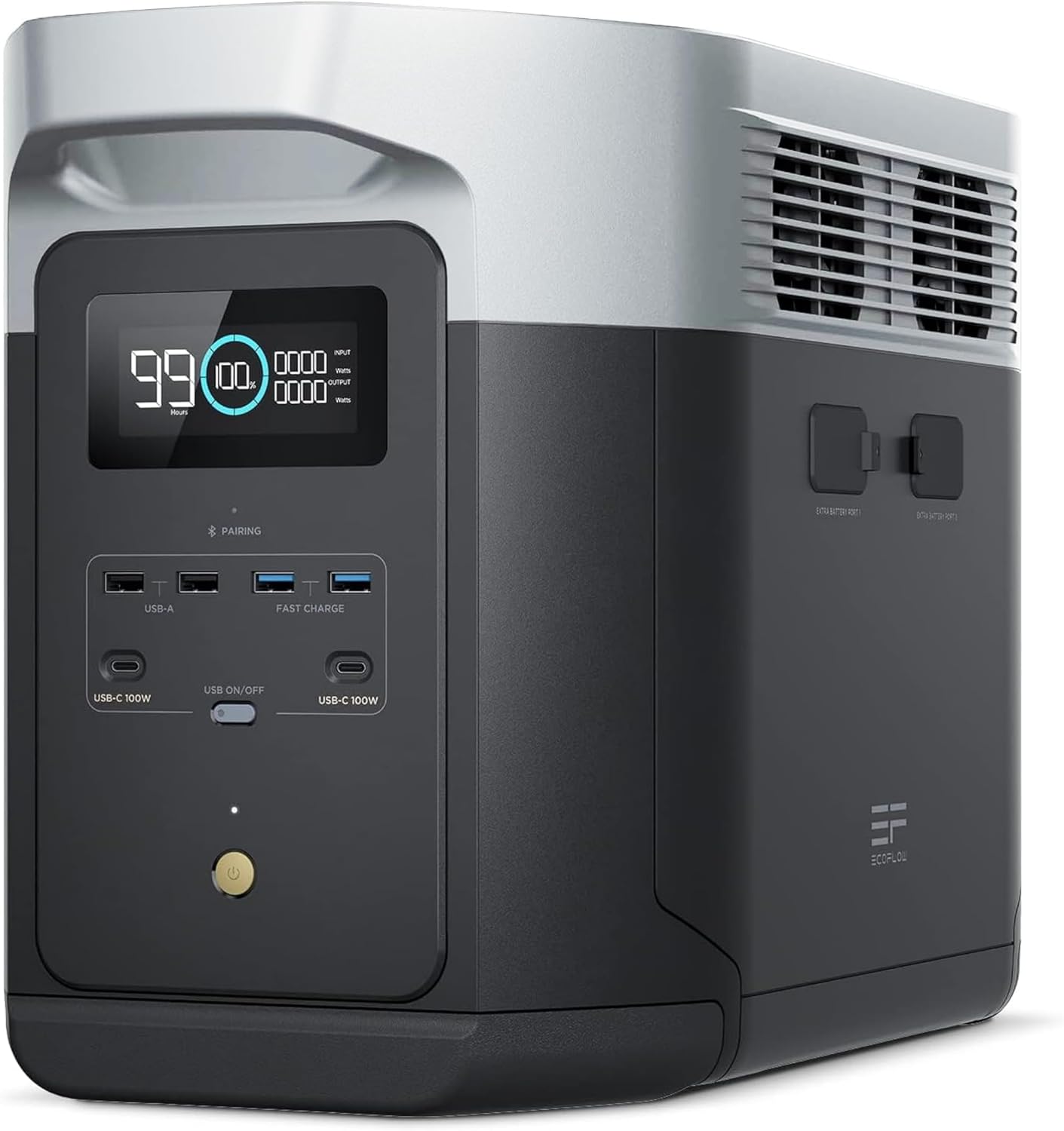

Overview of the EF ECOFLOW Portable Power Station DELTA 2 Max, 2400W LFP Solar Generator, Full Charge in 1 Hr, 2048Wh Solar Powered Generator for Home Backup(Solar Panel Optional)
You’ll find a lot to like about this model if you prioritize fast charging, long cycle life, and flexible capacity. The EF ECOFLOW Portable Power Station DELTA 2 Max packs 2048Wh of LFP battery capacity, a 2400W inverter, and the ability to charge extremely quickly using combined solar and AC input.
What this product is designed to do
This unit is built as a home backup and mobile power hub for serious users. You can run most household appliances, plug in many devices at once with 15 outlets, and even add extra battery modules to increase your stored energy up to 6kWh.
Who this suits best
If you want a mid-to-high capacity portable generator that’s quiet, future-proof, and meant to be used regularly rather than occasionally, this fits well. It’s ideal for people who rely on sensitive electronics, want solar charging capability, or need overnight operation without loud fan noise.
Key specifications at a glance
Below is a concise table summarizing the core specs you’ll refer to often. These are the features that matter most when deciding if this unit fits your needs.
| Feature | Specification |
|---|---|
| Model | EF ECOFLOW Portable Power Station DELTA 2 Max, 2400W LFP Solar Generator |
| Battery capacity | 2048Wh (2.048 kWh) |
| Battery chemistry | LFP (Lithium Iron Phosphate) |
| Inverter continuous output | 2400W |
| X-Boost peak capability | Up to 3400W (for short periods with X-Boost mode) |
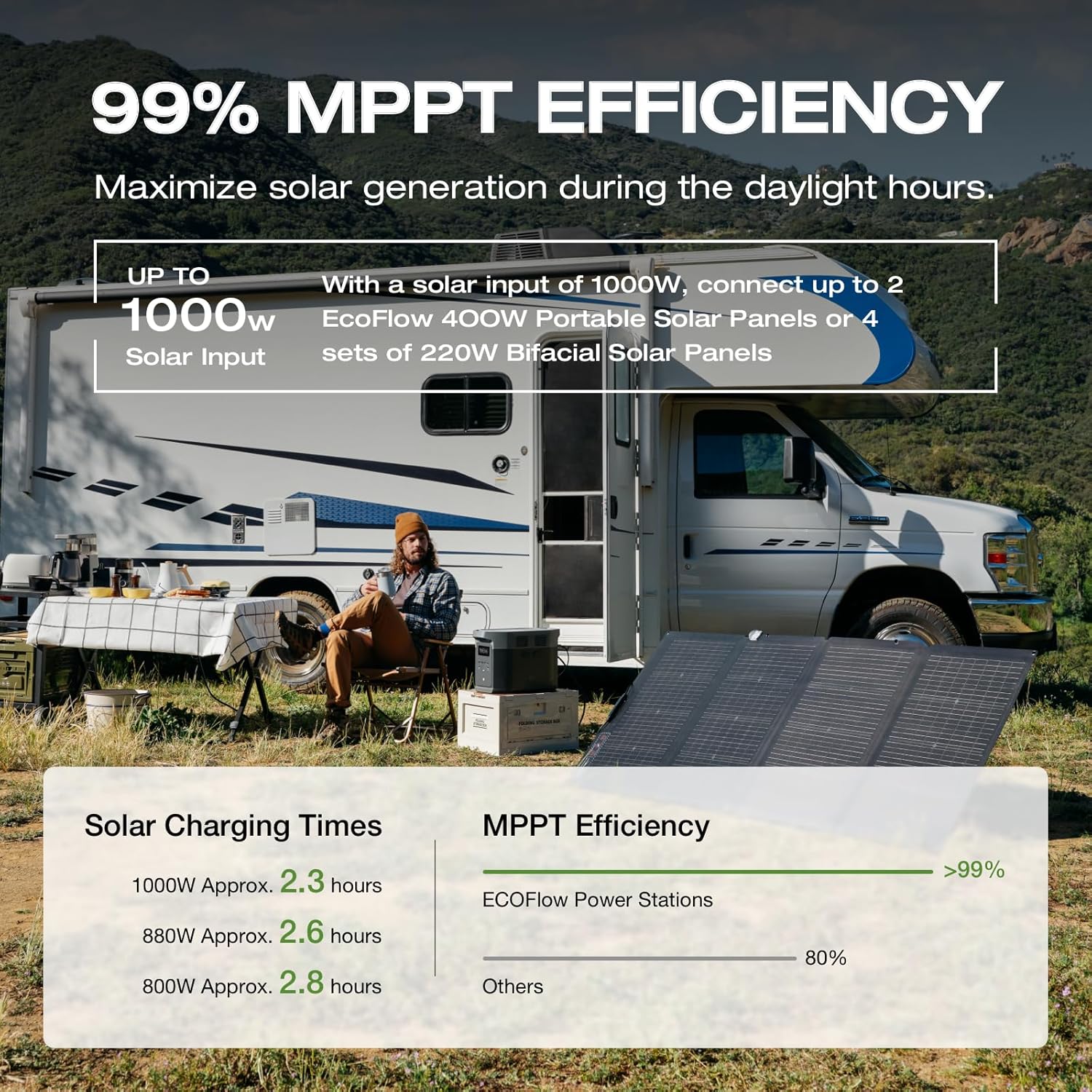
| Max solar input | Up to 1000W (combined with AC for highest charging speed) |
| Charge time (solar + AC) | 80% in 43 minutes (with optimized combined input) |
| Charge time (AC only) | 80% in about 1.1 hours |
| Battery cycles | ~3000 cycles to 80% capacity |
| Expandable capacity | Up to 6 kWh (with up to 2 extra battery units) |
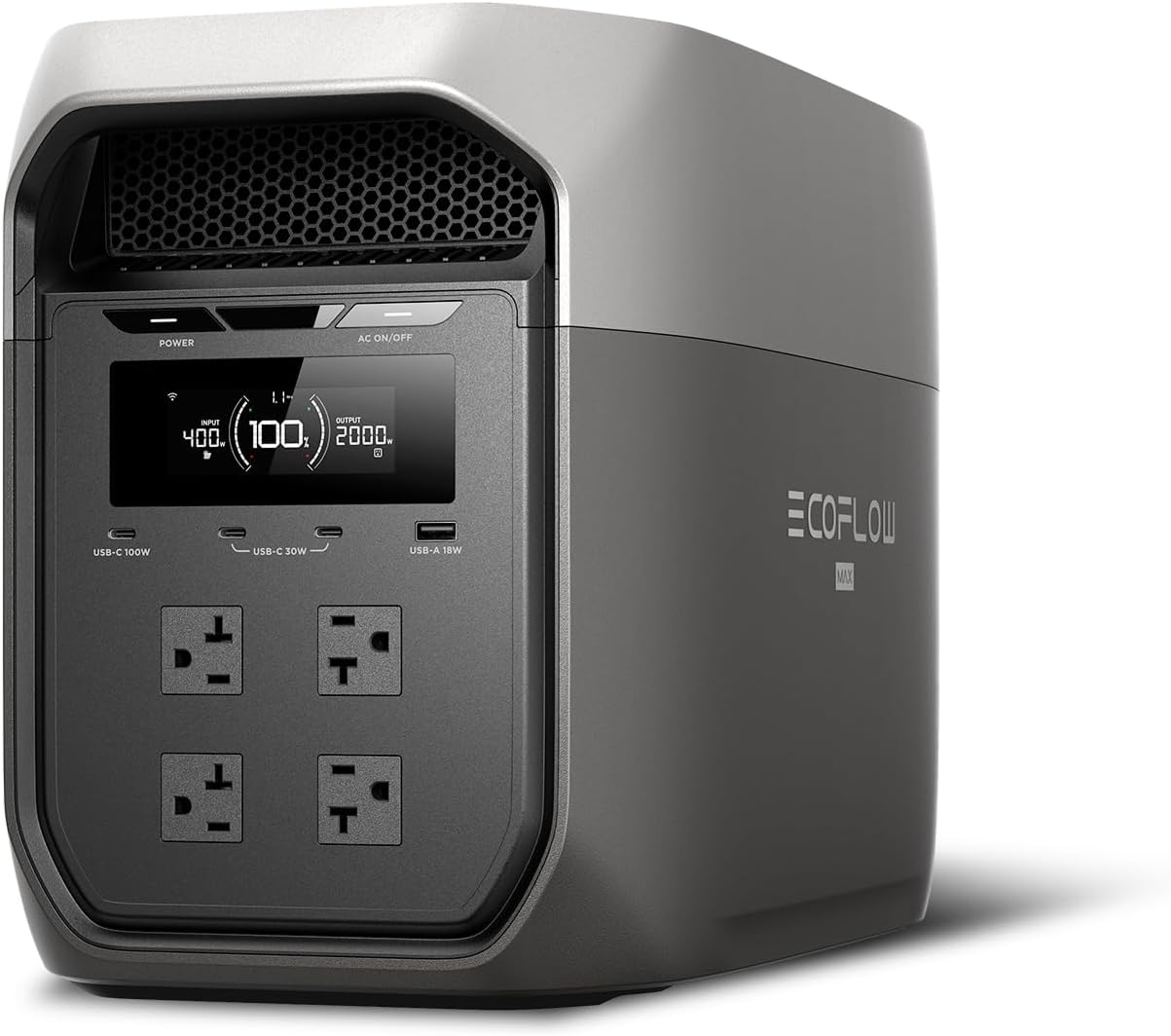
| Outlets | 15 total outlets |
| Noise level | From ~30 dB (very quiet) |
| App control | Yes — EcoFlow app for monitoring and automations |
| Warranty/Service | 5-year extended service available |
Charging performance and speed
You’ll likely be impressed by how quickly this unit charges, and that has real-world benefits when you need power back fast.
Fastest charging in its class
One of the headline features is the 80% charge in just 43 minutes when you combine up to 1000W of solar input with AC. If you rely on solar but also plug into AC periodically, that combination gives you world-leading charging speeds.
AC-only speed
If you don’t have solar available, using AC will still get you an 80% charge in approximately 1.1 hours. For many scenarios—especially sudden outages or quick turnarounds—that’s very practical.
Why charging speed matters to you
Faster charging means less downtime and more flexible use. If you’re running essential devices and need to recharge between events, you won’t be waiting hours for recovery. That quick turnaround can be the difference between staying comfortable during an outage and having to ration power.
Battery chemistry, lifespan, and reliability
You’ll want a power station that holds up long-term; LFP chemistry is the core reason DELTA 2 Max stands out here.
LFP for longevity
The DELTA 2 Max uses Lithium Iron Phosphate (LFP), which delivers around 3000 cycles until the battery reaches 80% capacity. That’s roughly six times the cycles offered by many other chemistries, meaning lower replacement cost per cycle for you.
Ten-year longevity potential
With proper use, the LFP cells and ECOFLOW’s battery management make it realistic to expect many years of service. The battery’s resistance to degradation makes it a good investment if you plan to use it frequently.
Extended service and peace of mind
ECOFLOW provides an extended 5-year service with the product, which further reduces your risk. If reliability matters, knowing you’re supported for several years is reassuring.
Expandable capacity and scalability
If your power needs change, this unit can change with you. You don’t have to be stuck at 2.048 kWh forever.
Tripling capacity with extra batteries
You can expand the DELTA 2 Max from its base 2kWh to up to 6kWh by adding up to two extra batteries. The plug-and-play approach makes this straightforward—no complicated setup to expand your stored energy.
Customize based on demand
If you expect to add more devices, increase runtime, or want several days of backup during frequent outages, expanding capacity is a clean way to scale without buying a whole new system.
When to expand
Consider the extension if you regularly run refrigerators, medical devices, or multiple high-draw loads simultaneously for long stretches. For occasional use, the base 2048Wh may be enough.
Output capability and outlets
You’ll appreciate the power variety this unit provides when you plug in multiple gadgets and appliances.
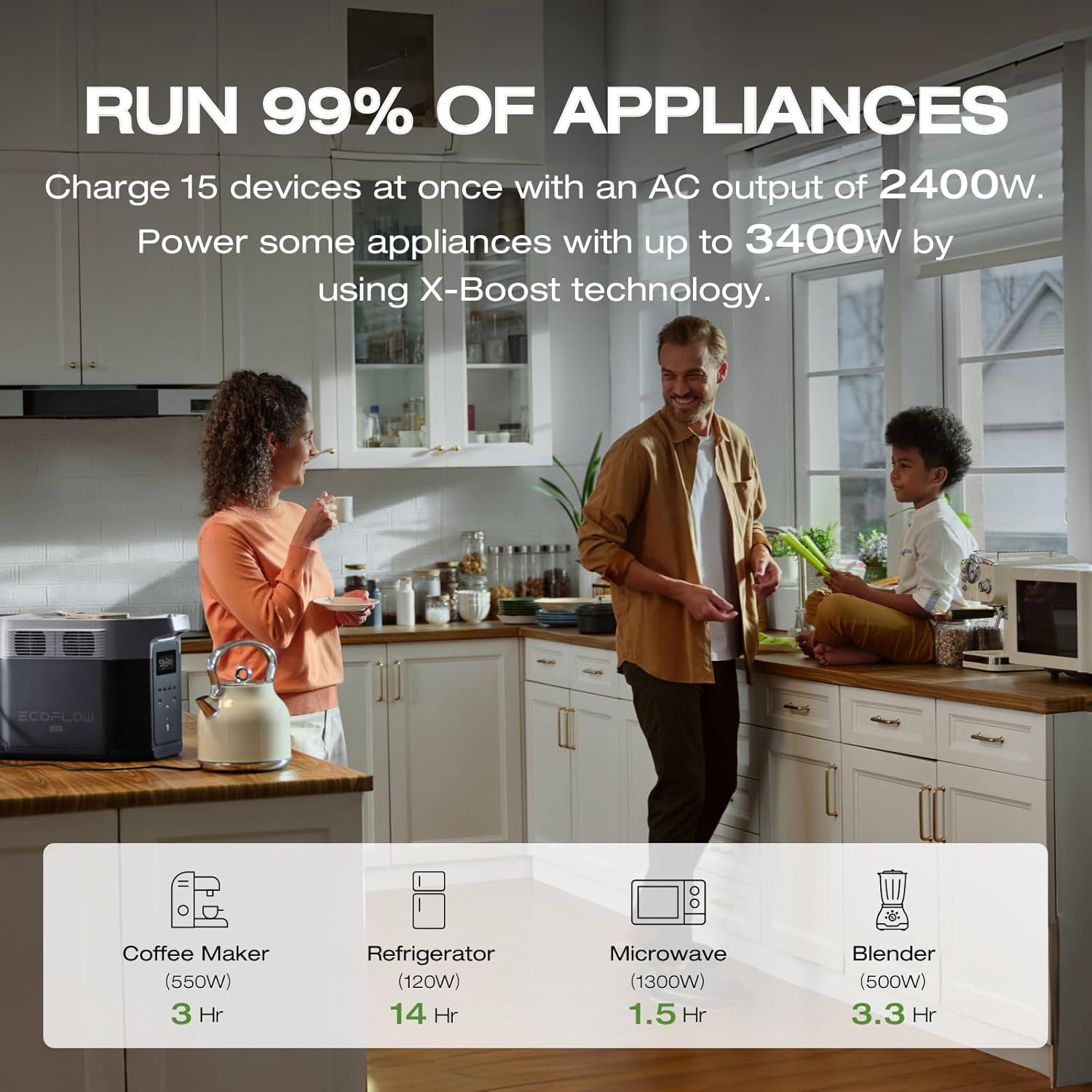
2400W continuous inverter
The 2400W inverter is strong enough for the majority of household needs—lighting, TVs, multiple laptops, refrigerators, and smaller kitchen appliances fall within this range.
X-Boost mode for heavy loads
If you need higher short-term power, X-Boost mode allows you to power certain high-wattage appliances up to 3400W. That helps with some tools and heavier devices—just check startup and continuous ratings for specific appliances.
Plenty of outlets
With 15 outlets, you can connect many devices at once. That reduces the hassle of swapping plugs during an outage and makes it good for both home backup and busy work setups.
Solar compatibility and off-grid use
You’ll get full use of solar with this model whether you’re trying to stay off-grid or keep costs down during normal use.
High solar input
DELTA 2 Max supports up to 1000W of solar input, which, when combined with AC, enables those blistering charge times. If you have a decent solar array or a few high-efficiency panels, you can maintain or recharge the unit efficiently during the day.
Good for regular solar charging
If you plan to use solar regularly, the LFP chemistry’s cycle life and the high input rate make this a smart pairing. You’ll be able to rely on solar without excessive worry about battery degradation.
Solar panel optional
Panels are optional, so if you already have a solar setup you’ll be able to integrate it, or you can add panels later as your needs grow.
Noise and suitability for overnight use
You’ll notice how quiet the DELTA 2 Max can be, which matters for overnight or indoor use.
Low noise floor
The unit operates from very low volume levels—around 30 dB at the quietest. That’s close to a quiet room or a whisper, making it suitable to run in living spaces or at night without disrupting sleep.
Smart cooling
Because it’s optimized for efficiency and LFP cells don’t need as aggressive cooling as some chemistries, you’ll get quieter operation while still protecting the battery.
App control and smart features
You’ll get a modern user experience via the EcoFlow app that helps you monitor and automate power use.
App overview
Using the EcoFlow app, you can monitor battery status, check input and output, set automations, and manage settings remotely. That makes it easier to balance solar charging, AC charging, and load management.
Useful automations
You can set priorities for charging and discharging, which helps when you want to conserve energy or ensure critical devices remain powered. Remote control is handy when the unit is placed in a garage or hard-to-reach location.
Real-world run-time estimates
To help you plan, here are reasonable run-time estimates based on the 2048Wh capacity. These are approximate and assume typical device power draws and a usable capacity near the nominal rating; actual run times will vary with efficiency, startup surges, and device cycles.
| Device | Typical Wattage | Estimated Run Time (hours) |
|---|---|---|
| LED lights (10W total) | 10W | ~180–200 hours |
| Laptop (60W) | 60W | ~30–34 hours |
| Smart TV (100W) | 100W | ~18–20 hours |
| Refrigerator (150W average) | 150W | ~12–14 hours |
| Portable CPAP (40W) | 40W | ~45–50 hours |
| Microwave (1000W) | 1000W | ~1.5–2 hours (short bursts) |
| Electric kettle (1500W) | 1500W | ~1–1.5 hours (short bursts) |
| Portable heater (1000W) | 1000W | ~1.5–2 hours |
Note: These are rough estimates. Inverter efficiency, startup draws, and duty cycles affect actual runtime. For devices with high startup current (motors, compressors), use X-Boost cautiously and confirm the appliance’s starting and running wattages.
Setup and first-use tips
Getting started should be straightforward, but a few steps will help you avoid common pitfalls.
Unpack and inspect
When you first receive the DELTA 2 Max, inspect the unit and accessories for shipping damage. Check that you have the charging cables and documentation included.
Initial charging recommendation
Charge the unit to full before first use to ensure the battery management system initializes correctly. Using the AC charger or a combination with solar will work fine.
Placement and ventilation
Keep the unit in a dry, ventilated area and avoid covering vents. Although it’s quiet, it still needs airflow during intense charging or heavy discharge.
Grounding and safety
Follow local electrical codes if you plan to integrate this into your household circuits. Use the user manual instructions for safe connection to appliances and batteries. Don’t attempt to open the unit; servicing should be done by authorized personnel.
Safety features and protections
You’ll be protected by multiple safeguards that prevent common issues and reduce risk.
Battery management system (BMS)
The internal BMS protects from overcharge, over-discharge, short circuits, and thermal stress. That keeps the battery healthy and reduces the chance of failure.
Temperature and surge protections
The unit monitors temperatures and will throttle or shut down if conditions become unsafe. Surge protection helps protect connected devices during transient events.
Certification and standards
ECOFLOW typically adheres to regulatory certifications for safety and emissions. You should check the included manual for specific certification markings and compliance in your region.
Maintenance and longevity best practices
You’ll get the most life from the battery by following a few basic practices.
Avoid deep cycling when possible
Even though LFP tolerates many cycles, avoiding unnecessary deep discharges can extend the useful life. Use partial charges and shallow cycles when practical.
Store at moderate state of charge
If you won’t use the unit for a long time, store it at a roughly 50–60% charge and in a cool, dry place. That helps preserve battery health.
Keep firmware updated
Periodically check the EcoFlow app for firmware updates. Those updates can improve efficiency, add features, and fix bugs.
Pros and cons
You’ll want a quick list of strengths and trade-offs to compare this unit against your priorities.
Pros
- Extremely fast charging (80% in 43 minutes with combined input).
- Long-lasting LFP battery with ~3000 cycles to 80%.
- Expandable capacity up to 6 kWh.
- 2400W inverter with X-Boost up to 3400W for heavy loads.
- Quiet operation (~30 dB), good for overnight use.
- 15 outlets for flexible device connections.
- EcoFlow app for remote monitoring and automations.
- 5-year extended service for peace of mind.
Cons
- Base capacity (2048Wh) might be small for multi-day heavy loads without expansion.
- Extra battery modules increase cost and add weight/space requirements.
- Specific weight and dimensions should be checked if portability (lifting, carrying) is a high priority—confirm those details before purchasing.
- Some heavy-duty appliances may still require a hardwired solution if runtime is long-term.
Price and value considerations
You’ll want to balance initial cost against long-term value. The DELTA 2 Max is positioned as a premium mid-to-high capacity portable power station.
Upfront vs lifetime cost
LFP’s long cycle life reduces cost per cycle relative to many other chemistries. If you use your unit frequently (camping seasons, daily solar cycles, or regular outages), you’ll likely find the total cost of ownership attractive compared to cheaper alternatives that need replacement sooner.
Add-ons and expansion
Plan for potential extra battery purchases if you want multi-day autonomy. Solar panels are optional but advisable if you want a renewable charging source. Those extras raise the initial outlay but increase the utility and independence of your system.
Comparison with similar options
You’ll find several competitors in the portable power station market, but the DELTA 2 Max distinguishes itself on charging speed and battery longevity.
Where it stands out
- Charging speed when combining solar + AC is among the fastest in its class.
- LFP chemistry gives better longevity than many mainstream lithium-ion options.
- Expandability to 6kWh makes it more adaptable as your needs grow.
Where others compete
- Some competitors may offer slightly higher base capacity or lower upfront price.
- For strictly lightweight portability, smaller units with lower capacity could be easier to carry.
Who should buy this
If you recognize yourself in any of the following, this could be a great match for your needs.
- You need a reliable home backup that can handle refrigerators, multiple devices, and short-term heavier loads.
- You want to pair a power station with solar and expect to charge frequently.
- You value long battery life and low cycle degradation.
- You prefer a quiet unit you can run indoors without disturbing sleep.
- You want the option to scale capacity over time with additional battery modules.
Who might want to consider another option
If your primary concerns are absolute lightweight portability, lowest possible purchase price, or you rarely need more than a few hundred watts, smaller or cheaper units might be more appropriate.
Frequently asked questions (FAQs)
You’ll likely have some practical questions before buying; here are common ones with clear answers.
Can DELTA 2 Max run a whole house?
It can run most household devices and, depending on your home’s peak load, may cover the essentials (fridge, lights, some outlets). It’s not a direct replacement for a whole-house hardwired generator in a long-term disaster scenario unless you expand capacity and carefully manage loads.
How long will the battery last?
The battery offers around 3000 cycles to 80% capacity. That translates to many years of typical use before you’ll see significant capacity decline. Actual years depend on how often and how deeply you cycle it.
Is it safe to leave it charging overnight?
Yes—charging overnight via AC or solar is fine. The unit has a BMS to manage safe charging and thermal controls. Ensure it’s in a ventilated space and follow the manual for safe operation.
Can I hook this to my home breaker panel?
Yes, with the right accessories and following local electrical codes, you can integrate it into your home with an appropriate transfer switch. Consult a licensed electrician to do this safely and legally.
Final verdict
You’ll get a compelling mix of fast charging, long battery life, quiet operation, and expandable capacity with the EF ECOFLOW Portable Power Station DELTA 2 Max, 2400W LFP Solar Generator, Full Charge in 1 Hr, 2048Wh Solar Powered Generator for Home Backup(Solar Panel Optional). If your priorities include reliability, frequent use, solar integration, and the ability to scale up later, it’s a very strong choice. Consider whether you’ll add extra batteries and solar panels to fully meet your expected runtime needs, and plan installation accordingly.
If you want, I can help you compare this unit to specific competitors, calculate run times for exact appliances you own, or help you pick compatible solar panels and expansion batteries. Which would you like to look at next?
Disclosure: As an Amazon Associate, I earn from qualifying purchases.