
Looking for a compact, reliable portable power station that you can take camping, stash in your car, or keep ready for home emergencies?

Quick summary
You get a lightweight, LiFePO4-based power station that balances capacity, safety, and portability. With 288Wh capacity, 600W continuous (1,200W surge), multiple outputs, and a fast AC charging option, this unit is geared toward weekend adventurers and households wanting short-term backup power for essentials.
Product overview
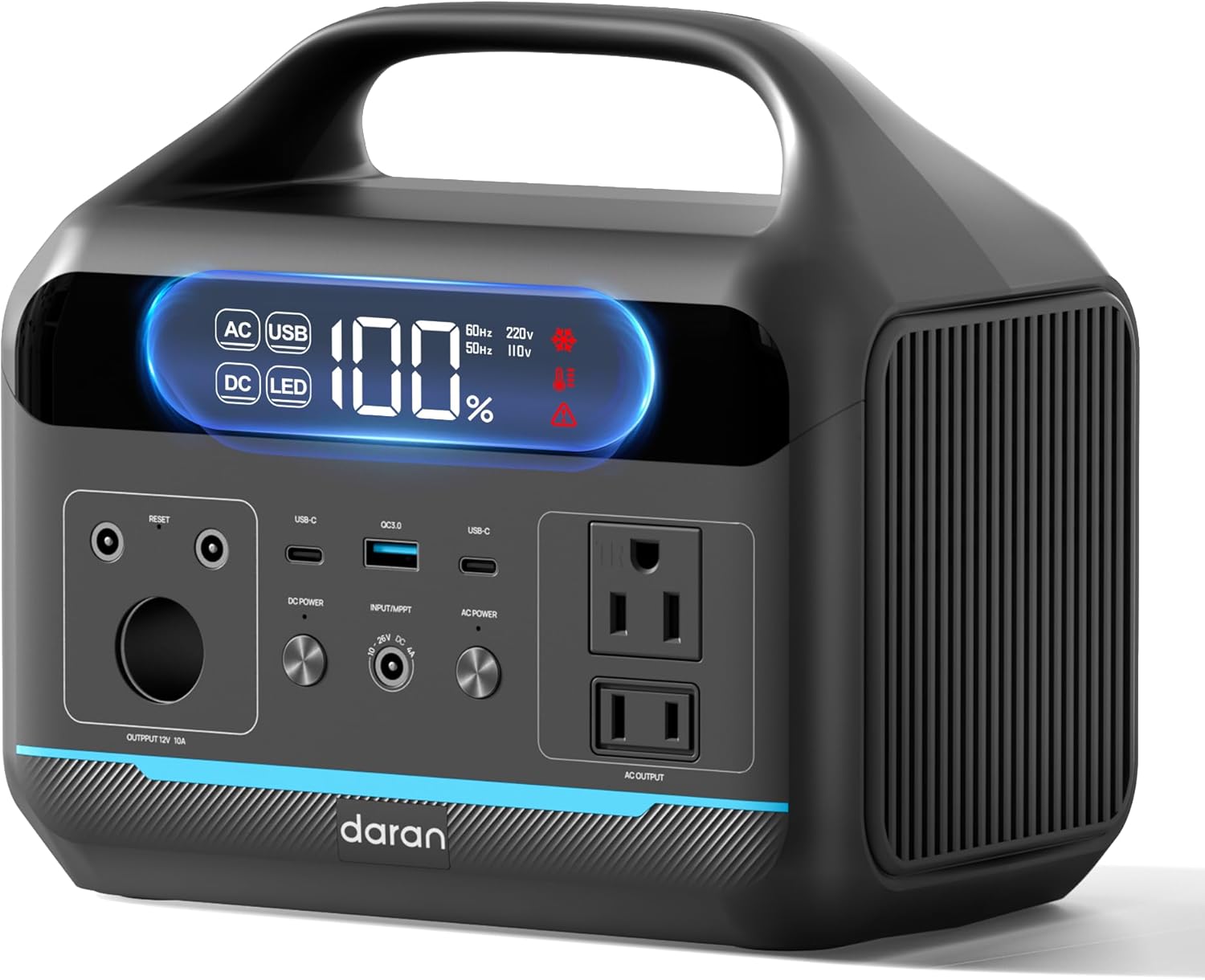
The DARAN Portable Power Station 600W(1200W Surge) – 288Wh(90,000mAh) Solar Generator LiFePO4 Battery with AC DC Outlets, 8.3LB Portable Charging Station for Camping, RV, Home, Emergency (Solar Optional) is designed to be a mid-range, multi-use power unit. It emphasizes long battery life with LiFePO4 chemistry, a compact footprint at about 8.3 lb, and a set of ports that let you charge phones, laptops, small fridges, lights, and more.

Key specifications
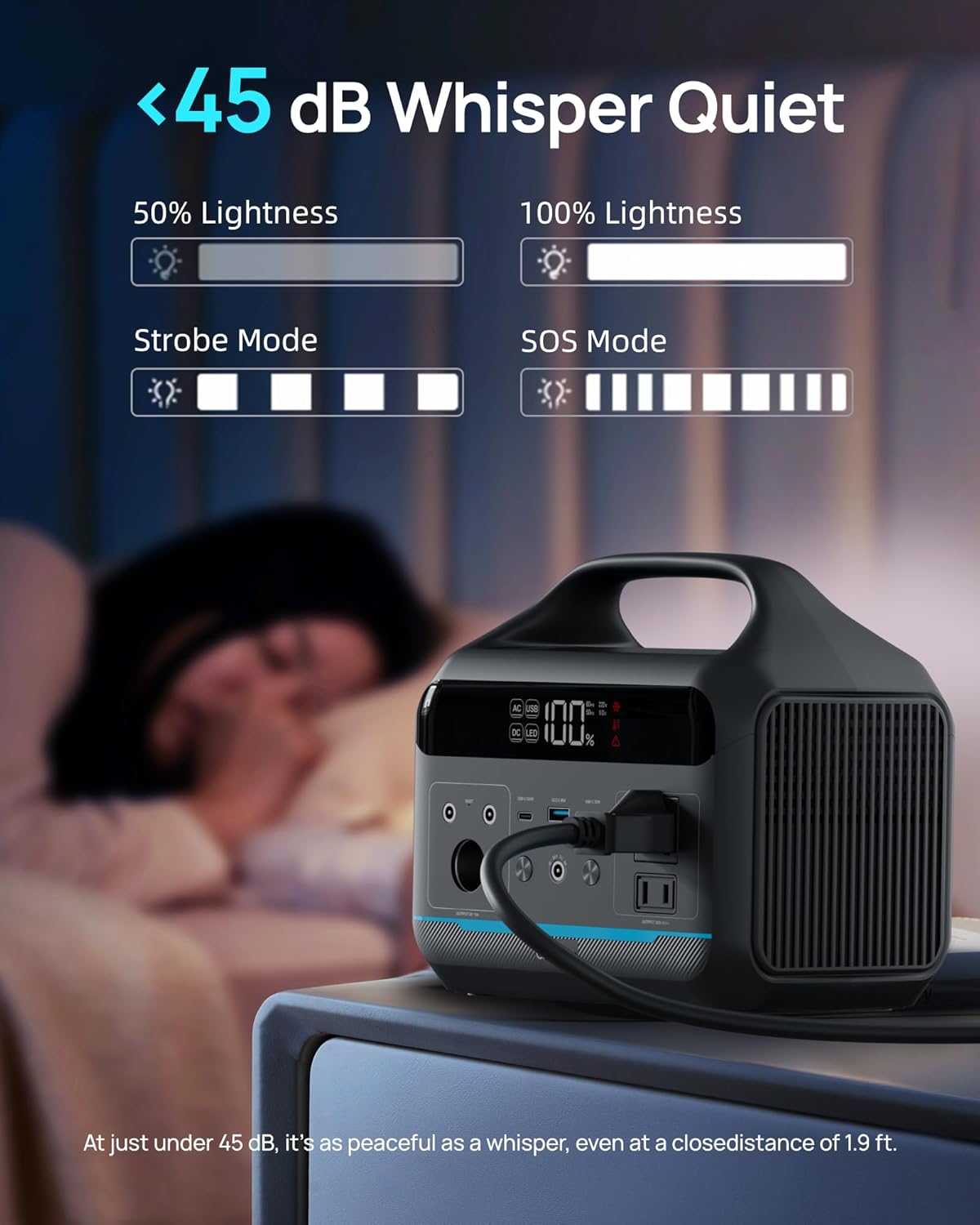
Below is a clear breakdown of the most important specs and practical runtime estimates you’ll find helpful when deciding if this model suits your needs.
| Feature | Specification / Estimate |
|---|---|
| Battery chemistry | LiFePO4 (long cycle life) |
| Usable capacity | 288Wh (equivalent to 90,000mAh @3.2V) |
| Continuous AC output | 600W |
| Surge (peak) AC output | 1,200W |
| AC outlets | 2 x AC |
| USB-C | 1 x USB-C PD 60W |
| USB-A | 2 x USB-A (up to 18W each) |
| DC input/output | 1 x DC (for solar/car input + DC output) |
| Weight | ~8.3 lb |
| Recharge: AC to 80% | ~2 hours (manufacturer claim) |
| Cycle life | 3,500+ cycles (LiFePO4) |
| Safety | 12 protections + BMS monitoring |
| LED light | Integrated with SOS mode |
| Included in box | Power station, AC charging cable, user manual |
| Not included | Solar panel, car charging cable |
| Special behavior | AC ports auto-off at 10% battery to protect cell health; DC/USB remain available |
Estimated runtimes (realistic, accounting for inverter losses and battery management):
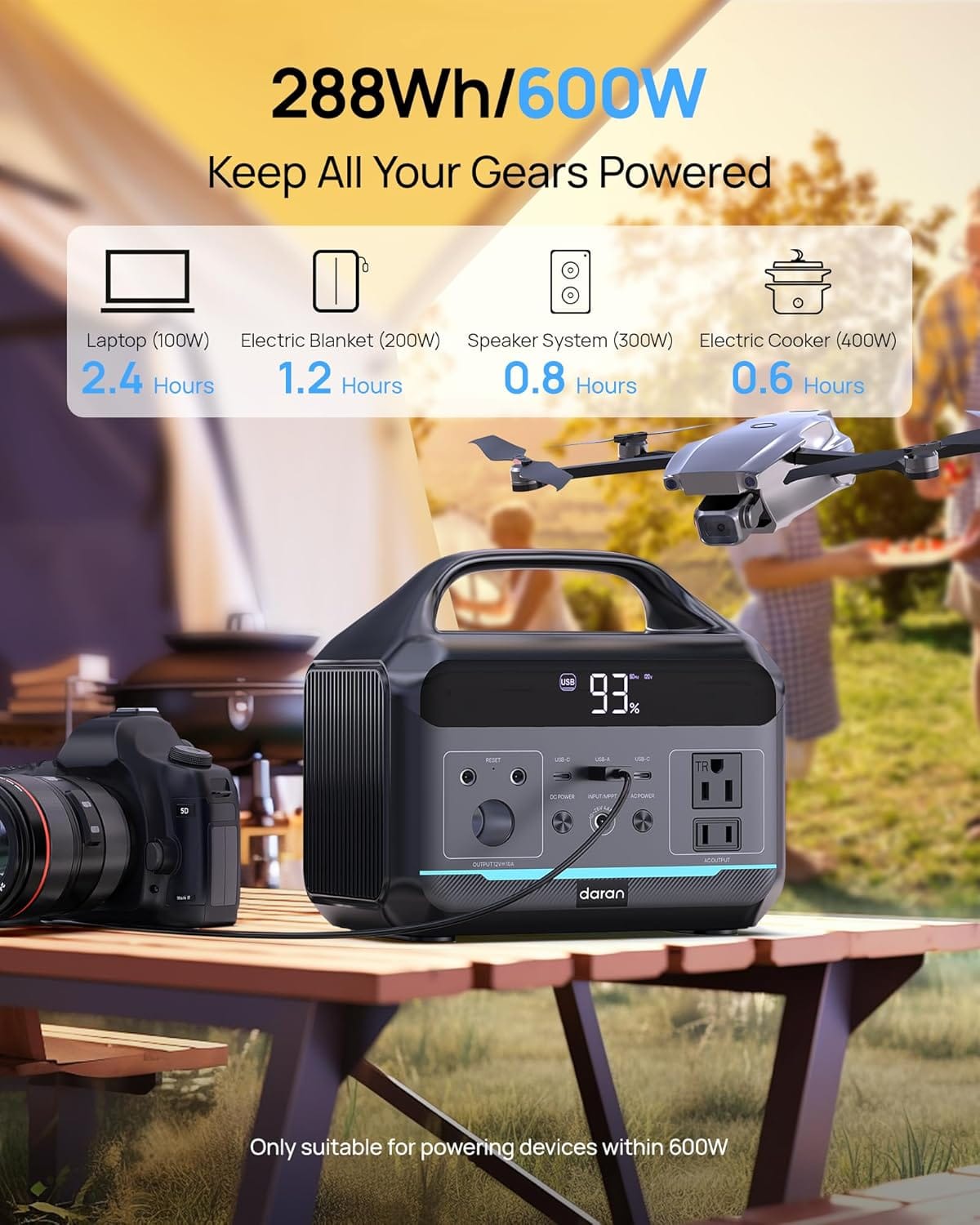
- Smartphone (10W): ~20–25+ hours
- Laptop (45W): ~5–6 hours
- Portable fridge / small car refrigerator (60W): ~3.5–4.5 hours
- CPAP (typical 40–60W): ~3–6 hours depending on model
- LED light (10W): ~20+ hours
Design and portability
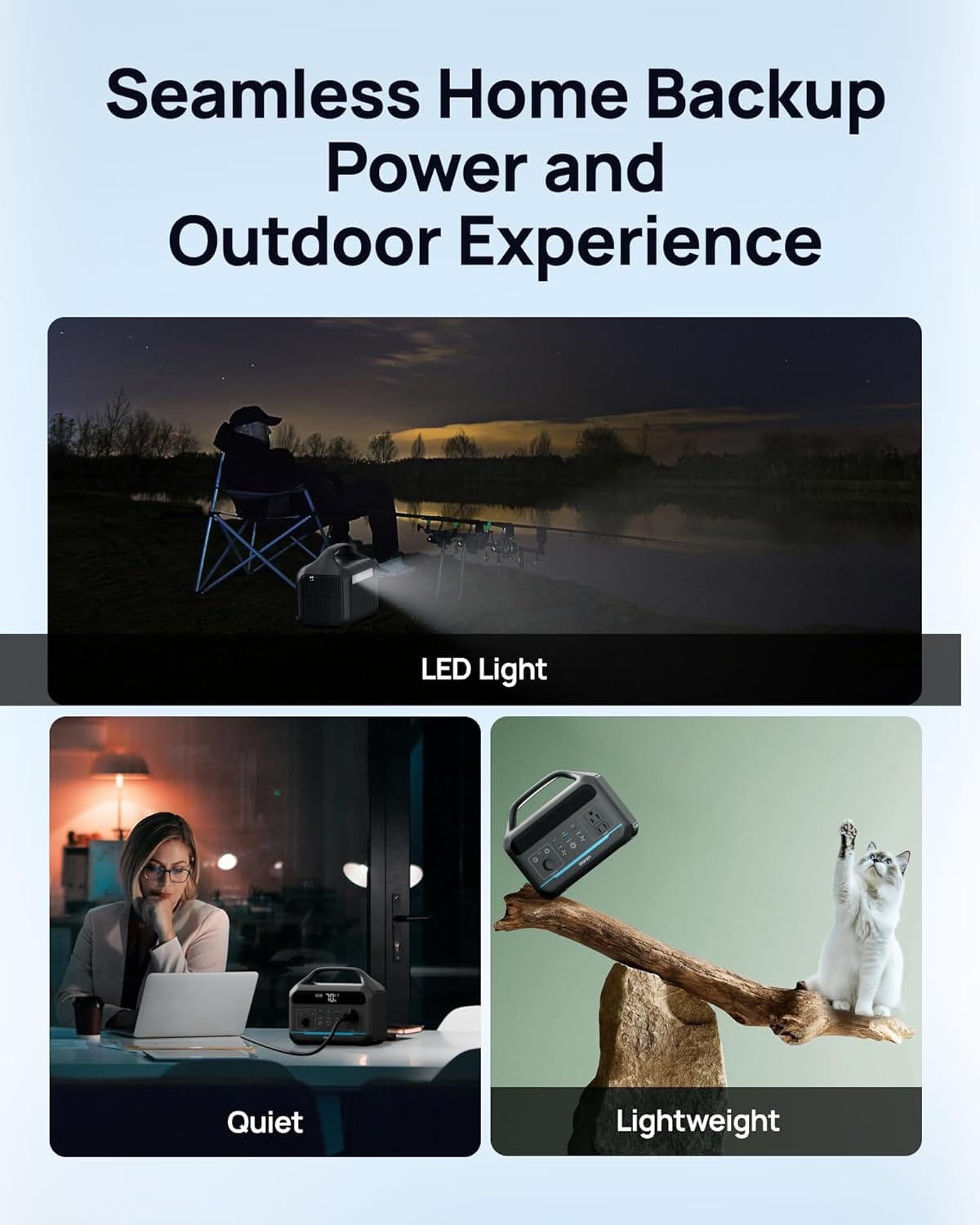
The unit’s compact size and 8.3 lb weight make it easy for one person to carry or pack into a car or RV. You’ll notice a simple, rugged exterior with an integrated handle, and a digital display that shows charge percentage and output/input status. The footprint is friendly for tight storage spaces and small tents.
Battery technology and lifespan
LiFePO4 chemistry is a major selling point here. Because the battery is LiFePO4, you can expect significantly longer cycle life and better thermal stability compared with typical lithium-ion packs. The manufacturer states 3,500+ cycles, which means you can use this daily for years before capacity drops substantially. That longevity makes it a good choice if you plan to integrate the unit into regular outdoor gear or emergency preparedness.
Output ports and charging options
You have a functional mix of outputs that cover most daily charging needs, from USB to AC. The layout allows multiple devices to be powered simultaneously without juggling adapters.
AC outlets
Two AC outlets provide up to 600W continuous with a 1,200W surge capacity for brief motor starts or power spikes. That’s enough for laptops, small fridges, projectors, fans, and some medical devices — but not for high-watt appliances like microwaves, full-size electric kettles, or hair dryers.
USB-C PD60W and USB-A
The single USB-C PD port provides up to 60W, so you can fast-charge many laptops, tablets, and phones that accept PD. The two USB-A ports each support up to 18W, which is handy for phones, power banks, and accessories.
DC input/output
The DC port supports solar and car charging input (note: cables/panels not included) and provides DC output for compatible devices. This adds flexibility for on-the-road recharging or pairing with a solar panel when you’re off-grid.
LED light and emergency features
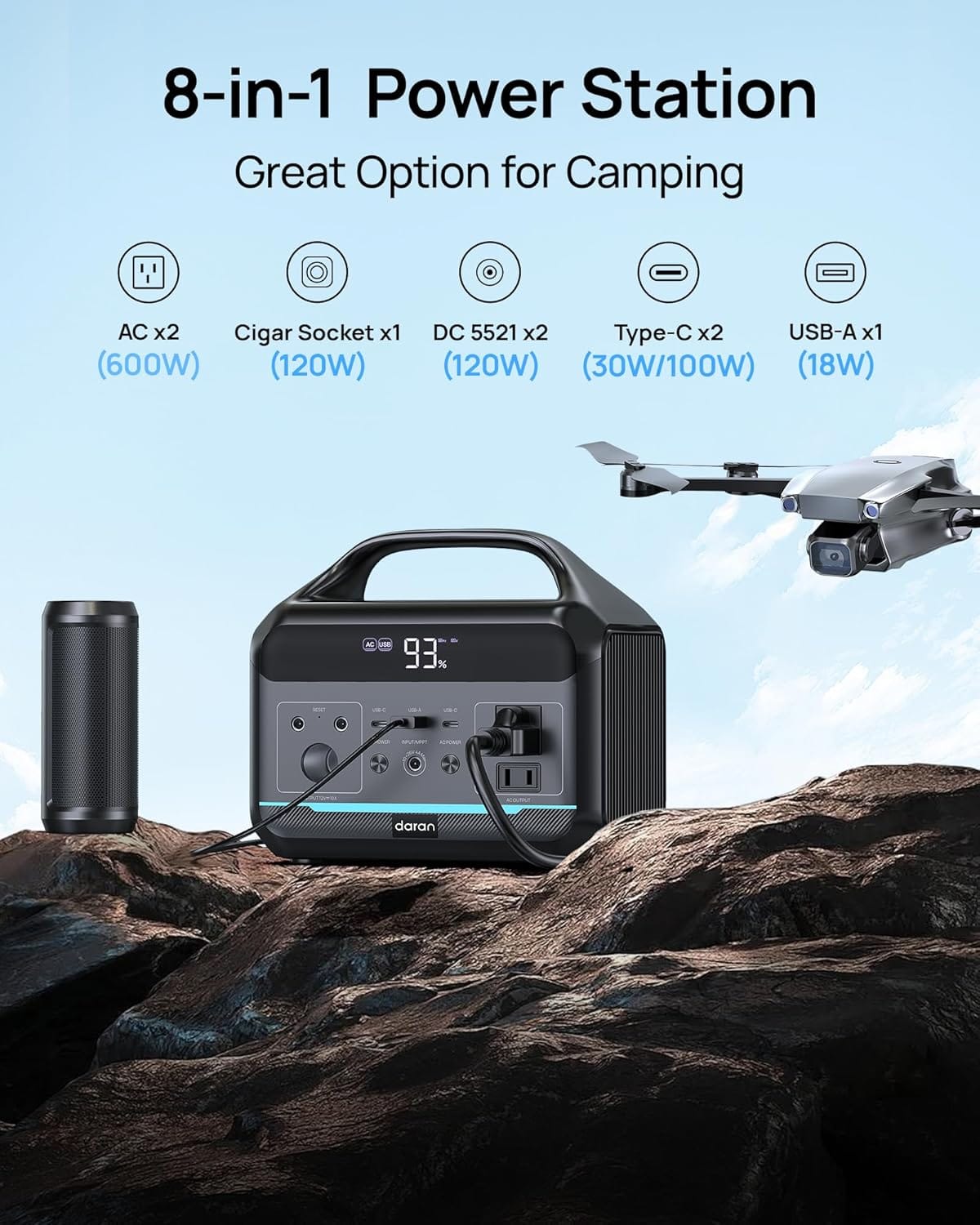
An integrated LED light with an SOS mode is a practical inclusion for emergency situations, campsite tasks, or power outages. It’s a small feature that can make the unit feel more like a complete emergency kit.
Performance and real-world runtime estimates
Real-world runtime depends on device wattage and how you use the unit. In practice, inverter efficiency (often 85–90%) and power draw patterns change how long the 288Wh will last.
- Low-power use (phones, LED lights): The unit can easily stretch to full weekends or longer. Expect many hours or days for intermittent light and phone charging.
- Mid-power use (laptops, cameras, routers): You’ll see several hours of runtime — good for mobile work sessions or charging a laptop a few times on a trip.
- Continuous appliances (portable fridge, CPAP): For a 60W mini-fridge, expect roughly 3.5–4.5 hours; for CPAP machines (often 40–60W), you’ll typically get one full night, sometimes more depending on the machine and settings. Always check your device’s continuous power draw before relying on the unit for overnight medical use.
Charging behavior and times
How you recharge the DARAN unit affects practical usability. The unit supports multiple charging methods but note that not all accessories are included.
AC charging
The fastest supplied charging option is the AC cable included in the box. The manufacturer claims a recharge to 80% in about 2 hours via AC, which is very convenient when you have access to wall power. Full charge time may be slightly longer; manufacturers typically advertise the quick 80% time because battery charge rate slows near full.
Solar charging
Solar charging is supported but the solar panel is sold separately. Solar recharge time varies widely depending on panel wattage, sun conditions, and whether you combine solar with AC charging. For example, a 100W panel in ideal conditions might give 60–80W usable power after inefficiencies, so a full recharge could take several hours and likely a full day of strong sun. Combining solar and AC can shorten total recharge time.
Car charging
Car charging is supported as an option but the car charging cable is not included. Car charging is convenient for road trips, but it typically takes longer than AC unless you have high-wattage car converters.
Simultaneous charging & pass-through use
You can generally use devices while the unit is charging (pass-through), which is useful in camping or emergency scenarios. However, behavior can vary by unit and power draw; very high loads may reduce net battery charging speed or be limited by the inverter.
Safety features and BMS
The unit uses an advanced Battery Management System (BMS) that protects against overheat, short circuit, overload, overcharge, and other hazards. There are 12 safety protections built-in. One particular behavior to note: when battery level hits 10%, the AC ports automatically shut off to prevent battery damage and prolong cycle life — DC and USB ports remain usable. This helps protect the LiFePO4 cells and increases long-term reliability, but means you should plan for that shutdown when powering AC devices.
Use cases and practical scenarios
This product is versatile enough for a number of real-world situations where you need portable power.
Camping & outdoors
On a weekend camping trip, the station can run lights, charge multiple phones, power a speaker, and keep a mini-fridge or cooler running for several hours. You’ll appreciate the light weight and the recharge options if you bring a compatible solar panel.
RV trips
For short boondocking or tailgate setups, you can run small appliances and charge electronics. It’s not a replacement for a full RV inverter system, but it covers short-term needs when you want quiet, portable power.
Home emergency & storms
During a power outage, this station can keep essential devices running — phones, lights, a router, and perhaps a small medical device — long enough to get through short outages or to power individual items overnight.
CPAP and medical devices
You can power many CPAP machines depending on their wattage. Because CPAP units vary, check your machine’s draw. The 600W continuous output supports most CPAP setups, but runtime will depend on the device and its humidifier or heated tubing options.
Everyday portable power
You can use the unit for mobile work, outdoor photography, and as a backup in the trunk of your car. Its fast AC charging is handy between outings.
Limitations and what to watch for
There are practical limits you should be aware of before buying.
- 600W continuous output restricts you from running high-watt appliances like microwaves, electric kettles, or hair dryers. Even if the surge capacity can handle a brief spike, continuous use will exceed limits.
- Solar panel and car charging cable aren’t included. You’ll need to budget for compatible accessories.
- AC ports auto-shutoff at 10% battery; DC/USB remain active. That behavior protects the battery but could interrupt AC-dependent devices.
- Real-world runtimes are lower than theoretical math because of inverter efficiency and system losses.
- If you need multi-day power for large loads or full home backup, you’ll need a larger capacity system.
Comparing to alternatives
If you compare this unit to other 300–500Wh or 500–1000Wh stations, the standout differences are LiFePO4 chemistry (longer life), a very portable weight, and fast AC charging. Some competitors might offer higher continuous wattage or larger capacities but at the cost of weight and price. If you want a long-lived, lightweight pack for mid-power uses, this model sits in a useful middle ground.
Who should buy it?
You should consider this power station if:
- You want a lightweight, durable LiFePO4 option for weekend trips and emergency readiness.
- You need fast AC recharge when you return to a wall outlet.
- You want the ability to power mid-draw devices like laptops, mini-fridges, and CPAP machines for short periods.
- You value cycle life and safety more than raw capacity.
You might look elsewhere if:
- You need multi-day power for high-wattage devices.
- You require integrated solar panels or car charging accessories in the package.
- You need continuous power above 600W.
Setup, maintenance, and best practices
Getting the most from your unit involves a few simple steps and habits.
- Charge before first use: Fully charge the power station using the supplied AC cable before relying on it in the field.
- Store at partial charge: For long-term storage, keep the battery around 40–60% charge to optimize lifespan.
- Avoid extreme temperatures: Store and use between recommended temperature ranges — avoid extremes which reduce efficiency and potentially damage the battery.
- Regular exercise: If you store the unit for extended periods, recharge it every few months to maintain cell health.
- Read the manual: Follow the user manual for port usage, charge limits, and safety instructions.
- Check device draw: Prior to using for important devices (CPAP, fridge), verify their wattage to estimate runtime accurately.
Accessories to consider
To make this unit more flexible, you may want to buy:
- A compatible solar panel (look for MPPT-regulated panels or those recommended by the manufacturer).
- Car charging cable (if you want recharging from a 12V socket).
- Extra USB or DC cables for faster multi-device charging.
- Protective carry case for transport and storage.
Troubleshooting and customer support
If you run into issues:
- Confirm the device is charged and that you’re using the correct cables and ports.
- Check the digital display for error codes or warnings. The BMS should indicate faults.
- Remember AC auto-off occurs at 10% battery; switch to DC/USB if you need limited power at very low charge.
- Contact the manufacturer’s customer service for unresolved issues. The product listing emphasizes support and assistance; they can help with warranty and troubleshooting.
Pros and cons
Pros:
- LiFePO4 battery with long cycle life (3,500+ cycles).
- Lightweight and portable at ~8.3 lb.
- Fast AC charging to 80% in about 2 hours.
- Useful port selection including 60W USB-C PD.
- Built-in LED light with SOS mode and effective BMS protections.
Cons:
- 600W continuous limits heavier appliances.
- Solar panel and car charging cable are not included.
- AC port auto-offs at 10% may interrupt some uses.
- Only one USB-C PD port — could be limiting if you have multiple PD devices.
Final verdict
If you want a reliable, long-lasting portable power station that balances portability, safety, and performance, this model is a strong option. It’s especially appealing when you prioritize long cycle life (LiFePO4) and need a compact unit that still powers mid-wattage devices. It isn’t designed to replace a full home backup or power-hungry tools, but for camping, RV weekend trips, short outages, and keeping essential devices running, it offers a practical mix of features. Make sure to factor in the need for separate solar panels or car cable if those recharging methods matter to you.
Frequently asked questions (FAQ)
Q: Can this power station run a full-size refrigerator? A: No, full-size refrigerators typically require more than 600W continuous and higher surge capacity over extended periods. You can run small portable fridges or 12V car refrigerators, but expect runtimes of a few hours depending on draw.
Q: Will the AC ports turn off automatically? A: Yes, the AC ports auto-off at around 10% battery to protect the battery. DC and USB outputs remain available so you can still charge low-power devices.
Q: How long does the battery last in terms of cycles? A: The LiFePO4 battery is rated for 3,500+ cycles. That equates to many years of daily use before significant capacity loss.
Q: Is the solar panel included? A: No, solar panels are optional and not included. You should buy a compatible panel and cables to use solar input.
Q: Can you charge while using the unit? A: Yes, you can generally charge devices while the unit is charging (pass-through), but heavy simultaneous loads may affect net charging speed.
Q: Is a car charging cable included? A: No, the car charging cable is not included. If you want to recharge from your vehicle, you’ll need to get the appropriate cable.
Q: Is the unit safe for medical devices like CPAP? A: Many CPAP units can be powered by this station if their wattage is within the 600W continuous limit. Check your CPAP’s power draw and consider humidifiers or heated tubing, which increase consumption. Test with your device before relying on it for emergency use.
Q: How fast does it charge with solar? A: Solar charge time depends on panel wattage, sunlight, and conditions. A 100W panel under ideal sun might take many hours to fully recharge; combining solar with AC can reduce overall time. For best results, use panels and controllers recommended by the manufacturer.
If you have a specific use case or devices you want to run, tell me what they are and I’ll estimate runtimes and advise whether this unit fits your needs.
Disclosure: As an Amazon Associate, I earn from qualifying purchases.