
Looking for a compact, fast-charging power station that can keep your CPAP running and your devices topped up during a storm or a camping trip?

Quick Verdict
You’re looking at a solid, compact option with the DARAN Portable Power Station 600W (1200W Peak), 288Wh (90,000mAh) Solar Generator LiFePO4 Battery with AC DC Outlets, 2hrs Fast Charging, 7-Port Design for Emergency, Hurricane (Solar Optional). It’s especially appealing if you want something lightweight, quiet, and safe for indoor use, with fast AC charging and LiFePO4 longevity. If your needs stay within a 600W continuous limit, this unit delivers dependable performance and good multi-device convenience.
Product Overview
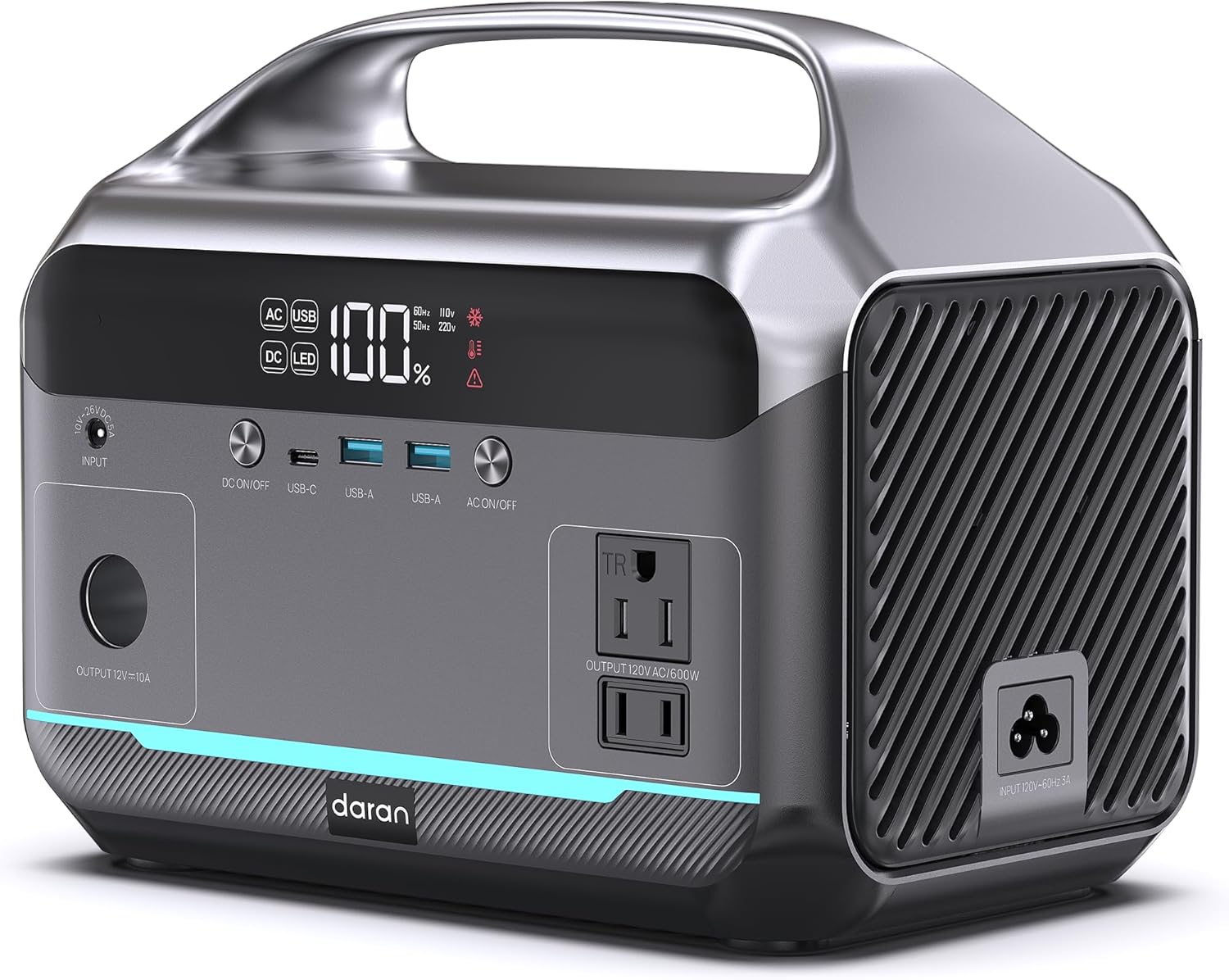
This DARAN Portable Power Station packs a 288Wh LiFePO4 battery into an 8.86 lb package that’s easy to carry in a car trunk or a backpack. You get up to 600W continuous output (1200W surge), multiple ports for simultaneous charging, and fast AC recharge to 80% in about 2 hours. The unit is aimed at emergency preparedness, CPAP users, camping groups, and anyone who wants quiet, safe indoor backup power.
Key Specifications (At-a-glance)
Below is a concise spec breakdown so you can quickly see the core numbers and ports this model offers. Use these figures to match the power station to your devices and scenarios.
| Feature | Specification |
|---|---|
| Model Name | DARAN Portable Power Station 600W (1200W Peak), 288Wh (90,000mAh) Solar Generator LiFePO4 Battery |
| Battery Capacity | 288Wh (90,000mAh) |
| Continuous Output | 600W pure sine wave |
| Peak/Surge Output | 1200W |
| AC Outlets | 2 × AC outlets (pure sine wave) |
| USB Ports | 2 × USB-A |
| USB-C | 1 × USB-C |
| Car Socket | 1 × 12V car socket |
| Simultaneous Devices | Up to 6 devices at once |
| Solar Input | Up to 100W (solar panel not included) |
| AC Fast Charge | 80% in ~2 hours (AC) |
| Weight | 8.86 lbs |
| Dimensions | 10.0 × 6.6 × 8.2 in |
| Battery Chemistry | LiFePO4 |
| Noise | Silent (no fan) |
| Additional Features | Rear LED light (steady, strobe, SOS), BMS safety protection |
| Included | Power station, AC charging cable, user manual, 1-year customer service |
| Not Included | Solar panels, solar charging cables, car charging cables |
Performance: AC Output and Pure Sine Wave
The unit provides 600W of continuous AC power through its AC outlets and a 1200W surge capacity to handle startup loads like some motors and compressors. You should keep in mind that the continuous rating is the limit for sustained loads — anything above 600W will overload the unit. The pure sine wave output is great for sensitive electronics like CPAP machines, laptops, and other AC-powered devices that prefer a clean waveform.
AC Outlet Behavior and Limitations
You’ll want to check the combined draw of all devices plugged into the AC outlets so you don’t exceed 600W. The surge headroom to 1200W helps with start-up currents, but that’s short-term only. If you’re planning to run high-draw power tools or multiple heavy appliances, this unit is not appropriate for sustained loads above the continuous rating.
USB-A and USB-C Ports
The two USB-A ports and single USB-C port give you versatile charging for phones, tablets, cameras, and many modern laptops (via USB-C PD if supported). These ports make it simple to charge multiple smaller devices simultaneously without dipping into your AC budget. Expect typical charging behavior for mobile devices and modestly powered peripherals.
Car Socket and Multi-device Charging
The included 12V car socket is handy for charging automotive accessories and other 12V devices. Combined with the AC, USB-A, and USB-C ports, you can charge or power up to six devices at once — useful for group camping or family emergencies. Just remember to balance loads so you don’t accidentally exceed the total allowable output.
Charging Options and Speed
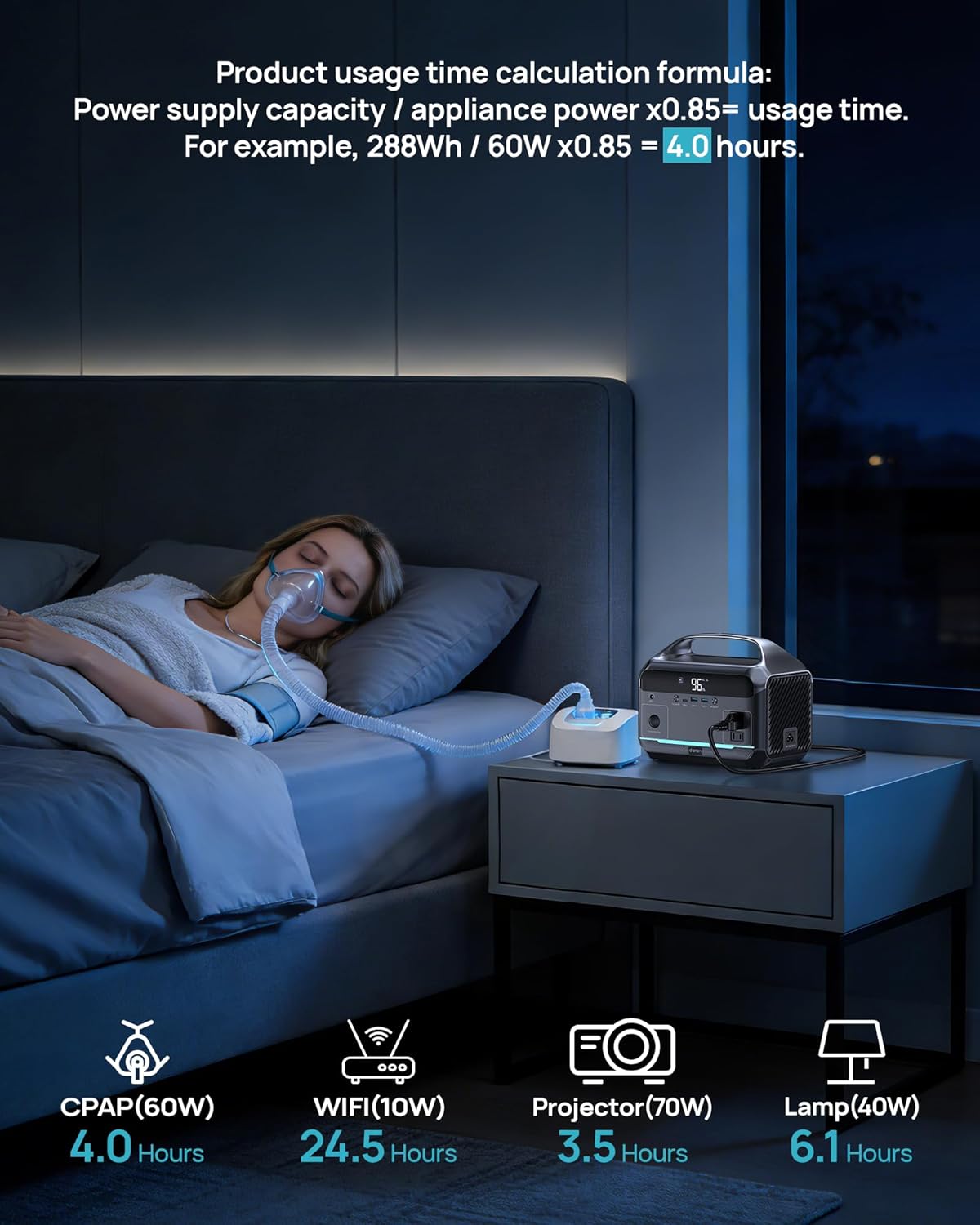
You can recharge the power station several ways: using the AC charging cable provided, via a car outlet, or by connecting a solar panel up to 100W (not included). The standout feature here is fast AC charging: the battery charges to 80% in about 2 hours using household AC power. That makes it quick to get back to usable capacity after a long run.
Fast AC Charging Details
Getting to 80% in roughly 2 hours is very practical when you’re restoring power between uses. Real-world times depend on wall outlet quality, ambient temperature, and how much load you’re drawing while charging. Expect diminishing returns as it approaches 100%, so full charge times may be slightly longer.
Solar Charging Capability
You can add a 100W solar panel to charge the unit off-grid, which is perfect for extended outdoor trips or long-duration outages. Solar panels, and the solar charging and car charging cables, are not included, so plan on purchasing them separately if you intend to use solar or vehicle charging often. Solar is slower and weather-dependent, but it gives you a renewable charging option.
Car Charging
You can recharge from a car outlet when on the road, which is convenient during travel. Car charging is typically slower than AC but useful for maintaining charge during long drives or when you don’t have access to AC power.
Battery Chemistry and Safety Features
The DARAN unit uses a LiFePO4 battery, which is known for a longer cycle life and better thermal stability compared to typical lithium-ion chemistries. The built-in Battery Management System (BMS) protects against overcharge, over-discharge, overload, and temperature extremes, making it safer for indoor use and prolonged storage.
Advantages of LiFePO4
You’ll appreciate that LiFePO4 chemistry generally handles more charge/discharge cycles before degrading, so the unit should last longer in regular use. It’s also less prone to thermal runaway, which increases safety for indoor or near-sleeping-area use (e.g., powering a CPAP overnight). These traits make LiFePO4 a solid choice for emergency-ready devices.
BMS and Safety Details
The BMS monitors temperature and load, and will cut off power in unsafe situations to prevent damage. The unit’s silent, zero-fume operation also means you can safely use it indoors without worrying about exhaust or loud fans. The built-in rear LED light with steady, strobe, and SOS modes is a useful emergency feature for signaling and basic illumination.
Portability and Build Quality
Weighing 8.86 lbs and sized at 10.0 × 6.6 × 8.2 inches, this power station is easier to carry than many in its class. The reinforced handle and shock-resistant casing mean it’s built for travel and occasional rough handling. The compact size also helps it fit into tighter storage spaces like backpacks, small trunks, or under seats.
Design and Durability
The shell is designed for practical durability rather than heavy-duty industrial use. If you’re carrying it to campsites or in your car, the handle and compact form factor keep it convenient. The casing is shock-resistant, which adds confidence when you’re stacking gear or carrying it across uneven ground.
Silent Operation and Indoor Use
Since it produces zero operational noise, you can use it inside a tent, RV, or bedroom without disturbance. This makes it particularly useful for overnight CPAP use or as a quiet backup during power outages.
Real-World Runtime Examples
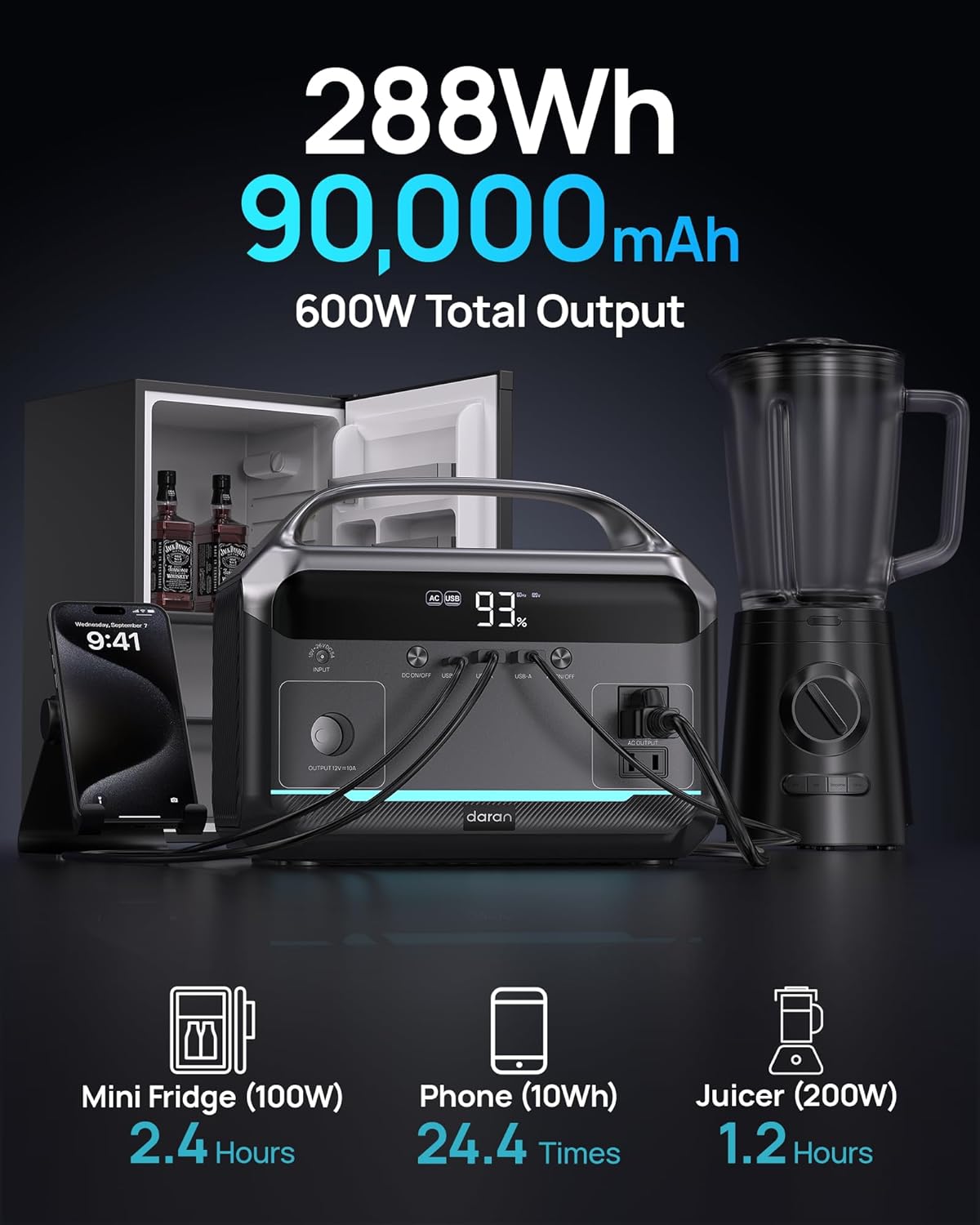
Battery runtime depends on your device’s wattage and the conversion efficiency. DARAN provides an estimated conversion rate of 85% (0.85) for calculating usable output. Below you’ll find calculated estimates for common devices to help you plan.
| Device | Power Draw (W) | Estimated Runtime (hrs) |
|---|---|---|
| CPAP (example 30W) | 30W | 8.16 hrs (288Wh × 0.85 / 30W) |
| Laptop (average 60W) | 60W | 4.08 hrs (288Wh × 0.85 / 60W) |
| Mini-fridge (average 50W) | 50W | 4.90 hrs (288Wh × 0.85 / 50W) |
| Electric kettle (100W steady use not typical) | 100W | 2.44 hrs (288Wh × 0.85 / 100W) |
| Smartphone charging (10W) | 10W | 24.48 hrs (288Wh × 0.85 / 10W) |
| Camera battery charger (20W) | 20W | 12.24 hrs (288Wh × 0.85 / 20W) |
| LED light strip (10W) | 10W | 24.48 hrs (288Wh × 0.85 / 10W) |
These estimates assume continuous draw at the listed wattage. For devices with motors or compressors, start-up power can be higher than running power, so the surge capacity (1200W) may kick in briefly to handle startups. Always check your specific device’s power rating and startup requirements before relying on estimates.
Ideal Use Cases
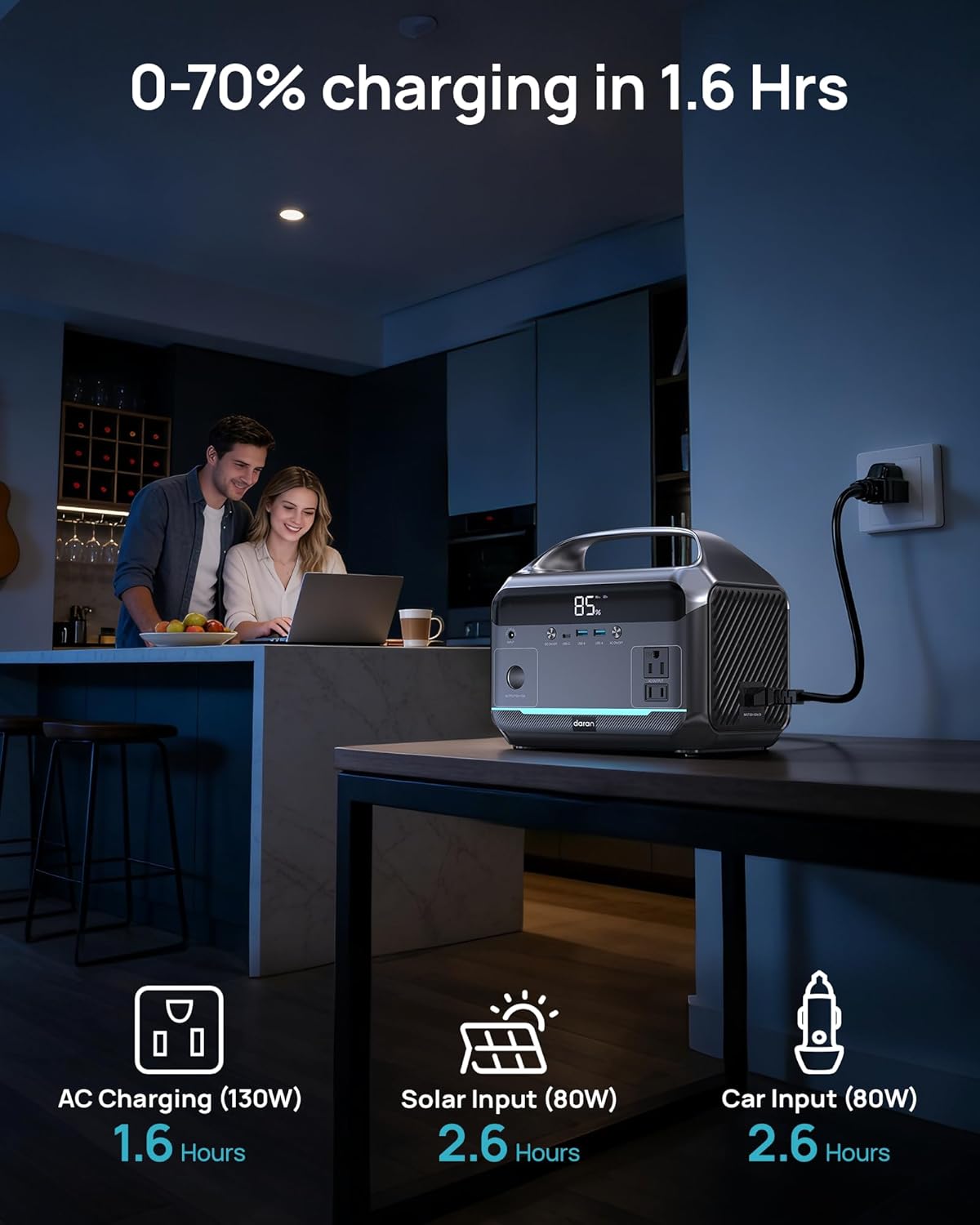
You’ll find several practical scenarios where this DARAN unit fits well. It’s excellent for CPAP users who need overnight power without noise or fumes. It works well for weekend camping trips where you want to keep phones, cameras, and a laptop charged. It’s also a solid emergency backup for lights, small appliances, and communication gear during storms or outages.
For CPAP Users
If your CPAP draws around 30W, you can expect around 8 hours of operation, which is typical for a night’s sleep. That means you can rely on this unit for overnight medical support during travel or power outages, provided your machine’s draw is within the wattage limits.
For Camping and Road Trips
The multiple ports and car socket let you power family devices, run a small fridge, or charge camera batteries while on the move. The compact weight and fast recharge make it a practical companion for repeat outings where you need quick turnaround between uses.
For Emergency and Home Backup
You’ll appreciate the silent operation, safety features, and quick AC recharge when power goes out. Use it to power lighting, charge phones, and run small essential electronics during storms or hurricanes. The rear LED light with SOS mode can also help with visibility or signaling in emergency situations.
Limitations and Caveats
This power station is not a solution for heavy loads beyond 600W continuous. If you have appliances like a full-sized electric cooktop, heavy power tools with sustained draw above the rating, or multiple high-draw devices, the DARAN unit will not be sufficient. Also note that solar panels and additional charging cables are not included, so add those costs to your plan if you expect to charge off-grid.
Not Ideal for High-Wattage Tools
You may be tempted to use it for drills or saws, but if those tools pull more than 600W continuously, you risk overloading the inverter. This unit is best for light-to-moderate power tools or short bursts of heavier loads that stay within surge limits.
Solar and Cable Purchases
If you intend to use solar charging, you’ll need a compatible 100W panel and the correct solar input cable. These are sold separately, so factor in the extra items and check connector compatibility before buying a panel.
Considerations for Long-Term Off-Grid Use
The 288Wh capacity is fantastic for short-term or occasional use, but it’s limited for extended off-grid living unless paired with multiple solar charging cycles per day. For multi-day power needs without AC recharging, you’d either need a much larger capacity or consistent and efficient solar harvest.
Maintenance and Pro Tips
To keep your DARAN power station happy and healthy, follow a few easy maintenance steps. DARAN recommends performing two full charge/discharge cycles after receiving the product, and recharging the battery every 1–2 months during storage. That helps the battery chemistry stabilize and keeps cells balanced.
Storage and Periodic Recharge
If you store the unit for long periods, check and recharge it every 1–2 months to prevent deep discharge. LiFePO4 tolerates low state-of-charge better than many chemistries, but periodic maintenance still preserves capacity over time.
Cycling After Purchase
Complete two full charge and discharge cycles when you first get the unit. This “conditioning” helps the BMS and battery reach proper operating behavior and improves accuracy of any state-of-charge readouts.
Proper Use and Load Management
Always check the combined draw of attached devices. If you need to run multiple devices, add up their wattages and leave a safety margin below 600W. Avoid simultaneously connecting high inrush-load devices to prevent unnecessary shutoffs.
Comparison to Similar Power Stations
Compared to typical small portable power stations that use standard lithium-ion cells, the LiFePO4 in this DARAN unit gives you longer cycle life and better thermal stability. Capacity-wise, the 288Wh range sits in the small-to-mid tier — bigger than pocket battery packs but smaller than large home backup solutions. The 600W continuous rating is typical for compact stations aimed at portability rather than whole-house backup.
LiFePO4 vs. NMC or LCO Cells
You’ll get more cycles and safer thermal behavior with LiFePO4, albeit sometimes at a slightly higher weight for equivalent energy. This DARAN model balances that trade-off well by keeping the weight under 9 lbs. If cycle longevity and safety are priorities for you, LiFePO4 is a compelling advantage.
Value for the Specs
Given the combination of 600W continuous output, 288Wh capacity, LiFePO4 chemistry, and 2-hour fast AC charging to 80%, this unit offers a strong value proposition for light-to-moderate users. If you need longer runtime or higher sustained wattage, you’ll want a larger capacity model or one with a higher continuous inverter rating.
What’s in the Box and Additional Accessories
When you unbox the product, you’ll find the DARAN power station, an AC charging cable, and a user manual. The product also includes 1-year customer service support. It does not include solar panels, solar charging cables, or car charging cables, so you’ll need to buy those separately if you plan to use solar or frequent car charging.
Recommended Accessories
If you plan to use solar charging, add a 100W solar panel and the matching cable with the correct connector type for the solar input. Consider a car charging cable if you’ll frequently recharge on the road. A small protective carrying case can also help protect the unit during travel.
Final Recommendation
If you want a lightweight, quiet, and safe power station for emergency backup, CPAP support, camping, or light appliances, the DARAN Portable Power Station 600W (1200W Peak), 288Wh (90,000mAh) Solar Generator LiFePO4 Battery with AC DC Outlets, 2hrs Fast Charging, 7-Port Design for Emergency, Hurricane (Solar Optional) is a strong choice. Just be mindful of the 600W continuous limit and factor in the additional cost of solar panels and cables if you need off-grid charging. For everyday portability and peace of mind during outages, it’s a practical pick.
Frequently Asked Questions (FAQ)
Q: How long will this power station run my CPAP? A: If your CPAP draws about 30W, expect roughly 8 hours of runtime based on the manufacturer’s conversion rate (288Wh × 0.85 / 30W ≈ 8.16 hours). If your CPAP model draws more, adjust the estimate accordingly.
Q: Can I run a microwave or a space heater? A: No. Microwaves and space heaters typically require more than 600W continuous power. Running such appliances will either trip the unit’s protection or exceed its continuous rating, so this unit is not suitable for those loads.
Q: How fast does it recharge with solar? A: It supports up to 100W solar input, so charging speed depends on panel output and sun conditions. Expect several hours to reach meaningful capacity; solar charging will be slower and variable compared to the ~2-hour AC fast charge to 80%.
Q: Is it safe to use indoors and overnight? A: Yes. The LiFePO4 chemistry and built-in BMS provide good thermal stability and protection. The unit is silent and produces no fumes, making it suitable for indoor use and overnight CPAP operation.
Q: Do I need to buy extra cables or panels? A: You’ll receive an AC charging cable in the box, but solar panels, solar charging cables, and car charging cables are not included. Purchase a compatible 100W panel and connectors if you want solar charging capability, and a car charging cable if you plan to recharge from your vehicle.
Q: How many times can the battery be charged before it starts to degrade? A: LiFePO4 batteries typically offer many more cycles than typical lithium-ion chemistries, often in the thousands of cycles range. The exact cycle life depends on usage and depth of discharge, but you can expect longer longevity compared with standard NMC batteries.
Q: What devices can I safely power at the same time? A: You can power up to six devices simultaneously across the AC outlets, USB-A, USB-C, and car socket. Just ensure the combined AC load does not exceed 600W continuous and that you leave headroom for any startup surges.
Q: What should I do after receiving the power station? A: Perform two full charge/discharge cycles as recommended by the manufacturer to stabilize battery performance. After that, keep the unit charged every 1–2 months when stored to preserve battery health.
If you have other questions specific to your gear or use case, tell me what devices you want to run and I’ll help estimate runtimes and compatibility.
Disclosure: As an Amazon Associate, I earn from qualifying purchases.