Looking for a compact, long-lasting solar generator that can actually keep your essentials running whether you’re camping, on the road, or dealing with a power outage?
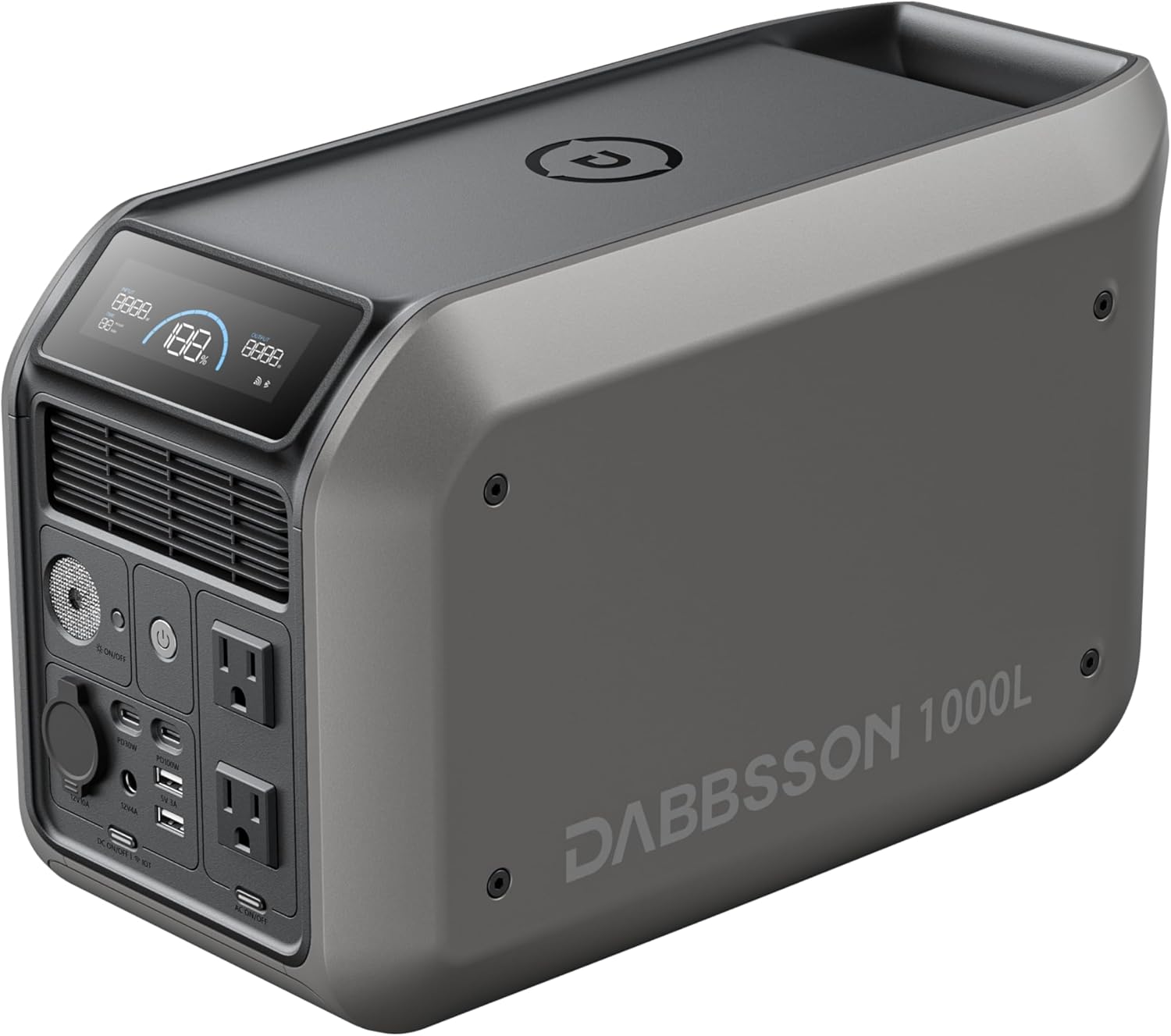

Product overview: Dabbsson Solar Generator 1000L
You get a lot packed into the Dabbsson Solar Generator 1000L, 1008Wh Semi-Solid LiFePO4, 1200W AC Output/100W USB-C, 1600W Power Boost, 1.3X Longer Runtime, 0-80% in 50 Min, Portable Power Station for Home Backup/Camping/RV. This model is built around semi-solid LiFePO4 chemistry and an AI-driven battery management system that promises extended runtime and a long lifecycle, which is especially useful if you plan to use it frequently.
You’ll notice Dabbsson emphasizes real-world durability and convenience: a relatively light 23.4 lb body with a built-in handle, fast charging options, app control, and a suite of safety protections for indoor and outdoor use. That combination makes it a strong candidate if you want a near-1 kWh station that’s smaller and lighter than many competitors.
Quick specs at a glance
Below is a condensed table to help you compare core specs quickly. It lays out the key numbers so you can see how the unit fits your needs at a glance. Refer back to this when evaluating runtime and device compatibility.
| Specification | Detail |
|---|---|
| Model | Dabbsson Solar Generator 1000L |
| Battery Capacity | 1008Wh (Semi-solid LiFePO4) |
| AC Output (continuous) | 1200W |
| AC Output (Power Boost) | 1600W (P-Boost) |
| USB-C Ports | 1× 100W, 1× 30W |
| USB-A Ports | 2× 30W |
| Car Charge | 1× 126W |
| DC Output | 1× DC5521 |
| Solar Input | Up to 600W |
| Wall Charging | 0–80% in ~50 minutes |
| Weight | ~23.4 lbs |
| Size | ~36% smaller than average 1kWh stations |
| Cycle Life | 4000+ cycles (10+ years) |
| Warranty | 5 years (3 years standard + 2-year extended) |
You’ll find the rest of the review goes into more detail on how those numbers translate to everyday use, and what to expect when you actually plug devices in.
What’s included
You’ll receive the Dabbsson 1000L portable power station, an AC charging cable, a car charging cable, and a user manual. That basic kit gives you everything you need to start using the unit right away with wall or car charging and to connect solar panels if you have them.
You’ll also get a five-year warranty—three years as standard plus two extra years—so you’re covered for manufacturing issues in the medium term. If any questions pop up, Dabbsson’s customer support is the channel they list for warranty or troubleshooting help.

Battery technology and durability
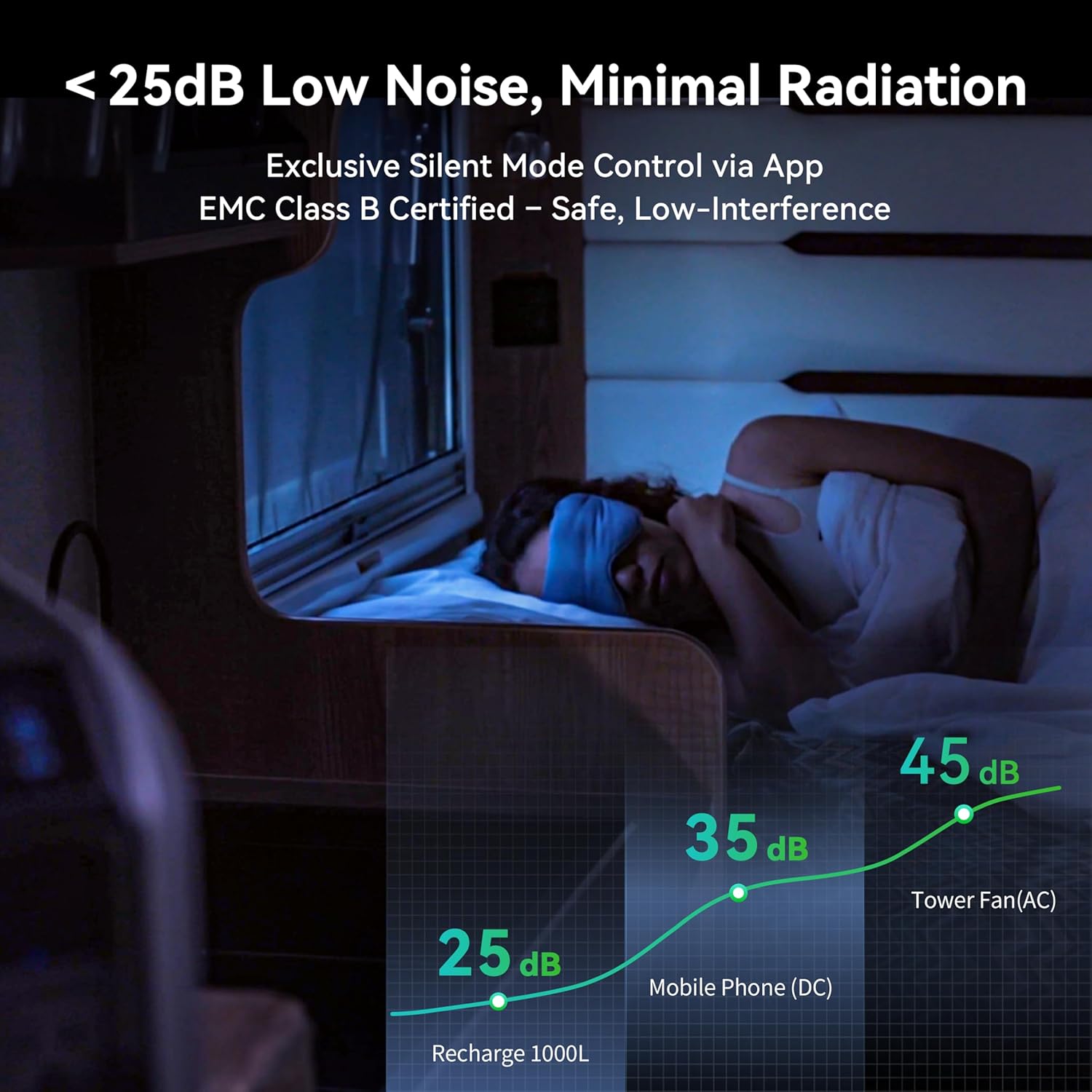
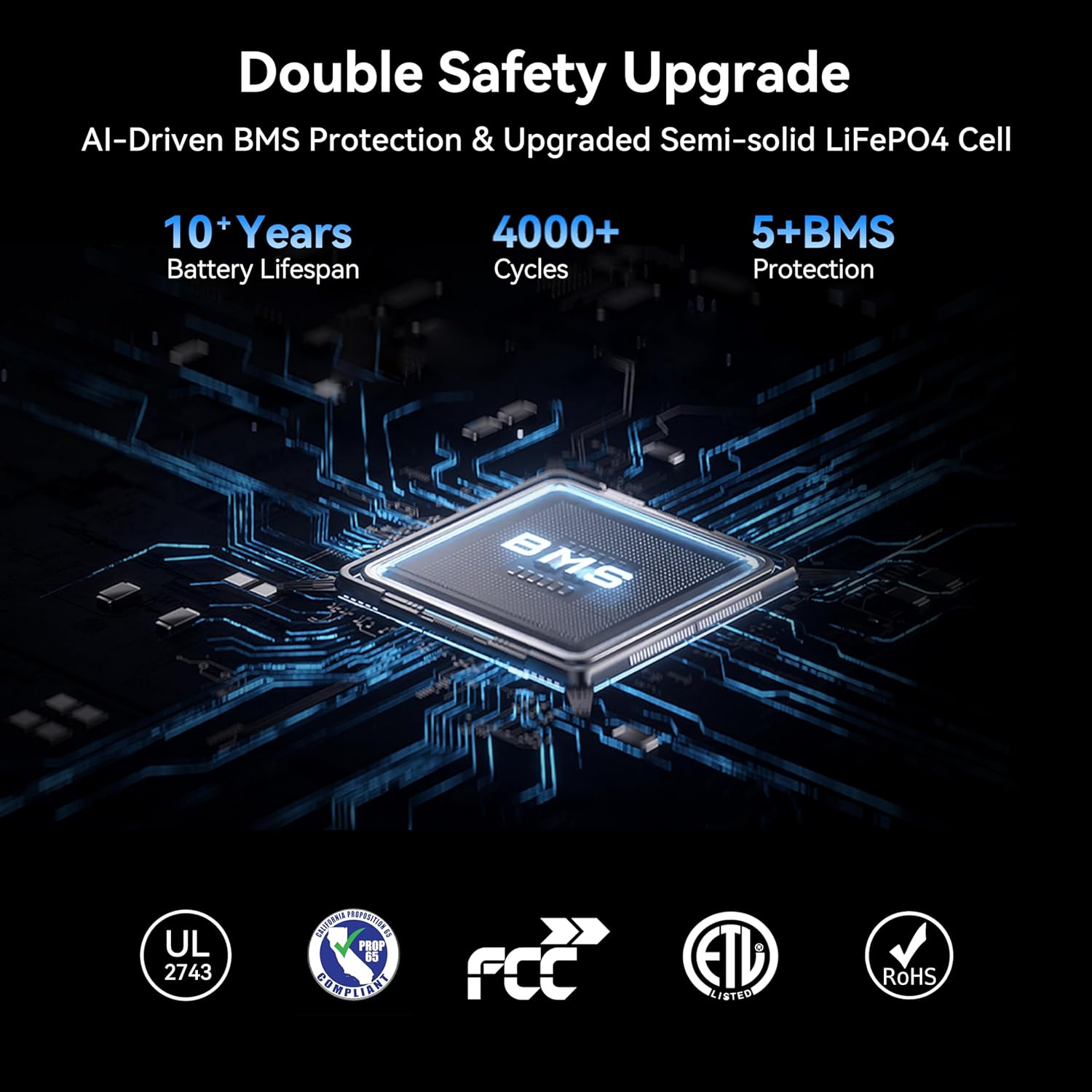
You’re looking at semi-solid LiFePO4 cells paired with an AI-driven BMS, which is not a common pairing in mainstream portable power stations yet. Semi-solid chemistry can reduce internal resistance and energy loss, meaning more of the battery’s capacity ends up powering your devices instead of being wasted as heat.
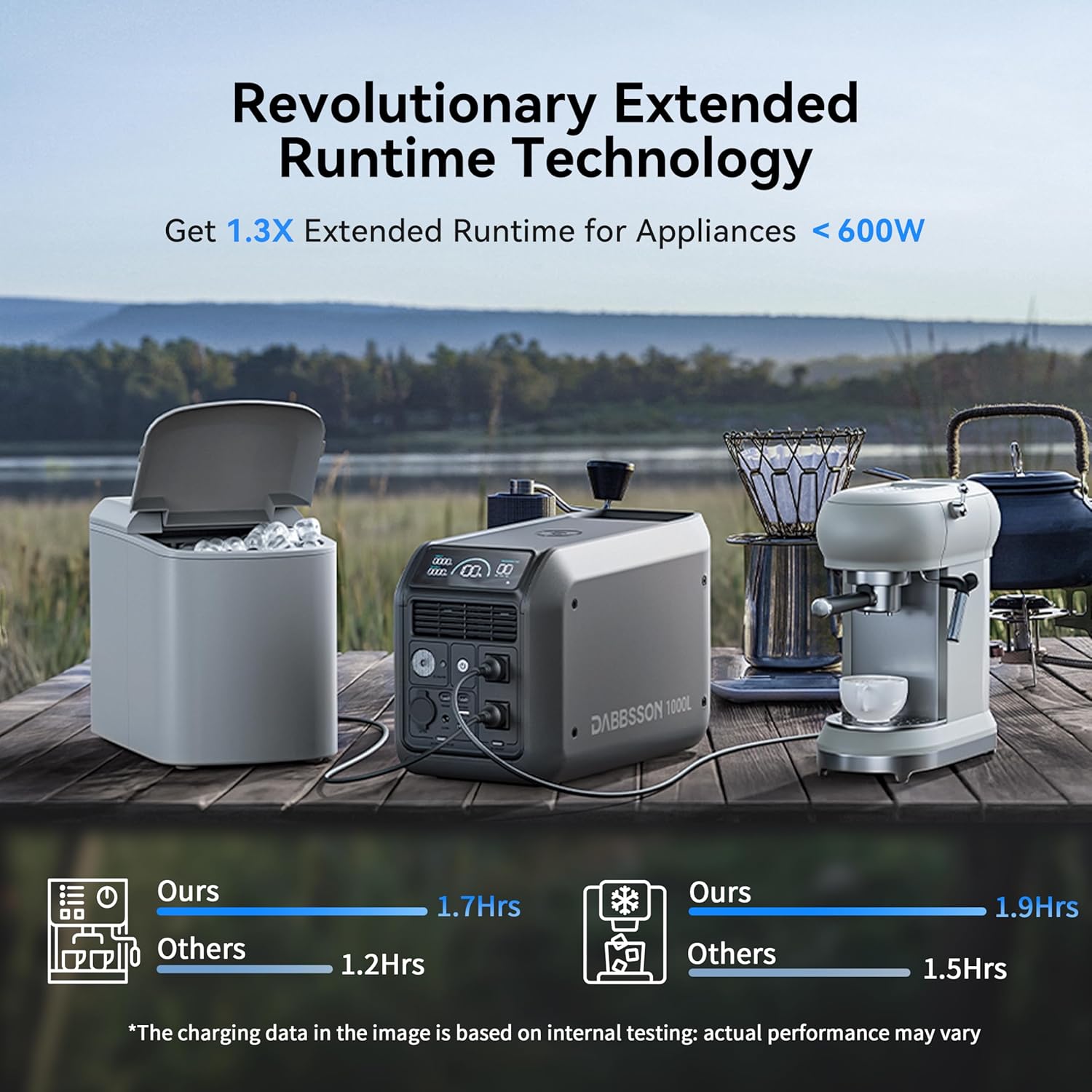
You’ll also benefit from an advertised 1.3X longer runtime for appliances drawing less than 300W, which is an important point if your typical use case is low- to mid-wattgear—think CPAPs, LED lights, routers, phones, and laptops. The unit’s thermal management and the BMS’s many protections are designed to keep cells healthy for thousands of cycles.
Semi-solid LiFePO4 explained
Semi-solid LiFePO4 combines the inherent safety and cycle life of LiFePO4 chemistry with manufacturing techniques that lower internal losses and improve energy density. That means you’ll get long life (4000+ cycles) and stable performance, even if you use the station frequently.
You’ll notice that LiFePO4 is also less prone to thermal runaway than other chemistries, so it’s a good fit for indoor backup use and long-term deployment. The semi-solid approach aims to squeeze more practical runtime from the same physical volume, which is how Dabbsson keeps the unit compact.
AI-driven BMS and safety features
You’ll have an advanced BMS monitoring cell balance, temperature, current, and voltage, applying micro-adjustments that prolong battery life and reduce degradation. The “56+ safety protections” Dabbsson advertises cover typical failure modes like overcharge, over-discharge, short circuit, and temperature extremes.
You’ll also appreciate the advanced thermal management and built-in safeguards when using the generator in mixed conditions—hot days at the campsite or variable loads during a home outage. The result is a device designed to keep operating reliably for years when used within recommended guidelines.
Output performance and real-world use
You’ll get a 1008Wh battery capable of delivering 1200W continuous AC output and a 1600W power boost for startup loads. That’s enough to run most household essentials, and the P-Boost is helpful for devices with high startup currents like some power tools or mini-fridges.
You should expect the actual runtime to vary depending on efficiency losses and the type of device you connect; the 1.3X runtime improvement applies to loads under 300W, so low-power devices will give you noticeably more hours compared to standard 1kWh stations.
Real-world runtime estimates
You can estimate runtime by dividing the usable watt-hours by device wattage and accounting for inverter losses (typical ~85–90% efficiency for AC output). For example, the Dabbsson 1000L might power the following for approximate durations:
- Smartphone (10W): many charges per day—multiple days of steady charging.
- Laptop (60W): roughly 12–14 hours.
- CPAP (40W average): ~20–24 hours depending on humidifier use.
- Mini-fridge (60–80W average, cycling): 10–20 hours depending on compressor efficiency and ambient temperature.
- LED lighting (10–20W): multiple days for a small setup.
You’ll find these figures are estimates; real-world conditions such as ambient temperature, device power draw spikes, and how aggressively you use P-Boost will shift actual run times.
AC output and Power Boost behavior
You’ll experience 1200W continuous output for sustained loads and up to 1600W temporarily for devices that require higher start-up current. This P-Boost lets you run appliances that would otherwise trip lower-capacity units—handheld power tools or refrigerators with demanding compressors, for instance.
You’ll want to avoid keeping the unit at P-Boost for long intervals, as that’s meant for short startup periods and could increase stress on the inverter. For sustained high-wattage use, choose a station rated for continuous power near or above your appliance’s average draw.
Charging options and speed
You’ll be able to charge the Dabbsson 1000L via wall outlet, solar, or a 12V/24V car input. Wall charging is especially fast—Dabbsson claims 0–80% in around 50 minutes—so you can top up quickly before you head out or when the grid is available.
You’ll also have up to 600W of solar input if you pair with appropriate panels, allowing for faster off-grid replenishment than many other 1kWh stations. The car input gives you an alternative when you’re on the move and can’t rely on AC charging.
Solar charging specifics
You’ll be able to feed up to 600W of solar into the power station, so with good sun and matching panels you can recharge a large portion of the battery in a few hours. That capability is particularly useful for extended camping or van life when you can run continuous moderate loads while replenishing battery capacity.
You’ll want to ensure you use solar panels with compatible voltage/current specs, and position them for optimal sun throughout the day. Also remember that solar is subject to weather and seasonal variation, so plan for cloudy days by reducing consumption or using alternative charging.
Fast wall charging and car options
You’ll appreciate the wall charger that can push the unit to 80% in about 50 minutes, which is convenient if you have limited downtime between trips. Car charging is slower than wall, but the 12V/24V input is invaluable for topping off while driving or when you’re away from AC power.
You’ll want to manage charging times with the app or monitoring to avoid unnecessary cycling, and use quick wall charging when you need immediate power for appliances or departure.
Ports and connectivity
You’ll find the Dabbsson 1000L has eight output ports to power multiple devices at once: 2 AC outlets (1200W), 1× 100W USB-C, 1× 30W USB-C, 2× 30W USB-A, 1× car charge port (126W), and 1× DC5521. This mix lets you run laptops, phones, lights, and small appliances simultaneously without hunting for adapters.
You’ll appreciate the 100W USB-C port for fast-charging modern laptops and phones, which is a faster and more efficient option than relying solely on inverter-powered AC charging for those devices.
Using the Dabbsson app to manage power
You’ll be able to connect the power station to the Dabbsson app to monitor battery percentage, incoming and outgoing power, and to switch modes like Quiet Charging or Energy Saving. The app adds convenience when you want to schedule or limit power use without manually toggling the device.
You’ll also be able to receive low-power reminders and other notifications to help avoid unexpected drain—handy if you rely on the unit for overnight medical devices or critical gear.
Portability and build
You’ll notice the unit is about 36% smaller and 15% lighter than average 1kWh stations, tipping the scale at roughly 23.4 lbs. That makes it far easier to carry to a campsite or move around the house when running appliances during an outage.
You’ll also get practical touches—a built-in handle and a drop test rating (0.9 ft) that suggest the unit can tolerate typical handling and transport. It’s designed to be compact, which is valuable when vehicle or storage space is limited.
Design and durability in the field
You’ll find the casing feels rugged enough for outdoor conditions, and the advanced thermal management helps protect battery health during heavy use. The drop-tested rating isn’t a license to be careless, but it does show Dabbsson has considered real-world handling.
You’ll want to avoid exposing the station to rain or immersion despite its durability features—treat it like electronics that should be protected from severe environmental stress.
Backup and safety features
You’ll get an emergency power supply (EPS) mode with <15ms switchover, so sensitive devices won’t lose power during the switch from grid to battery. that feature is particularly important if you run medical devices, routers, or other gear can’t tolerate sudden interruptions.< />>
You’ll also have built-in LED lighting for emergencies and a broad array of protections—over 56 safety safeguards—so you can run it indoors with greater peace of mind compared to generic, unmanaged power banks.
Home backup capability
You’ll find the Dabbsson 1000L well-suited as a short-term home backup for essentials: lights, routers, medical devices, phone charging, and small kitchen appliances. It’s not meant to be a whole-house solution, but for targeted support during an outage it performs very well.
You’ll want to prioritize which appliances to keep running and calculate estimated runtimes ahead of time so you know how to distribute loads when the grid goes down.
Use cases and practical scenarios
You’ll be able to use the Dabbsson 1000L in many scenarios: weekend camping, van life, RV trips, job-site power for small tools, or as a focused home backup. Its combination of fast charging, multi-port outputs, and compact form factor makes it a flexible tool in many circumstances.
You’ll want to match the unit’s strengths—excellent life cycle, portability, and fast recharge—to your typical usage patterns to get the most out of it.
Camping and outdoor use
You’ll enjoy the ability to run lights, charge phones and cameras, power small cookers (within watt limits), and keep refrigeration for food during multi-day camping trips. The unit’s light weight and handle make it simple to move from car to campsite and use without a heavy setup.
You’ll also appreciate the built-in LED light for ambient lighting and the option to top up batteries with solar panels during sunny days to extend your stay.
RV and van life
You’ll find the 1008Wh capacity and 1200W output helpful for overnight stays or short journeys where you want to maintain creature comforts—laptops, coffee makers (if wattage allows intermittently), and lights. The fast solar input and car charging will let you replenish capacity while you’re moving or parked in the sun.
You’ll still need to be mindful of high-draw appliances; always check starting and continuous wattage before attempting to run devices like air conditioners or large kettles.
Home emergency backup
You’ll rely on the EPS and quick switchover to keep essential systems running, like a router, a night light, phone chargers, and medical devices. The long cycle life means the station can sit unused as part of an emergency kit and still provide reliable service when you need it.
You’ll want to maintain a schedule to charge it periodically and keep it topped up so it’s ready during a sudden outage.
Everyday power for travel and work
You’ll find this unit useful if you often work remotely from parks, beaches, or other outdoor locations where AC power is absent. The 100W USB-C port in particular helps you keep laptops charged for longer work sessions without relying on the AC inverter.
You’ll just need to pack the charging cables and, if you depend on long-term off-grid use, consider a solar panel setup to keep the battery topped off through the day.
Comparison with similar products
You’ll notice many mainstream 1kWh stations use standard Li-ion chemistries or bulkier LiFePO4 setups; Dabbsson’s semi-solid approach aims to squeeze more runtime and keep weight down. Compared to common units in this class, the Dabbsson 1000L stands out for the 1.3X runtime claim under low-to-mid loads and the fast 0–80% in 50-minute wall charging.
You’ll want to weigh how important the extended runtime is for your main devices, as the benefit is most pronounced for loads under 300W. If your use case frequently involves sustained high-wattage appliances, then a station with a higher continuous AC rating might make more sense.
Who should consider this model
You’ll benefit most if your typical usage involves multiple small-to-moderate devices—phones, laptops, CPAPs, LED lighting, small fridges—where extended runtime and fast recharge are valuable. It’s also a good pick if you value portability and want a power station that’s lighter and smaller than many 1kWh alternatives.
You’ll be less interested if you regularly need continuous power above 1200W for long periods, or if you need a whole-house solution; in those cases, consider options with higher sustained output.
Pros and cons
You’ll want a balanced view to decide if this model matches your needs; here are the strengths and trade-offs to consider. The lists below summarize the most important selling points and potential drawbacks based on the product details and typical user needs.
You’ll see the pros focus on efficiency, durability, and convenient features, while cons highlight limitations in sustained high-wattage use and the need for compatible solar panels.
Pros
- Semi-solid LiFePO4 with long cycle life (4000+ cycles) and 10+ year reliability. This gives you years of use before significant degradation.
- 1.3X longer runtime for appliances under 300W, which makes a real difference for common low-wattage setups. You’ll get more practical hours out of the battery.
- Fast wall charging (0–80% in ~50 minutes) so you can recharge quickly between uses. That’s convenient for frequent short trips.
- 1200W continuous output with 1600W P-Boost to handle startup surges. You’ll be able to run many mainstream appliances.
- Multiple ports including a 100W USB-C for fast laptop charging. This modern port simplifies charging newer devices.
- Compact and relatively lightweight at ~23.4 lbs for a near-1kWh station. You’ll find it easier to carry than many competitors.
- 56+ safety protections and advanced thermal management for reliable indoor/outdoor use. That reduces worry when using sensitive gear.
- Smart app control for monitoring and modes like Quiet Charging. You’ll appreciate remote management and customization.
Cons
- Not designed for sustained loads above 1200W; prolonged P-Boost use is not recommended. You’ll need a larger unit for heavy continuous loads.
- Solar performance depends on panel selection and sun conditions; to use 600W solar input you must match compatible panels. You’ll need to invest in quality panels and learn optimal setup.
- No integrated wheels or backpack-style carry; while portable, it still requires manual handling. If you frequently transport it long distances on foot, heavier packs may be uncomfortable.
- The drop test is modest (0.9 ft), so you’ll still need to handle the unit carefully. It’s rugged but not indestructible.
You’ll find that for most common uses the strengths outweigh the trade-offs, but your decision should reflect how often you intend to run higher-wattage devices.
Tips for maximizing battery life and performance
You’ll get the most from the Dabbsson 1000L by charging it properly, avoiding extreme temperatures, and using the app to manage modes. Regular moderate charge/discharge cycles rather than constant full-depth cycles will prolong the battery’s lifespan.
You’ll benefit from minimizing high-peak draws, running efficient appliances, and using energy-saving modes where possible. Also, keep firmware updated if Dabbsson releases improvements to the BMS or app features.
- Charge to about 80–90% for daily use and keep occasional full charges for calibration.
- Avoid deep discharges (<10%) unless necessary.< />i>
- Store the battery in a cool, dry place if not in use for extended periods.
- Use the app to switch to Quiet or Energy Saving modes when appropriate to reduce stress on the system.
You’ll develop a routine that fits your usage pattern and helps the station keep performing well for years.
Maintenance and warranty
You’ll find that maintenance is mostly about proper use—keep it clean, dry, and charged periodically if stored. The included 5-year warranty (3 years standard + 2-year extended) provides reassurance for manufacturing defects during the early years of ownership.
You’ll want to register the product if required by the manufacturer and keep receipts handy for warranty claims. For any troubleshooting, Dabbsson customer support is the recommended point-of-contact.
Frequently asked questions
You’ll likely have some practical questions before buying, so here are answers to common queries and concerns people have about this unit. Each response gives concise guidance so you can make an informed decision.
Can the Dabbsson 1000L run a refrigerator?
Yes, you’ll be able to run most small to mid-size refrigerators; the 1600W P-Boost helps handle compressor startup surges. You’ll need to check the fridge’s starting surge and continuous draw—larger residential fridges with higher surges may push the limit.
You’ll also want to account for compressor cycling and ambient temperature, which affect overall runtime; using an efficient mini-fridge is more battery-friendly than a full-size unit.
How long will the battery last for a CPAP machine?
You’ll get roughly 20+ hours for a CPAP at typical consumption (around 40W) without a humidifier, and somewhat less with a heated humidifier in use. Your exact time will depend on model, pressure settings, and any added accessories.
You’ll likely appreciate the long cycle life and stable output for nightly use, but always test your setup beforehand to ensure safe and continuous operation.
What kind of solar panels do I need?
You’ll need panels that support combined input up to 600W and compatible voltage/current specifications with Dabbsson’s solar input connector. Look for high-efficiency panels (e.g., mono-crystalline) with correctly rated MC4 or adapter cables.
You’ll benefit from combining panels to match the input range and placing them for optimal sun exposure; if uncertain, consult Dabbsson’s manual or customer service for recommended specs.
Is the unit safe for indoor use?
Yes, the LiFePO4 chemistry, comprehensive safety protections, and thermal management make it well-suited for indoor use. You’ll still follow basic precautions: keep it in a ventilated area, avoid liquids, and don’t obstruct vents.
You’ll also rely on the built-in protections to reduce risk during charging and heavy use, making it safer than many lead-acid or lower-quality lithium options.
How does the app work and what features are available?
You’ll use the Dabbsson app to monitor battery percentage, view input/output power, and switch modes like Quiet Charging and Energy Saving. The app also offers notifications like low-power reminders and the option to tweak settings remotely.
You’ll find remote control handy when the unit is stored or installed in a fixed location and you want to tweak modes without physically accessing it.
How long will the battery hold a charge in storage?
You’ll get good long-term storage stability thanks to LiFePO4 chemistry; storing at around 50% charge in a cool place is ideal for long-term shelf life. You’ll want to cycle the battery once every few months to keep charge balance and BMS health.
You’ll also avoid storing at 0% or 100% for extended periods to prevent unnecessary aging.
Final verdict
You’ll find the Dabbsson Solar Generator 1000L a strong choice if you want a compact, efficient, and long-lived near-1kWh power station with fast charging and a mix of useful ports. Its semi-solid LiFePO4 cells, AI-driven BMS, and the 1.3X runtime advantage for sub-300W devices make it especially attractive for campers, RVers, and anyone who uses low-to-moderate power gear frequently.
You’ll still want to check your load requirements: if you routinely need sustained power over 1200W the unit isn’t the right fit, but for most personal and small-appliance needs it’s a well-rounded, reliable option with thoughtful features and long-term value.
Disclosure: As an Amazon Associate, I earn from qualifying purchases.