
?Looking for a compact, reliable portable generator that balances power, convenience, and safety for home backup, camping, or light jobsite use?
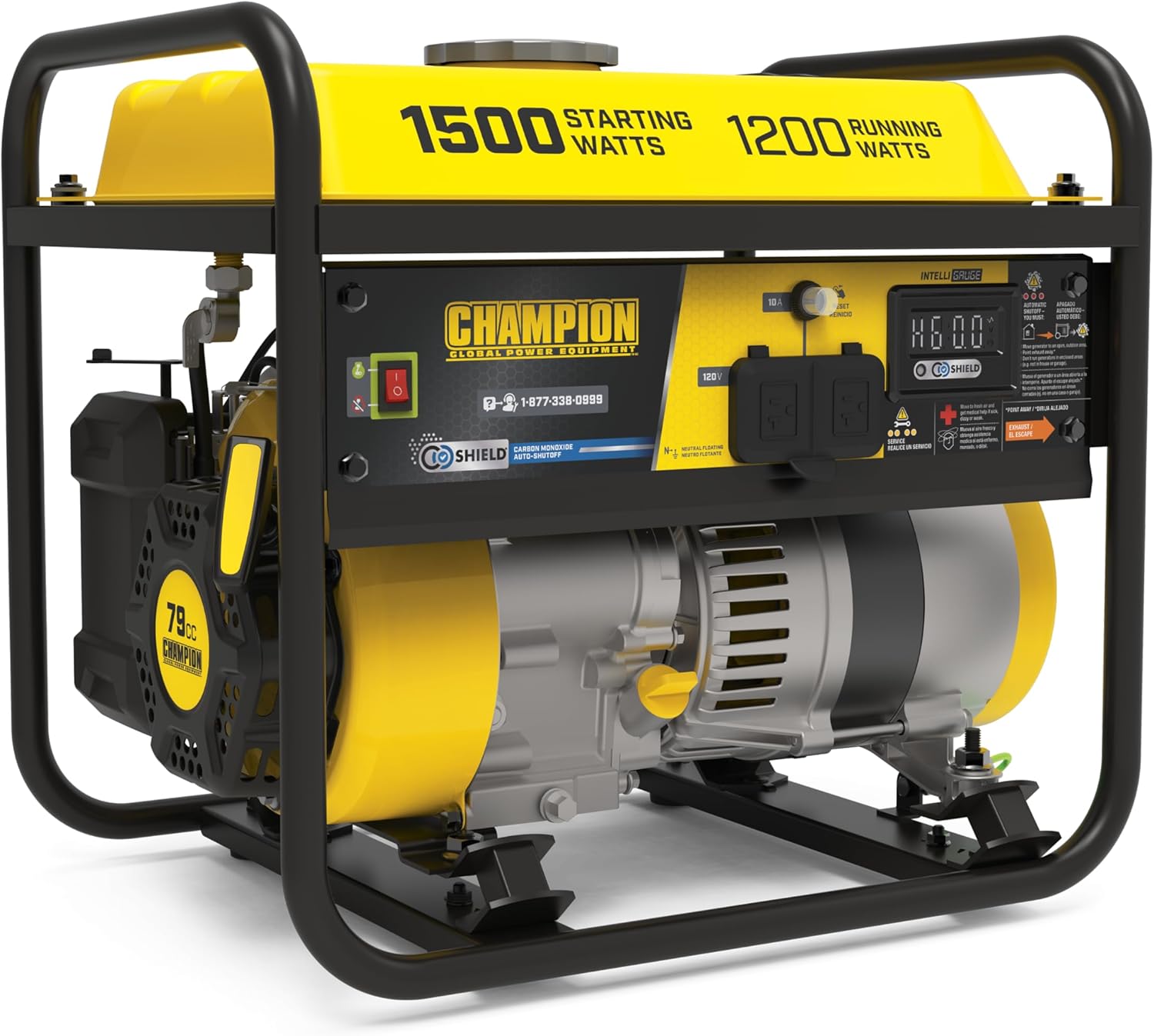

Quick summary of the Champion Power Equipment 1500-Watt Portable Generator with CO Shield
You’ll get a compact generator that delivers 1500 starting watts and 1200 running watts, which is enough to handle essential appliances and tools during short outages or while you’re off-grid. The unit focuses on safety with the CO Shield carbon monoxide auto shutoff system and provides convenient features like a covered 120V 20A duplex outlet and an easy-to-read digital display.
Key specifications
These specs give you a fast look at the most important numbers so you can quickly judge whether the generator meets your needs. You’ll find fuel capacity, noise level, oil capacity, and runtime among the essential details.
| Specification | Value |
|---|---|
| Model | Champion Power Equipment 1500-Watt Portable Generator with CO Shield |
| Starting Watts | 1500 W |
| Running Watts | 1200 W |
| Outlets | 120V 20A covered household duplex outlet |
| Fuel capacity | Full tank (specified runtime up to 10 hours) |
| Run time | Up to 10 hours at 50% load on a full tank |
| Noise level | 65 dBA measured at 23 feet |
| Oil capacity | 0.4 quarts (recommended 10W-30) |
| Safety feature | CO Shield carbon monoxide auto shutoff system |
| Cold start | Cold Start Technology |
| Monitoring | Voltage, frequency, and operating hours display |
| Warranty | 3-year limited warranty + FREE lifetime technical support |

Performance overview
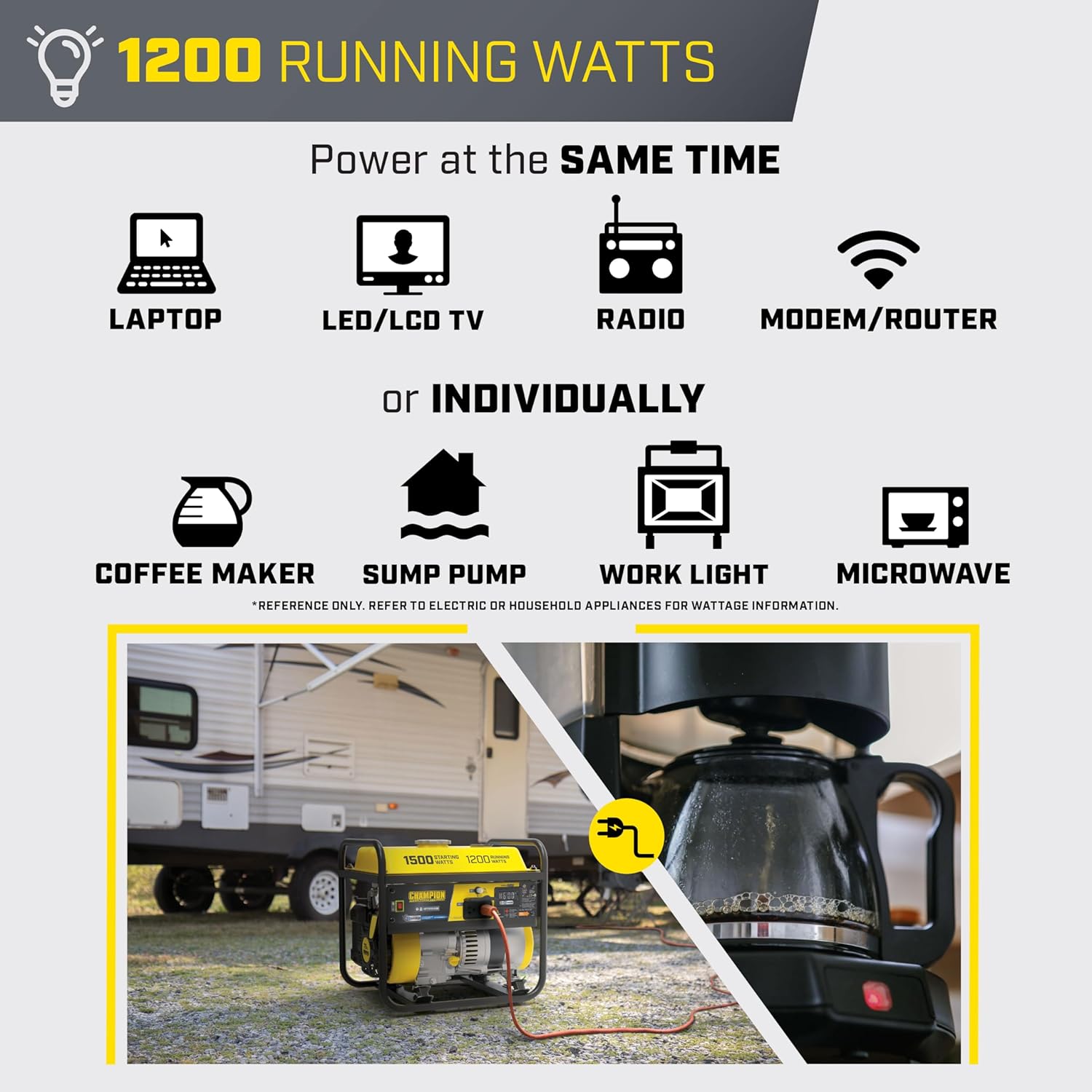
You can expect reliable basic performance for powering essential devices and a few small appliances. With 1500 starting watts and 1200 running watts, the generator is best for lights, small refrigerators, phone chargers, and power tools with modest draw.
Starting and running power
The 1500 starting watts let you handle motor-driven loads that require a higher burst on startup, and 1200 running watts will keep those loads operating continuously. You should plan which appliances you’ll run simultaneously since the running capacity limits the number of devices you can use at once.
Practical load examples
When you look at typical power draws, standard LED lights and phone chargers are negligible, a small refrigerator can run on this generator, and small power tools work fine if used one at a time. You’ll want to avoid trying to run full-size air conditioners, large well pumps, or multiple heavy-duty appliances at once.
Run time and fuel efficiency
Run time matters a lot when you rely on a generator during outages, and this model advertises up to 10 hours on a full tank at 50% load. That runtime gives you a full night of power for essentials if you’re conservative with what you run.
Fuel tank and consumption
The generator is optimized for small to medium loads so fuel consumption will be modest compared to larger units, which means fewer refuels during extended use. You’ll still want to keep spare gasoline on hand if you anticipate running the generator for long periods.
Managing runtime in practice
If you’re using several devices at once, runtime will drop below the quoted 10 hours, so prioritize essential equipment and stagger noncritical loads. Planning load rotation—running the refrigerator for a while, then switching to lights and charging—can stretch runtime efficiently.
Noise level and working environment
A noise level of 65 dBA from 23 feet is about as loud as a normal conversation in a busy restaurant; it’s noticeable but not overwhelming. You’ll appreciate that the unit isn’t excessively loud for its power class, making it suitable for campsites and residential neighborhoods where noise is a concern.
Real-world noise expectations
Noise will vary with load—heavier loads generally raise the noise level—so if you want quieter operation, reduce load or move the unit further away, following safe ventilation guidelines. In a quiet environment at night, you’ll still hear it, so placing it at the recommended distance will help minimize disturbance.
Positioning and noise mitigation
Placing the generator on a firm surface and using vibration-damping pads can reduce transmitted noise and rattling. Keeping the exhaust clear of walls and windows will also prevent amplified noise or fumes near living spaces.
Safety features: CO Shield carbon monoxide auto shutoff
Champion’s CO Shield is a built-in safety system designed to protect you from dangerous carbon monoxide buildup. If the unit detects elevated CO levels near the generator, it will automatically shut down to prevent poisoning, giving you an important layer of protection.
How CO Shield works for you
CO Shield continuously monitors carbon monoxide levels and triggers an automatic shutdown when thresholds are exceeded, which reduces risk in case the generator is placed too close to living spaces or in an enclosed area. While CO Shield adds safety, you must still follow safe operation guidelines and never run the generator indoors or in garages.
Limitations and best practices
CO Shield is a smart feature but not an excuse for lax safety—always place the generator outdoors and at a safe distance from windows, doors, and vents. You should also have battery-powered CO alarms in your home for additional protection, as CO Shield protects the unit but environmental placement matters most.

Outlets, connectivity, and monitoring
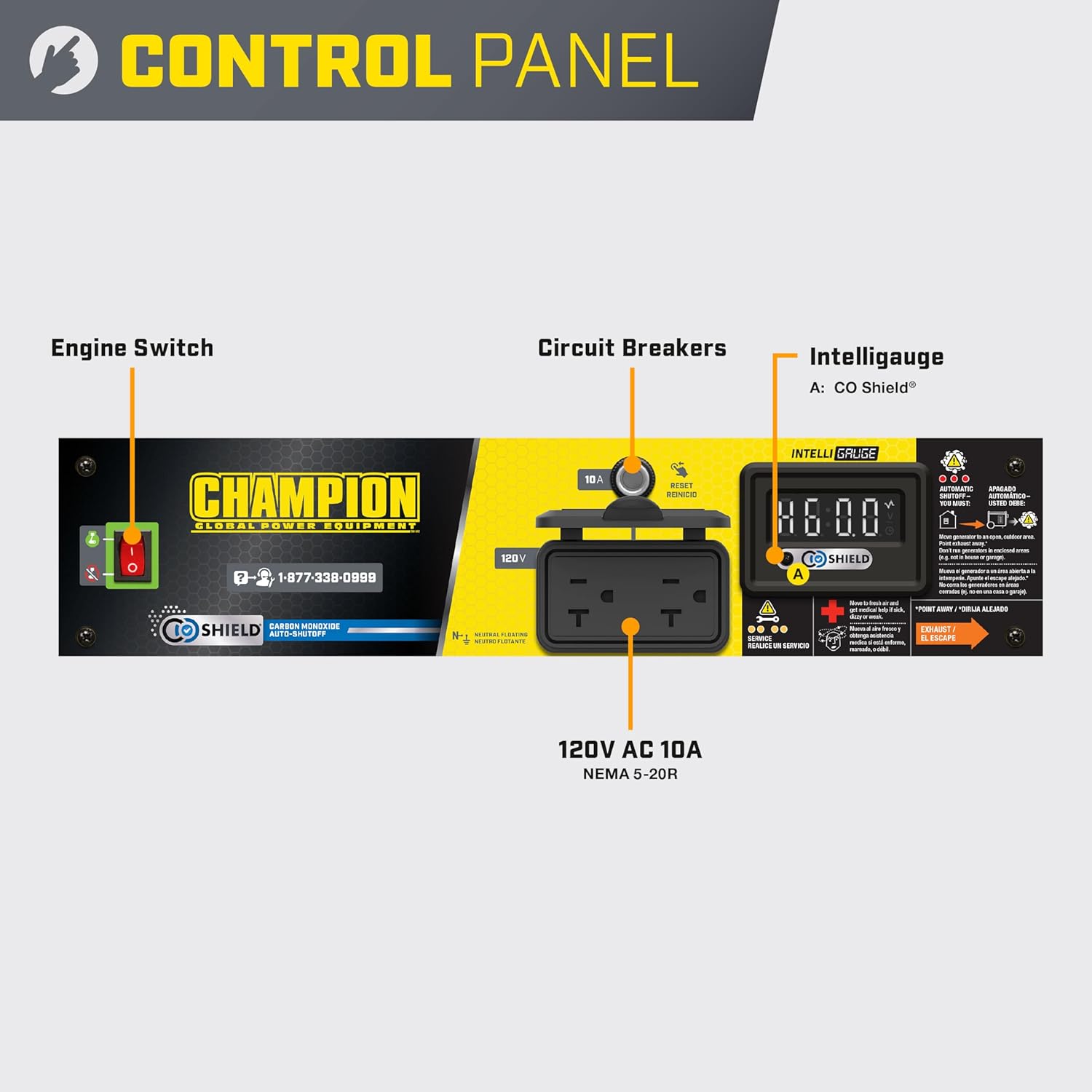
The unit includes a covered 120V 20A household duplex outlet that lets you plug in standard appliances and extension cords without adapters. You’ll also appreciate the unit’s digital monitoring that shows voltage, frequency, and operating hours to help you keep track of performance.
Digital display and what it tells you
The display helps you monitor the generator’s status in real time, which is useful for troubleshooting and planning maintenance. If you notice voltage fluctuations or unexpected frequency changes, you can adjust your loads and address potential issues promptly.
Practical connectivity tips
Use heavy-duty outdoor-rated extension cords and keep total draw below rating to avoid tripping or overloading the generator. If you need to power multiple circuits, spread the load across the available outlets and avoid daisy-chaining extension cords.
Cold Start Technology
Cold Start Technology ensures that the generator starts more easily in colder weather, which is valuable if you live in a region with chilly winters. You’ll find starting reliability improves when temperatures drop, reducing frustration during winter outages.
Why cold start matters
Cold temperatures make engines harder to crank and start; cold start systems help by adjusting ignition and fuel delivery to improve starting performance. You should still use fresh fuel and keep the unit well-maintained to maximize cold-start reliability.
Winter operation tips
If you plan to use the generator in cold weather, store it with stabilized fuel when possible and perform pre-start checks to ensure oil and spark plugs are in good condition. Running the generator briefly every month in winter can help keep the carburetor and fuel lines from gumming up.
Oil capacity and maintenance requirements
The Champion unit holds 0.4 quarts of oil, and the manufacturer recommends 10W-30. You’ll need to keep a close eye on oil level and quality because the unit includes a low oil shut-off switch to protect the engine.
Low oil shut-off protection
The low oil shut-off prevents the engine from running without sufficient lubrication, which protects internal components and extends engine life. If the generator shuts down due to low oil, check the level and refill before attempting to restart.
Routine maintenance tasks
You’ll want to perform routine maintenance such as oil changes, air filter checks, spark plug inspections, and periodic fuel system cleaning. Following the maintenance schedule in the owner’s manual gives you the best chance at long-term reliability.
Portability, size, and storage
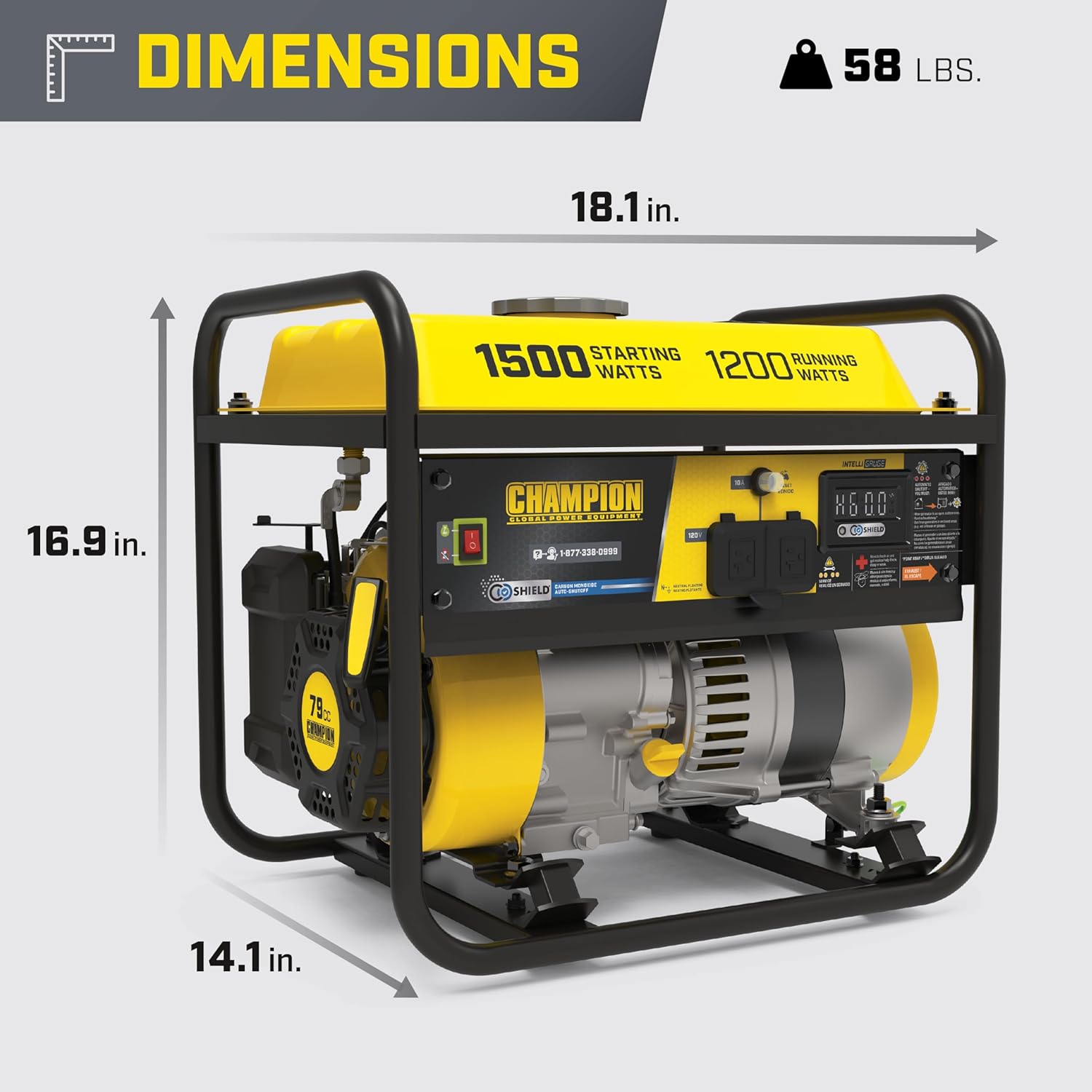
This generator is designed to be portable and compact, making it easy for you to move it for camping trips, tailgating, or brief jobsite tasks. You’ll appreciate the manageable size if you need a backup power solution for small spaces or occasional use.
Moving and lifting considerations
Although portable, the unit still has weight, so use proper lifting techniques or ask someone to help if you’re carrying it a long distance. Storing it in a dry, ventilated area and protecting it from extreme temperatures will extend its usable life.
Storage tips
Drain the fuel or add a stabilizer if you store the generator for extended periods to prevent stale fuel problems. Cover the unit and keep it elevated off a damp floor to avoid rust and moisture damage.
Build quality and durability
Champion is known for producing durable consumer-grade generators, and this model reflects that focus on solid construction for routine use. You’ll get a generator that feels sturdy and is meant for occasional to moderate loads rather than continuous industrial use.
Components that matter
Pay attention to things like the frame, control panel integrity, and the quality of the outlets and cords—you’ll want them to hold up under repeated use. Even with good build quality, treat the unit with basic care to prevent unnecessary wear.
Long-term reliability
If you follow maintenance schedules and avoid heavy overloads, this generator should provide reliable backup power for years. You’ll still want to keep an eye on rubber parts, hoses, and the fuel system for wear over time.
Warranty and customer support
Champion includes a 3-year limited warranty and offers free lifetime technical support, which means you have access to help if you run into issues. That combination gives you both hardware protection and expert advice when you need troubleshooting or maintenance guidance.
What the warranty covers
The 3-year limited warranty typically covers defects in materials and workmanship under normal use, but you should read the warranty details for exclusions and required maintenance practices. Keep your purchase receipt and service records handy to make warranty claims smoother.
Using lifetime technical support
Free lifetime technical support can help you with startup questions, maintenance tips, or troubleshooting minor issues without additional service costs. Take advantage of the support line if you’re unsure about operations or maintenance procedures.
Who this generator is best for
You should consider this generator if you need a compact, affordable unit for occasional backup power, campsite use, tailgating, or light jobsite tasks. It’s a strong choice for homeowners who want to keep a few essentials running during short outages.
Not a fit for heavy continuous loads
This model is not designed to run large central air conditioners, heavy machinery, or multiple high-wattage appliances at once. If you need extended high-capacity power, you should look at larger generators with higher continuous wattage.
Ideal buyer profile
You’ll appreciate this generator if you need portability, basic safety features like CO Shield, and the simplicity of a manual start generator with handy monitoring. It’s especially useful for those who value built-in safety features and manufacturer support.
Setup and first-time start
Getting the generator ready and performing the first-time start is straightforward, but you should follow the instructions carefully. Proper setup ensures safe operation and reliable performance.
Pre-start checklist
Before starting, check oil level, add fresh gasoline, verify that the CO Shield area is unobstructed, and confirm the fuel valve and choke settings per the manual. Make sure the generator is outdoors on a level surface and at a safe distance from buildings.
First start best practices
When starting for the first time, run the generator without a load for a few minutes to ensure proper circulation of oil and fuel. Then gradually add loads while monitoring voltage and listening for unusual noises.
Practical tips for safe operation
Using the generator safely protects you, your family, and your property. Follow common-sense guidelines each time you operate the unit.
Ventilation and placement
Always run the generator outdoors, away from windows, doors, and vents, and never inside a garage or enclosed space. Position the exhaust so fumes won’t drift toward occupied areas and check that the CO Shield is functioning.
Load management and protection
Use surge protectors for sensitive electronics and avoid connecting high-start-up-load devices simultaneously. Regularly check cords for damage and use the correct gauge extension cords to prevent overheating.
Accessories and add-ons to consider
You might want to add a few accessories to increase convenience and safety, such as a heavy-duty extension cord, a wheel kit or cart if you move the unit often, and a fuel stabilizer for storage. These add-ons can make the generator easier to use and prolong its lifespan.
Recommended accessories
A quality set of outdoor-rated extension cords, a durable cover, and a wheel kit are practical investments that improve usability. Fuel stabilizer and a small tool kit for maintenance will keep the generator running smoothly during emergencies.
Parallel capability note
This model is a single-unit portable generator; if you need more power, check whether parallel kits are offered for similar Champion models or consider purchasing a larger generator. Do not attempt to parallel with incompatible units, as that can damage equipment or create hazards.
Comparison with similar models
When you compare this generator to others in the same class, consider run time, weight, safety features, and outlet options. Champion’s CO Shield stands out among many small portable generators that lack built-in CO detection/shutdown.
How it stacks up on safety
The CO Shield is a differentiator in its price range, offering an additional safety layer that many competitors don’t include as standard. If safety near living spaces is a priority, this feature makes the unit more attractive.
How it stacks up on value
For a portable generator with digital monitoring, cold start tech, and a CO auto-shutoff, the unit offers a solid value proposition for homeowners and casual users. If you need more power or inverter-level clean power for sensitive electronics, higher-end or inverter models may be better.
Pros and cons
Listing the main advantages and disadvantages helps you weigh whether this generator fits your needs and budget. Every product has trade-offs, and understanding them helps you make a smart choice.
Pros
- CO Shield carbon monoxide auto shutoff adds safety.
- Cold Start Technology improves reliability in cold weather.
- Compact size and portability for camping and light jobs.
- Digital monitoring for voltage, frequency, and operating hours.
- 3-year limited warranty plus free lifetime technical support.
Cons
- 1200 running watts limit you to smaller loads and fewer simultaneous appliances.
- Not an inverter generator, so less ideal for sensitive electronics without additional surge protection.
- Small fuel tank means more frequent refueling for extended use.
Real-world scenarios and load planning
You should plan loads carefully to maximize the utility of this generator. Understanding what you can realistically run will avoid surprises and protect the generator.
Example: emergency home backup
To power essential circuits in a short outage, run a few LED lights, charge phones, and keep a small refrigerator operating by staggering loads and avoiding high-wattage devices. This approach will let you stretch the 10-hour runtime across important needs.
Example: camping or tailgating
For camping, you’ll find this generator great for powering a small portable fridge, some lighting, and charging devices. Keep the unit well-ventilated and at recommended distances from tents and RVs to ensure safety.
Maintenance schedule and long-term care
Keeping the generator in good condition requires routine checks and periodic service tasks that you can manage with basic tools. Proper maintenance extends engine life and preserves performance.
Recommended maintenance tasks
Check oil before each use, change oil per the manual’s schedule, clean or replace the air filter as needed, inspect the spark plug annually, and drain or stabilize fuel when storing. Keeping a log of usage hours helps you track maintenance intervals using the operating hours display.
Storage and seasonal care
If you store the generator for long periods, drain fuel or add stabilizer, run the engine briefly after adding stabilizer, and store it in a dry place. During extended storage, protect plastic and rubber components from sunlight and inspect seals before the next season.
Price and value considerations
You’ll find this model priced competitively for consumer-grade portable generators that include enhanced safety and monitoring features. Factor in the warranty and lifetime technical support when you weigh ongoing value.
Cost vs. alternatives
Compared to bare-bones small generators, you might pay a bit more for CO Shield and digital monitoring, but the added safety and convenience often justify the price for home and family use. If budget is tight and safety features aren’t a priority, lower-cost units exist but lack CO auto-shutoff.
Long-term ownership ROI
If you use the generator during several outages or for regular recreational use, the convenience and peace of mind from built-in safety and support make it a worthwhile investment. Regular maintenance will minimize unexpected repair costs and extend usefulness.
Buying tips and final decision factors
When you’re ready to purchase, check local noise regulations, read user reviews for common issues, and confirm warranty terms and dealer reputation. Make sure the generator’s capacity matches your planned loads.
Checklist before buying
Confirm outlet type and quantity meet your needs, verify weight and portability for your use case, check that CO Shield is included (important for near-home usage), and ensure you have space to store gasoline safely. Also, buy recommended accessories like a heavy-duty extension cord and a cover.
Final recommendation
If you want a compact, moderately powerful generator with an emphasis on safety and basic monitoring, the Champion Power Equipment 1500-Watt Portable Generator with CO Shield is a strong contender. It suits homeowners and outdoor enthusiasts who need a dependable, easy-to-use backup option for essential power needs.
Frequently asked questions (FAQs)
Here are common questions you might have along with concise answers to help you make an informed choice.
Can you run a refrigerator on this generator?
Yes, you can run a small refrigerator, particularly if you avoid simultaneous high-draw items. Because refrigerators have a startup surge, the 1500 starting watts help, but manage other loads carefully.
Is the CO Shield a substitute for proper placement?
No, CO Shield provides an additional safety layer but is not a substitute for correct placement and ventilation—always operate the generator outdoors away from doors, windows, and vents.
How often do you need to change the oil?
Follow the owner’s manual, but a common schedule is an oil change after the first 20–30 hours and then every 50–100 hours of operation or annually, depending on usage. Always check oil level before each use.
Is this generator suitable for sensitive electronics?
Because this is not an inverter generator, you should use surge protection for sensitive electronics or consider a dedicated inverter model for cleaner power. The digital monitoring helps you detect voltage irregularities, which is useful for safe operation.
What type of gasoline should you use?
Use fresh, unleaded gasoline and consider a fuel stabilizer if storing the generator with fuel. Avoid gasoline with more than 10% ethanol for best performance and storage longevity.
Final verdict
You’ll get a compact, user-friendly generator with helpful safety and monitoring features in the Champion Power Equipment 1500-Watt Portable Generator with CO Shield. It’s especially useful if you need reliable, short-term power for essential devices, appreciate added safety like CO Shield, and value manufacturer support. If your needs are modest and you prioritize safety and portability, this model is a practical and well-rounded choice.
Disclosure: As an Amazon Associate, I earn from qualifying purchases.