
?Have you ever been stuck with a dead battery, low tyre pressure, and no way to charge your phone — all at once — and wished you carried a single reliable device to handle all of that?

Product at a glance
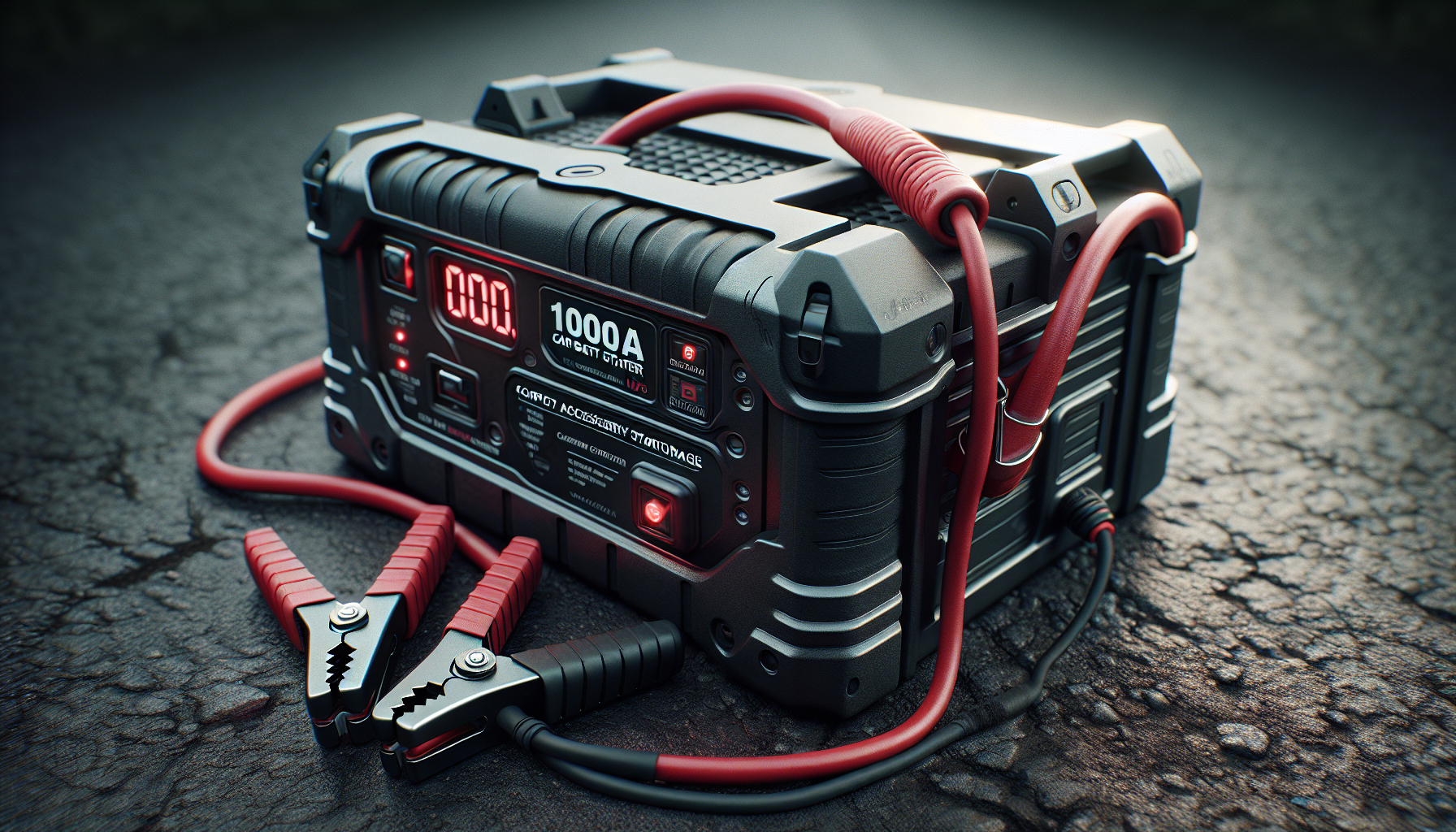
You’re looking at the Car Battery Jump Starter-1000Amp 12V Lead-Acid Battery Jump Box with 260PSI Air Compressor, 10000 mAh Portable Power Station, Jump Pack for Vehicles Up to 5L Gas or Diesel. This unit promises to combine a 1000 Amp jump starter, a 260 PSI air compressor, and a 10,000 mAh power bank into one package so you can handle multiple roadside emergencies without juggling devices.
Key specifications
These specs give you the facts you’ll want to know before deciding whether this is right for your needs. Below is a compact table that breaks down the core specs so you can quickly compare features and limits.
| Feature | Specification |
|---|---|
| Peak Jump Current | 1000 Amps |
| Vehicle Compatibility | 12V vehicles up to 5.0L (gas or diesel) |
| Battery Type | Lead-acid internal battery |
| Power Bank Capacity | 10,000 mAh |
| USB Output | 5V / 2.1A (single USB port, no cable included) |
| DC Output | 12V / 11A (with DC charging cable) |
| Air Compressor Max Pressure | 260 PSI |
| Typical Inflation | Inflates tyre to ~30 PSI in 2–3 minutes |
| Nozzles Included | 3 (car tyre valve, bike valve adapter, inflatables) |
| Charging Methods | DC in-car charger (≤8 hours), AC wall charger (≤24 hours) |
| Operating Temperature | -4°F to 130°F |
| Safety Protections | Reverse connection, short circuit, overheat, overcurrent, overcharge, overvoltage |
| Recommended Maintenance | Charge monthly (summer), every 2 months (winter); do not overcharge |
Design and build quality
You’ll notice the unit aims for practical durability rather than premium styling, and that’s intentional for a tool designed for emergency use. The housing is typically rugged plastic with integrated handles or strap points so you can carry it into the trunk or to a roadside tyre.
The clamp design is bulkier than small lithium clamps because the lead-acid pack needs sturdier connectors to pass higher currents safely. The compressor hose, gauge, and nozzle storage appear integrated or neatly stowed so you won’t lose parts when you need them most.
Jump starting performance
This jump starter offers a peak current of 1000 Amps, which is enough to start most 12V engines up to 5.0L in size, whether they run on gas or diesel. In practical terms, that covers many cars, SUVs, light trucks, motorbikes, tractors, and buggies you’ll encounter.
You should follow the recommended procedure: connect the clamps correctly, try to start, and if unsuccessful wait 4–5 minutes before trying again. Don’t repeat attempts too many times in a short period because that can stress the starter and the vehicle’s electrical system; the unit’s safety protections will help, but cautious use will extend the life of the device.
Cold-weather performance
Cold temperatures reduce the effective power and cranking ability of any starter, and the manufacturer specifies operation down to -4°F (-20°C). You’ll find it generally reliable in winter conditions for most mid-sized engines, though extremely cold climates may reduce peak performance.
You’ll also want to keep the jump starter charged and stored somewhere not exposed to extreme cold for long periods, because both lead-acid batteries and capacitors that support cranking can be impacted by prolonged low-temperature storage.
Repeated attempts and care
If the vehicle doesn’t start on the first try, wait the recommended 4–5 minutes before trying again to allow internal circuits to cool and capacitors to recover. You should avoid repeated rapid attempts since this can cause the jumper to overheat or trigger built-in protections that cut output until things cool.
If you often face hard starts, consider combining this jump starter with routine battery health checks, because a failing vehicle battery or alternator issue won’t be permanently solved by repeated jumping.
Air compressor and tyre inflator performance
You get a 260 PSI-rated compressor that’s powerful for a portable device, and it can inflate a tyre to about 30 PSI in 2–3 minutes under typical conditions. The quick inflation time helps you get back on the road quickly, and the included pressure gauge helps prevent over-inflation.
The unit includes three different nozzles so you can inflate tyres, bike tubes, balls, and inflatables like air mattresses. That versatility makes it handy not only for roadside emergencies but also for weekend activities and outdoor gear.
Accuracy and gauge usability
The pressure gauge is front-and-center for easy reading, which means you won’t have to guess the pressure and risk over- or under-inflating. Read the gauge while inflating and stop at the required PSI for safe driving or item use.
Keep in mind that ambient temperature affects pressure readings, so if you’re inflating in very hot or cold conditions, account for that when setting tyre pressures according to the manufacturer’s recommendations.
Hose length and reach
The included hose length and its connection style matter if you’re inflating tyres without moving the vehicle. The hose is usually long enough for most compact cars and SUVs, but very large trucks or awkward positions near the spare wheel may require you to move the starter closer for convenience.
Make sure you coil the hose properly after use to avoid kinks that could shorten its life or reduce airflow.
Portable power station and device charging
This device doubles as a 10,000 mAh portable power station, which means you can charge phones, tablets, and small accessories from the USB port or power in-car devices from the DC output. The USB is rated at 5V/2.1A — enough for typical smartphone charging — and the 12V/11A DC output lets you run some car accessories like portable vacuums.
Remember that 10,000 mAh at the stated voltage doesn’t equate to infinite charging cycles; real-world output to smartphones may be closer to 1–3 full charges depending on phone battery size and conversion losses. Still, it’s a useful secondary power source when you’re away from wall outlets.
Using the DC port
The 12V/11A DC port provides a more direct way to run and charge automotive gadgets that expect in-car power. If you plan to use the DC port frequently, check the amperage requirements of your devices to avoid drawing more than the unit can provide.
The DC port often includes a separate cable and connector; keep that cable with the unit so you’re not left hunting for the right lead in an emergency.
USB charging tips
Charge phones and small electronics using the 5V/2.1A USB port, and avoid using the jump starter as a long-term power bank for high-draw devices like laptops unless you use a proper inverter and confirm the combined load is safe. Quick top-ups while you arrange roadside assistance are the most practical use case.
Charging the jump starter unit
You can recharge the starter either via the included DC car charger (in-car) or the AC wall charger (indoor). The DC charger should not be used for more than 8 hours continuously, while the AC charger is limited to 24 hours to prevent overcharging; an LED indicator shows when the unit is fully charged.
It’s good practice to keep the device topped up: charge monthly during summer and every two months in winter if you don’t use it frequently. That helps preserve lead-acid battery health and ensures you won’t open the box to a dead starter when you need it most.
Charging LED and status indicators
A green LED indicates a full charge, which is handy so you don’t second-guess the unit’s readiness. When you’re charging, watch for any abnormal heating or unusual smells — stop charging and inspect if that happens.
Overcharging can reduce battery life, so follow the recommended maximum durations and unplug once the green LED is on. Some users like to set calendar reminders to check and recharge periodically to avoid deep discharge.
Charging safety tips
Charge indoors on a stable, non-flammable surface and away from direct sunlight or heat sources when using the AC charger. When using the DC charger in a vehicle, ensure your vehicle is off and the jumper clamps are disconnected from the vehicle battery to avoid accidental connection issues.
Avoid charging in extreme cold or extreme heat for prolonged periods, as temperature extremes can affect charging efficiency and battery health.
Safety features and protections
The unit includes a smart jumper clamp with multiple safety protections, including reverse connection protection, short circuit protection, overheat protection, overcurrent protection, overcharge protection, and overvoltage protection. These protections reduce the risk of damage to you, the starter, and your vehicle when used correctly.
Even with these features, you should always follow safe jump-start procedures and double-check connections. The protections are a backstop — safe user behavior is still essential.
Reverse polarity protection
The reverse connection protection will prevent the unit from delivering current if you connect the clamps incorrectly, which is a crucial safeguard against accidental damage. That gives you peace of mind if you’re not completely comfortable with jump-starting.
Still, always connect the positive clamp to positive and negative to a good engine ground or chassis point as instructed in the manual to avoid sparks and potential battery hazards.
Other protective features
Overheat and overcurrent protections prevent the starter from delivering continuous excessive power that could cause failure or fire risk. Overcharge and overvoltage protections safeguard the internal lead-acid battery when connected to chargers.
These layers of protection make the unit safer than makeshift methods, but proper storage and periodic maintenance will keep those protections functioning optimally.
Real-world scenarios and usability
You’ll use this unit most often for emergency jump starts, quick tyre inflation, and charging small electronics while you handle roadside tasks. Its combined features make it particularly useful for road trips, rural driving, camping, and work on small machinery.
Because it’s a lead-acid-based jump starter with compressor and power bank functions, it’s heavier and bulkier than compact lithium-only jump packs, but you’ll get robust cranking power and a built-in compressor that many smaller devices lack.
Road trip and camping use
For weekend camping trips, the compressor handles inflatables and the USB port keeps your phone alive for navigation and photos. If a vehicle battery lets you down in a remote location, the 1000 Amp peak current improves your chances of getting restarted without professional help.
Just be mindful of the unit’s weight if you’ll be carrying it on long hikes; it’s best suited to vehicle-based adventures rather than ultralight backpacking.
Professional and farm use
If you work on tractors, buggies, or small farm equipment with 12V systems up to 5L, this starter is useful because it tackles diesel and gas engines of modest size. For heavier agricultural equipment or large diesel trucks, however, you’ll need a higher-capacity solution.
Regular users in farms or workshops may appreciate keeping this device on hand in a garage or tool trailer for quick fixes.
Pros and cons
These straightforward points help you decide quickly whether the balance of features meets your priorities.
Pros:
- Powerful 1000 Amp peak cranking for vehicles up to 5.0L.
- Integrated 260 PSI compressor for fast tyre inflation and inflatables.
- 10,000 mAh power bank with USB and 12V DC outputs.
- Multiple safety protections on the smart clamps.
- Two charging methods (DC and AC) for flexible recharging.
Cons:
- Lead-acid design is heavier and bulkier than lithium options.
- USB output is a single 2.1A port — not fast-charging for modern phones.
- No USB cable included, and DC cable best kept with unit.
- Charging limits require attention to avoid overcharging.
How it compares to other jump starters
When you compare this lead-acid combo to compact lithium jump starters, the main trade-offs are weight vs raw cranking reliability and integrated compressor capability. Lithium units are lighter and smaller, but many lack a built-in air compressor and can be expensive for the same cranking capacity.
For a quick comparison, consider that a smaller lithium 1000A pack might be lighter and have faster USB charging options (QC/PD), while this unit gives you the compressor and durable lead-acid chemistry that can be preferable for repeated, heavy cranking in some environments.
When to choose lead-acid over lithium
Choose this lead-acid model if you prioritize ruggedness and the integrated compressor, and don’t mind some extra weight for that functionality. If you expect to jump start often in challenging conditions and need an air compressor for tyres, the combined features can be especially valuable.
If ultralight portability and fast phone charging are more important, look at modern lithium jump packs, but be aware they might not include a compressor or 12V DC output at the same amperage.
Maintenance and long-term care
To keep your unit ready, charge it when you receive it, then follow the recommended maintenance cycle: once a month in summer and once every two months in winter if it’s unused. That prevents deep discharge, which is the lead-acid battery’s main enemy.
Store the unit in a cool, dry place and avoid leaving it in direct sunlight or in freezing conditions for prolonged periods. Inspect clamps and wires periodically for corrosion or damage; clean clamp jaws if you see oxidation using a brush and protective measures.
Cleaning and storage
Wipe the case with a damp cloth and avoid letting water enter the unit. Store the device with clamps secured and accessories organized to prevent damage during transport.
If you notice swollen battery casing, persistent inability to hold charge, or unusual smells, stop using the unit and have it inspected or replaced. Lead-acid batteries have a finite lifespan and will eventually require replacement of the whole unit.
Battery health tips
Avoid complete discharge and try to keep the unit charged above 50% if you can. Using it frequently for long runs without recharging will shorten its lifespan.
When the unit approaches end of life, recycling the lead-acid battery safely through a certified recycling center is important for environmental safety.
Troubleshooting common issues
If the starter won’t power or won’t start a vehicle, first confirm the clamps are properly connected and the unit itself is charged. Check for any blown fuses in your vehicle and ensure the vehicle’s battery terminals are clean and secure.
If the compressor won’t build pressure, inspect the hose and nozzle for leaks or kinks and ensure the valve connection is tight. If the USB port won’t charge devices, test with a known-good cable and device to isolate whether the problem is the cable, the device, or the starter.
What to do if it fails to start a car
First, ensure clamps are on the correct battery terminals and the unit shows some charge. Try again after waiting a few minutes between attempts; if it still won’t start, the vehicle battery or starter motor may be too degraded for a single jump — contact roadside assistance.
Don’t attempt to bypass safety protections or modify the clamps. If the unit repeatedly fails to start vehicles that are within its rated capacity, contact the seller or manufacturer for support.
Compressor troubleshooting
If the compressor seems weak, listen for air leaks and check seals on connectors. Clean or replace any clogged nozzle adapters and confirm the gauge reads zero before starting to avoid misleading results.
For persistent weak airflow, the internal compressor motor may be fatigued; professional repair or replacement may be required.
Tips for safe use
Before you start, read the manual and inspect the unit for visible damage. Always wear gloves and safety glasses if possible, connect clamps in the correct order, and keep clear of moving engine parts when attempting to start a vehicle.
When inflating tyres, use the gauge often to prevent over-inflation and let tyres cool after long drives before setting pressure, since hot tyres read higher than cold tyres. Be cautious of heat buildup in the compressor during extended inflation sessions and allow it to cool if you need to inflate multiple tyres.
Step-by-step jump-start procedure
- Turn off vehicle ignition and accessories. Keep the starter powered off until clamps are securely attached.
- Attach the positive clamp to the battery’s positive terminal and the negative clamp to a solid chassis ground or engine block, not directly to the negative terminal, if advised by the manual.
- Power on the jump starter and attempt to start the vehicle.
- If the vehicle doesn’t start, wait 4–5 minutes before attempting again.
- Once the vehicle is running, disconnect clamps in reverse order, keeping clear of moving engine parts.
Safe inflation procedure
- Attach the hose to the tyre valve securely and select the correct nozzle for inflatables.
- Monitor the pressure gauge while inflating and stop at the recommended PSI.
- Allow the compressor to rest between long runs to avoid overheating.
- Store the hose and nozzles properly after use.
Who should consider buying this
You should consider this product if you want a multi-purpose emergency tool that covers jump starting, tyre inflation, and basic device charging. It’s well-suited if you frequently travel with vehicles up to 5L, spend time in rural areas, or need a compact workshop/garage starter that’s affordable and versatile.
If you need ultra-portability or frequent fast charging for phones, a separate lightweight lithium jump starter and a dedicated power bank might suit you better. For heavy commercial trucks or very large diesel engines, look for a higher-spec jump starter with greater cranking amps.

Final verdict
This Car Battery Jump Starter-1000Amp 12V Lead-Acid Battery Jump Box with 260PSI Air Compressor, 10000 mAh Portable Power Station, Jump Pack for Vehicles Up to 5L Gas or Diesel is a practical multi-tool that gives you real value for roadside emergencies. You’ll appreciate the 1000 Amp cranking capability, the fast 260 PSI compressor, and the convenience of a 10,000 mAh power bank when you need a single device that does multiple jobs.
It’s a solid, budget-friendly option if you prioritize functionality and safety protections over ultralight portability. Keep it charged, follow safe procedures, and it will significantly increase your readiness for common vehicle and outdoor inconveniences.
Frequently asked questions (FAQ)
Q: Can this jump starter start a 5.0L diesel truck?
A: Yes, it is rated to start gas or diesel engines up to 5.0L. However, very old or heavily discharged batteries and some large diesel engines in commercial trucks may still be difficult to start and could require a higher-capacity unit.
Q: How many times can I jump start a car on a single charge?
A: The number of starts per charge depends on the condition of the vehicle battery and engine. If the battery is moderately discharged, expect several jump starts; for heavily discharged batteries, fewer attempts will be possible. Always allow the unit to rest a few minutes between attempts.
Q: Is the 10,000 mAh rating enough for a smartphone?
A: Yes, you can typically get 1–3 full smartphone charges depending on your phone’s battery size and power conversion losses. It’s great for emergency top-ups and communication while you handle roadside problems.
Q: Can I leave the unit plugged in overnight to charge?
A: The manufacturer recommends not charging the DC charger in the car for more than 8 hours and not charging via AC for more than 24 hours. Leaving it continuously plugged-in risks overcharging and reducing battery life.
Q: How heavy is the unit?
A: Exact weight varies by model version, but lead-acid jump starters are heavier than lithium ones. Expect a weight that’s manageable for trunk storage but heavier than compact lithium packs.
Q: Does it come with a warranty?
A: Warranty terms vary by seller and region. Check with the retailer or manufacturer for warranty length and coverage details before purchasing.
Q: Can I use the compressor to inflate large truck tyres?
A: The compressor is powerful for a portable unit and works well for car and light truck tyres. Very large truck tyres may require a commercial-grade compressor or an additional high-capacity inflator.
Q: What maintenance does the lead-acid battery require?
A: Keep the unit charged, and follow the recommended charging interval: charge once a month in summer and once every two months in winter when unused. Don’t overcharge and store it in a cool dry place.
If you want, I can draft a short printable checklist for safe jump-starting and tyre inflation to keep with your kit so you’ll always have clear steps when an emergency happens. Would you like that?
Disclosure: As an Amazon Associate, I earn from qualifying purchases.