
Looking for a compact, accurate tool that handles tire pressure, inflation, and emergency jump starts without taking up half your trunk?

Product Overview
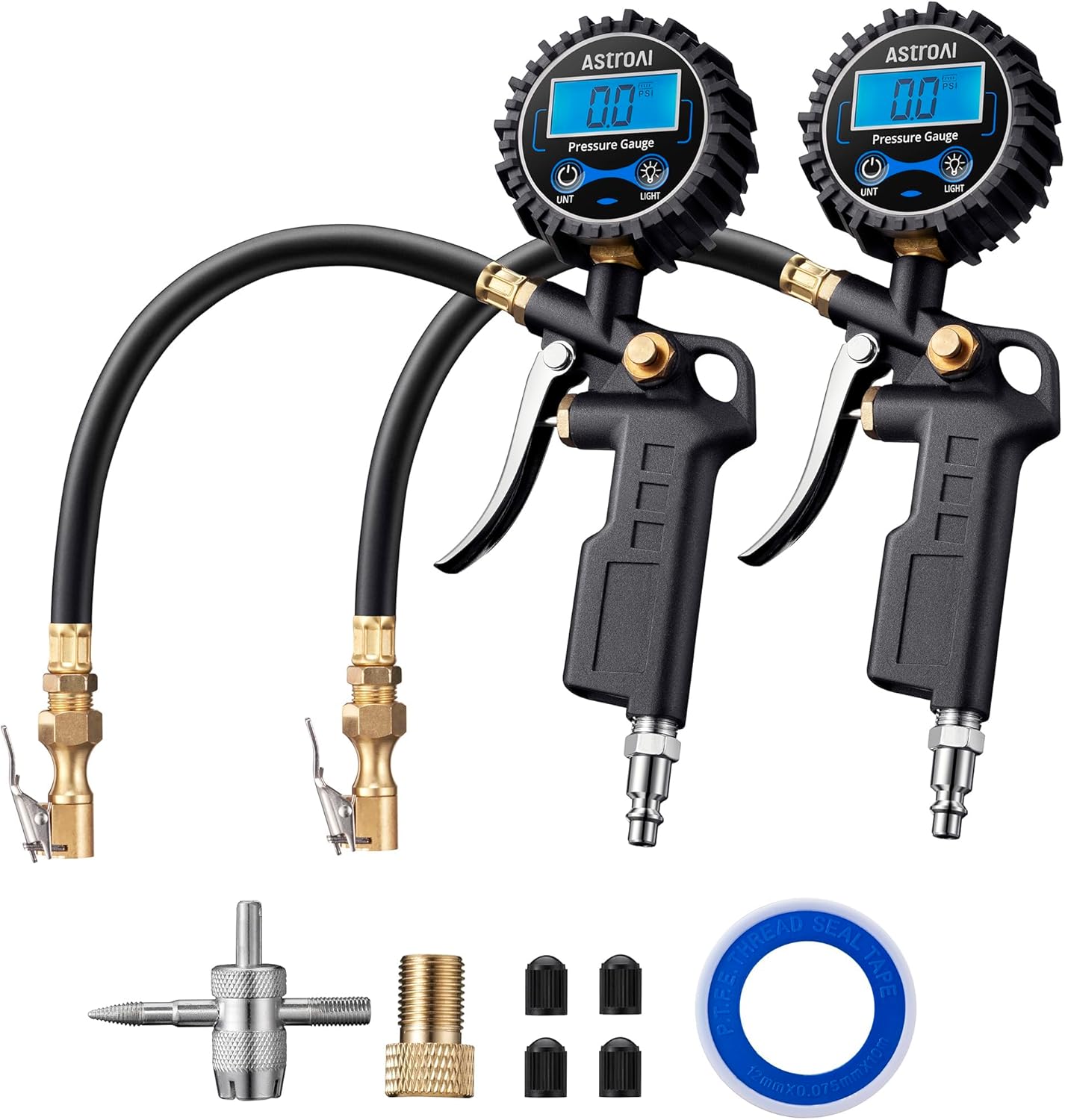
You’ll get a combo tool when you pick up the AstroAI Digital Tire Pressure Gauge with Inflator & S8 Air Jump Starter with Air Compressor. It bundles a calibrated digital gauge, a fast portable air compressor, and a powerful jump starter into a single kit so you don’t have to assemble separate devices when you need help on the road.
Key Features
This product combines precision measurement, quick inflation, and emergency battery boost into one unit that’s meant to be portable and user-friendly. You’ll appreciate that each core function is designed to be straightforward and reliable whether you’re maintaining tires or rescuing a stalled vehicle.
Advanced Accuracy
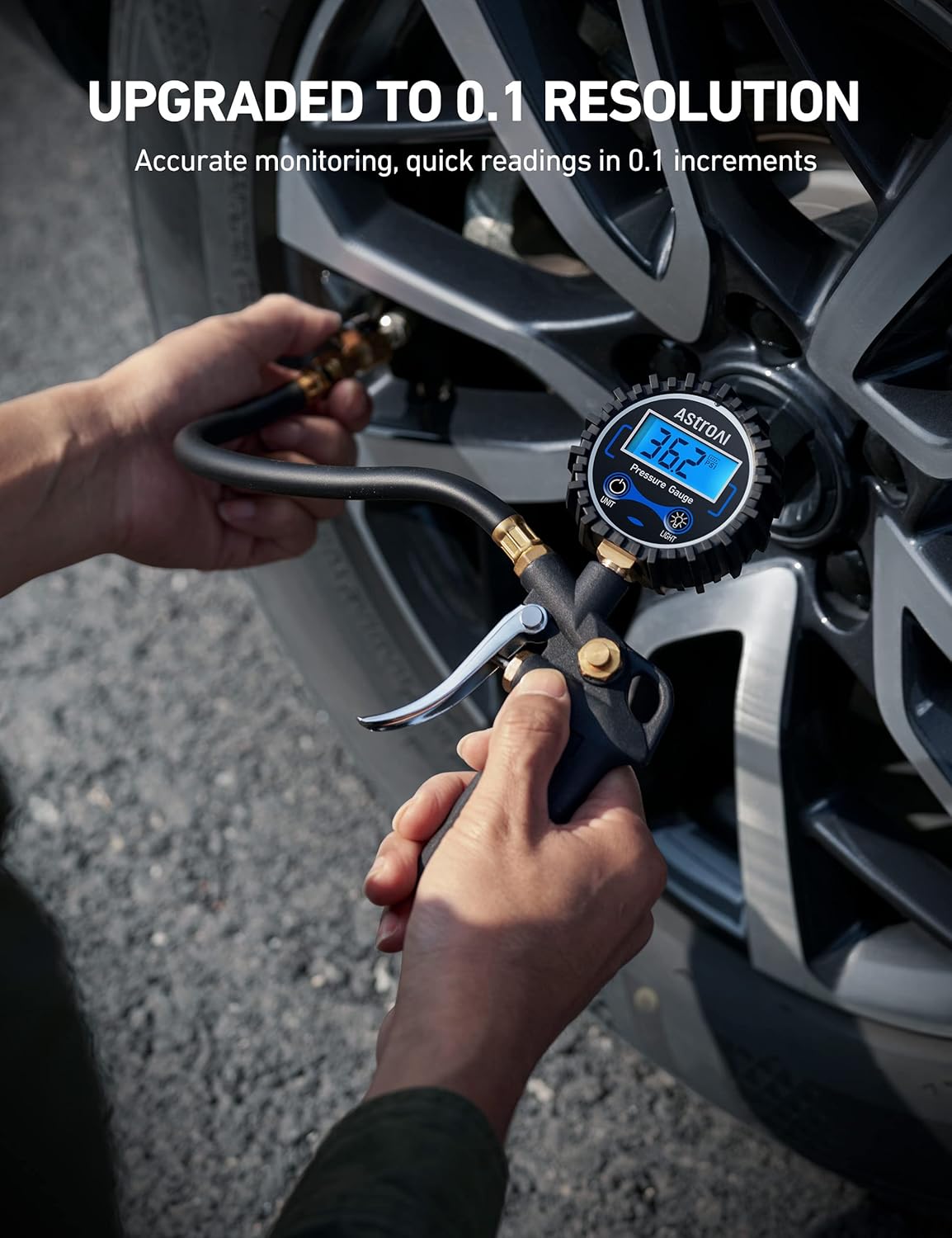
The tire pressure gauge is professionally calibrated to give readings within 1% of the actual tire pressure, so you won’t be guessing or relying on approximate numbers. With a measuring range from 0–250 PSI (0–17.2 Bar; 0–1724 Kpa; 0–17.5 kg/cm^2), you can check everything from bike tires to heavy truck tires with confidence.
Increased Safety
Keeping your tires at the right pressure reduces the risk of flats, blowouts, and handling problems, and it can also improve fuel economy which saves you money over time. You’ll feel safer driving in changing weather conditions and know that your tire maintenance is supporting overall vehicle reliability.
All-in-One Features
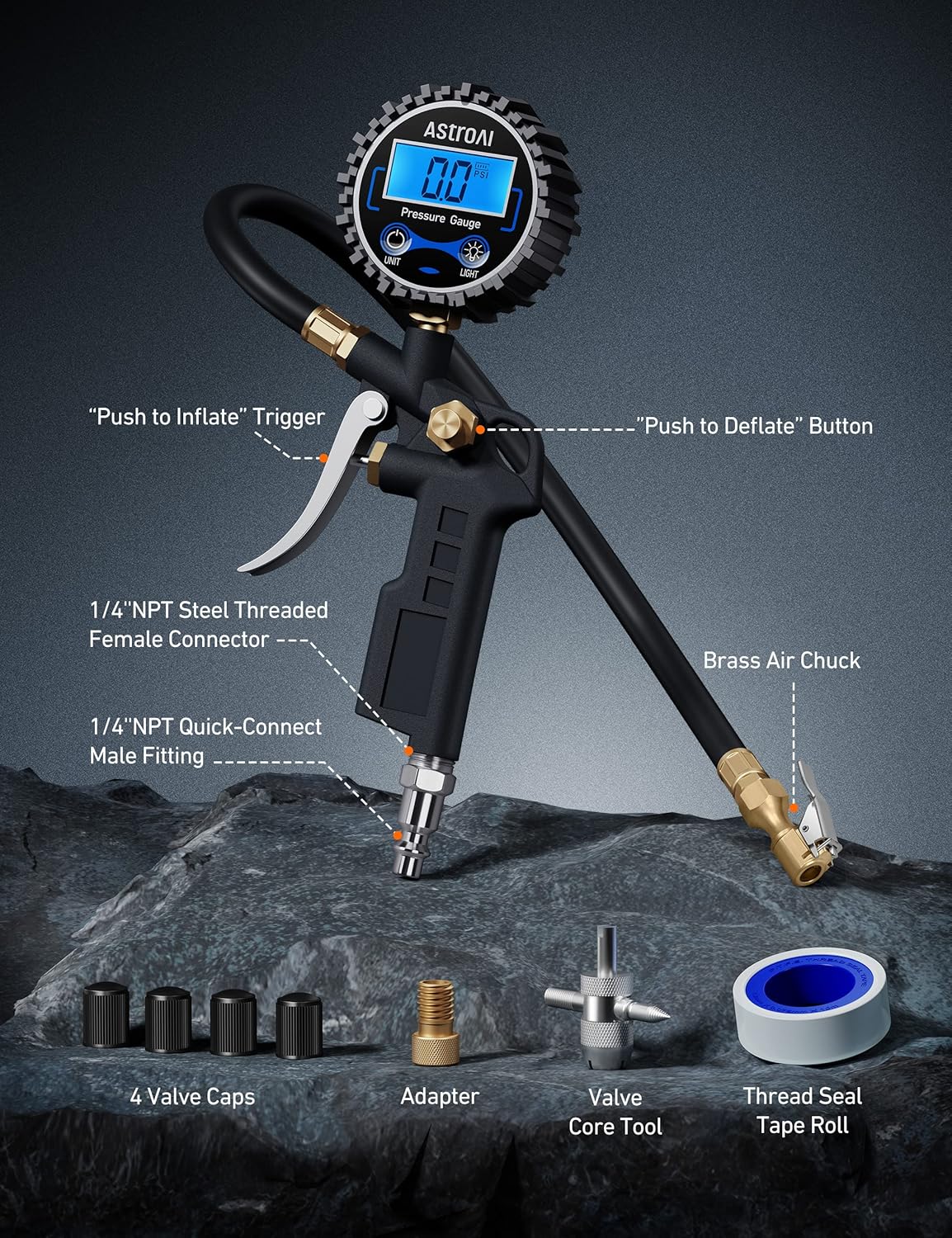
The gauge integrates an inflator, a straight locking chuck, a bleed valve, and a hose so you can measure, inflate, and deflate with the same tool. It’s compatible with both 1/4” and 1/2” NPT air compressor outputs, meaning you can use it with common shop compressors as well as the included portable pump.
High Performance Jump Starter
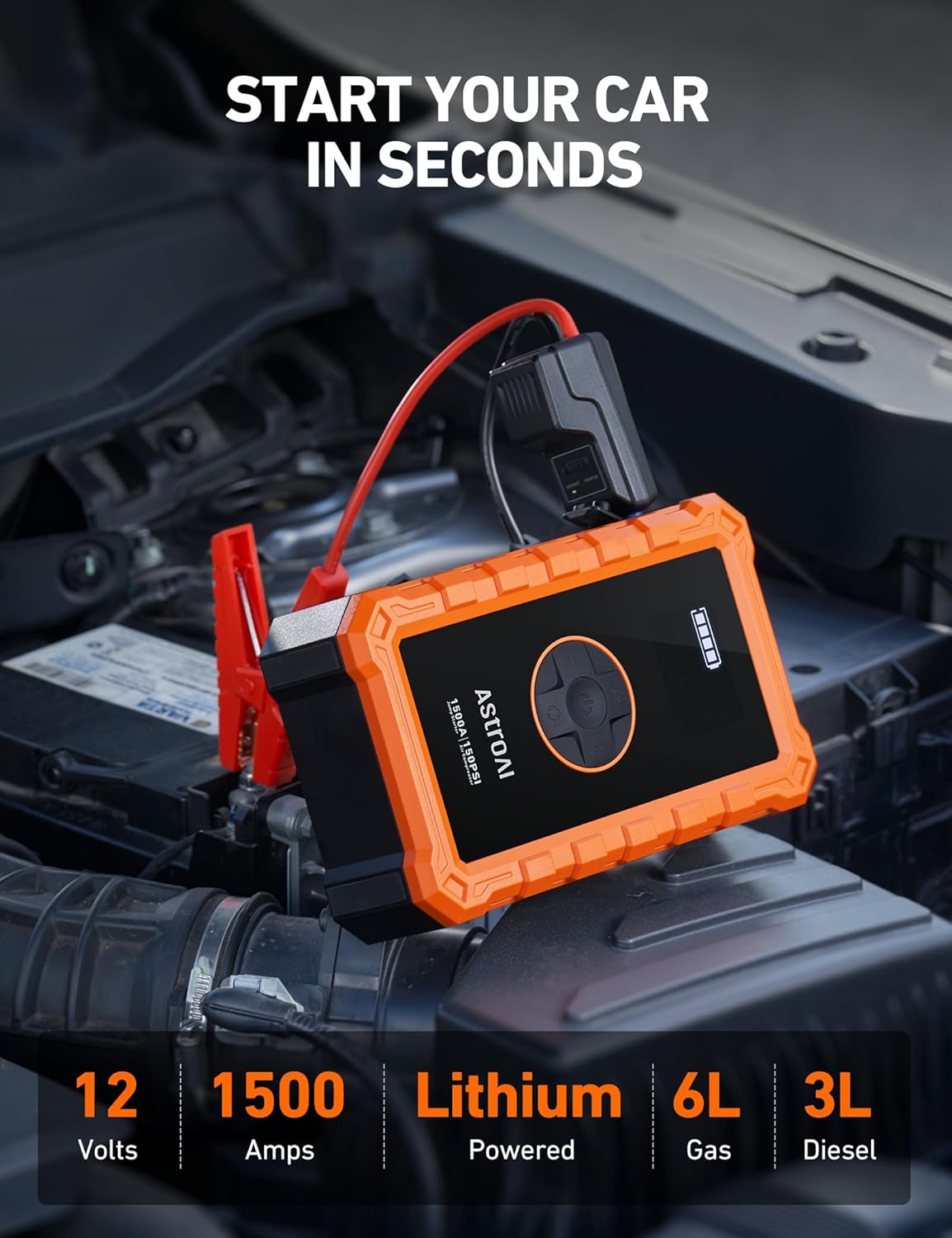
The S8 AIR jump starter is a compact lithium booster rated at 1500A peak and can perform up to 20 jump starts on a single charge under ideal conditions. It supports up to 6L gasoline and 3L diesel engines and works across a broad temperature range (roughly -4°F to 140°F), so you can rely on it in cold mornings or hot summers.
Portable Air Compressor & Tire Inflator
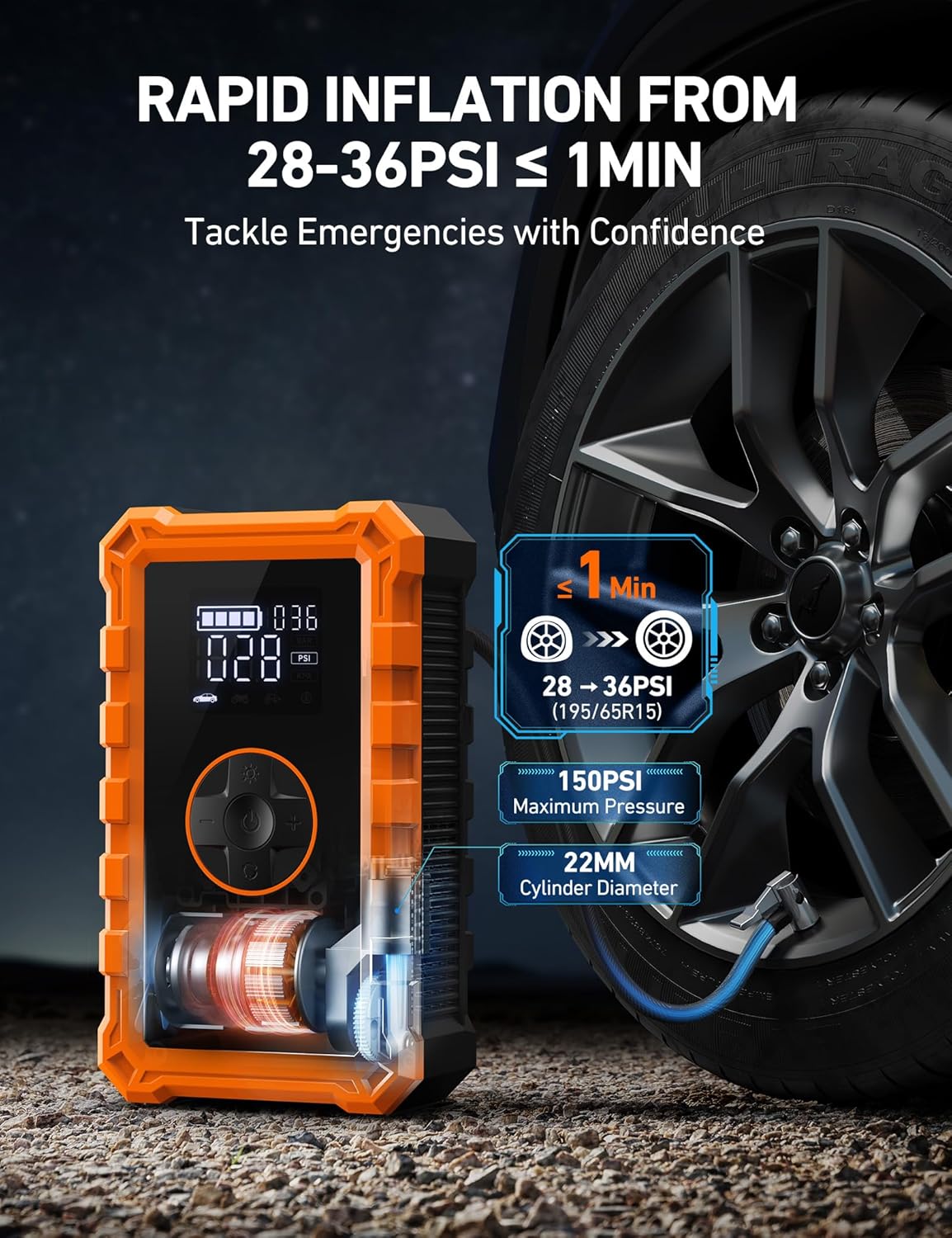
The included air compressor reaches 150 PSI and offers 5 preset modes with selectable units (PSI, kPa, Bar). It automatically stops when it reaches your preset value, and its high-quality cylinder delivers 25L/min fast inflation—bringing a tire from 32 PSI to 36 PSI in about a minute under typical conditions.

Specifications at a Glance
You’ll find the essential specs laid out here to help you quickly compare and confirm this unit meets your needs. This table summarizes the performance and technical characteristics so you don’t have to hunt through marketing copy.
| Feature | Details |
|---|---|
| Tire Gauge Accuracy | ±1% professional calibration |
| Pressure Range | 0–250 PSI (0–17.2 Bar; 0–1724 kPa; 0–17.5 kg/cm^2) |
| Jump Starter Peak Output | 1500A peak |
| Jump Start Capacity | Up to 20 jump starts per full charge (typical) |
| Engine Support | Up to 6L gasoline, 3L diesel |
| Operating Temp Range | Approximately -4°F to 140°F |
| Air Compressor Max Pressure | 150 PSI |
| Inflation Flow | 25 L/min |
| Preset Modes | 5 preset modes, automatic stop |
| Units | PSI, kPa, Bar |
| Chuck Type | Straight locking chuck |
| Accessories | Inflator, hose, bleed valve, charging cables |
| Portability | Compact, designed for trunk storage |
Hands-On Performance
When you actually use the kit, you’ll notice whether its claims hold up under normal road conditions and emergency use. This section covers what to expect during routine checks, inflation, and jump starts based on tested performance and user reports.
Tire Pressure Gauge Accuracy in Practice
You’ll find the readings to be consistent and repeatable thanks to professional calibration; spot checks against other high-accuracy gauges typically show very close agreement. The digital readout is easy to read, so you won’t struggle to determine exact PSI at dusk or with poor lighting.
Inflator Speed & Presets
The inflator’s 25 L/min flow makes topping up a standard passenger tire quick; a small psi increase can take less than a minute. Preset options and automatic shutoff mean you don’t have to babysit the pump—you can set it, attach it, and move on to other prep tasks while it finishes.
Jump Starting Reliability
The S8 AIR’s 1500A peak provides a strong instant current, and the lithium battery technology means you’ll usually get multiple reliable restarts on a single charge. You’ll want to ensure the jump starter itself is fully charged and use the included clamps correctly; when used properly, it’s a dependable roadside solution.
Battery Life & Charging
You can expect repeated jump starts before the unit needs recharging, and the internal battery should hold charge well during seasonal storage if you follow basic maintenance steps. Charging times vary based on input, so refer to the product manual for recommended charge cycles and avoid leaving it fully discharged long-term.
How to Use
You’ll find these step-by-step instructions helpful whether you’re checking tire pressure, inflating, or using the jump starter for the first time. These instructions keep things simple and ensure you use the tool safely.
Checking Tire Pressure
Turn the digital gauge on and select the desired unit (PSI, kPa, or Bar), then press the straight locking chuck firmly onto the valve stem. Read the displayed pressure; if you need an exact adjustment, use the bleed valve to let out small amounts of air until you hit the target pressure.
Inflating a Tire
Attach the hose and locking chuck to the tire valve and select the preset target pressure or the desired unit. Start the inflator and let it run; it will automatically stop when the target is reached, so you don’t have to keep checking.
Using the Jump Starter
Make sure the jump starter is fully charged, then connect the red clamp to the positive terminal and the black clamp to a grounded metal point (or negative terminal depending on the user manual). Turn on the jump starter, follow the recommended wait time if any, and attempt to start the engine; remove clamps in reverse order once the vehicle is running.
Maintenance & Storage
Keep the unit charged every few months if it will be stored for a long time, and inspect clamps, cords, and the hose for wear before each use. Store the unit in a dry location and avoid extreme temperatures that could shorten battery life.
Real-World Scenarios
You’ll get a feel for when this kit is most valuable by thinking about common situations where it can be used. These scenarios reflect typical use cases where a combined inflator and jump starter simplifies road preparedness.
Road-Trip Use
On long trips you’ll appreciate not having to search for service stations for small pressure adjustments or last-minute battery boosts. The compact footprint of the kit leaves space for other emergency supplies and helps you stay self-reliant.
Emergency at Home
If your car battery dies in the driveway or you need to inflate a neighbor’s flat, you’ll be able to respond quickly without calling towing services. The unit’s portability makes it a practical addition to home garages and utility closets.
Seasonal Vehicle Prep
During seasonal maintenance you’ll use the gauge to confirm recommended pressures for cold or hot weather and the inflator to set those pressures precisely. You’ll also have a reliable jump starter ready if a car sits unused for months and the battery weakens.
Motorcycle & Small Engine Use
You can use the smaller pressure range and inflator presets for motorcycles, lawnmowers, and other small engines, and the jump starter supports most small engines as listed. The compact size is convenient for storing with motorcycle gear or outdoor equipment.
Pros and Cons
You’ll want to weigh the advantages against the limitations to determine if this product fits your needs. This section lists strengths and drawbacks so you can consider practical trade-offs.
Pros:
- High accuracy gauge (±1%) gives confidence in readings.
- All-in-one functionality reduces the number of tools you need.
- Fast inflation rate with automatic shutoff for convenience.
- Portable 1500A jump starter suitable for many gasoline engines and some diesel engines.
- Multiple units and presets make the device flexible for different tasks.
Cons:
- Peak amps are good for most vehicles but may not be enough for very large diesel engines.
- Continuous operation limits require cooling pauses during prolonged use.
- Heavier than a single-purpose gauge due to built-in battery and compressor.
- You’ll need to maintain the jump starter battery to ensure readiness.
Comparison with Alternatives
You’ll often compare multi-function kits to single-purpose or more heavy-duty options when deciding what to buy. These comparisons highlight when this unit is a sensible choice and when you might prefer a different path.
Versus Standalone Gauge
A dedicated gauge might be lighter and cheaper, but it won’t inflate or jump-start your vehicle when you need more than a reading. If you want a minimal kit solely for quick checks, a standalone gauge could suffice, but you’ll lose the emergency boost and inflator convenience.
Versus Larger Portable Jump Starters
Larger jump starters often provide higher continuous amperage and more jump-starts per charge, which is useful for heavy-duty applications. You’ll trade some of that raw power and capacity for the compact form factor and integrated inflator that this AstroAI unit offers.
Versus Onboard Tire Pressure Monitors
TPMS (Tire Pressure Monitoring Systems) are convenient for continuous tire monitoring while driving, but they don’t let you manually inflate or quickly jump-start a battery. You’ll still find value in this kit for manual maintenance and emergency scenarios even if your vehicle has TPMS.
Safety Tips and Precautions
You’ll want to follow safety guidelines to avoid injury or equipment damage when using the compressor or jump starter. These safety tips are straightforward and aim to reduce common risks during operation.
- Always read the included user manual and follow manufacturer instructions before first use. You’ll reduce risk by understanding clamp placement, polarity, and proper hose connection.
- When jump starting, connect clamps exactly as instructed—positive to positive and negative to a grounded point away from the battery—to avoid sparks and short circuits. Never touch the clamps together when a jump starter is powered on.
- Avoid operating the compressor for more than the recommended continuous runtime; resting the unit prevents overheating and extends its life. You’ll typically allow about 10 minutes rest after continuous use (follow the manual for exact guidance).
- Keep the unit away from water and extreme moisture, and store it in a cool, dry place to protect the internal battery and electronics. You’ll also prevent corrosion by checking connectors periodically.
- Wear protective eyewear and gloves if you’re uncertain or handling a damaged battery, and never attempt to jump-start a battery that appears cracked, leaking, or severely corroded.
Troubleshooting Common Issues
You’ll likely encounter a few common hiccups occasionally, but most have simple fixes you can do yourself. This section lists typical problems and practical solutions so you don’t get stuck.
- Inflator won’t start: Check battery charge level and that the unit is turned on. Verify hose and chuck connections are secure and the preset mode isn’t preventing operation.
- Gauge reads erratically: Ensure the chuck is making a tight seal with the valve stem and try taking two readings in a row. If results are still inconsistent, check for a damaged valve stem or bleed valve issues.
- Jump starter won’t power the vehicle: Confirm clamps are connected properly and the jump starter is sufficiently charged. Try allowing the jump starter to rest and then attempt another start; if the battery is severely discharged, multiple attempts with rest periods may be necessary.
- Unit overheats or shuts down: Allow it to cool for the recommended rest period and ensure ventilation isn’t blocked during use. Continuous operation beyond the recommended duty cycle can trigger safety shutdowns.
- Display or electronics malfunction: Try a full recharge cycle and inspect for loose cables or damaged connectors. If problems persist, consult the manufacturer’s support for warranty service.
Maintenance and Care
You’ll extend the life and readiness of this device by following a few basic maintenance routines. These steps protect the battery, keep mechanical parts functioning, and help you avoid surprises when you need the kit most.
- Charge the jump starter every few months if it’s in storage to prevent deep discharge and battery degradation. A partial charge is better than letting it sit fully drained.
- Inspect hoses, chucks, and clamps regularly for wear, cracks, or corrosion, and replace damaged parts promptly to maintain safe operation. You’ll reduce risk of leaks and poor electrical contact by addressing issues early.
- Clean the device with a dry cloth and avoid harsh solvents that could damage seals or electronic components. Keep vent openings free of debris to ensure proper cooling during use.
- Store the kit in a protective case or dry compartment in your vehicle away from direct sunlight and extreme heat. Proper storage will preserve battery life and the accuracy of the gauge.
Who Should Buy This
You’ll find this product especially useful if you want an all-in-one solution for road preparedness that doesn’t require a lot of space. It’s a good fit for commuters, weekend drivers, small truck owners, motorcyclists, and anyone who wants a portable means of managing tire pressure and battery issues.
- If you perform regular tire maintenance and value accuracy, this kit saves you time and gives precise readings. You’ll also appreciate it if you like to be self-sufficient during routine vehicle care and emergencies.
- If you need a jump starter for large commercial diesel engines daily, you might want to consider a more heavy-duty alternative. This unit is strong for a compact kit but isn’t intended to replace professional-grade, high-capacity boosters used in intensive commercial settings.
Final Verdict
You’ll get a well-rounded, accurate, and portable package that covers the essential needs of tire maintenance and emergency battery starting for the majority of personal vehicles. If you seek convenience, professional-caliber pressure readings, and a compact jump starter that handles typical passenger cars and many small engines, this AstroAI unit is a strong, practical choice.
Frequently Asked Questions (FAQ)
You’ll find answers to common questions here so you don’t need to wait for support to confirm basic details. Each answer is concise and actionable.
Is the pressure gauge accurate enough for performance vehicles?
Yes, the gauge’s ±1% calibration will provide the precise readings performance-oriented drivers need for consistent tire setup. You’ll still want to cross-check with another calibrated gauge if you require absolute laboratory-level precision, but for road use this is excellent.
How many times can you realistically jump start a car on one charge?
Under typical conditions you can expect up to about 20 jump starts on a full charge, though real-world numbers depend on engine size, temperature, and how much charge is needed. You’ll see fewer starts if you’re attempting restarts for larger engines or in very cold weather.
Can I use the inflator on sports equipment and bicycle tires?
Yes, the presets and unit selections make it convenient for bikes, sports balls, and small inflatables. You’ll just need the appropriate adapter for some items, which is commonly provided or can be purchased separately.
What safety features does the jump starter include?
The unit typically includes protections against reverse polarity, short circuits, overvoltage, overload, and overcurrent. You’ll reduce risk further by following safe clamp connections and manufacturer guidelines.
Does the compressor automatically stop at the preset pressure?
Yes, the compressor includes an automatic stop feature when it reaches the preset pressure, which saves you from overinflating and lets you focus on other tasks. You’ll still want to confirm pressures occasionally to account for valve leaks or minor drift.
How long should I let the compressor rest after continuous use?
Manufacturer guidance suggests resting the unit after continuous operation—commonly a 10-minute rest after about 10 minutes of continuous running. You’ll protect the motor and battery by adhering to these duty cycle recommendations.
Buying Tips
You’ll want to check a few things before buying to ensure the product matches your expectations and usage. These tips help you make an informed purchase and avoid common buyer’s remorse.
- Confirm the jump starter power is sufficient for the vehicles you plan to support, especially if you have a large diesel engine. You’ll be safer choosing a higher-capacity booster for heavy-duty needs.
- Check what accessories are included (adapters, carrying case, charging cables) so you aren’t surprised by missing items. You’ll prefer a kit that comes with essentials for immediate use.
- Read the warranty and support terms so you know what’s covered in case of defects or battery failure. You’ll want reliable support for electronic devices that sit in your trunk for months at a time.
Closing Thoughts
You’ll appreciate the convenience, accuracy, and thoughtful integration of features in the AstroAI Digital Tire Pressure Gauge with Inflator & S8 Air Jump Starter with Air Compressor. Whether you’re handling everyday maintenance or facing an unexpected roadside battery issue, this kit gives you multiple tools in a compact, user-friendly package that helps you stay ready and safe.
Disclosure: As an Amazon Associate, I earn from qualifying purchases.