
Looking for a compact solar panel that can keep your gadgets topped up during a camping weekend, van trip, or emergency power outage?
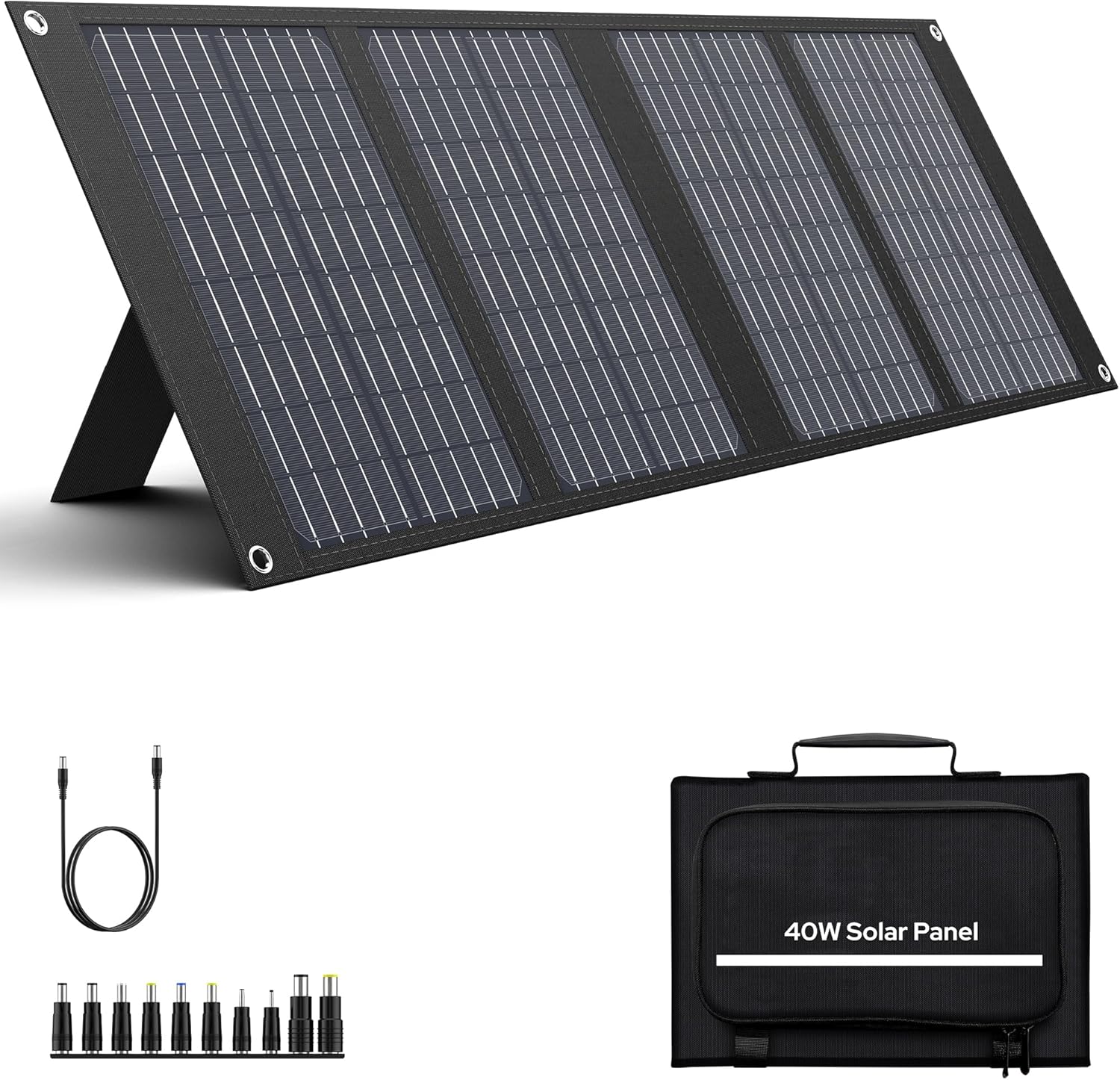

Product overview: Apowking Portable Solar Panels 40W, Foldable Solar Panel Charger for 100-300W Portable Power Station, with Adjustable Kickstands, DC 18V Output, USB 3.0 and Type-C Ports for Camping Van RV Trip
This is a concise portable solar charger designed for people who want a lightweight, foldable solution to recharge phones, power banks, tablets, and even many portable power stations. You’ll get a foldable 40W monocrystalline panel with multiple output ports, adjustable kickstands, and a 10-in-1 connector kit so you can pair it to a wide range of devices and solar generators.
What this product is and what it isn’t
This panel is a lightweight, foldable solar module that converts sunlight into DC power with a rated peak output of 40W under ideal conditions. It is not a battery or power station — it doesn’t store energy — so you’ll need a compatible power bank or portable power station if you want stored energy for night use or cloudy days.
Who should consider it
If you enjoy camping, van life, or want an emergency trickle charger for small devices, this panel is built for that kind of travel-savvy user. You should consider it if you value portability, simple setup, and the ability to directly charge devices or feed a compatible 100–300W portable power station.
Specifications snapshot
Here is a clear breakdown of the key specs so you can quickly understand the capabilities. The table focuses on the most relevant numbers you’ll use when matching the panel to devices or power stations.
| Spec | Detail |
|---|---|
| Panel Type | Monocrystalline solar cells |
| Rated Power | 40W (peak, under ideal sun) |
| Conversion Efficiency | Up to 22% |
| DC Output | 18V / 2.27A max |
| USB QC3.0 | 5V/3A, 9V/2A, 12V/1.5A |
| USB Type-C | 5V/3A, 9V/3A, 12V/2.5A, 15V/2A |
| Connector Kit | 10-in-1 adapter kit included |
| Folded Size | Approximately 12.6 x 9.1 inches (folded) |
| Water Resistance | Mainboard IPX4; junction box NOT waterproof |
| Materials | PET laminate; foldable fabric backing |
| Accessories | 5ft DC cable, 10-in-1 kit, user manual |
| Weight | Lightweight and designed for portability |
| What’s not included | Internal battery — panel only provides live output |
Below the table, you should note that the 40W rating assumes ideal sunlight and optimal angle. In real life, output will vary with angle, temperature, shading, and cloud cover, and the manufacturer warns that output may be less than 40W depending on conditions.
Performance overview
You’ll find that the ApowKing 40W performs as a dependable small solar input when conditions are good, but like any small portable panel it has natural limits. Expect solid daytime trickle charging and the ability to top off power banks and smaller portable stations, but don’t expect it to replace a larger fixed solar array.
Solar efficiency and power output
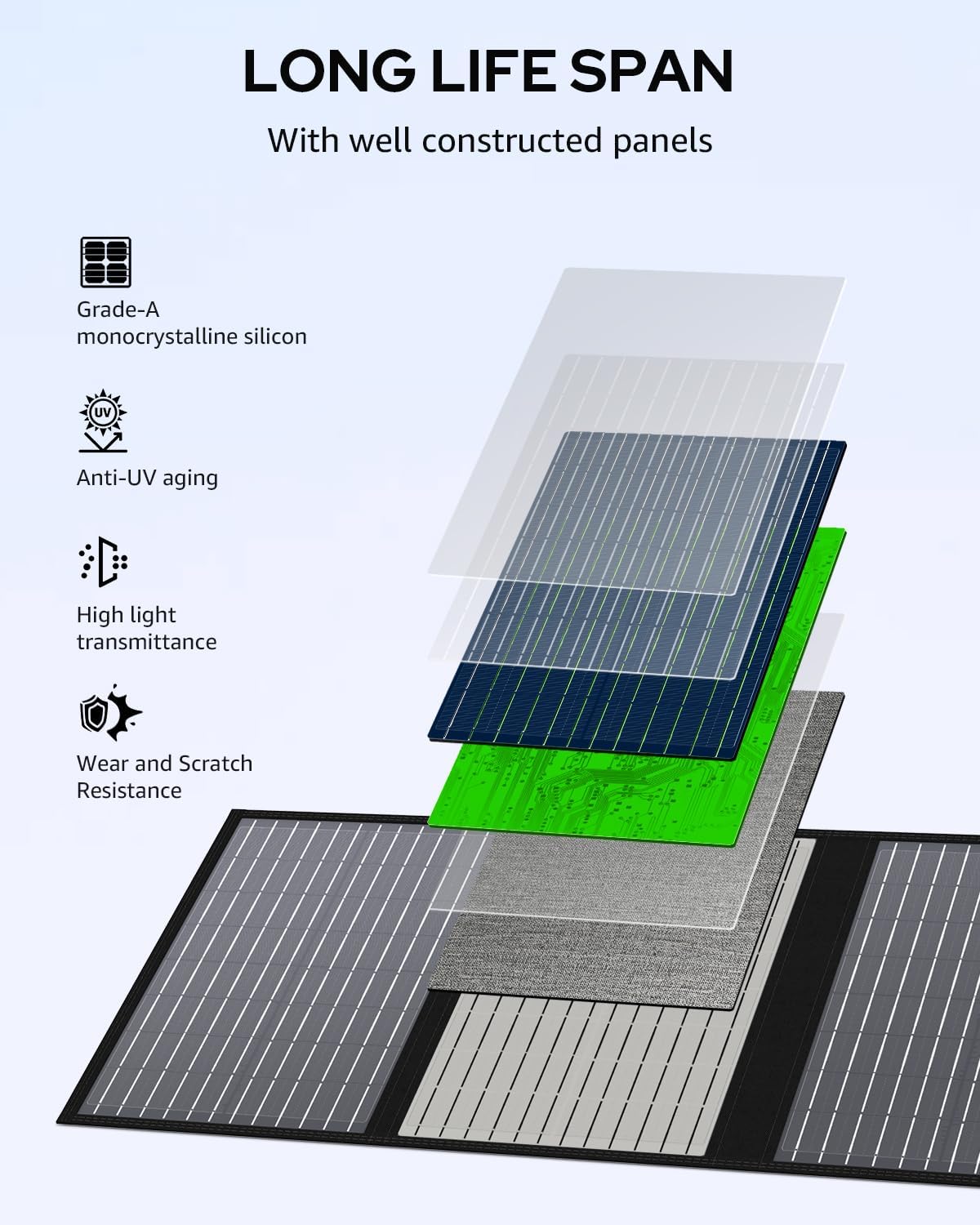
With monocrystalline cells rated up to 22% conversion efficiency, the panel is optimized for good power-per-area performance compared with older polycrystalline options. That efficiency helps you get more power from a small, foldable package, making it practical for packing into a backpack or van.
Real-world charging behavior
In strong direct sunlight, you’ll frequently see outputs near the panel’s rating, but clouds, morning/evening sun angles, and partial shading will reduce output significantly. If you use it to charge a phone or buffer into a power station, expect actual wattage to vary through the day and rarely to sustain peak output for many hours unless conditions are perfect.
Conditions that affect output
Several factors will change how much power you actually harvest: the sun’s zenith angle, panel temperature, shading from tents or trees, dust or dirt on the surface, and even the orientation of your portable station or device cable. You should plan with conservative expectations — assume 40W peak for short periods only and much lower average daily totals unless you can sun-track or relocate the panel.
Ports and compatibility
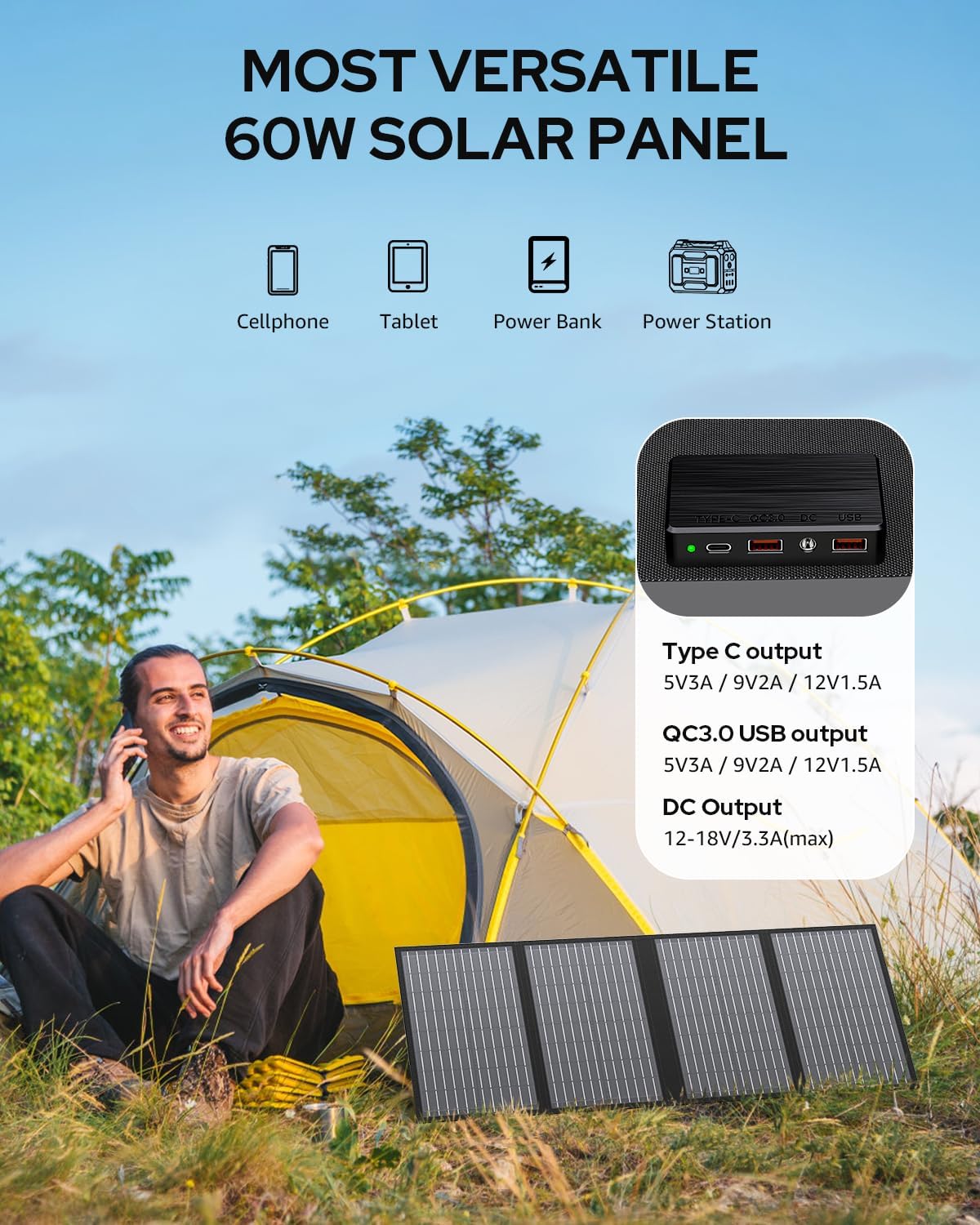
You’ll like the variety of outputs this panel offers if you want to charge different devices without extra converters. The included connector kit widens compatibility with many portable power stations, and the QC3.0 and Type-C outputs add direct charging convenience for modern devices.
DC output and 10-in-1 connector kit
The DC output provides an 18V output at up to 2.27A, which allows direct connection to many portable power stations and solar generators when you pick the correct adapter from the included 10-in-1 kit. Keep in mind that the junction box is not waterproof, so you should avoid exposing those connectors to heavy rain.
USB QC3.0 and USB Type-C convenience
For phones, tablets, and other USB-powered gear, the QC3.0 port and the Type-C port support multiple voltages and fast-charge protocols such as 9V and 12V where applicable. You can charge a smartphone or a USB-C power bank directly, and the Type-C port supports up to 3A at some voltages which gives you decent charging speed for compatible devices.
Portability and design
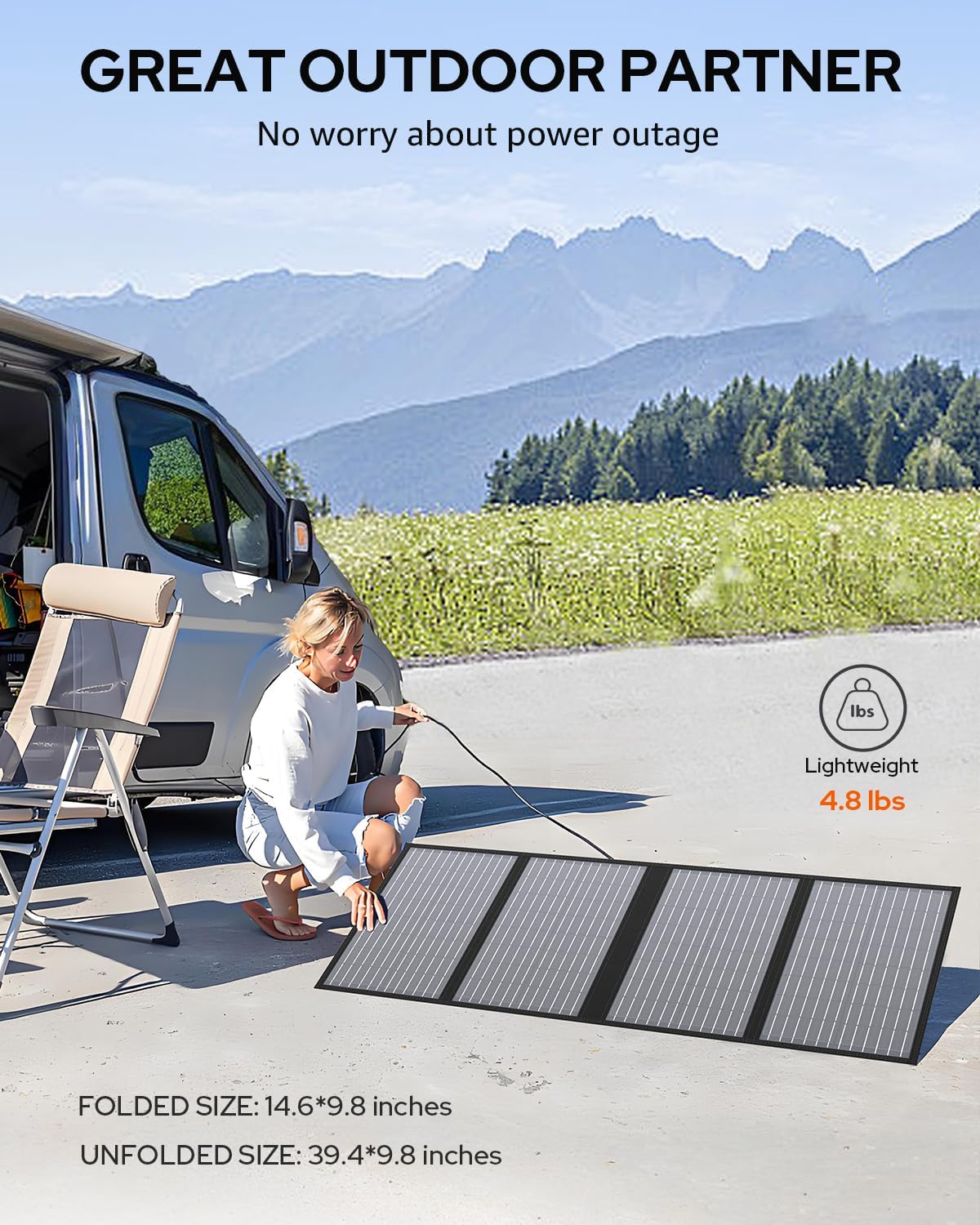
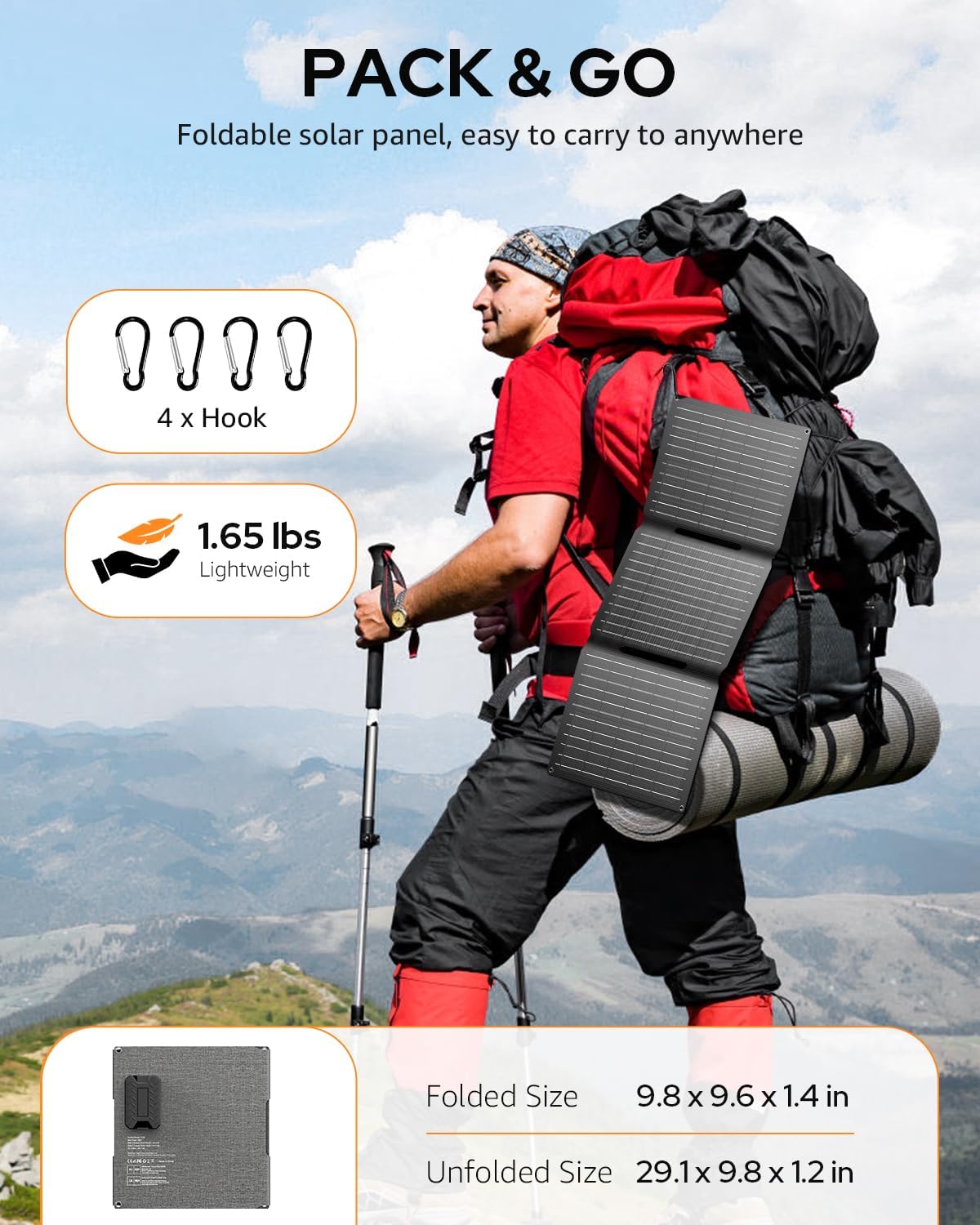
The panel’s foldable design makes carrying it easy and reduces the chance you’ll leave it behind. It’s meant to fold into a compact bundle you can sling into a bag while still offering kickstands and hanging points to position it in the sun.
Folded dimensions and weight
Folded to roughly 12.6 x 9.1 inches, it becomes small enough to treat like a compact briefcase or handbag when you travel. Because it’s lightweight and slim when folded, you can tuck it behind other gear in a van or carry it in your daypack without much burden.
Kickstands, hanging options, and IPX4 weather resistance
Two adjustable kickstands let you set the panel at the best angle for the sun, and two reinforced holes let you hang it from a tent, RV, or pack. The main board uses IPX4 materials so it resists splashes and light rain, but you must keep the junction box and dry connectors away from heavy water exposure.
Materials and build quality
The PET laminate and fabric backing provide durability and a degree of abrasion resistance, and overall construction is geared towards light outdoor use. While the body feels sturdy for normal travel, you should still treat it like a delicate electronic — avoid folding it onto sharp objects and store it in dry conditions when not in use.
Setup and daily use
Getting started is straightforward: unfold, angle toward the sun, connect an output cable, and you’ll see live power flow. You’ll want to check cable polarity and connector fits before leaving it unattended, particularly if you’re pairing it with an unfamiliar power station.
Unboxing and what’s included
You’ll receive the ApowKing 40W solar panel, a 5ft DC charging cable, the 10-in-1 connector kit to adapt to different devices, and a user manual. There’s also customer service available 24/7 according to the product description, so you can reach out if a connector is missing or you need help matching the panel to your power station.
Best practices for placement and angle
To maximize output, orient the panel perpendicular to direct sunlight and adjust the kickstand as the sun moves. You can get more hours of effective output by re-angling periodically or by setting the panel where it won’t be shaded by trees, tents, or the body of your vehicle.
Charging a portable power station
If you plan to use this panel with a 100–300W portable power station, select the correct adapter and verify the station accepts 18V input from a solar panel. Take note that small panels will charge larger capacity power stations slowly; use this panel to top up the station or extend runtime rather than expecting quick full recharges.
Pros and cons
It helps a lot to weigh the strengths against the limitations so you can match the panel to your use case before buying. The following summary gives you a balanced view so you can decide whether the trade-offs fit your needs.
Pros
- Highly portable and foldable size that’s easy to pack and carry.
- Decent conversion efficiency (up to 22%) for a small monocrystalline panel.
- Multiple outputs (DC 18V, USB QC3.0, Type-C) suit phones, power banks, and many portable power stations.
- 10-in-1 connector kit broadens compatibility without buying extra adapters.
- IPX4 mainboard resistance and durable PET laminate material for basic outdoor use.
Cons
- Rated 40W is peak; real-world output often lower because of angle, shade, and clouds.
- Junction box is not waterproof, so you must protect connectors in wet conditions.
- Not a battery — you’ll need a power station or battery to store energy for night use.
- Will charge larger portable power stations slowly compared with higher-watt solar arrays.
- If you need continuous high output, you’ll want a larger or multiple-panel setup.
Comparison with similar portable panels
When you compare this ApowKing panel to similarly rated foldable panels, the differences often come down to build quality, connector options, and actual delivered power. You should match the panel to your device needs and budget rather than only comparing watt numbers.
Versus other foldable 40W panels
Compared to other 40W foldables, ApowKing’s 22% efficiency and included 10-in-1 kit are competitive advantages, and the USB Type-C and QC3.0 ports add convenience. Some competitors might have better waterproofing around junctions or slightly lighter materials, so check whether junction box weatherproofing matters for your intended use.
Versus higher-watt portable kits
If you compare a single 40W foldable to a larger 100–200W portable kit, the larger kits will charge power stations much faster and generate more surplus energy on sunny days. Choose the 40W if portability and weight are primary concerns; choose larger arrays if rapid recharging and higher daily energy harvest are your priorities.
Use cases and recommendations
Knowing the best scenarios to use this panel helps you optimize its value. The 40W ApowKing panel thrives in lightweight, mobile setups and as a supplement to larger systems rather than a replacement for them.
Camping, van, and RV day use
For weekend camping and van trips where you want to charge phones, headlamps, small power banks, and cameras, it’s a convenient solution. You can sit it on a dash or hang it on the side of a tent to capture midday sun and keep devices running without running a generator.
Emergency preparedness and power outages
As part of an emergency kit, it gives you the ability to trickle-charge essential devices and top off small power stations during daylight hours. It won’t fully replace your home power, but it provides a useful lifeline for communications and essential device power.
Everyday mobility and device charging
For frequent travelers and digital nomads who need an ultra-portable table-top solar charger, the ApowKing is a practical way to reduce reliance on outlets. You can carry it in a car or backpack and use the Type-C port to directly power laptops or USB-C power banks when conditions permit.
Tips to get the best performance
A few small habits will significantly improve the energy you harvest from this panel. You’ll benefit from simple steps like cleaning, angle adjustments, and protective measures for the junction box.
Angle, orientation, and tracking
Point the panel so sunlight hits it at as close to a 90-degree angle as possible, and adjust the kickstand every few hours if you’re stationary for long periods. If you can reposition the panel while you move or use multiple panels to track the sun, you’ll get more consistent power over the day.
Maintenance and storage
Keep the PET laminate surface clean and free of dust, bird droppings, or salt if you’re near the ocean. Store the panel folded in a dry spot and avoid leaving the junction box exposed to rain; consider a small weatherproof bag or container for connectors in damp conditions.
Troubleshooting common issues
If the panel isn’t outputting, first check cable connections and make sure the connectors are secure and dry. Confirm you’re not in heavy shade, and test with a phone or USB power meter to verify voltage; if the junction box gets wet, dry it carefully before reusing.
Frequently asked questions
These are common concerns you’ll likely think about when deciding whether this panel fits your setup. Each answer focuses on practical considerations and what you should expect day-to-day.
Can you use this panel to charge a 200Wh power station?
Yes, but expect slow charging. A 40W panel will trickle-charge a 200Wh station over many hours; in good sun you might approach several hours to deliver significant recharge, but full recharge could take a long time compared with a larger panel array.
Is the panel weatherproof?
The panel’s mainboard uses IPX4 materials, which resist splashes and light rain, but the junction box is not waterproof and must be kept dry. You should avoid leaving connectors exposed in heavy rain and protect the junction box with a dry cloth or bag if needed.
Will it run a laptop directly?
You can power some laptops directly if the laptop accepts the DC output voltage and you have the correct adapter from the 10-in-1 kit. However, USB-C laptops with power delivery might work directly from the Type-C port when the voltage and current match the laptop’s requirements. Performance depends on your laptop’s power draw — high-power laptops may not run fully at peak load from a single 40W panel.
How do I get the most watts out of it?
Maximize watts by facing the panel directly to the sun, keeping it cool (panels drop efficiency when very hot), and avoiding shade or dust on the surface. Use the kickstands to set the angle and reposition as the sun moves across the sky to get as many peak hours as possible.
What’s the warranty and support like?
The product listing mentions 24/7 friendly customer service, so you can contact the seller for missing accessories or defects. Warranty terms typically vary by seller and region, so check the manual or product page for exact warranty length and coverage.
Practical testing scenarios
If you want to evaluate this panel in real life, consider a few representative tests you can run in a single day. These will help you form realistic expectations and plan how to use the panel in your gear setup.
Phone and power bank charging test
Place the panel in full midday sun, connect a modern smartphone or USB-C power bank to the Type-C output, and observe charge rate and time to top up. You should see decent amperage for a fast phone charge in ideal sun, but note that charging speed will taper as device batteries reach higher percentages.
Charging a small power station
Connect the panel to a 100–300W portable power station using the correct DC cable adapter and monitor the input watts and time to add a portion of the station’s capacity. Expect slow steady power; measure input so you can calculate realistic daily energy harvest under your local sun conditions.
Partial shade test
Test the panel under partial shade to see how susceptible it is to performance drops — one shaded cell string can reduce total output. This test helps you understand how careful you must be with placement around tents, trees, or your vehicle.
Buying considerations and final recommendations
Before you buy, think about how you’ll use the panel and whether its design matches your needs for portability versus speed of recharge. The ApowKing 40W is a solid fit for lightweight travelers and people who need a compact supplemental solar source.
When to choose this panel
Choose it if you need a light, portable, and foldable solar option for phones, small power banks, or topping up a portable power station on the go. It’s ideal for day trips, weekend camping, and as a backup charger for essential electronics.
When to look for alternatives
If you need to recharge large batteries quickly, support extended off-grid life for an RV, or expect heavy rain exposure, you should look at higher-watt arrays or panels with fully waterproof junctions and rugged frames. Two or more panels used in parallel will also offer much better performance for larger power needs.
Final verdict
If you want a genuinely portable, multi-output solar charger that’s simple to carry and set up, the ApowKing 40W panel is a practical and budget-friendly option. You should approach it as a mid-range, portable charging solution — excellent for phones and trickle-charging power stations, but not a replacement for a larger off-grid solar array.
If you want, I can help you compare this panel to specific models you’re considering, or calculate likely daily energy yield given your location and typical sun hours.
Disclosure: As an Amazon Associate, I earn from qualifying purchases.