
Looking for a reliable foldable solar charger that you can take on your next camping, RV, or van trip?

Product Overview
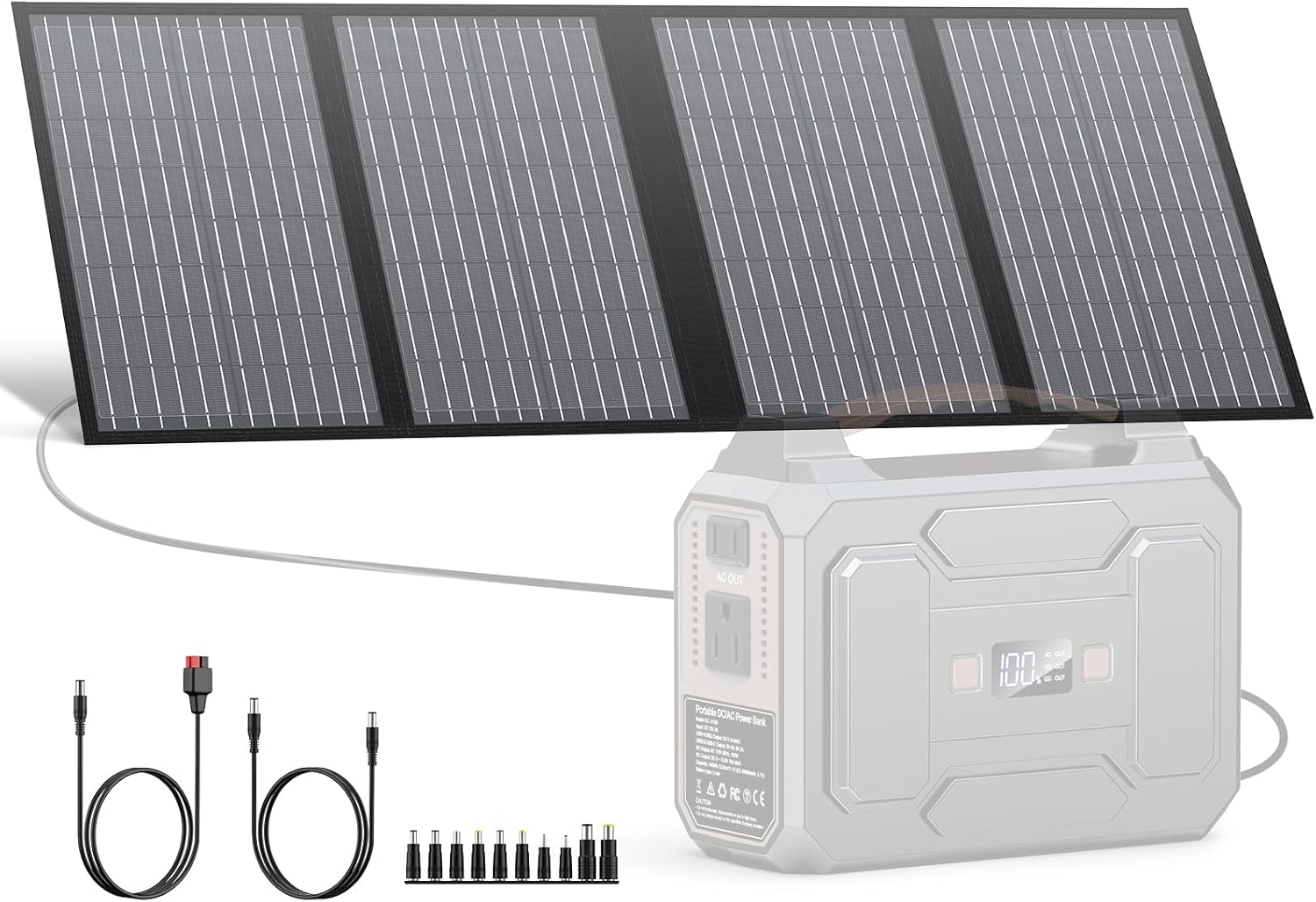
You’ll find plenty of portable solar panels on the market, but the 60W Portable Solar Panels, Foldable Solar Panel Charger for Portable Power Station(Under 500W), with Adjustable Kickstands, DC 18V Output, USB 3.0 and Type-C Ports for Camping Van RV Trip is built for convenience and versatility. This review walks you through what the panel can and can’t do, how it performs in real conditions, and whether it fits your needs for off-grid charging and emergency backup.
What this product is
You get a foldable mono-crystalline 60W solar array with a carrying case, connectors, and adjustable kickstands that help you position the panels toward the sun. The unit is designed primarily to top-up portable power stations (under 500W), charge phones and laptops, and serve as a lightweight solar option for outside use.
What this product is not
This panel doesn’t store any energy by itself — it only generates power when sunlight is available — and its junction box is not waterproof, so the unit requires some care in wet conditions. If you need a complete power system you’ll still need a battery or power station to store the energy this panel produces.
Key Specifications
You want the numbers up front so you can quickly compare capabilities and connectors. This section highlights the essential specs and what they mean for your charging tasks.
| Specification | Detail |
|---|---|
| Maximum Power | 60W (nominal, optimal sunlight) |
| Solar Cell Type | Mono-crystalline (high efficiency) |
| Conversion Efficiency | Up to 22% |
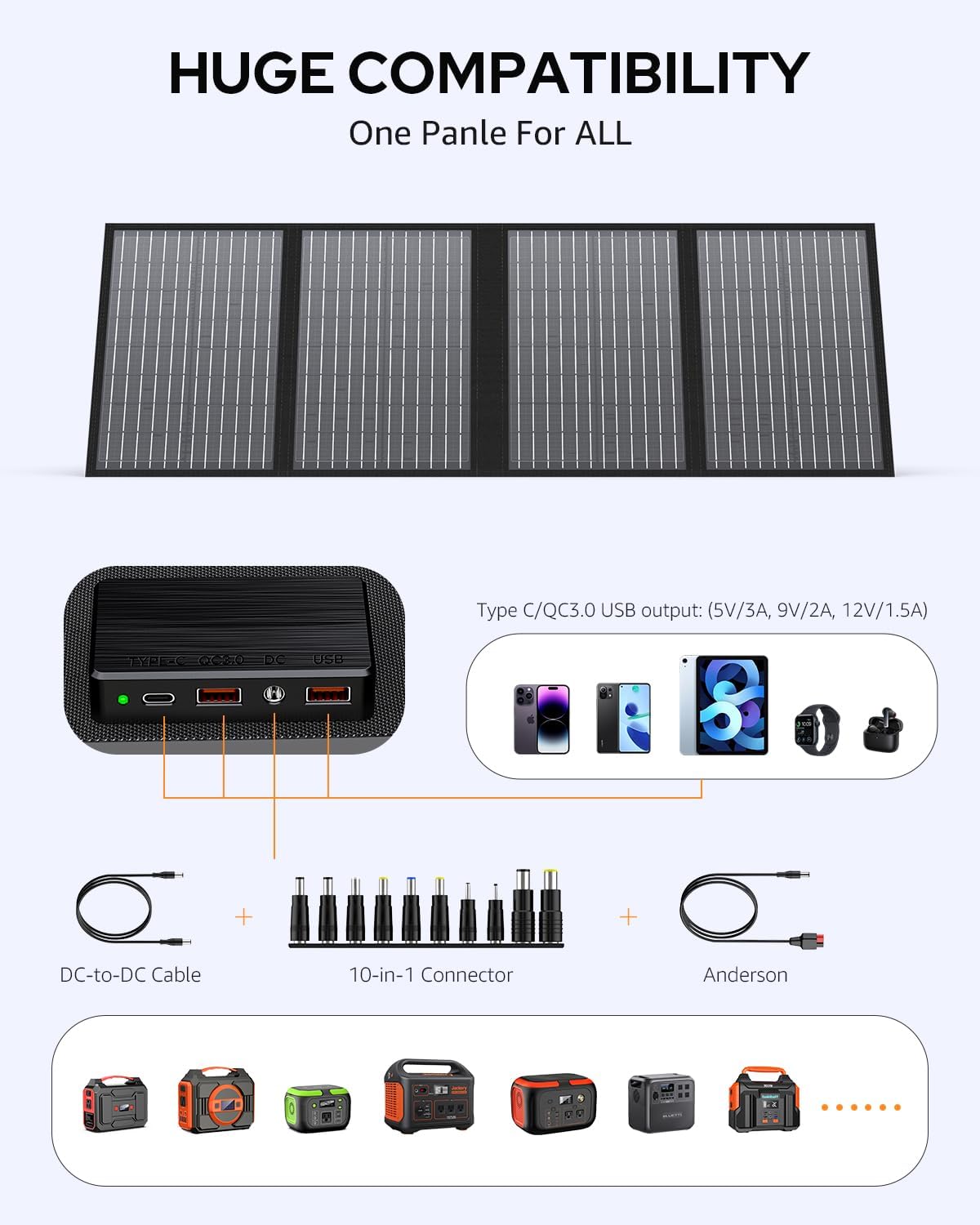
| Outputs | 1× DC 12-18V/3.3A max, 2× USB QC3.0, 1× USB-C (5V/3A, 9V/2A, 12V/1.5A) |
| Connector Kit | 10-in-1 connector kit + DC-to-Anderson cable |
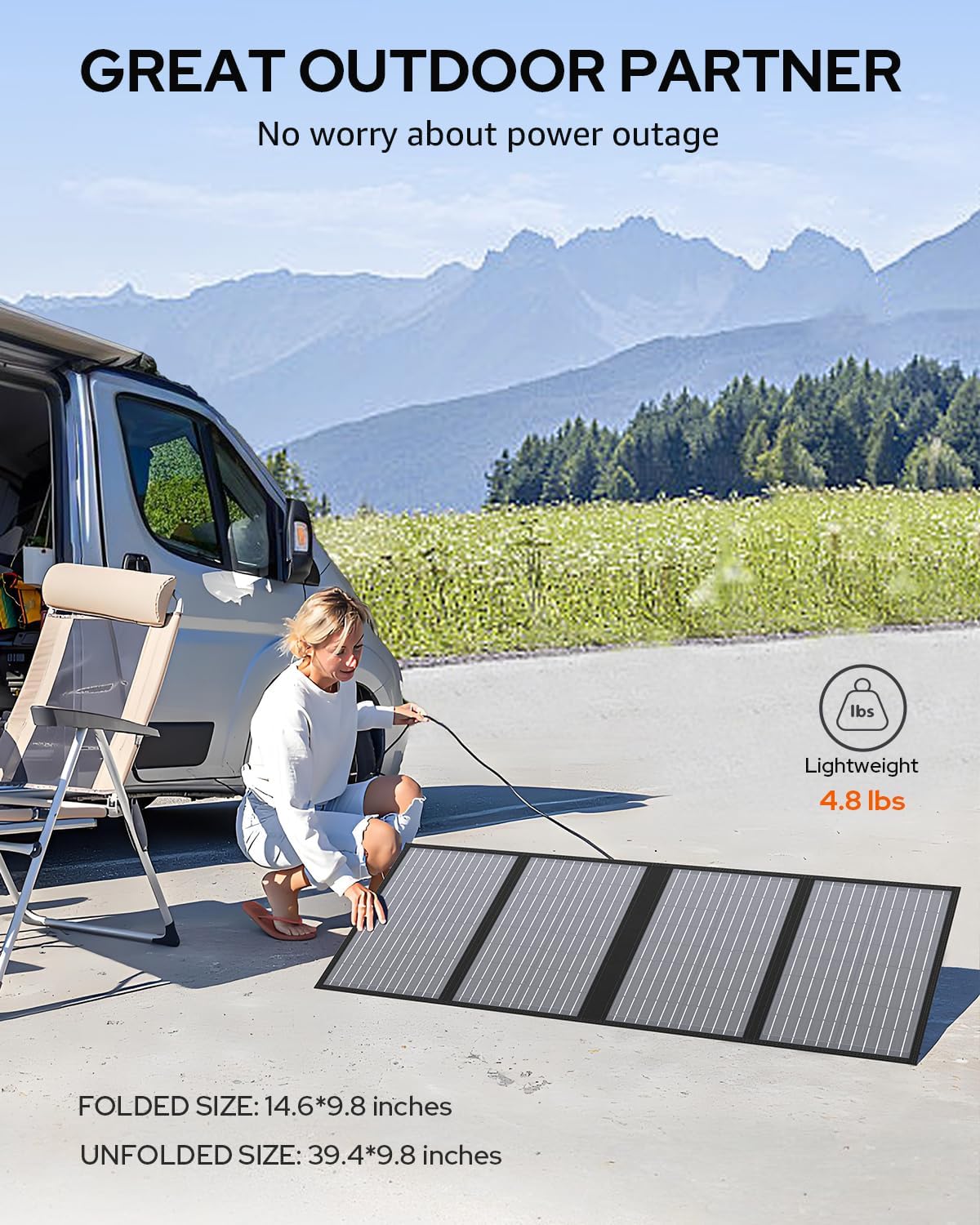
| Weight | 4.8 lb (≈2.18 kg) |
| Folded Size | 14.6 × 9.8 × 2 inches |
| Material | PET laminate, IPX4 main board (junction box NOT waterproof) |
| Kickstands | 2 adjustable |
| Included Accessories | 5 ft DC charging cable, user manual, connectors |
| Manufacturer Note | Output may be less than 60W under suboptimal angles or cloudy weather |
Why these specs matter
The 22% conversion efficiency and mono-crystalline cells indicate the panel is built to extract more energy per square inch than typical polycrystalline alternatives. Those outputs and the included connector kit show the manufacturer intended the panel for multi-device compatibility, especially portable power stations under 500W.
Design and Build Quality
You’ll notice the unit is designed to be portable and user-friendly, folding up like a small suitcase with a handle for easy transport. The PET laminate and reinforced casing suggest reasonable durability for general outdoor use.
Physical construction and materials
The panels are laminated with PET and the main board uses materials rated IPX4, which offers splash resistance for light rains or splashes. The junction box, however, is explicitly not waterproof so you’ll need to keep that part dry to avoid damage.
Port layout and accessibility
The panel exposes a DC output, two QC3.0 USB-A ports, and a USB-C port in a neat arrangement, making it easy to plug multiple devices while the unit sits on its kickstands. The 10-in-1 connector kit further increases compatibility, so you won’t be stuck hunting for adapters when connecting to power stations or laptops.
Portability and Setup
You’ll like how lightweight and compact this panel is for backpacking-lite and vehicle-based adventures. The solid handle and suitcase-style folding make it convenient to carry and store when not in use.
Weight and folded dimensions
At 4.8 lb and folding to roughly 14.6 × 9.8 × 2 inches, the panel is easier to fit into a car trunk, RV compartment, or closet compared with many rigid panels. You can pick it up and move it alone without strain, which is helpful during campsite changes.
Kickstands and mounting options
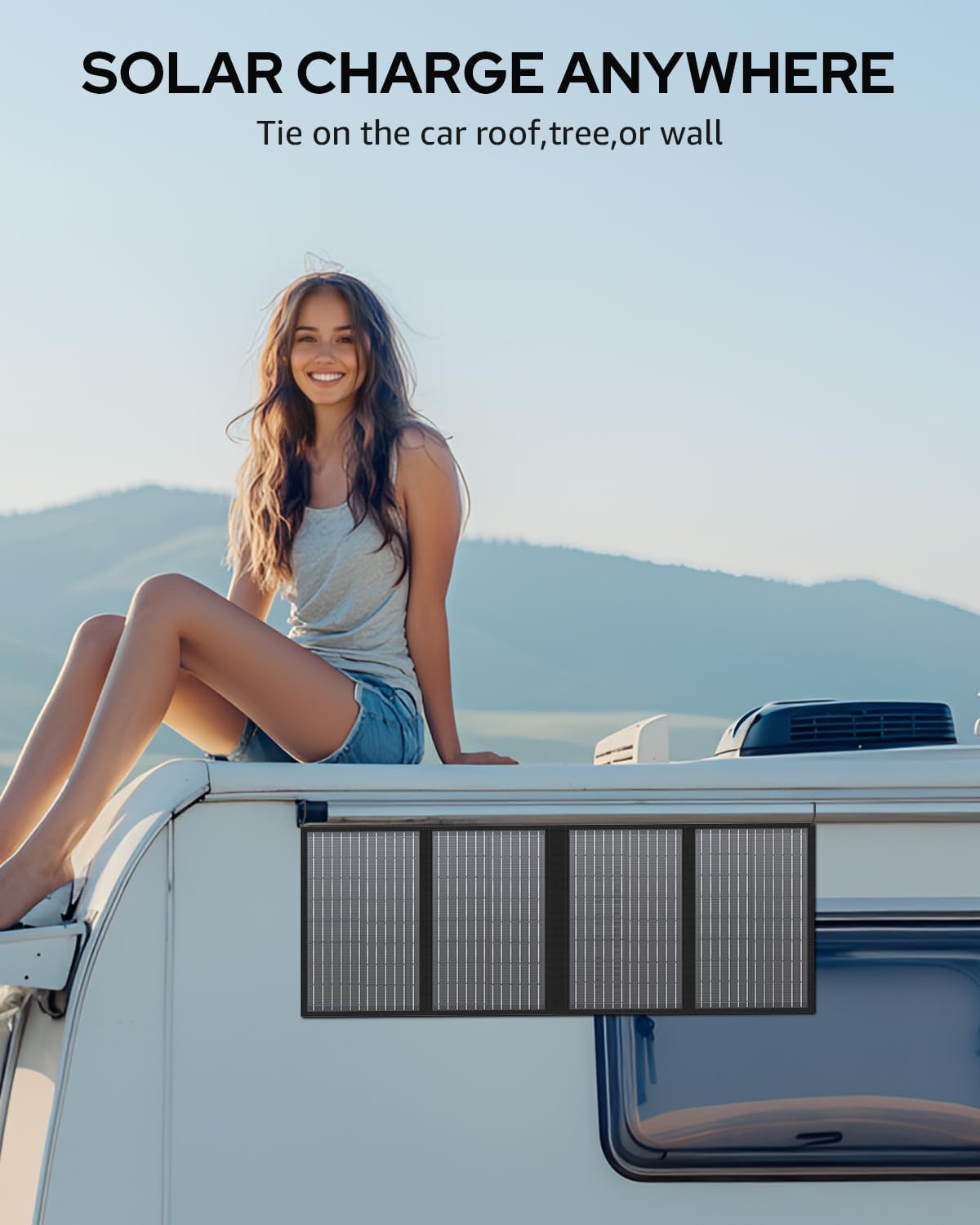
Two adjustable kickstands let you tilt the panels to a favorable angle for the sun when placed on the ground or roof of your vehicle. The integrated hanging holes let you suspend the panel from tent walls, tarps, or the side of an RV when ground placement isn’t convenient.
Solar Performance and Efficiency
You’ll see how well the panel converts sunshine into usable power and what to realistically expect in different weather and angles. The rated 60W is a best-case figure measured under specific conditions and will vary with environment.
Conversion efficiency and real output
With up to 22% conversion efficiency, these mono-crystalline cells perform well relative to many consumer foldable panels. Expect peak output close to 60W on bright, direct sunlight at optimal angle, but outputs will drop in cloud cover, shading, or if the panel is not oriented correctly.
Typical output under common conditions
On a clear sunny day with the panel optimally angled, you can expect near-rated output for much of the day. Under partly cloudy skies or if the panel is flat, output commonly falls to 30–60% of the rated power; in heavy cloud or shaded areas, you’ll see much lower generation, sometimes only enough to trickle-charge devices.
Charging Options and Compatibility
You’ll appreciate the variety of outputs that let you charge phones, laptops, cameras, and most portable power stations. The QC3.0 USB-A ports and multi-voltage USB-C port provide fast-charge abilities for modern devices.
USB and DC outputs explained
The panel offers 2 QC3.0 USB-A ports for fast charging smartphones and tablets, plus a USB-C port supporting 5V/3A, 9V/2A, and 12V/1.5A. The DC output range (12–18V, 3.3A max) is ideal for connecting to small to medium portable power stations using the included connectors.
What devices you can charge
You can charge phones, power banks, GPS units, digital cameras, tablets, certain laptops (with the right cable), and most portable power stations under 500W. You’ll want to check the power station’s input parameters and use the appropriate connector from the 10-in-1 kit for safe and effective charging.
Connection Kit and Cables
You’ll find the included 10-in-1 connector kit and DC-to-Anderson cable are practical for matching the solar panel to a wide range of devices. These accessories reduce the need to purchase additional adapters for a basic setup.
Included cables and adapters
In the box you get a 5 ft DC charging cable, a 10-in-1 connector kit, and a DC-to-Anderson cable to connect to many portable power stations. This accessory set covers most use cases for charging common devices and small power stations.
Limitations and additional adapters
While the kit is comprehensive, some proprietary or uncommon power station inputs might still require an additional adapter or an inverter for AC devices. If you intend to charge high-wattage equipment directly, plan to route solar output into a battery or power station first.
Durability and Weather Resistance
You want a panel that holds up to outdoor use and occasional bad weather. The ApowKing 60W panel is designed with durable laminate materials and an IPX4-rated main board, but there are limits you must respect.
Weatherproofing and expected lifespan
The PET laminate protects the cells from normal handling and light moisture exposure, while the IPX4-rated main board resists splashes from any direction. The junction box is not waterproof, so you must cover it or keep it dry, and you should avoid prolonged exposure to severe weather to maintain lifespan.
Handling and maintenance
Treat the panel gently when folding and unfolding, keep the junction box elevated and dry, and wipe the cells clean of dust and debris to preserve efficiency. Avoid sharp creases and heavy impacts, and store it in a dry place between uses to reduce wear.
Real-world Use Cases
You’ll want to know practical situations where this panel shines and where it might fall short. Below are scenarios showing how the panel performs in everyday outdoor power tasks.
Camping and overlanding
For car camping, van life, or short overland trips, this panel provides enough generation to keep phones, lights, and small refrigerators topped up when used with a power station. Its portability and adjustable kickstands make it simple to reposition throughout the day to maximize solar gain.
RV and boat charging
You can use the panel on RV roofs or boats to supplement onboard batteries or trickle-charge devices while docked. Keep the junction box dry and secure mounting points to reduce movement during travel.
Emergency backup power
In power outages you can use the panel to charge a power station that then supplies household essentials like lights, communication devices, and small appliances. Remember that charge rates depend on sunlight and won’t replace full home backup systems, but they can keep critical gear working.
Installation Tips and Best Practices
You’ll get better performance and longer life from your panel when you follow a few simple setup and maintenance tips. These suggestions are practical, easy to implement, and improve energy harvest.
Positioning for maximum output
Set the panel to face the sun directly and tilt it according to your latitude for best results; the adjustable kickstands help you find a good angle. Reposition the panel periodically as the sun moves or use multiple panels throughout the day if you need more energy.
Protecting the junction box and connectors
Keep the junction box dry, and avoid dragging it across rough surfaces. Use zip ties or a small cover when you expect rain, and disconnect cables when not in use to prevent corrosion and accidental damage.
Performance with Portable Power Stations
You’ll often use the panel to charge a portable power station, so it’s important to understand typical charge times and compatibility considerations. This section outlines realistic expectations when pairing this panel with common battery packs.
Charging time estimates
Charge times depend on the power station capacity and sunlight. For example, a 300Wh power station receiving an average of 45W from the panel would need roughly 6–8 hours of peak sun to approach full charge (taking into account losses and variable sunlight). Smaller power stations will charge proportionally faster under the same conditions.
Compatibility tips
Make sure your power station accepts a DC input within the panel’s voltage range and use the correct connector from the 10-in-1 kit. If the power station supports MPPT or has an MPPT charge controller, you’ll see improved efficiency and faster charging compared with basic controllers.
Pros and Cons
You’ll want a clear list of strengths and weaknesses to decide if this panel is right for you. Below is a balanced assessment so you can weigh trade-offs.
Pros
- High conversion efficiency (up to 22%) for better energy capture per area.
- Multiple output ports (DC, QC3.0 USB-A, USB-C) for versatile device charging.
- Lightweight (4.8 lb) and foldable for convenient transport and storage.
- Comprehensive 10-in-1 connector kit and DC-to-Anderson cable included.
- Adjustable kickstands and hanging holes increase placement options.
Cons
- Junction box is not waterproof and requires careful handling in wet conditions.
- Output can be significantly lower than 60W in cloudy or poorly angled conditions.
- Not suitable as a standalone energy storage solution — you must pair it with a battery or power station.
- Limited to devices and power stations that work within its voltage/amperage range; some laptops may need additional adapters.
How it compares to other foldable 60W panels
You’ll want to see how this panel sits in relation to competitors on features and value. This comparison focuses on the typical attributes you’ll care about: efficiency, ports, durability, and accessories.
Efficiency and power delivery
Compared with other 60W foldable panels, the 22% efficiency rate is at the higher end, which means better performance in limited space. Some cheaper alternatives use lower-efficiency cells and fewer ports, reducing flexibility.
Ports, accessories, and build
This panel’s inclusion of USB-C, dual QC3.0 ports, and a 10-in-1 connector kit gives it a functional edge over many models that include only a single DC output or fewer fast-charge ports. The PET laminate and IPX4-rated main board make it more robust than some ultra-lightweight foldables, though the non-waterproof junction box is a shared weak point across many products.
Troubleshooting and Maintenance
You’ll likely have questions or minor problems during use; this troubleshooting guide should help you solve the most common issues without needing service.
Common issues and fixes
If the panel is producing low power, check angle, sun exposure, and whether dust or shade is present. Ensure connectors are securely attached and the junction box is dry. For intermittent output, look for partial shading or debris on the cells.
When to contact support
If the panel shows no output in full sun with proper connections, or if physical damage occurred to the cells or junction box, contact ApowKing support using the included user manual information. The product includes 7×24 customer service for assistance with adapters, replacements, or warranty questions.
Frequently Asked Questions (FAQ)
You’ll find answers to common questions you might have when considering or using this panel. These quick answers save you time and give clarity on practical points.
Can you chain multiple panels together?
Yes, in most cases you can chain compatible panels to increase total power output, but ensure your power station or controller supports the combined voltage and current. Use proper connector cables and avoid exceeding the input limits of your power station.
Will this panel charge my laptop directly?
Some laptops will charge directly through the USB-C port if they support the provided voltage and current (5V/3A, 9V/2A, 12V/1.5A). For laptops requiring higher input voltages or proprietary connectors, use a compatible power station or an appropriate adapter cable from the 10-in-1 kit.
Is the output stable during cloudy weather?
Output will fluctuate with cloud cover and sun intensity — you’ll often see lower and variable outputs during clouds. For stable power supply, route the panel into a battery or power station that smooths out generation variability.
Safety Considerations
You’ll want to use the panel safely to avoid electrical hazards and prolong lifespan. Follow these basic safety steps whenever you set up the panel.
Basic safety steps
Never leave the junction box submerged or exposed to heavy rain; keep it covered and elevated where possible. Avoid exposing connectors to metal objects that could short-circuit, and disconnect the panel from devices during prolonged storage.
Handling and storage
Fold the panel gently along the designed seams, store in a dry place, and avoid stacking heavy items on top of it. When transporting, keep connectors secured in the pouch to prevent crushing or bending.
What’s in the box
You’ll find everything needed for basic setup included, so you can start using the panel out of the box with minimal hassle. Here’s the complete list of contents.
Included items
- 1× ApowKing 60W Foldable Solar Panel
- 1× 5 ft DC charging cable
- 1× 10-in-1 connector kit
- 1× DC-to-Anderson cable
- 1× User manual
- 7×24 customer service access
Pricing and value
You’ll weigh price vs performance and accessories when deciding if this panel is a good buy. Consider the combination of efficiency, ports, and included connectors.
Is it worth the price?
If you want a mid-range portable solar solution that packs multiple ports, decent efficiency, and a compact foldable form, this panel is a good value. If you need all-weather ruggedness or waterproof junction components, you may need to look at higher-end rigid panels or purchase additional protective gear.
Final Verdict
You’ll get a capable and versatile portable solar panel with the 60W Portable Solar Panels, Foldable Solar Panel Charger for Portable Power Station(Under 500W), with Adjustable Kickstands, DC 18V Output, USB 3.0 and Type-C Ports for Camping Van RV Trip. It’s well-suited for campers, van lifers, and anyone who needs a lightweight and multi-port solar solution for charging power stations and small electronics.
Who this product is best for
This panel fits you if you want a compact, efficient solar option for day trips, camping, or as a supplemental charger for a power station during emergencies. It’s less ideal if you need waterproof junction protection or plan to rely exclusively on solar in very cloudy environments.
If you have specific questions about compatibility with your power station or laptop model, tell me the model and I’ll help verify connectors and expected charge times.
Disclosure: As an Amazon Associate, I earn from qualifying purchases.