
Looking for a portable power station that can keep your home lights and fridge running during an outage while still being useful for camping and RV trips?

Overview of the Anker SOLIX F3000 Portable Power Station
You’re looking at a high-capacity, feature-rich battery system designed to act as both a home backup and a heavy-duty portable power source. The Anker SOLIX F3000 starts at roughly 3,072 Wh of battery capacity, supports high-power outputs, and is designed to scale up to a full 24 kWh when you add extra batteries. That combination aims to serve short-term emergency needs and longer-term backup scenarios.
Key specifications at a glance
This table breaks down the headline numbers you’ll want to know quickly. It pulls from manufacturer details so you can compare the F3000 against other solutions.
| Feature | Specification / Claim |
|---|---|
| Nominal Starting Capacity | 3,072 Wh (3.072 kWh) |
| Expandable Capacity | Up to 24 kWh with extra batteries |
| Peak/AC Output | 3,600 W pass-through charging; supports full appliance operation while charging |
| Max Combined Recharging | Up to 6,000 W (generator + solar combined) |
| Solar Input | Ultra 2,400 W solar recharging; supports 165V and 60V ports |
| AC Input (Generator) | Supports 120V generator recharging; pass-through capability |
| 120/240V Output | Run at 120V; pair two units for 240V |
| Idle Power Consumption | Ultra-low idle; claims 125 hours AC idle standby time |
| Claimed Appliance Runtime | 190 W fridge for 42 hours (manufacturer claim) |
| Smart Charging | Works with Bi-Directional Inlet Box and Smart Meter for automatic solar/off-peak charging |
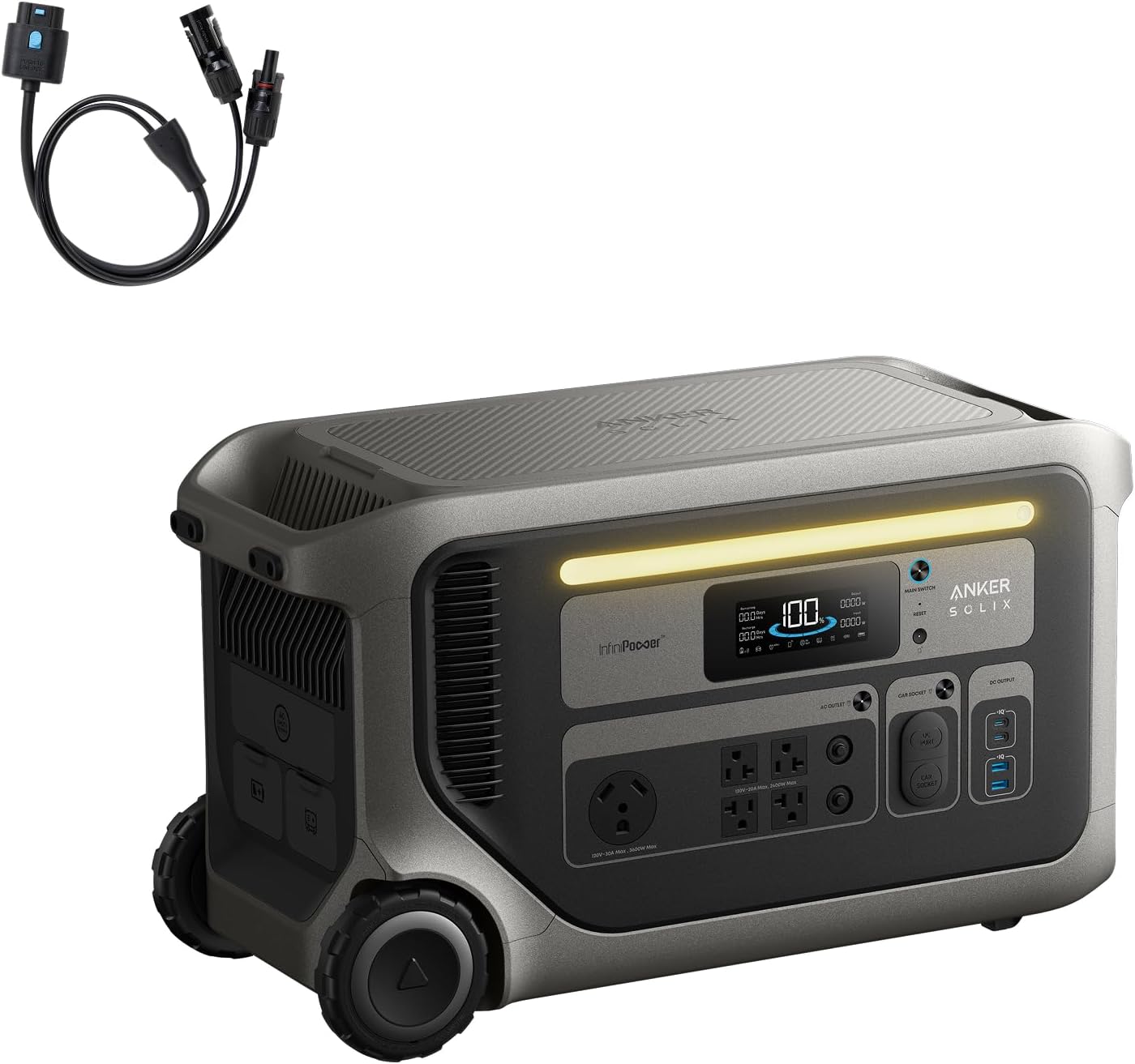
| What’s in the box | Anker SOLIX F3000, AC charging cable, high-voltage solar charging cable, user manual, warning notice, warranty card |

Design and build quality
You’ll notice Anker built the F3000 as a heavy-duty residential/portable hybrid rather than a backpack-friendly unit. The product is meant to sit in your garage, utility room, or RV bay, and to be moved as needed rather than carried on long hikes. The enclosure is purpose-driven: it prioritizes electrical capacity, cooling, and serviceability over being ultra-light.
Physically, it’s a portable-but-substantial device. You should expect to plan where it will live during normal use and how you’ll transport it for trips or between locations.
Portability considerations
You’ll be able to move the F3000 around for setup and repositioning, but it’s not a “carry-on your back all day” power bank. If you plan to take it to campsites or off-grid sites, factor in vehicle space and how you’ll lift and secure it.
You should also think through placement regarding ventilation and weather protection. The more powerful the battery and inverter, the more need there is for good airflow and a dry environment.
Power capacity, usable energy, and expandability
The headline 3,072 Wh tells you how much stored energy you start with. That’s enough to keep many essentials running for hours to days depending on load. But capacity numbers alone don’t tell the whole story — you’ll want to know realistic usable watt-hours after inverter inefficiency, battery management, and depth-of-discharge policies.
You can expand the system up to 24 kWh, which changes its role from “short-term backup” to “multi-day home backup” or a whole-house supplement in many cases. Expansion makes it attractive if you want long-term outage coverage or to pair it with solar for daily energy management.
Real-world usable capacity
Manufacturer-rated capacity is useful, but in practice you should consider efficiency losses. If you assume around 80–90% usable energy after inverter and system losses, your effective on-hand capacity will be lower than the 3,072 Wh number suggests. When you expand to the maximum, you get far more sustained runtime and resilience.
You’ll want to design your expected loads (refrigerator duty cycles, lighting, medical devices, communication, and small appliances) around realistic draw profiles rather than nameplate wattages.
Practical runtime examples and realistic expectations
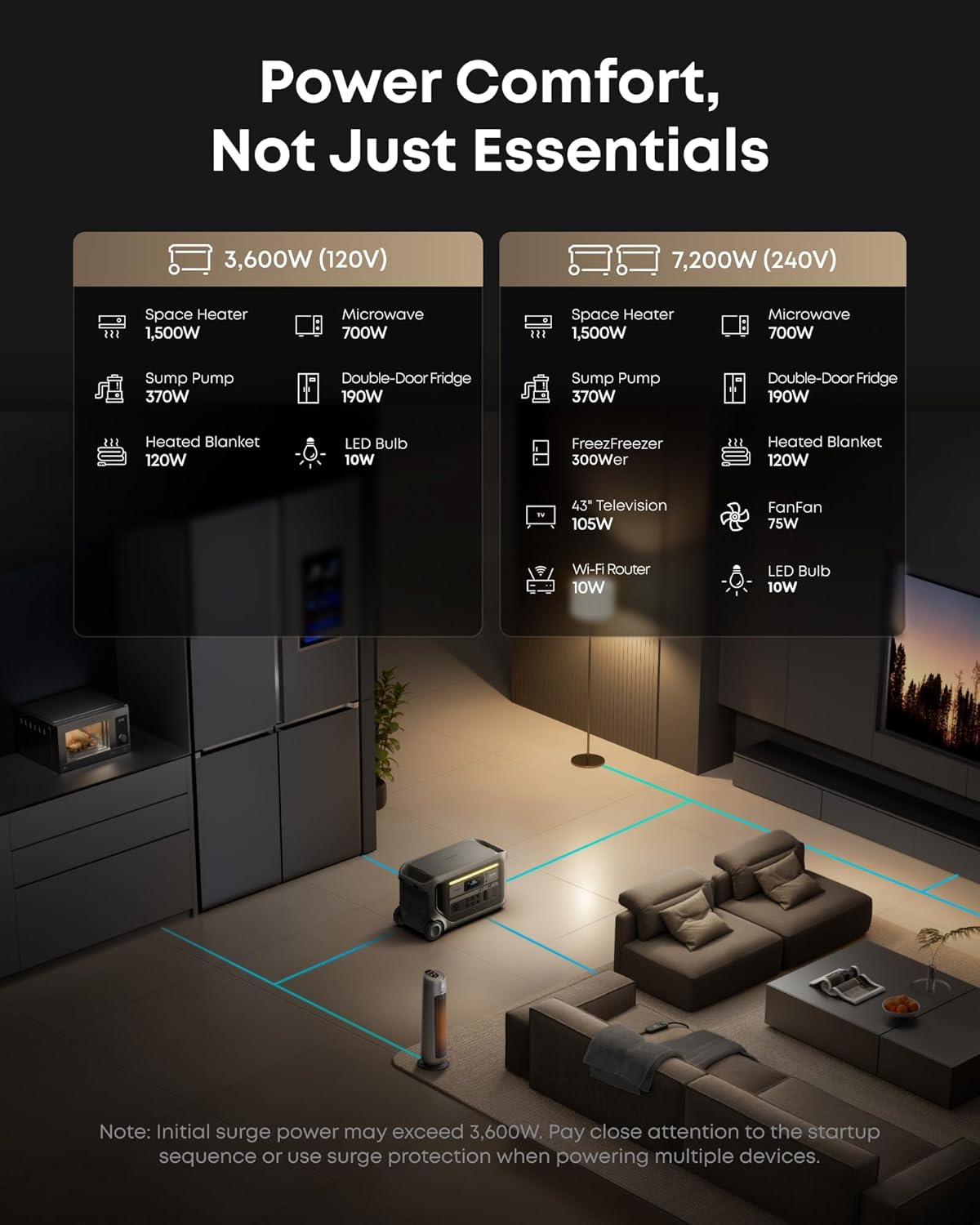
Anker provides a few runtime claims (like a 190 W fridge for 42 hours and 125 hours of AC idle standby time) — those are useful as manufacturer benchmarks. In practice, appliance consumption varies widely, and compressor-based devices like fridges don’t run continuously at nominal wattage; they cycle on and off. To give you a clearer idea, here are two runtime columns: the manufacturer’s highlighted claims and a practical estimate that accounts for inverter efficiency and typical real-world usage.
| Device / Load | Manufacturer Claim | Realistic Estimate (approximating 85% usable capacity = ~2,600 Wh) |
|---|---|---|
| Phone charging (10 W) | n/a | ~260 hours |
| Laptop (60 W) | n/a | ~43 hours |
| LED lighting (3 × 10 W = 30 W) | n/a | ~87 hours |
| Small CPAP (30–50 W average) | n/a | ~52–87 hours |
| Mini fridge (100 W continuous) | n/a | ~26 hours |
| Full-size fridge (190 W average per manufacturer claim) | 42 hours (Anker claim) | ~13–15 hours (realistic continuous draw estimate) |
| Microwave (1,000 W when running) | n/a | ~2.5 hours (if continuous) — note microwaves run short bursts |
| Electric kettle (1,500 W) | n/a | ~1.7 hours (burst loads) |
| Sump pump (600 W average) | n/a | ~4.3 hours |
Notes:
- The “realistic” column assumes roughly 85% of nameplate capacity is practically usable (to account for inverter loss, BMS reserve, and real-life inefficiencies). If you’re conservative and use 80% or more depending on manufacturer recommendations, those hours shrink accordingly.
- Appliance startup (surge) currents can be many times the running current; the F3000 is designed for heavy duty loads and should handle surges for motors and compressors, but always check surge ratings and appliance startup amp draw.
- Manufacturer claims like “190W fridge for 42 hours” often assume a specific fridge duty cycle (compressor runtime percentage much lower than 100%) and ideal conditions.
Charging options and speed — how fast you can refill
One of the F3000’s strongest selling points is a versatile and very high input capability. You can recharge via generator, AC shore power, or solar panels, and Anker promises very fast recharging paths when you combine sources.
You’ll find three charging modes to mix and match:
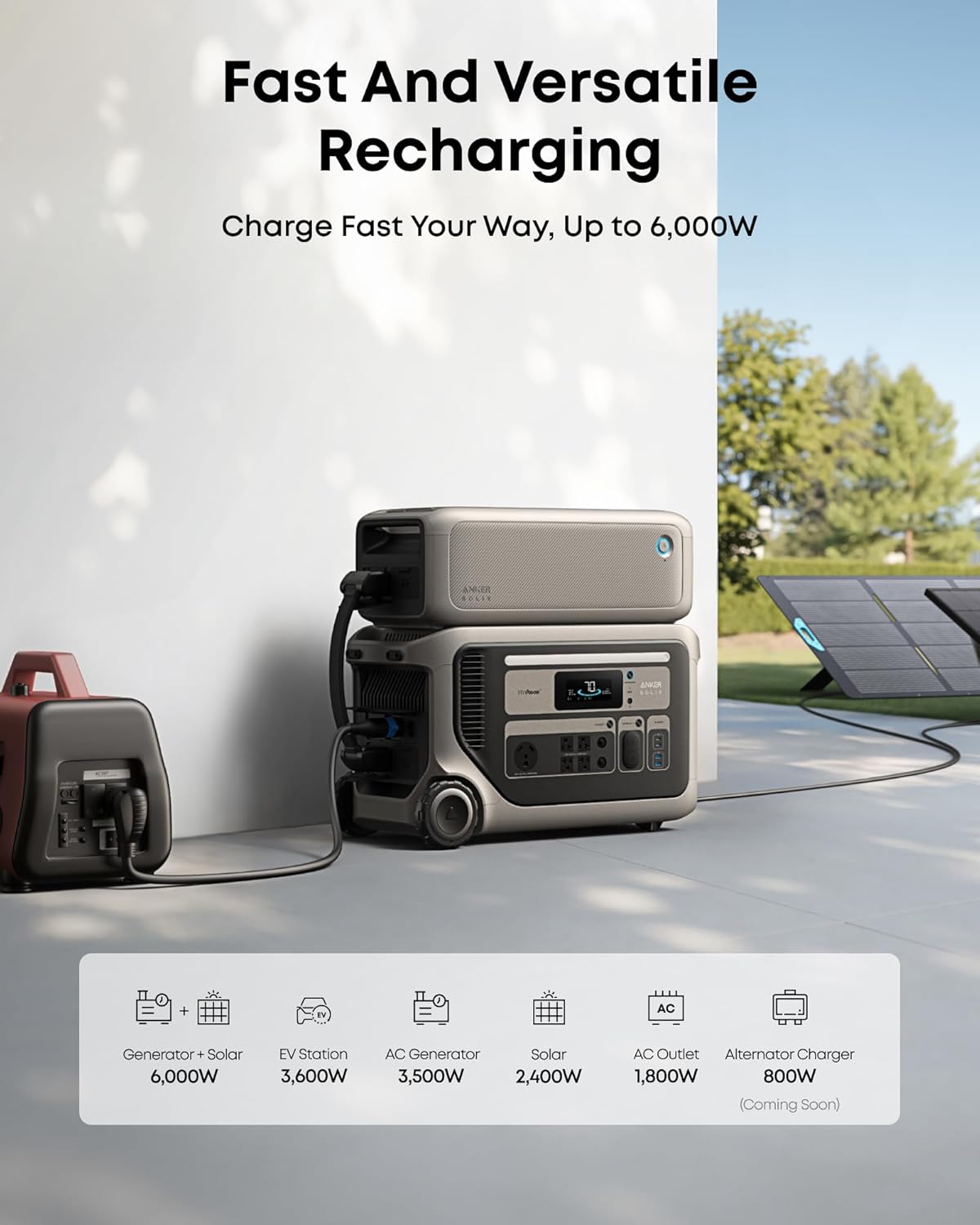
- AC/generator recharging via 120V with pass-through charging capability, up to 3,600 W of effective pass-through power.
- Solar recharging up to 2,400 W using the 165V or 60V solar ports and compatible panels.
- Combined generator + solar recharging that can reach up to 6,000 W, allowing hyper-fast recovery when you need it urgently.
What “pass-through charging” means for you
Pass-through charging means you can keep running your appliances while the unit charges, with minimal interruption. For example, during an outage you can connect a generator and have it both run your appliances and charge the F3000 at the same time. That’s especially useful if you want to minimize generator runtime while preserving battery reserve.
If you’re relying on solar during daylight, pass-through plus solar input means you can run or charge continuously as long as panel output holds up.
Estimated recharge times
You can use the input numbers to get ballpark recharge times:
- Using 2,400 W of solar in ideal conditions: full refill of 3,072 Wh could be roughly 1.3–1.5 hours in ideal sun (accounting for panel orientation, MPPT efficiency, and system losses).
- Using 3,600 W AC/generator pass-through: theoretical recharge under ideal conditions ~1 hour, but practical times will vary with BMS charge profile and initial state-of-charge.
- Using combined 6,000 W (generator + solar): the unit can accept a very high combined input to speed recharge dramatically, potentially bringing the battery from low to nearly full in an hour in best-case conditions. Real-world numbers depend on generator capacity and solar variability.
Keep in mind charging is often intentionally throttled at high states-of-charge to protect battery longevity, so “from 10% to 80%” will be faster than “from 80% to 100%.”
Solar setup and compatibility
You’ll plug panels into either the 165V or 60V solar ports depending on the panel configuration. The F3000 supports rigid and portable panels, so you aren’t locked into a single panel type. If you want to maximize solar input, match panel voltage and array wiring to the port you choose and follow Anker’s guidance for MPPT input ranges.
You’ll want to size your panel array to take advantage of the 2,400 W solar ceiling for fastest daytime recharge. In many residential setups, that means many panels or several high-output portable arrays. For camping or limited roof space, you’ll likely get less than full solar input but still benefit from steady daytime charging.
Using solar with the system
- For daily solar usage (solar generation to battery for evening use), combine the F3000 with extra batteries or the Smart Meter to auto-store and schedule charging from solar or off-peak rates.
- For emergency recharge, position panels for maximum sun and chain arrays to hit the 165V/60V input specs.
- Note that cloud cover, temperature, and shading will reduce solar throughput and increase recharge times.
Generator compatibility and combined charging
You can pair a 120V fuel generator with the F3000 to recharge while running loads. The pass-through capacity of 3,600 W lets you run many household-level appliances without interruption while generator power simultaneously charges the battery.
Anker lets you combine the generator input with solar to reach a combined 6,000 W input. That’s a major capability if you have a large generator and solar array and need rapid battery recovery during extended outages.
Practical generator usage tips
- Use a clean and stable generator output to reduce the chance of power quality issues. Many modern inverter generators pair seamlessly.
- Watch runtime and fuel usage. The ability to rapidly recharge reduces total generator hours, so you’ll waste less fuel than with generator-only strategies.
- Ensure power quality and installation safety if you’re tying the F3000 into a dedicated home transfer switch or subpanel. Follow local electrical codes and consult an electrician.
Output options, 120V vs 240V, and surge handling
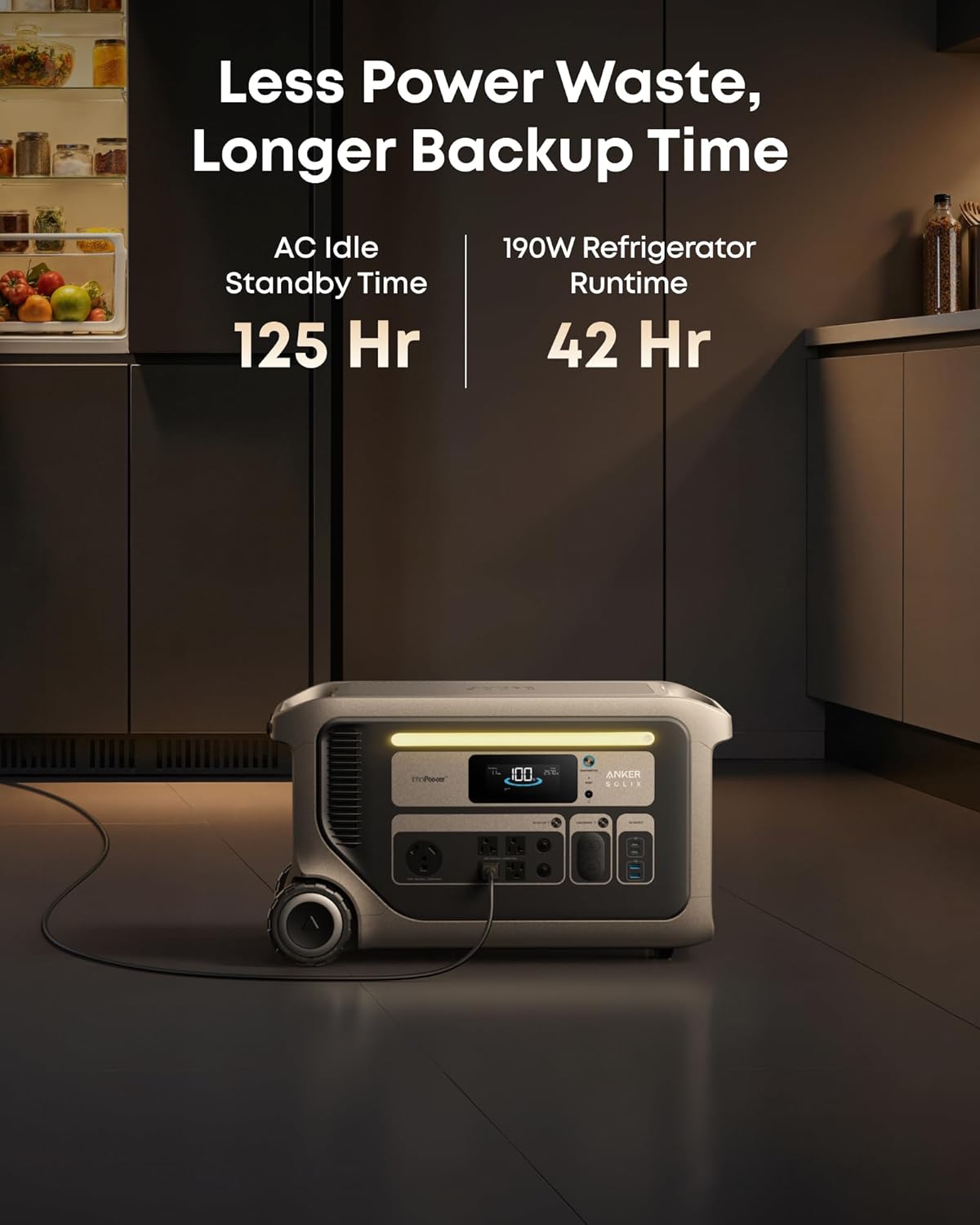
The F3000 supports 120V outputs for standard U.S. household appliances out of the box, and you can pair two units to deliver 240V for larger appliances and tools. Pairing for 240V can be particularly important if you want to run electric stoves, larger heat pumps, or certain heavy-duty power tools that require 240V.
You’ll also get robust surge capacity for motor start-up and compressor loads; the high inverter ratings are designed to handle typical appliance startup surges. Still, check the specific surge current of devices like well pumps, AC compressors, and large HVAC systems and compare to the F3000 spec sheet or Anker support.
Smart energy features and integration
If you plan on a more advanced setup, the Bi-Directional Inlet Box and Smart Meter add automation. With those add-ons you can:
- Automate storing low-cost grid power (off-peak charging).
- Automatically prioritize free solar energy when available.
- Control charge/discharge schedules for cost or energy independence.
That lets you treat the F3000 as part of a home energy management system rather than just a large battery.
Why the Smart Meter matters for you
You can optimize costs and battery cycles by scheduling charging during off-peak hours and using solar when available. If you want to reduce electricity bills or minimize generator runtime, those automation features are valuable.

Typical use cases — where the F3000 shines
You’ll find this product performs well in several scenarios where both power and flexibility matter:
- Home backup for outages: With expandable capacity and strong inverter output, you can keep essentials like refrigeration, lights, communications, and medical devices running for hours to days.
- RV and camper home base: Use the F3000 as a stationary power hub in an RV bay for long stays or boondocking if you can handle the transport weight.
- Emergency response and medical backup: The inverter and battery capacity are suited to critical loads like CPAPs, medical refrigerators, and communication hubs.
- Construction or job-site power: Run tools and lights with high surge and continuous power, especially if you combine battery and generator inputs.
- Solar off-grid basecamp: Pair with a sizable panel array, expand batteries as needed, and you can support multi-day off-grid needs.
Where it might not be ideal
If you’re backpacking, ultralight camping, or need something you’ll lift and move frequently, the F3000 is likely overkill. It’s a significant, vehicle-transportable power source rather than an ultra-portable battery.
Setup, installation, and safety tips
When you’re installing and using the F3000, consider:
- Placement: Keep the unit dry, ventilated, and on a stable surface away from direct sunlight or excessive heat.
- Wiring and transfer: If you intend to connect the F3000 to home circuits, use a proper transfer switch and consult a licensed electrician. Never attempt ad hoc mains tie-ins.
- Generator hook-up: Use recommended cables and inlets, and observe fuel/generator safety (ventilation, carbon monoxide risk).
- Solar orientation: To hit top solar input you’ll need an array sized and oriented to produce the required voltages and currents.
- Temperature and storage: Lithium systems perform best and last longer when kept in recommended temperature ranges; avoid extremes if possible.
Maintenance and longevity
You’ll appreciate that battery-based stations generally require less active maintenance than generators (no oil changes or fuel stabilizing). Still, maintain good practices:
- Charge and discharge cycles: Regular use and shallow cycling typically maintain battery health; following Anker’s recommended charge/discharge patterns will extend service life.
- Software/firmware updates: Watch for firmware updates if Anker offers them; updates may improve performance, safety, or compatibility.
- Visual inspections: Periodically check for cable wear, loose connections, and signs of heat stress.
Noise, emissions, and environmental considerations
The F3000 itself runs silently — there’s no engine noise or direct emissions. That’s a major benefit for indoor or nighttime use. If you need to recharge via a generator, you’ll reintroduce noise and fumes during generator operation. Combining solar and battery reduces generator hours and emissions overall.
If minimizing noise and greenhouse impact is important, prioritize solar input and use generator backup sparingly.
Pros and cons — quick summary to help your decision
You’ll want a clear and direct list of strengths and potential trade-offs before deciding.
Pros
- High starting capacity (3,072 Wh) with expandability to 24 kWh for serious backup needs.
- Very high input capability (up to 6,000 W combined) for rapid recharging.
- 3,600 W pass-through charging allows continuous operation while charging.
- Strong inverter output for heavy loads; pair two units for 240V.
- Solar friendly (2,400 W) with both 165V and 60V solar ports.
- Low idle consumption with long AC idle standby times per manufacturer.
- Smart charging options (Bi-Directional Inlet Box + Smart Meter) for cost and energy optimization.
- Silent operation during battery-only use.
Cons
- It’s a substantial device requiring vehicle transport or solid placement; not suited to ultralight mobility.
- True runtime depends heavily on real-world appliance duty cycles; manufacturer runtime claims may appear optimistic without context.
- Initial cost and potential add-on costs for expansion batteries, Smart Meter, or inlet box to reach full system potential.
- If you want 240V regularly, you’ll need to buy and manage a second unit, which increases cost and footprint.
- Setup for whole-home integration requires electrical expertise and potential additional hardware.
Comparison points if you’re evaluating alternatives
You’ll want to compare the F3000 against other large-capacity portable power stations on key axes:
- Usable capacity and expandability options (is modular expansion supported?).
- Input and output power ceilings (both continuous and surge ratings).
- Solar input capability and MPPT quality.
- Pass-through charging and inverter efficiency.
- Integration with smart meters and home energy systems.
- Price per kWh of installed capacity (consider expansion batteries).
- Physical size/weight and how you plan to transport it.
Anker competes strongly on input power and pass-through capability. If you prioritize very fast recharge and strong solar integration, the F3000 stands out.
Scenarios and example setups
Here are a few practical setups you might consider depending on needs:
- Short outage, minimal cost:
- Single F3000 unit.
- Use for essential circuits (refrigerator, lights, comms).
- If generator available, use for recharge during the day with minimal runtime.
- Multi-day outage, high reliability:
- F3000 + additional battery modules up to desired kWh (e.g., expand toward 12–24 kWh).
- Solar array sized toward 2,400 W or more to recharge during daylight.
- Bi-Directional Inlet Box + Smart Meter for automatic energy management.
- RV / basecamp:
- Single F3000 in RV bay with solar array for daytime charging.
- Use to power AC, appliances, and entertainment during boondocking. Verify vehicle handling and mounting.
- Emergency medical backup:
- Single F3000 with dedicated circuits for CPAPs, medical fridge, and comms.
- Ensure surge capacity and test battery runtime under typical medical device duty cycles.
What’s in the box (again, so you know what you’re unpacking)
You’ll find the essentials for immediate use:
- Anker SOLIX F3000 Portable Power Station
- AC charging cable
- High-voltage solar charging cable
- User manual and warning notice
- Warranty card
You’ll likely need additional accessories for a full home install (transfer switch, Bi-Directional Inlet Box, Smart Meter, extra batteries for expansion, or additional solar panels and cabling).
Frequently asked questions you might have
You’ll probably think of a few common concerns. These basics summarize typical user questions:
-
Can it run a whole house?
- That depends on your loads. The base 3,072 Wh is enough for many essentials, but whole-house operation for extended periods typically requires expansion toward the 24 kWh capability and coordinated load management.
-
How fast will it recharge with solar?
- Up to 2,400 W solar input theoretically gives fast midday recharges (roughly 1–2 hours for the base battery in perfect conditions), but real-world conditions extend that time.
-
Can it run air conditioners?
- Small window or portable AC units may run depending on their wattage and surge requirements. For central HVAC systems you’ll likely need paired 240V capability, potentially multiple units, and careful engineering.
-
Is professional installation required?
- For basic portable use no, but for hardwiring into your home circuits you should consult a licensed electrician and use proper transfer equipment.
Final verdict — should you consider the Anker SOLIX F3000?
If you want a powerful, expandable, and flexible battery system that bridges portable use and serious home backup, the F3000 is an attractive option. You’ll benefit most if you:
- Want strong solar inputs and fast recharge capability.
- Need robust pass-through charging to minimize outage interruptions.
- Plan to scale capacity over time toward multi-day backup.
- Want the ability to pair units for 240V operation and to support heavy-duty loads.
If your priority is ultra-light portability or a very low purchase price for occasional use, you’ll find better smaller or more budget-focused alternatives. But if you value quick recharge, expansion, and the ability to use the unit in both home and mobile settings, the F3000 fits that niche well.
You should check local electrical codes and plan any home integrations with a professional. Also verify transport logistics and any additional purchases like extra battery modules, solar panels, and the Smart Meter that will help you get the system to the level you want.
If you want, I can help you size a panel array, estimate battery expansion needs for a multi-day outage, or run specific runtime calculations for the exact appliances you plan to power.
Disclosure: As an Amazon Associate, I earn from qualifying purchases.