
Looking for a portable power solution that balances strong output, long-lasting battery life, and real-world convenience?


Anker SOLIX C300 DC Power Bank Station — Quick Overview
You’re looking at the Anker SOLIX C300 DC Power Bank Station, Outdoor 288Wh Portable Power Station, LiFePO4 Battery, 300W Solar Generator, for Camping, Traveling, and Emergencies (No Wall Charger Included). You’ll notice it aims to give you a compact unit that still outputs meaningful power for a range of devices while using safer LiFePO4 chemistry. This overview explains what the unit is for and what you should expect from its core capabilities.
Key Specs at a Glance
It helps to have the core specs in one place so you can decide fast whether this unit fits your needs. Below is a concise breakdown of the most useful specs, so you don’t have to hunt through long product pages.
| Feature | Detail |
|---|---|
| Model | Anker SOLIX C300 DC Portable Power Station |
| Capacity | 288Wh |
| Continuous Output | 300W |
| Fast Charge Output | Two 140W two-way USB-C ports (PD 3.1) |
| Additional Ports | 1× USB-C (100W), 1× USB-C (15W), 2× USB-A (12W), 1× Car Socket (120W) |
| Battery Chemistry | LiFePO4 (iron phosphate) |
| Recharging Options | Dual PD 3.1 USB-C (fast recharge), solar (recommended 100W or 60W Anker panels), car charging |
| First-Time Activation | Recharge with 18W+ USB-C charger via USB-C2 or USB-C3 ports |
| Compatibility Notes | Not compatible with Anker SOLIX PS30 (5V~3A USB-C panels), PS200, PS400 |
| Durability & Safety | Smart temperature control, impact-resistant design |
| Footprint | ~30% smaller than similar power stations (per Anker) |
| Warranty | 3-year guarantee |
| Included in Box | C300 unit, 60cm 140W USB-C to USB-C charging cable, Safety Manual, Warranty Info |
| Wall Charger | Not included (must supply your own for first activation) |
Design and Portability
You’ll appreciate that the C300 trades raw size for a much more portable footprint. Anker says it’s roughly 30% smaller than comparable power stations, which makes it easier to carry on camping trips or store in a trunk without taking over all your space. The layout is aimed at being straightforward so you can plug devices in quickly.
Build Quality and Durability
Anker has used LiFePO4 cells and included smart temperature control, which means the chemistry and the thermal protections both contribute to safer and longer-lasting performance. You’ll also find the casing and internal design are built to tolerate knocks and basic outdoor use — it’s described as impact-resistant. That should give you confidence when you’re using it on trails, at camp, or during emergency use.
Size, Weight, and Handling
Although exact weight is not provided here, the “30% smaller” claim means you can expect a significantly smaller footprint than many 300W/300Wh competitors. You’ll find it easier to handle, and attaching a strap (sold separately) can make carrying it even simpler. The form factor is designed to fit in a car trunk, overhead compartment, or under a camping table without hogging space.
Power and Performance
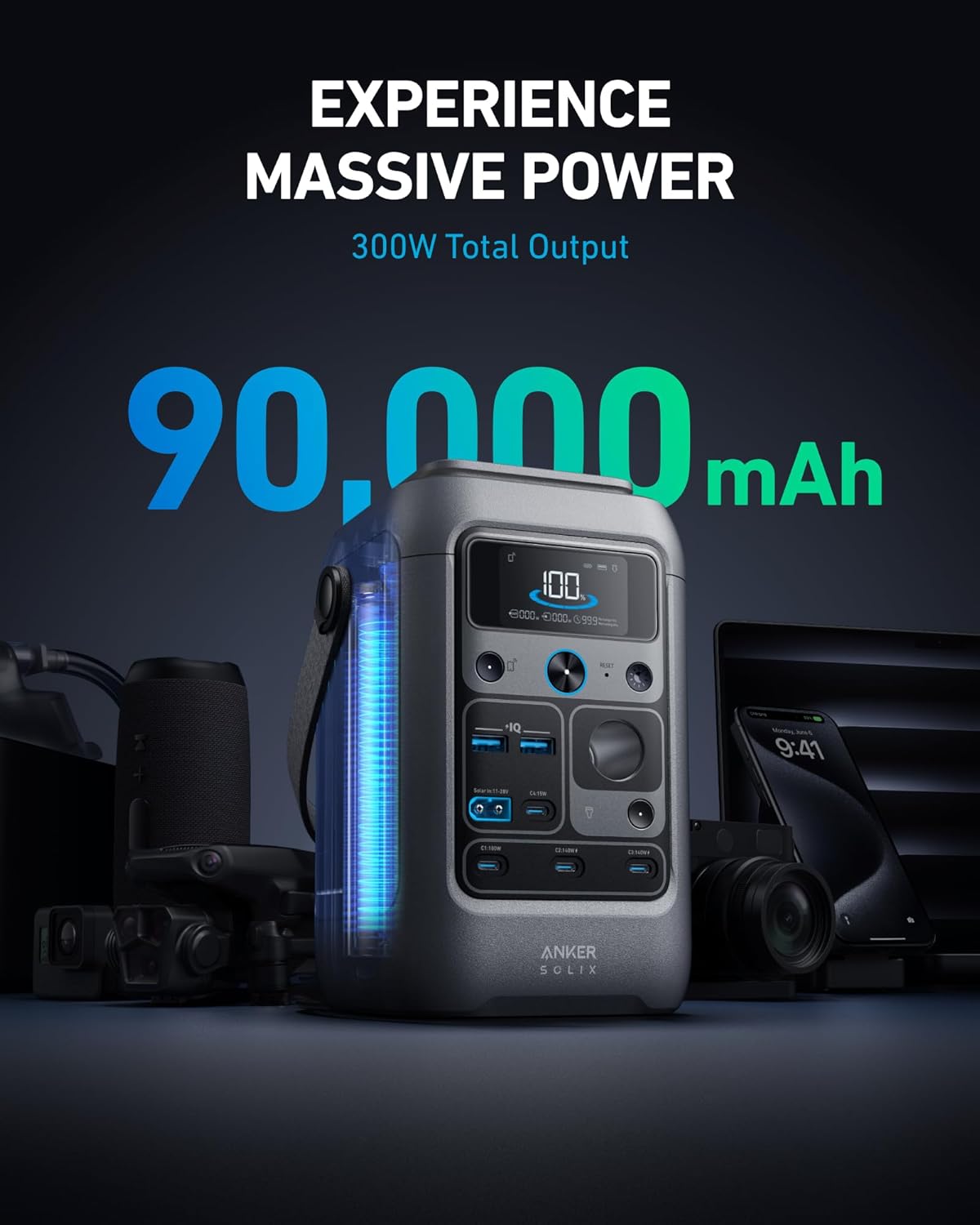
You’ll get 288Wh of battery capacity and a 300W continuous output. That combination suits charging phones, tablets, cameras, laptops, lighting setups, and a number of other portable devices. The C300 aims to be a versatile mid-size power station for weekend adventurers and people prepping for outages.
Battery Chemistry and Longevity
The LiFePO4 battery chemistry is a big selling point here. You’ll benefit from better cycle life and thermal stability compared with many lithium-ion chemistries, meaning the battery will sustain useful capacity for more cycles and is less prone to thermal runaway. Anker backs this with a three-year guarantee, so you have warranty protection if something goes wrong during the early years of use.
Output Power and Real-World Use Cases
With 300W continuous output, you’ll be able to run most small electronics and light appliances. You can power laptops, LED lights, cameras, charge multiple phones at once, run small projectors, and keep essential devices like routers and medical gear (within power draw limits) operational. You should avoid expecting it to run large or high-startup-wattage devices like electric kettles, microwaves, or full-size fridges for extended periods.
Port Layout and Charging Flexibility
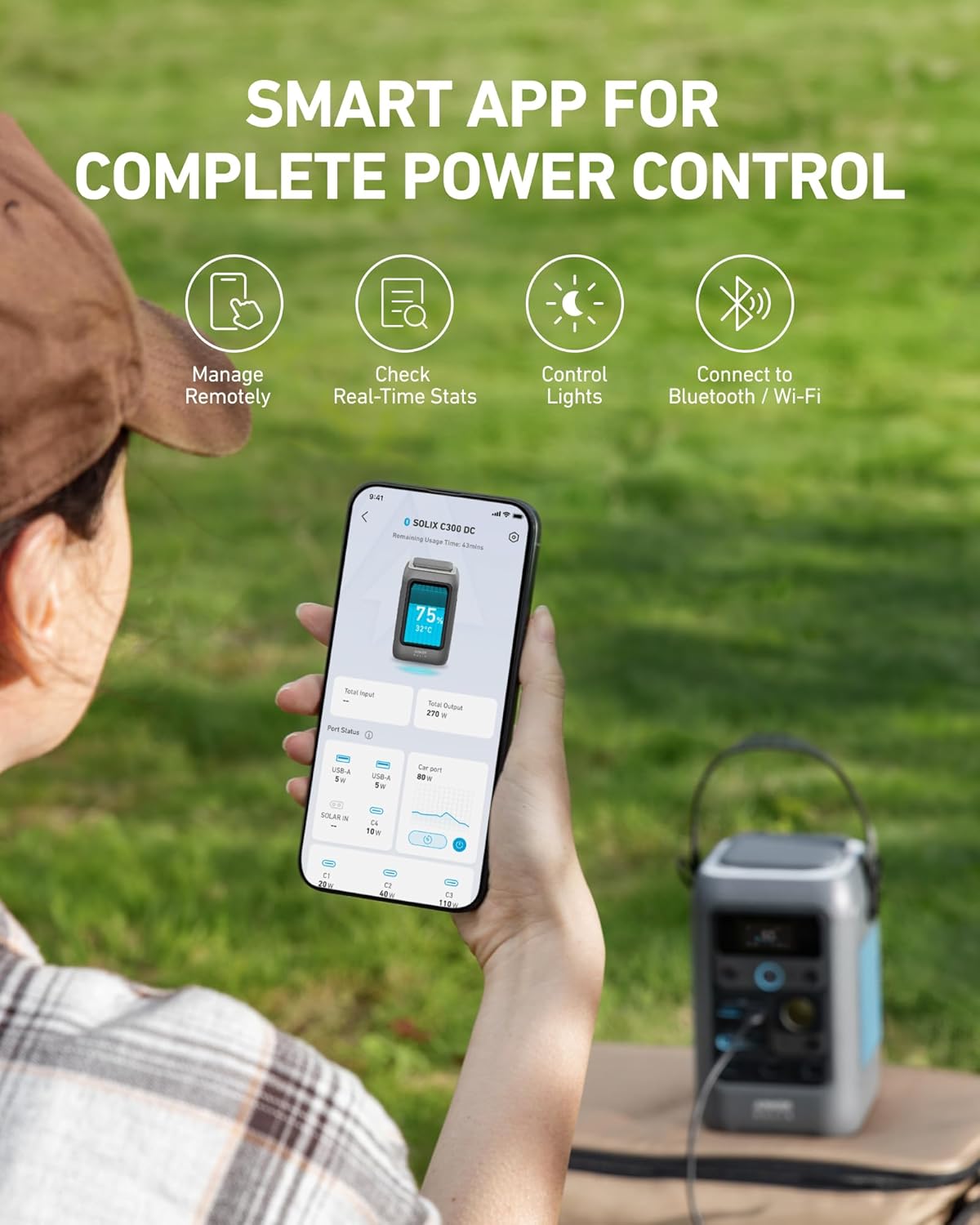
You’ll notice Anker included multiple high-power USB-C ports plus USB-A ports and a car socket. This port diversity means you can charge multiple devices at once and use the fastest available ports for laptops and other high-wattage USB-C devices.
Fast Charging and Two-Way USB-C
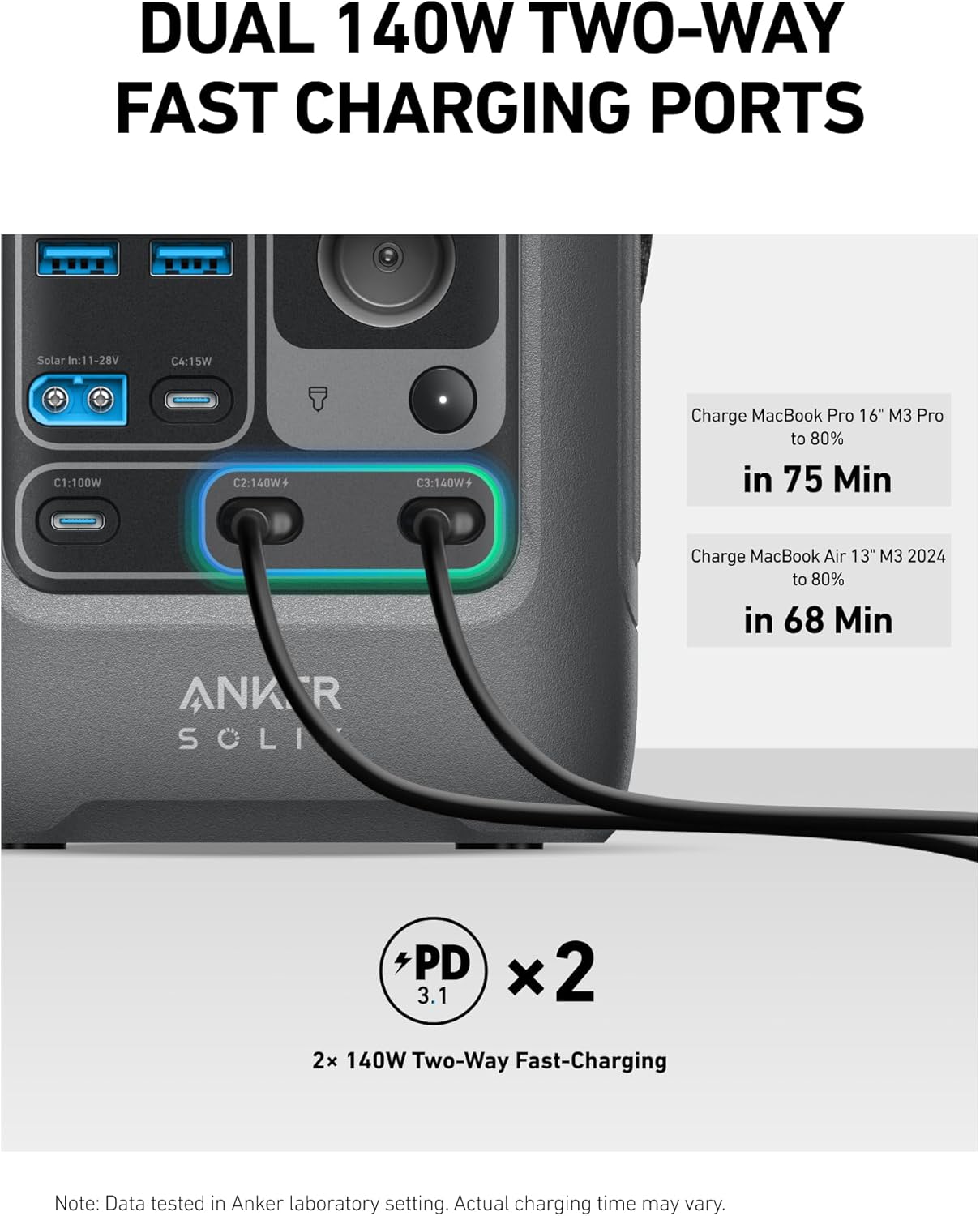
The two 140W two-way USB-C ports allow for both fast output to devices and fast input when recharging the station. You can fast recharge the unit up to 80% in about an hour if you use the dual PD 3.1 USB-C ports and a compatible high-power charger. This is great when you need a quick turnaround in the field. Also included is a 60cm 140W USB-C to USB-C cable so you can take advantage of these ports right away.
Port-by-Port Breakdown
You’ll find a useful mix of ports:
- Two 140W two-way USB-C ports (main fast-charge ports)
- One 100W USB-C port for laptops or other high-wattage devices
- One 15W USB-C port for smaller devices or accessories
- Two USB-A ports (12W each) for charging traditional USB gear
- One car socket rated at 120W for devices that use DC cigarette-lighter plugs
This layout will let you charge phones, tablets, laptops, camera batteries, and other accessories simultaneously without hunting for adapters.
Recharging Options and Times
You can recharge the C300 in multiple ways so you don’t get stranded. You’ll use a wall charger, solar panel, or car to refill the battery — whichever fits the situation. Each method has pros and cons depending on how fast you need a recharge and the conditions you’re in.
USB-C Wall Charging (First-Time Activation)
Important: to activate the C300 for the first time, you must recharge it with an 18W or higher USB-C wall charger, using only the USB-C2 and USB-C3 ports. Anker suggests using an Anker USB-C charger or a laptop charger. The product does not include a wall charger, so you’ll need to supply one. This first-charge requirement is critical — if you skip it, the unit may not power up or accept other input sources properly.
Solar Charging
If you plan long-term off-grid use, solar is a natural choice. Anker recommends a 100W solar panel (or 60W) for reliable solar recharging. With ideal sun conditions and a properly aligned 100W panel, expect multi-hour recharge times — typically a few hours depending on sunlight intensity and panel efficiency. Keep in mind solar input is affected by weather, angle, and shading, so actual times will vary. Also note that the C300 is not compatible with some Anker panels (e.g., SOLIX PS30, PS200, PS400), and you should avoid 5V~3A USB-C panels that aren’t designed for the C300’s input specs.
Car Charging and Other Methods
You can recharge via a car socket using the included cable or by plugging into a DC input if you have a compatible adapter. Car charging is convenient on road trips, but it’s usually slower than wall or high-power USB-C PD charging. If you have a powerful laptop charger that supports PD, you can also use it to recharge the unit via the compatible USB-C ports.
Estimated Runtime Examples
You’ll want realistic expectations for how long the C300 will power your devices. Below is a table using a conservative efficiency assumption (about 85% usable energy after inverter and conversion losses) to give you ballpark runtimes for common devices. These numbers are approximations to guide planning — your mileage will vary based on device efficiency, usage patterns, and conditions.
Usable energy estimate: 288Wh × 0.85 ≈ 244.8Wh
| Device | Typical Draw (Watts) | Estimated Runtime (Hours) |
|---|---|---|
| Smartphone (full charge ~15Wh) | N/A (charge cycles) | ~16 full charges |
| Tablet (battery ~30Wh) | N/A | ~8 full charges |
| Laptop (60Wh battery) | N/A | ~4 full charges |
| LED light (10W) | 10 W | ~24 hours |
| Small TV (50W) | 50 W | ~4.9 hours |
| Mini-fridge (60W average) | 60 W | ~4.0 hours |
| CPAP (typical 30W) | 30 W | ~8.1 hours |
| Camera battery (10Wh) | N/A | ~24 full charges |
These estimates assume you’re drawing the given wattage continuously or charging devices by their full battery capacity. Real-world results will be affected by conversion losses, device inefficiencies, and whether the device cycles on/off (e.g., fridges with compressors). For devices with higher startup currents, like some pumps or fridges, check the surge capability and the inrush current requirements before relying on this unit.
Safety Features and Battery Management
You’ll want the C300 to protect your devices and itself, and Anker includes a range of protections. The LiFePO4 chemistry provides inherent thermal stability, and Anker pairs that with smart temperature control to avoid overheating. The unit will include standard protections against overcharge, over-discharge, short-circuit, and likely other BMS-managed safeguards that help protect both the battery cells and your connected electronics.
Battery Management System and Protections
The built-in Battery Management System (BMS) balances cells and regulates charging and discharging to keep the battery healthy. You’ll get protections for common failure modes such as overcurrent, overvoltage, short circuits, and temperature extremes. That reduces the chance of damage to your devices and increases the lifespan of the battery.
Compatibility and Limitations
While the C300 is versatile, you should know what it will not do. You won’t be able to run heavy appliances that need more than 300W continuous power, and certain Anker solar panels and low-voltage USB-C panels are not compatible. Also, be mindful of the startup or surge wattage required by some appliances; an appliance might list a low running wattage but requires a much larger surge to start.
What It Can’t Do
You should not expect the C300 to power high-wattage kitchen appliances, high-powered power tools, or HVAC systems. Running a full-size refrigerator or microwave will either not be possible or will drain the battery extremely quickly. If you have devices with a high startup surge, confirm their inrush current before connecting them. Also, the unit’s incompatibility with the SOLIX PS30 (and PS200, PS400) means you should buy recommended Anker solar panels for reliable solar input.
Practical Tips for Use
You’ll want some practical pointers to get the most from the C300. Treat it like any rechargeable battery: avoid exposing it to extreme temperatures, don’t let it remain fully discharged for long periods, and use cables and chargers rated for the power the unit supports. If you plan seasonal storage, store it partially charged (around 40–60%) for best long-term health.
Charging Best Practices
Always use chargers and cables that match the Anker recommendations. For first-time activation, use an 18W or higher USB-C charger and plug into USB-C2/USB-C3 as instructed. For fastest recharging, use dual PD 3.1 capable chargers and the two 140W ports. If you’re using solar, make sure your panel is in full sun and at the correct angle to maximize input. If you’re charging multiple devices from the C300 while it’s being solar charged, expect slower net charging of the internal battery.
Storage and Maintenance
Store the C300 in a cool, dry place when not in use and charge it to around 40–60% if you won’t use it for a few months. Avoid extreme cold or heat during storage, as both reduce battery longevity. Periodically top up the charge every few months to prevent deep discharge, which can degrade battery chemistry over time.
Setup and First-Time Activation (Step-by-Step)
You’ll want a clear checklist to get started right away. Follow these steps to ensure proper activation and immediate usability.
- Unbox the unit and remove protective packing materials. Inspect the included 60cm 140W USB-C cable and read the Safety Manual.
- Obtain an 18W or higher USB-C wall charger (not included). Anker recommends using an Anker USB-C charger or a laptop charger with PD support.
- Plug the wall charger into a power outlet and connect it to the C300’s USB-C2 or USB-C3 port. This is mandatory for first-time activation.
- Let the unit charge until it reaches at least the minimum activation threshold — the unit should power on and indicate charge status. For fastest future charges, use the dual PD 3.1 USB-C ports.
- Once activated, you can charge via solar (100W recommended), via car, or continue using high-power USB-C chargers.
Real-World Scenarios Where the C300 Shines
You’ll find several common real-world scenarios where the C300 is a strong match:
- Weekend camping: power lights, charge phones and cameras, run small speakers, and occasionally power a mini-fridge or cooktop accessories.
- Road trips: top up laptops and phones quickly between drives and recharge the station from your car if necessary.
- Emergency backup: keep essential devices working during short power outages — routers, phones, and small medical devices (verify power draw).
- Photography and content creation: charge camera batteries, run lights, and power laptops for editing in remote locations.
Pros and Cons
You’ll want a clear list of strengths and limitations to weigh whether this unit is right for you.
Pros:
- LiFePO4 battery chemistry for longer life and safety.
- Compact, 30% smaller footprint than many peers, making it easier to carry and store.
- Multiple high-wattage USB-C ports with dual 140W two-way capability for fast charging in and out.
- 3-year warranty gives you a measure of protection.
- Versatile port selection (USB-A, USB-C, car socket) for many devices.
Cons:
- No wall charger included; you must supply an 18W+ USB-C charger for first activation.
- Not compatible with some Anker solar panels (e.g., SOLIX PS30, PS200, PS400) — you need the recommended 100W or 60W panels.
- 300W continuous limit restricts heavy loads and some appliances with high startup currents.
- Strap sold separately, so you’ll need an accessory if you want a shoulder carry option.
Who Should Buy the Anker SOLIX C300?
You’ll get the most value from the C300 if you’re a weekend camper, a road-tripper, a photographer who needs on-location power for cameras and laptops, or someone who wants a compact emergency backup for shorter outages. If you prioritize a balance between portability, safety, and decent output, this unit is designed for you. If you need to run heavy-duty appliances or long-term off-grid living, you’ll want a higher-capacity, higher-wattage solution.
Troubleshooting Common Questions
You’ll likely have a few questions once you start using the C300. Here are answers to common concerns.
Q: The unit won’t turn on after unboxing.
A: Make sure you performed the first-time activation by charging it with an 18W+ USB-C charger into the USB-C2 or USB-C3 port. If you haven’t, the C300 may be in a dormant state that requires that initial charge.
Q: Can I use any USB-C solar panel?
A: No. Anker recommends a 100W or 60W Anker Solar Panel and explicitly mentions incompatibility with PS30 (and other 5V~3A USB-C panels), PS200, PS400. Use recommended panels or confirm panel output specs before connecting.
Q: Will it power my fridge/CPAP/power tool?
A: Check the device’s continuous power draw and startup surge. The C300 supports up to 300W continuous output. If your device’s continuous draw is below that and the startup surge is manageable, it may work for a limited time. For CPAPs, confirm device wattage and consider run-time expectations.
Final Thoughts and Recommendation
You’ll find the Anker SOLIX C300 to be a well-balanced option if you want a compact, safety-focused portable power station with strong USB-C performance. The LiFePO4 battery, dual 140W two-way USB-C ports, and compact design make it a compelling pick for campers, travelers, content creators, and anyone who needs a reliable mid-range power source. Keep in mind the need to provide your own charger for first-time activation, the solar compatibility constraints, and the 300W power ceiling when you’re making purchasing decisions. If those conditions fit your intended use, the C300 is likely to make your portable power setup simpler and more reliable.
Disclosure: As an Amazon Associate, I earn from qualifying purchases.