
Looking for a reliable portable power station that can keep your devices and appliances running during outages, on the road, or at camp?

Product Overview
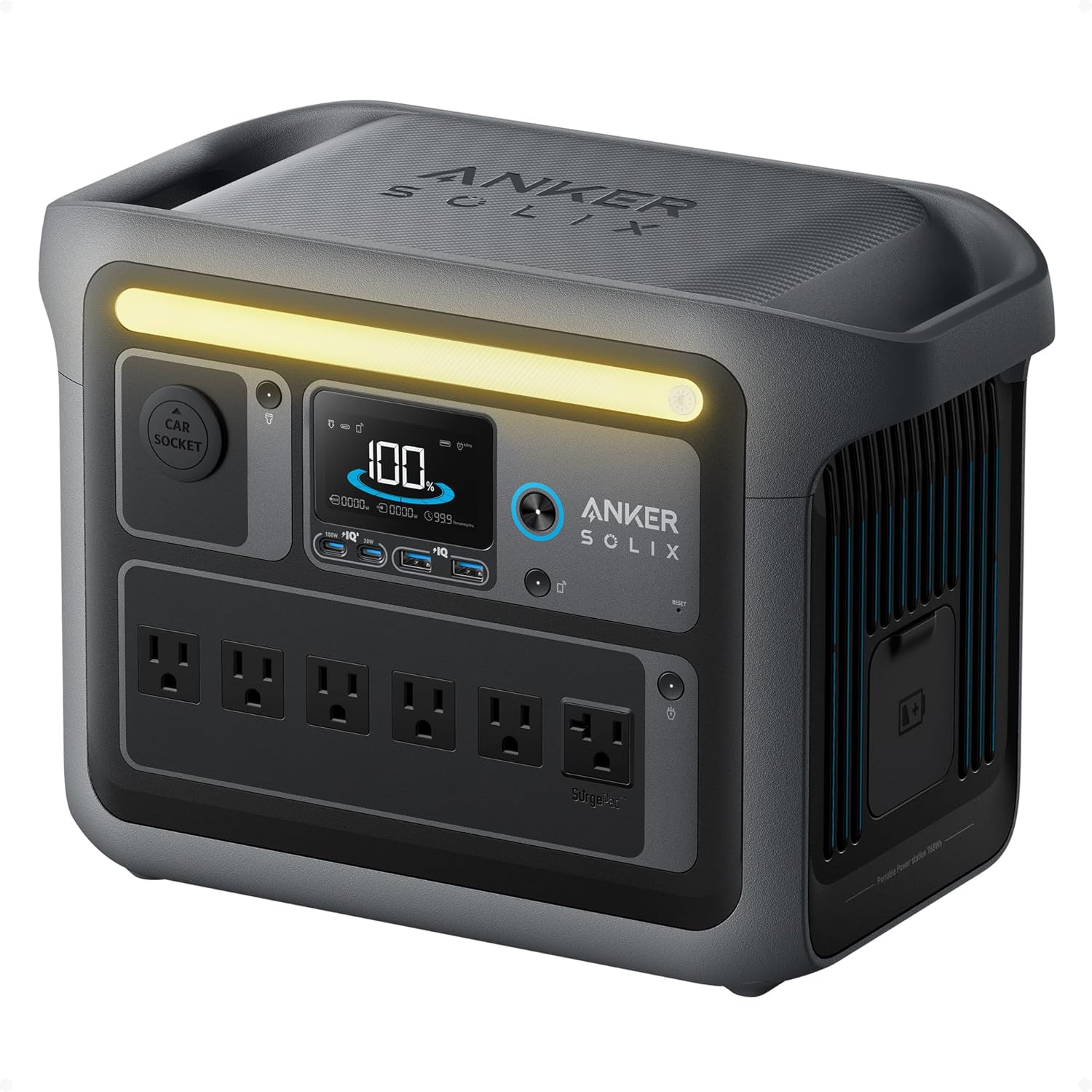
You’ll find the Anker SOLIX C1000 Portable Power Station, 1800W (Peak 2400W) Solar Generator, Full Charge in 58 Min, 1056wh LiFePO4 Battery for Home Backup, Power Outages, and Outdoor Camping (Optional Solar Panel) is designed to be a versatile, long-lasting energy hub. It blends fast charging, robust output, and a long battery life in a compact package so you can power what matters without fuss.
What it is and who it’s for
This is a mid- to high-capacity LiFePO4 portable power station built for people who want dependable backup power at home, reliable power on the road in RVs, and fast solar recharging while camping. If you care about longevity, fast recharge times, and the ability to run heavier appliances, this unit was engineered with you in mind.
What’s in the box
You’ll get the Anker SOLIX C1000 power station, a solar panel connector, an AC charging cable, a car charging cable, and a user guide. That setup covers the essentials for home, vehicle, and solar charging right away, letting you get started quickly.
Key Specifications
You should be able to glance at core specs and know if the unit fits your needs. Below is a concise breakdown of the most important technical details and their implications for your daily use.
| Specification | Details |
|---|---|
| Battery Type | LiFePO4 (Lithium Iron Phosphate) |
| Usable Capacity | 1056 Wh |
| Continuous AC Output | 1800 W |
| Peak/Surge Output | 2400 W (SurgePad technology) |
| Recharge (AC UltraFast) | 80% in 43 minutes; full charge in 58 minutes (requires Anker app activation and compatible smartphone) |
| Solar Input | Up to 600 W (Fast Solar Recharging) |
| Solar Full Recharge Time | Approximately 1.8 hours at 600 W |
| Battery Cycle Life | ~3,000 cycles (rated lifespan about 10 years) |
| Number of Ports | 11 (mix of AC, USB-C, USB-A, car port, etc.) |
| Size | ~15% smaller than comparable 1 kWh units (manufacturer claim) |
| Operating Temperature | 68–122°F for UltraFast charging |
| App | Anker app for controlling charge speeds and monitoring statistics |
How to read these specs
The Capacity and Output numbers determine how long and how many devices you can power. Cycle life and LiFePO4 chemistry tell you how long the battery will remain effective. Recharge times and solar input indicate how quickly you can get back to full power when you need it most.
Performance and Power Output
You’ll want to know whether this station can actually run the devices you care about. Performance covers continuous use, surge handling, and real-world appliance behavior.
Continuous and Peak Output
The SOLIX C1000 provides 1800 W continuous AC output and a 2400 W peak thanks to SurgePad technology. That peak capacity helps when your devices draw a large inrush current at startup — for example, refrigerators, power tools, and some home appliances, which often need a short burst above their running wattage.
Real-world appliance testing
In practical use, you can run most household electronics, lights, and small appliances simultaneously. Expect to power laptops, CPAP machines (check specific wattage), TVs, routers, small refrigerators, and power tools within the 1800 W continuous window. Larger or multiple heavy-duty appliances running together may exceed continuous capacity, so you’ll need to manage loads accordingly.
SurgePad technology explained
SurgePad smooths out startup spikes, giving your AC outlets the extra headroom to handle initial surges without tripping. You’ll appreciate this when starting motors or compressors that normally cause other units to cut out.
Battery and Longevity
You’ll rely on your battery for years, so battery chemistry and cycle life are crucial. This section explains why the SOLIX C1000’s battery is built to last.
LiFePO4 chemistry benefits
LiFePO4 (lithium iron phosphate) is more stable and longer-lived than many other lithium chemistries. That means improved thermal stability, lower degradation over time, and a safer chemistry for frequent use and storage. You’ll notice more consistent performance across seasons and fewer capacity losses over years.
Cycle life and lifespan
Anker rates the SOLIX C1000 for about 3,000 battery cycles and a 10-year lifespan. For you, that translates to thousands of full charge/discharge cycles before capacity drops meaningfully. If you use it daily for RV life or weekly for weekend trips and emergency prep, this unit is designed to last far longer than many typical consumer power stations.
Charging Options and Speed
Fast recharge is a standout feature here. You’ll get multiple ways to recharge, with AC UltraFast as the marquee capability.
UltraFast AC recharge
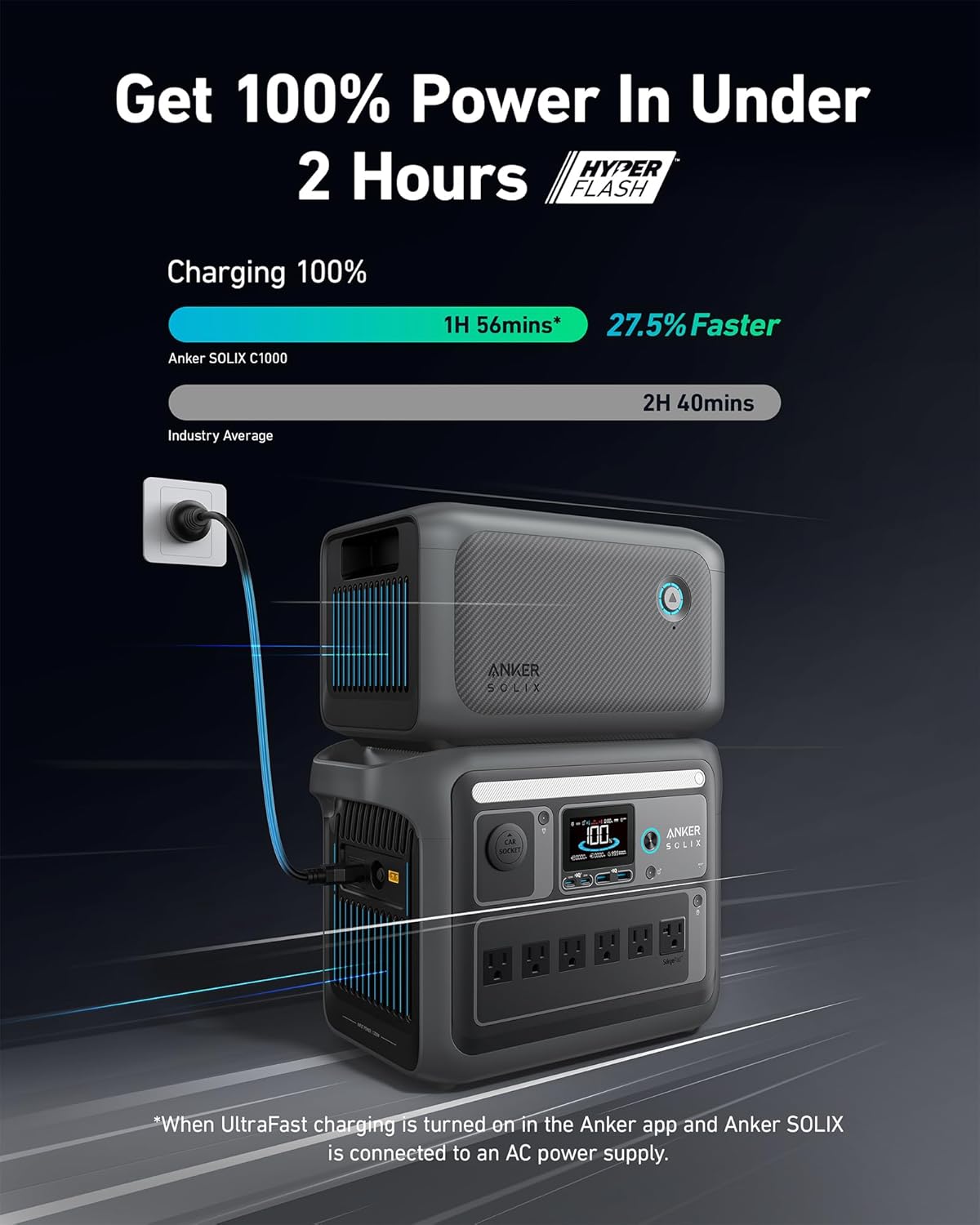
You can reach 80% battery capacity in about 43 minutes and a full charge in under 58 minutes using the UltraFast AC recharging feature. To enable UltraFast mode, you’ll need to use an AC input and turn on the feature through the Anker app with a connected smartphone. This is hugely convenient when you need to top up quickly between uses or before a trip.
Solar recharging (600 W)
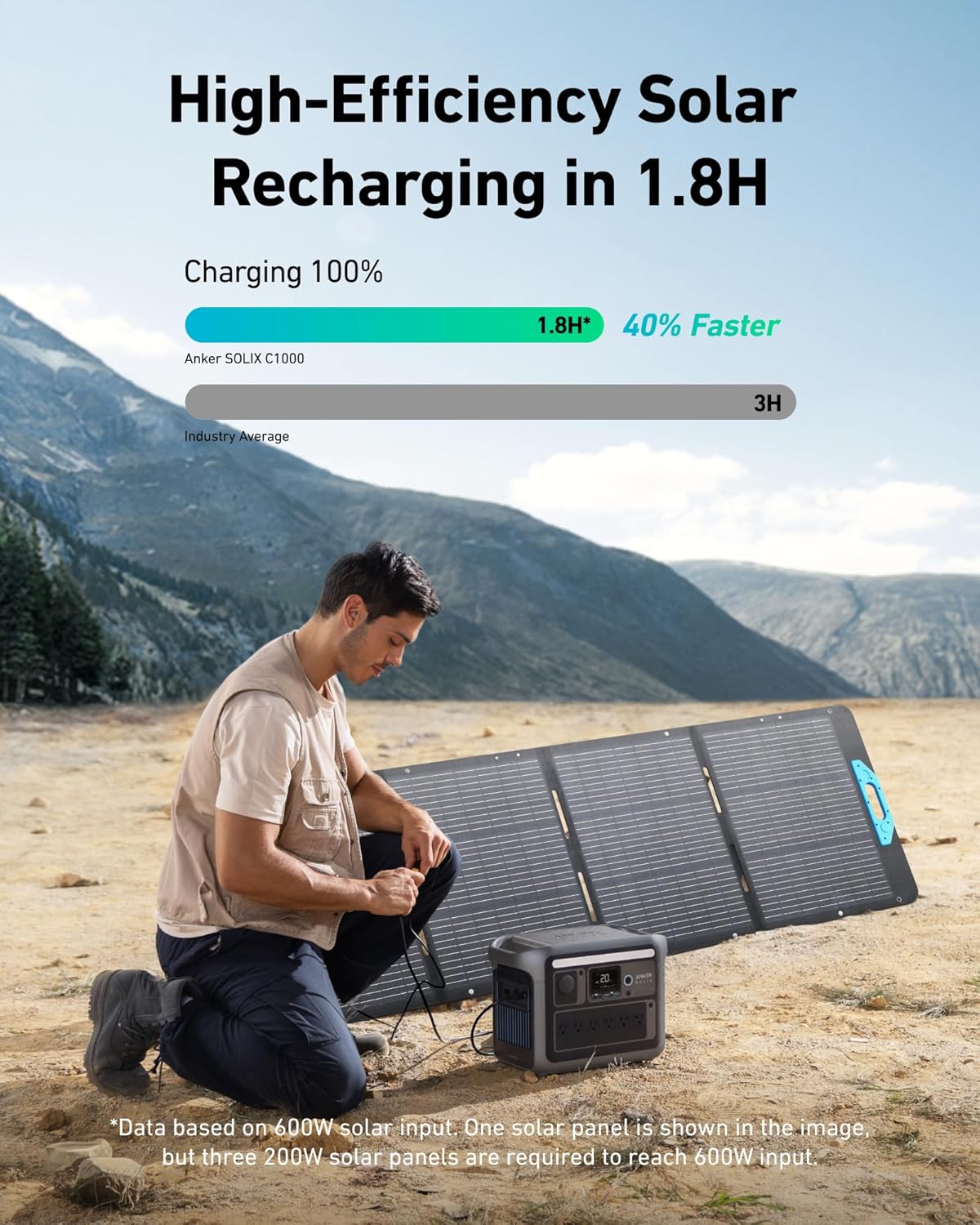
If you prefer green charging, the SOLIX C1000 accepts up to 600 W of solar input, enabling a full recharge in roughly 1.8 hours under ideal conditions. That’s rapid solar charging for a 1 kWh-class station and lets you rely less on grid AC power when you’re off-grid.
Car charging and other methods
You’ll also have car charging via a DC input, useful when driving between destinations. While car charging is slower than UltraFast AC and high-watt solar, it gives you flexibility for on-the-go recharging in RVs and vehicles. The included car charging cable makes this option plug-and-play.
Ports and Connectivity
You’ll need a variety of ports to handle modern devices. The SOLIX C1000 doesn’t skimp here, offering a broad selection for simultaneous charging.
Port types and layout
The unit includes multiple AC outlets, USB-C ports (likely high-watt for laptops and fast charging), USB-A ports, and a car-style DC outlet. With 11 ports in total, you can keep several devices running and charging at once without juggling adapters.
App and smart features
You’ll use the Anker app to tailor charging speeds, enable UltraFast recharge, and track power statistics in real time. That remote control makes it easy to monitor battery health and optimize how you charge. If you like data and control, the app adds value by helping you manage your energy usage precisely.
Design and Portability
Design matters if you’re carrying this unit to campsites or moving it around the house. You’ll want durability without excessive weight.
Size, weight, and build quality
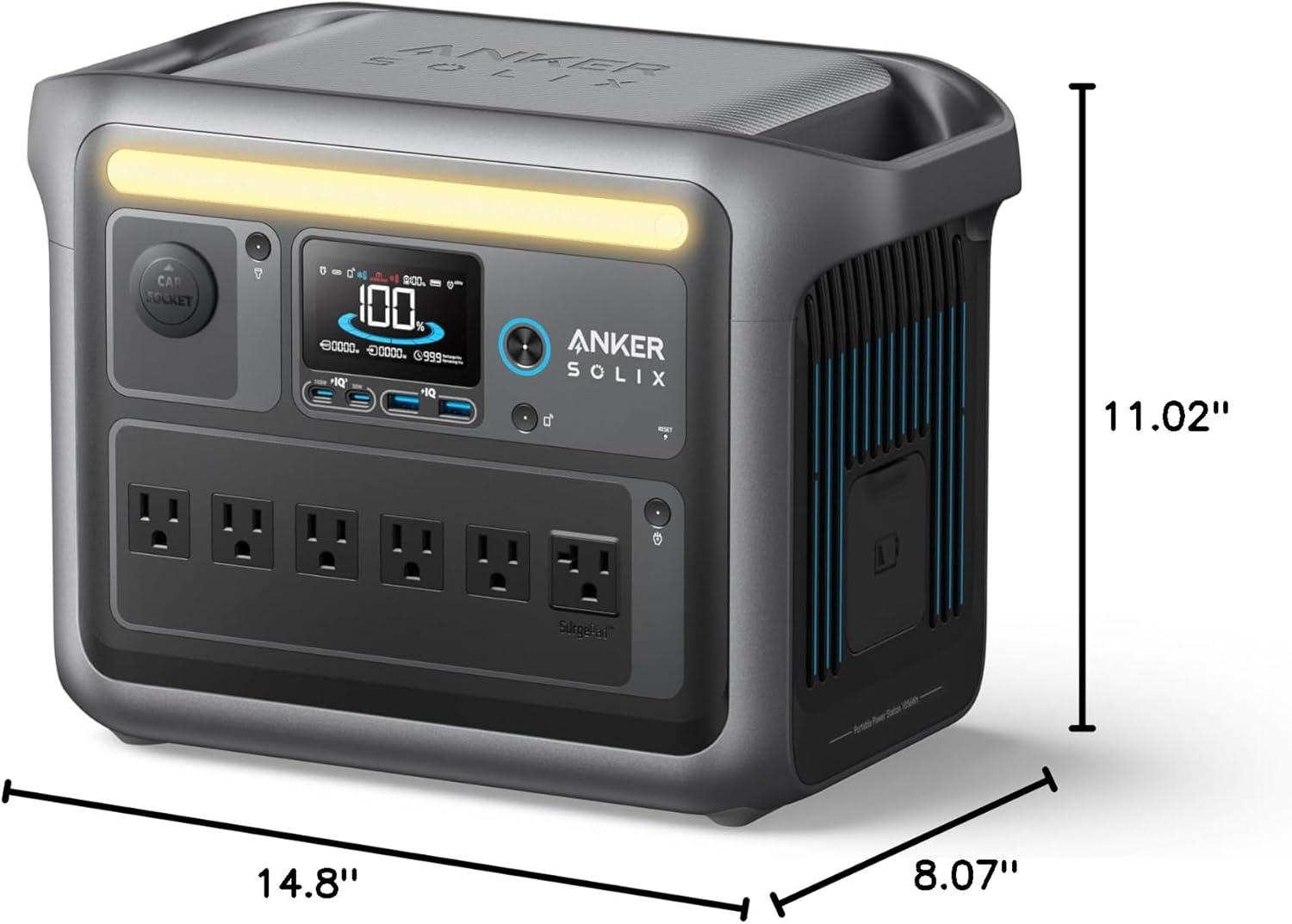
Anker advertises the SOLIX C1000 as about 15% smaller than comparable 1 kWh units, so you’ll find it more compact and easier to stow. The build quality is solid and designed to withstand travel and frequent handling. While it’s not pocket-sized, it’s intended to be an on-the-go companion rather than a stationary bunker.
Handling and travel
You’ll appreciate handles and a balanced form factor when lifting it into and out of vehicles. Its size makes it suitable for car trunks, RV storage compartments, and campsite tables. If you want a balance between capacity and portability, this unit aims to fit that sweet spot.
Use Cases and Scenarios
You’ll want to know if this station matches your lifestyle. Below are practical situations where the SOLIX C1000 shines.
Home backup and power outages
When the power goes out, you’ll be able to run critical appliances like routers, lights, medical devices, and small refrigerators. Its long cycle life and rapid recharge ensure you can restore power quickly after outages and rely on the station over many years.
RVs and overlanding
For RV trips and overland adventures, you’ll benefit from the compact size and 1800 W continuous output. You can run kitchen appliances, charge devices, and power smaller AC units depending on wattage, making it a strong fit for mobile living.
Camping and outdoor use
When you camp, the station gives you clean, quiet power for cooking equipment, lighting, phones, and cameras. With the option of 600 W solar input, you can maintain power even off-grid, shortening downtime between uses.
Emergency preparedness
As part of your emergency kit, you’ll have a dependable energy source for communication, medical needs, and lighting. The unit’s safety features and LiFePO4 chemistry give you peace of mind for long-term storage and occasional use.
Pros and Cons
You’ll want a clear picture of strengths and weaknesses before investing. Here’s a balanced look at what stands out and what to consider.
Pros:
- Extremely fast AC recharging (80% in 43 minutes; full in 58 minutes when UltraFast enabled).
- Long battery lifespan with LiFePO4 chemistry and ~3,000 cycles.
- High continuous and peak outputs suitable for a wide array of appliances (1800 W continuous, 2400 W peak).
- Up to 600 W solar input for rapid solar recharge in favorable conditions.
- App-based control and monitoring for customized charging.
- Compact form factor—about 15% smaller than comparable units.
Cons:
- UltraFast recharge requires the Anker app and a smartphone to enable; not fully plug-and-play for the fastest charge.
- Solar full-charge times assume ideal sun and correct panel setup; real-world conditions can extend times.
- Heavier than lightweight consumer power banks, so it’s less convenient for multi-day backpacking.
- You’ll need to manage loads to stay under the continuous 1800 W rating for extended runs of heavy appliances.
Comparisons
You’ll often compare units by capacity, recharge speed, and durability. Here’s how the SOLIX C1000 stacks up.
Versus other 1 kWh-class power stations
Compared with similar-capacity stations, the SOLIX C1000 typically surpasses them in charging speed and battery longevity thanks to UltraFast recharging and LiFePO4 chemistry. Its slightly smaller footprint is an advantage if you’re tight on space.
Versus portable gasoline generators
Gas generators can supply near-unlimited runtime but are noisy, require fuel, and need more maintenance. You’ll get quieter, cleaner power with the SOLIX C1000, and you won’t deal with fumes. For many users—especially those in residential areas or near people—the SOLIX is the preferable option, provided your wattage needs don’t exceed its limits.
Tips for Getting the Most Out of Your SOLIX C1000
You’ll want to optimize your setup and habits to extend battery life and ensure reliable performance. These tips help you do just that.
Battery maintenance and storage
Store the unit charged to about 50–80% for long-term storage to minimize capacity loss. Keep it in a cool, dry environment away from extreme temperatures when possible. Check charge levels periodically and top up if storage lasts several months.
Best solar setup for fast charging
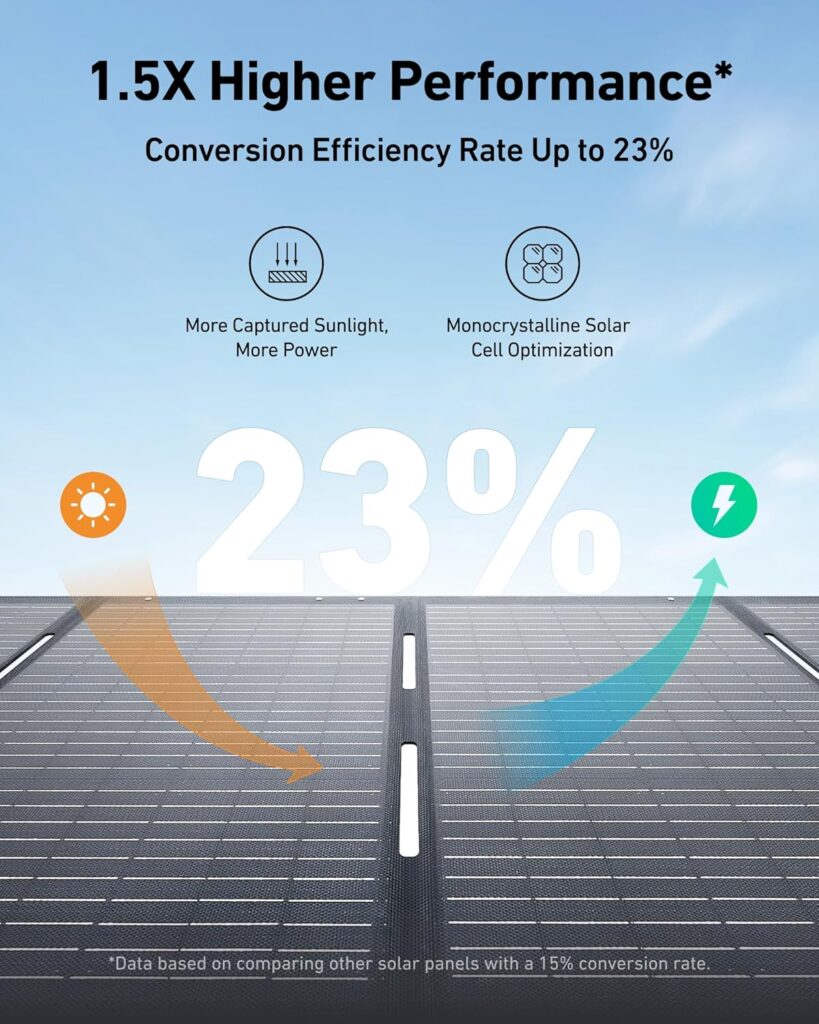
To approach the 1.8-hour solar full recharge time, use a high-quality solar array tuned to the unit’s 600 W max input and orient panels for maximum sun exposure. Maximize clear, direct sunlight and avoid shading. Consider a portable folding array or multiple panels linked in parallel to reach the needed wattage.
Efficient load management
Plan which devices you’ll run simultaneously to avoid exceeding the 1800 W continuous limit. Use the app to monitor draw and consider staggering high-startup devices that could trigger surge draw beyond the peak window.
Safety and Reliability
You’ll want to trust that this unit is safe during daily use and in stressful situations. Anker builds in protections and design elements to keep the unit stable and reliable.
Thermal management and operating temps
UltraFast recharging works within a specified operating temperature range of about 68–122°F. You’ll need to avoid charging in excessive cold or heat for the fastest charge. The thermal management system helps protect the battery during high-wattage operation.
Protection features
Expect protections against overcurrent, overvoltage, overtemperature, and short circuits. These safeguards help protect both the unit and your devices, and they add a layer of reliability during varied use conditions.
Price and Value
You’ll weigh cost against what you get: high-capacity LiFePO4 battery life, extremely fast recharge, 1800 W continuous output, and 600 W solar input capability. For those features, the SOLIX C1000 delivers strong long-term value, especially if you plan to use it frequently over many years.
Is it worth the investment?
If you value longevity, fast recharge times, and the ability to run heavier appliances without a noisy generator, you’ll likely find the SOLIX C1000 worth the price. For occasional light use, it may be more capacity than necessary, but for regular backup and outdoor use, it’s a solid long-term investment.
Frequently Asked Questions
You’ll likely have practical questions before you buy. Below are common questions and concise answers to help you decide.
How long will the battery last on a single charge?
Runtime depends on load. For example, a 100 W device could theoretically run for about 10 hours from 1056 Wh (neglecting conversion losses). Heavier devices will reduce runtime proportionally. Use the app to get real-time estimates based on your actual load.
Can it run a refrigerator or air conditioner?
You can run most small- to medium-sized refrigerators and some small air conditioners as long as the continuous and startup wattage requirements stay within the 1800 W (continuous) and 2400 W (surge) limits. Always check appliance specs and consider runtime expectations based on battery capacity.
How fast is the solar charging in real conditions?
The 1.8-hour full charge time assumes 600 W of ideal solar input with excellent sun conditions. In practice, weather, panel quality, angle, and shading will affect real-world times. Expect longer times under less-than-ideal conditions.
Do you need the app to use the station?
You can use the station without the app for standard charging and output functions. However, to enable UltraFast AC recharging and to access certain monitoring and control features, you’ll need the Anker app and a smartphone.
Is LiFePO4 safer than other battery types?
LiFePO4 batteries are generally considered safer and more stable than many other lithium chemistries, with lower risk of thermal runaway and longer cycle life. That makes them a good option when you plan to rely on the unit frequently or store it for long periods.
Final Thoughts
You’ll find the Anker SOLIX C1000 Portable Power Station to be a compelling option if you want fast recharging, long-term durability, and a capable output for a wide range of devices and appliances. Its LiFePO4 battery and app-driven features add value for regular users and those preparing for emergencies.
This unit is particularly strong for people who need an all-around, future-proof power solution: quick top-ups between trips, solid solar capabilities for off-grid use, and enough surge capability to handle startup loads from common home appliances. If your priority is fast recharge, longevity, and clean portable power with flexible recharging options, the SOLIX C1000 is worth considering as an investment in reliable energy for years to come.
Disclosure: As an Amazon Associate, I earn from qualifying purchases.