
Have you ever found yourself with a dead battery and low tire pressure at the worst possible moment?

Product Overview
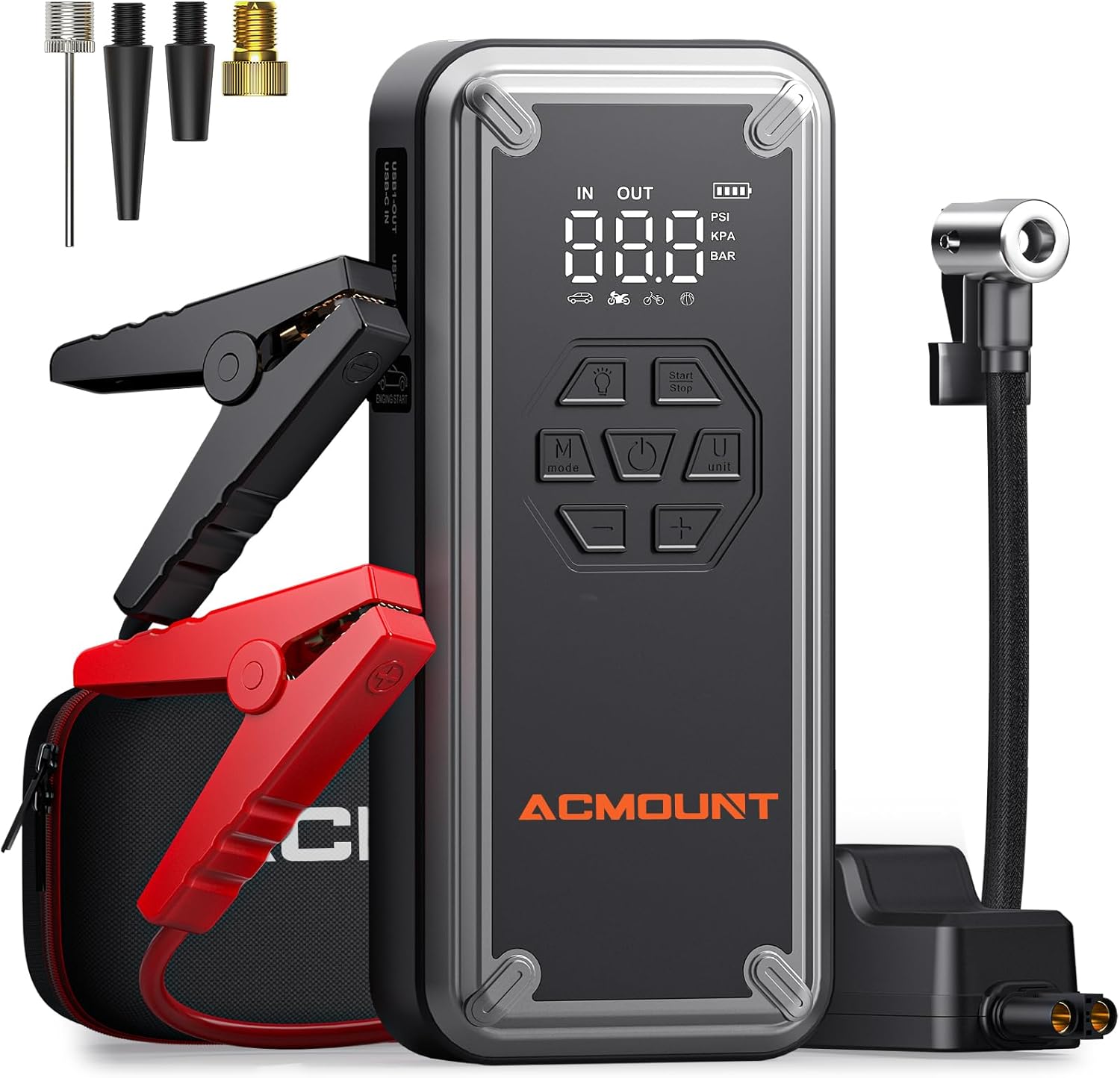
You’re looking at the Acmount W160 Jump Starter with Air Compressor, 5000A Car Jump Starter 150PSI Tire Inflator, 12V Car Battery Jumper Pack for Up to 9.0 Gas/8.0L Diesel, Portable Air Pump with LCD Display & LED Light as a multi-purpose roadside tool. This unit combines a high-current jump starter, a 150 PSI tire inflator, a portable power bank, and a multi-mode LED light so you can handle common roadside emergencies without needing multiple devices.
Quick Verdict
If you want a single, portable device that gives you jump-start capability for large engines, fast tire inflation, and a way to power devices, this product is built to cover those bases. You’ll appreciate the rugged temperature range, the safety protections, and the convenience features like an LCD screen and multiple nozzle types.

Specification Summary
Below is a clear breakdown of the core specifications so you can scan what matters most quickly. You can use this to check fit for your vehicle and typical use cases.
| Feature | Specification |
|---|---|
| Model | Acmount W160 |
| Peak Current | 5000A |
| Vehicle compatibility | Up to 9.0L gasoline / 8.0L diesel |
| Jump starts per charge | Up to 60 times (single charge, nominal) |
| Operating temperature | -4°F to 140°F (-20°C to 60°C) |
| Tire inflator max pressure | 150 PSI |
| Typical car tire inflation | 29 PSI to 36 PSI in ~1 minute |
| Inflation modes | Car, Motorcycle, Bicycle, Basketball, Custom |
| Nozzles included | 4 different nozzles |
| Display | LCD screen (battery %, inflation mode, real-time pressure) |
| USB outputs | Dual USB ports |
| LED light modes | Flashlight, SOS, Strobe |
| Safety protections | 10 built-in protections (short circuit, reverse polarity, over-temp, etc.) |
| Weight & portability | Compact handheld unit with detachable hose |
| Auto-shutoff | Yes (pre-set & auto-off for inflator; unit auto shutdown to save battery) |
Key Features — What You’ll Notice First
You’ll notice that the unit is heavy on versatility, combining several common emergency tools in one package. The LCD display and simple button-based controls make it approachable whether you’re a novice or experienced with roadside gear.
5000A Jump-Starting Power
You get a peak 5000-amp capability designed for serious jump-starts, which is advertised to handle up to 9.0L gasoline and 8.0L diesel engines. That means you can reasonably expect to start large passenger cars, SUVs, light trucks, and many diesel-powered vehicles without needing assistance.
Tire Inflator Performance
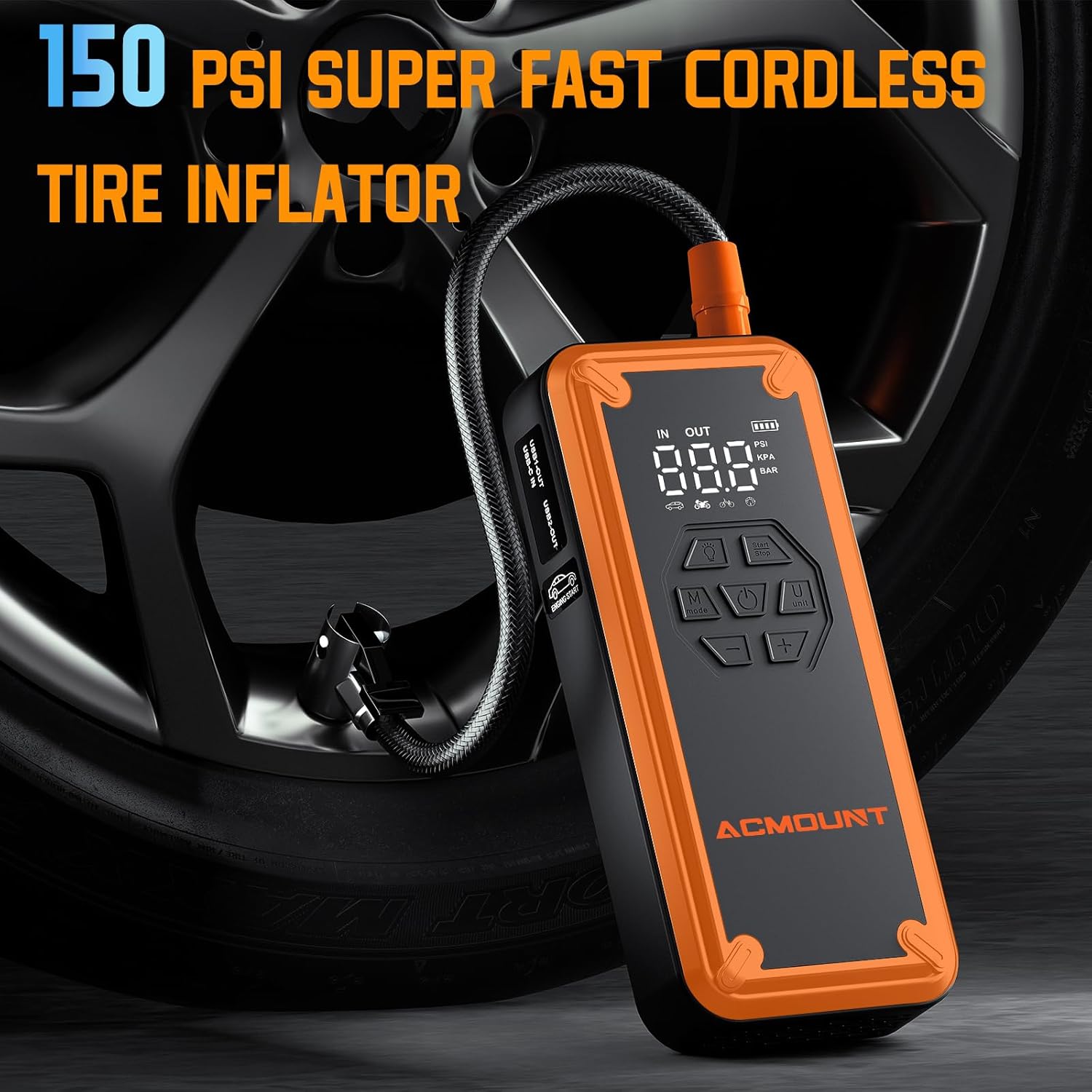
The built-in 150 PSI compressor is useful beyond just car tires — it works for motorcycles, bicycles, sports balls, and small inflatables. You can switch between 5 modes and use the detachable hose and included nozzles to match the job quickly.
Portable Power Bank
The dual USB ports let you charge phones, tablets, and most USB-powered devices, which means you won’t be stranded without communication while you sort out a vehicle problem. You’ll need your device’s charging cable and should note the unit does not include a wall adapter for recharging itself.
LCD Screen & Controls
The visible LCD shows battery percentage, selected inflation mode, and real-time tire pressure so you can monitor progress precisely. You’ll find the button layout intuitive: mode selection, inflate/power toggles, and light control are all handled with dedicated keys.
LED Lighting Modes
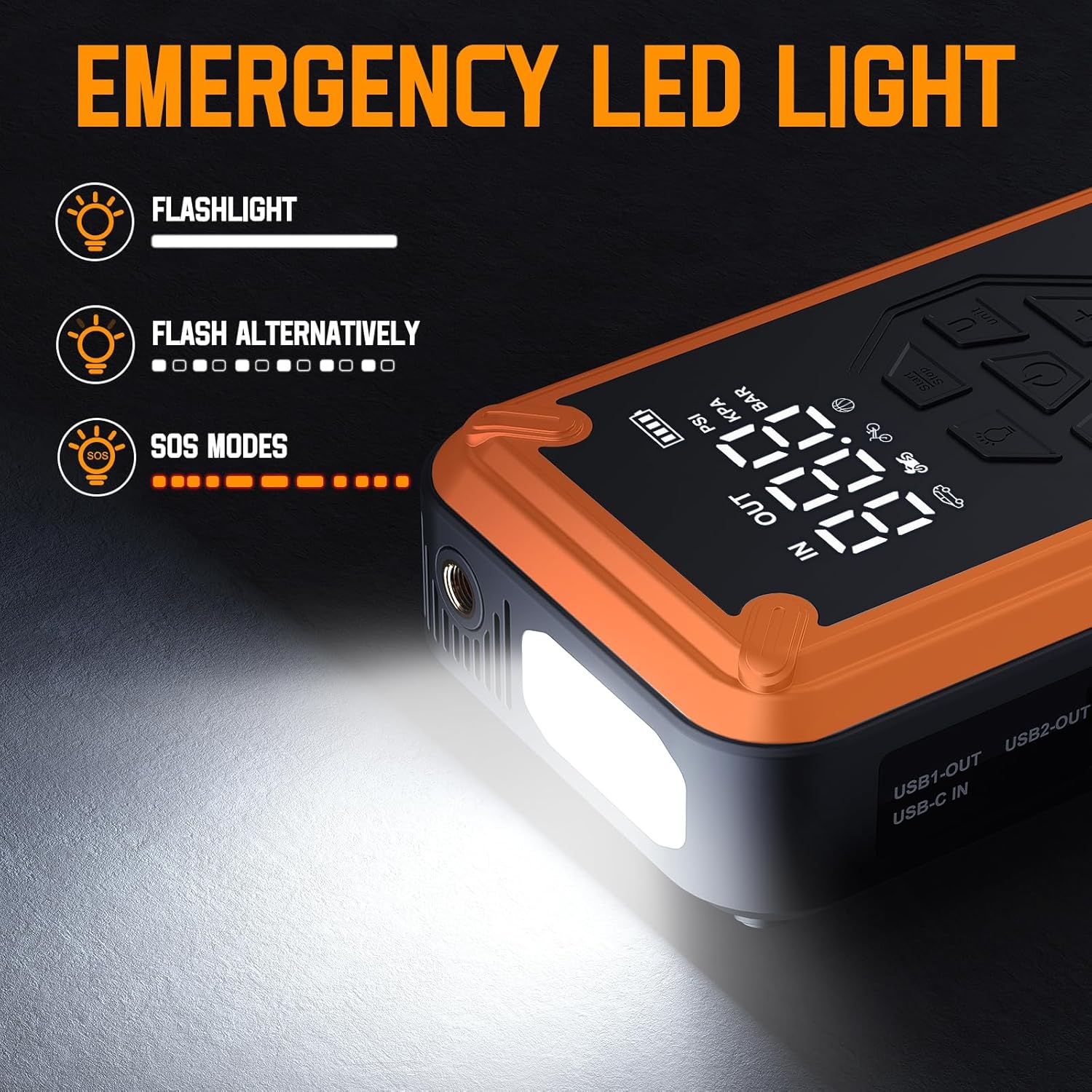
The LED light has three modes — flashlight, SOS, and strobe — which are helpful for nighttime emergencies or signaling for help. You can switch modes with a press, and the light also helps when you’re working under the hood or checking a tire at night.
Jump Starter Performance in Real Use
You’ll want to know how it behaves when you actually need a jump. The real-world performance matters more than lab numbers, so let’s look at common use scenarios and what to expect.
Starting Capacity and Reliability
If your vehicle fits within the 9.0L gas / 8.0L diesel rating, this unit will reliably turn over the engine. You should keep the jump starter’s internal battery above 50% before attempting a jump, as recommended. If the starter is well charged, you can expect repeated starts — up to 60 on a single charge under ideal conditions — which is excellent for frequent roadside assistance or fleet use.
Cold-Weather Performance
The advertised operating range goes down to -4°F, and you’ll find that the unit is engineered to still perform in cold conditions where many batteries struggle. That said, extremely cold temperatures will always reduce battery efficiency, so you should try to keep the unit insulated or stored inside when temperatures drop below freezing to maximize performance.
Practical Tips for Jump-Starting
When you connect the clamps, make sure you follow the color coding carefully and attach the negative clamp to a chassis or engine block ground away from the battery when advised. The unit’s safety circuitry helps prevent sparks and wrong-polarity damage, so you’ll feel safer using it even if you’re inexperienced.
Tire Inflator: Speed, Modes, and Convenience
You’ll find the 150 PSI inflator is fast and practical for most inflating needs. The preset modes and auto-off function mean you can set a target pressure and let the unit take care of the rest.
Inflation Speed
A typical car tire from 29 PSI to 36 PSI in about one minute is a quick turnaround for routine pressure boosts. If you need to fill a very flat tire from near zero PSI, expect a longer time and occasional pauses for thermal cooldown.
Preset Modes and Nozzles
You can choose from car, motorcycle, bicycle, basketball, or custom modes, which simplifies the process so you don’t overinflate. The four different nozzles cover the majority of valve types you’ll encounter, and the detachable extension hose helps you reach awkward valve positions.
Auto-Off and Safety
The pre-set and auto-off features mean you won’t accidentally overinflate and damage a tire. The LCD displays real-time pressure so you can visually confirm the value and stop the pump manually if needed.
Power Bank & LED Light Details
You’ll appreciate the power bank feature for emergencies and travel where phone power is critical. The light modes add a layer of safety for nighttime use.
Charging Devices
Dual USB outputs provide simultaneous charging for two devices. You’ll want to manage charging if you’re jump-starting and charging a phone at the same time, because heavy simultaneous use will increase overall battery draw.
Light Functionality
The flashlight, SOS, and strobe modes serve different purposes: the flashlight for work, SOS for emergency signaling, and strobe for getting attention. The automatic shutdown function helps preserve battery if you accidentally leave the light on.
Display, Controls, and User Experience
You’ll find the device’s UI focuses on clarity and ease of use. The visible LCD screen is a major advantage over simpler devices that only have indicator lights.
LCD Readouts
Battery percentage, selected inflation mode, and current tire pressure are all shown on screen. This reduces guesswork and makes the unit feel more modern and user-friendly.
Button Layout and Operation
You control modes and functions through clearly labeled buttons. Because the controls are straightforward, you won’t need to consult the manual for basic tasks like switching inflator modes or turning on the LED.

Safety Features: Built for Peace of Mind
Safety is a big selling point for this unit. You’ll have ten built-in safety protections designed to protect the device, your vehicle, and yourself.
Protection Systems Included
Expect protections against reverse polarity, short circuits, over-current, over-voltage, over-temperature, low-voltage, over-charge, over-discharge, and more. These systems reduce the risk of damage or injury if something goes wrong.
Novice-Friendly Design
Because the unit prevents sparks and incorrect connections from causing catastrophic problems, even a beginner can attempt a jump with confidence. Still, you should learn the correct connection steps; safety features are a backup, not a substitute for caution.
Build, Design, and Portability
You’re getting a device designed to be stored in a trunk or garage and carried to the roadside. The detachable hose and compact footprint make it simple to handle.
Size and Weight Considerations
It’s portable enough for regular vehicle storage yet substantial enough that it won’t blow away in wind. The added compressing hardware and jump clamps add weight, but you’ll accept that as the price for multi-functionality.
Materials and Durability
The housing is built to withstand normal vehicle conditions and the temperature range indicated. If you treat it reasonably — avoid prolonged exposure to the elements and drop shocks — it will last through many roadside incidents.
Battery Life, Charging, and Maintenance
How you maintain the starter is crucial to its readiness when you need it. You’ll need to recharge periodically and keep track of battery health.
Charging Routine
Make sure you recharge the starter after heavy use, and keep it above 50% battery before attempting any critical jump-start. The manufacturer recommends charging it every 2–3 months if you won’t use it for a long time to maintain the starter’s battery health.
Storage Tips
Store it inside the vehicle cabin if you’re in extreme cold or heat for extended periods, or keep it in a temperature-controlled location if possible. Avoid leaving it with a low battery for long stretches as that can shorten the service life.
How to Use: Step-by-Step for Common Tasks
You’ll want quick, reliable instructions when you’re under stress. Below are condensed steps for the two most common functions: jump-starting and inflating a tire.
Jump-Starting a Vehicle
- Ensure the jump starter is charged to at least 50% and that the unit is switched off. This helps ensure enough available current when you connect.
- Connect the red clamp to the positive (+) terminal and the black clamp to a grounded metal point on the engine block (not the negative battery terminal if advised). This reduces spark risk.
- Turn on the jump starter, then try to start the vehicle. If the engine cranks but fails to start, wait a minute and try again, observing any warning signals on the starter.
- Once the vehicle starts, disconnect clamps in reverse order (negative first if you attached to the battery) and allow the alternator to recharge the car battery.
Inflating a Tire
- Attach the hose to the tire valve and secure the connector; choose the car mode for typical passenger tires.
- Set the target PSI on the LCD if you prefer automatic shutoff, or monitor the readout manually.
- Start the compressor and monitor the pressure. The unit will auto-off when the preset pressure is reached, or you can manually turn it off.
- Detach the hose carefully and stow the components.
Real-World Use Cases
You’ll find this device useful for a variety of situations beyond a single break-in scenario. It’s a safety and convenience tool for travel and outdoor activities.
Everyday Roadside Emergencies
A dead battery and a low tire can ruin a planned day. With this unit, you can address both quickly and get back on the road without waiting for roadside assistance.
Camping and Travel
You can use the USB outputs to charge phones and small devices while camping and the LED to illuminate a campsite or tent area. It’s a compact multipurpose tool for families or solo travelers.
Sports and Recreation
You’ll also be able to inflate sports equipment and small inflatables, which is handy for family outings or recreational trips.
Pros and Cons
You’ll appreciate the strengths and understand the trade-offs when considering this purchase. Here’s a balanced look.
Pros
- Powerful 5000A peak current suitable for large engines.
- 150 PSI compressor with fast inflation and multiple modes.
- Clear LCD with real-time readouts for pressure and battery level.
- Dual USB outputs for charging devices.
- Multiple safety protections for safer use.
- LED with multiple signaling modes.
- Operates across a wide temperature range.
Cons
- You must remember to recharge periodically to maintain readiness.
- The unit adds weight and takes space compared to a small standalone inflator.
- No wall adapter included for recharging; you’ll use a vehicle charger or other USB adapter.
- Extreme, prolonged cold will still reduce battery performance despite the wide operating range.
Comparisons: Where This Unit Fits
You’ll want to compare this to single-purpose jump starters and standalone inflators. This unit saves space and provides combined functionality but weighs more than tiny pocket inflators.
Versus Dedicated Inflators
A dedicated inflator may be slightly faster or lighter, but it won’t jump-start your car. If you want a single device to do both jobs competently, this model is a strong choice.
Versus Big-Power Jump Starters
Some ultra-high-capacity jump starters provide more reserve amp-hours, but they’re bulkier. This model gives a balanced mix of amps, portability, and extra features like the inflator and power bank.
Who Should Buy This
You’ll find this device valuable if you want an all-in-one roadside aide for family cars, light trucks, and recreational vehicles that fit within the engine size limits. It’s ideal for commuters, road-trippers, and anyone who wants to reduce reliance on external roadside assistance.
Best For
- Drivers who want a compact emergency kit for battery and tire issues.
- Owners of larger gasoline or diesel vehicles within the listed engine size.
- People who value an LCD readout and multi-mode inflator.
Not Ideal For
- Heavy commercial vehicles beyond the rated engine size.
- Those who prefer ultra-light inflators and have no need for jump-start capability.
- Users who expect long-term cold storage without periodic maintenance charging.
Maintenance, Care, and After-Sales Advice
You’ll keep this unit ready by following a few simple maintenance tasks regularly. Proper care extends the lifetime and ensures reliable performance.
Routine Maintenance
Charge the jump starter every 2–3 months if unused, and after any heavy use recharge it fully. Keep clamps and hose connectors clean and dry to prevent corrosion or leaks.
Storage and Longevity
Store in a dry place away from direct sunlight and extreme temperature shifts when possible. Follow the recommendation to keep battery levels above 50% before critical use to prevent unexpected failure.
Manufacturer’s Recommendations
Follow the included manual for safety and operational specifics. The manufacturer suggests maintaining a 50% battery or higher before attempting critical jump-starts and periodic charging if unused.
Final Verdict
If you want a reliable, multi-function tool that handles jump-starts for pretty large engines, inflates tires quickly, and doubles as a power bank and light source, this Acmount unit is a smart, compact choice. You’ll gain peace of mind and fewer roadside headaches with this kit in your trunk, provided you maintain its charge and follow safe connection practices.
Frequently Asked Questions
You’ll likely have some questions if you’re considering buying or using the unit. Here are common queries and practical answers.
How many jump starts can I get on a single charge?
Under ideal conditions, you can expect up to about 60 jump starts on a single full charge, depending on engine size, temperature, and how fully charged the unit starts. Real-world factors like cold weather and multiple high-draw uses will reduce that number.
Can I inflate a completely flat tire?
Yes, but inflating from near zero will take longer than filling a slightly low tire. The unit is fast for topping off and moderately fast for refilling, but extremely flat tires may need additional time and occasional cooling periods for the pump.
Is the unit safe to use if I’m inexperienced?
Yes. The unit includes 10 built-in safety protections and is designed to minimize the risks of sparks or reverse-polarity damage. Still, follow the included instructions for connecting clamps and using the inflator to ensure safe operation.
Do I need a mains adapter to recharge the starter?
A wall adapter is not included, so you’ll need a compatible charger or use a car socket/USB charger that matches the starter’s charging requirements. Check the manual for input specs before plugging it in.
What should I do if the unit won’t start a vehicle?
Confirm the jump starter’s battery is at least 50% charged, check all connections for correct polarity and solid contact, and try again. If it still fails, the vehicle battery or starter may be beyond simple jump-start recovery and professional help might be needed.
If you want, I can condense this into a one-page quick-start cheat sheet you can print and keep in your glovebox, or I can compare this model to two specific alternatives you’re considering. Which would you prefer?
Disclosure: As an Amazon Associate, I earn from qualifying purchases.