
Have you thought about how quickly you could get reliable backup power the next time the grid goes out?

Product at a glance
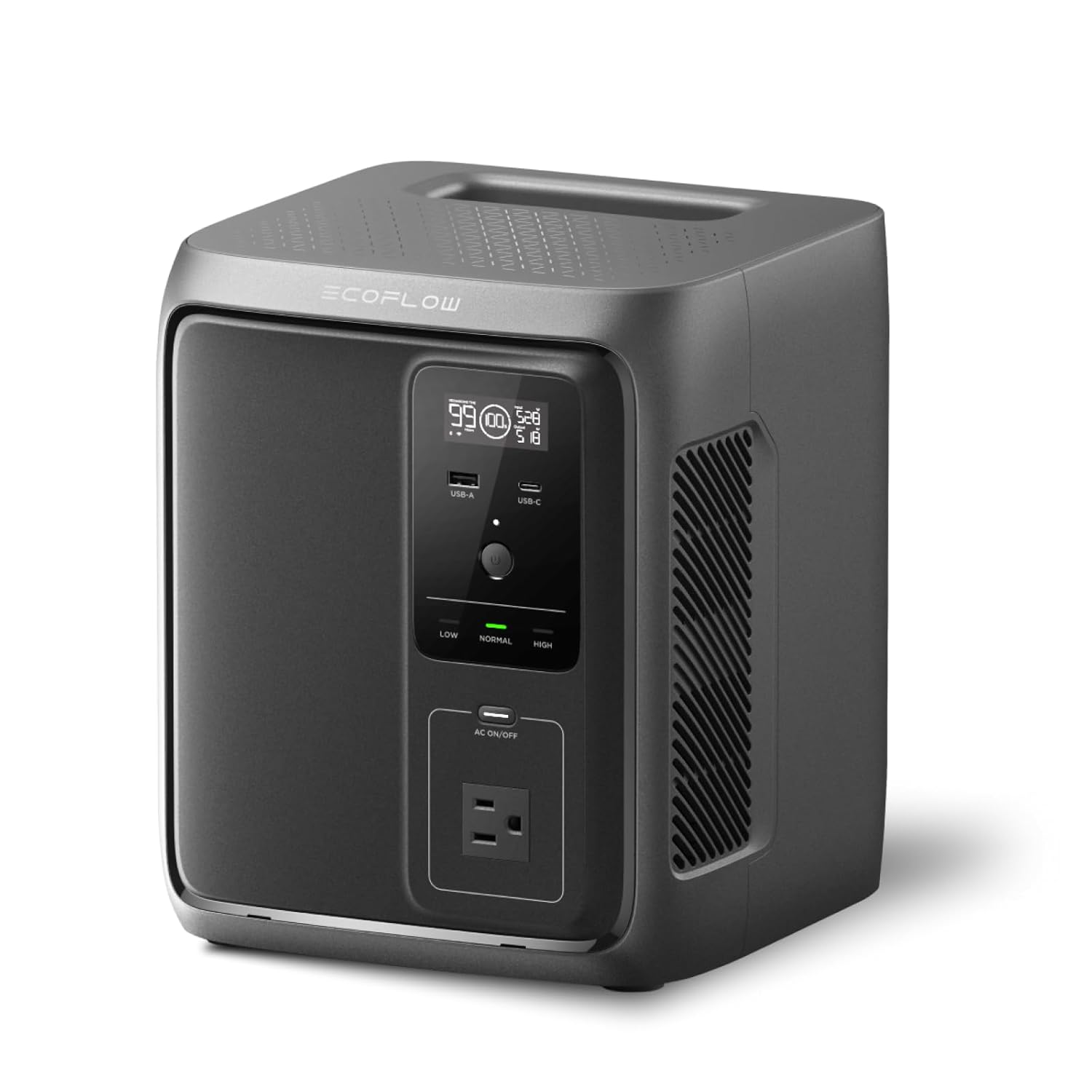
You’ll find that the EF ECOFLOW Portable Power Station DELTA 3 1000 Air, 960Wh LiFePO4 (LFP) Battery, 500W AC Output Solar Generator(Solar Panel Optional) for Home Backup Power, Camping & RVs aims to balance capacity, portability, and fast charging. This section gives you the condensed facts so you can see whether it meets your needs at a glance.
| Feature | What it means for you |
|---|---|
| Model | EF ECOFLOW DELTA 3 1000 Air |
| Battery capacity | 960Wh LiFePO4 (LFP) — long cycle life and stable chemistry |
| Continuous AC output | 500W (with X-Boost support for some higher-wattage devices) |
| Charging options | AC fast charge (X-Stream), solar up to 500W, car, generator |
| Fast charge time | As fast as 2 hours (AC, using X-Stream) |
| UPS switchover | ~10 ms for uninterrupted transitions |
| Weight & size | ~22 lbs; 8.7 x 8.8 x 10.4 in — compact and portable |
| Operating temperature | -4°F to 140°F — wider range than many systems |
| Protection & BMS | Smart BMS with multiple protection layers |
| Best for | Home backup, camping, RVs, off-grid charging for essentials |
Key features overview
You’ll want to know which features matter most for your use case, and this section highlights the elements that typically sway buyers. These features combine to make the DELTA 3 1000 Air useful whether you need short-term blackout resilience or a portable power hub for trips.
Capacity and battery chemistry
You get a 960Wh LiFePO4 (LFP) battery, which means more usable cycles and a safer chemistry than many older lithium-ion cells. That translates to longer lifespan and less worry about performance degradation if you plan to rely on it regularly.
Output and appliance support
The unit delivers 500W continuous AC output and supports X-Boost mode so that you can run many common household appliances. That means fans, lights, TVs, routers, and many refrigerators or rice cookers are typically within reach, though you should always check an appliance’s startup and running wattage.
Fast charging and recharging options
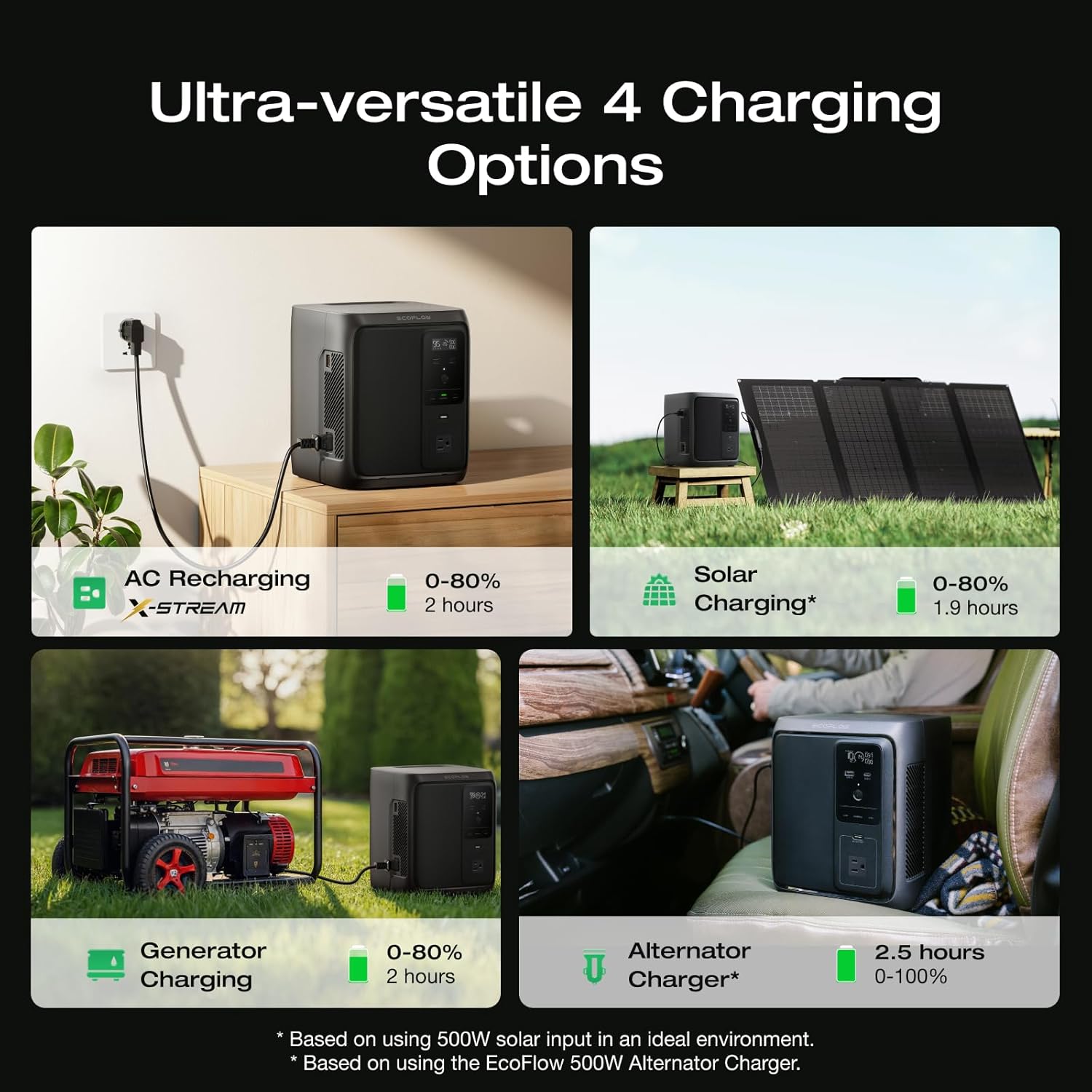
EcoFlow’s X-Stream technology offers an AC recharge from 0–100% as fast as 2 hours, which is unusually quick for a nearly 1 kWh unit. You also can top up via solar (up to 500W), a car, or a generator, giving you flexible ways to recharge when grid power is unavailable.
UPS and voltage stabilization
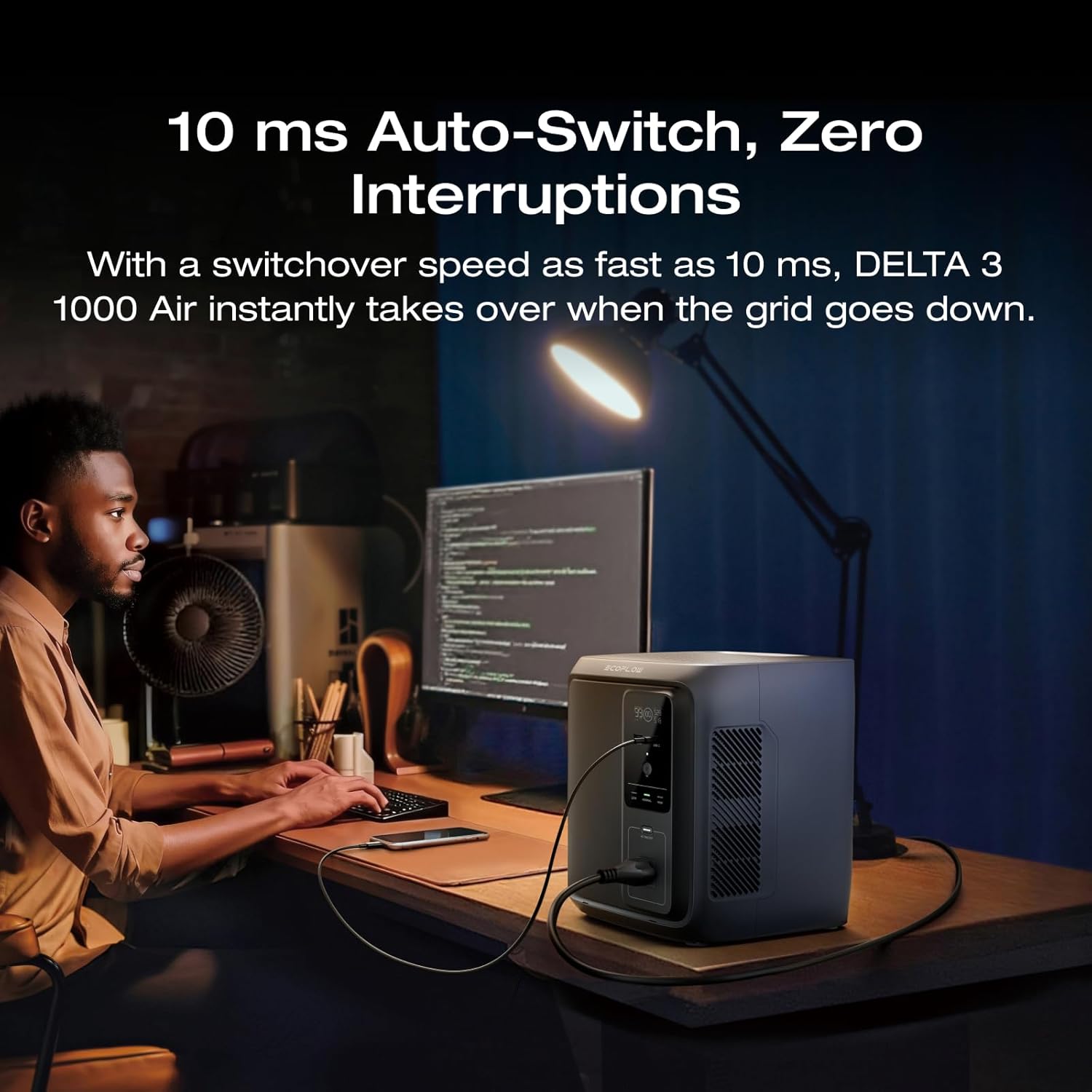
With a switchover speed around 10 milliseconds, the DELTA 3 1000 Air acts like an uninterruptible power supply for essentials, so you won’t lose a video call or corrupt a file when the grid blinks off. It also has built-in voltage stabilization to smooth out grid fluctuations and protect sensitive equipment.
Compact design and portability
At roughly the size of a rice cooker and weighing about 22 lbs, you can move the unit comfortably around your home or pack it into an RV. The built-in handle makes it easier to carry than bulky alternatives, which helps when you’re setting up outdoors or storing it between uses.
Safety and battery management
EcoFlow equips the DELTA 3 1000 Air with a smart BMS that monitors the battery 24/7 and includes multiple layers of protection. The LiFePO4 chemistry is inherently more thermally stable, and the system’s protection features reduce the chance of overcharge, over-discharge, and other risks.
Detailed specifications
You’ll want a compact technical summary to match your checklist against the product’s capabilities. This specification breakdown highlights the numbers people ask about most when choosing a portable power station.
| Specification | Details |
|---|---|
| Battery type | LiFePO4 (LFP) |
| Capacity | 960Wh |
| Nominal voltage | Manufacturer specifications variable — designed for home-use appliances |
| Continuous AC output | 500W |
| Peak/surge power | Varies with X-Boost and instant draw; check device manual for startup loads |
| AC outlets | Multiple AC outlets (check unit for exact count) |
| USB outputs | USB-A and USB-C ports (fast charge options likely included) |
| Solar input | Up to 500W |
| Charger input | AC fast charge (X-Stream) — ~2 hours |
| UPS switching | ~10 ms |
| Weight | ~22 lbs |
| Dimensions | 8.7 x 8.8 x 10.4 in |
| Operating temp | -4°F to 140°F |
| Warranty | Check EcoFlow’s current warranty policy for regional terms |
Real-world performance
You’ll want to know what this actually does in everyday scenarios, not just the numbers on the spec sheet. This section shares realistic expectations, including runtimes, charging scenarios, and performance caveats.
Typical runtimes by appliance
These are practical, approximate run times so you can estimate how long the DELTA 3 1000 Air will keep your essentials running. Note that actual runtimes depend on device efficiency, duty cycles (for compressors/pumps), and whether you use X-Boost.
| Appliance | Typical power draw (W) | Estimated runtime (hours) |
|---|---|---|
| Smartphone (charging) | 10 W | ~60–80 hours |
| Laptop (workload) | 45–60 W | ~12–16 hours |
| Wi-Fi router + modem | 10–25 W | ~40–80 hours |
| LED lighting (multiple bulbs) | 20–60 W | ~16–40 hours |
| TV (LED, 40–55″) | 50–100 W | ~8–16 hours |
| Mini fridge (average duty) | 40–80 W (avg) | ~12–24 hours |
| Full-size refrigerator (cycles) | 100–200 W (peak) | ~6–12 hours (varies widely) |
| Rice cooker / slow cooker | 200–500 W | Short bursts or intermittent use with X-Boost; check load |
| Coffee maker / microwave | 600–1200 W | Not continuous; may not be supported without careful X-Boost checks |
You’ll notice these are ranges rather than fixed numbers because appliances vary and compressors cycle on/off. For refrigerators and freezers, duty cycles matter most: the compressor doesn’t run continuously, so average wattage is what determines runtime.
Solar charging performance
If you plan to use solar, you’ll appreciate that the DELTA 3 1000 Air accepts up to 500W of solar input. In strong sun with good panel orientation and no shading, you can add a substantial amount of capacity during daylight hours, which helps for extended outages or long camping trips.
You’ll want to remember that solar harvest depends on panel wattage, sunlight hours, angle, weather, and panel efficiency. Expect real-world solar input to be lower than peak rated watts, and plan for lower yields on cloudy or partially shaded days.
Charging with car or generator
You’ll have the option to recharge from a car or generator when you’re off-grid, which gives you flexibility on long trips. Charging from a car is slower than AC or solar, but it’s a useful backup if you’re moving between sites or need top-ups during travel.
You’ll want to match generator sizing and car charging outputs to the DELTA 3 1000 Air’s input specs to avoid slow or inefficient charging. Always follow EcoFlow’s recommended cables and adapters to ensure safe charging.
Use cases and scenarios
Think about how you’ll actually use this unit, and match your priorities to the strengths of the DELTA 3 1000 Air. This section covers common scenarios and how the unit performs in each.
Home backup for short outages
If you want to keep lights, phones, routers, and some kitchen appliances running during blackouts, this unit can be a dependable solution. The 10 ms UPS switchover means your sensitive electronics will see almost no interruption when the grid trips.
Extended power outages (with solar)
For multi-day outages, pairing the DELTA 3 1000 Air with solar panels gives you the best chance of maintaining essentials indefinitely under the right conditions. You’ll need enough panel wattage and decent sun exposure, but 500W solar input capability is generous for a 960Wh battery.
Camping and RV use
You’ll like the compact footprint and handle if you move power around campsites or inside an RV. The weight and size make it easier to carry than heavier, similar-capacity power stations, and its ability to run small refrigerators, lights, and cooking appliances makes it convenient for trips.
Mobile professionals and remote work
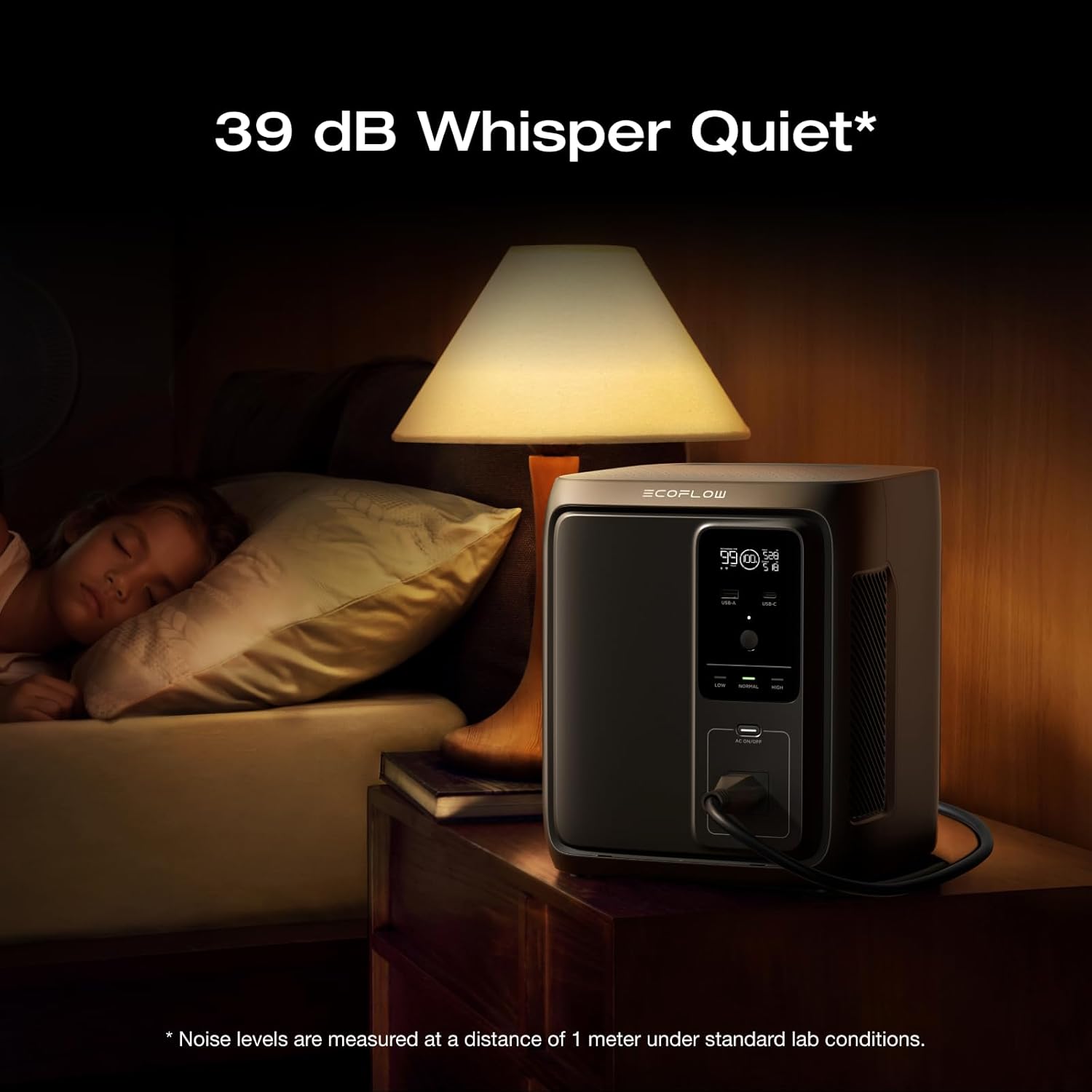
If you work on the go, you’ll value the fast AC recharge and the ability to power laptops, monitors, and networking gear for long stretches. The unit’s quieter operation and clean AC output help you maintain a productive, interruption-free workspace.
Medical and emergency equipment
You’ll want to verify exact power needs for any medical device, but the DELTA 3 1000 Air’s UPS and voltage stabilization make it a worthwhile option for low- to medium-draw medical equipment. Always consult a medical professional and the device manufacturer before relying on a portable power station for critical devices.
Setup and daily operation
You’ll want an easy setup and predictable daily use, and this section outlines what to expect from unboxing to routine operation.
Unboxing and first charge
When you unbox the DELTA 3 1000 Air, you’ll find the unit, charging cable(s), and documentation; verify included accessories for your region. Make the initial charge via AC to bring the battery to full, which helps the battery management system calibrate and gives you a baseline for future runtime estimates.
Connecting appliances and the UPS setup
You’ll plug essential devices into the AC outlets and USB ports; for always-on devices, set up the UPS function to protect against sudden outages. You’ll want to double-check startup wattages for devices that have high inrush currents, like pumps or compressors.
Monitoring and app features
You’ll likely be able to monitor charge status, power draw, and remaining runtime via an EcoFlow app or on-device display — always check the current model’s app compatibility. This monitoring helps you manage loads, prioritize devices, and decide when to engage solar or generator charging.
Maintenance tips
You’ll want to store the unit in a cool, dry place and check charge levels during long-term storage. LiFePO4 is forgiving, but regular top-ups and avoiding extremes of temperature help preserve battery life.
Safety and long-term reliability
You’ll care about the safety systems and how long the unit will remain useful. This section covers protections, expected lifespan, and environmental tolerances.
Battery protection and BMS
The DELTA 3 1000 Air includes a multi-layer smart BMS that monitors and protects against overcharge, over-discharge, overheating, and short circuits. You’ll benefit from improved longevity and reduced risk compared with simpler battery setups.
Thermal management and operating temperatures
You’ll be able to operate the unit from -4°F to 140°F, which is broader than many consumer portable power stations. You should still avoid exposing the battery to direct flames, prolonged moisture, or submersion, and maintain ventilation when charging or discharging at high rates.
Lifespan and cycle expectations
LiFePO4 batteries typically deliver many more cycles than traditional lithium-ion chemistries, so you’ll get longer service before capacity noticeably degrades. You’ll see gradual capacity loss over time, but expect a useful lifespan measured in thousands of cycles under normal use conditions.
How it compares to alternatives
You’ll want to know how this unit stacks up against other portable power stations. This comparison focuses on typical buyer priorities: capacity per weight, charge speed, battery chemistry, and usability.
Versus consumer-grade lead-acid or older lithium units
You’ll notice LiFePO4 offers better cycle life, improved safety, and more stable performance over time than older chemistries. That means lower long-term cost of ownership if you plan to use the unit regularly.
Versus similar EcoFlow models
You’ll see EcoFlow’s DELTA lineup vary by capacity and output. The DELTA 3 1000 Air balances portability and near-1 kWh capacity, whereas larger DELTA or PRO models push capacity and AC output higher (with corresponding increases in weight and size).
Versus competitors (Jackery, Goal Zero, etc.)
You’ll generally find that competitors may offer similar-looking units, but chemistry (LiFePO4 vs NMC or others), charge speed, and port selection vary. You should compare cycle life, recharge times, and AC output to match your priorities — the DELTA 3 1000 Air’s quick AC charging and LiFePO4 chemistry are notable strengths.
Pros and cons
You’ll appreciate a concise, honest look at strengths and limitations to determine fit.
Pros:
- You get quick AC recharge (as fast as 2 hours), which reduces downtime between uses.
- LiFePO4 battery chemistry gives longer cycle life and better thermal stability for regular use.
- Compact, lightweight design with a handle makes it genuinely portable for a 960Wh unit.
- UPS capability with ~10 ms switchover and voltage stabilization protects your electronics.
- Multiple recharge options (AC, solar up to 500W, car, generator) give flexibility in many situations.
Cons:
- 500W continuous AC output limits continuous use of high-wattage appliances without careful management.
- To maintain extended off-grid capability, you’ll need to invest in solar panels or a generator for repeated days off-grid.
- Some high-startup-load devices may exceed the unit’s surge capabilities even with X-Boost — you’ll need to verify each appliance.
- At around 22 lbs, it’s portable but not effortless for everyone to carry long distances.
Practical buying and accessory recommendations
You’ll get better results if you pick the right accessories and plan for realistic usage. These suggestions help you set up for the scenarios that matter most.
Solar panels and cabling
You’ll want matching solar panels with combined wattage up to 500W and the appropriate MC4 or EcoFlow connectors. Consider folding portable solar panels for campsite convenience or rigid panels for permanent home installations.
Extension cords and surge protection
You’ll want heavy-duty extension cords for outdoor setups and surge protectors for sensitive devices. The unit’s built-in stabilization helps, but extra protection ensures peace of mind.
Carrying cases and mounting
You’ll appreciate a padded case if you move the unit frequently or want to store it safely. In an RV, secure mounting or tie-downs prevent movement while driving.
Extra battery or parallel options
You’ll want to check if EcoFlow supports expansion via extra battery modules for your model if you anticipate heavier continuous loads. Not all models support parallel expansion, so verify compatibility before purchasing add-ons.
Troubleshooting basics
You’ll find that most issues are predictable and resolvable with a few checks. This section outlines quick fixes so you can get back to powering your devices.
Unit won’t turn on or charge
You’ll want to verify the power button, cables, and outlet or panel inputs. Check that the battery isn’t fully depleted and that the fuse or protection hasn’t tripped; follow the manual’s reset procedure if needed.
Appliances flicker or don’t start
You’ll want to check startup (inrush) wattage and whether X-Boost is needed or allowed for that appliance. Some motors, pumps, or heaters require higher surge power than the unit can supply — use alternatives or reduce simultaneous loads.
Unexpected shutdowns
You’ll want to check the battery level, internal temperature, and connection integrity. The BMS may shut down to protect the battery if voltage or temperature thresholds are exceeded, so allow the unit to cool and recharge before retrying.
Frequently asked questions
You’ll probably have a few common questions; these quick answers address typical concerns buyers raise.
Q: How long will the battery actually last in everyday use?
A: You’ll get many years of use with LiFePO4, often measured in thousands of cycles before substantial capacity loss; actual lifetime depends on usage patterns and how you treat the battery.
Q: Can the DELTA 3 1000 Air run a full-size fridge overnight?
A: You’ll likely be able to run a refrigerator for many hours depending on the fridge’s average wattage and duty cycle, but full-size compressors and high start-up draws mean you should check your appliance’s specs and consider adding solar for prolonged outages.
Q: Is 500W AC enough for a typical RV?
A: You’ll be able to power lights, fans, small microwave or induction cooktops for short periods, and electronics easily, but not sustained heavy loads like an air conditioner. Pairing with a generator or choosing a larger system is better if you rely on high continuous wattage.
Q: How safe is LiFePO4 compared to other battery types?
A: You’ll appreciate that LiFePO4 is one of the safer lithium chemistries, with better thermal stability and lower risk of thermal runaway than some alternatives. That said, any battery requires proper handling and charging discipline.
Q: Can this unit be left plugged into solar all day?
A: You’ll be able to leave it connected, and the BMS will manage charge and protect the battery. It’s still a good idea to inspect connections and panels periodically and avoid leaving panels shaded or damaged.
Final thoughts and recommendation
You’ll find the EF ECOFLOW Portable Power Station DELTA 3 1000 Air, 960Wh LiFePO4 (LFP) Battery, 500W AC Output Solar Generator(Solar Panel Optional) for Home Backup Power, Camping & RVs offers a strong blend of fast recharge, safe battery chemistry, and portability that suits many users. If you need a near-1 kWh system that charges quickly, supports essential home appliances during short outages, and is convenient for travel or RV use, this model is a solid choice — just be mindful of continuous AC limits and plan for solar or generator top-ups for extended off-grid use.
If you’d like, you can tell me which appliances you want to run and for how long, and I’ll give a custom runtime and charging plan so you can decide if this unit fits your specific needs.
Disclosure: As an Amazon Associate, I earn from qualifying purchases.