
Are you looking for a portable, plug-and-play solar solution to keep your 12V batteries or power station topped up on the go?
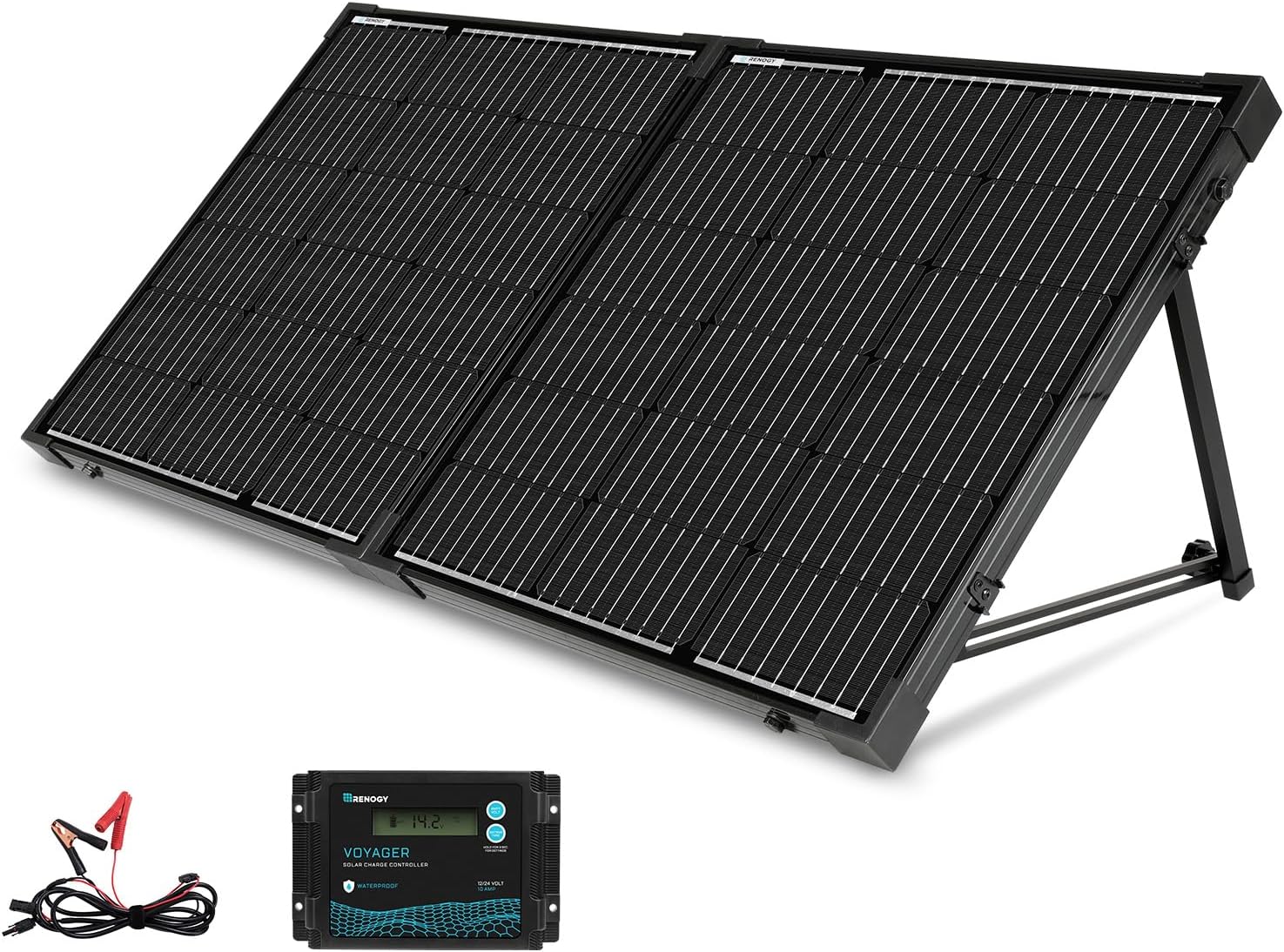

Product overview: Renogy 100 Watt 12 Volt Portable Solar Panel with Waterproof 20A Charger Controller Foldable 100W Solar Suitcase with Adjustable Kickstand for Power Station, 100W Panel-20A Controller, Black
You’ll get a complete solar suitcase kit that’s ready to use out of the box. It combines a 100W foldable monocrystalline panel, a waterproof 20A PWM charge controller, and alligator clips, all packed in a rugged canvas case for travel and storage.
What’s included and why it matters
The kit includes the 100W foldable solar suitcase, a 20A waterproof charge controller, and alligator clips for battery connection. That means you can connect to a wide range of 12V batteries right away without sourcing adapters, making setup quicker and less confusing for your first use.
Design and build quality
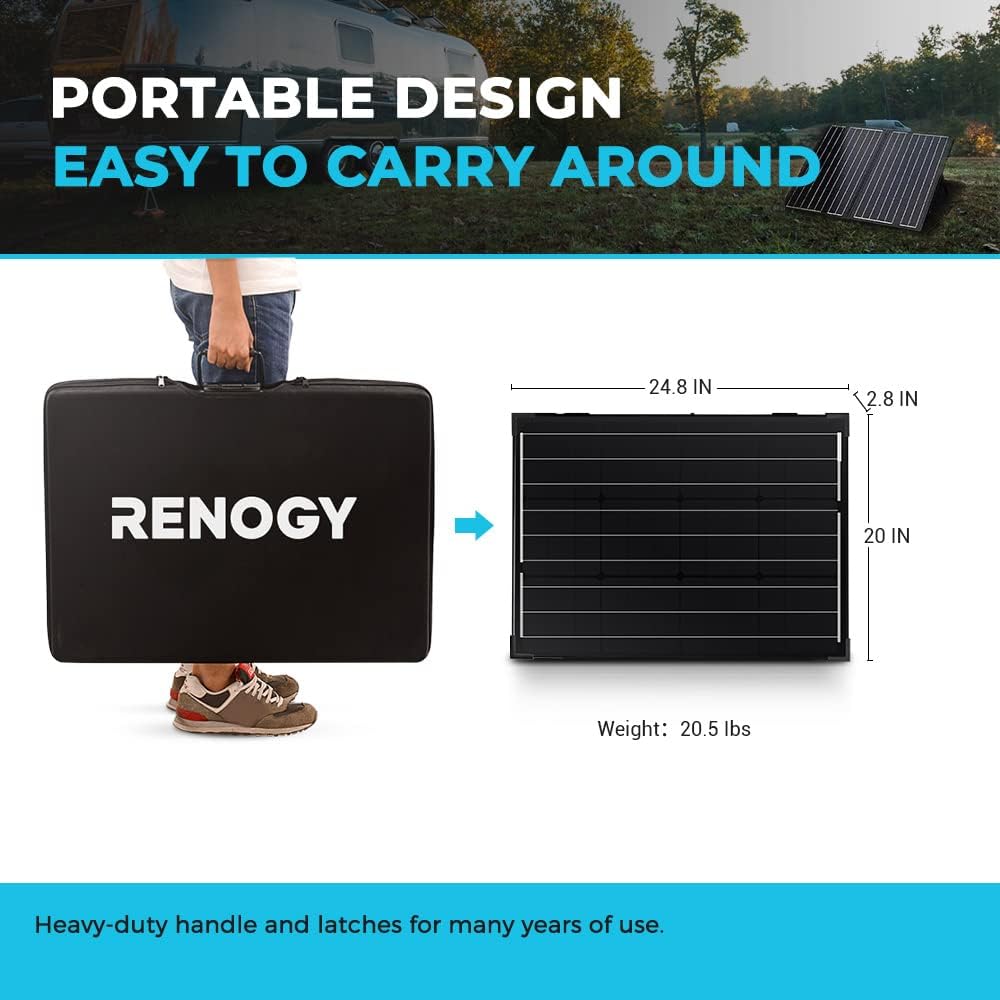
The kit is designed to be portable while offering durable protection for regular outdoor use. Its canvas case, heavy-duty handle, and secure latches make it easier to carry and protect during transport and rough handling.
Foldable suitcase form factor
This model folds into a compact suitcase that you can carry like luggage, which makes it ideal for campers, tailgaters, and van lifers. You’ll appreciate how small it packs down compared to rigid panel setups, and the built-in adjustable kickstand lets you set the panel at optimal angles.
Materials and durability
Renogy uses grade A+ monocrystalline solar cells and a premium canvas protective case. You can expect sturdy hinges, reinforced corners, and a tough exterior that withstands frequent outdoor use; the heavy-duty handle and latches are designed for longevity and frequent opening and closing.
Performance and efficiency
Under ideal conditions the 100W panel will produce up to its rated output, and the included PWM charge controller will manage battery charging. While PWM controllers are reliable and simple, they’re not as efficient as MPPT controllers in certain conditions, so it’s useful to understand what to expect.
Real-world power output
In bright, direct sunlight you can expect close to the panel’s rated power — roughly 100W peak. That typically translates to around 5–6 amps of charging current into a 12V battery in sunny conditions, though the exact current depends on sunlight intensity, panel orientation, and temperature. Expect lower results in partially cloudy conditions or when the panel isn’t perfectly aligned with the sun.
PWM charge controller behavior
The included 20A waterproof PWM controller handles charging using pulse-width modulation technology. The controller protects the battery and simplifies installation, but it won’t extract as much energy from the panel as an MPPT controller would, especially in cooler climates, early/late daylight hours, or when panel voltage is significantly higher than battery voltage.
Charge controller features and protections
The 20A waterproof charge controller is a key part of the safety and usability of this kit. It offers multiple protections and compatibility with a variety of battery types, which helps you keep your battery healthy.
Safety protections you can expect
Typical protections include overcharge protection, reverse polarity protection, short-circuit protection, overcurrent protection, and possibly over-discharge prevention. These safeguards help prevent the common failure modes that can damage batteries and wiring, so you can feel more secure leaving your setup connected while you’re away.
Battery compatibility
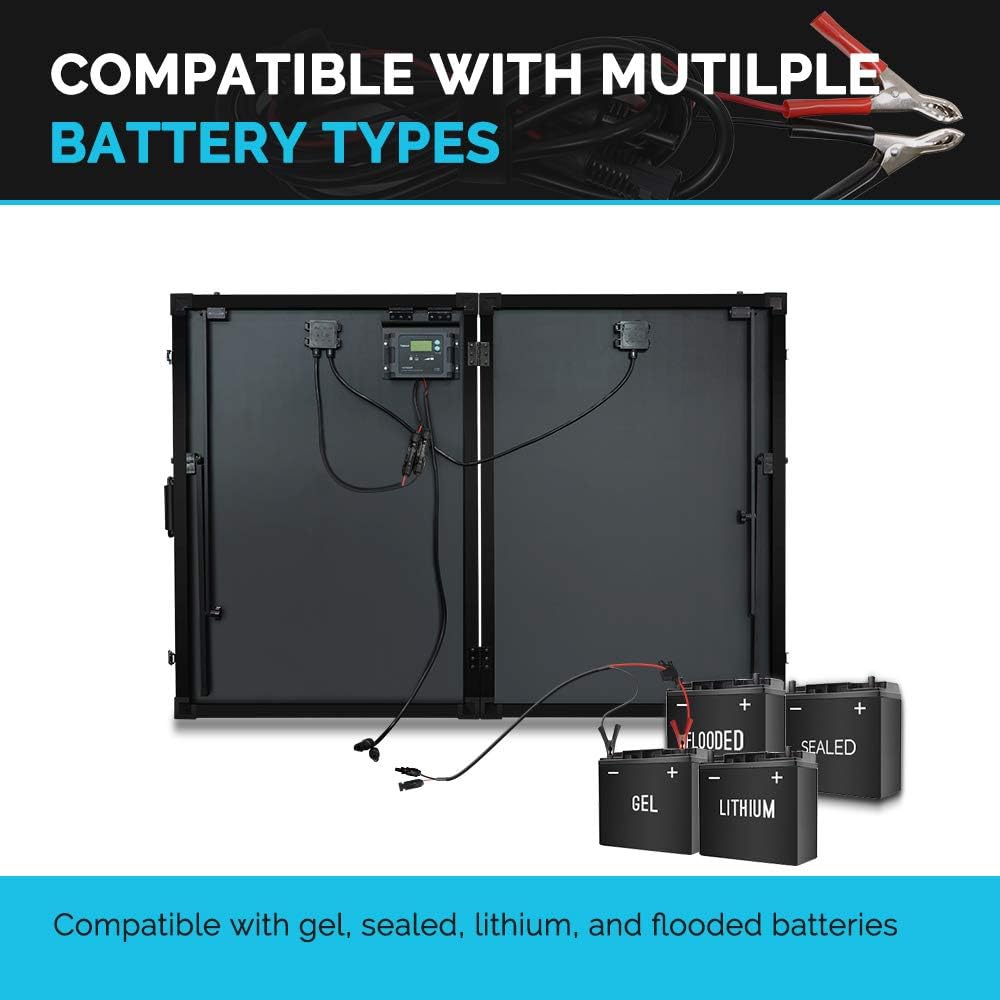
The controller is compatible with multiple kinds of 12V batteries, such as sealed (AGM), gel, and flooded lead-acid batteries. Some Renogy controllers also support lithium battery settings — you should check the manual and controller settings to confirm lithium compatibility and required settings before connecting a lithium battery.
Setup and first-time use
You’ll find this kit to be largely plug-and-play, but a few best-practice steps will make your setup safer and more effective. Follow simple ordering and connection steps to prevent damage and get maximum output.
Quick setup steps
- Unfold the solar suitcase and position it using the adjustable kickstand.
- Connect the panel leads to the controller (if not pre-wired).
- Attach the controller to the battery using the alligator clips or recommended connectors.
- Verify controller status LEDs and battery voltage.
- Adjust panel angle for maximum sun exposure.
Be sure to connect the battery to the controller before exposing the panel to sunlight, following the instructions in the manual to avoid voltage spikes and false readings.
Tips for optimizing the angle and placement
Set the panel so it faces the sun directly and at an angle close to your latitude for best year-round performance, and adjust daily for seasonal or time-of-day changes. Keep the panel free of dust, leaves, and snow, and avoid partial shading of cells, as shading one cell can significantly reduce overall output.
Practical charging examples and estimates
Numbers help set realistic expectations for charging times and energy you can harvest with the kit. Below are example scenarios that show how the panel performs for common battery sizes.
How long will it take to charge common 12V batteries?
If your panel produces near its 100W peak, that’s roughly 100 watt-hours per hour of peak sun. Here’s an approximate guide for ideal conditions, assuming about 5–6 amps of charging current:
- 12V, 20Ah battery (240 Wh): from 50% to 100% ~ about 2–3 hours of full sun.
- 12V, 50Ah battery (600 Wh): from 50% to 100% ~ about 6–8 hours of full sun.
- 12V, 100Ah battery (1200 Wh): from 50% to 100% ~ about 12–15 hours of full sun.
These are rough estimates — real-world times will vary with sunlight intensity, panel angle, temperature, and whether the controller reduces charging as the battery approaches full. PWM losses and system inefficiencies will extend the actual charging time.
Use cases and who should buy it
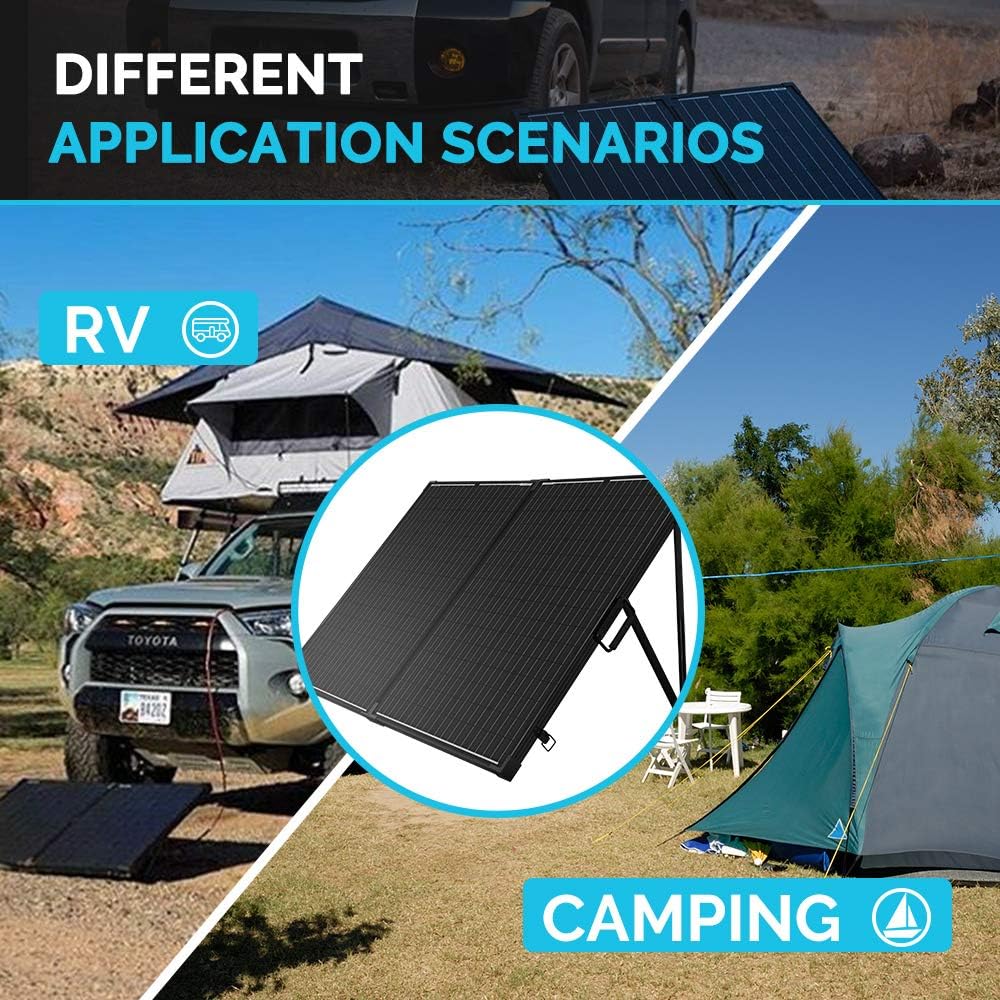
This kit is useful for a wide range of on-the-go power needs, from weekend camping to emergency backup and van life. It’s aimed at people who need a portable, durable, and easy-to-use solar solution without the complication of a permanent rooftop install.
Ideal situations for the solar suitcase
You’ll find this particularly handy for:
- Camping and RV trips where you want to top up house batteries.
- Tailgating, outdoor events, and off-grid day use.
- Keeping a portable power station charged upstream or as a supplemental charging source.
- Emergency backup for maintaining 12V systems during outages.
Situations where you might prefer a different solution
If you plan to charge large battery banks quickly or want maximum efficiency in varying sunlight, an MPPT controller or higher-capacity panel array may be more appropriate. Also, if you require rigid rooftop mounting for a permanent system, a suitcase-style foldable panel might not be the best fit.
Compatibility with power stations
You can use this kit with many power stations, but there are a few things you should double-check before connecting. Power stations often have input requirements that differ from a direct battery connection.
How to connect to a portable power station
Some power stations accept direct solar input with their own built-in charge controllers and specific connector types. If your power station accepts a 12V input and has compatible connectors, you can connect the panel directly to the station or use the included controller and clips if the station requires a regulated 12V input. Always confirm the power station’s supported solar voltage and connector type.
When to avoid using the included controller with a power station
If your power station has an internal MPPT controller, it’s often better to connect the panel directly to the station using the recommended cable rather than routing through the included PWM controller. Using two controllers in series can reduce efficiency and potentially confuse battery management systems.
Portability and storage
The suitcase format and protective case make this model one of the more portable options for frequent travel. You’ll appreciate how neatly it packs and how the case protects cells from scratching and impact.
Transportation and weight considerations
While larger than a single rigid panel in folded thickness, the suitcase design balances protection with portability. The heavy-duty handle makes carrying easier; however, consider the overall weight with accessories if you’re shoulder-carrying for long distances.
Storing for longevity
When you’re not using the kit, store it in a cool, dry place folded in its canvas case and avoid prolonged exposure to direct sunlight while stored. Clean the panel surface before storage if it’s dusty or dirty to prevent abrasive wear on the cell surface.
Maintenance and cleaning
A little maintenance goes a long way toward keeping your solar suitcase performing well over time. You won’t need complicated tools — just a gentle approach and regular checks.
Cleaning steps
Use a soft cloth or sponge with water and mild soap to clean the panel surface, rinsing off any residue and drying with a soft towel. Avoid harsh solvents, abrasive pads, or high-pressure washing that can damage cells or seals.
Periodic checks
Inspect connectors, wiring, and the controller periodically for corrosion, fraying, or loose connections. Check the canvas case and latches for wear, and test the controller LEDs and settings to ensure consistent performance.
Troubleshooting common issues
You’ll likely be able to resolve most common problems with simple checks and corrective actions. The following steps cover typical issues users report.
If the panel isn’t charging
First, verify that the panel is receiving direct sunlight and is facing the sun. Next, confirm all connections are secure and the battery is compatible and properly attached to the controller. Check the controller’s LED status and the battery voltage to determine whether the controller is in a protection mode that prevents charging.
If charging rate is lower than expected
Ensure the panel isn’t shaded or dirty, and confirm the angle is optimized for sun exposure. Check that the controller is functioning correctly and that there are no voltage losses in connectors or cables. Remember that PWM controllers are less efficient than MPPT, so lower-than-ideal charging currents are normal in suboptimal conditions.
Safety considerations
The kit is designed with safety features, but you should still follow standard electrical safety practices. Being cautious reduces the risk of accidental damage or injury.
Basic safety rules
Always connect the battery to the controller before exposing the panel to sunlight according to manufacturer instructions, isolate charges with a fuse or breaker as recommended, and avoid connecting panels in ways that exceed the controller’s voltage or current ratings. Wear insulated gloves when connecting alligator clips in wet conditions, and never leave the system unattended if you suspect wiring damage or overheating.
Comparison with alternatives
You’ll want to compare this PWM suitcase kit to other options like MPPT-equipped portable panels, fixed rooftop panels, or higher-wattage foldable kits. Knowing strengths and trade-offs will help you choose what fits your needs.
PWM vs MPPT in portable kits
PWM controllers are simpler, cheaper, and reliable for many camping and small battery setups, but MPPT controllers are more efficient and can extract more power under varied light and temperature conditions. If you need maximum power from limited panel area, an MPPT system will pay off in performance.
Suitcase vs rigid panels
A foldable suitcase trades a bit of thickness for protection, portability, and ease of storage. Rigid panels offer potentially better long-term durability on fixed mounts, while suitcases give you convenience and transportability if you move locations frequently.
Accessories and upgrades to consider
A few accessories can make your setup cleaner, safer, or more powerful depending on how you plan to use it. Consider adding cables or connectors that simplify repeated use.
Recommended accessories
- MC4-to-Anderson or MC4-to-DC adapter cables for common power station inputs.
- Higher-quality, shorter battery cables with proper ring terminals and inline fuses.
- An MPPT charge controller upgrade if you plan to expand the system or squeeze more power in marginal light.
- A portable power station or deep-cycle battery sized to your expected loads and runtime needs.
When to upgrade to MPPT
If you plan to add more panels, charge large battery banks, or frequently operate in less-than-ideal sun conditions, upgrading to an MPPT controller will improve energy harvest and reduce charge time. MPPT is especially valuable in winter, cloudy weather, or when panel voltage is well above battery voltage.
Detailed specifications table
Below is a breakdown of the main specifications and what they mean for you in practical terms.
| Specification | Details | How it affects you |
|---|---|---|
| Panel output | 100W peak | Provides roughly 100 watt-hours/hour under peak sun; expect ~5–6A charging current into 12V battery in ideal conditions |
| Cell type | Grade A+ monocrystalline | Higher efficiency and better performance in limited space compared to polycrystalline |
| Charge controller | 20A waterproof PWM | Reliable, multiple protections; simpler and less expensive than MPPT but less efficient in some situations |
| Compatibility | Multiple 12V battery types | Works with sealed (AGM), gel, flooded; check controller for lithium settings |
| Form factor | Foldable suitcase with kickstand | Easy to transport and set up; adjustable tilt for sun alignment |
| Accessories included | Alligator clips, cables | Ready to connect to batteries without extra parts for basic setups |
| Case & build | Rugged canvas case, heavy-duty handle, latches | Good protection and ease of transport |
| Warranty | 2-year material and workmanship | Covers defects; register product and keep receipt for claims |
Pros and cons
You’ll find this kit balances usability and durability nicely, but it doesn’t solve every solar need. Below is a concise summary to help you decide.
Pros
- Plug-and-play with included controller and clips.
- Highly portable and protected in a canvas suitcase.
- Grade A+ monocrystalline cells for good efficiency in limited area.
- Waterproof 20A controller with multiple protections.
- Adjustable kickstand simplifies angling for sun.
Cons
- PWM controller is less efficient than MPPT in many situations.
- Peak output depends heavily on ideal sun and orientation; real-world output varies.
- Foldable format can be bulkier than single-sheet lightweight panels for backpacking.
- If you need fast charging of large battery banks, a single 100W panel might be slow.
Warranty and support
Renogy backs this kit with a 2-year material and workmanship warranty, which gives you a safety net in case the product has manufacturing defects. You should register the product and retain proof of purchase to streamline warranty claims and support.
How to make the most of warranty support
Keep your receipts and serial numbers in a safe place, and check Renogy’s support resources for troubleshooting guides and firmware or documentation updates. If you run into a problem, reach out to the manufacturer with a description, photos, and purchase information for faster service.
Buying tips and final advice
When you’re ready to buy, think about how you’ll use the system, what additional adapters or cables you might need, and whether an MPPT upgrade is worth it for your usage patterns. Matching components and expectations will make you happier with the result.
Questions to ask before buying
- Will you need to charge large batteries quickly, or is slow topping-up sufficient?
- Do you already have a power station or separate charge controller that you’ll integrate with the panel?
- Will you often operate in less-than-ideal sun where MPPT would help significantly?
- Which connectors does your power station accept, and do you need adapter cables?
Final summary recommendations
If you want a portable, protected, and straightforward solar kit for camping, small battery maintenance, or emergency backup, this Renogy foldable 100W suitcase with its 20A waterproof PWM controller is a strong choice. It’s user-friendly out of the box, durable for travel, and suited to a wide range of 12V battery types. If you need maximum energy extraction in varied conditions or plan to scale the system significantly, consider pairing it with an MPPT controller or choosing a system that includes MPPT from the start.
If you’d like, I can walk you through a wiring diagram for your specific battery or power station model, calculate expected charge times for your battery size with more precise sun-hour assumptions, or suggest compatible adapter cables and MPPT upgrades. Which would help you next?
Disclosure: As an Amazon Associate, I earn from qualifying purchases.