
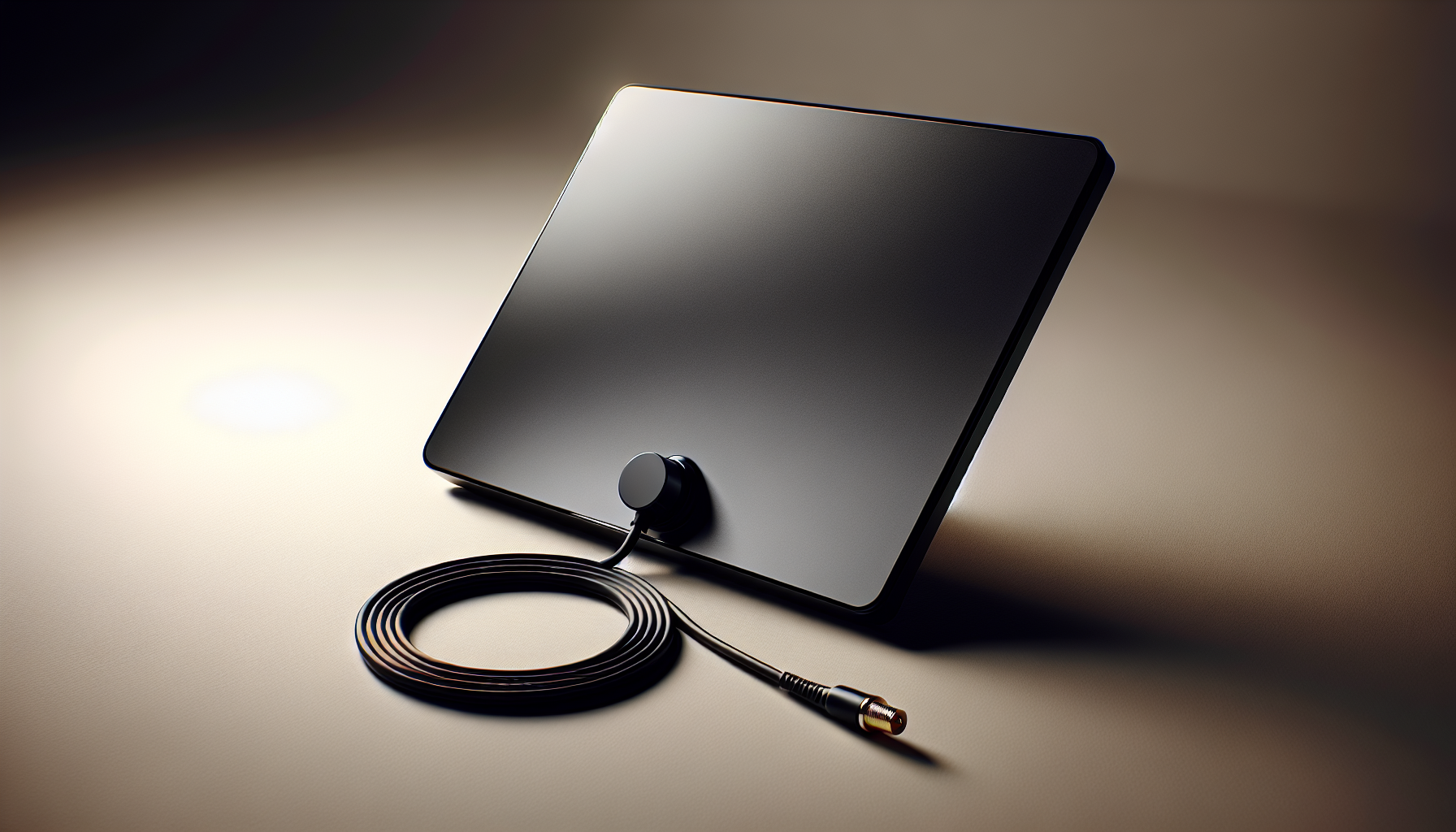
Can this antenna really save you money and give you stable, high-definition local channels whether you mount it inside or outside?

Product Overview
You’re looking at the 2025 TV Antenna for Local Channels Outdoor 999+ Miles Long Range Indoor/Outdoor tv Antenna for Smart 16.5ft Cable HD Antenna Supports 4K 8K1080p, a marketed long-range TV antenna designed for both indoor and outdoor use. The seller emphasizes upgraded chips and technologies to improve channel reception and stability, and the package includes the antenna and an instruction manual.
2025 TV Antenna for Local Channels Outdoor 999+ Miles Long Range Indoor/Outdoor tv Antenna for Smart 16.5ft Cable HD Antenna Supports 4K 8K1080p
$15.38 In Stock
What’s Included
You’ll receive the antenna and a printed instruction manual in the box, and the unit ships with a 16.5 ft (5 m) coaxial cable attached so you can connect it to your TV right away. There aren’t additional accessories like a mast, amplifier, or grounding kit included, so you should plan for mounting hardware and any signal boosters you might need separately.
Key Specifications
This section breaks down the main specs so you can quickly see the essentials and compare them to your needs. The table below summarizes the manufacturer’s claims and the practical notes you should consider when deciding whether this antenna fits your situation.
| Feature | Manufacturer Claim | What it means for you |
|---|---|---|
| Range | 999+ miles / 1k+ mile long range | Marketing often overstates reachable distance. Realistic reception depends on tower height, transmitter power, terrain, and line-of-sight; expect useful reception typically under 60–100 miles in ideal conditions. |
| Cable Length | 16.5 ft coaxial cable included | Enough for simple indoor placement; may be limiting if you want to mount on a roof or a distant attic without buying more cable. |
| Use | Indoor/Outdoor | You can mount it inside near a window or outside on a roof. Outdoor placement usually offers significantly better results. |
| Resolution Support | Supports 4K/8K/1080p | Antennas don’t “push” resolution — the antenna receives broadcast signals; if broadcasters transmit HD content and your TV supports it, you’ll get those resolutions. |
| Modes | Two modes: long-range / short-range | Mode switching should help you reduce interference near cell towers or increase gain when far away; actual improvement varies by environment. |
| Installation | “Easy to install” with manual | Basic connections are simple, but optimal placement and grounding, especially outdoors, require additional steps you might choose to follow. |
| After-sale service | 24-hour customer reply | The seller claims 24-hour support for questions; verify actual response times and return policy before purchasing. |
Design and Build Quality
You’ll notice a compact, low-profile design aimed at easy indoor mounting and simpler outdoor installation without a bulky mast. The build quality appears oriented toward consumer convenience rather than rugged professional use, so you should check seals and connectors carefully if you plan to leave it exposed to weather year-round.
Installation and Setup
Connecting the antenna to your TV is straightforward: plug the coax into the TV antenna input, run the TV’s channel scan, and then fine-tune placement and mode if needed. You’ll want to read the included manual for the specific steps, but plan extra time for orientation testing and possibly procuring mounting hardware or longer coax if you need to place the antenna farther from the TV.
Antenna Modes: Long Range vs Short Range
The antenna provides two reception modes that let you tailor gain to your distance from broadcast towers and nearby interference sources. You should start with long-range mode if you’re farther out from towers and switch to short-range when you’re close to a tower or if you experience signal overload or interference.
Real-world Range and Reception
Marketing claims of 999+ miles or “1k+ mile long range” are unrealistic in most real-world scenarios; over-the-air (OTA) TV reception is governed by physics, terrain, and broadcast power. You should expect to reliably pick up local stations anywhere from a few miles up to roughly 60–100 miles under exceptional line-of-sight conditions; beyond that, atmospheric phenomena such as tropospheric ducting can temporarily increase range but are not dependable.
What Affects Your Reception
Several factors will influence what channels you actually receive: distance to towers, terrain (hills, trees, buildings), tower power and antenna height, the band used (VHF vs UHF), and whether you mount the antenna indoors or outdoors. You should also consider things like cable quality, splitters, and connectors — each connection point can reduce signal strength.
Picture and Sound Quality
If you’re worried about whether this antenna supports 4K or 8K, you should know antennas are format-agnostic: they simply deliver broadcast signals to your TV’s tuner, and the TV renders whatever resolution the broadcaster sends. You will get the best picture quality when broadcasters transmit in HD and your tuner and TV support those formats; poor signal strength, interference, or multipath issues will cause pixelation, audio dropouts, or missing channels irrespective of the antenna’s marketed resolution support.
Installation Scenarios: Indoor vs Outdoor
If you place the antenna indoors, you’ll appreciate the convenience and easier access for adjustments, but thicker walls, windows with metal coatings, and surrounding structures will usually reduce signal strength. When you mount the antenna outdoors (on a roof, mast, or in the attic), you’ll generally see improved reception — higher, clearer line-of-sight to towers often makes a far bigger difference than the antenna’s model or label.
Placement Tips to Maximize Signal
You should place the antenna as high as possible with a clear view toward broadcast towers, avoiding metal obstructions and large trees when possible. Window-facing placement for indoor setups, attic mounting above the roofline, or a rooftop mast with a directional orientation are effective strategies depending on your home and local conditions.
Signal Testing and Tuning Tips
You should perform multiple scans and small adjustments to orientation and mode: each re-scan can pick up channels you didn’t see before as you change the antenna’s direction or height. Use a compass, a tower locator app or website, and incremental testing: move the antenna a few inches or a few feet, swap between long and short modes, and re-scan until you get the best channel lineup.
Troubleshooting Common Reception Problems
If you get pixelation or intermittent channels, try switching modes, re-orienting the antenna, raising the antenna height, or using higher-quality coaxial cable to reduce loss. If multiple TVs are connected or splitters are in use, minimize splitting or use a distribution amplifier; make sure connectors are tight and weatherproofed, and ground the outdoor installation to reduce interference and lightning risk.
Cable and Connector Advice
The included 16.5 ft coax is convenient, but if you need more length, opt for high-quality RG6 cable and keep runs as short as practical to reduce signal loss. You should avoid cheap adapters and corroded connectors; use compression connectors if you can, and seal outdoor connections with waterproof tape or proper weatherproofing boots.
Compatibility and TV Support
This antenna will work with any TV that has an integrated OTA tuner (ATSC in the U.S., DVB-T/T2 in many other countries), and you can use it with a digital converter box if your TV lacks a tuner. If you have a modern “smart” TV, the antenna will feed the TV’s internal tuner, allowing you to watch local over-the-air channels alongside your streaming apps.
Amplifiers and Boosters: When You Might Need Them
You should only consider an amplifier (signal booster) if you have weak signals but minimal interference; amplifiers increase gain but also amplify noise and overload near strong signals. If you live close to a broadcast tower or cell phone tower, a preamplifier can make reception worse by causing overload; in those cases a filter or short-range mode is often better.
Weatherproofing and Outdoor Safety
If you mount the antenna outdoors, you should properly seal connections, use UV-resistant cable, and ensure mounts are secure to handle wind and weather. Ground the antenna and mast according to local electrical codes to protect against lightning and static buildup — grounding is not optional if the antenna is on your roof.
After-sale Service and Support
The product description states the seller offers 24-hour customer service to answer product or installation questions; you should test responsiveness if fast support is important to you. Keep your receipt, order number, and take photos of your setup so customer service can better assist you if something goes wrong.
Pros and Cons
You’ll benefit from a compact, dual-mode antenna with a convenient 16.5 ft cable that can work indoors or outdoors and aims to be easy to install. On the flip side, marketing claims about 999+ miles are unrealistic in most cases, no amplifier or mounting hardware is included, and outdoor durability and long-term weatherproofing aren’t guaranteed without your additional hardware.
Pros:
- You can use it indoors or outdoors depending on needs.
- Two selectable modes (long vs short) give flexibility in many environments.
- Includes 16.5 ft coax for immediate setup and use.
- Simple plug-and-play connection for TVs with an antenna input.
Cons:
- Marketing range claims are exaggerated compared to real-world conditions.
- No mast, amplifier, or grounding hardware included for outdoor installations.
- Long-term weather resistance and ruggedness are unclear from the listing.
- You may need extra tools and materials for best performance (longer cable, mount, connectors).
How It Compares to Other Antennas
Compared to compact indoor antennas, this unit’s dual-mode design and outdoor capability give it an edge in flexibility. Against larger rooftop antennas and professionally installed systems, it won’t match the sustained performance of a heavy-duty external antenna on a properly grounded mast, but it’s typically more affordable and easier to set up for average users.
Who Should Buy This
You should consider this antenna if you want a low-cost, flexible indoor/outdoor antenna and you’re willing to test placement and mode to optimize reception. If you live in a rural area and expect miracles from a “1k+ mile” claim or you need a permanent, heavy-duty rooftop installation with warranty-backed weatherproofing, you might want to invest in a higher-grade rooftop antenna and professional installation instead.
Who Should Not Buy This
You should not rely on this as a single solution if you require guaranteed long-distance reception from extremely distant transmitters, need included mounts and hardware for a rooftop installation, or want a premium, weatherproof solution that’s pre-certified for extreme conditions. Also, if you’re uncomfortable doing basic mounting, grounding, and signal testing, consider a professional installer or a simpler indoor-only model that fits your comfort level.
Step-by-Step Quick Setup Checklist
You should follow these steps to get started and improve your odds of strong, stable reception:
- Unbox and inspect the antenna for any shipping damage. Make sure connectors are clean and intact.
- Connect the 16.5 ft coax to your TV’s antenna input and secure the connector.
- Place the antenna near a window for an initial indoor test, pointing it toward the broadcast towers.
- Run your TV’s channel scan and note the channels found. Repeat scans after each adjustment.
- Switch between long-range and short-range modes to see which gives a better lineup and fewer artifacts.
- If channels improve, try moving the antenna higher or outdoors and re-scan each time.
- If needed, buy better RG6 cable, a mast mount, or a preamplifier only after testing in several positions.
- Weatherproof any outdoor connections and ground the antenna if installed on a mast.
Final Verdict
You’ll get a flexible, entry-level antenna that’s easy to set up and likely to work well for many suburban and urban users who place it intelligently and manage expectations around range. The 999+/1k+ mile marketing should be treated skeptically — you’ll get the most reliable results by focusing on height, orientation, and local tower distance rather than advertised maximums.
Frequently Asked Questions (FAQ)
Q: Will this antenna actually pick up channels 999 miles away?
You should not expect consistent reception at distances anywhere near 999 miles in normal conditions; that number is a marketing exaggeration. Realistic reception is governed by tower power, antenna height, line-of-sight, and atmospheric conditions, so plan based on maps and tower distances rather than the claimed mileage.
Q: Can I use this with a 4K or 8K TV?
You can use this antenna with any TV that has a digital tuner — the antenna itself does not limit resolution. If broadcasters transmit 4K/8K or HD content and your TV supports those formats, you’ll receive them provided the signal strength and quality are sufficient.
Q: Do I need an amplifier?
You should only add an amplifier if you have weak signals and little interference; amplifiers boost both signal and noise and can make reception worse near strong transmitters. Test first without an amplifier, then consider a preamplifier or distribution amplifier if you have long cable runs or multiple TVs.
Q: Is the 16.5 ft cable long enough?
The included 16.5 ft cable will work for straightforward indoor setups but may be too short for rooftop or attic installations. You can extend with high-quality RG6 cable, but remember that longer runs increase signal loss, so try to minimize length where possible.
Q: Can I mount it on my roof?
You can mount it on a roof, but you’ll need to supply a suitable mast, clamps, grounding equipment, and weatherproofing for a safe and durable installation. If you aren’t comfortable installing on a roof, consider attic mounting or hiring a professional.
Q: How do I find broadcast towers near me?
You should use online tools and tower locators (such as FCC’s DTV Reception Maps in the U.S. or similar services elsewhere) to find tower locations and bearing angles. Those resources help you point the antenna and choose indoor vs. outdoor placement based on expected distance and obstacles.
Q: What if I have no channels after installation?
You should try reorienting the antenna, switch modes, raise height, check connectors, and run multiple channel scans. If you still have no channels, test with a different TV or a digital converter box to rule out a TV tuner issue, and consult the seller if you suspect a defective unit.
Q: Is grounding necessary?
You should ground any outdoor antenna and mast to reduce lightning risks and static buildup — it’s a safety and code requirement in many areas. Proper grounding also helps reduce some types of interference.
Q: Does it work outside the U.S.?
Yes, the antenna receives over-the-air broadcast signals, but compatibility depends on the broadcast standard used in your country (ATSC, DVB-T/T2, ISDB-T, etc.). Verify that your TV’s tuner supports local digital broadcast standards, or use a compatible converter box if necessary.
Additional Practical Notes
You should treat this antenna as an affordable, flexible option but not a guarantee of extreme long-range performance. Allow time for testing multiple configurations — simple adjustments often yield more benefit than buying more expensive gear. Keep expectations realistic about how much influence the antenna alone can have: mounting height, line-of-sight, and local transmission power are often the limiting factors, not the antenna label.
If you’d like, tell me your general location (town or distance to your nearest broadcast towers) and whether you plan to mount indoors or outdoors, and I can help you estimate likely performance and offer placement suggestions tailored to your situation.
Disclosure: As an Amazon Associate, I earn from qualifying purchases.