
Looking for a reliable wheeled charger that can also crank your engine when you need it most?

Quick verdict
You get a two-in-one unit that charges and starts batteries with straightforward manual controls and a heavy-duty build. If you value robust construction, flexible charging and starting power, and a timer you can control manually, this Schumacher Electric Wheeled Manual 10A Car Battery Charger and 200A Engine Starter, 2-in-1 Solution, 40A Boost, for 6V/12V Power Sport, Automotive, and Marine Batteries, SC1446 could be a very practical addition to your garage or shop.
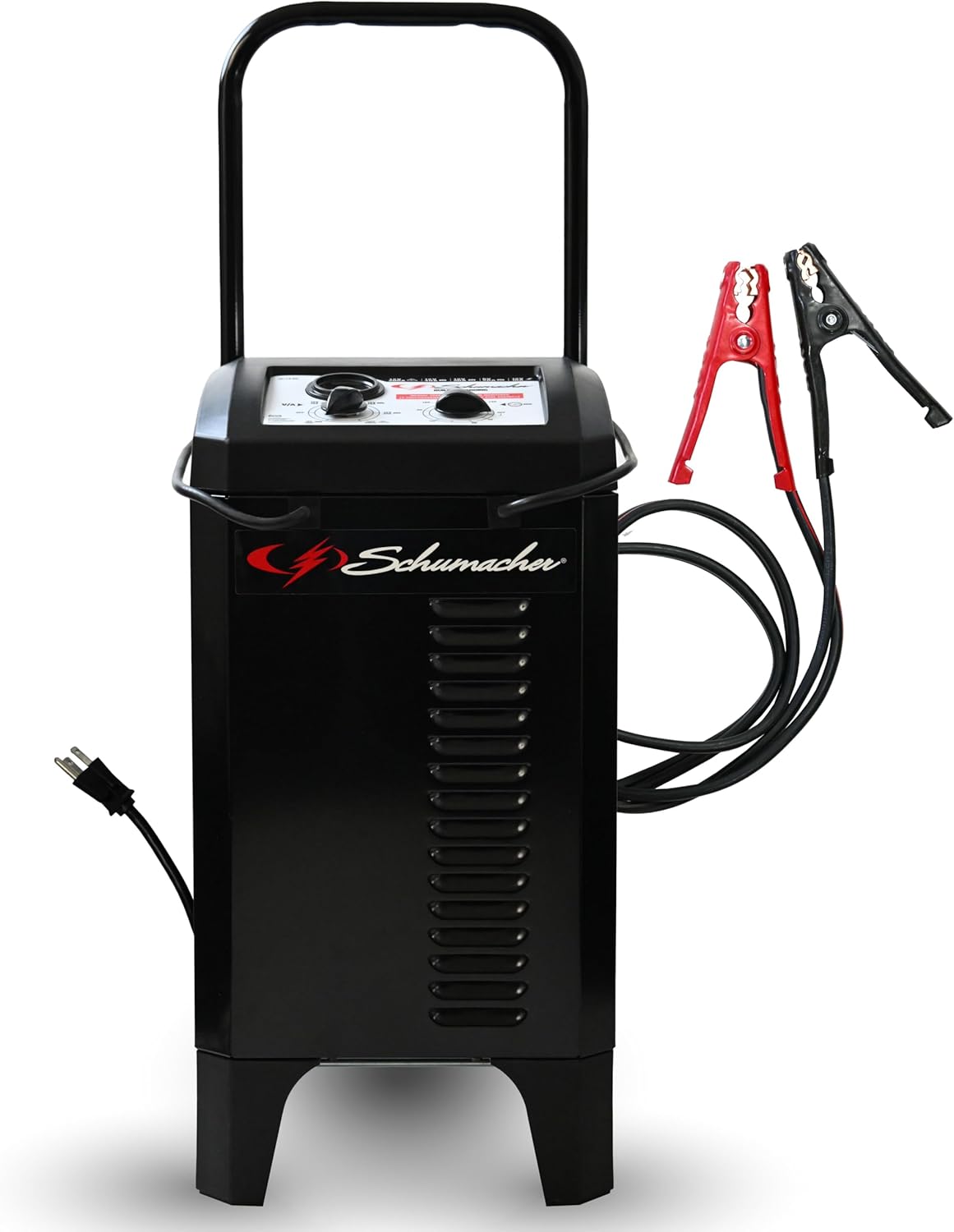
Schumacher Electric Wheeled Manual 10A Car Battery Charger and 200A Engine Starter, 2-in-1 Solution, 40A Boost, for 6V/12V Power Sport, Automotive, and Marine Batteries, SC1446
Product snapshot
You’re getting a charger/starter that combines multiple charging rates and a high-amperage engine start function in one wheeled package. It’s built to handle a variety of battery types and vehicle applications, from motorcycles and ATVs to cars, trucks, RVs, and boats.
What’s included
You’ll find the SC1446 unit itself and a user manual in the box. The package is simple, with everything necessary to get started as long as you have a power outlet nearby.
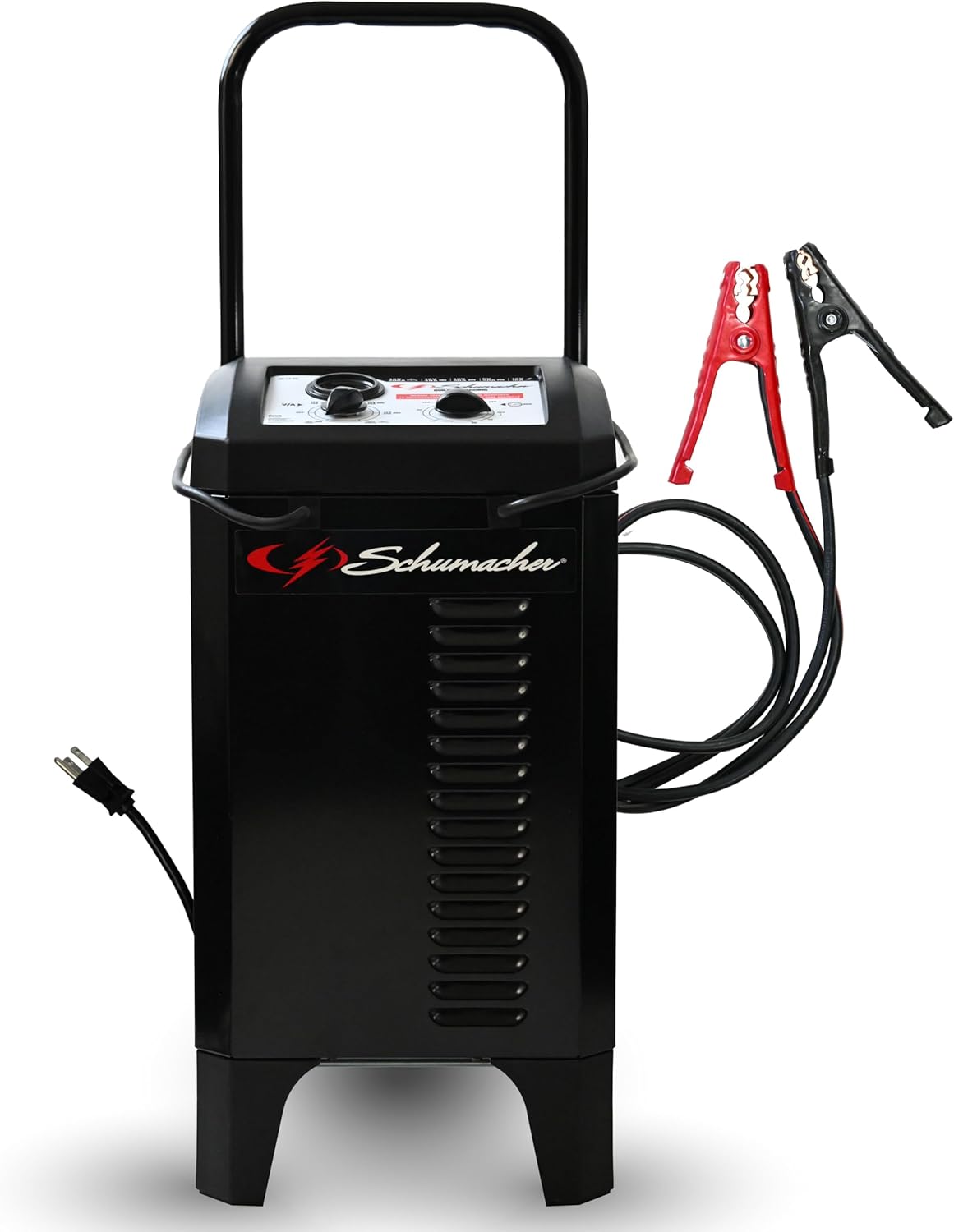
Key features overview
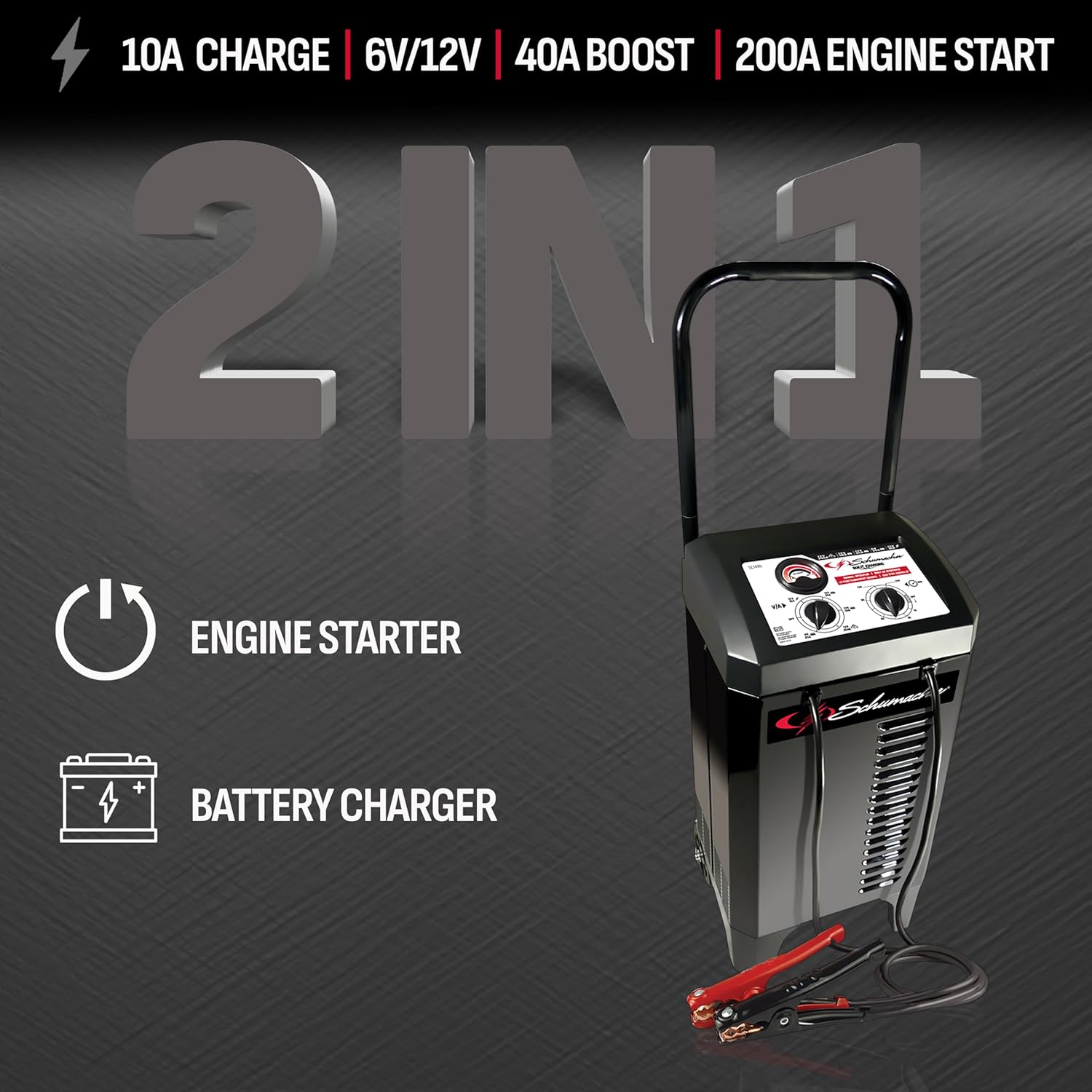
You’ll appreciate that this unit does more than a basic charger, delivering 200 amps for engine starts and multiple boost and charge modes for 6V and 12V batteries. The manual timer lets you control charging duration up to 135 minutes, and the analog ammeter gives you a visual reading of current flow during charging.
Feature highlights
You get a 200-amp engine start mode, a 40-amp 12V boost mode, a 20-amp 6V/12V boost mode, and a 10-amp 12V charge mode. The steel housing, strong clamps, retractable handle, and solid wheels make it a durable, mobile tool for your workspace.
Technical specifications table
You’ll find a compact breakdown of the unit’s main specifications below so you can scan the core numbers quickly.
| Specification | Detail |
|---|---|
| Model | SC1446 |
| Functions | 2-in-1: Charger + Engine Starter |
| Engine Start | 200A (12V) |
| Boost Charge | 40A (12V); 20A (6V/12V) |
| Charge Rate | 10A (12V manual) |
| Timer | 135-minute manual timer |
| Battery Types | Standard, AGM, Gel, Deep-cycle |
| Voltage Compatibility | 6V and 12V |
| Power Source | AC (6-foot power cord) |
| Controls | Manual switch and timer |
| Meter | Analog ammeter |
| Construction | Steel case, heavy-duty clamps |
| Mobility | Retractable handle, solids wheels |
| Package | SC1446 unit, user manual |
Charging performance
You’ll notice the 10A 12V charging mode is suited for a steady, controlled charge rather than a rapid top-up. If you need to keep battery health in mind, that lower charge rate can be gentler on batteries compared with high-current automatic chargers.
Boost charge behavior
When you need faster recovery for a deeply discharged battery, the 40A (12V) and 20A (6V/12V) boost modes deliver a stronger current to raise voltage quickly. You should monitor the battery during boost charging, using the analog ammeter and the manual timer, to avoid overcharging or overheating the battery.
Engine starting capability
You can depend on the 200-amp engine start mode for many starting jobs across typical passenger cars and light trucks. The high starting current helps slam the cranking voltage down and provide the necessary cold-cranking assistance for many engines.
Practical use of the 200A start
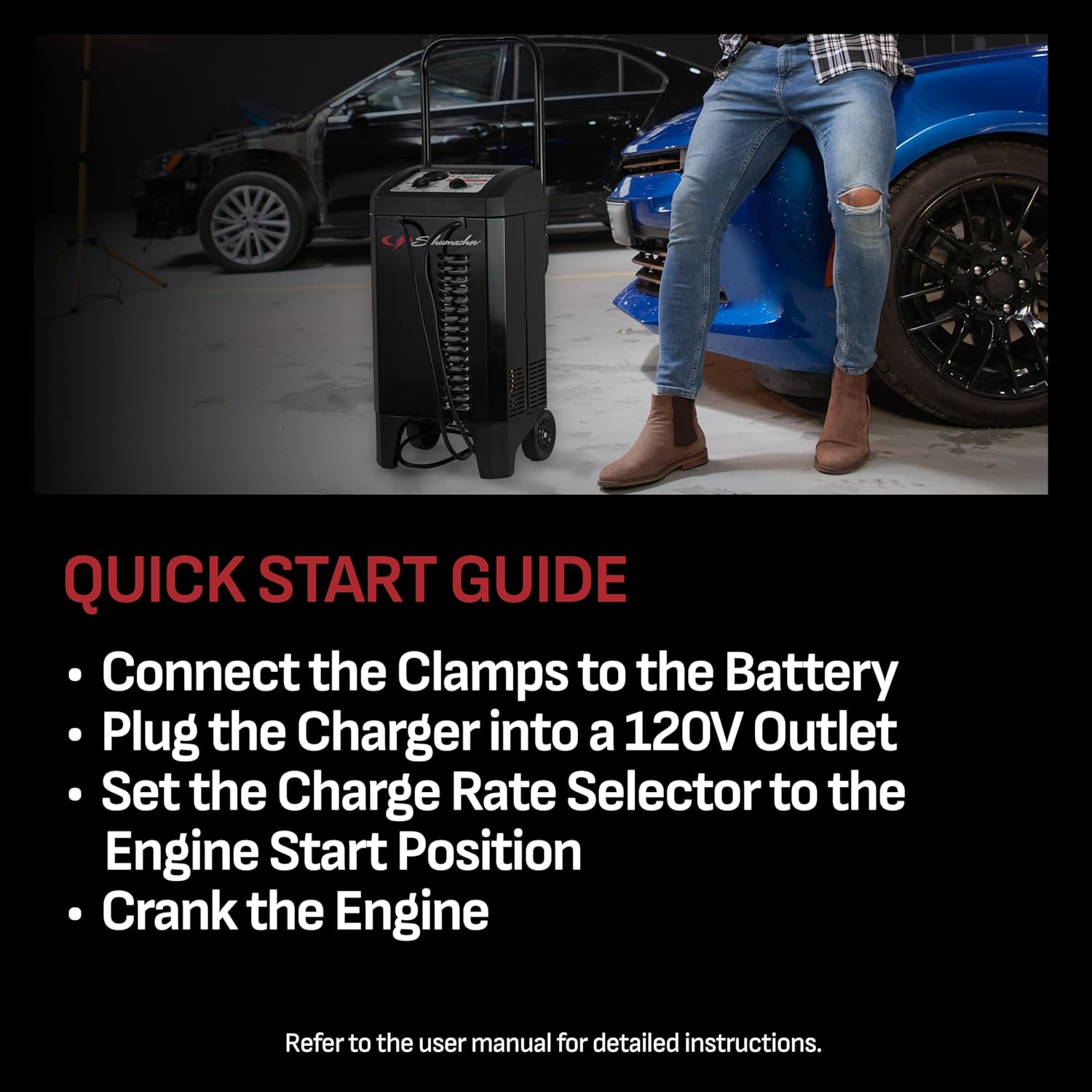
You should clamp correctly to the battery and ensure the unit is plugged into AC power while using the starting mode, as the charger requires mains power to deliver the start current. In practice, this means the unit acts like a power boost rather than a standalone portable jump starter.
Manual timer control
You’ll have a 135-minute manual timer that gives you complete control over charging session length. This is helpful when you want to limit charge time precisely, avoid long unattended charging sessions, or tailor a charging routine based on battery condition.
Why manual timing matters
With manual control you can respond to visual cues from the analog ammeter and the battery itself, making small adjustments to charge duration instead of relying on a fully automatic algorithm. If you’re comfortable watching the process and making decisions, the timer is an advantage.
Analog ammeter and monitoring
You get a classic analog ammeter that shows charging current in real time, which can be easier to read at a glance than some digital displays. The meter helps you see when the charge current drops, indicating the battery is accepting less current and is closer to full.
Reading the meter effectively
You should use the meter together with the manual timer; watch for a steady decline in current as the battery absorbs charge, and use that trend to set appropriate charge lengths for future sessions. The analog readout is simple and reliable for hands-on users.
Compatibility and battery types
You’ll be able to work with 6V and 12V batteries and multiple chemistries: standard flooded, AGM, gel, and deep-cycle batteries are all supported. The unit supports gas and diesel vehicles, which increases its utility across small engines and larger automotive applications.
Vehicle and battery fit
You can use this on motorcycles, ATVs, cars, trucks, SUVs, RVs, and marine batteries, provided you follow proper clamp and polarity procedures. Remember that it’s mains-powered and not a cordless booster, so you need AC access to operate it.
Build quality and design
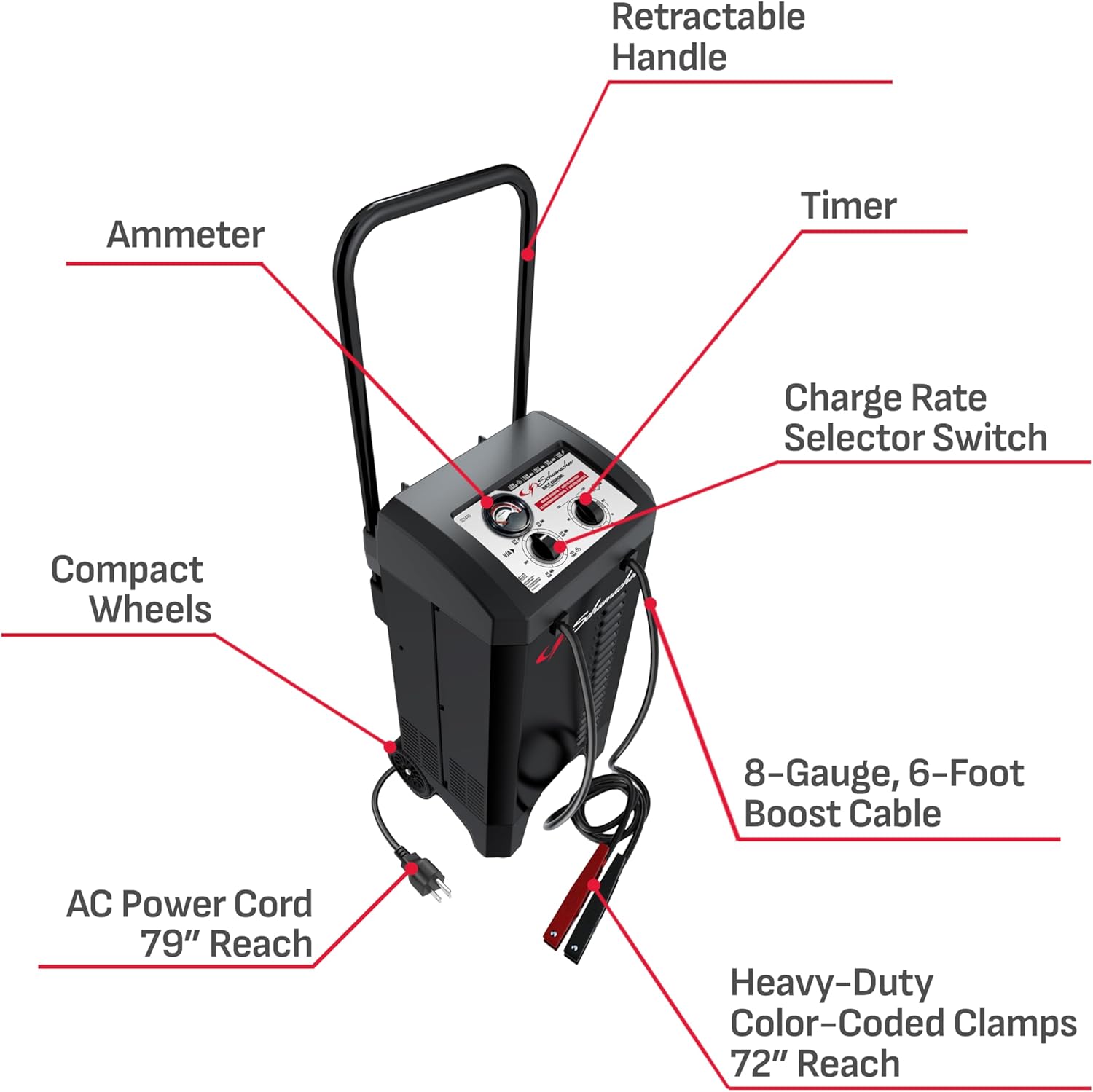
You’ll notice a steel case that gives the SC1446 a rugged feel and long-term durability in a workshop setting. Heavy-duty clamps, solid wheels, and a retractable handle combine to make the unit portable yet tough enough for frequent use.
Mobility and footprint
You can move the charger around the garage easily thanks to the wheels and handle, but the unit is designed to be plugged in while in use so it’s not independent from a power outlet. Its compact footprint lets it live near your workbench or in a corner and be rolled out whenever needed.
Controls and usability
You’ll control the device manually with switches and the timer, so the learning curve is minimal if you’ve used manual chargers before. The front-mounted booster cables are convenient and reduce the amount of cable you have to manage when positioning the unit near a vehicle.
Placement and access
You should place the unit where the power cord reaches and the booster cables are long enough to comfortably reach the battery terminals. The front-mounted cables and analog meter make it easy to set up and monitor without walking away.
Safety features and considerations
You’ll want to follow basic battery safety: correct polarity, clean connections, and eye protection where appropriate. The manual timer and your supervision act as safety measures to prevent long unattended charging.
Thermal and electrical risks
You should monitor batteries for heat and swelling during high-current boost charging, and avoid leaving batteries connected beyond recommended durations. Because the unit is high-current and mains-powered, treat it like workshop equipment and use caution around children or pets.
Real-world use cases
You’ll find the SC1446 useful in a home garage, small repair shop, marina service area, or on a farm where vehicles and machines are varied. It’s particularly handy if you deal with seasonal equipment like motorcycles, ATVs, or marine craft and need the ability to both charge and provide a starting boost.
Scenario examples
If you ride a motorcycle in the summer and store it for winter, you can use the 6V/12V boost modes to refresh batteries before re-commissioning. If you run a small fleet of vehicles or maintain RVs and boats, the high-starting current and multiple boost modes give you a versatile tool to keep everything operational.
Pros and cons
You’ll want to weigh the strengths—manual control, sturdy build, strong starting amps—against limitations such as the need for AC power and the absence of automatic, smart charging algorithms. This helps you decide whether hands-on control and raw power suit your workflow better than a fully automatic, portable jump starter.
Pros (summary)
- 2-in-1 charger and 200A starter gives functional flexibility.
- Multiple boost rates handle deeply discharged batteries quickly.
- Manual 135-minute timer offers precise control.
- Analog ammeter provides direct visual feedback.
- Heavy-duty construction and wheels make it durable and mobile.
Cons (summary)
- AC-powered only, so not usable away from a power outlet.
- Manual controls require user attention and some charging know-how.
- Lack of automatic multi-stage charging means more active monitoring by you.
- Analog meter lacks the granularity of a digital readout.
Maintenance and care
You’ll keep this unit in good condition by storing it in a dry environment, cleaning clamps and cable contacts, and checking cords and wheels before use. Regularly inspect clamps and cabling for wear and replace if you find any cracks or excessive oxidation.
Seasonal and long-term storage
You should store the SC1446 indoors in winter and avoid extreme temperature swings to preserve internal components and the battery clips. Before extended storage, coil the cords neatly and ensure the unit is dry and free from corrosive chemicals or fuels.
Troubleshooting tips
You’ll often solve common problems yourself by checking basic things first: power to the unit, clamp polarity, clean battery terminals, and secure cable connections. If the ammeter shows no current, verify AC power at the outlet and the integrity of the AC cord.
Common issues and solutions
- If the unit won’t start the engine: confirm the unit is plugged in, clamps are tight, and battery voltage is above a minimum threshold.
- If battery chargers show low current: clean terminals and retighten clamps, or try the boost mode if the battery is deeply discharged.
- If the timer doesn’t run: check for a tripped outlet or damaged AC cord before assuming internal failure.
Safety checklist before every use
You’ll reduce risks by following a short safety checklist: wear eye protection, ensure proper ventilation for charging lead-acid batteries, confirm clamp polarity, and keep sparks away from the battery. Identifying damaged cables, cracked cases, or signs of leaking batteries before connecting is also essential.
Emergency stops and safe handling
If you see smoke, hear a popping sound, or detect a strong odor, you should immediately disconnect the AC power and remove clamps carefully, keeping clear of any flames or leaking acid. Have a class ABC or BC fire extinguisher nearby in your workshop for worst-case scenarios.
How it compares to portable jump starters
You’ll note that unlike compact, battery-powered jump starters, the SC1446 needs AC power to operate and offers continuous charging and multiple boost levels. That tradeoff means you gain sustained charging capability and a high starting amp while losing cordless portability.
Choosing between a mains unit and a portable pack
If you regularly work in a fixed shop environment with AC access and handle a range of battery sizes and chemistries, the SC1446 will serve you well. If you need roadside portability or the ability to jump a car without plugging into the mains, a portable jump pack is a better complement to your toolbox.
Comparison with other Schumacher models and competitors
You’ll find other Schumacher models may offer automatic charging, digital displays, or smaller footprints, but might lack the same starting amps or the robust steel construction. Some competitors provide microprocessor-controlled charging that automatically adapts to battery condition, which is convenient but gives up manual precision.
When manual control is preferable
You should choose the SC1446 if you want to manually manage charging sessions, particularly for specialized batteries or maintenance workflows where you prefer to monitor and adjust charging yourself. You’ll appreciate its simplicity and repair-friendly design in a shop setting.
Who should buy this
You’ll benefit from this unit if you run a home garage, small service shop, marina, or maintain multiple vehicles and power equipment. It’s ideal for people who prefer manual control, need strong starting power, and have consistent AC access.
Who should consider alternatives
You might look elsewhere if you primarily need roadside assistance or if you prefer a “set it and forget it” automatic charger that handles multi-stage charging without user input. Also consider a portable battery pack if you often work far from a power source.
Practical buying tips
You’ll want to check that the seller includes the user manual and a verified warranty, and confirm the unit’s condition if buying used. Make sure the AC cord and booster cables meet your length needs for your workspace layout.
Accessories and add-ons to consider
You should consider battery terminal cleaners, replacement clamps, and a workshop power strip with surge protection for safer operation. A maintenance schedule or logbook can help you track charge cycles and battery health if you maintain many batteries.
Cost-to-value considerations
You’ll likely find the SC1446 offers strong value for users who will use its high starting amps and manual charge control regularly. The value increases if you need both charging and starting capability in one durable, wheeled package that lives in your shop.
Long-term ownership perspective
You should think of this unit as a workshop tool rather than a convenience gadget; proper maintenance will extend its life and make the up-front investment pay off across years of battery work. Replacement parts like clamps and cords are generally inexpensive compared with the cost of an entire new unit.
Frequently asked questions
You’ll often ask about use cases, safety, and limitations when considering this charger/starter. The answers below will help clarify common concerns and set realistic expectations for performance and operation.
Can the SC1446 start diesel engines?
You can use the 200A start on many diesel engines depending on engine size and battery condition, but very large diesel engines may require a higher cold-cranking rating than 200 amps. Always test carefully and ensure the battery has adequate reserve and the unit is plugged in.
Is the unit automatic or smart-charging?
You’ll find this is a manual, timer-controlled unit and not a microprocessor-controlled smart charger. That means you’ll have to monitor charging and set the timer rather than relying on automatic multi-stage charge algorithms.
Can you leave it connected to maintain a battery?
You should avoid leaving batteries connected indefinitely on the timer-controlled SC1446, because it lacks an automatic float/maintenance mode. Use the timer for periodic charging sessions instead, and consider a dedicated float charger for long-term battery maintenance.
Final thoughts
You’ll get a practical, heavy-duty charger and starter in the SC1446 that’s especially useful if you prefer hands-on control in a workshop environment. Its combination of a 200A engine start, multiple boost options, and a manual timer makes it a versatile tool for a range of battery and vehicle needs.
Final recommendation
You should pick the Schumacher Electric Wheeled Manual 10A Car Battery Charger and 200A Engine Starter, 2-in-1 Solution, 40A Boost, for 6V/12V Power Sport, Automotive, and Marine Batteries, SC1446 if you value rugged construction, strong starting capability, and manual control over automatic convenience. If you primarily need roadside independence or automatic maintenance charging, pair it with a portable jump starter or a dedicated float charger to cover those needs.
Disclosure: As an Amazon Associate, I earn from qualifying purchases.