
Have you ever been stuck with a dead battery and wished you had a single tool that could charge, start, maintain, and even recondition it?

Quick Verdict
You get a versatile 4-in-1 device with the Schumacher Electric 6A Car Battery Charger and 50A Engine Starter, 4-in-1 Solution, Maintainer, 10A Boost, for 12V Power Sport, Automotive, and Marine Batteries, SC1361 that covers most household and garage battery needs without taking up a lot of space. If you want something that can maintain daily drivers, revive weak batteries, and provide a reliable engine start boost, this unit is a strong contender.

Schumacher Electric 6A Car Battery Charger and 50A Engine Starter, 4-in-1 Solution, Maintainer, 10A Boost, for 12V Power Sport, Automotive, and Marine Batteries, SC1361
Product Overview
This Schumacher SC1361 combines a 6-amp charger, a 2-amp maintainer, a 10-amp boost charger, and a 50-amp engine starter into a single AC-powered device. You’ll appreciate its compatibility with standard and AGM 12V batteries across motorcycles, ATVs, cars, trucks, SUVs, and many marine applications.
Key Features Summary
The SC1361 packs features you’ll actually use: multi-stage charging to protect battery health, a smart trickle mode for long-term maintenance, a desulfation/reconditioning mode to extend battery life, and reverse polarity protection to prevent accidental damage. It’s designed to be a practical everyday workhorse rather than a minimalist trickle charger.
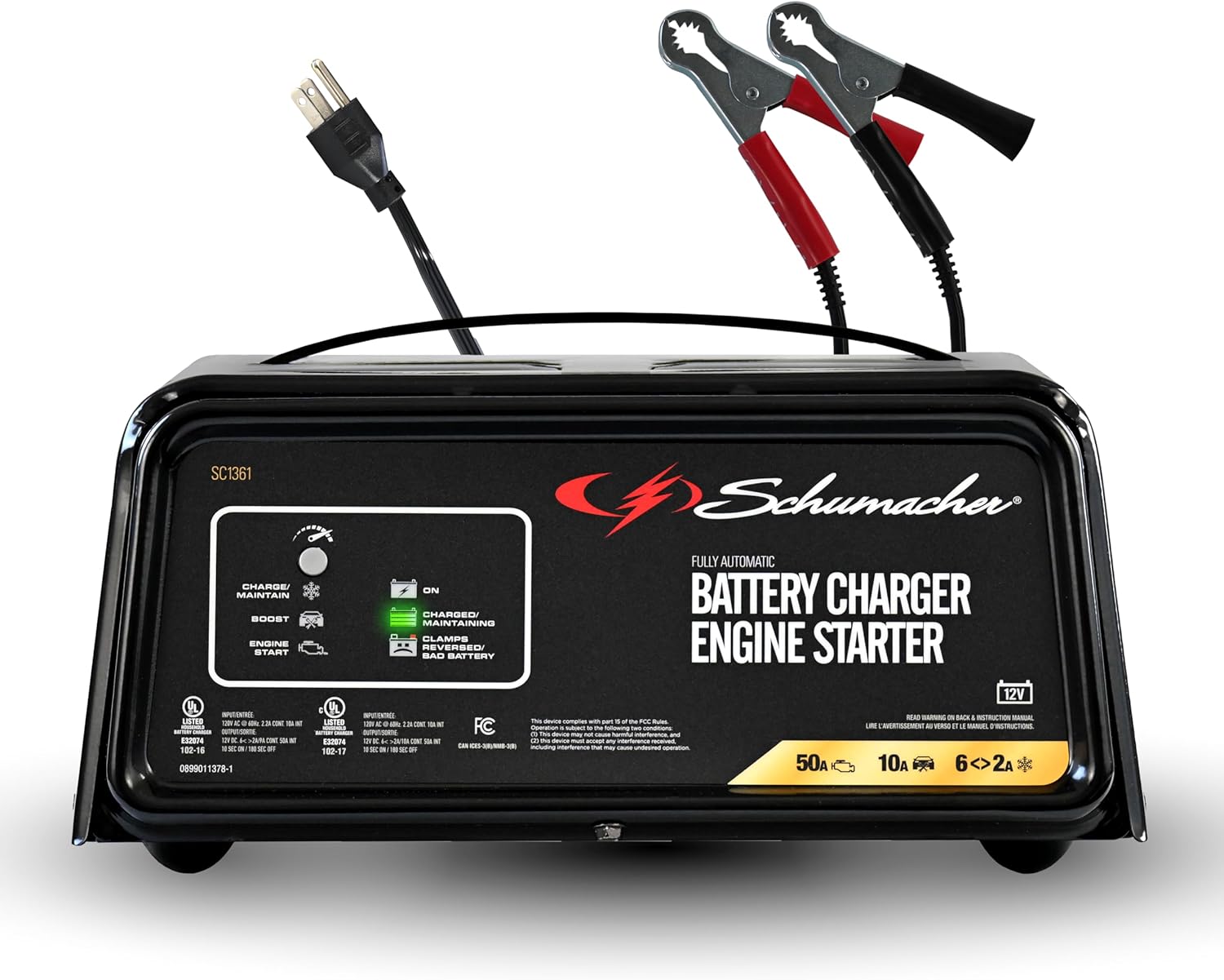
Technical Specifications Table
This table will help you compare the most important specs at a glance so you can decide if it fits your typical tasks.
| Feature | Specification |
|---|---|
| Model | Schumacher SC1361 |
| Functions | 4-in-1: starts, charges, maintains, reconditions |
| Charging Output | 6A normal charge / 2A maintain |
| Boost Output | 10A boost charge |
| Engine Start Output | 50A |
| Battery Types | 12V: standard lead-acid, AGM (absorbent glass mat) |
| Vehicle Types | Motorcycle, ATV, car, truck, SUV, marine |
| Protection | Reverse polarity protection |
| Power Source | AC powered (requires plug-in during use) |
| Cord Length | 6-foot power cord (unit includes booster cables) |
| Included Items | SC1361 unit, user manual |
| Charging Algorithm | Multi-stage smart charging |
| Special Mode | Battery reconditioning (desulfation) |
What’s in the Box
When you unbox the SC1361, you’ll find the battery charger/engine starter unit itself and the user manual that walks you through operation and safety precautions. The booster cables are attached or provided, so you don’t need to source any extra clamps to get started.
Design and Build Quality
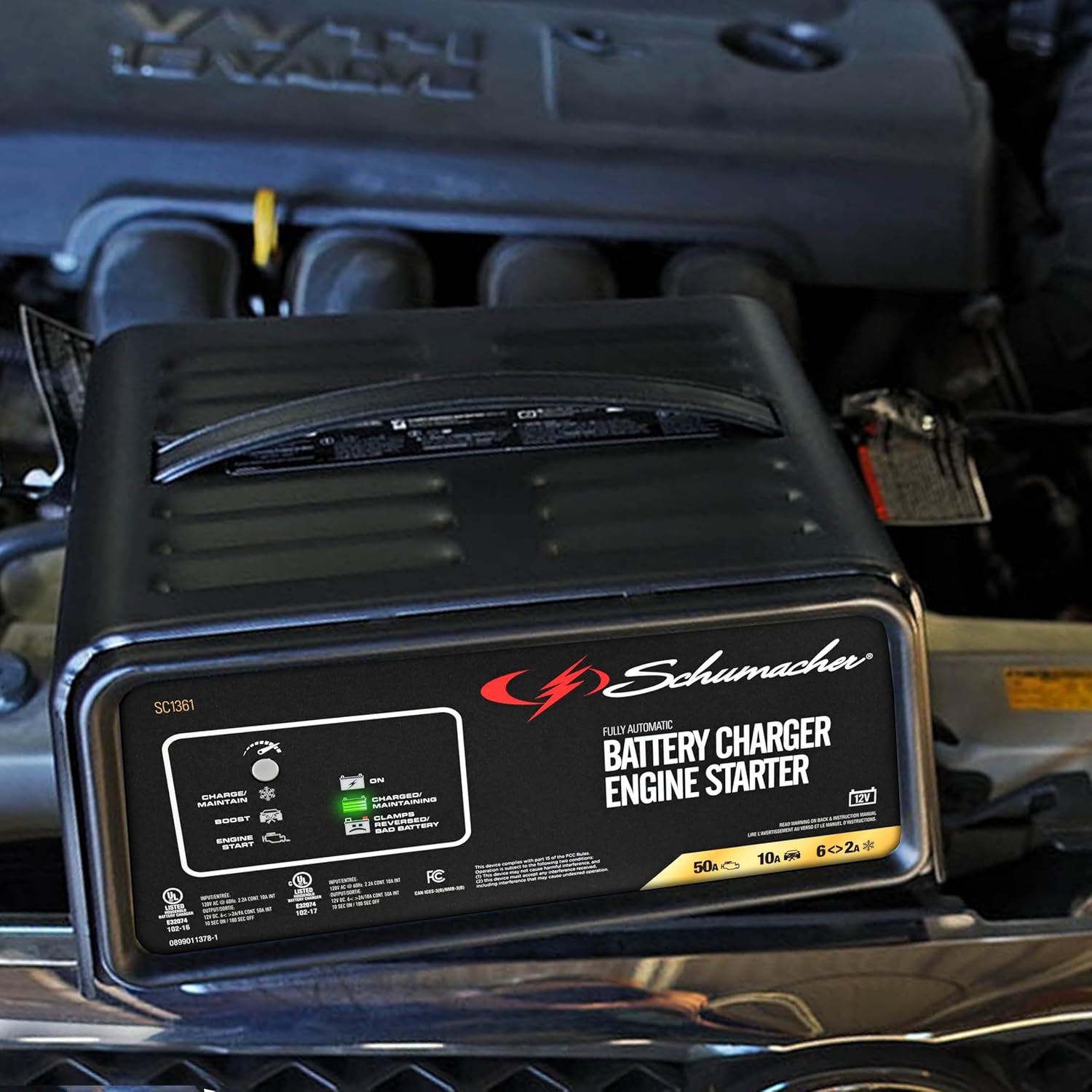
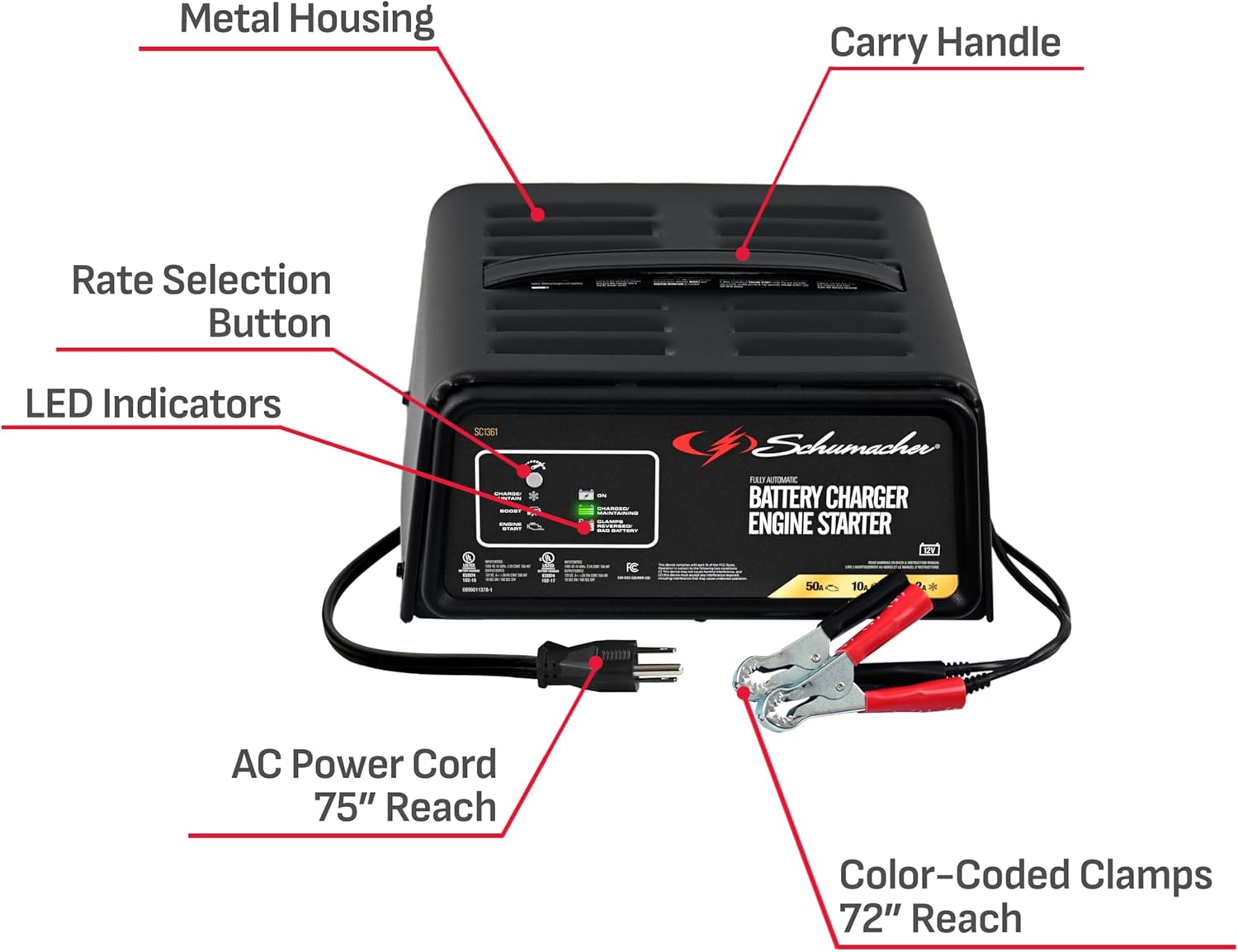
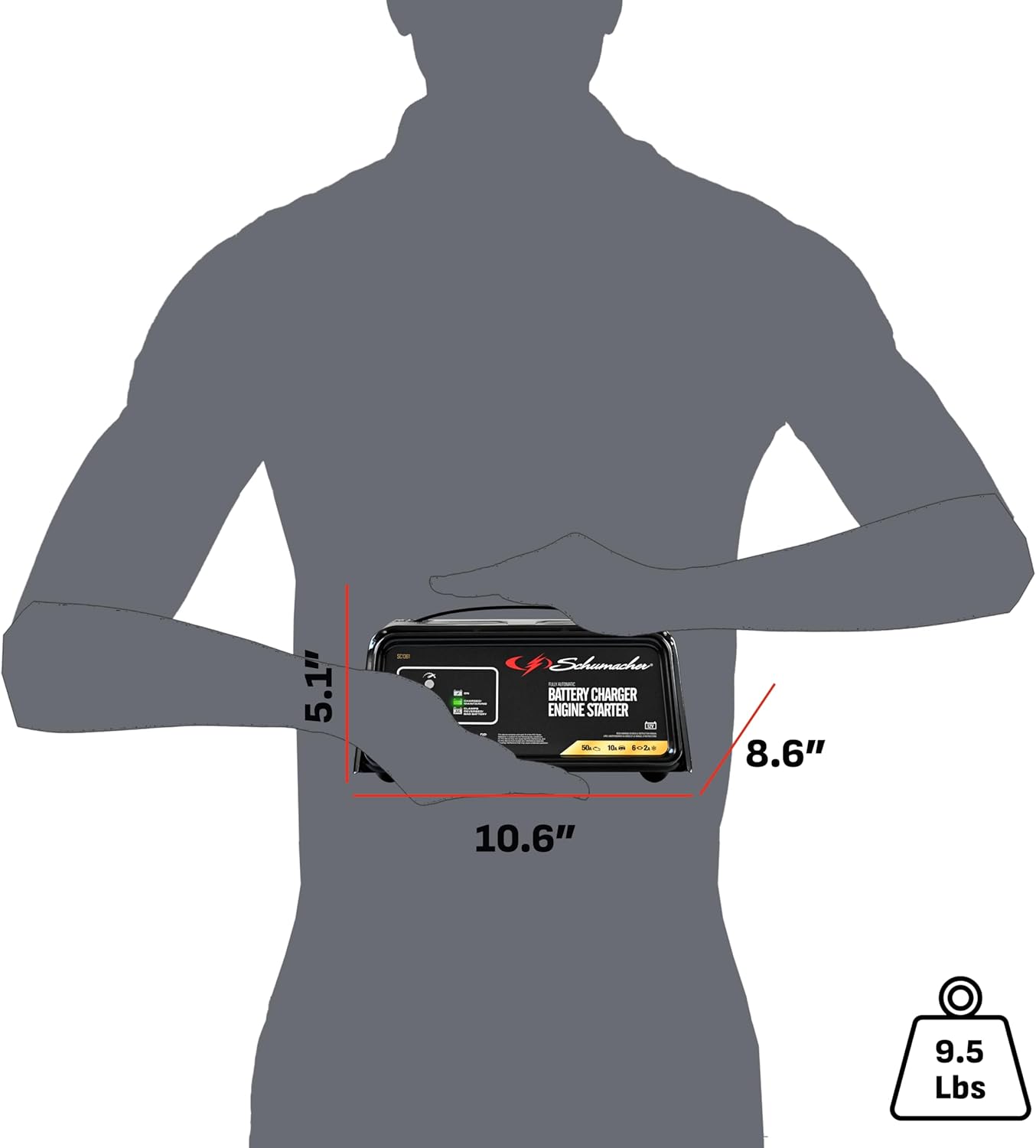
The SC1361 feels like a practical shop device rather than a boutique gadget, with a compact housing that’s easy to store. You’ll notice the unit is designed for frequent use and routine garage tasks, with robust cables and a sensible control layout.
Cables and Clamps
The included booster cables and clamps are heavy enough for the 50A start function and feel sturdier than what you’d expect from a basic trickle charger. You should still inspect clamps periodically for corrosion or wear and replace them if they deteriorate.
Controls and Display
Controls are straightforward and designed so you can switch between modes without fuss; LEDs and labeled buttons make the unit intuitive to use. The interface isn’t flashy, but you won’t need to read a manual repeatedly to figure out what each function does.
Charging Performance
You’ll get reliable charging performance for maintenance and slower charging, and a higher-current boost for quicker top-ups when you need them. The device prioritizes battery health with its multi-stage algorithm, which helps you avoid overcharging.
6A Charging and 2A Maintenance
The 6-amp charge mode is ideal when you want a moderate charging rate that’s safe for most 12V batteries, while the 2-amp maintain mode is perfect for long-term storage or seasonal vehicles. You can leave the unit connected to the battery in maintain mode without worry of overcharging, which is handy if you store a bike or boat for months at a time.
10A Boost Mode
Use the 10-amp boost when a quicker recharge is needed—say, after you’ve used an accessory battery or made a short trip that left the battery low. It gives you a faster fill than the 6A setting but is still controlled; don’t expect it to replace a dedicated, high-power fast charger for very large batteries.
50A Engine Start
The 50-amp engine start is the feature you’ll call on when you need to crank an engine with a weak or dead starting battery. It’s not a jump starter with an internal battery; instead, it provides high current while plugged into AC power. That means you’ll need access to an outlet to use this feature, but it’s very effective for most passenger vehicles and smaller trucks.
Multi-Stage Charging Algorithm
You’ll appreciate that the SC1361 doesn’t just dump current into the battery; it uses a multi-stage charging process to optimize charge acceptance and battery longevity. The algorithm typically includes bulk, absorption, and maintenance stages, so the battery spends less time at harmful voltage thresholds.
Why Multi-Stage Matters
Charging in stages prevents excessive gassing and heating, which can shorten battery life or damage internal plates. By following a more intelligent charge profile, you help the battery retain capacity and reduce the frequency of replacements.
Battery Reconditioning
The reconditioning or desulfation mode is one of the most practical features for extending battery life, especially if you’ve got aging batteries that still have some life left. This mode uses controlled pulses or a special charge profile to break down sulfate crystals that form on battery plates over time.
How Reconditioning Works
When a battery sits partially discharged for long periods, lead sulfate crystals can harden and reduce capacity; reconditioning attempts to reverse that process by applying targeted voltages and pulses. You shouldn’t expect miracles with severely damaged batteries, but for many batteries with surface sulfation, you’ll see measurable improvement.
When to Use Reconditioning
Run reconditioning on batteries that show decreased capacity, slow cranking, or that have been idle for long stretches, but always follow the manufacturer’s instructions and safety precautions. If the battery is physically damaged, bulging, or leaking, do not attempt reconditioning—replace it instead.
Compatibility and Use Cases
You can use this unit across a wide range of 12V battery applications, so it’s versatile for a mixed-use garage. Whether you maintain a motorcycle, an ATV, a family car, or occasional marine craft, you’ll find the SC1361 fits many scenarios.
Automotive and Light Truck Use
For standard cars and many light trucks, the 50A start and 6A/10A charging modes cover most common needs, from keeping a second vehicle in shape to boosting a battery for an immediate start. For heavy-duty diesel trucks or very large batteries, you’ll want to check the amp requirements and possibly consider a heavier-duty solution.
Power Sports and Marine Use
Smaller engines found in motorcycles, personal watercraft, and many boats are a great match for the SC1361’s combination of maintenance and boost functions. The 2A maintain mode is particularly valuable for seasonal marine applications where batteries sit idle for months.
Safety Features
The unit includes important protections you’ll rely on: smart trickle charge to avoid overcharging and reverse polarity protection to block damaging connections. Those features reduce the risk of battery damage and make the unit friendly for users who aren’t professional mechanics.
Reverse Polarity Protection
If you accidentally attach the clamps backwards, the SC1361 will prevent current flow that could otherwise damage the battery, vehicle electronics, or the charger itself. This gives you peace of mind, especially when working in low-light conditions or when you’re rushing.
Smart Trickle Charge
The trickle or maintainer mode monitors battery state and supplies only what’s needed to keep it topped off, so you can leave the charger connected for extended periods. That means you don’t have to remove the battery from storage to bring it back to peak charge every time.
Ease of Use
From setup to operation, the SC1361 is designed to be accessible even if you’re not electrically inclined. You’ll plug it in, choose the correct mode, attach clamps, and let it do the work—no complex menus to wade through.
Setup and Connection
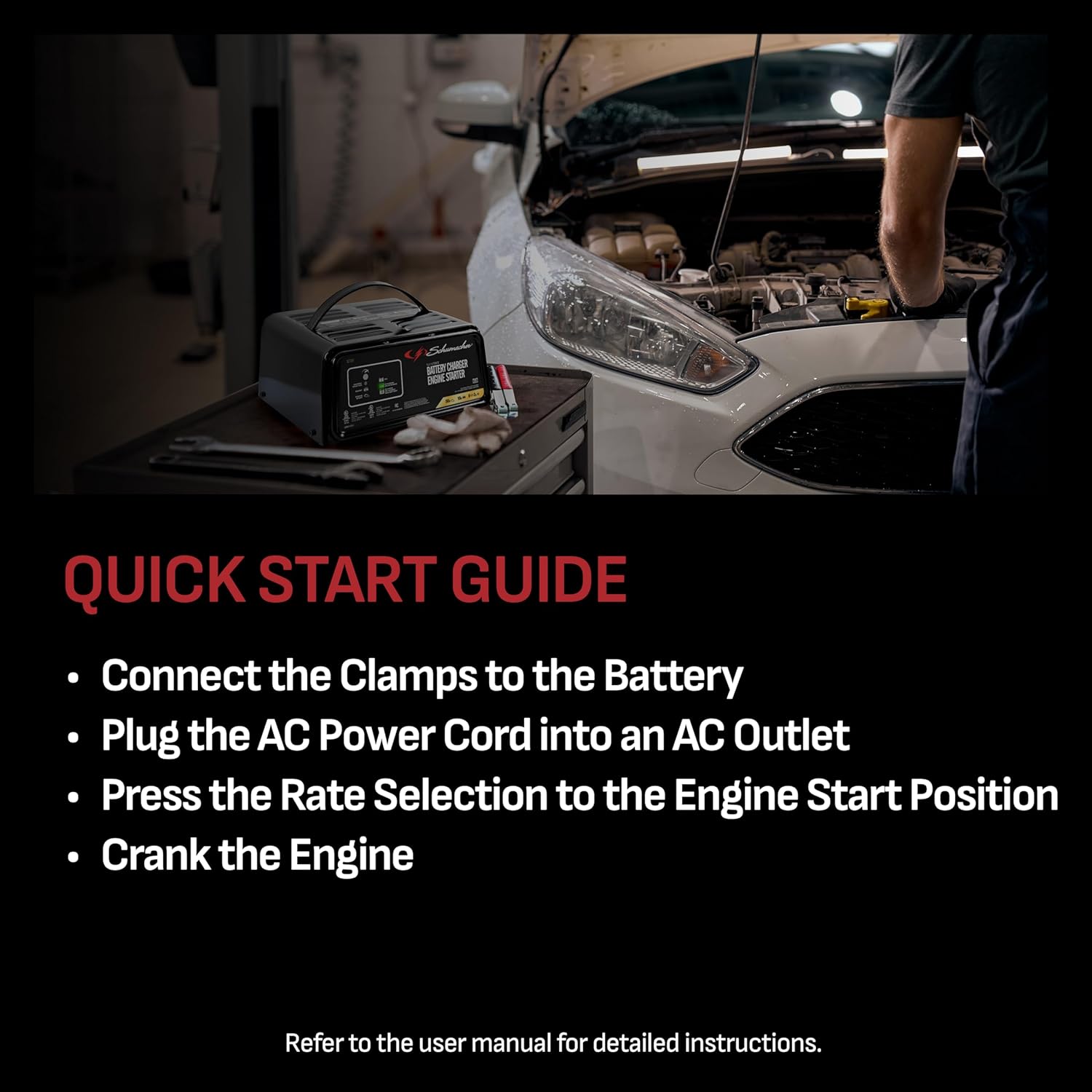
Make sure the unit is plugged into a working AC outlet before connecting to the battery, and always connect positive clamp first then negative clamp to a chassis ground or negative terminal as advised. Follow the manual’s step-by-step guidance to minimize the chance of error.
User Interface and Modes
Buttons and LEDs indicate the current mode and charging status, so you won’t be guessing whether the unit is in maintain, boost, or recondition mode. Clear labeling helps you move between functions quickly and safely.
Real-World Testing Notes
In practice, the SC1361 performs reliably for everyday garage tasks and occasional emergency starts, provided you have AC power available. You’ll find it most useful for maintaining seasonal vehicles, topping off weak batteries, and assisting with cold-weather starts.
Time to Charge Examples
A typical mid-sized car battery that’s partially discharged might take several hours on the 6A mode to reach full charge; for deeper discharges, expect longer times or use the 10A boost for a faster top-up. For maintenance use, the 2A mode will keep a battery healthy indefinitely without overcharging.
Starting Dead Batteries
If the battery is only weak rather than completely dead or internally shorted, the 50A engine start can get you going with minimal fuss. Remember that this isn’t a standalone jump pack—if you don’t have AC power onsite, you’ll need another solution to crank a dead vehicle.
Installation and Storage Tips
Store the unit in a dry, cool spot where the cord and clamps won’t be damaged, and keep the user manual handy for reference. When installing clamps, clean battery terminals and ensure solid contact to avoid arcing or inefficient charge transfer.
Pros and Cons
You’ll appreciate the compact, multi-function design and the reconditioning capability, as well as the safety features that make this unit easy to use. On the downside, you must have AC power to operate it, and it’s not a portable jump starter with an internal battery for roadside emergencies.
Pros:
- 4-in-1 functionality covers many needs
- Smart multi-stage charging to protect battery life
- Reconditioning mode can extend battery lifespan
- Reverse polarity protection adds safety
- Compact and reasonably priced for the feature set
Cons:
- Requires AC power (not a handheld jump starter)
- 50A start may be insufficient for some heavy-duty applications
- Cables and clamp quality are good but not premium-grade
Maintenance Tips for the Charger and Batteries
You’ll want to keep both your charger and batteries in good condition for reliable performance—clean clamps, keep connections tight, and inspect insulation and cables for wear. For the batteries themselves, routine topping off with the maintainer and periodic reconditioning when needed will keep them healthy for longer.
Troubleshooting Common Issues
If the unit doesn’t appear to charge, confirm it’s plugged in, check AC outlet power, and verify clamp polarity and terminal cleanliness. If the battery still won’t accept charge, the battery may be internally damaged or sulfated beyond recovery, and you should consider replacement.
Frequently Asked Questions
You’ll likely have a few common questions about daily operation, safety, and compatibility—below are concise answers to help you troubleshoot or plan.
-
Can you leave the charger connected indefinitely?
Yes, the 2A maintenance mode is designed for extended connection without overcharging, but still inspect the battery periodically. -
Is the 50A engine start powerful enough for a car?
The 50A start is suitable for many passenger vehicles and smaller trucks; check your vehicle’s cranking amp requirements for heavy-duty diesel engines. -
Does reconditioning fix dead batteries?
Reconditioning can restore performance for sulfated batteries but cannot repair batteries with internal shorts, physical damage, or severe plate degradation. -
Can this unit charge lithium batteries?
The SC1361 is specified for 12V lead-acid and AGM batteries; do not use it with lithium batteries unless the manual explicitly specifies compatibility.
Alternatives and Comparisons
If you want something with an internal battery for roadside use, look at portable jump starters; if you need higher charging amps for faster bulk charging, consider a dedicated high-amp charger or bench charger. The SC1361 occupies a useful middle ground for workshop and garage use where AC is available.
Comparable Models
Other battery tenders or chargers in this class may offer similar multi-stage charging and maintain modes, but pay attention to engine start amps and reconditioning capability when comparing. If you need more frequent or higher-amperage starting, models that provide 100A+ or that include an integrated jump battery might be a better fit.
Who Should Buy This
You should consider the SC1361 if you routinely maintain multiple small to medium 12V batteries, have seasonal vehicles that need long-term maintainers, or want a reliable engine start boost when AC power is accessible. It’s particularly well-suited to home mechanics, hobbyists, and small-boat owners who store batteries over winter.
When to Choose Something Else
If you need a portable jump starter for roadside use where AC power isn’t available, pick a model with an internal battery pack. If you manage heavy-duty truck batteries or large commercial batteries, choose a higher-amperage, purpose-built charger.
Environmental and Safety Considerations
When using any battery charger, work in a well-ventilated area and wear eye protection if you’re near battery terminals, especially when charging or reconditioning. Dispose of old batteries at authorized recycling centers and follow local regulations for battery disposal.
Practical Scenarios and Use Cases
You’ll find the SC1361 invaluable in scenarios like keeping a seasonal motorcycle battery healthy through winter, giving a quick boost to a weekend commute car, or assisting with a boat battery after sitting idle. It’s also useful in garages where you have AC power and want a single device to handle multiple battery tasks.
Step-by-Step: Starting a Vehicle with the SC1361
- Plug the charger into a functioning AC outlet before connecting clamps to avoid sparks and ensure the unit is powered.
- Set the unit to the engine start mode and confirm settings via the user interface.
- Connect the positive clamp to the positive battery terminal, then connect the negative clamp to the negative terminal or vehicle chassis ground.
- Engage the 50A start mode and attempt to crank the engine; if it does not start immediately, allow a short charge period and try again.
- Disconnect clamps in reverse order once the engine is running and allow the alternator to charge the battery or use the unit to top off.
Each step keeps safety and battery health in mind so you can get back on the road quickly and responsibly.
Final Recommendation
If you need a compact, AC-powered, multi-function charger and starter that will maintain batteries, provide a quick boost, and help recondition aging batteries, the Schumacher Electric 6A Car Battery Charger and 50A Engine Starter, 4-in-1 Solution, Maintainer, 10A Boost, for 12V Power Sport, Automotive, and Marine Batteries, SC1361 is a well-rounded choice. It’s not a substitute for a heavy-duty shop charger or a portable jump pack with its own battery, but for most home and hobby uses, it covers a lot of bases efficiently and safely.
If you have specific vehicles or battery types you frequently work with, tell me what they are and I can help you confirm whether this model meets those exact needs or suggest an alternative.
Disclosure: As an Amazon Associate, I earn from qualifying purchases.