
Have you ever needed a quick, portable way to start a car and wondered if your Makita batteries could pull the job?

Product Overview
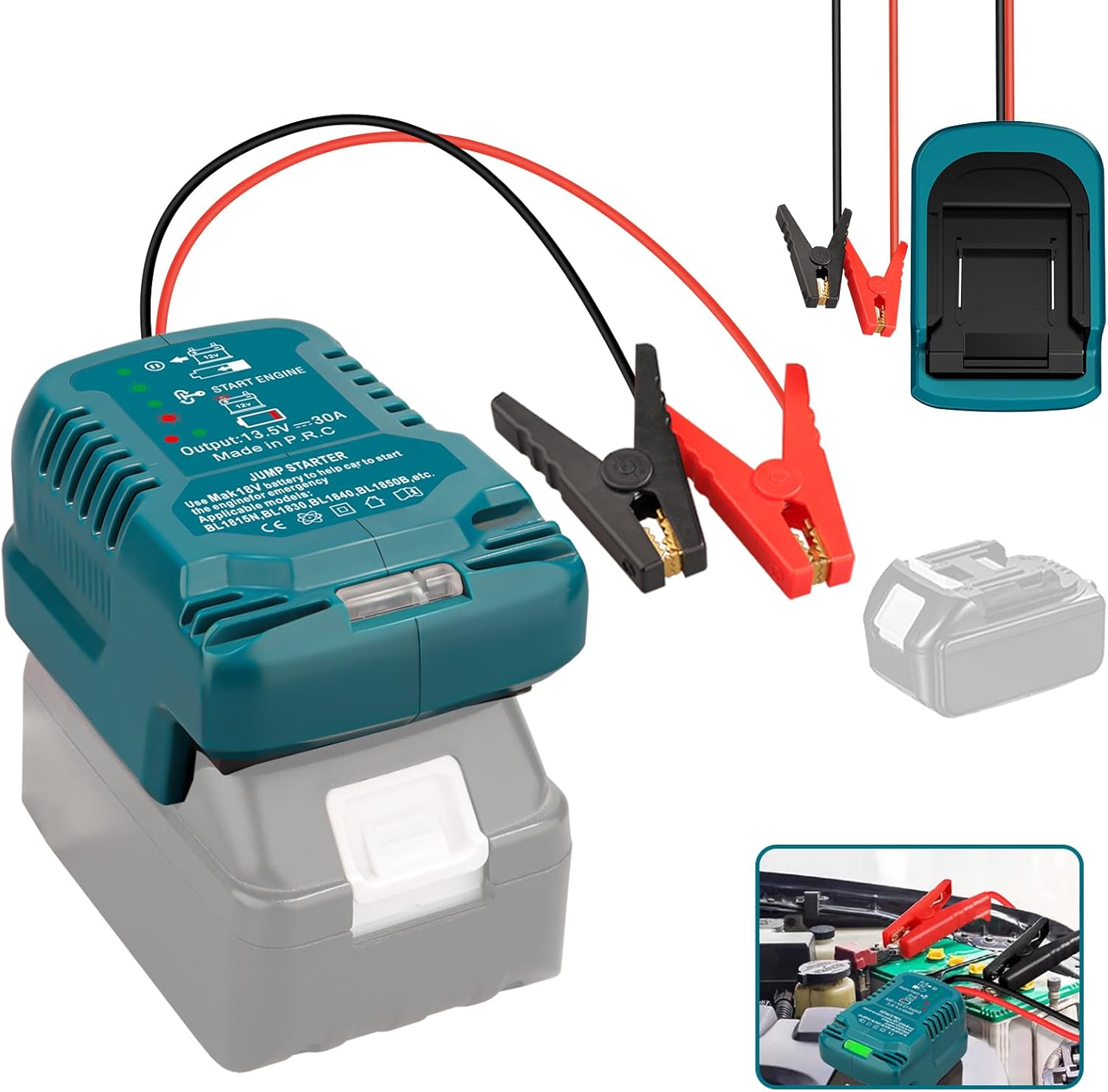
You’re looking at the for Makita Car Jump Starter Adapter 18V Li-ion Battery – Portable Jump Starter with Jumper Cables&Clamps, Adapter Charger Car Portable Jump Starter with 18V(Battery Not). This adapter turns compatible Makita 18V Li-ion batteries into an emergency jump starter for 12V vehicle systems up to 3.5L engines. You’ll appreciate the simplicity: it’s a compact adapter with clamps and status indicators that uses a Makita-style battery as the power source.
What it is
This product is an adapter module that connects to Makita BL1830/BL1840/BL1850/BL1860 series batteries (battery not included) and provides jumper cables and clamps to start a 12V vehicle. It’s not a standalone power bank — you supply the battery — and it’s designed primarily for emergency starting rather than long-term charging or powering accessories.
Who it’s for
If you already own Makita 18V batteries and want a lightweight, portable emergency starter option, this adapter is for you. It’s a practical choice if you work with Makita tools, keep batteries charged, and want a backup jump-start method without investing in a dedicated heavy-duty jump starter.
Key specifications at a glance
This table breaks down the most relevant specs so you can quickly see whether it matches your needs.
| Item | Detail |
|---|---|
| Product type | Makita battery jump starter adapter (battery not included) |
| Compatible batteries | Makita BL1830 / BL1840 / BL1850 / BL1860 series (18V) |
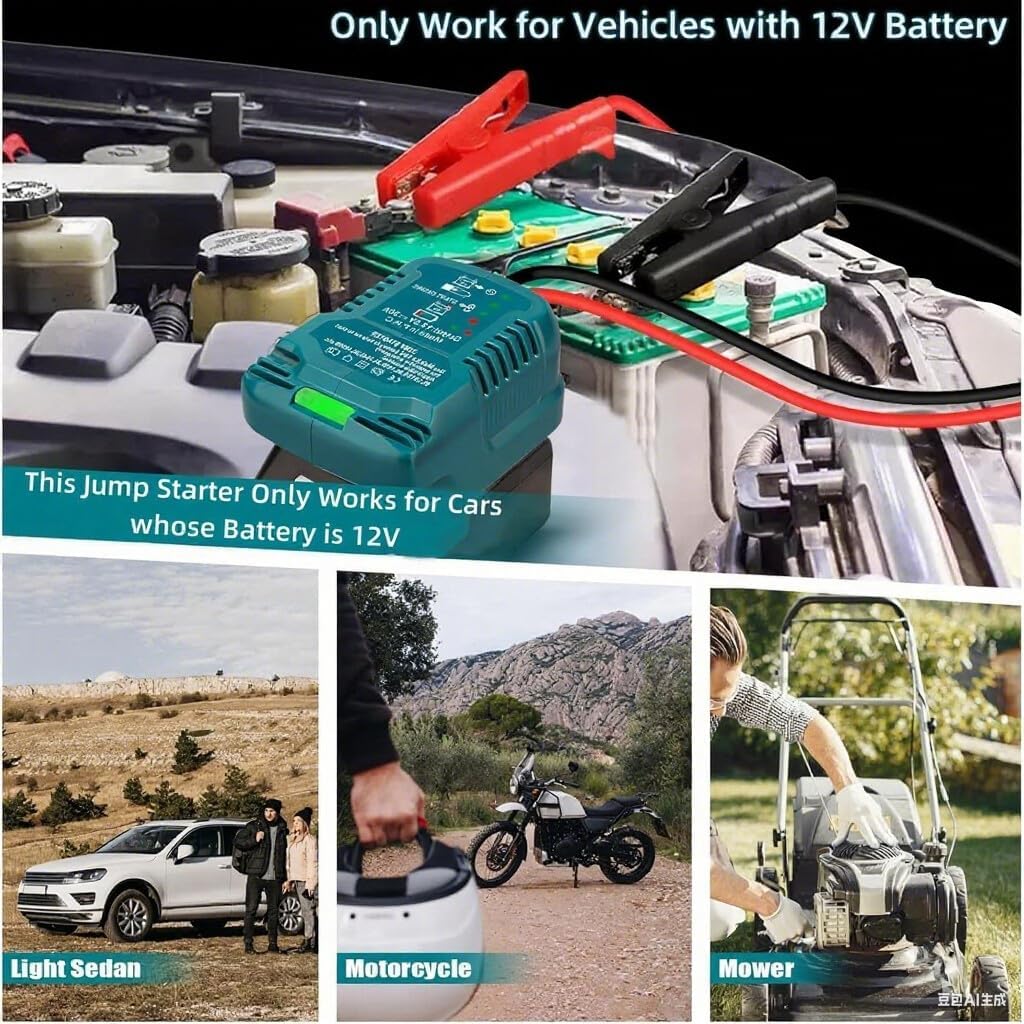
| Vehicle system | 12V cars, motorcycles, and other vehicles up to 3.5L engines |
| Purpose | Emergency auxiliary jump start only |
| Clamps | Anti-slip jagged teeth, strong springs, insulated handles |
| Indicator lights | Charging (flashing green), Ready (solid green), Low battery (flashing red), Reverse polarity (solid red & green) |
| Battery included | No |
| Typical use | One-off starts or occasional emergency starts, not sustained cranking for large engines |
Compatibility and Fit
You want this adapter to work seamlessly with your existing kit, so compatibility is the first thing to check before you buy. It fits selected Makita 18V battery models and is meant for 12V vehicle systems under a 3.5L engine size.
Which Makita batteries work
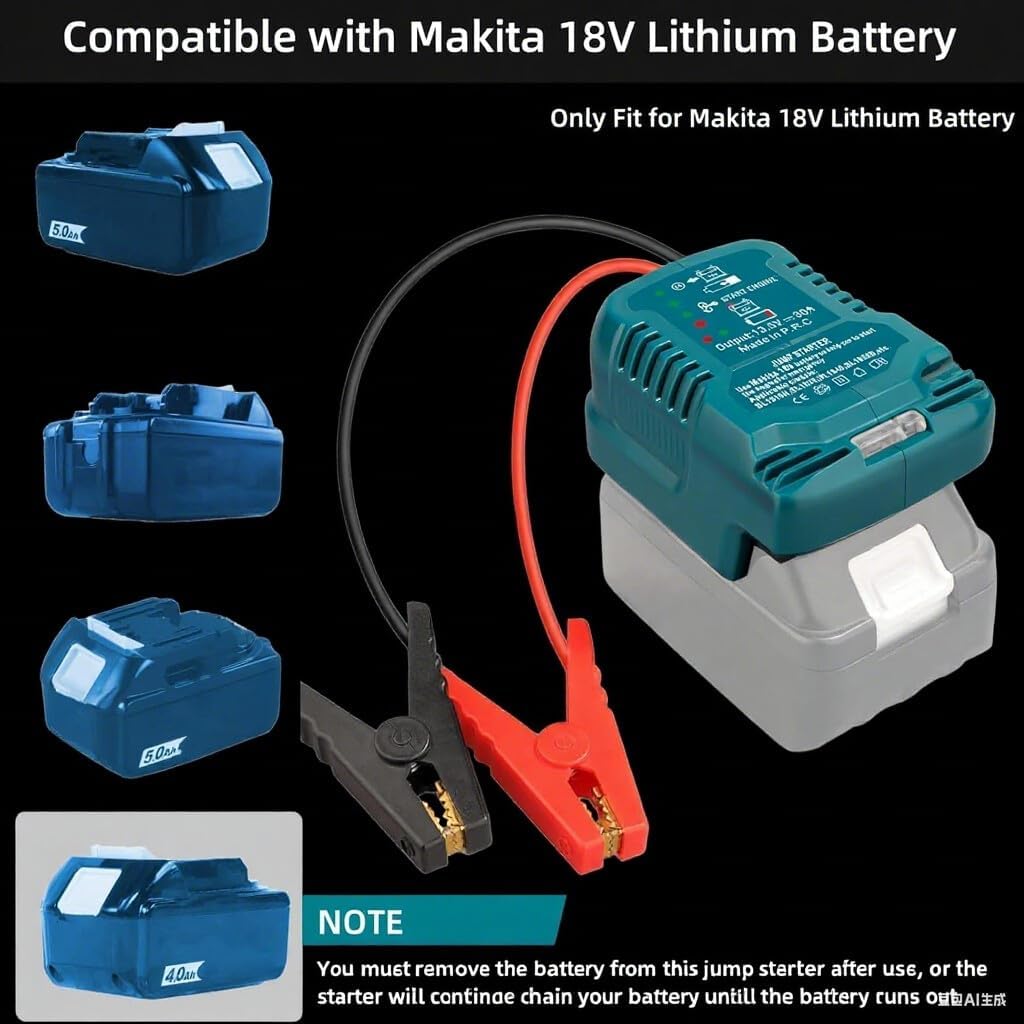
The adapter specifically lists compatibility with Makita BL1830, BL1840, BL1850, and BL1860 batteries. If you already have one of these batteries in your toolbox, you can use it as the power source for the adapter. You should avoid using non-compatible battery shapes or voltages because the connector and internal electronics expect Makita 18V Li-ion form factors.
Vehicle compatibility
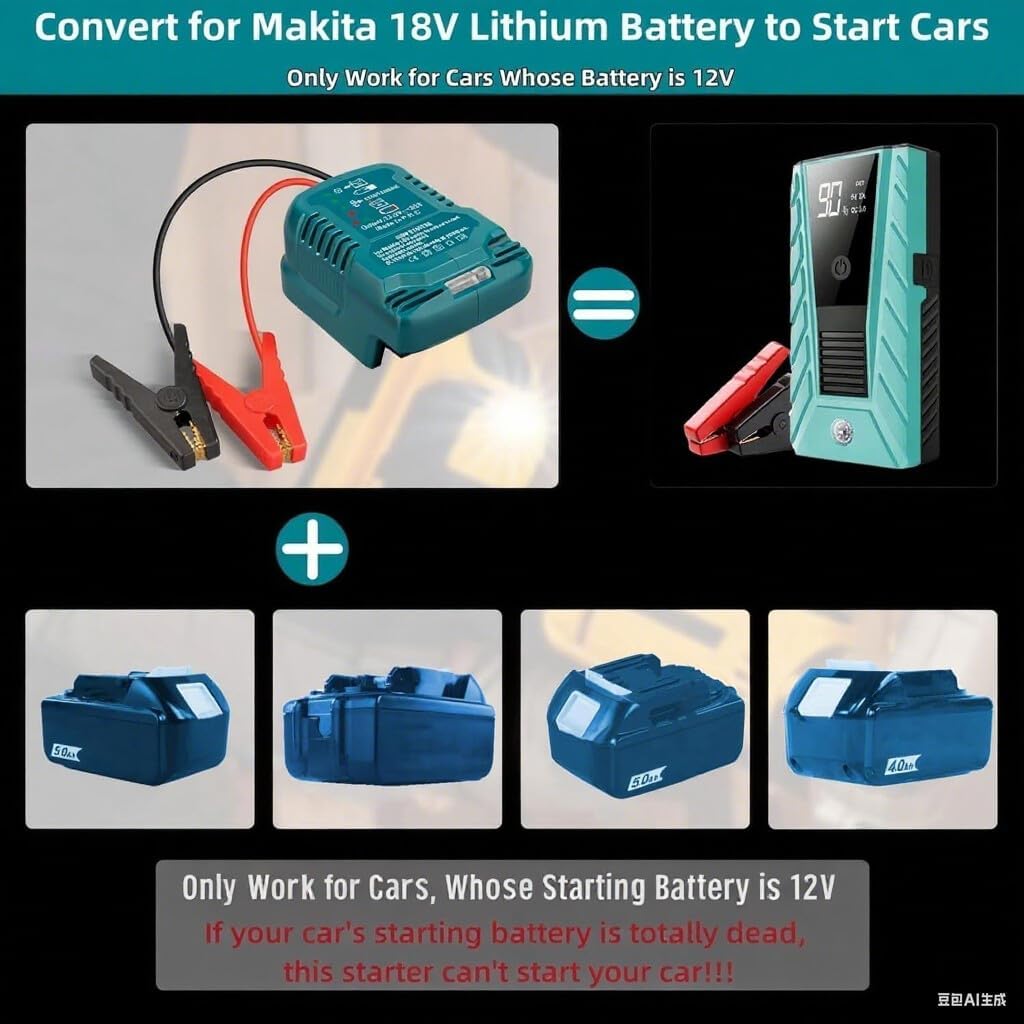
This adapter is designed for 12V vehicles up to 3.5L engine displacement. That includes most sedans, small SUVs, many light trucks, motorcycles, and boats with similar electrical systems. If you have a larger engine (V6 or V8 above 3.5L, diesel trucks, or commercial vehicles), this adapter is not suitable. You should treat it as an emergency starter only — not a replacement for a heavy-duty jump starter on larger or high-demand vehicles.

Design and Build
You’ll notice the adapter is compact and utilitarian. It’s built to connect directly to Makita batteries and provide quick access to clamps and status lights. The build favors portability and ease of use rather than heavy-duty industrial ruggedness.
Adapter and connector design
The adapter plugs into the Makita battery the same way your tools do, creating a secure electrical connection. The housing contains the electronics that convert the 18V input into the current needed to crank a 12V starter briefly. The connector is keyed to fit Makita 18V packs, so insertion is straightforward and secure when the battery is fully seated.
Clamps and safety features
The clamps feature anti-slip jagged teeth and strong springs, which help ensure good contact on battery terminals. Insulated handles reduce the risk of accidental shocks while you’re making the connections. The unit also includes an indicator-light system to show charging status, readiness, low battery, and reverse polarity, giving you immediate feedback if something is wrong.
Indicator Lights and User Feedback
You’ll appreciate clear visual feedback when you’re in a stressful situation like a car that won’t start. The indicator lights are simple and meaningful.
Light meanings
The indicators use combinations of green and red lights to communicate status:
- Flashing green: Charging in progress (battery pack is delivering current to adapter or adapter is in charging mode).
- Solid green: Ready to start the car (sufficient battery charge detected).
- Flashing red: Low battery level — replace or recharge the Makita battery before attempting to start.
- Solid red & green together: Reverse polarity — clamps are connected to the wrong terminals.
This system gives you quick guidance on whether you can proceed or need to correct the setup.
Practical use of indicators
When you connect the Makita battery and attach the clamps to the vehicle, watch the lights. A solid green means go ahead and crank the engine. If the light is flashing red, you’ll want to swap in a fresh battery or recharge before risking a failed start. If the red and green are solid together, immediately disconnect and recheck your clamp polarity. The lights help prevent mistakes and protect both the vehicle and your equipment.
How to Use
Using the adapter is straightforward, but you should follow a few steps carefully to avoid damage or unsafe situations. The process is designed for quick emergency deployment.
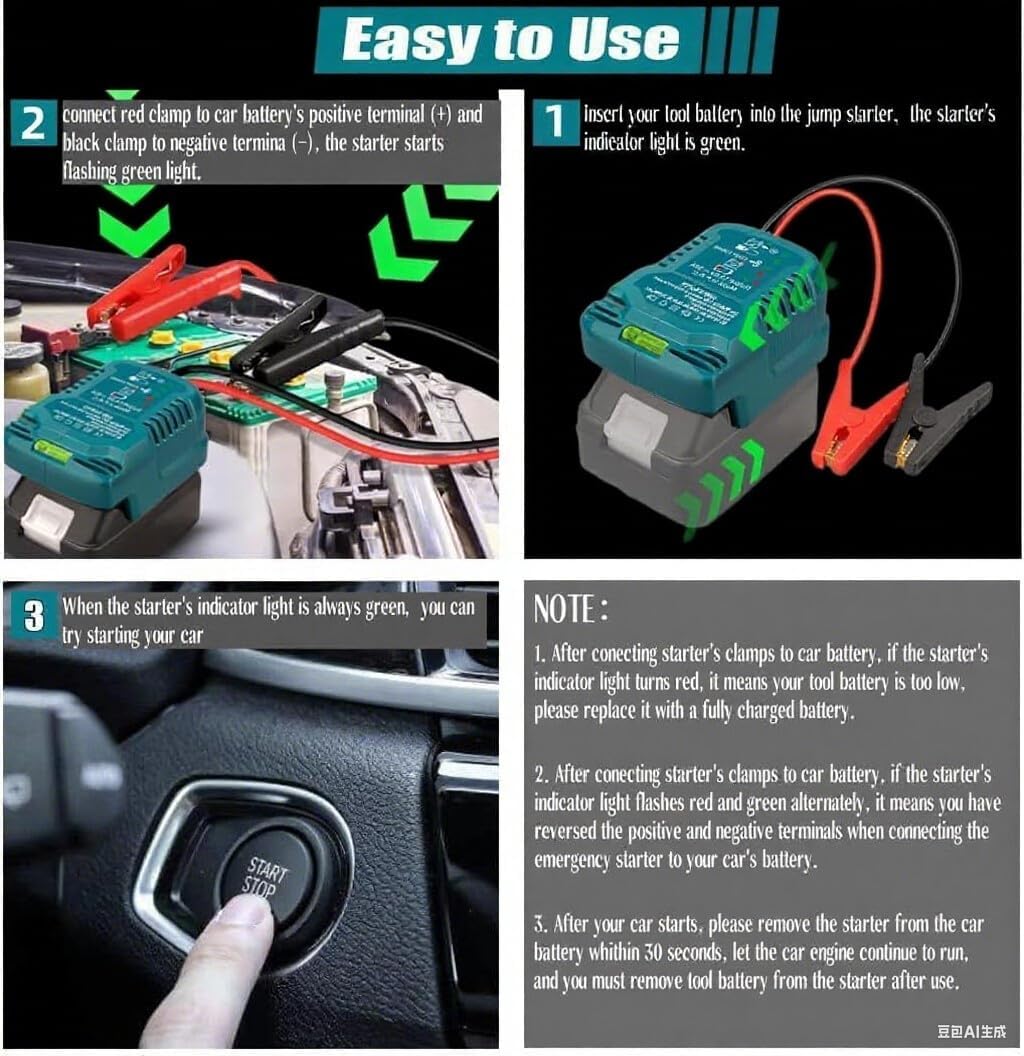
Step-by-step startup
- Insert a compatible Makita 18V battery into the adapter until it clicks and seats securely.
- Attach the red clamp to the vehicle’s positive (+) battery terminal and the black clamp to the negative (-) terminal or a solid chassis ground if recommended.
- Check the indicator lights—solid green means you’re ready to start. If it’s flashing red, change batteries before trying.
- Start the vehicle. Don’t crank for more than a few seconds at a time; let the starter rest between attempts.
- Once the engine is running, remove the clamps in reverse order (black first, then red) and remove the Makita battery from the adapter.
Tips for safe connection
Always inspect clamps for corrosion or damage and clean battery terminals if needed. Keep the clamps steady and avoid letting them touch each other or any metal surface while connected. Wear gloves and eye protection if you have them handy, and steady the vehicle on a level surface with parking brake engaged. Follow the indicator lights: never attempt to start if reverse polarity is indicated.
Performance and Real-World Testing
You’ll want to know not just how it’s supposed to work, but how it performs in real situations. Performance depends heavily on the condition and capacity of the Makita battery you use as well as the vehicle’s starter draw.
Starting performance on different engines
For small to medium gasoline engines under 3.5L, a healthy high-capacity Makita battery (for example, BL1850 or BL1860) usually provides enough cranking current to start a cold engine. For older or high-compression engines, results vary: the adapter can often give a quick boost to start the car, but if the engine demands more current than the battery can safely supply, you may experience slow cranking or no start. If you attempt to start a larger engine or an engine with a severely drained battery, the adapter won’t perform as well as a dedicated jump starter with a high peak amperage.
Cold weather and repeated starts
Cold conditions reduce battery performance, and you’ll notice less available cranking current when temperatures drop. If you’re in a cold climate, use the highest-capacity Makita battery you have and keep spare charged packs ready. Repeated start attempts can also rapidly drain the battery; limit cranking attempts to short bursts and allow the pack to recover between tries. If you need to make multiple starts in a row (for example, helping other vehicles), expect diminished performance unless you swap in fresh batteries.
Battery life and recommendations
The adapter’s usefulness is driven by the Makita battery capacity and state of charge. BL1830 (3.0Ah) will give fewer attempts than BL1850 (5.0Ah) or BL1860 (6.0Ah). For reliable emergency use, you should keep a higher-capacity battery on hand and routinely top it up on a charger. Batteries also age and lose capacity; don’t rely on an older pack for emergency starts without verifying its charge and health.
Charging and Maintenance
You manage the power: charging and maintaining your Makita batteries determine how effective the adapter will be when you need it.
Battery selection and charging
Choose the highest-capacity Makita battery you can afford and that fits the adapter. Charge the batteries using Makita’s recommended chargers and avoid leaving them at a low charge for extended periods. Rotate batteries between tools and storage so you always have at least one fully charged pack for emergencies. Consider keeping one battery dedicated for emergency car starts if you rely on this solution frequently.
Storage and care
Store the adapter and your batteries in a dry place where temperatures stay within Makita’s recommended range. Keep the clamps and cables free of rust and corrosion. Inspect contacts periodically and clean battery terminals with a contact cleaner if needed. If you won’t use the adapter for a long time, remove the battery and store each component in a protective bag or case.
Pros and Cons
You want a clear, practical summary of what you’ll gain and what you should watch out for when choosing this adapter.
Strengths
- Portable and compact, easy to keep in a toolbox or trunk.
- Useful if you already own Makita 18V batteries — it leverages existing gear.
- Simple to operate with clear indicator lights.
- Clamps are insulated and designed to grip well, improving safety and contact.
- Cost-effective compared with buying a separate heavy-duty jump starter if you already have batteries.
Limitations
- Battery not included — you must supply compatible Makita 18V batteries.
- Not suitable for engines above 3.5L or heavy-duty vehicles.
- Performance depends entirely on the battery capacity and health.
- Not designed for sustained cranking or repeated heavy use without swapping batteries.
- Lacks some advanced protections and power reserves found in dedicated high-amp jump starters.
You may find the strengths align well with occasional emergency needs, but if you need a rugged, high-capacity solution for larger engines or frequent use, this adapter will likely fall short.
Technical Breakdown Table
This table provides a technical breakdown to compare features and expectations quickly.
| Category | What you’ll get | What to expect |
|---|---|---|
| Power source | Makita 18V Li-ion battery (user-supplied) | Cranking capacity varies with battery Ah and condition |
| Maximum vehicle size supported | Up to 3.5L engine | Not suitable for larger or diesel motors |
| Safety features | Insulated clamps, indicator lights | Basic protections; follow polarity indicators carefully |
| Ease of use | Plug-in battery + clamps | Quick setup if you’re familiar with battery terminals |
| Portability | Compact adapter + clamps | Easy to store; depends on battery size for bulk |
| Durability | Plastic housing & connected electronics | Good for occasional emergency use; not ruggedized industrial heavy use |
| Use case | Emergency start only | Not a multi-purpose power source for long-duration tasks |
Comparison with Alternatives
You’ll want to know how this product stacks up against other options you might consider.
Makita battery-based adapter vs. standalone jump starters
If you already have Makita batteries, this adapter is cheaper and more compact than a standalone jumper. Standalone jump starters generally contain larger battery packs with higher peak amps, integrated chargers, and sometimes air compressors and USB ports. They’ll handle larger engines and offer repeated starts without swapping batteries, but they’re bulkier and cost more.
When to choose this adapter
Choose this adapter if you:
- Own compatible Makita batteries.
- Need a light, portable emergency option to keep in the trunk.
- Want to save cost and weight over a full jump starter and don’t expect to start large engines.
If you don’t already have Makita batteries, buying one of the better standalone jump starters may be more sensible unless you’re planning to use Makita tools as well.
Safety and Legal Notes
You’ll be responsible for using this device safely and in compliance with best practices.
Safety checklist
- Confirm the vehicle is off and keys are out of the ignition before connecting clamps.
- Attach red clamp to positive (+) terminal and black clamp to negative (-) or chassis ground.
- Verify indicator lights before attempting to crank.
- Avoid touching clamps together while connected to a battery.
- Use gloves and eye protection when possible.
Warnings and common mistakes
Never attempt to start an incompatible vehicle or engine size. Pay attention to reverse polarity warnings — incorrect connections can damage vehicle electronics, the adapter, and the battery. Don’t attempt to jump a heavily damaged or leaking battery, and avoid cranking beyond a few seconds at a time to prevent overheating the Makita battery or the adapter circuit.
Frequently Asked Questions (FAQ)
You’ll find answers to the most common concerns and clarifications about the product and its use.
Q: Can this adapter charge my car battery?
A: No. The adapter is designed for emergency starting only. It provides a burst of current to turn the starter but doesn’t replace a charger or alternator for maintaining or charging a drained car battery.
Q: Will any Makita 18V battery work?
A: It’s specified for BL1830, BL1840, BL1850, and BL1860. Other Makita 18V packs with the same interface might fit physically but aren’t guaranteed or listed by the manufacturer. Use only recommended batteries to ensure proper performance and safety.
Q: How many starts can I get from a single Makita battery?
A: That depends on battery capacity and the engine’s required cranking current. A BL1860 (6.0Ah) will provide more starts than a BL1830 (3.0Ah). Expect only a few emergency starts from a single battery in typical use; repeated use will quickly reduce available starts.
Q: Does it protect against reverse polarity?
A: The adapter signals reverse polarity with a solid red & green light. This is a warning — you should disconnect and correct the clamp placement. The indicator helps protect you from damage, but proper clamp attachment is your responsibility.
Q: Is it safe to use in the rain?
A: The adapter and clamps are designed for typical automotive conditions but are not fully waterproof. Avoid using it in heavy rain or submersion; keep connections dry if you can and work under a canopy or with an umbrella if needed.
Maintenance Checklist
You’ll get the most life and reliability out of this adapter if you care for it properly.
- Keep the adapter and clamps clean and dry.
- Inspect clamps and cables for wear before each use.
- Rotate and charge Makita batteries regularly to keep them healthy.
- Store the unit and batteries in a cool, dry place out of direct sunlight.
- Replace batteries that show significant capacity loss or damage.
Troubleshooting Tips
You’ll likely be able to resolve common issues quickly if you follow these tips.
- If indicators show low battery: swap in a fully charged Makita pack and try again.
- If reverse polarity lights come on: disconnect immediately and reattach clamps correctly.
- If vehicle doesn’t crank despite solid green: ensure battery pack is seated fully, try a higher-capacity pack, or check the vehicle starter and battery condition.
- If clamps don’t get a good grip: clean vehicle terminals and verify clamp teeth aren’t clogged with corrosion.
Final Verdict
You’ll find that the for Makita Car Jump Starter Adapter 18V Li-ion Battery – Portable Jump Starter with Jumper Cables&Clamps, Adapter Charger Car Portable Jump Starter with 18V(Battery Not) is a practical, cost-effective emergency solution if you already own Makita 18V batteries. It’s compact, straightforward, and gives you a reliable way to start most 12V vehicles up to 3.5L in an emergency.
Who should buy it
Buy this adapter if you:
- Own compatible Makita 18V batteries and chargers.
- Want a lightweight, portable emergency starting option for small-to-medium engines.
- Prefer leveraging existing tool batteries instead of buying a bulky dedicated jump starter.
Final recommendations
Keep at least one high-capacity Makita battery in good condition and charged if you plan to use this adapter regularly. Treat the adapter as an emergency tool rather than a primary cranking solution. If you need repeated jumps, higher peak amperage, or support for larger engines, invest in a dedicated standalone jump starter with higher capacity and more rugged design.
If you follow the safety tips, use the indicator lights properly, and match the adapter to your vehicle size and battery capacity, this Makita-compatible adapter gives you a nimble and useful way to get back on the road when a dead battery surprises you.

Disclosure: As an Amazon Associate, I earn from qualifying purchases.