
Looking for a dependable all-in-one battery charger and engine starter that handles everything from routine maintenance to emergency starting?
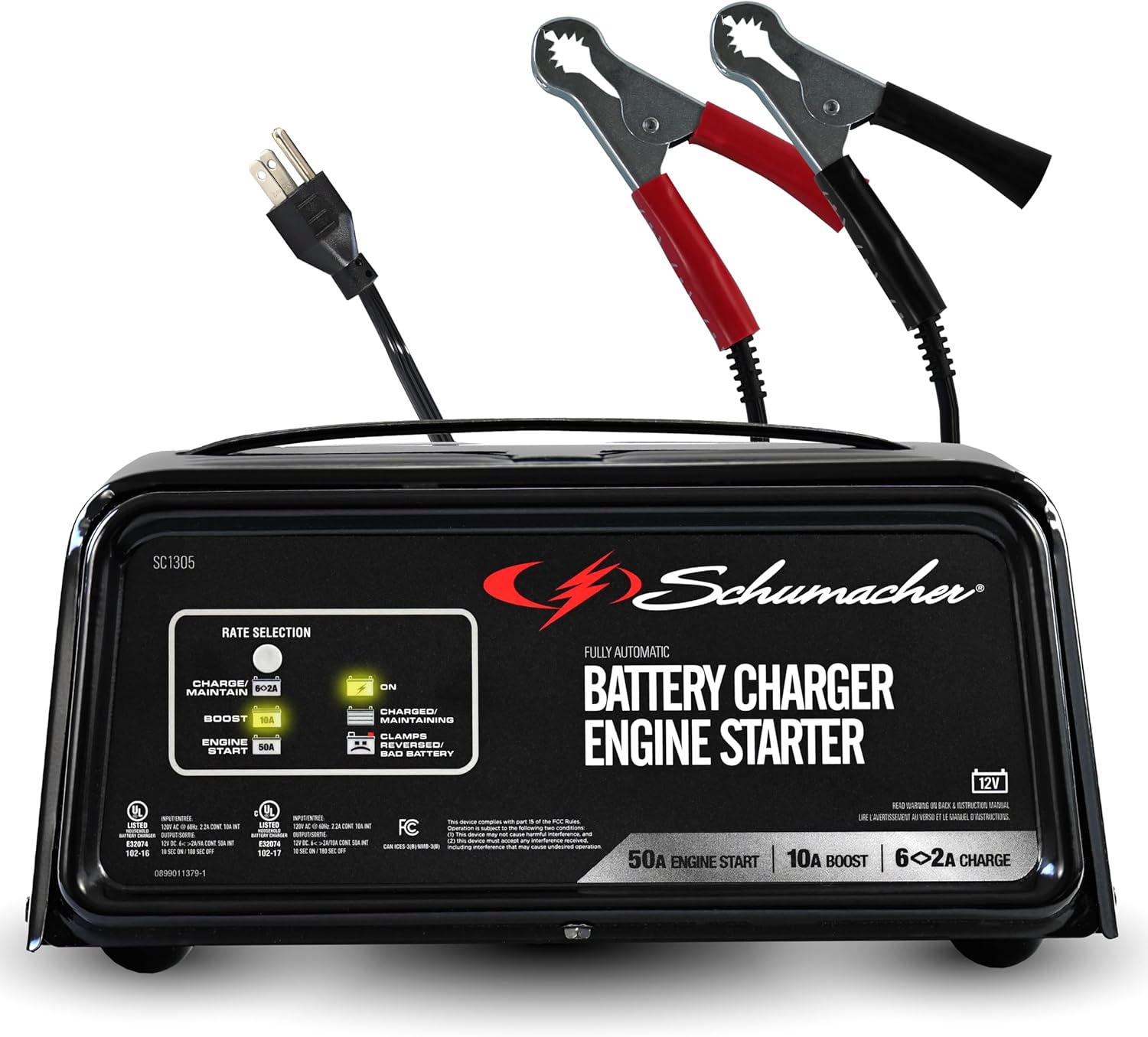

First impressions of the Schumacher Electric 6A Car Battery Charger and 50A Engine Starter, SC1305
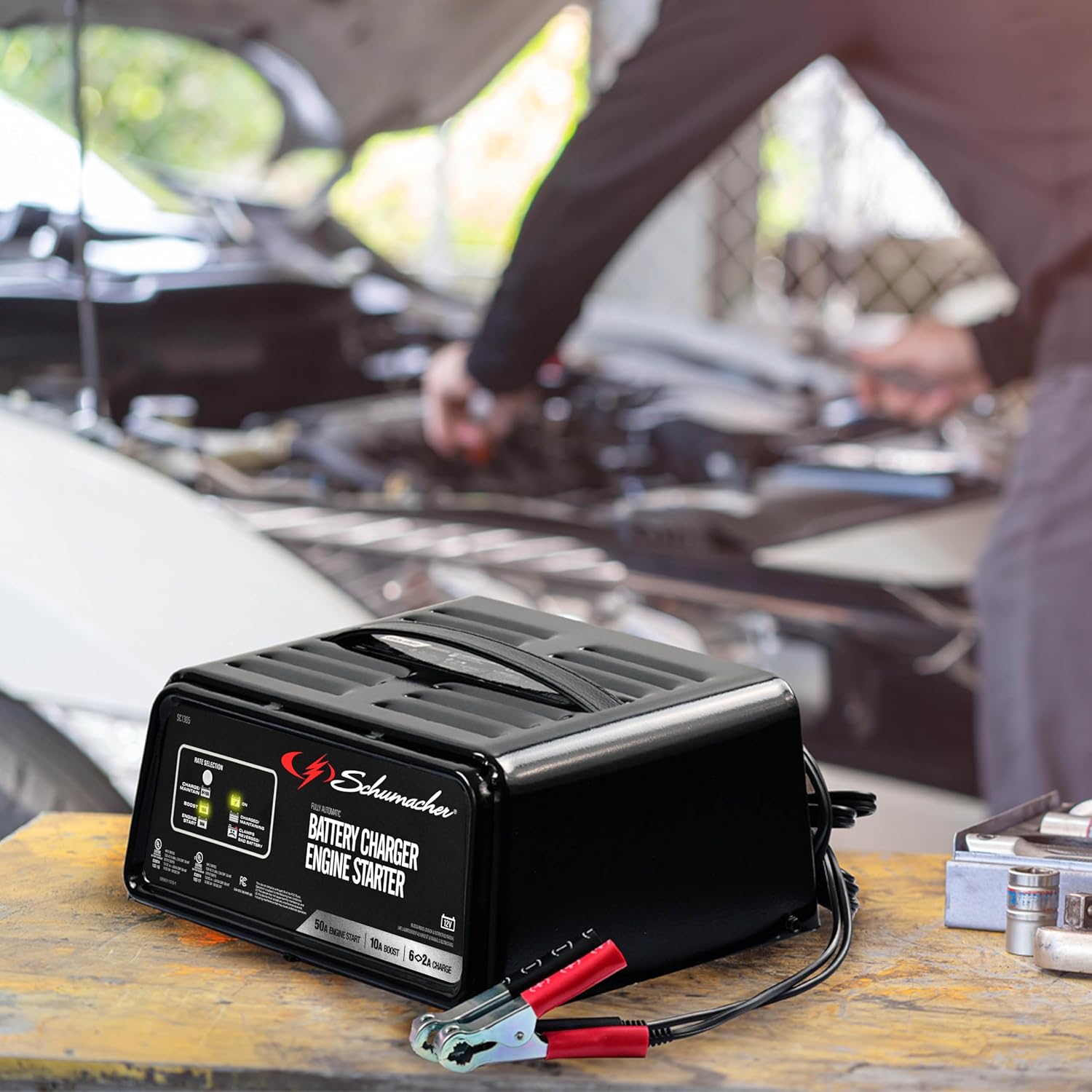
You’ll notice right away that this is marketed as a 4-in-1 solution, and that promise shapes your expectations before you even plug it in. The unit feels solidly built for garage or home use, with heavy-gauge booster cables and a 6-foot power cord that keeps things practical for most situations.
What comes in the box
When you open the package, you get the SC1305 unit and a user manual, and that’s it — no extra accessories beyond the built-in cables. You’ll appreciate the simplicity: everything you need is right there, and you won’t be sorting through unnecessary parts.
First-run experience
Setting it up for the first time is straightforward and intentionally user-friendly, so you won’t be left guessing what to do next. The controls are clearly marked and the mode selector makes it easy to move between starting, boosting, charging, and maintaining.
Key features overview
This section breaks down the headline specs and what they mean for your day-to-day use, so you can visualize how the SC1305 fits your needs. Understanding those specs helps you choose the right mode for the right battery state.
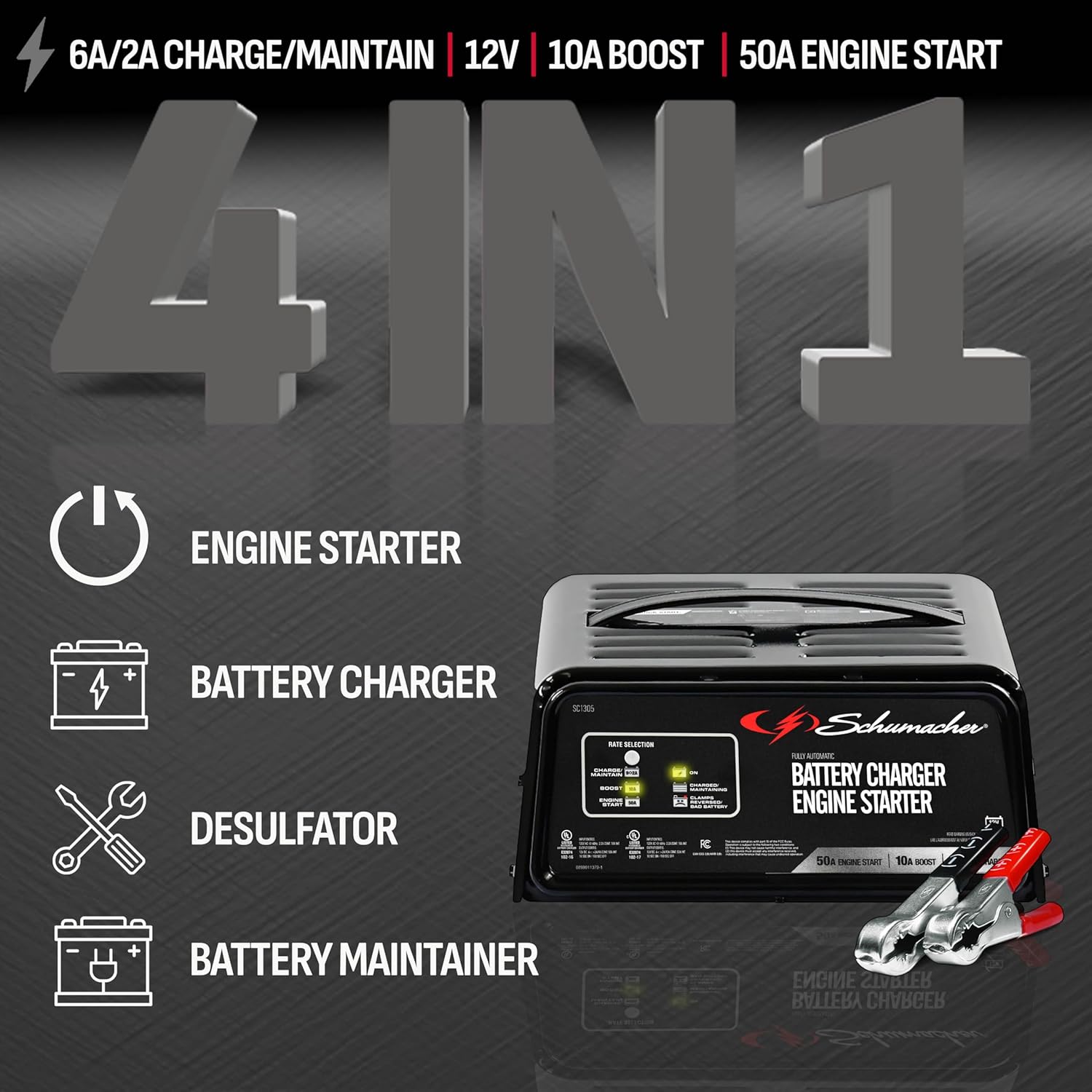
4-in-1 functionality
The SC1305 can start, charge, maintain, and recondition batteries — that’s a lot of capability in one box. You’ll find that having all four modes available reduces the number of devices you need in your garage or workshop.
Immediate charging power: start, boost, and charge rates
You get a 50-amp engine start capability, 10 amps for boost charging, and variable 6-amp to 2-amp charging/maintenance modes. Those numbers mean you can use the unit for emergency starts, quicker boosts to get you going, and gentle long-term maintenance.
Smart trickle charge and multi-stage charging
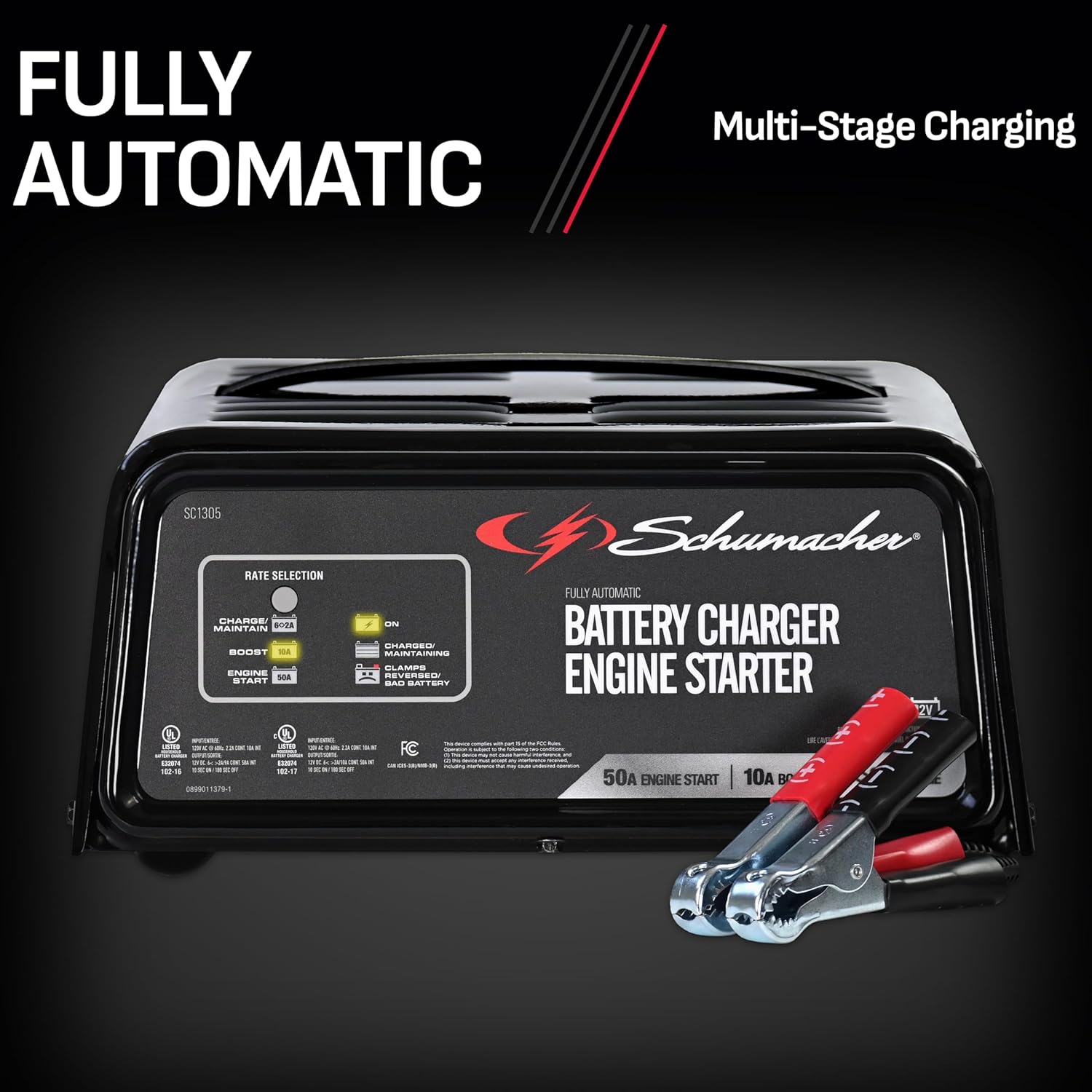
The unit offers smart trickle charging that prevents overcharging while keeping your 12V battery healthy. The multi-stage algorithm balances quick replenishment with proper topping and maintenance, so you don’t shorten battery life by using brute force charging.
Battery reconditioning
An advanced desulfation mode aims to restore battery capacity by breaking down sulfate deposits on plates. If you’ve got an older battery that’s underperforming, the reconditioning function may extend useful life, saving you money and a trip to the parts store.
Safety and compatibility
The SC1305 includes reverse polarity protection to help prevent accidental damage if clamps are reversed, and it’s compatible with most 12V batteries including standard and AGM types. That compatibility covers a wide range of applications from motorcycles to marine batteries.

Technical specifications table
The table below gives a concise snapshot of the unit’s primary specs and typical use cases, which should help you compare or decide quickly.
| Feature | Specification | Typical use or benefit |
|---|---|---|
| Product name | Schumacher Electric 6A Car Battery Charger and 50A Engine Starter, SC1305 | 4-in-1 portable AC-powered unit for 12V batteries |
| Engine start output | 50 A | Emergency engine starts for cars, SUVs, light trucks |
| Boost charge | 10 A | Faster top-up to start a weak battery |
| Charge/maintain | 6 A and 2 A | Regular charging and long-term battery maintenance |
| Battery types supported | 12V lead-acid (standard, AGM) | Work with automotive, marine, Powersport batteries |
| Reconditioning | Desulfation mode | Helps restore sulfated batteries |
| Safety | Reverse polarity protection | Prevents damage from clamp reversal |
| Power source | AC (6-foot power cord) | Must be plugged in during use; not stand-alone DC-operated |
| Included | SC1305 unit, user manual | Ready-to-use with integrated cables |
How the charging modes work in practice
Understanding each mode helps you pick the right approach when your battery is low, dead, or needs long-term care. You’ll feel more confident using the unit for routine and emergency situations.
Engine start (50A)
Using the 50-amp start capability gives you a burst of current to crank the starter motor on most 12V vehicles. That’s especially handy if you’re dealing with a dead or severely weakened battery and need a reliable jump start without a second vehicle.
Boost charge (10A)
The 10-amp boost mode is meant to quickly raise battery voltage enough for an immediate start or to address a battery that’s not fully discharged but too weak to crank the engine. You’ll find this useful when you’ve left lights on and need a faster top-up than trickle charging.
Charge and maintain (6A and 2A)
The 6-amp charge mode gets the battery back to a healthy state faster than trickle alone, while 2-amp maintain is designed for long-term connection without overcharge risk. If you store seasonal equipment like motorcycles or boats, the maintain mode will keep your battery ready.
Reconditioning/desulfation
The reconditioning mode uses pulsed currents or an algorithm to reduce sulfate accumulation on battery plates. While it’s not a guaranteed fix for a physically damaged battery, you’ll often notice improved voltage retention and longer service life after successful reconditioning cycles.
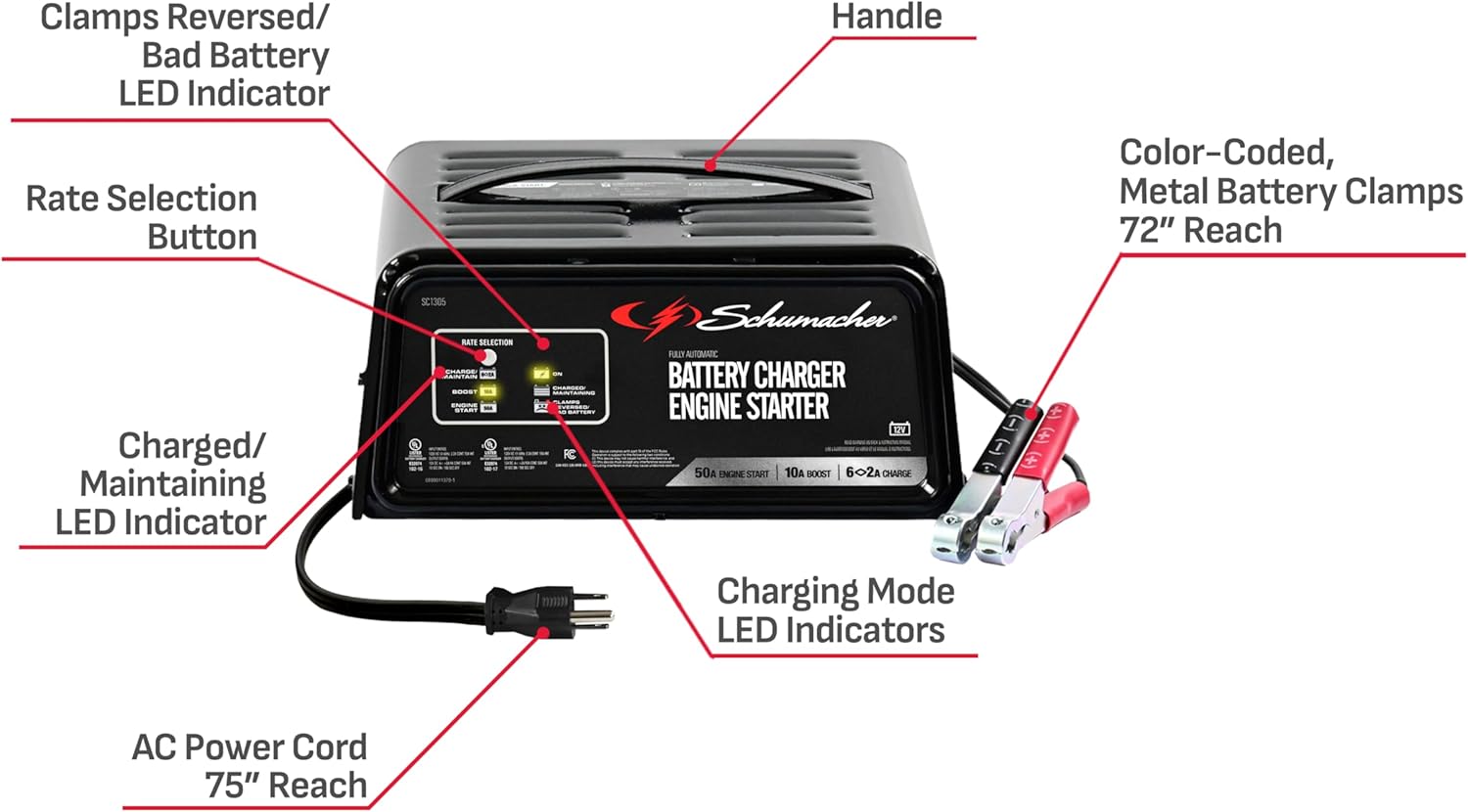
Using it safely and effectively
Safety matters whenever you’re handling batteries and cables, so you should know the basics before you start. A few simple precautions and best practices will keep you and your vehicle protected.
Reverse polarity protection and what it means for you
The reverse polarity protection prevents damage if the clamps are connected incorrectly. That feature gives you peace of mind and reduces the chance of catastrophic error while you’re learning or in a hurry.
Proper clamp attachment and spark avoidance
Attach the positive clamp to the battery positive first, then the negative clamp to a ground point if recommended by the manual. You’ll want to avoid sparks near the battery, especially in areas where hydrogen gas may accumulate.
AC power requirements and cord length
Because the unit must be plugged into AC power, you’ll need access to an outlet within about six feet of where you’ll place the charger. If you plan to use this in a larger shop or at a remote job site, factor in extension options rated for outdoor use if necessary.
Real-world performance: starting, charging, and maintaining
How does the SC1305 perform when you actually use it on vehicles and equipment you own? This section covers typical outcomes and what to expect in everyday scenarios.
Starting stalled or weak engines
You can expect dependable performance for most light automotive applications with the 50-amp start function. It’s especially helpful for quick roadside recoveries and for bikes or ATVs that require less cranking current than larger engines.
Charging a drained battery overnight
Using the 6-amp charge will replenish a moderately drained battery over several hours, often overnight depending on battery capacity and state of discharge. You’ll find that the multi-stage charging helps avoid overcharging while bringing voltage back up efficiently.
Long-term storage for seasonal gear
The 2-amp maintain mode is ideal for long-term storage of motorcycles, scooters, boats, and lawn equipment. You can leave the unit connected without worry, and your battery will be ready when you return to use the equipment.
Reconditioning outcomes you can reasonably expect
Reconditioning can improve voltage and sometimes bring a marginal battery back to usable condition. However, if a battery is physically damaged or has internal failures, reconditioning won’t restore it fully. You should treat it as a recovery option rather than a guaranteed repair.
Setup, operation, and step-by-step use
You’ll find the operation is straightforward, but following these steps gives you the best chance of success and reduces hassles. Every sequence below includes tips that will help you avoid common mistakes.
Step 1: Positioning and connecting the unit
Place the SC1305 on a stable surface near the vehicle and plug it into a grounded AC outlet. Attach the positive clamp to the battery’s positive terminal and then the negative clamp to the negative terminal or a vehicle chassis ground if appropriate.
Step 2: Selecting the correct mode
Choose Start, Boost, Charge, or Maintain based on battery condition and your goal. If you’re unsure, check voltage with a multimeter or choose charge to replenish the battery safely before attempting to start.
Step 3: Monitoring and finishing the process
Keep an eye on indicator lights or gauges while the unit is working, and disconnect clamps once charging is complete or the engine is running. After a start, let the engine run long enough for the alternator to stabilize battery voltage, and if possible, finish with a charge cycle to ensure full recovery.
Maintenance, troubleshooting, and tips
Caring for the charger itself is simple, and following a few troubleshooting steps will resolve most minor issues without a visit to a technician. You’ll prolong the unit’s life with basic upkeep.
Routine maintenance
Wipe down the unit and clamps after use and store it in a dry area to prevent corrosion. Inspect cables periodically for wear or damage and replace them if you see fraying or exposed wire.
Troubleshooting common issues
If the unit won’t start a battery, check the outlet, cord connection, and clamp contact points first. If the charger indicates reverse polarity or won’t power on, verify proper clamp orientation and inspect the fuse or circuit if applicable.
When to call it quits on a battery
If reconditioning and charging repeatedly fail to bring the battery to acceptable voltage or capacity, it’s probably time to replace the battery. Trying to force a badly damaged battery to work can be unsafe and unreliable.
Pros and cons summary
You’ll want a clear list of benefits and limitations so you can decide if this unit matches your needs and expectations. This quick comparison highlights the most important trade-offs.
Pros
- Versatile 4-in-1 functionality that covers starting, charging, maintaining, and reconditioning.
- Good power range for home and light commercial work with 50A start and 10A boost options.
- Smart charging and multi-stage algorithm to protect battery life.
- Reverse polarity protection reduces user risk.
- Works with common 12V battery types including AGM.
Cons
- Requires AC power, so it’s not a portable, standalone battery pack for remote use.
- 50A start is excellent for many vehicles but may be marginal for larger diesel engines with high cranking demands.
- Reconditioning can help but is not a guaranteed revival for deeply damaged batteries.
- Only includes the unit and manual — no carrying case or additional accessories.
Who should buy the SC1305
This product suits certain users better than others, and knowing where it fits helps you purchase with confidence. If you match one of the descriptions below, this charger-starter will be particularly useful.
Ideal users
You should consider this unit if you maintain multiple 12V vehicles and equipment, such as a car, motorcycle, ATV, or boat. It’s also a strong choice if you value having a single device that handles both starting and long-term maintenance.
Less ideal users
If you need a completely portable solution that works away from AC power, or if you regularly need very high cranking amps for large diesel trucks, you may want to consider alternatives. Also, if you expect guaranteed battery revival regardless of condition, no gadget will promise that.
Comparison to other common solutions
Seeing how this unit stacks up against other approaches can clarify its strengths and weaknesses relative to specific alternatives. You’ll get a practical sense of whether this is the right tool for your situations.
Compared to a standard trickle charger
A standard trickle charger is fine for maintaining voltage, but it won’t provide the immediate starting power the SC1305 offers. If you want both maintenance and starting capability in one device, you’ll prefer the SC1305.
Compared to jump boxes or portable battery packs
Portable jump boxes give you stand-alone starting power without needing AC, which is great on remote roads. However, the SC1305 gives you a broader set of battery-handling tools if you mostly work near an outlet and want reconditioning and maintenance functions too.
Compared to workshop-grade chargers
Workshop chargers may offer higher current and more advanced diagnostics, but they can be bulkier and more expensive. The SC1305 strikes a balance: solid performance for at-home mechanics and hobbyists without the price or footprint of professional units.
Real use cases and scenarios
Picture actual moments when you’ll reach for the SC1305, and you’ll better understand its practical value. These scenarios reflect typical homeowner and enthusiast use rather than professional fleet demands.
Weekend motorcycle restoration
You’ll keep the battery healthy through the off-season using the maintain mode, and a quick boost will get the bike started after months in storage. The reconditioning mode can help rejuvenate a battery that’s been sitting stale.
Roadside dead-battery recovery
If your car won’t start because you accidentally left the lights on, the 50A start or 10A boost will most likely get you running without towing or waiting for a second vehicle. Plug it in at home or at a location with power, and you’re back on the road quickly.
Marine battery care
You’ll appreciate the maintain mode for winter storage and the robust clamps for marine battery terminals, though make sure to use an appropriate outlet and take precautions against salty corrosion. The SC1305 supports typical 12V marine batteries used in small boats.
Final verdict and buying considerations
Summing things up will help you arrive at a confident purchase decision. Consider your usual use cases, required portability, and the types of batteries you service.
Summary recommendation
If you want a compact, versatile charger-starter that handles most 12V battery needs at home or in a small workshop, the Schumacher SC1305 is a strong, cost-effective choice. You’ll benefit from its combination of start power, boost capability, multi-stage charging, and reconditioning features.
Final purchasing tips
Before you buy, check that your most common vehicles fall within the unit’s 12V and amp capabilities and confirm you have access to AC power where you’ll use it. Also, read the included manual so you use the reconditioning and start modes correctly and safely.
Closing thoughts
You’ll find the SC1305 combines several useful battery functions into a single, well-rounded device that covers most day-to-day needs for automotive, powersport, and small marine batteries. With reasonable care and proper use, it will serve you well as a go-to solution for keeping batteries healthy and vehicles ready.

Disclosure: As an Amazon Associate, I earn from qualifying purchases.