
Have you ever wished your cordless tool battery could also get your car started after a long weekend or a late-night errand?
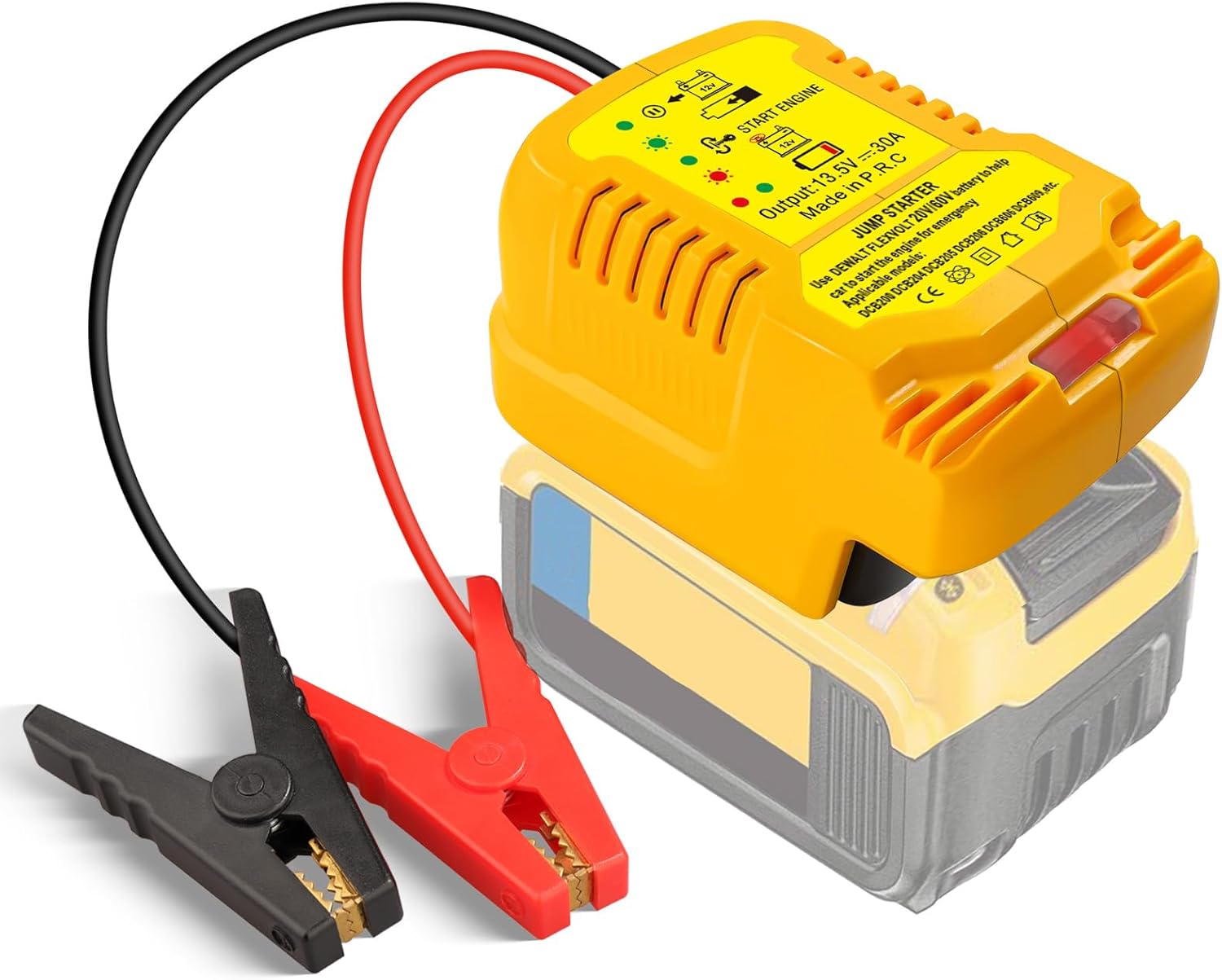

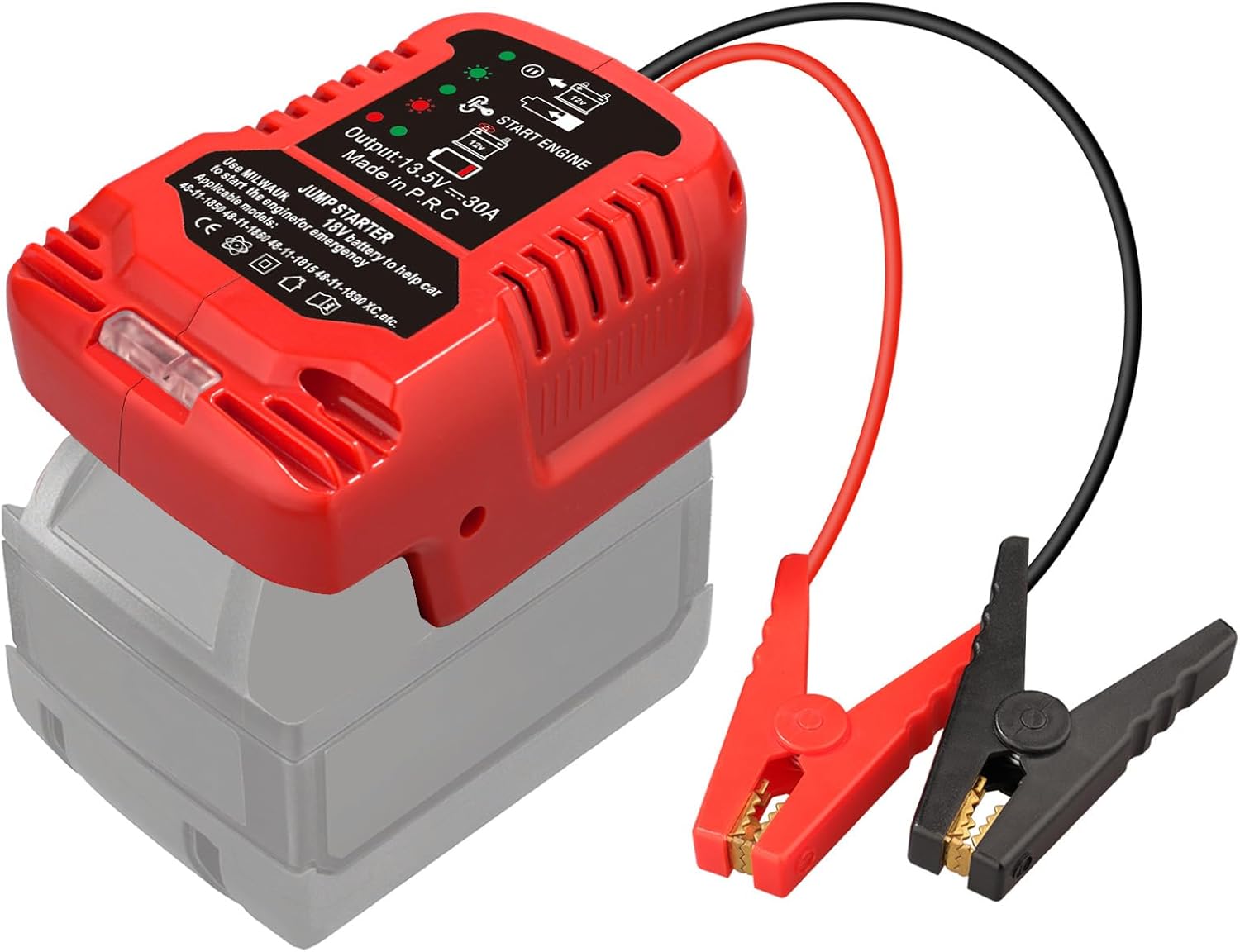
Jump Starter Adapter for DeWalt 20V MAX Battery, 12V Portable Car Jump Cables, Automotive Booster Cable Adapter, Jump Starting Dead or Weak Batteries, Engine up to 3.5 Liters (NO Battery)
This adapter turns compatible DeWalt Li-ion tool batteries into a compact jump starter for 12V car batteries. It’s an accessory-only product (battery not included), designed to give you a lightweight, portable option to start smaller engines when a traditional portable jump pack isn’t handy.
Quick summary
You get a compact adapter with heavy-gauge clamps and wiring that clips to a DeWalt battery on one end and your car battery on the other. It’s meant for convenience more than raw power — ideal for mid-size cars, small trucks and light recreational vehicles with engines up to about 3.5 liters. Expect to bring your own DeWalt battery and treat this as a “bring-your-own-power” solution.

What’s included and what’s not
You’ll receive the adapter with attached jumper cables and clamps, plus the plastic housing to mate with DeWalt batteries. The product does not include any DeWalt battery; you must supply your own compatible Li-ion pack. This is important to keep in mind when budgeting or planning what to keep in your vehicle.
Key features
Below are the main features that define how the adapter performs and how you’ll use it day to day. Each feature influences portability, usability, and safety when you need a quick start.
Portable, compact design
The adapter is designed to be small and lightweight so you can store it in your trunk or under a seat. That means you won’t need a bulky jump pack crowding your car, and you can grab it along with a compatible DeWalt battery when you head out.
Uses DeWalt 18V/20V/60V lithium batteries
It accepts a range of DeWalt Li-ion batteries (18V/20V/60V lines) such as DCB203, DCB204, DCB206, DCB606, DCB609, DCB612, DCB207, and similar models. Because it relies on a tool battery, you can leverage packs you already own for jobs and emergencies alike.
Simple operation with indicator lights
Operation is straightforward: attach your DeWalt battery, clamp to your car battery, and watch the indicator lights. A green light indicates readiness to start, while flashing lights and color combinations tell you if it’s charging, low on battery, or connected backwards.
Compatible with 12V automotive batteries and up to 3.5L engines
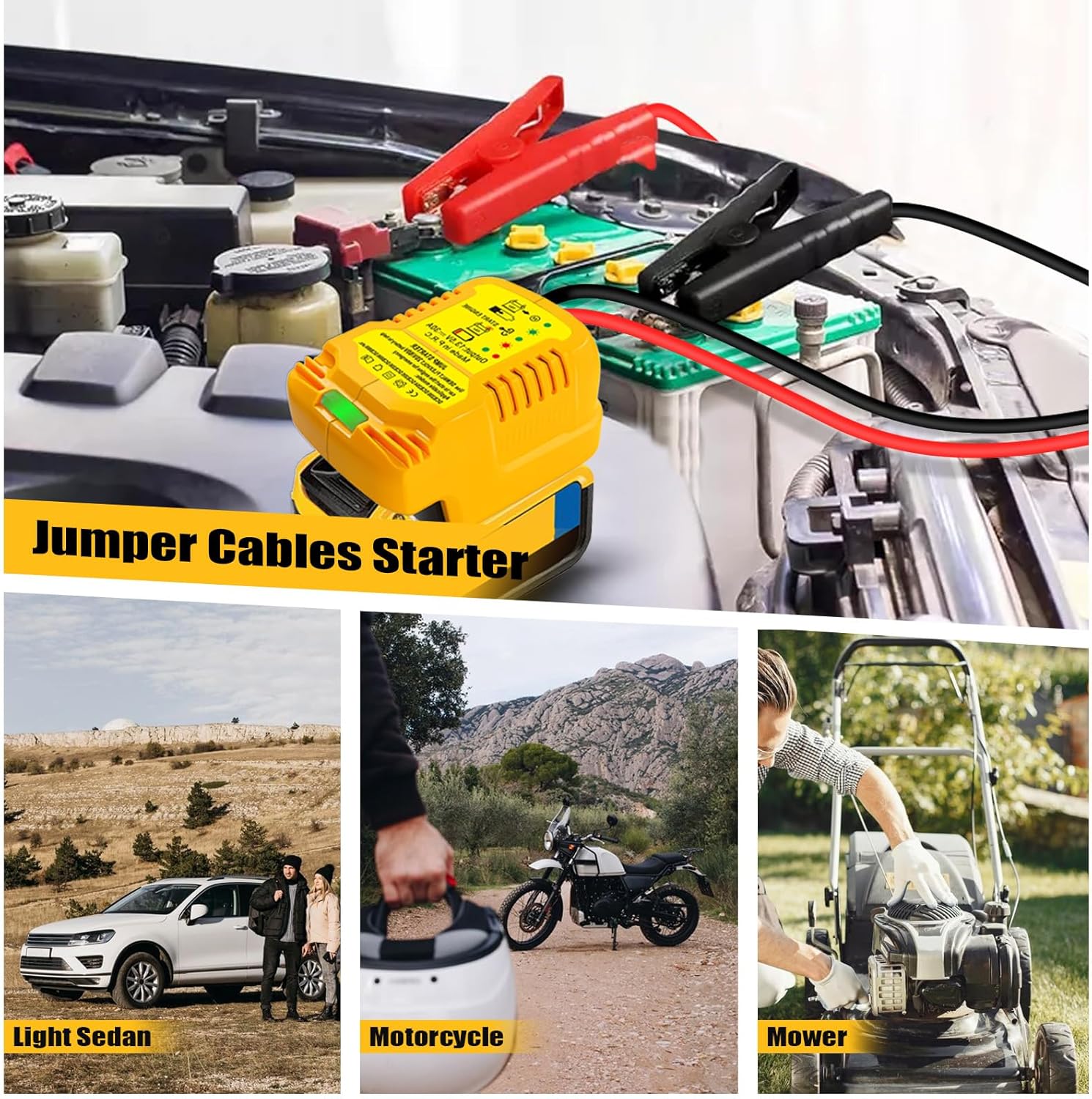
The adapter is built for 12V vehicle systems and is rated to start engines up to about 3.5 liters. That usually covers most passenger cars, some small SUVs, light pickups, and many recreational vehicles, but it’s not designed for large trucks or diesel engines.
Built with a heavy-gauge cable
The included 11-AWG (American Wire Gauge) cable at approximately 1.2 ft is short but thick for reduced voltage drop and safer current flow in a compact assembly. The short length keeps things portable, though it does require reaching the vehicle battery without putting the battery pack too far from the car.
Specifications at a glance
Here’s a quick table breaking down the main specs so you can compare at a glance and check compatibility with your gear.
| Feature | Detail |
|---|---|
| Product type | Jump starter adapter for DeWalt tool batteries (NO battery included) |
| Compatible batteries | DeWalt 18V/20V/60V Li-ion: DCB203, DCB204, DCB206, DCB606, DCB609, DCB612, DCB207, etc. |
| Vehicle system | 12V automotive batteries |
| Max engine size rating | Up to ~3.5 liters (gasoline, typical passenger cars/light pickups) |
| Cable gauge & length | 11 AWG, approx. 1.2 ft |
| Indicator lights | Green flashing = charging; green solid = ready; red flashing = low battery; red + green = reverse polarity |
| Portability | Compact, lightweight; designed for storage in vehicle |
| Battery included | No (you must provide your own DeWalt battery) |
Compatibility in detail
Compatibility is one of the most important points when you consider this adapter. If your battery and vehicle don’t match the adapter’s intentions, the device won’t help.
DeWalt battery compatibility
You should use DeWalt lithium-ion batteries in the supported families — 18V, 20V MAX, and the 60V packs that share connection form factors referenced by the manufacturer. Specific models called out in product details include DCB203, DCB204, DCB206, DCB606, DCB609, DCB612, and DCB207. In practice, that means most modern DeWalt 20V and some 60V packs will physically attach and power the adapter.
Vehicle compatibility and limits
This adapter is meant for 12V lead-acid style vehicle batteries and is physically sized to deliver the current needed for small-to-medium gasoline engines. If you have a diesel with a large displacement, a heavy-duty truck, or an older battery in marginal condition, you should not rely solely on this adapter — choose a higher-capacity portable jump starter.
What’s not compatible
Do not use this adapter with 24V systems, large diesel engines, or if your battery chemistry or pack shape is nonstandard and doesn’t lock to the adapter housing. Also, this adapter won’t charge the DeWalt battery — it uses the battery as the power source to crank the starter.
How to use it (step-by-step)
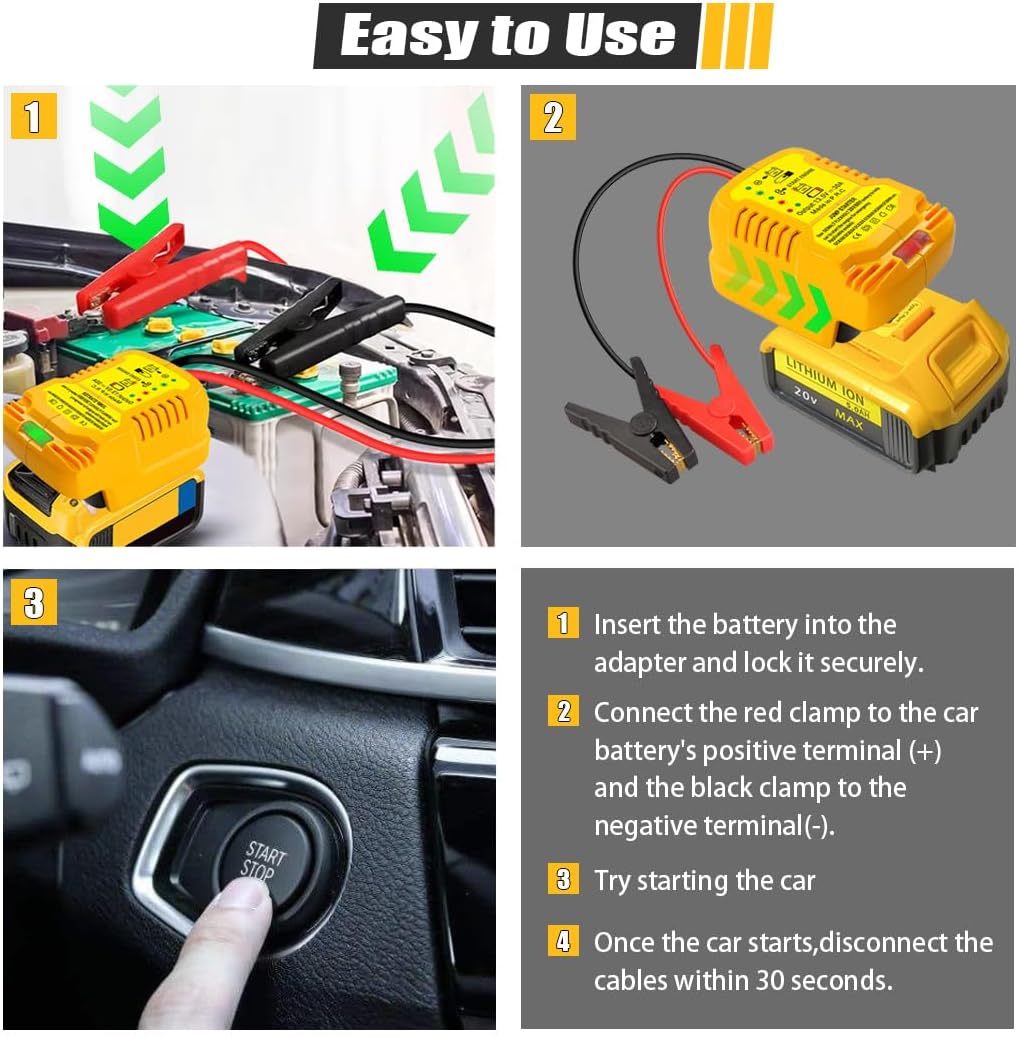
You’ll find the adapter easy to use once you understand the proper sequence. Follow these steps every time to keep things safe and effective.
- Inspect the battery and vehicle: Make sure the DeWalt battery is charged and in good condition. Confirm your vehicle has a 12V system and that the battery terminals are clean.
- Attach the battery to the adapter: Slide or click your DeWalt battery into the adapter housing until the connection is firm and the green indicator lights up if charging or ready.
- Connect clamps to the car battery: Attach the red clamp to the positive (+) terminal and the black clamp to the negative (-) terminal of the car battery. Make sure connections are secure and not touching each other.
- Check the indicator light: Wait for the green solid light — it signals the adapter has the required status to attempt starting. If you see red flashing, the DeWalt battery might be too low.
- Start the engine: Attempt to start the vehicle. If the engine doesn’t turn over immediately, you can wait 3–5 minutes to allow some charge transfer and try again. Don’t crank for more than a few seconds at a time.
- Remove clamps after starting: Once the engine is running, remove the adapter clamps from the car battery in reverse order (negative first, then positive) and let your vehicle run to recharge its own battery.
- Detach the DeWalt battery: After use, remove the DeWalt battery from the adapter and store both components safely.
Indicator light guide and what each state means
You’ll rely on the indicator lights during operation. Knowing what they mean helps prevent mistakes.
Green flashing
This means charging in progress — the adapter is transferring charge or pre-charging. You may need to wait a short period before attempting a start.
Green solid
This is the “ready to start” state. When you see a steady green light after connecting properly, you can attempt to start the car.
Red flashing
A flashing red light signals low battery capacity on the DeWalt pack. Replace or recharge the tool battery before trying again.
Red and green on together
This indicates reverse polarity — you’ve connected the clamps backwards. Immediately disconnect both clamps and reconnect them correctly (red to positive, black to negative).
Performance expectations
Performance depends heavily on the capacity and health of the DeWalt battery you use, and on the condition of your vehicle’s starter and battery.
What you can expect with typical DeWalt batteries
- Small packs (1.5–2.0 Ah): May give you one attempted start or assist enough to turn an engine over briefly. These are less reliable for repeated use.
- Medium packs (3.0–4.0 Ah): Offer better performance and often provide several start attempts for smaller engines.
- Large packs (5.0–9.0 Ah or higher): These will give you the best chance for multiple successful starts and are preferable if you plan to depend on the adapter regularly.
Practical limitations
Because this is an adapter and not a full jump pack, it doesn’t include internal surge capacity or a large internal battery to handle repeated heavy starts. If you’re somewhere remote and your car frequently struggles, a dedicated portable jump starter with built-in high-capacity battery or an automotive-grade battery charger is a safer bet.
Pros
Here are the main advantages you’ll notice if this adapter fits your needs.
- Extremely portable and easy to store in your car.
- Uses batteries you may already own for tools, so no extra battery purchase is necessary if you have a compatible pack.
- Simple operation with indicator lights that help guide you.
- Affordable and compact compared with full portable jump starters.
- 11-AWG cable provides decent current in a short form factor.
Cons
No product is perfect — these are the trade-offs to consider before buying.
- Battery not included — you must supply a compatible DeWalt pack.
- Short cable length may restrict placement and reach in some vehicles.
- Not suitable for heavy-duty trucks, large diesel engines, or frequent repeated jumps.
- Performance is entirely dependent on the battery capacity you choose.
- No built-in power bank functions like USB charging or flashlight features found on some jump packs.
Safety tips you should follow
Using any jump device requires attention to safety. These are practical steps to reduce risk.
- Verify polarity before connecting clamps: Positive to positive, negative to negative.
- Wear eye protection and gloves when handling batteries and clamps.
- Avoid smoking or sparks near the battery. Batteries release flammable gases.
- Keep the battery and adapter dry and free from oil or corrosion.
- Do not attempt to jump a frozen or visibly damaged battery — it could rupture.
- Limit cranking time to short bursts (a few seconds), with cooling intervals in between.
Maintenance and storage
A little care extends the life of the adapter and the batteries you use with it.
- Store the adapter in a dry, cool location in your vehicle, preferably inside a small bag or case to avoid metal objects touching clamps.
- Periodically clean clamp jaws with a wire brush to ensure good contact.
- If you store a DeWalt battery in your vehicle for emergencies, keep it charged to an appropriate state of charge per the battery manufacturer’s guidelines.
- Avoid leaving the battery attached to the adapter when not in use to reduce unnecessary drain or exposure to temperature extremes.
Troubleshooting common issues
If you run into problems, these steps cover most situations you might face.
Adapter won’t power on / no indicator lights
Check that the DeWalt battery is properly seated and has some charge. If the battery is dead, swap to a charged pack. Also inspect for any visible damage or debris in the battery-to-adapter contacts.
Vehicle won’t start despite green light
Give the battery a few minutes connected to the car to transfer charge, then try again. If it still won’t start, the vehicle’s starter or electrical system may be at fault, or your DeWalt battery may lack sufficient capacity. Try a larger DeWalt pack.
Red and green lights appear
This means reversed clamps — immediately disconnect and reconnect correctly. If the lights remain abnormal after reconnecting, stop and inspect wiring and clamps for damage.
Battery drains quickly
Higher cranking sessions greatly reduce run time. Switch to a higher-capacity DeWalt battery if you plan to rely on multiple starts, or use this adapter only as a one-off emergency tool and then get a robust portable jump starter for frequent use.
Comparison: adapter vs. typical portable jump starter
If you’re deciding between buying this adapter and a standalone jump pack, here’s a direct comparison to help.
| Aspect | Jump Starter Adapter (this product) | Dedicated Portable Jump Starter |
|---|---|---|
| Size & weight | Very compact, lightweight | Bulkier, heavier |
| Power source | Requires separate DeWalt battery | Built-in high-capacity battery |
| Number of starts | Depends on DeWalt battery capacity | Usually multiple starts out of the box |
| Extra features | None or minimal | Often includes USB ports, air compressors, lights |
| Cost | Lower (adapter-only) | Higher (full unit) |
| Portability for long trips | Good if you carry batteries | Better because it’s all-in-one |
| Suitability for large engines | Not recommended | Many models are designed for large engines |
Who should buy this adapter
You should consider this adapter if:
- You already own DeWalt 20V/18V or compatible batteries and want an economical backup solution.
- You drive a mid-size car or light pickup and want a compact emergency tool that won’t take much trunk space.
- You value portability and don’t need repeated heavy starts or extra features like USB charging.
Who should not buy this adapter
Avoid this adapter if:
- You need an all-in-one solution that charges phones or runs an air compressor.
- You drive a heavy-duty vehicle, diesel, or a large engine regularly.
- You prefer a guaranteed number of starts without dependence on tool battery capacity.
- You don’t own a compatible DeWalt battery and don’t want to buy one just for occasional car starts.
Practical tips for using it on the road
- Keep at least one high-capacity DeWalt pack in a designated emergency kit in your car if you plan to rely on this adapter.
- Store a pair of disposable latex or nitrile gloves in the kit so you can handle clamps cleanly.
- Label the adapter with a short instruction tag so anyone else who might use it understands basic steps and safety.
- If you live in very cold climates, remember battery capacity drops in low temperatures — use a larger pack in winter.
Frequently asked questions
Here are answers to questions people commonly ask about this kind of adapter.
Can it charge my DeWalt battery?
No. The adapter uses the DeWalt battery as a power source to start a vehicle. It is not a charger; you must charge the battery separately with an appropriate DeWalt charger.
Will it start diesel engines?
It’s not designed for large diesel engines and is rated more for gasoline engines up to 3.5L. Diesel engines typically require much higher cranking amperage — use a heavy-duty jump starter for diesels.
How many times can I start my car on one DeWalt battery?
That depends on the battery’s Ah rating and the condition of your vehicle’s starter. A larger capacity battery (5Ah and above) will provide more attempts than a small 1.5Ah pack. Expect fewer starts with smaller capacity packs.
Is it safe to leave the battery in the car?
You can store the battery in the car but follow DeWalt’s recommendations for temperature and storage. Long-term exposure to extreme heat or cold will shorten battery life.
What happens if I connect the clamps backwards?
The product has an indicator for reverse polarity (red + green). If you connect clamps backwards, disconnect immediately and then reconnect correctly. Avoid cranking while the clamps are reversed to prevent damage.
Troubleshooting scenarios you may face
- If the green light never turns solid: swap in a known-charged DeWalt battery and re-check clamps.
- If you hear clicking from the starter but the engine won’t turn over: battery pack may be underpowered; try a higher-Ah DeWalt battery.
- If clamps are sparking when connecting: turn off all vehicle electrical loads, ensure clamps make clean contact, and avoid contact between clamps.
Buying advice and accessories to consider
- If you don’t already have a DeWalt battery, consider purchasing a high-capacity pack (5Ah or higher) to maximize usefulness.
- Buy a small soft case or pouch to keep the adapter and clamps tidy and protected from debris.
- Consider keeping a compact set of basic jumper cables or a dedicated portable jump starter as a backup.
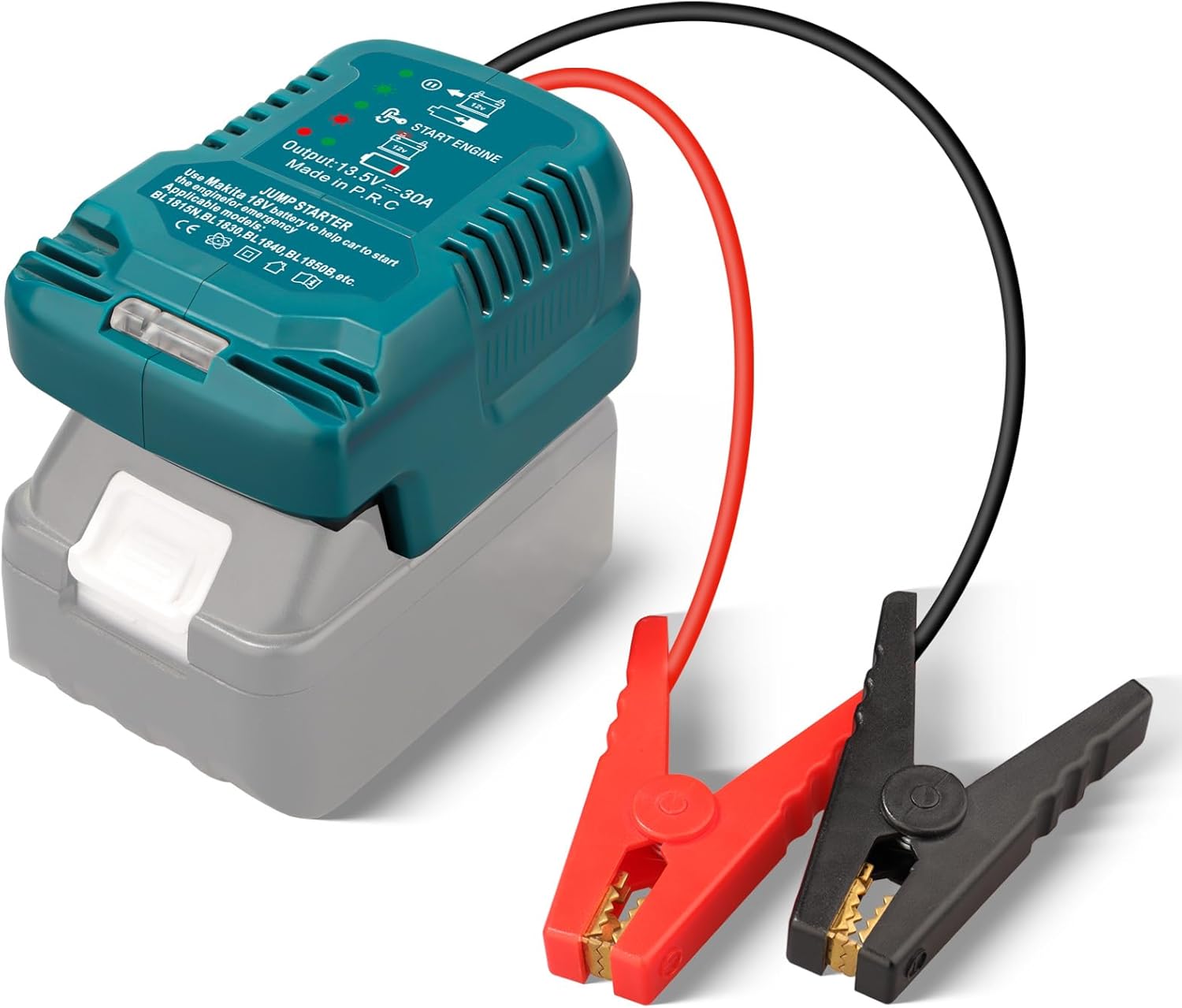
- Check compatibility carefully if you use non-DeWalt batteries — the product is optimized for DeWalt connection form factors.
Final verdict
If you already own compatible DeWalt batteries and drive a vehicle that fits within the stated limits, this adapter is an elegant, cost-effective emergency tool. It gives you the flexibility to use tool batteries for roadside starting without carrying a heavy jump pack. However, if you lack suitable batteries, need repeated heavy-duty starts, or want an all-in-one unit with extra features, a traditional portable jump starter will serve you better. Use this adapter as a smart, lightweight addition to an emergency kit rather than a sole substitute for a full-size jump starter.
If you’d like, I can help you compare specific DeWalt battery models to estimate how many starts you might get, or recommend portable jump starters as alternatives based on your vehicle type. Which vehicle do you drive, and do you already have DeWalt batteries?

Disclosure: As an Amazon Associate, I earn from qualifying purchases.