
Would this power station keep your lights on, your fridge running, and your devices charged when you need them most?

Product Overview
You’re looking at the AFERIY 3840Wh Portable Power Station,120V AC Outlets x 5,2.5H Fast Charge,3600W LiFePO4 Battery Power Station,Solar Generator for Home Use,Outdoor Camping,Power Outage,Camping,RV,Emergencies as a serious step up from smaller generators. This unit combines a high-capacity LiFePO4 battery, robust AC output, multiple charging methods, and expandable battery options—so you can picture it as a central power hub for home backup, extended camping, or mobile work.
Key Specifications
Below are the headline specs that most people want to see at a glance. These numbers tell you about capacity, output, weight, and charging speed so you can judge whether it fits your needs.
- Battery: 3840Wh LiFePO4 (LFP) cells
- Continuous Output: 3600W
- AC Outlets: 5 x 120V
- Fast Charge: Up to 2.5 hours (advertised as fast as 1.5 hours under supported input)
- Expandable Capacity: Up to 11.5kWh with expansion packs
- UPS Transfer Time: <10ms< />i>
- Ports: 15 ports including USB-C PD 3.0, USB-A, DC, XT60, and 12V car socket
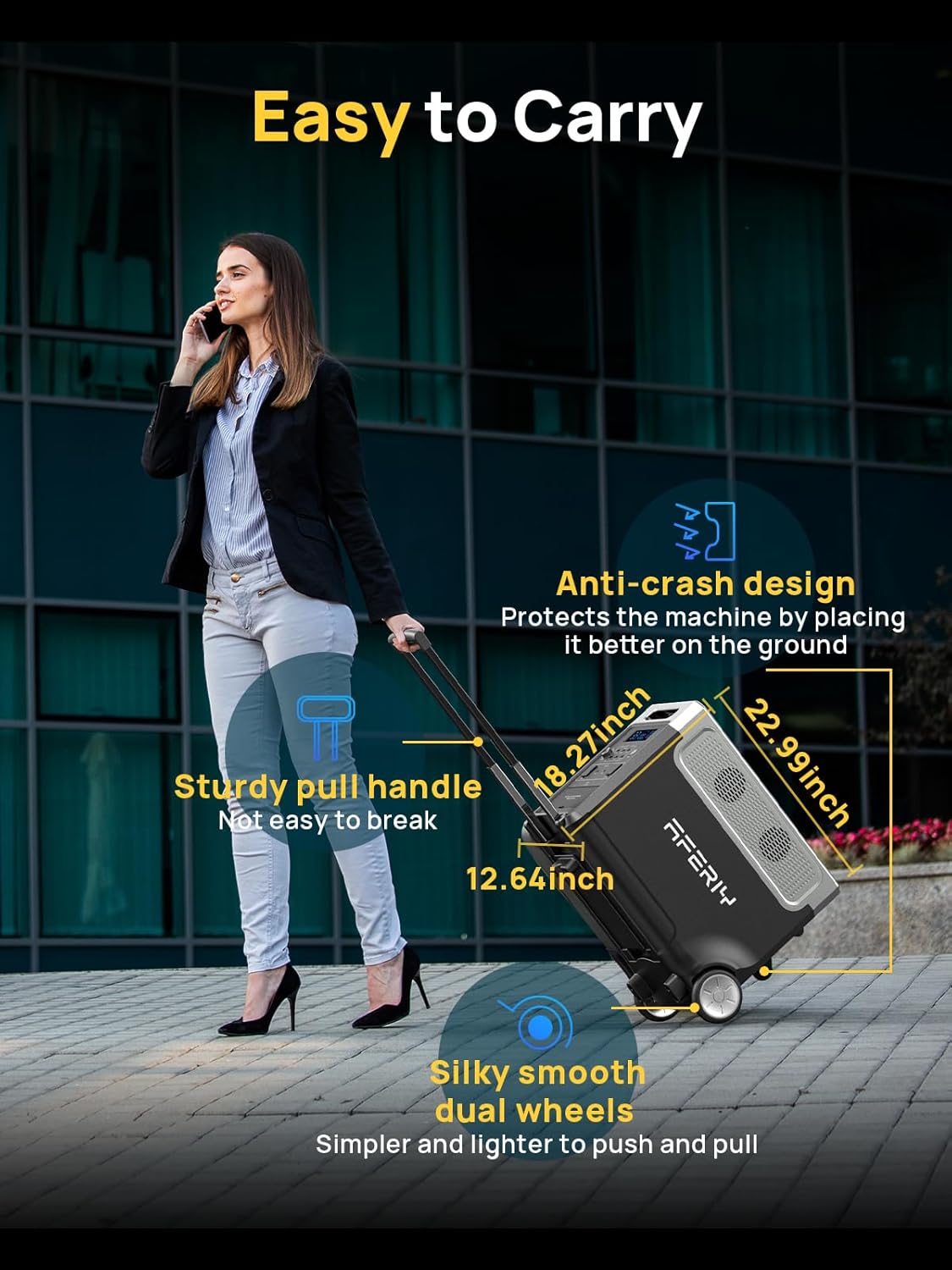
- Weight: 80.46 lb (22.99 × 12.63 × 18.26 in)
- Support: 7-year support, UL Listed
| Specification | Detail |
|---|---|
| Battery Capacity | 3840Wh (LiFePO4) |
| Peak / Continuous Output | 3600W continuous |
| AC Outlets | 5 x 120V AC |
| Ports Total | 15 (USB-C PD 3.0, USB-A, DC, XT60, car socket) |
| Fast Charging | As fast as 1.5 hours in ideal conditions; adjustable charging-speed levels |
| UPS Transfer | <10ms< />d> |
| Expandable Capacity | Up to 11.5kWh with add-on battery packs |
| Weight & Size | 80.46 lb; 22.99 × 12.63 × 18.26 in |
| Certifications & Support | UL Listed; 7-year support |
Design and Build Quality
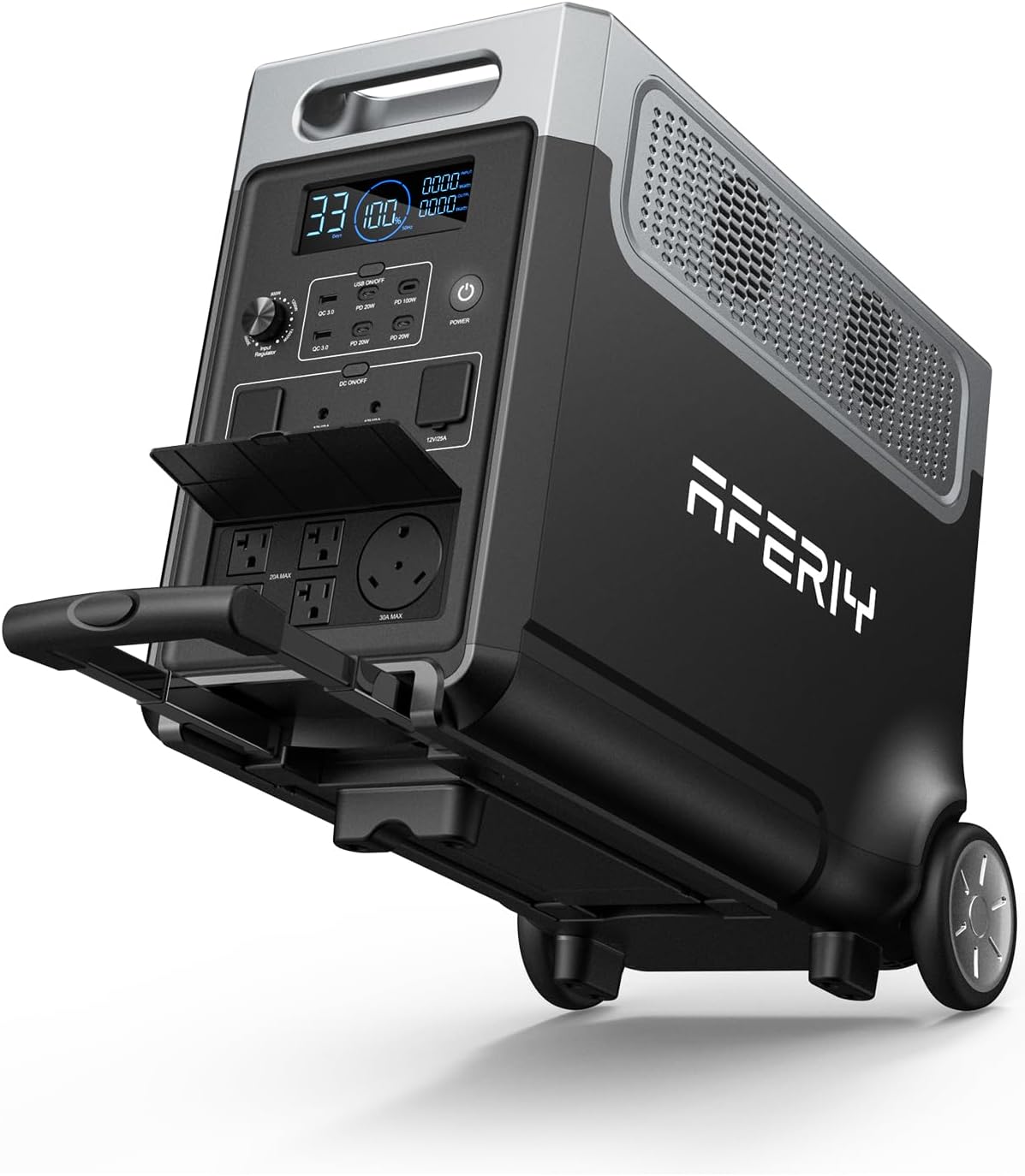
The AFERIY looks and feels built for heavy use rather than light, packable convenience. You’ll notice its rugged boxy design, a sturdy pull handle for transport, and a control panel with clearly labeled ports so you don’t fumble during a power outage.
You get a balanced combination of durable exterior, clear display, and industrial feel. The weight reflects the large LFP battery inside, so while it’s portable for car-to-site hauling, you’ll want a plan for moving it around (more on that below).
Portability and Weight
At 80.46 pounds, this isn’t a backpack power bank — it’s a mobile power station that you’ll load into a vehicle. The pull handle helps, and the footprint is fairly compact for its capacity.
If you plan to move it frequently by yourself, consider where it will live when in use and how you’ll get it from your vehicle to that spot. Two people make lifting and placing it much easier, but the handle and shape are designed to make short moves manageable.
Handling and Controls
You’ll find the control layout intuitive: an LCD that shows battery level, input/output watts, and status, plus physical buttons for power, inverter, and mode settings. Labels are clear so you’ll know which sockets are always-on or switched.
The app integration also gives you remote control options; more on app features later. For physical controls, the buttons feel responsive and the display is legible even in mixed lighting.
Battery and Performance
This unit’s heart is a LiFePO4 battery pack, which gives you a combination of thermal stability, long cycle life, and safety compared with many lithium-ion chemistries. For home backup and frequent use, LFP is one of the most reliable choices you can ask for.
You should expect steady voltage delivery and a more gradual capacity decline over years, which matters if you intend to use this device frequently or keep it in service during long-term outages.
Capacity and Chemistry
LiFePO4 chemistry (LFP) brings you higher cycle life—often thousands of cycles—so the battery should last longer with repeated charges than many alternatives. With 3840Wh onboard, you’re in the range of running essential circuits for hours or powering larger devices for shorter bursts.
With add-on batteries reaching up to 11.5kWh, you’re able to scale to whole-house or extended critical-load backup if you plan your loads carefully. That flexibility is a major selling point for users who want to grow their off-grid capability over time.
Output Power and Waveform
3600W continuous output provides real-world capability for appliances like refrigerators, freezers, power tools, and heavy-duty devices that smaller inverters can’t handle. The true test is simultaneous device draw—you’ll need to sum continuous wattages to avoid overloading.
The inverter waveform is designed to be clean enough for sensitive electronics, but you should check device startup surges (like well pumps or compressors) since some items need higher surge capability. For most home and camping gear, this station will supply stable power.
Runtime Examples
Estimating run times requires knowing actual device power draw, but these practical examples give you a sense of what 3840Wh can do. Actual runtime varies with load, device efficiency, and environmental conditions.
| Device / Load | Typical Power Use | Estimated Runtime (on 3840Wh) |
|---|---|---|
| Smartphone (10W) | 10W | ~384 hours (theoretical) |
| Laptop (60W) | 60W | ~64 hours |
| WiFi Router (10W) | 10W | ~384 hours |
| LED Lights (5 x 10W) | 50W | ~76 hours |
| Refrigerator (150-200W avg) | 175W | ~22 hours |
| Chest Freezer (200-300W avg) | 250W | ~15 hours |
| CPAP (60W) | 60W | ~64 hours |
| Microwave (1000W intermittent) | 1000W | ~3.8 hours (intermittent use) |
Keep in mind that inverter efficiency, ambient temperature, and actual device draw affect these estimates. Appliances with heavy startup surges will shorten usable time if they repeatedly cycle.
Charging Options and Speed
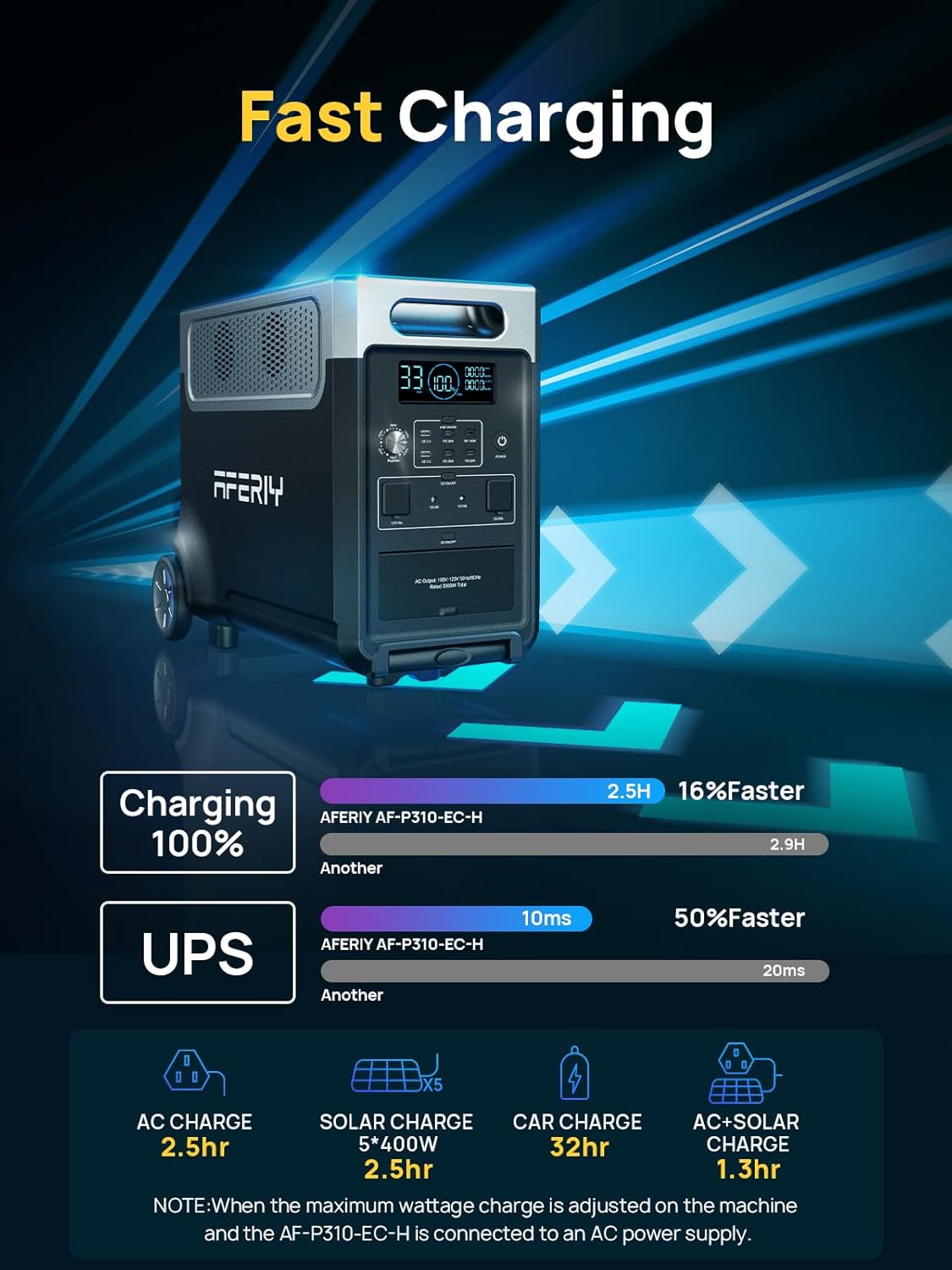
You get four ways to recharge: AC wall input, solar panels, car charging, and combined AC + solar. That flexibility means you can charge wherever you are, whether at home, on the road, or off-grid under the sun.
The product advertises adjustable charging-speed levels and a fastest-case recharge as short as 1.5 hours under supported input conditions—this is impressive if your setup can supply the necessary combined input power.
AC, Solar, Car, and Parallel Charging
AC wall charging is convenient and generally fast given the unit’s supported input rates. Solar charging lets you go off-grid; you’ll need panels and the right wattage to match the unit’s input capability to achieve fast times.
Car charging is handy for topping up while you drive and can be a lifesaver on long trips. If you want the fastest possible recharge, use AC + solar simultaneous input if conditions and your hardware support it, which the unit allows and will reduce downtime significantly.
Fast Charge and UPS Behavior
Fast charge modes are useful when you want the shortest downtime during an outage—you can pick higher input rates at the cost of more heat and potential stress if you aren’t cautious. The unit advertises a full charge in as little as 1.5 hours under ideal multi-input conditions, which requires high-power AC and solar combined.
The built-in UPS switches to battery with <10ms transfer time, which keeps sensitive electronics running without noticeable interruption. that’s crucial for things like computers, security systems, and medical devices that can’t tolerate longer interruptions.< />>
Ports and Connectivity
You’ll find a broad selection of ports for nearly every device: five 120V AC outlets for big loads, USB-A and USB-C PD 3.0 for phones and laptops, DC outputs including XT60, and a 12V car socket. With 15 ports total, you can charge many devices simultaneously without a power strip.
This variety lets you prioritize what to power during an outage: keep your router, phones, and critical devices online while running a fridge or workspace gear from AC outlets.
App Control and Monitoring
AFERIY includes an app for monitoring status, scheduling charging, and remote on/off functions. In practice, this adds convenience—you can check battery level and power flows without walking to the unit, and you can schedule charging to take advantage of lower electricity rates or solar windows.
App reliability varies among brands, but this one generally provides basic telemetry and control features you’d expect. If you like to automate or log power use, app control is a helpful bonus.
Safety Features and Certifications
This station is UL Listed, which gives you reassurance that it meets recognized safety standards for electrical devices. Built-in protections typically include overcharge, over-discharge, short-circuit, over-temperature, and surge protection.
Those safety systems are essential when you’re running household appliances or connecting sensitive electronics. Combined with the LFP chemistry, you’re getting multiple layers of safety for long-term, reliable operation.
Use Cases and Practicality
This unit is versatile: from storm-ready home backup to multi-day camping runs, it serves as a multi-role energy hub. Its size and expandability make it more of a primary backup solution than a lightweight secondary pack.
Think of it as the unit you bring when you want to replace a small generator, run longer off-grid sessions, or maintain critical loads without the noise and fuel management of a gas generator.
Home Backup and Emergency Use
For home emergency preparedness, the AFERIY can run essentials—refrigerator, WiFi, phones, lights, and medical devices—longer than most portable units. If you configure loads and add optional expansion batteries, it becomes a near full-house backup for select circuits.
The UPS functionality is particularly valuable for powering devices that can’t have interruptions. You’ll want to plan which circuits you power and ensure that startup surges won’t trip the inverter.
Camping, RV, and Outdoor Use
On camping or RV trips, this power station can run small AC appliances, charge multiple devices, and act as a quiet alternative to gas generators. You’ll appreciate not having fumes, noise, or fuel logistics while still enjoying ample power.
For longer trips, pair it with a solar array sized to your daily use to keep you running off-grid. The weight means you’ll generally use it for vehicle-based camping rather than backpacking.
Mobile Workstation and Tools
If you need to run power tools or a mobile office, the 3600W continuous output supports many tools and laptops simultaneously. It’s a great choice for contractors who want a quieter, cleaner power source at a worksite or creatives who need stable power for audio/video setups.
Remember that sustained high loads will drain the battery accordingly, so plan charging cycles or a generator backup if you anticipate continuous heavy use.
Setup, Maintenance, and Expandability
Setting up the unit is straightforward: unbox, connect input cables, and optionally pair expansion batteries or panels. You’ll want to read the user manual for connection order and recommended charging parameters to get the most out of the system.
Maintenance is minimal: avoid extreme temperatures, monitor battery health via the app and display, and follow storage recommendations to maximize cycle life.
Adding Expansion Batteries
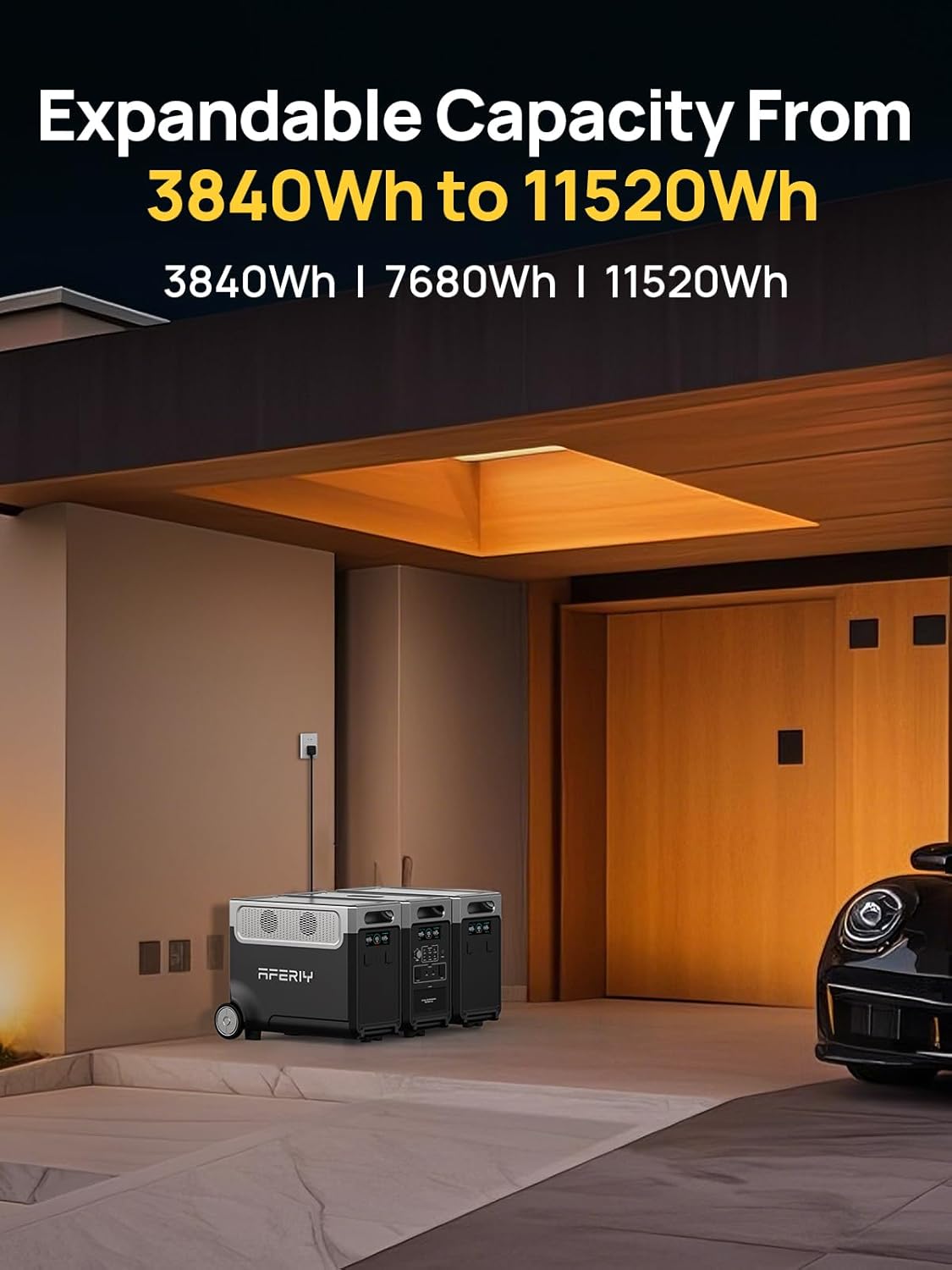
The AFERIY supports expansion packs to scale capacity up to 11.5kWh. If you plan for long-term power independence or larger home backup demands, buying expansion batteries incrementally lets you spread investment and grow capacity as needed.
Make sure expansion batteries are compatible and that you understand parallel connection requirements. Proper installation will give you a seamless, larger battery bank that the inverter can draw from.
Routine Maintenance and Storage Tips
Store the power station in a cool, dry place and avoid prolonged exposure to heat or freezing conditions. If you store it for long periods, maintain the battery at a partial charge and check it periodically so it doesn’t fall into deep discharge.
Keep vents clear, clean dust from ports, and ensure firmware or app updates are applied if offered—small maintenance steps keep the system healthy and reliable.
Pros and Cons
You’ll appreciate the thoughtful balance of power, safety, and expandability, but there are trade-offs to match to your needs.
Pros:
- Large 3840Wh LFP battery with long cycle life and safety
- 3600W continuous output for serious loads
- Expandable to 11.5kWh for scalable backup
- UPS with <10ms transfer for sensitive electronics< />i>
- Multiple charging methods and fast-charge capability
- 15 versatile output ports and app control
- UL Listed and backed by 7-year support
Cons:
- Heavy at 80.46 lb—less convenient for solo transport or lightweight trips
- Fastest recharge times require ideal combined inputs and equipment
- Expansion batteries and solar panels add cost and complexity
- Price point is higher than small portable power stations (but you get much more capability)
Comparison with Competitors
Compared with lower-capacity consumer power stations, the AFERIY stands out for capacity, inverter power, and expandability. Against other high-capacity LFP units, its combination of 5 AC outlets, app control, and 7-year support is competitive.
If you prioritize maximum portability above all else, smaller units will beat it on weight and size. If you want long runtime, high-output, and growth options, this unit is a strong contender.
Who Should Buy This
You should buy the AFERIY if you need a robust, expandable backup for home, extended off-grid capability for RV/camping, or a reliable mobile workstation power source. It’s ideal when you want LFP durability, UPS support, and the ability to scale the battery bank later.
This is also a good fit if you want to replace noisy gas generators with a quiet, clean energy source and are willing to handle a bit of weight for that gain.
Who Should Consider Alternatives
If you only need a lightweight battery for day hikes, short trips, or occasional phone charging, this unit is overkill. Likewise, if your budget is tight and you don’t plan to use high-wattage appliances, a lower-capacity, less expensive model will give better value.
If portability and backpackability are your highest priorities, consider smaller capacities geared for one-person transport.
Practical Tips for Real-World Use
Plan which appliances you’ll run and calculate average draw and startup surges to avoid surprises. Use the app or the display to monitor usage in real time so you can prioritize devices and extend runtime when necessary.
If you’ll rely on solar, size the panel array to cover daily consumption and factor in seasonal sunlight changes. Consider pairing with a transfer switch if you want easier integration into home circuits during extended outages.
Installation and Home Integration
If you want to power home circuits beyond plug-and-play devices, consider installing a transfer switch and having a qualified electrician help integrate the station with essential circuits. A proper installation lets you power refrigerators, medical equipment, and selected outlets safely.
For temporary setups, you can plug devices directly into the AC outlets; for household integration, planning and professional installation will deliver safer, cleaner operation.
Optimizing for Longevity
Avoid deep discharges when possible and store the station at around 40–60% charge if you won’t use it for a while. LFP batteries are forgiving, but good battery management practices extend life and maintain capacity.
Use scheduled charging windows and avoid constant full fast-charging unless you need it; slower, steadier charges are gentler on components over time.

Troubleshooting and Support
If you face startup issues, check that all connections are secure—input cables, AC outputs, and any expansion batteries. Use the display and the app to diagnose error codes and consult the manual for specific fault conditions.
AFERIY’s 7-year support gives you a clear point of contact for warranty, troubleshooting, and parts questions. Before reaching out, have your serial number, purchase details, and a description of the issue ready to speed up the support process.
Final Verdict
If you want a serious, expandable power solution that can handle home backup, RV life, and extended off-grid trips, the AFERIY 3840Wh Portable Power Station delivers a compelling mix of capacity, output, and safety. You’ll pay for the capability and weight, but you’ll get a long-lasting LFP battery, UPS reliability, and the option to grow the system as your needs change.
This unit is a solid buy when you value robust performance, safety certifications, and the ability to scale up your energy independence. Plan for transportation, any additional solar or expansion purchases, and you’ll have a versatile energy hub for years to come.
Disclosure: As an Amazon Associate, I earn from qualifying purchases.